

 Brazil
 Antarctica
 Argentina
 Bolivia
 Chile
 Colombia
 Ecuador
 Guyana
 French Guiana
 Falkland Islands (Malvinas)
 Paraguay
 Peru
 Suriname
 Uruguay
 Venezuela
 Germany
 Austria
 Belgium
 Croatia
 Denmark
 Slovakia
 Slovenia
 Spain
 Finland
 France
 Greece
 the Netherlands
 Hungary
 Ireland
 Iceland
 Italy
 Luxembourg
 Norway
 Poland
 Portugal
 the United Kingdom
 the Czech Republic
 Sweden
 Switzerland
 Turkey
 Bermuda
 Canada
 the United States
 Greenland
 Mexico
 Saint Pierre and Miquelon
 the Dominican Republic
 South Africa
 Egypt
 Australia
 Fiji
 New Zealand
 Papua New Guinea
Farm · Matsumoto, Nagano
Daio Wasabi Farm
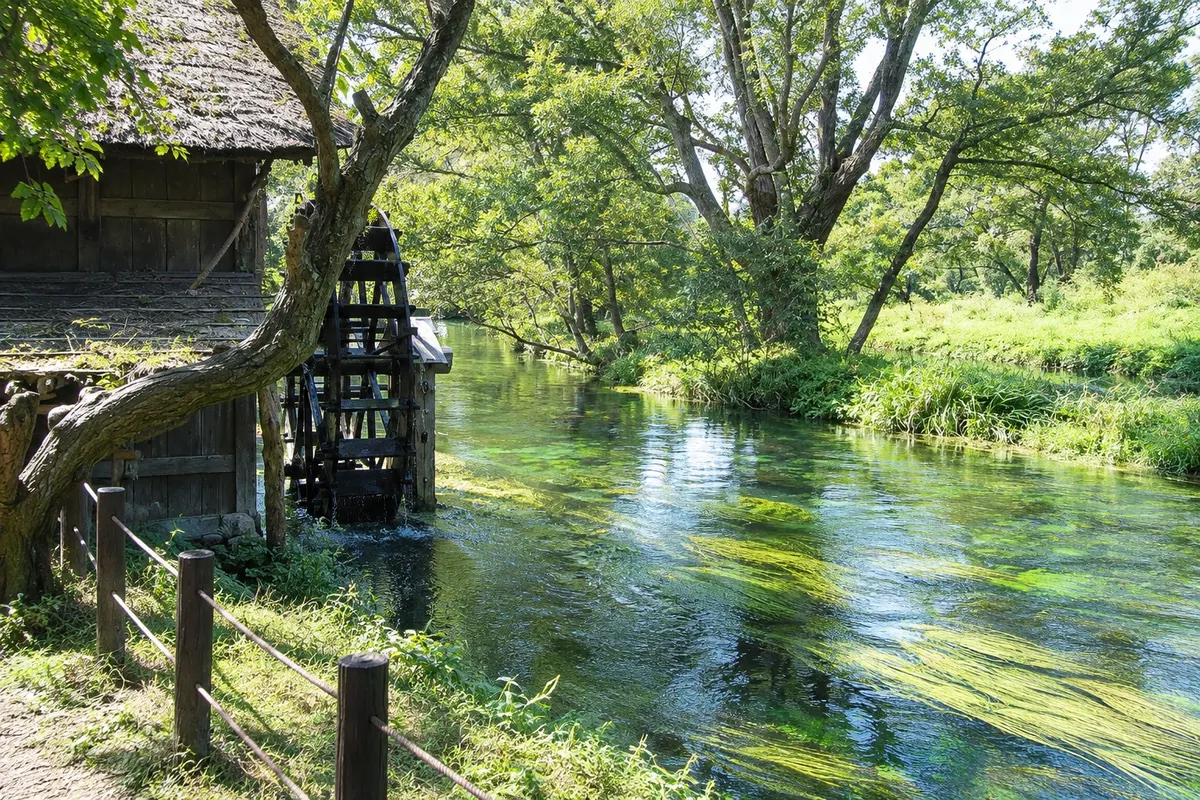
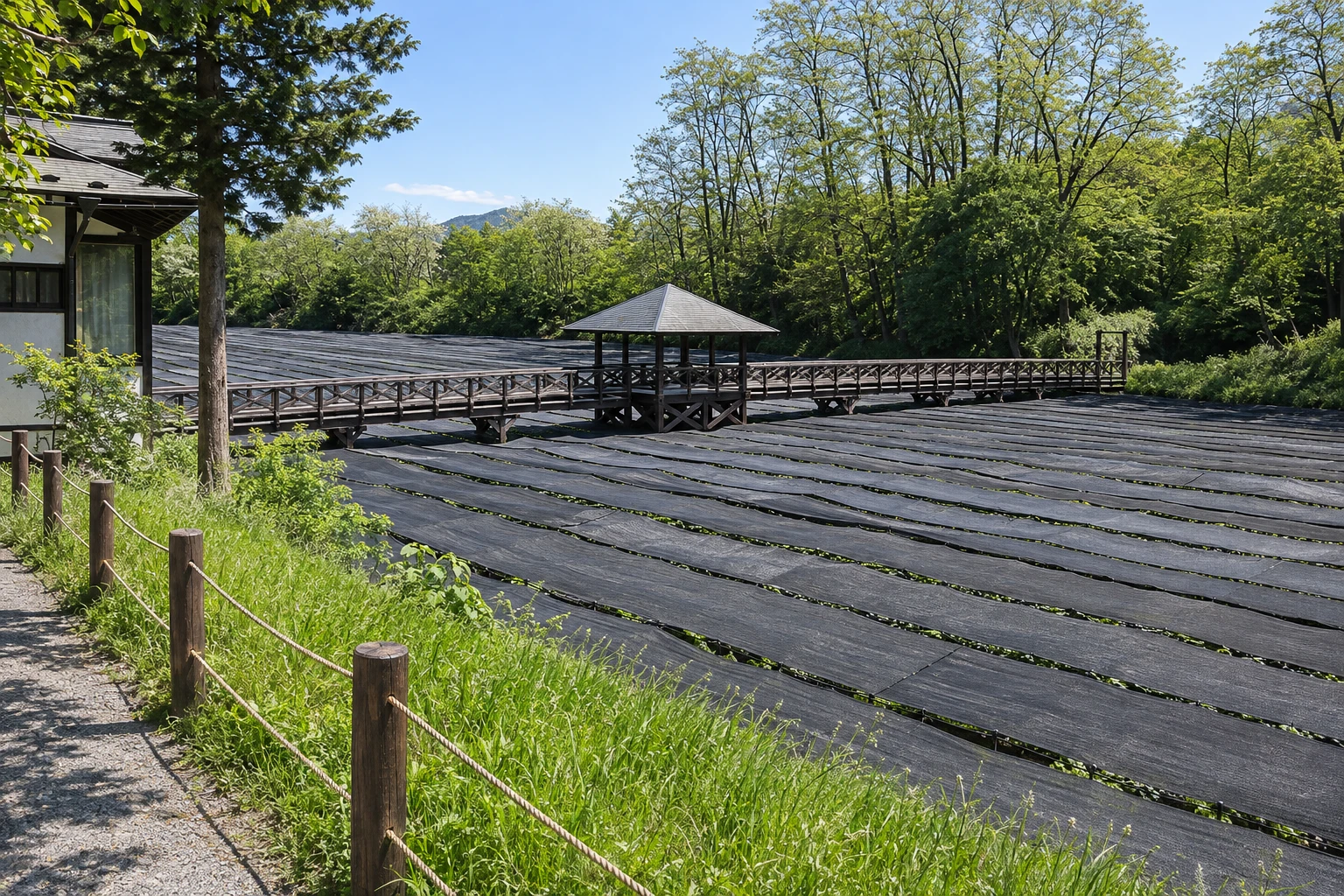
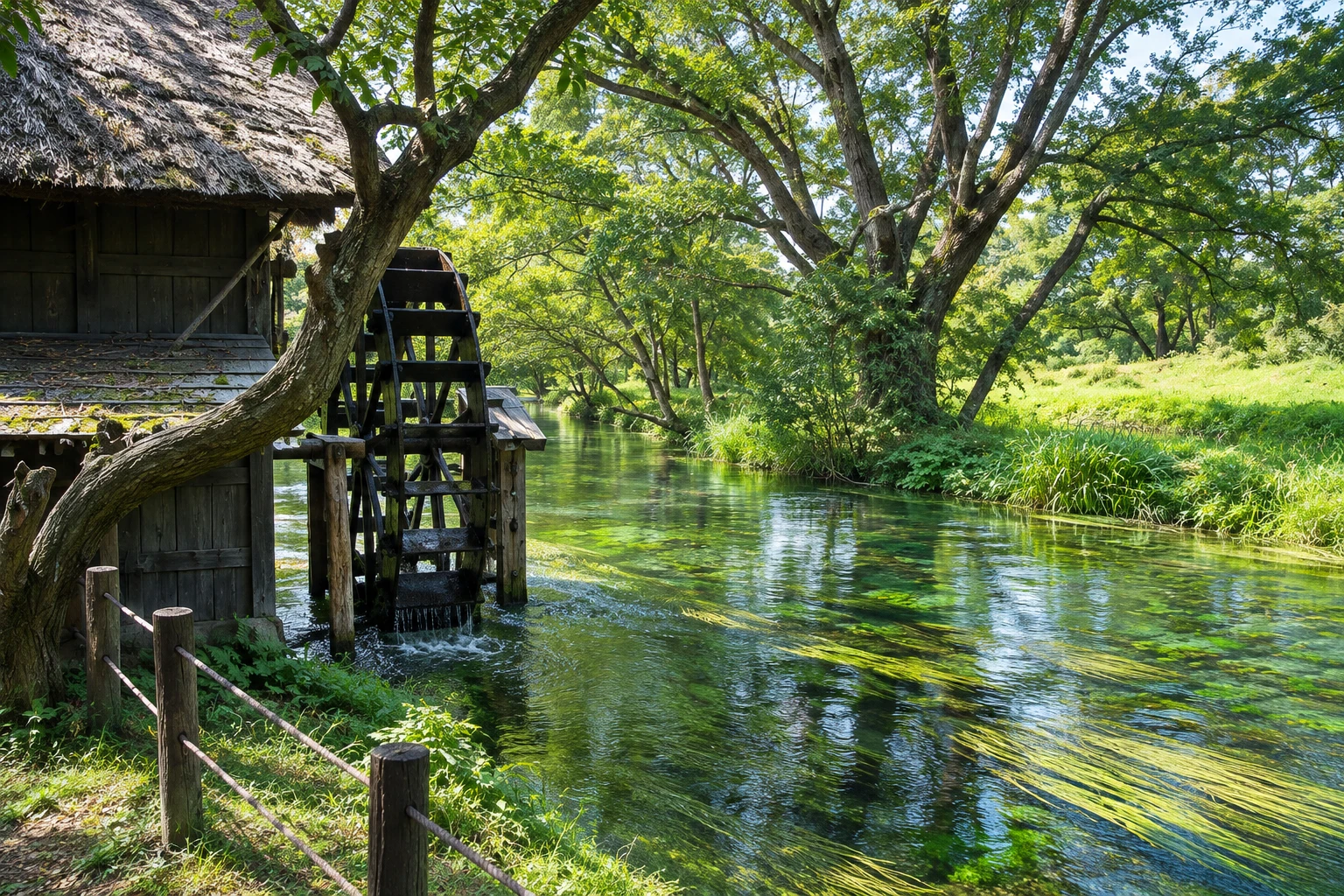
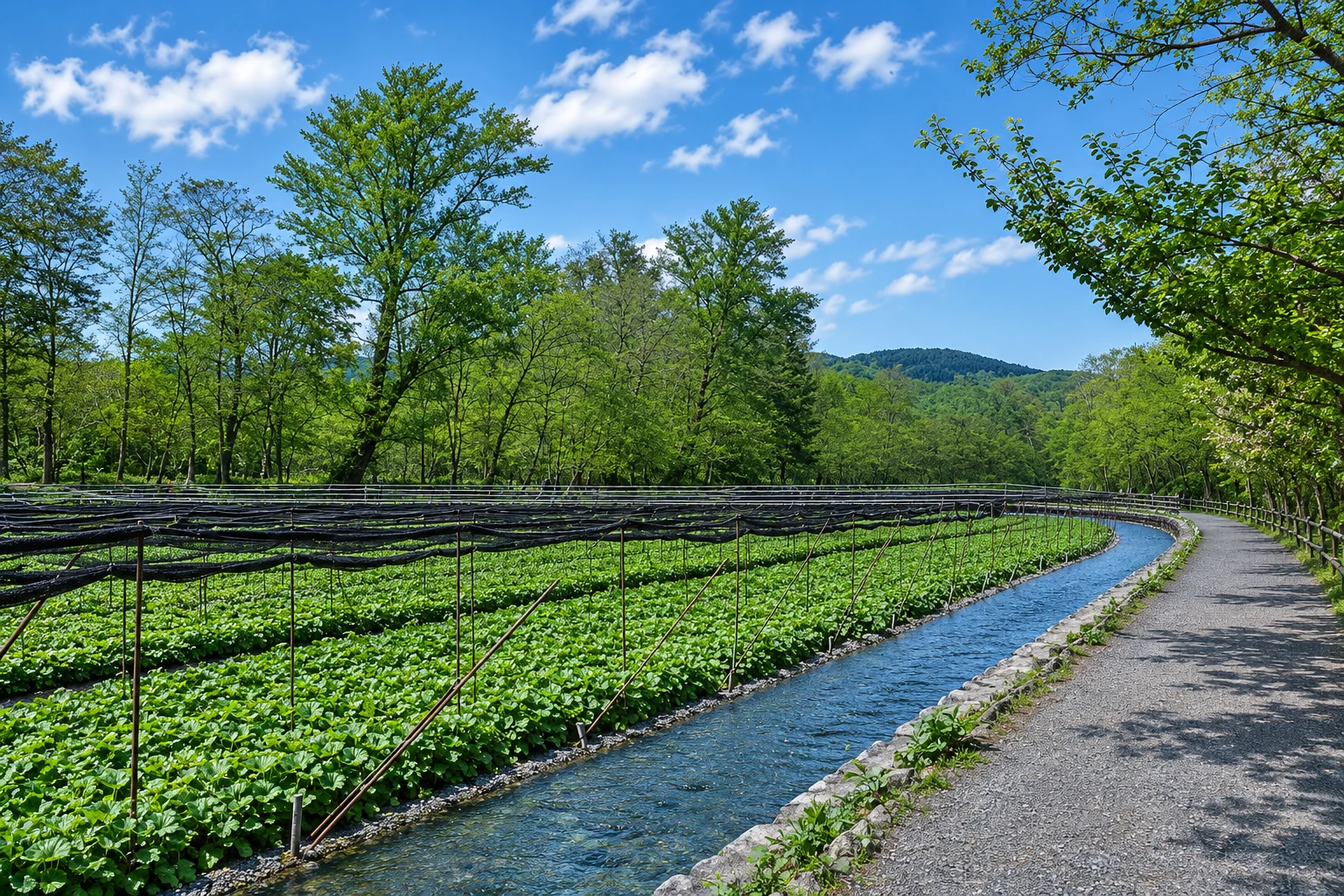
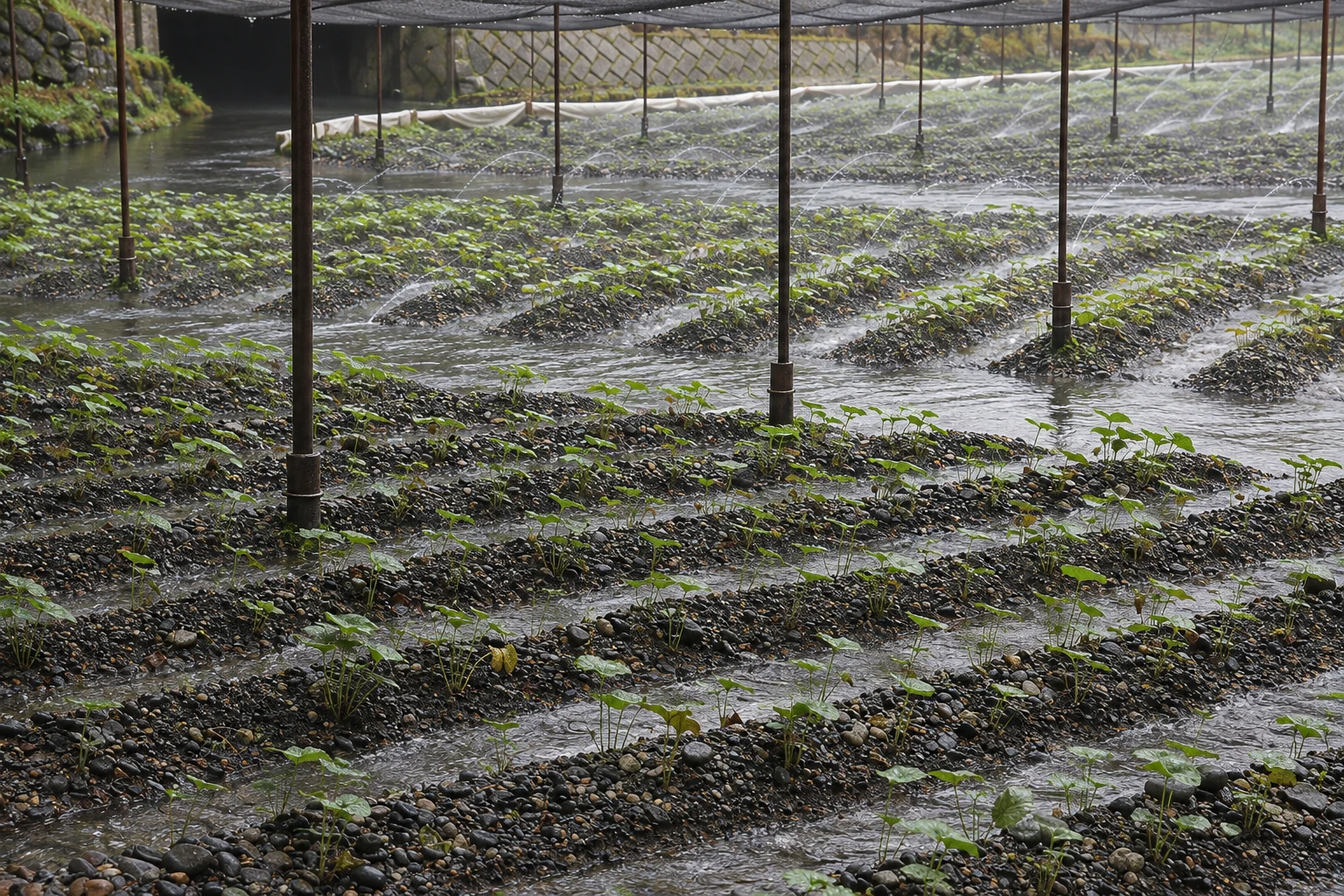
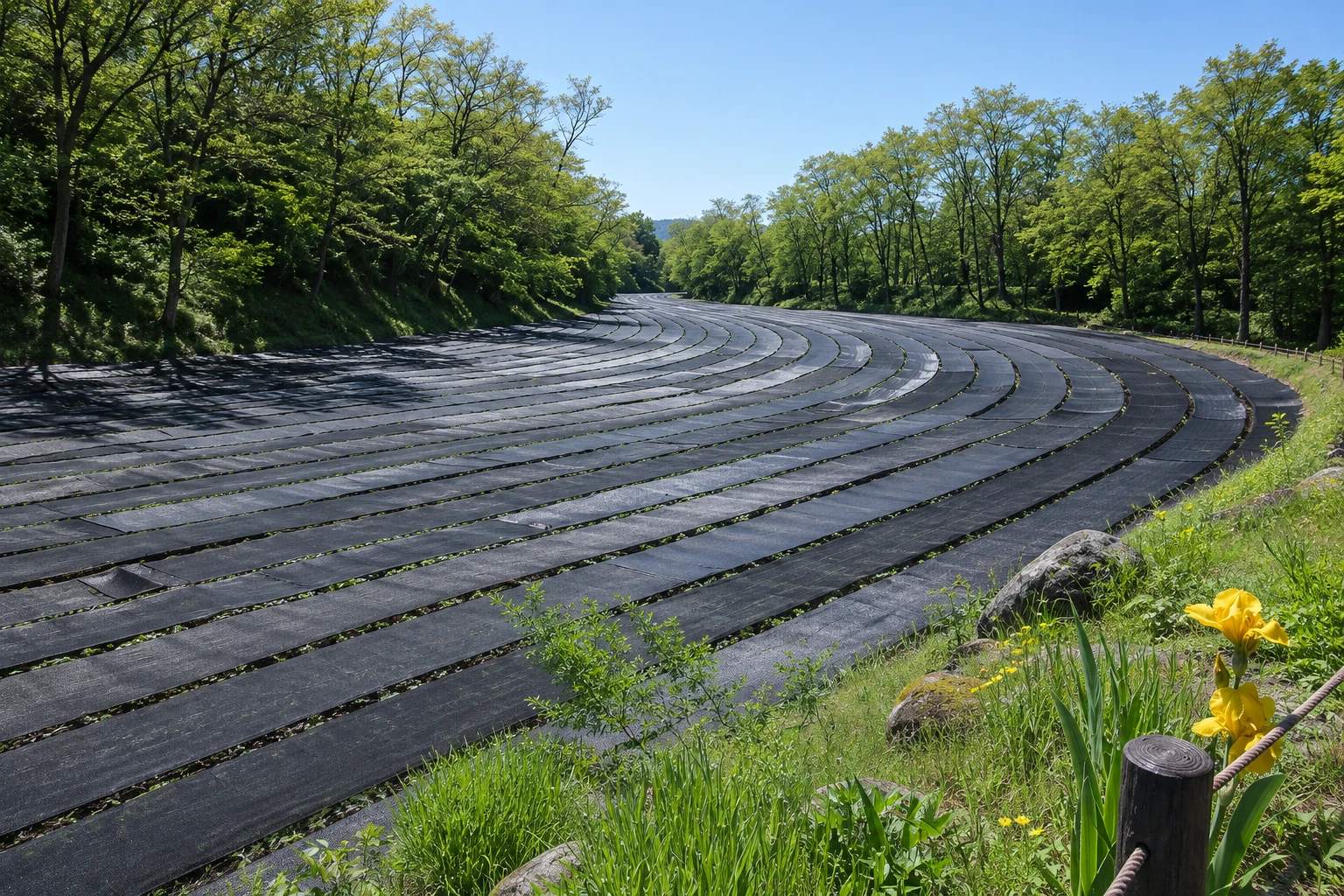
One of the largest wasabi plantations in Japan, in Azumino, irrigated by meltwater from the Northern Alps, with gravel beds under black screens, a clear-water river and wooden waterwheels.
Illustrative images. The pictures in this guide are illustrations based on the real place, not photographs, and may differ from it.

A look at the place
Daio Wasabi Farm in pictures
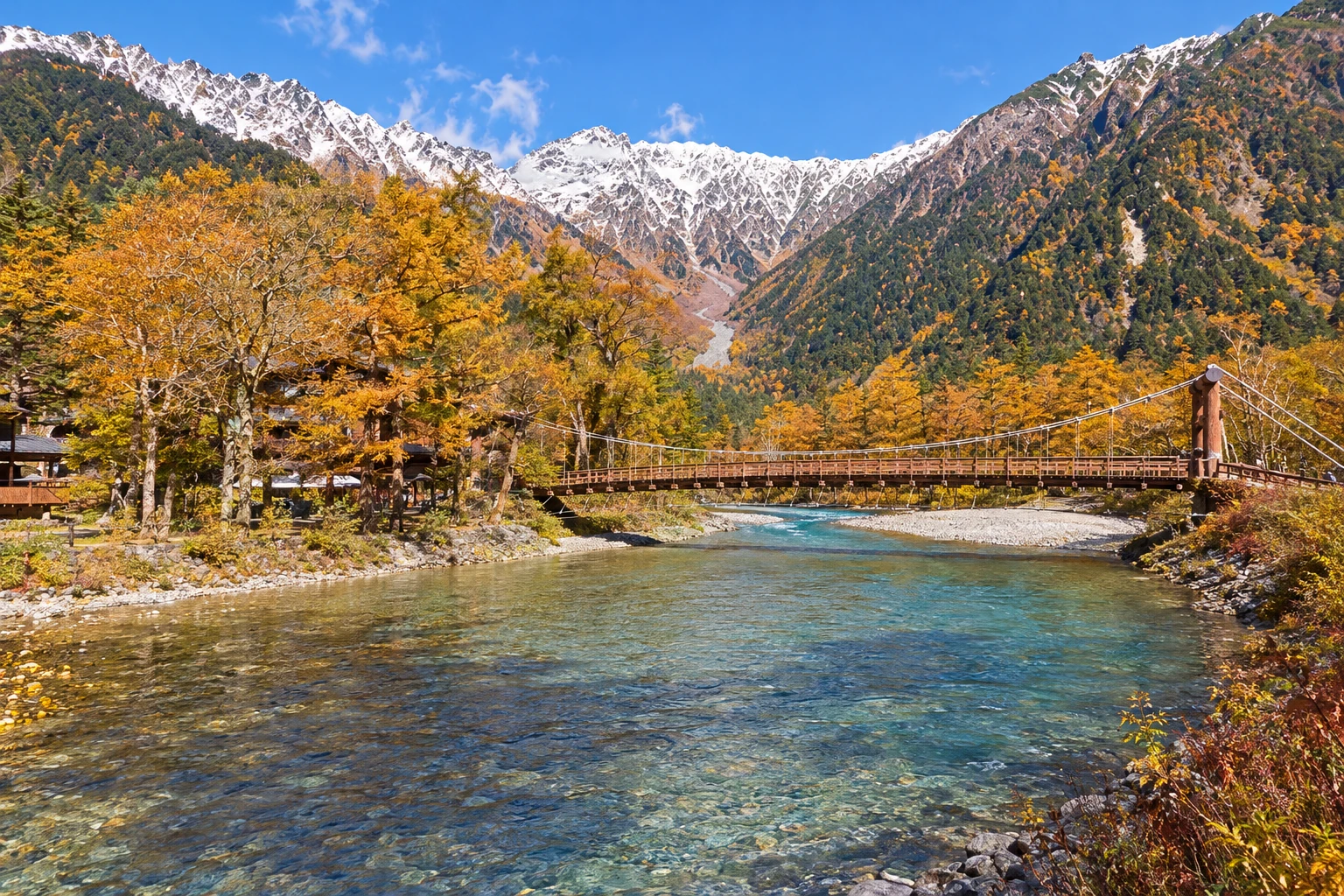
These pictures are illustrations based on the real place, not photographs. They may differ from the place.
Click the picture to enlarge it.
Discover
About Daio Wasabi Farm
The Daio wasabi farm is in Azumino, about 15 km north of Matsumoto, on a plain where meltwater from the Northern Alps springs from the ground in cold, clean springs with a stable temperature throughout the year. It is this water that allows wasabi to be cultivated, the pungent root used with sushi and soba, in gravel beds where water flows continuously.
The farm opened in the 1910s and covers about 15 hectares. The beds form long rows, covered in summer by black screens that protect the plants from the sun. Dirt paths run between them, with explanations about cultivation and harvesting, which is done by hand.
Along the clear Kurosawa River are three wooden waterwheels that appeared in Akira Kurosawa’s film “Dreams” (1990). Rubber boats run down a stretch of the river in the warm season. There are also small shrines, a spring area and restaurants and shops selling wasabi products, such as ice cream and croquettes.
The visit is calm and flat. Entrance is usually free, and boat rides and meals are paid separately. Azumino also has art museums and bike roads among the rice fields, with the Alps in the background.
Before you go
Practical information
Cidade Turismo reviews its information regularly, but something may have changed. Check with the place before planning your trip.
How much time to set aside
1–2 hours.
Best time
From April to October, when the plants are green and the river is full; boats usually operate in summer. The black screens cover the beds in the warm months. In winter the farm remains open, with less greenery.
How to get there
From Matsumoto, take the Oito Line train to Hotaka Station in about 30 minutes, then about a 40-minute walk or a few minutes by taxi or rented bicycle. By car, about 30 minutes from central Matsumoto.
Tip
Rent a bicycle at Hotaka Station and combine the farm with Azumino’s rice fields and museums. Try the wasabi ice cream; it is milder than it sounds.
Official website
Get your questions answered
Frequently asked questions about Daio Wasabi Farm
Why is wasabi grown in Azumino?
Because meltwater from the Alps springs from cold, clean sources with a stable temperature year-round, which is what wasabi needs to grow.
How do you get from Matsumoto to the Daio wasabi farm?
By train to Hotaka Station, about 30 minutes, and from there by bicycle, taxi, or on foot — about a 40-minute walk.
Is there an admission fee to enter the Daio farm?
Entrance is usually free; boats, meals, and products are paid separately.
Are the mills at the Daio farm from a film?
Yes. The wooden water mills appeared in the film “Dreams” by Akira Kurosawa (1990).
Beyond the guide


