

 Brazil
 Antarctica
 Argentina
 Bolivia
 Chile
 Colombia
 Ecuador
 Guyana
 French Guiana
 Falkland Islands (Malvinas)
 Paraguay
 Peru
 Suriname
 Uruguay
 Venezuela
 Germany
 Austria
 Belgium
 Croatia
 Denmark
 Slovakia
 Slovenia
 Spain
 Finland
 France
 Greece
 the Netherlands
 Hungary
 Ireland
 Iceland
 Italy
 Luxembourg
 Norway
 Poland
 Portugal
 the United Kingdom
 the Czech Republic
 Sweden
 Switzerland
 Turkey
 Bermuda
 Canada
 the United States
 Greenland
 Mexico
 Saint Pierre and Miquelon
 the Dominican Republic
 South Africa
 Egypt
 Australia
 Fiji
 New Zealand
 Papua New Guinea
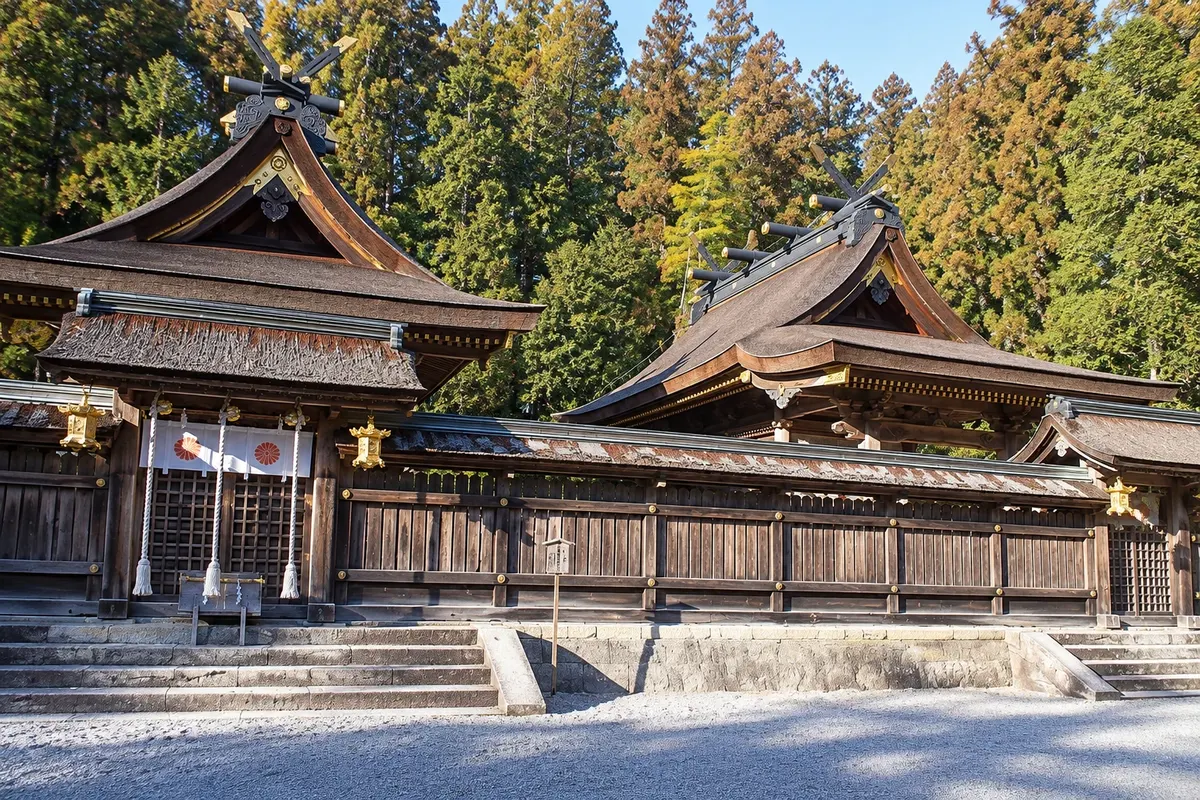
Shrine · Tanabe, Wakayama
Kumano Hongu Taisha
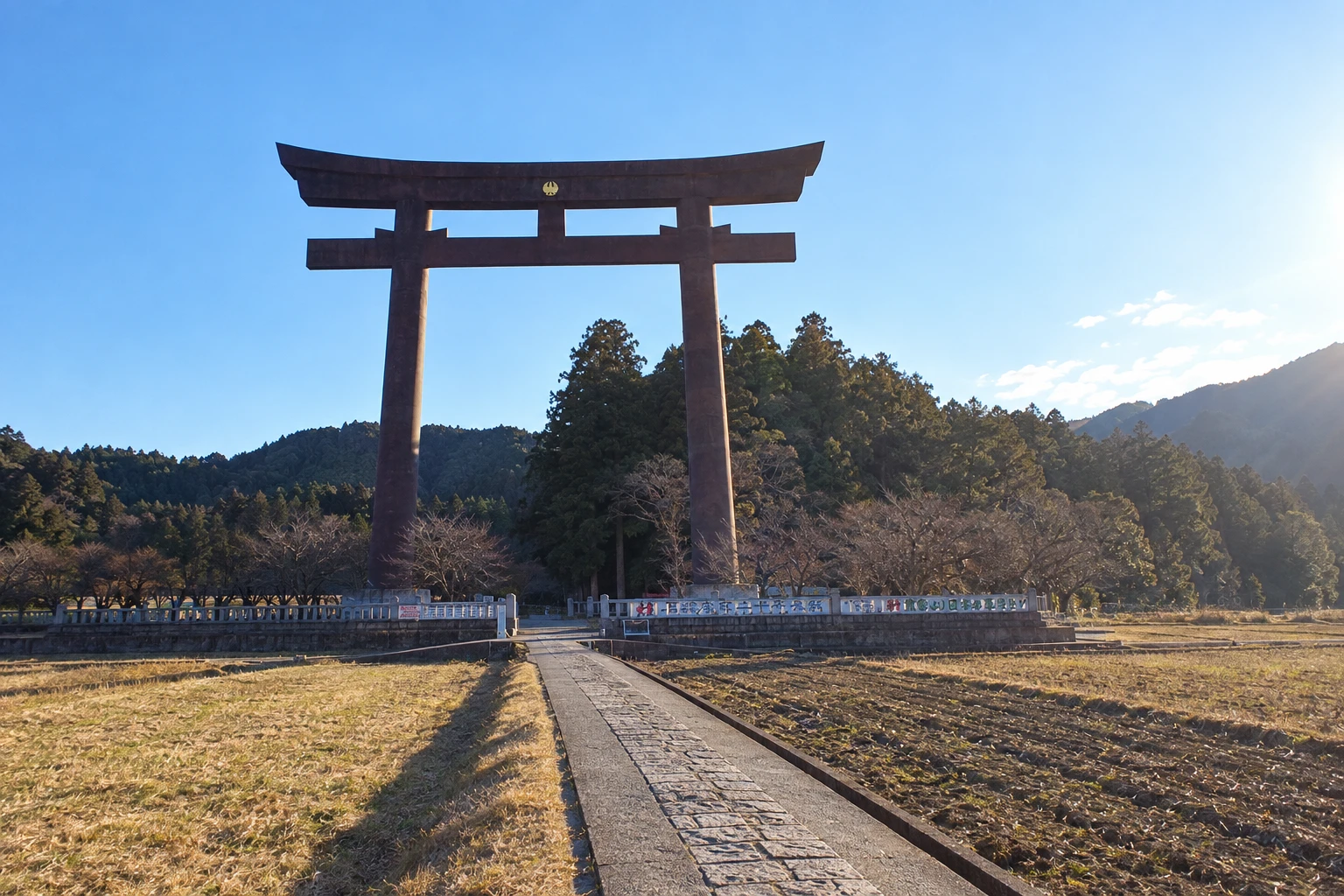
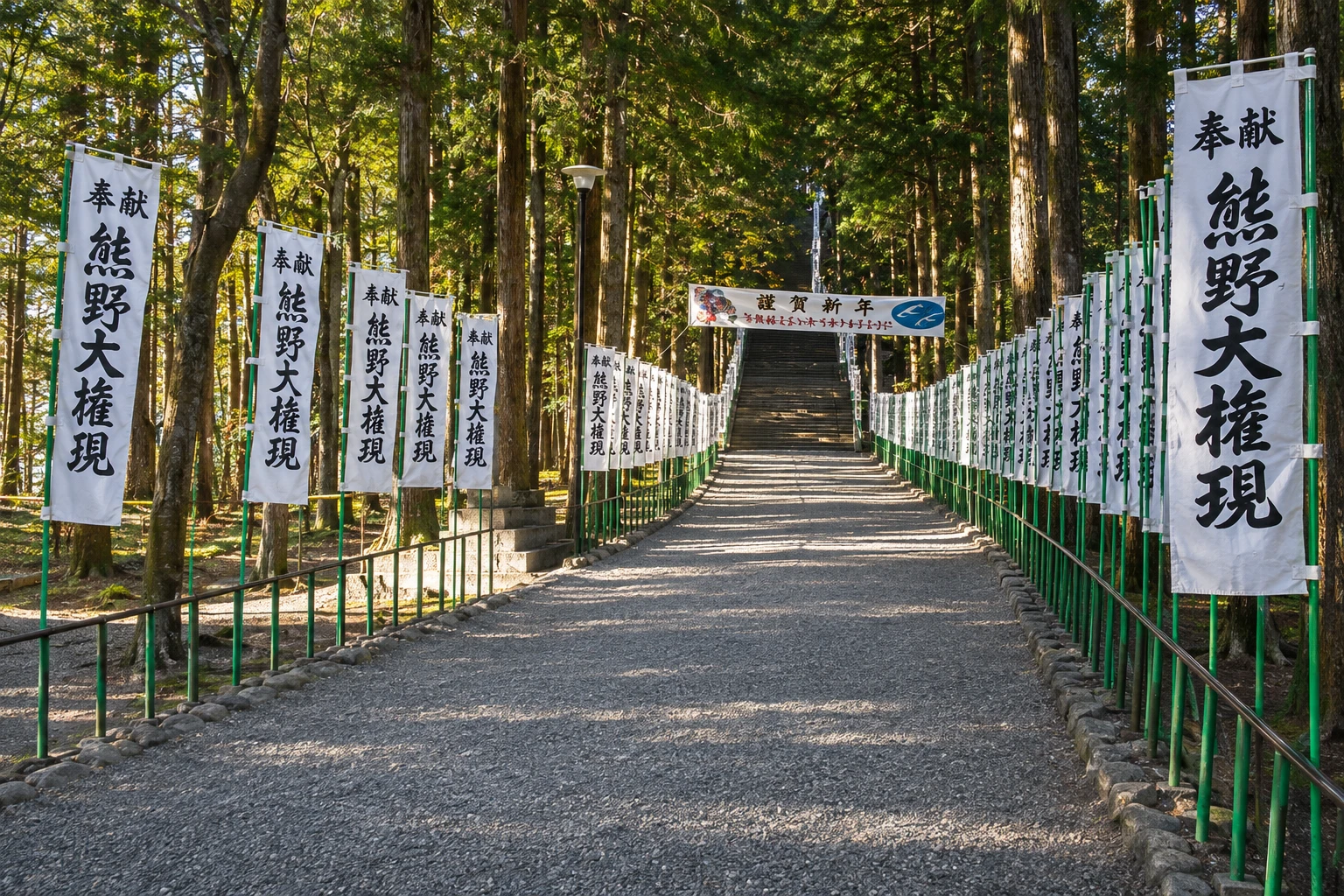
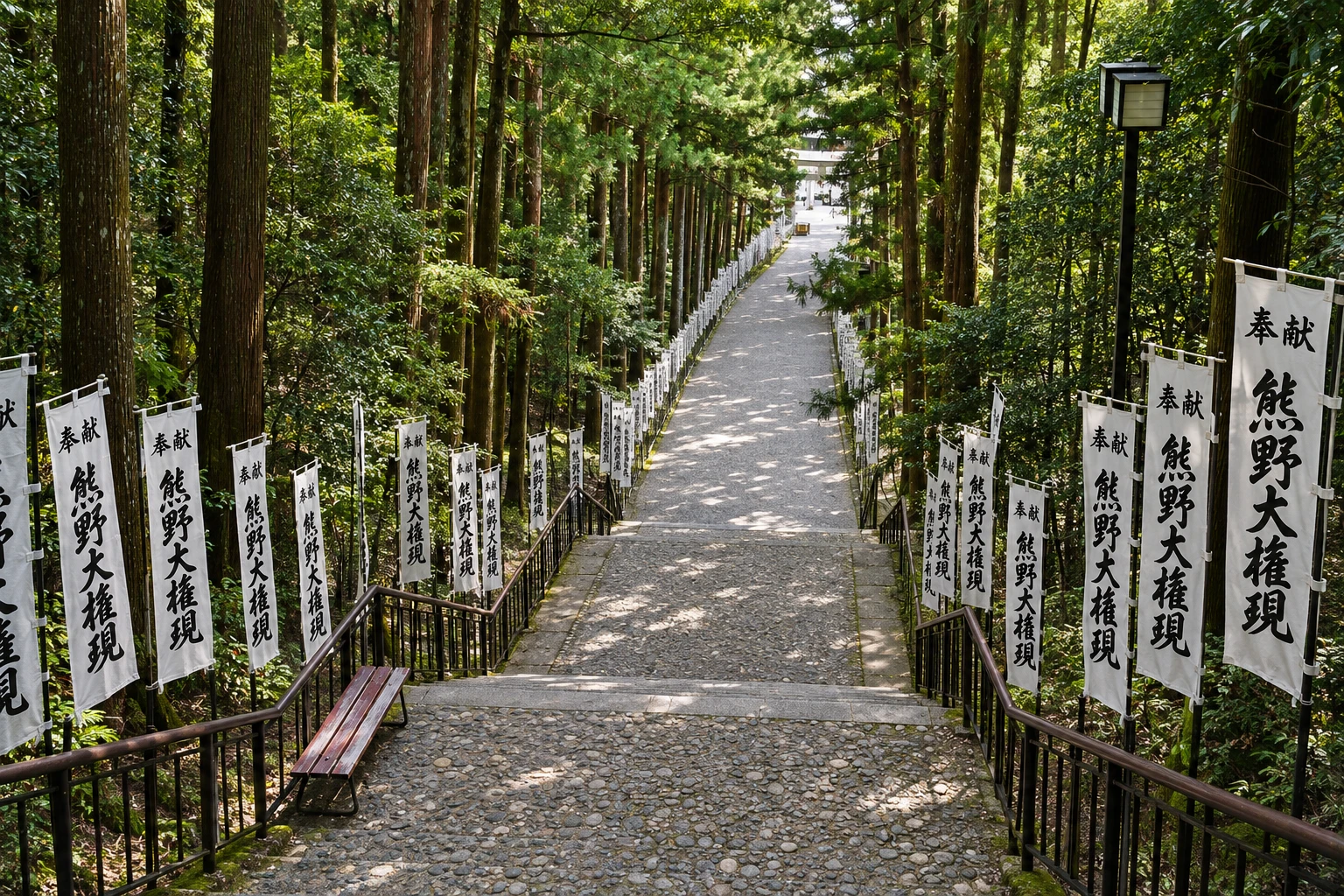
The main of the three grand Kumano shrines and the final destination of the Nakahechi, perched above a stone stairway among cedars. A few minutes away is Oyunohara, the shrine’s former site, with a torii gate about 34 meters tall.
Illustrative images. The pictures in this guide are illustrations based on the real place, not photographs, and may differ from it.

A look at the place
Kumano Hongu Taisha in pictures
These pictures are illustrations based on the real place, not photographs. They may differ from the place.
Click the picture to enlarge it.
Discover
About Kumano Hongu Taisha
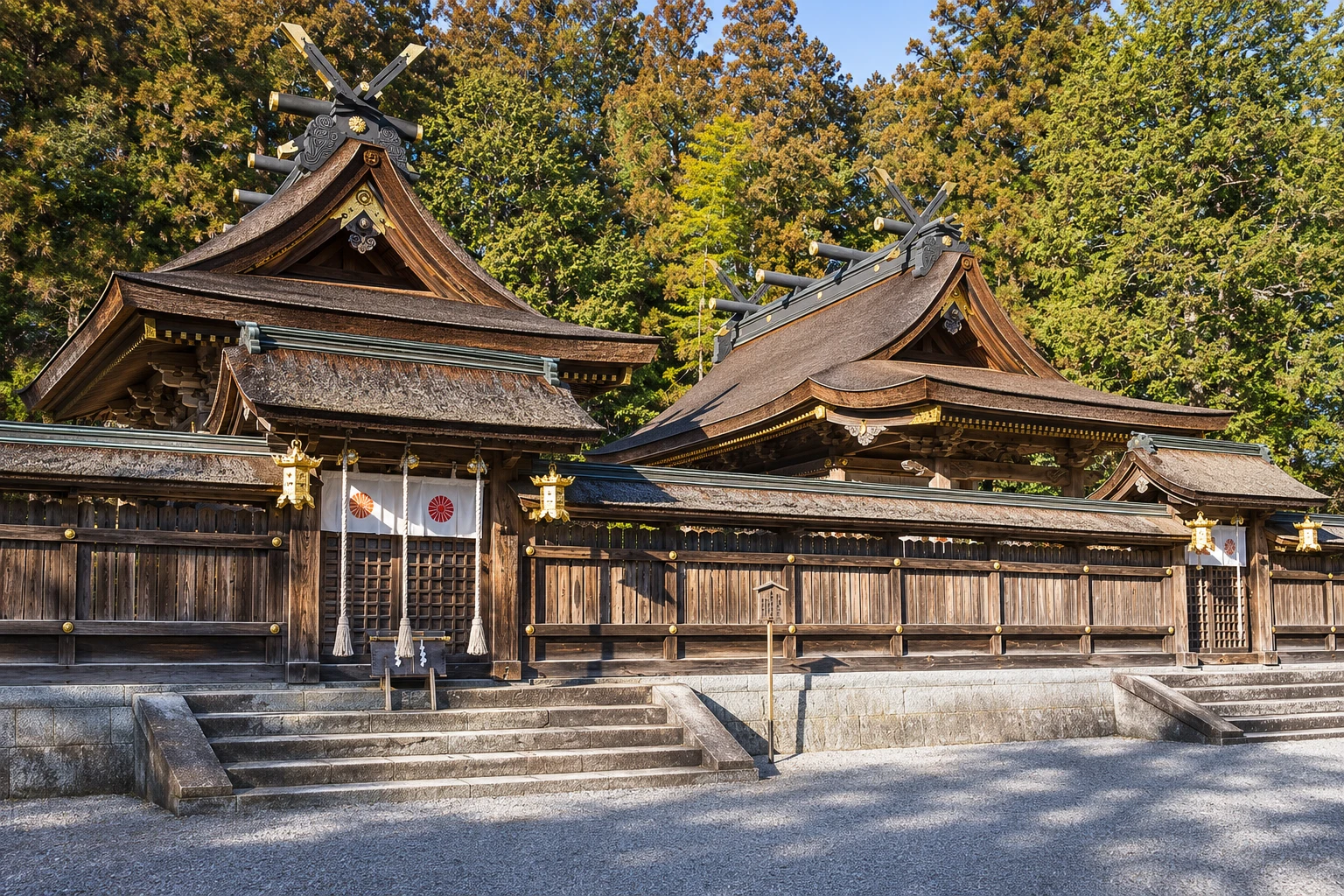
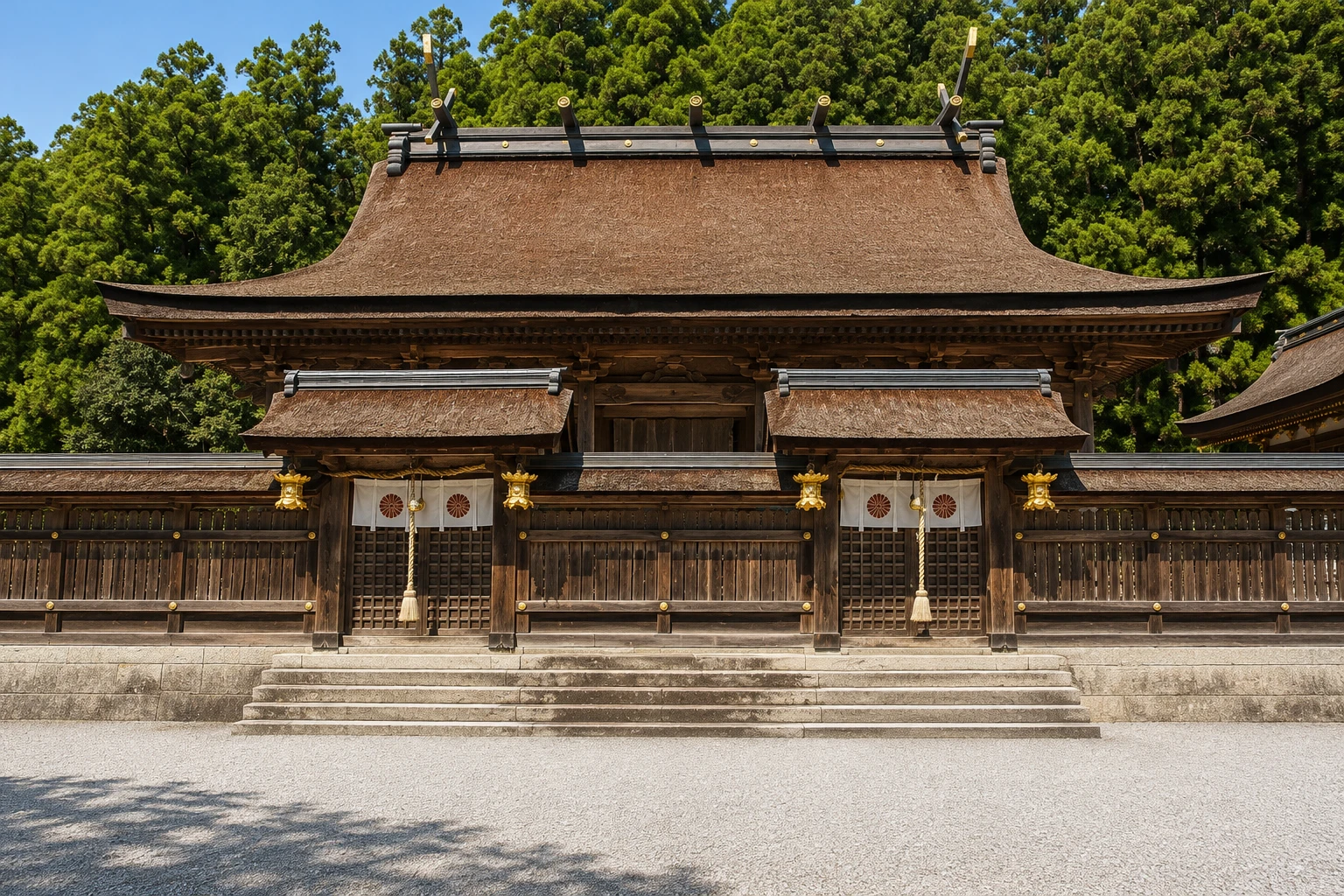
Kumano Hongu Taisha is the central shrine of Kumano worship and the arrival point of the Nakahechi trail. The dark wooden buildings, with cypress bark roofs, sit at the top of a stone staircase of 158 steps, flanked by cedars and prayer banners. The shrine’s emblem is the Yatagarasu, a three-legged crow that, according to myth, guided Japan’s first emperor through the Kumano mountains and today appears on charms and mailboxes.
Until 1889 the shrine stood at Oyunohara, a sandbank at the confluence of three rivers, about 500 meters away. A major flood destroyed part of the buildings, and the remaining structures were moved to the current, higher hill. The main buildings date from 1802.
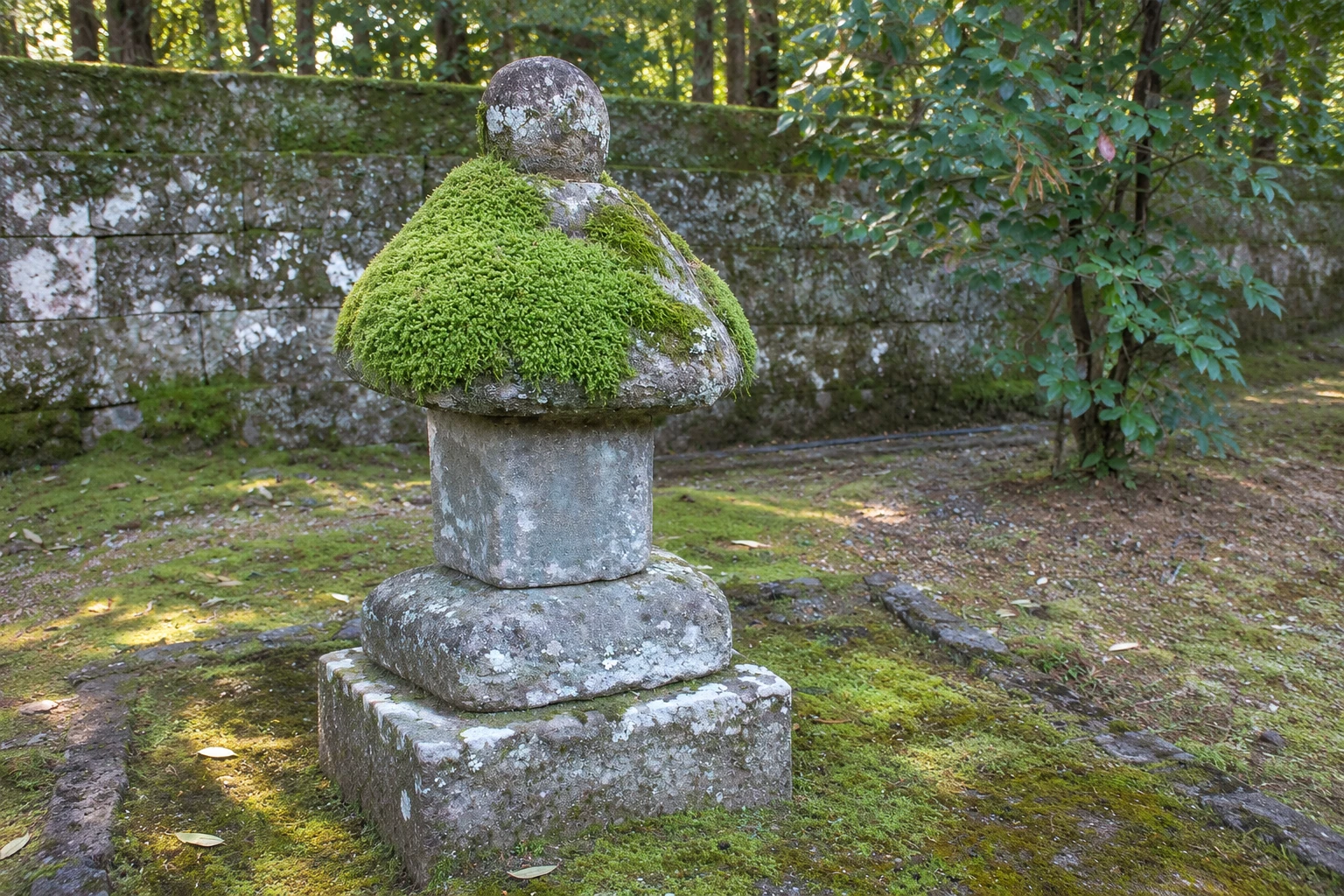
Oyunohara remains sacred and can be visited: the path runs between rice fields to a gigantic steel torii of about 34 meters, erected in 2000, and reaches a grove with two small memorial stones marking the sites of the former shrines. The view of the torii with the mountains behind is one of the region’s best-known images.
Near the shrine are the Kumano Hongu Heritage Center, with exhibits about the pilgrimage and the World Heritage designation, and small shops. The shrine is part of the Sacred Sites and Pilgrimage Routes in the Kii Mountain Range, inscribed by UNESCO in 2004.
Before you go
Practical information
Cidade Turismo reviews its information regularly, but something may have changed. Check with the place before planning your trip.
How much time to set aside
From 1 to 1h30, including Oyunohara.
Best time
Early morning, with mist over the valley, or late afternoon, when walkers arrive. Oyunohara’s cherry trees usually bloom in early April and the rice fields turn green in summer. In April the shrine’s annual festival features processions.
How to get there
It is in Hongu, in the municipality of Tanabe, about 2 hours by bus from Kii-Tanabe Station and about 1h20 by bus from Shingu. For walkers, it is the end of the Nakahechi.
Tip
Arrive on foot along the last section of the Nakahechi, from Hosshinmon-oji, to enter the shrine from above, as pilgrims do. Afterwards, descend to Oyunohara across the rice fields.
Official website
Get your questions answered
Frequently asked questions about Kumano Hongu Taisha
What is Oyunohara?
It is the ancient site of Hongu Taisha, a sandbank at the confluence of rivers, about 500 meters from the present shrine. It has a large torii gate of about 34 meters and a sacred grove.
Why is the three-legged crow a symbol of Kumano?
According to the myth, the crow Yatagarasu guided Japan’s first emperor through the mountains of Kumano. It appears on charms and the shrine’s symbols.
Is there an admission fee for Kumano Hongu Taisha?
There is no entrance fee for the shrine or Oyunohara.
How can I get to Hongu Taisha without walking the trail?
By bus from Kii-Tanabe in about 2 hours, or from Shingu in about 1 hour 20 minutes. The Hongu Taisha-mae stop is at the foot of the stairway.
Beyond the guide


