

 Brazil
 Antarctica
 Argentina
 Bolivia
 Chile
 Colombia
 Ecuador
 Guyana
 French Guiana
 Falkland Islands (Malvinas)
 Paraguay
 Peru
 Suriname
 Uruguay
 Venezuela
 Germany
 Austria
 Belgium
 Croatia
 Denmark
 Slovakia
 Slovenia
 Spain
 Finland
 France
 Greece
 the Netherlands
 Hungary
 Ireland
 Iceland
 Italy
 Luxembourg
 Norway
 Poland
 Portugal
 the United Kingdom
 the Czech Republic
 Sweden
 Switzerland
 Turkey
 Bermuda
 Canada
 the United States
 Greenland
 Mexico
 Saint Pierre and Miquelon
 the Dominican Republic
 South Africa
 Egypt
 Australia
 Fiji
 New Zealand
 Papua New Guinea
Monument · Hiroshima, Hiroshima
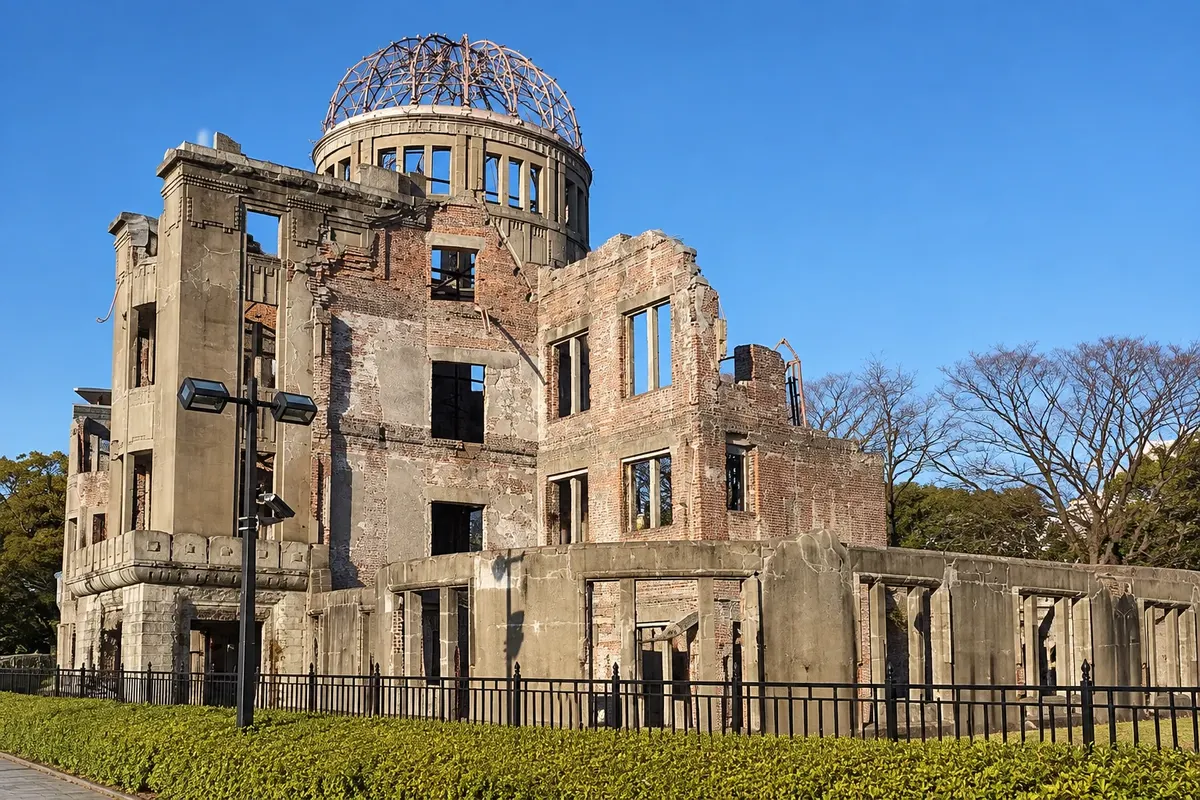
Atomic Bomb Dome
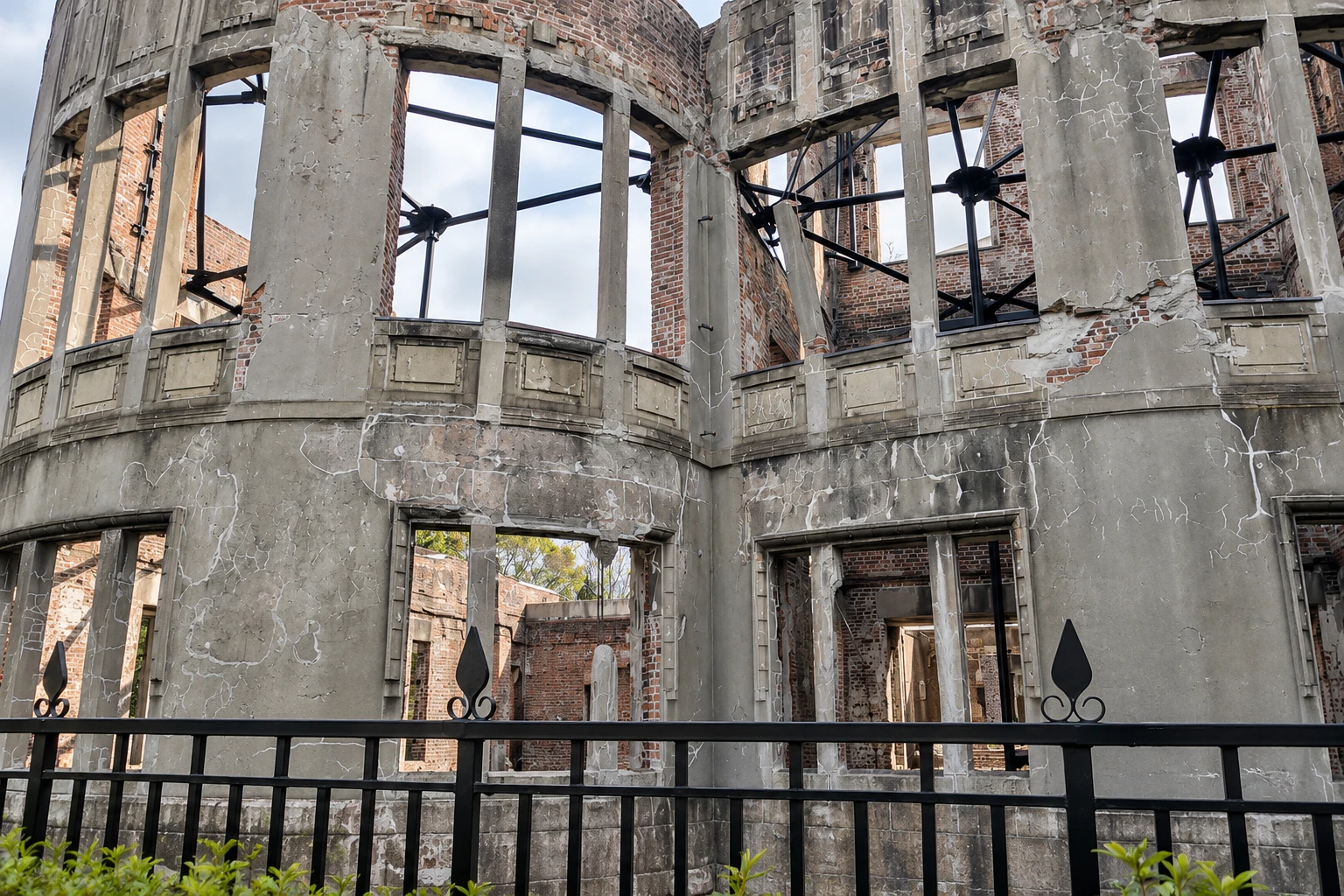
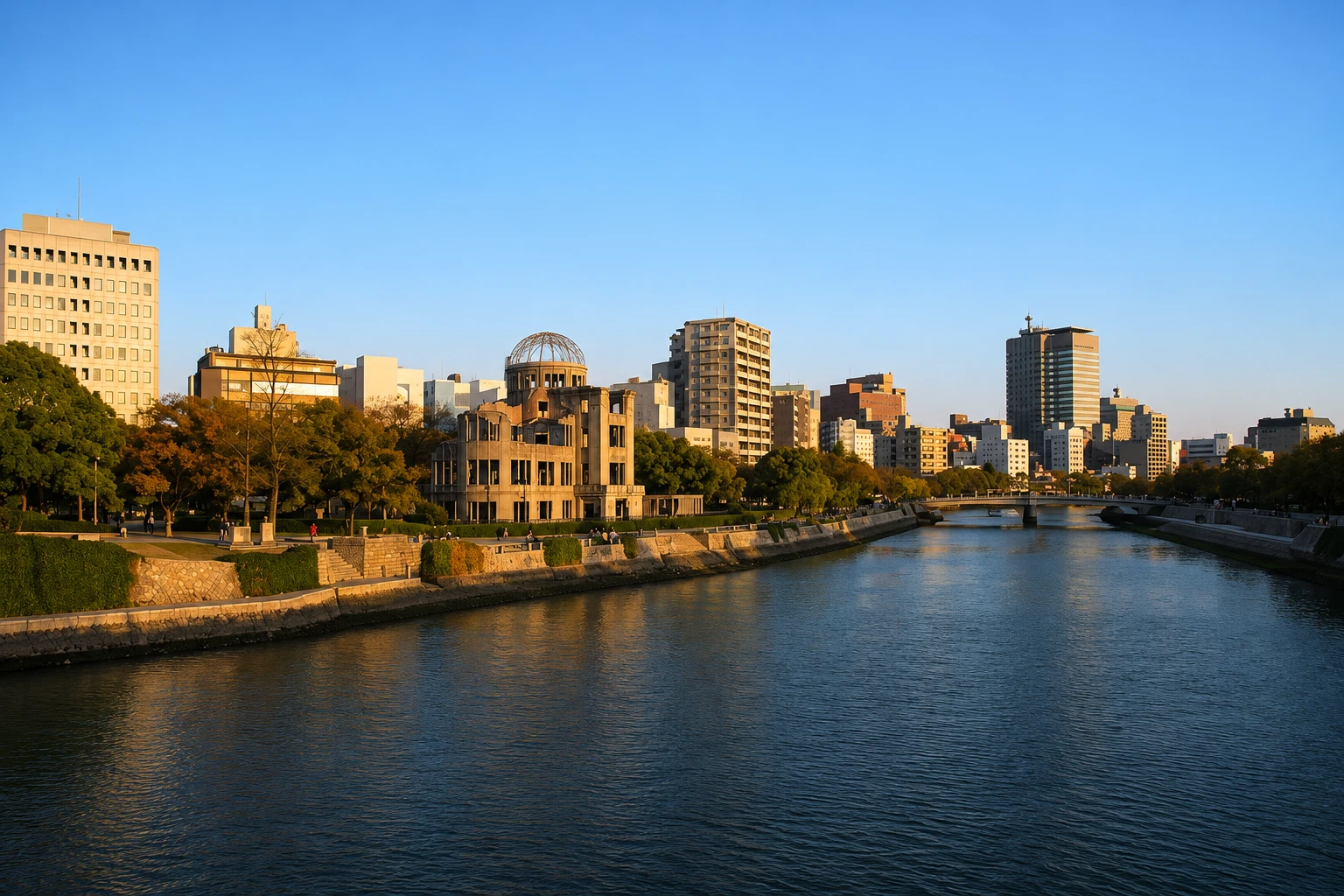
The ruin of the former Prefectural Industrial Promotion Hall, which stood near the hypocenter of the 1945 bomb and remained standing; World Heritage Site.
Illustrative images. The pictures in this guide are illustrations based on the real place, not photographs, and may differ from it.

A look at the place
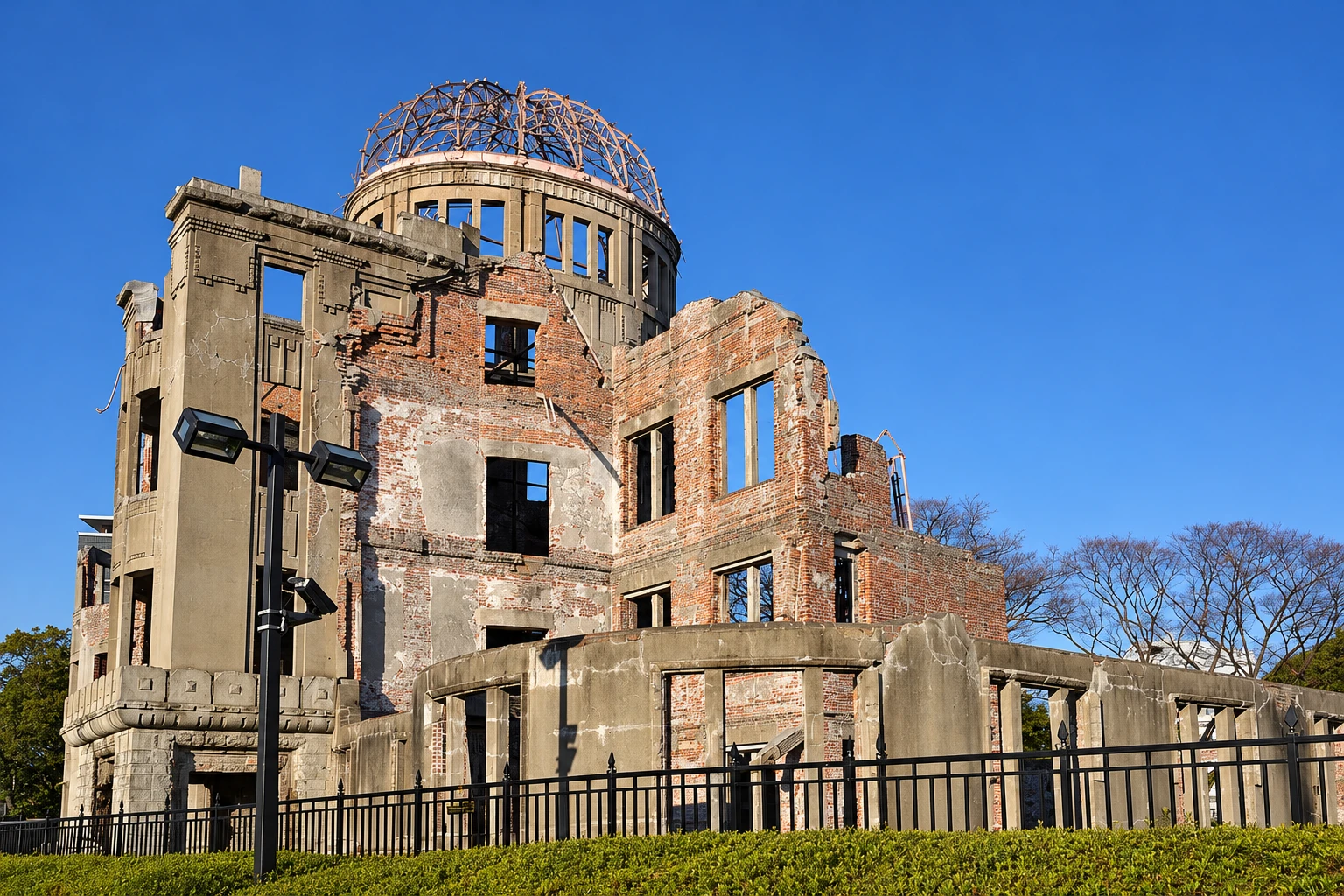
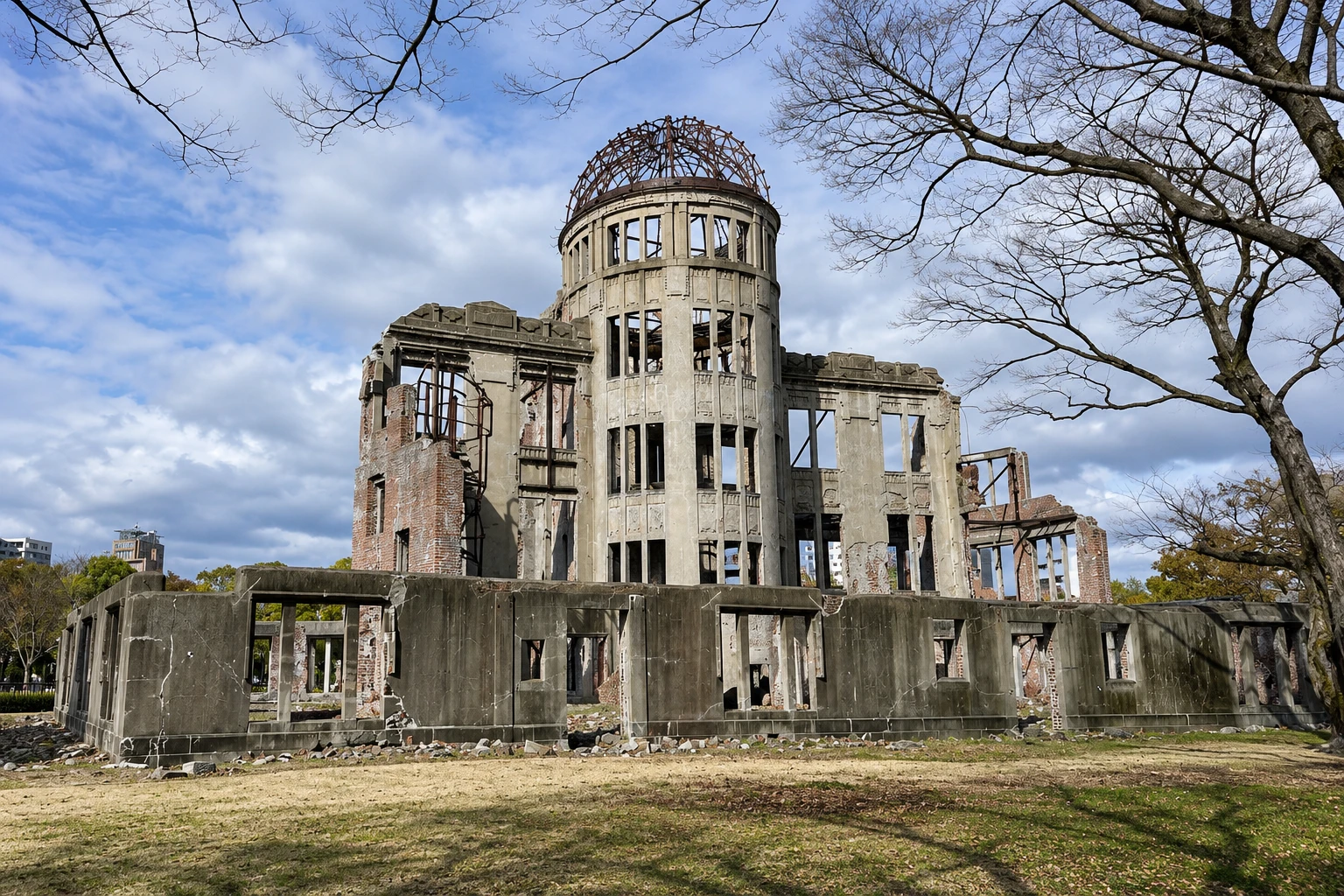
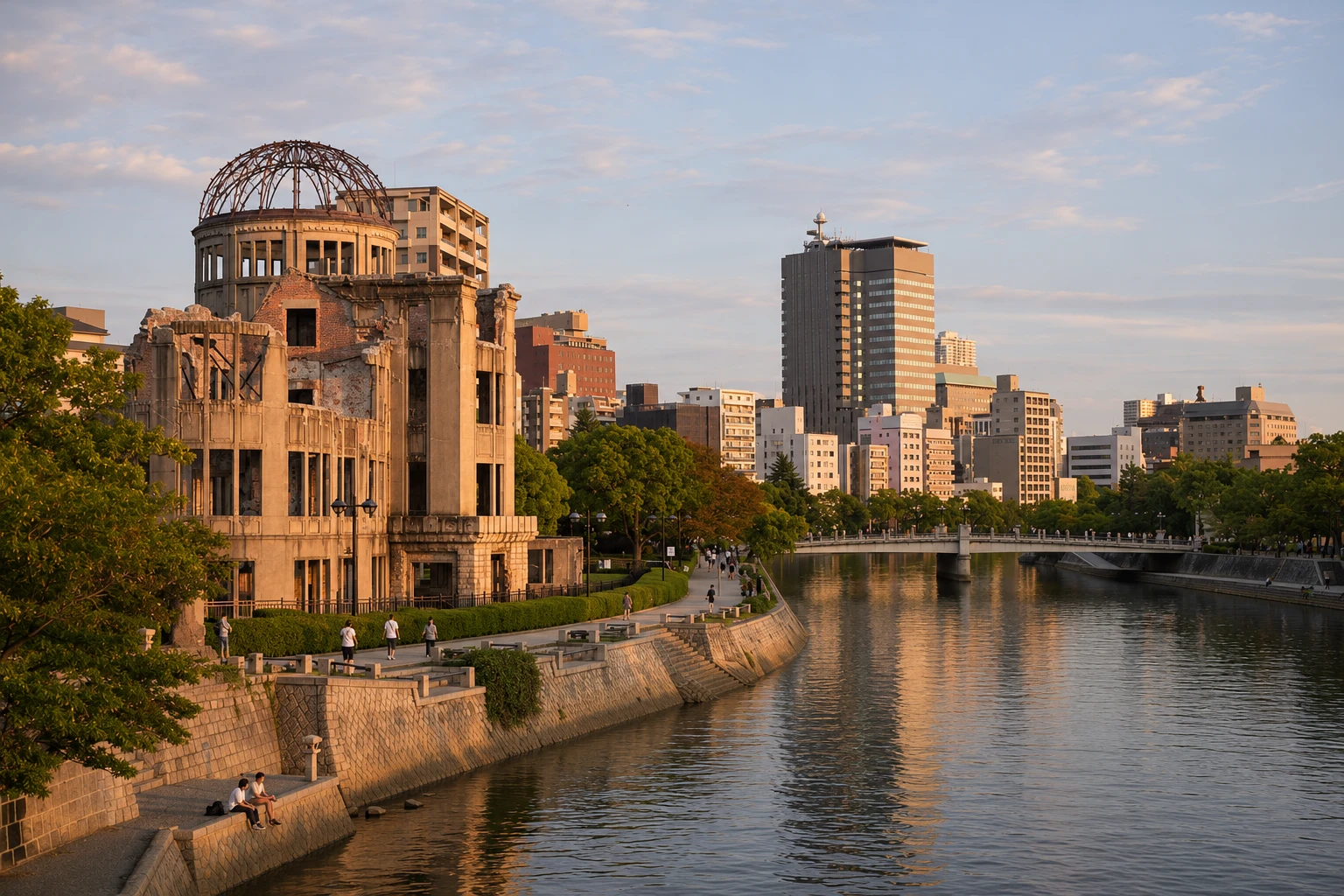
Atomic Bomb Dome in pictures
These pictures are illustrations based on the real place, not photographs. They may differ from the place.
Click the picture to enlarge it.

Discover
About Atomic Bomb Dome
The Atomic Bomb Dome (Genbaku Dome) is the ruin of the former Hiroshima Prefectural Industrial Promotion Hall, a brick-and-concrete building with a copper dome, designed by Czech architect Jan Letzel and completed in 1915. It stood on the banks of the Motoyasu River, beside the Aioi Bridge, and hosted exhibitions of regional products.
On the morning of August 6, 1945, the bomb detonated in the air at about 600 meters above ground, almost directly above the building. The blast came from above, the central walls remained standing and the steel skeleton of the dome survived, while almost all the surrounding buildings were destroyed. Everyone who was inside died.
After the war, opinions were divided about the ruin: part of the city wanted it demolished. In 1966, the prefectural government decided to preserve it as it was, and it has undergone periodic reinforcement work since. In 1996 it was inscribed as a UNESCO World Heritage Site, as a symbol of the destruction caused by the bomb and of the effort for peace.
The interior is closed, and the Dome is viewed from the outside, from the sidewalks and the riverside park, with explanatory plaques. The T-shaped Aioi Bridge next to it is believed to have been the aiming point of the attack. At night the ruin is illuminated, and its reflection in the river can be seen from the Peace Memorial Park on the opposite bank.
Before you go
Practical information
Cidade Turismo reviews its information regularly, but something may have changed. Check with the place before planning your trip.
How much time to set aside
20 to 30 minutes to walk around and see it from the other side of the river.
Best time
By day, to read the plaques and see the details; at night, for the illumination and the reflection in the river. The surroundings are open at any hour.
How to get there
The Genbaku Dome-mae tram stop is in front of the ruin. If you are already at the museum you can walk there, crossing the park and the Motoyasu Bridge in about 10 minutes.
Tip
See the Dome up close and then cross the Motoyasu Bridge to view it from the park with the river in the foreground. The boat to Miyajima departs from a pier nearby, in the Peace Park area.
Get your questions answered
Frequently asked questions about Atomic Bomb Dome
Can you enter the Atomic Bomb Dome?
No. The interior is closed, and the ruin is viewed from the outside, from the sidewalks and the riverside park.
What was the Atomic Bomb Dome before 1945?
It was the Hiroshima Prefectural Industrial Promotion Hall, an exhibition building completed in 1915, designed by Czech architect Jan Letzel.
Why did the Dome remain standing?
The bomb exploded in the air, almost directly above the building. The shockwave came from above, and parts of the walls and the dome’s skeleton held.
How do you get to the Atomic Bomb Dome?
By tram to Genbaku Dome-mae, about 15 minutes from Hiroshima Station.
When did the Dome become a World Heritage Site?
In 1996, inscribed by UNESCO as the Hiroshima Peace Memorial.
Beyond the guide


