

 Brazil
 Antarctica
 Argentina
 Bolivia
 Chile
 Colombia
 Ecuador
 Guyana
 French Guiana
 Falkland Islands (Malvinas)
 Paraguay
 Peru
 Suriname
 Uruguay
 Venezuela
 Germany
 Austria
 Belgium
 Croatia
 Denmark
 Slovakia
 Slovenia
 Spain
 Finland
 France
 Greece
 the Netherlands
 Hungary
 Ireland
 Iceland
 Italy
 Luxembourg
 Norway
 Poland
 Portugal
 the United Kingdom
 the Czech Republic
 Sweden
 Switzerland
 Turkey
 Bermuda
 Canada
 the United States
 Greenland
 Mexico
 Saint Pierre and Miquelon
 the Dominican Republic
 South Africa
 Egypt
 Australia
 Fiji
 New Zealand
 Papua New Guinea
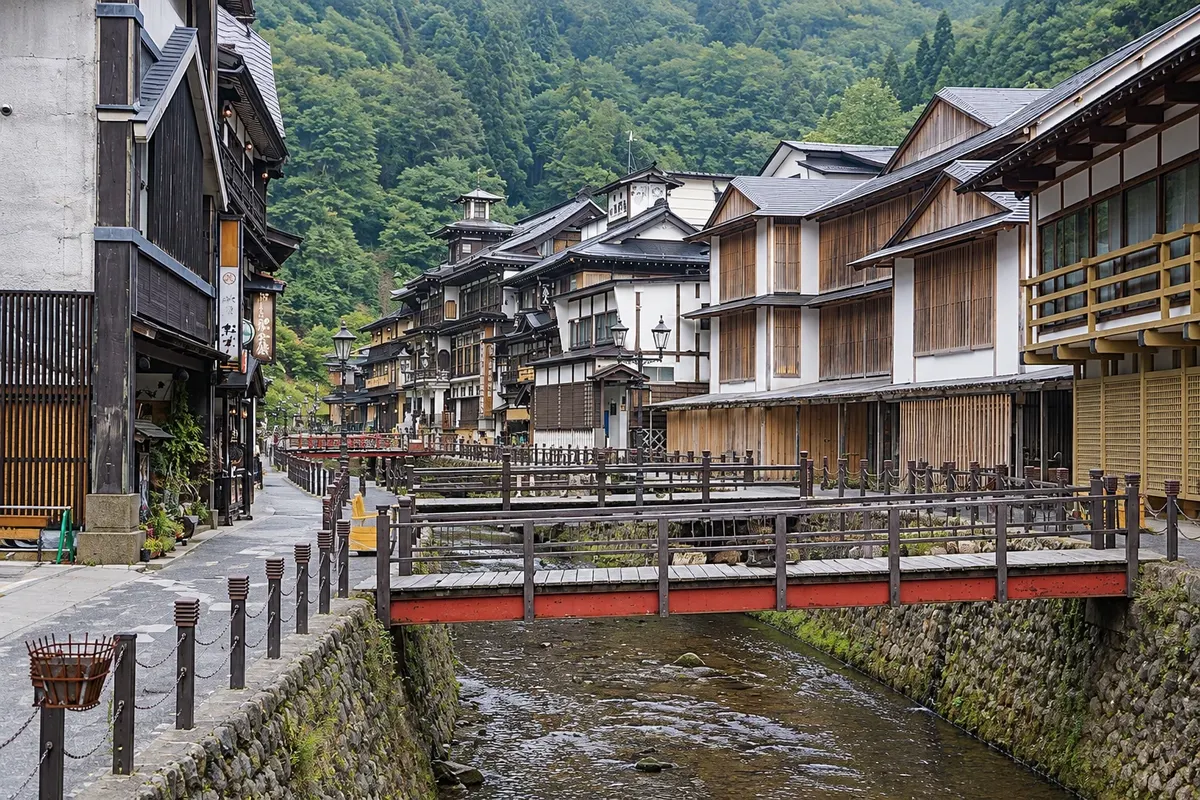
Hot spring · Obanazawa, Yamagata
Ginzan Onsen
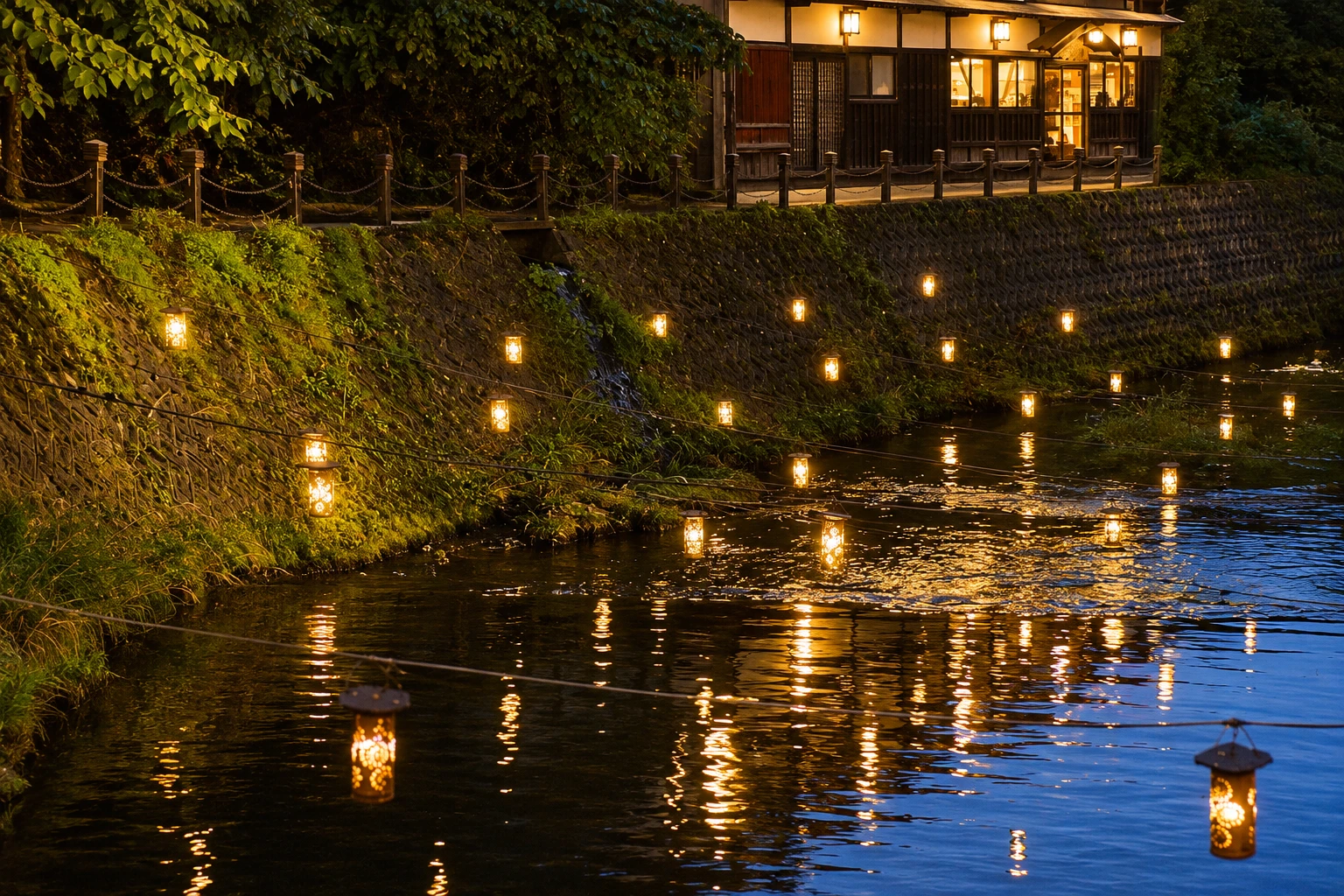
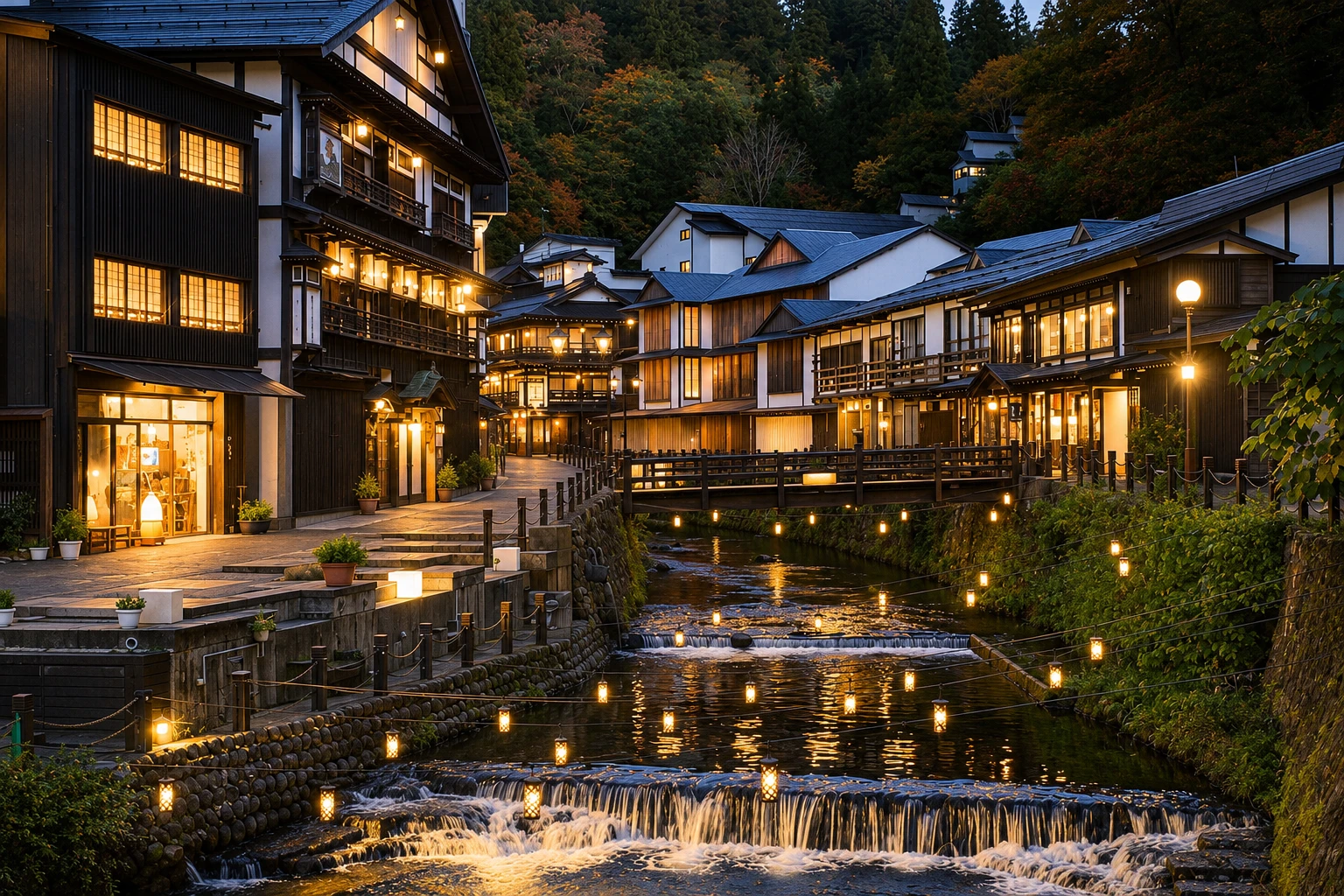
A hot-spring village in a narrow valley, with three- and four-story wooden ryokan from the 1910s and 1920s lining both sides of the Ginzan River, short bridges, gas lanterns at night and heavy snow in winter.
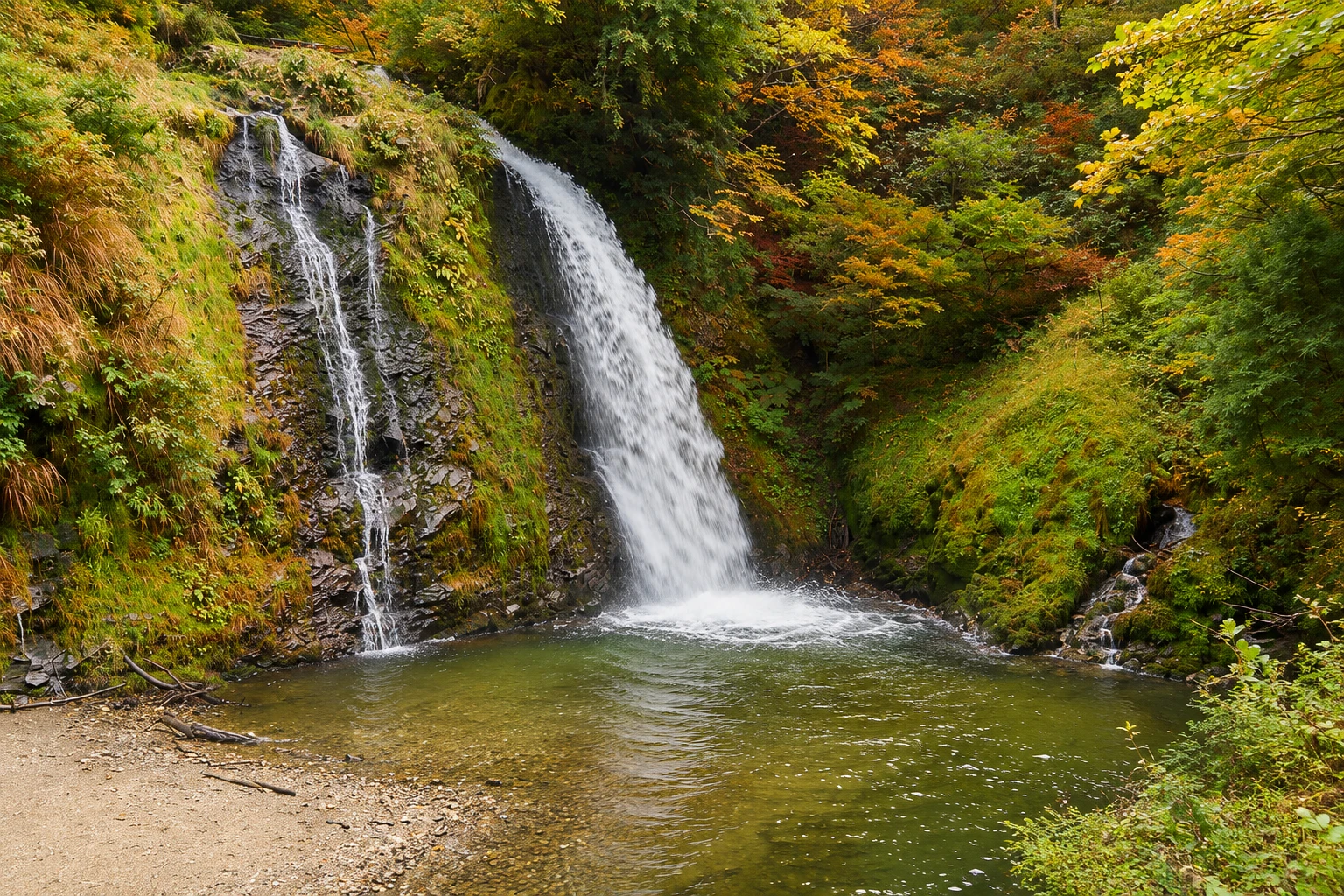
Illustrative images. The pictures in this guide are illustrations based on the real place, not photographs, and may differ from it.

A look at the place
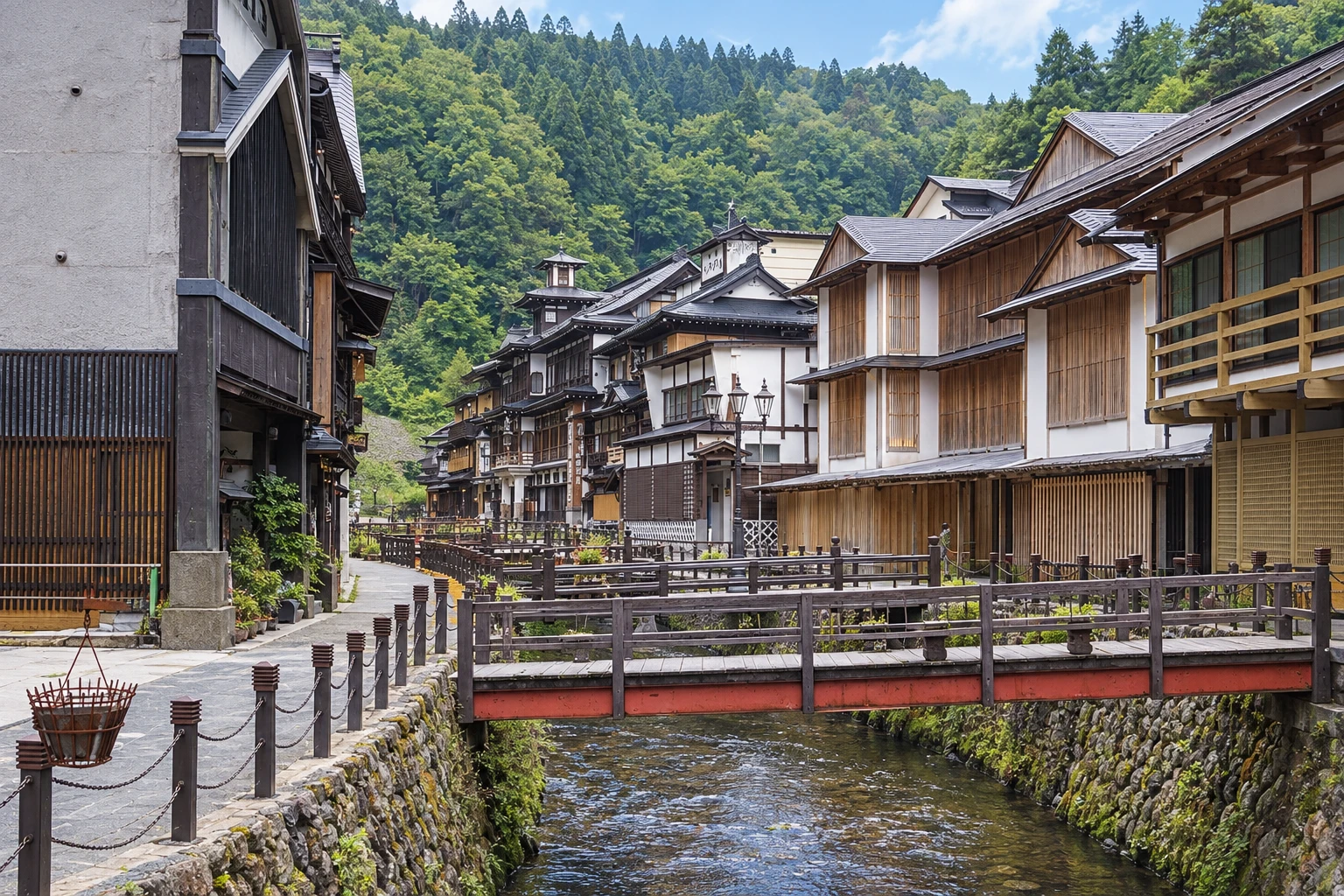
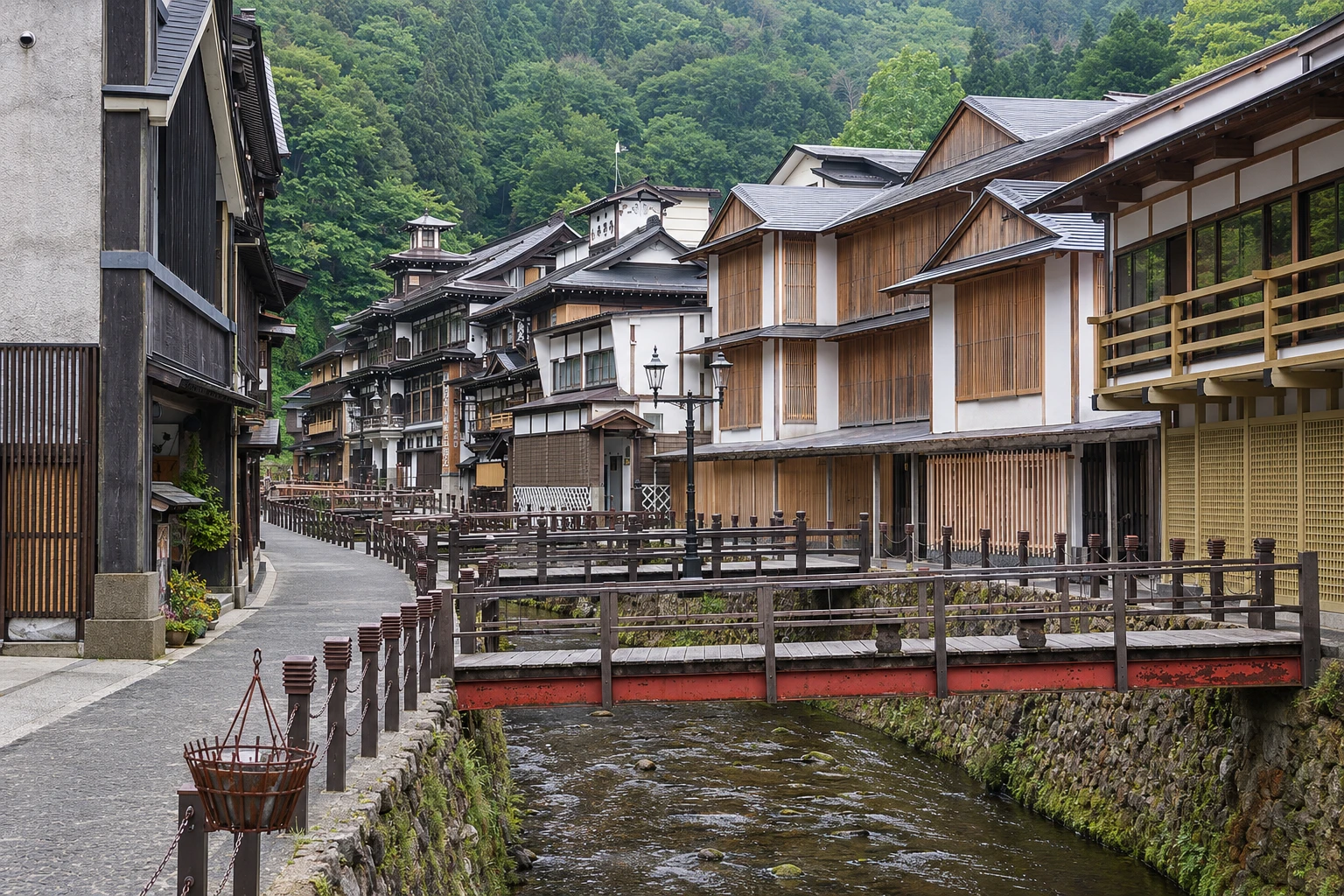
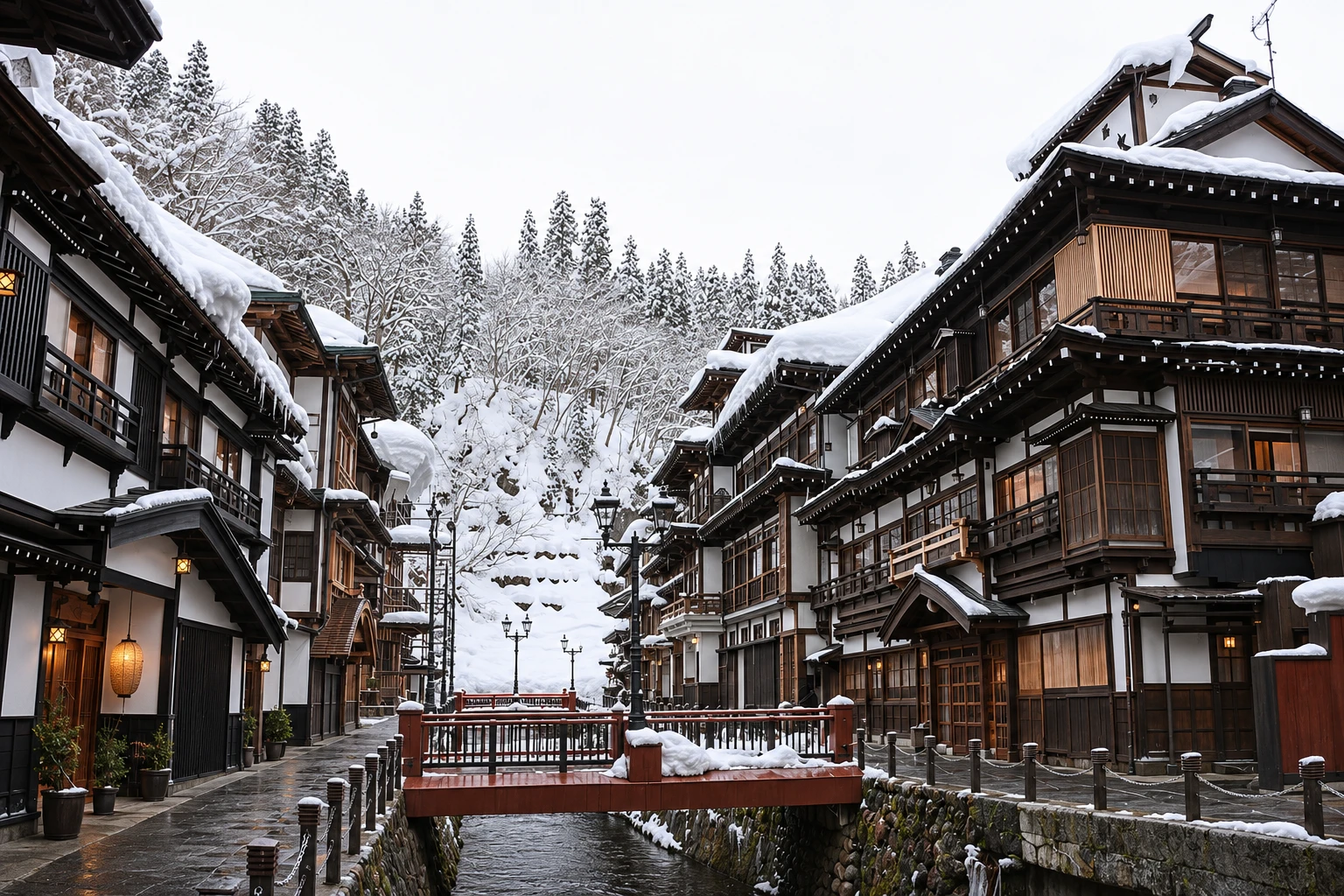
Ginzan Onsen in pictures
These pictures are illustrations based on the real place, not photographs. They may differ from the place.
Click the picture to enlarge it.
Discover
About Ginzan Onsen
Ginzan Onsen is a small hot-spring village in the Ginzan River valley, in the municipality of Obanazawa, about 15 km from the city center. The name, “silver-mine hot springs,” comes from the Nobesawa mine, which operated high in the valley between the 15th and 17th centuries. When the mine ran out, the hot springs the miners used began to attract visitors seeking cures.
A flood in the early 20th century destroyed much of the village, and the inns were rebuilt in the 1910s and 1920s, at the end of the Taisho era and the start of the Showa era. They are three- and four-story wooden buildings with verandas, thin-framed glass windows, white plaster walls and, in some cases, decorative plaster reliefs made by local artisans. They line a pedestrian street about 300 meters long on both sides of the river.
The street is pedestrian-only and has public foot baths, small shops and two public bathhouses, one in a contemporary wooden-and-glass building. At dusk the gas lanterns are lit and the ryokan windows glow — the view that made the village famous. In winter, snow piles on roofs and bridges.
At the end of the street, Shirogane Falls drops about 22 meters and marks the start of the trail up to the old mine. The village is small and attracts many daytime visitors; therefore, in recent winters it has adopted rules for cars and early-evening visits. Staying overnight in one of the few ryokan is the most peaceful way to experience it.
Before you go
Practical information
Cidade Turismo reviews its information regularly, but something may have changed. Check with the place before planning your trip.
How much time to set aside
About an hour to walk the street and reach Shirogane Falls; one night to see the village by lantern light and enjoy the baths.
Best time
From December to February, when snow and lit gas lanterns make the village most atmospheric, though it’s busier and may have access rules. In spring and summer the valley is green and calm; October brings autumn colors. Confirm seasonal rules before you go.
How to get there
From Oishida Station on the Tsubasa shinkansen, buses reach Ginzan Onsen in about 40 minutes; from the terminal the street is a few minutes on foot. Visitor cars do not enter the street, and in winter they may be stopped before the village, with parking and shuttle buses provided.
Tip
Book a ryokan well in advance for winter. If you visit by day, arrive early and walk to Shirogane Falls, where there are fewer people. Wear slip-resistant footwear for snow.
Official website
Get your questions answered
Frequently asked questions about Ginzan Onsen
Why is Ginzan Onsen so well known?
For its three- and four-story wooden ryokan from the 1910s and 1920s, lined along both sides of the river, which are lit by gas lanterns at night and, in winter, covered in snow.
How long should you stay in Ginzan Onsen?
One hour is enough for the street and the waterfall; one night is ideal to see the village illuminated and avoid the daytime crowds.
Does Ginzan Onsen have a public bath?
Yes — two public bathhouses and foot baths along the street, plus the ryokan baths. Check opening hours.
Does Ginzan Onsen have visitor rules in winter?
Yes. In recent winters there have been controls on cars and early-evening visitors, with rules that change each season; consult the village website before you go.
Beyond the guide


