

 Brazil
 Antarctica
 Argentina
 Bolivia
 Chile
 Colombia
 Ecuador
 Guyana
 French Guiana
 Falkland Islands (Malvinas)
 Paraguay
 Peru
 Suriname
 Uruguay
 Venezuela
 Germany
 Austria
 Belgium
 Croatia
 Denmark
 Slovakia
 Slovenia
 Spain
 Finland
 France
 Greece
 the Netherlands
 Hungary
 Ireland
 Iceland
 Italy
 Luxembourg
 Norway
 Poland
 Portugal
 the United Kingdom
 the Czech Republic
 Sweden
 Switzerland
 Turkey
 Bermuda
 Canada
 the United States
 Greenland
 Mexico
 Saint Pierre and Miquelon
 the Dominican Republic
 South Africa
 Egypt
 Australia
 Fiji
 New Zealand
 Papua New Guinea
Hot-spring village · Beppu, Oita
Myoban Onsen
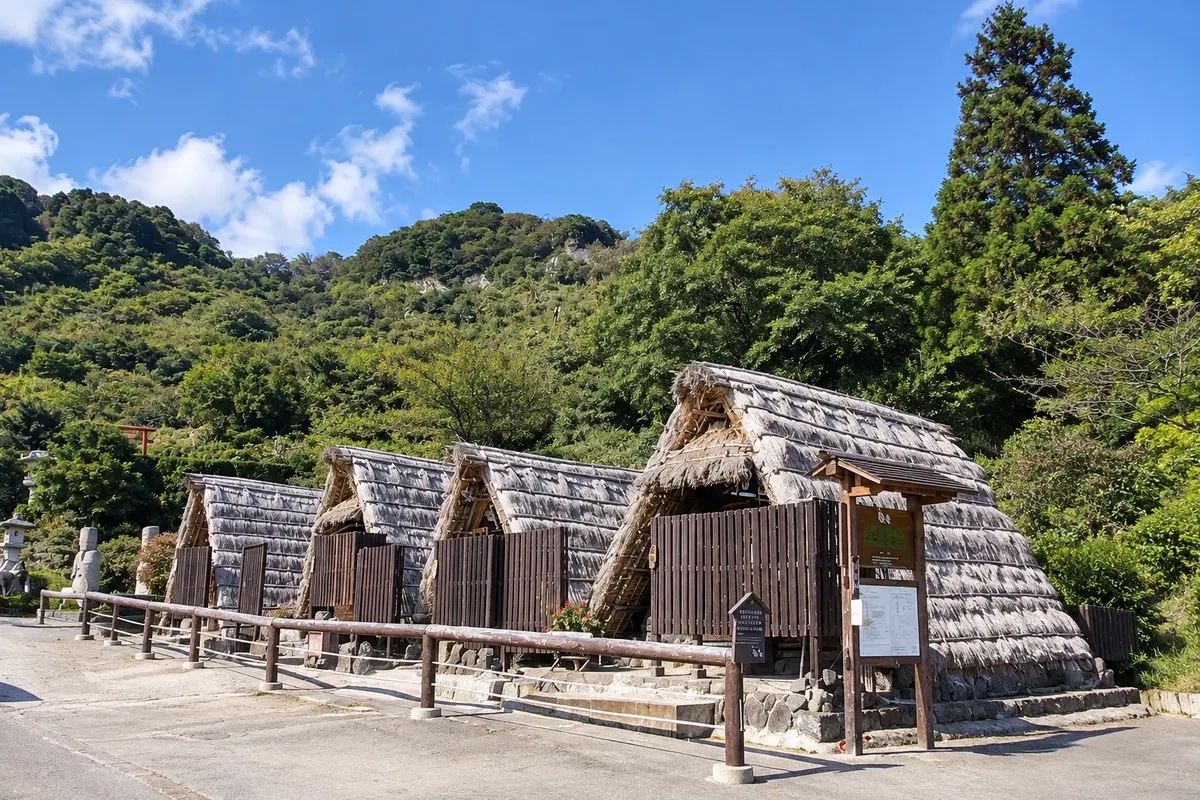
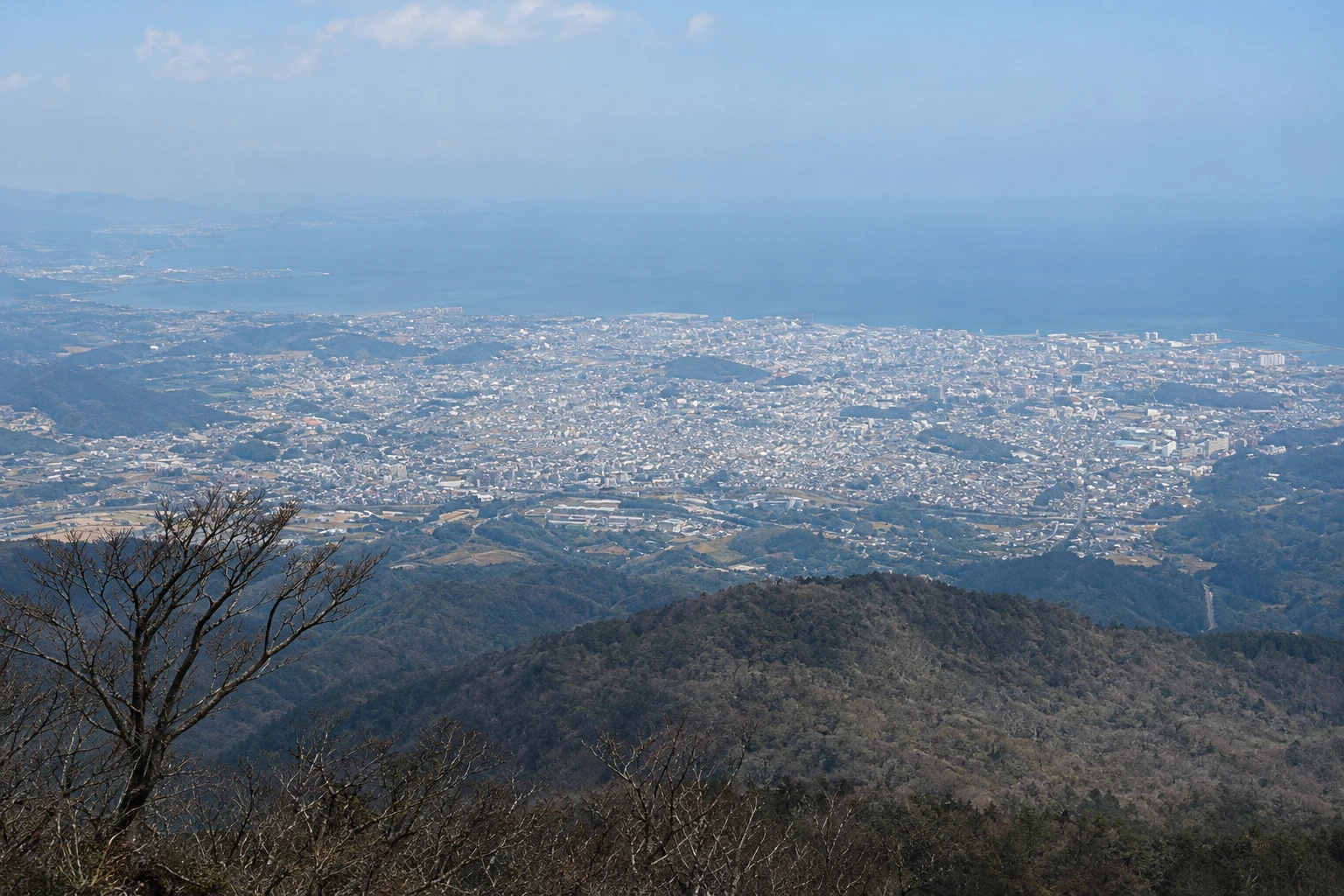
A thermal area on the slope above Kannawa with straw huts where yunohana crystallizes, milky waters and views over Beppu Bay.
Illustrative images. The pictures in this guide are illustrations based on the real place, not photographs, and may differ from it.

A look at the place
Myoban Onsen in pictures
These pictures are illustrations based on the real place, not photographs. They may differ from the place.
Click the picture to enlarge it.
Discover
About Myoban Onsen
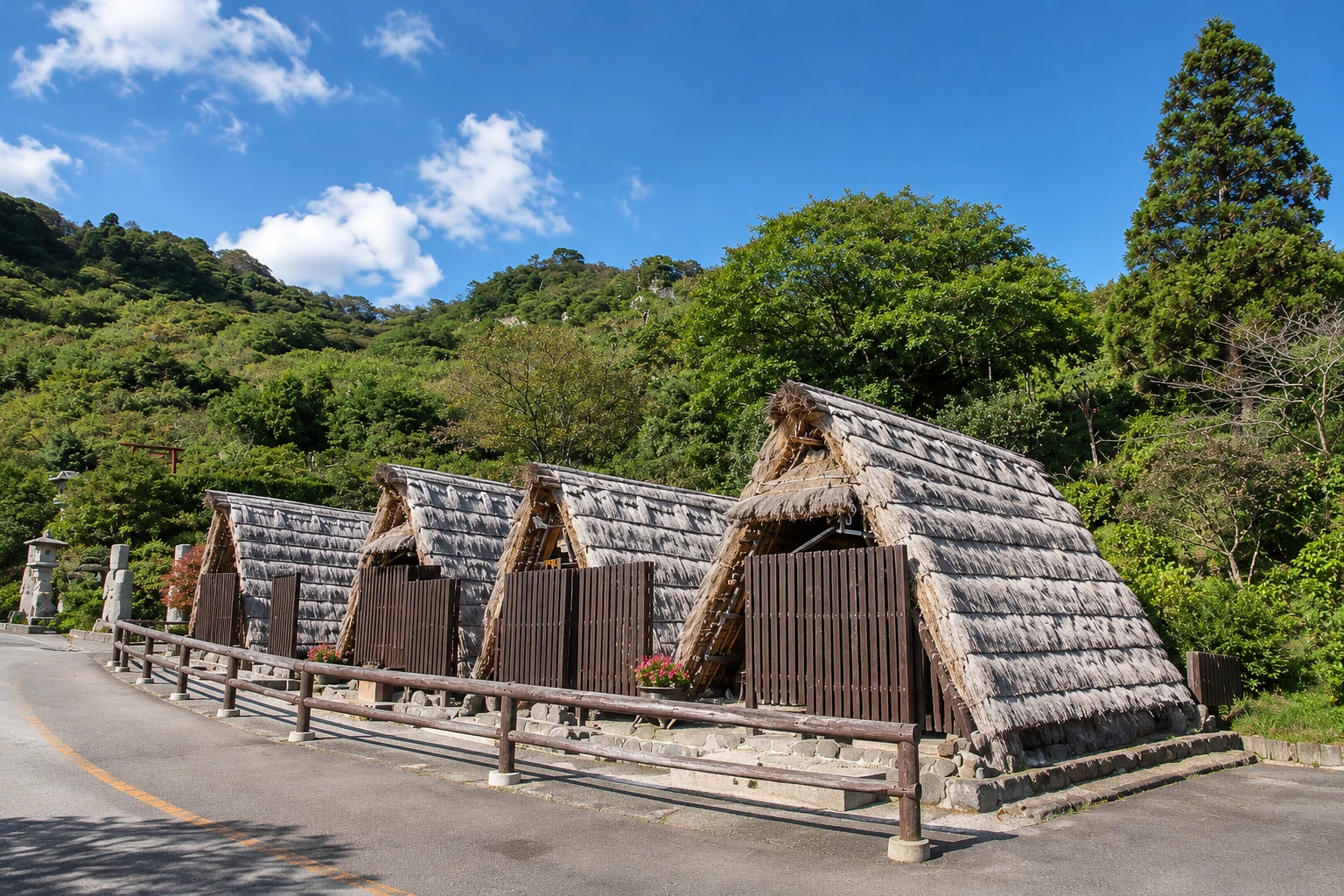
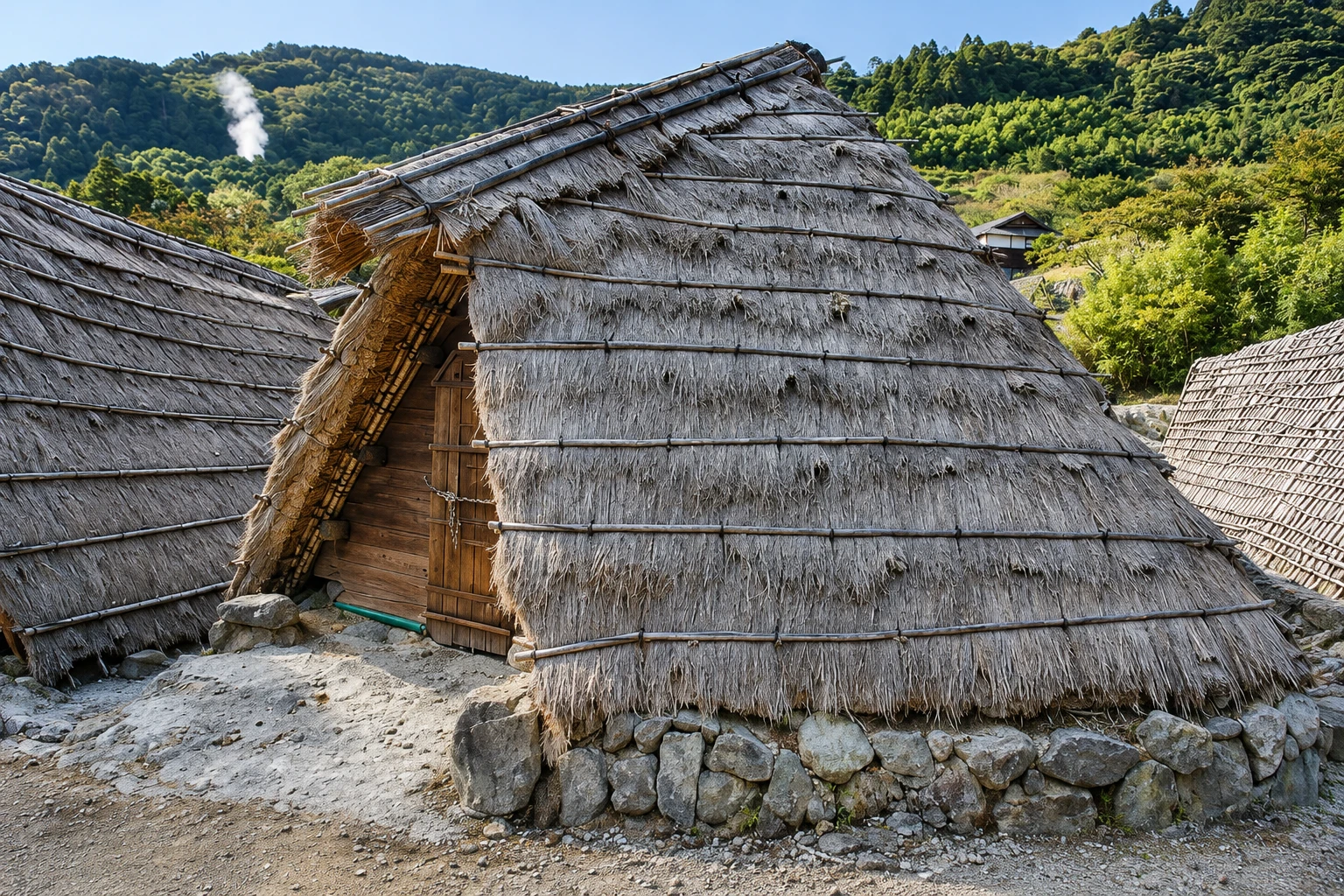
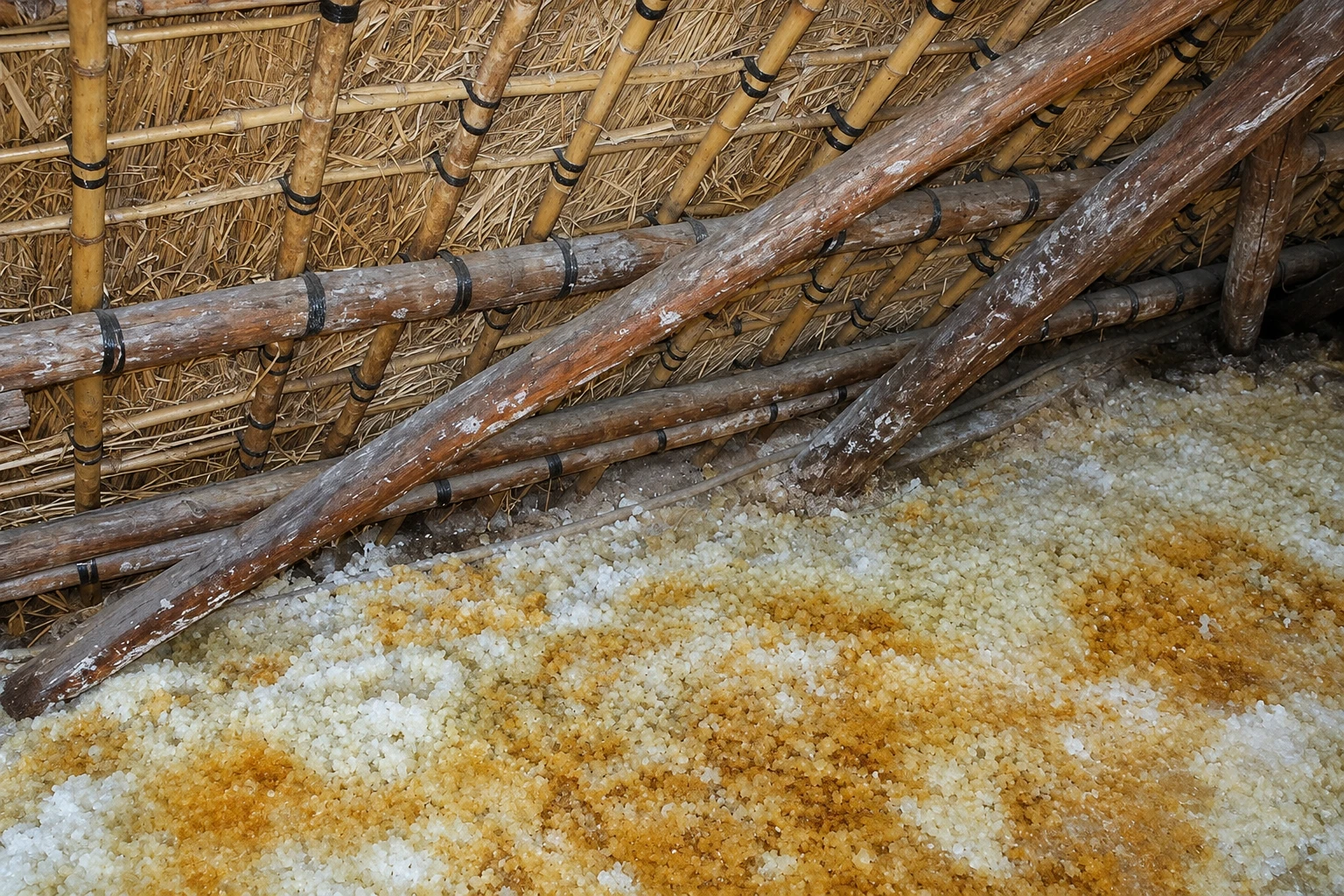
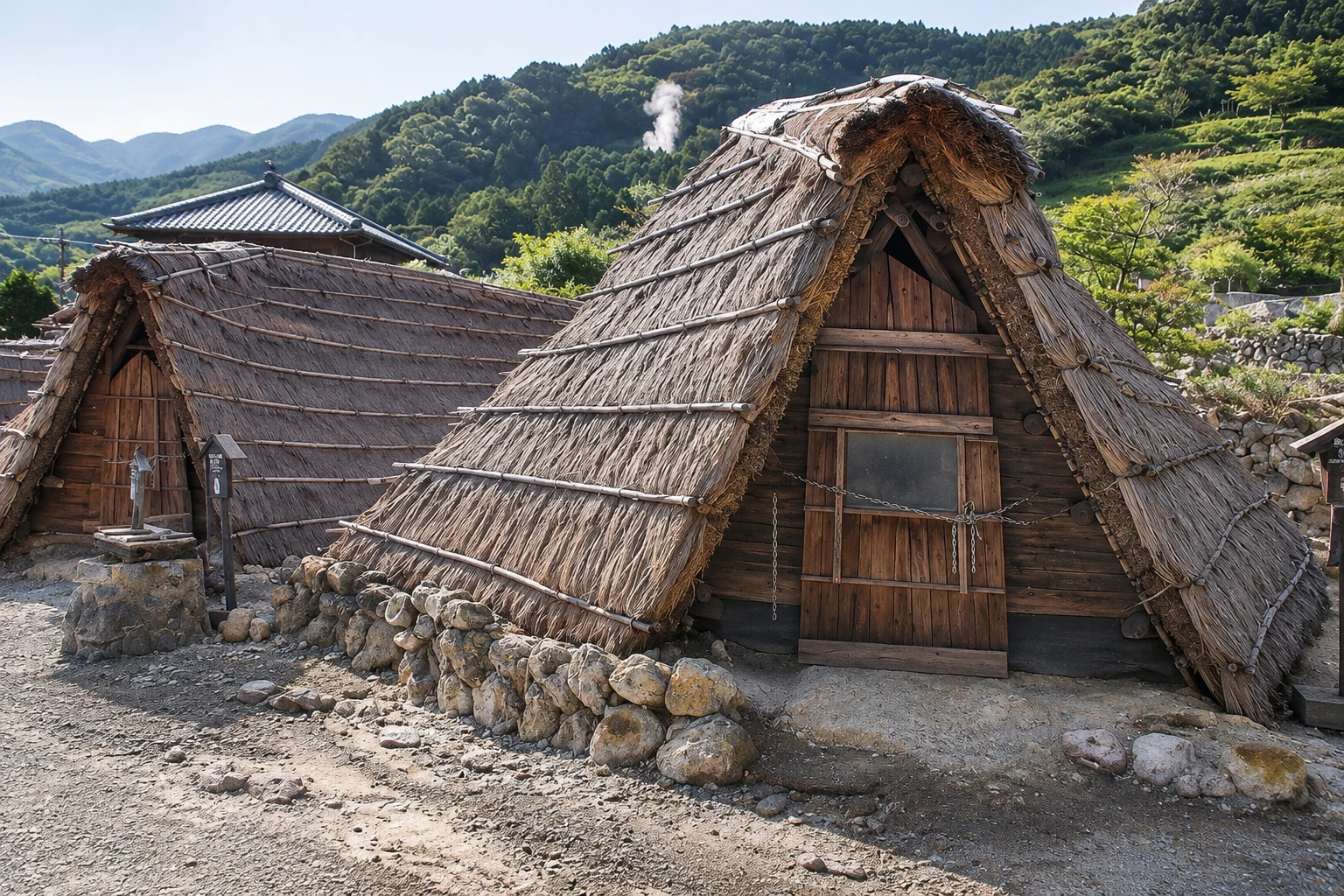
Myoban Onsen is Beppu’s highest thermal area, on the western slope above Kannawa, at about 350 meters elevation. The name comes from alum (myoban), once extracted there during the Edo period. Today it is known for the yunohana-goya, low straw huts where yunohana, the “hot-water flower,” a mineral bathing salt used for home soaks, is produced.
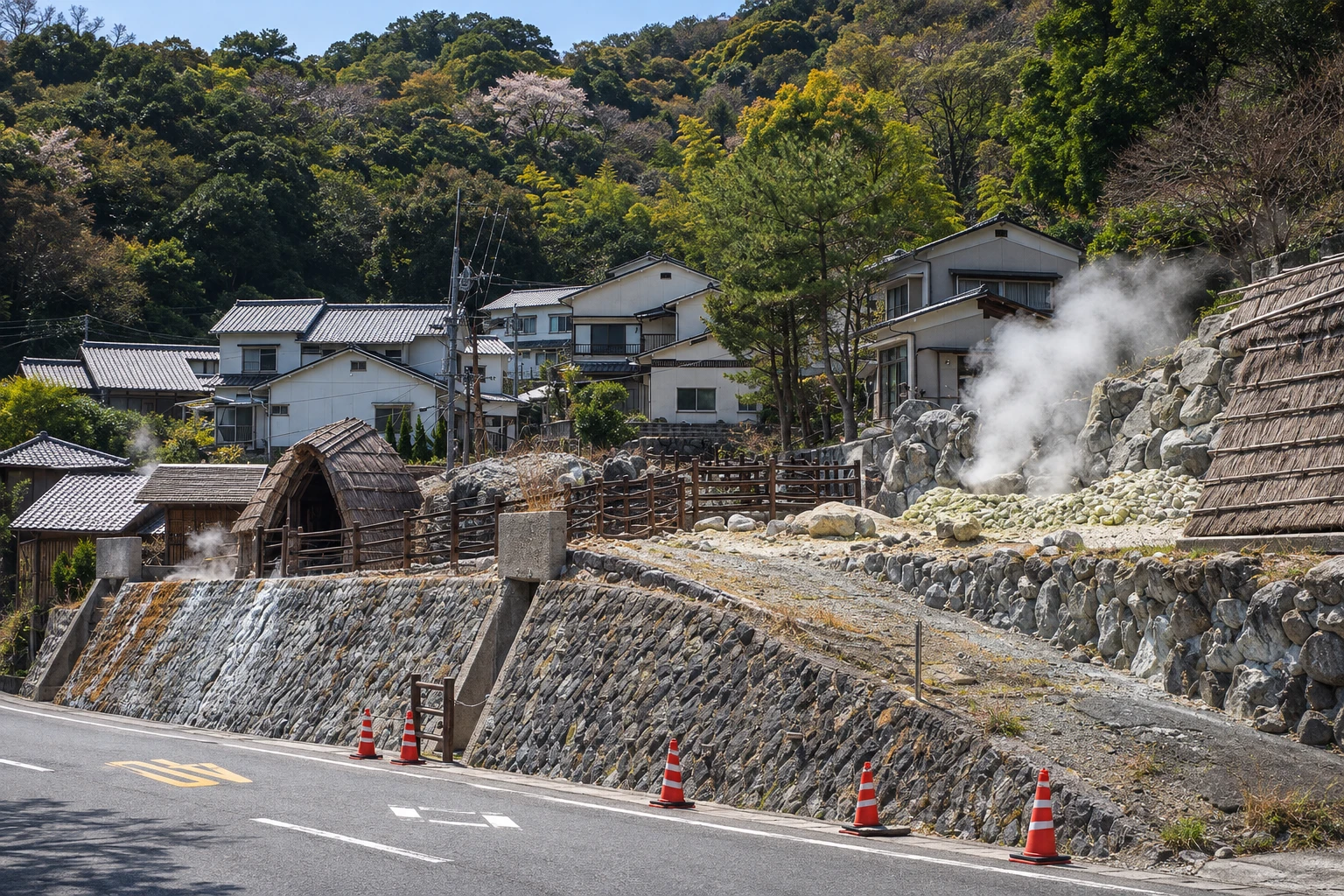
The method is traditional: sulfurous steam rises through a layer of blue clay and, under the straw cover, forms crystals that are scraped by hand. The production technique is recognized as an intangible cultural heritage of the country. The huts stand side by side on a slope, with steam escaping through the gaps and the smell of sulfur in the air; some are open to view inside in a visitor area.
Myoban’s waters are milky, acidic and sulfurous, different from Kannawa’s. There are outdoor baths connected to ryokan and bathhouses that accept visitors for a few hours, with views of the bay. From the road, the highway bridge crossing the valley forms a distinctive arch in the landscape.
A visit pairs well with the hells below: in a few minutes by bus you can go from Kannawa’s steam to the straw huts. Local shops sell yunohana in packets and serve sweets steamed by the vapor.
Before you go
Practical information
Cidade Turismo reviews its information regularly, but something may have changed. Check with the place before planning your trip.
How much time to set aside
About 1 hour for the huts and the shop; with a bath, 2 to 3 hours.
Best time
In the morning or late afternoon, when the steam over the huts is more visible, especially from November to March. On clear days the bay view is wider. Confirm bath hours before you go.
How to get there
About 10 minutes by bus from Kannawa and about 30 minutes from Beppu Station on the lines that climb the slope. By car, there is parking beside the huts.
Tip
Combine Myoban with the hells on the same day, going up after Kannawa. Bring little silver or jewelry for the bath: sulfurous water darkens metals.
Get your questions answered
Frequently asked questions about Myoban Onsen
What is Myoban’s yunohana?
It is a mineral salt formed by sulfurous vapor under the straw huts and scraped by hand. It is sold in packets to dissolve in the bathtub as a memento of the thermal water.
Can you enter the yunohana huts?
There is a visitor area with huts that can be seen inside and explanations about the process. The production huts in use are usually not open.
What are Myoban’s thermal waters like?
Milky, acidic and sulfurous, with a strong smell. It’s different from the clear waters in central Beppu and is often visited by those who want to try the city’s different types of baths.
Is Myoban far from the hells?
No. It’s on the slope just above Kannawa, about a 10‑minute bus ride, and you can visit both on the same day.
Beyond the guide


