

 Brazil
 Antarctica
 Argentina
 Bolivia
 Chile
 Colombia
 Ecuador
 Guyana
 French Guiana
 Falkland Islands (Malvinas)
 Paraguay
 Peru
 Suriname
 Uruguay
 Venezuela
 Germany
 Austria
 Belgium
 Croatia
 Denmark
 Slovakia
 Slovenia
 Spain
 Finland
 France
 Greece
 the Netherlands
 Hungary
 Ireland
 Iceland
 Italy
 Luxembourg
 Norway
 Poland
 Portugal
 the United Kingdom
 the Czech Republic
 Sweden
 Switzerland
 Turkey
 Bermuda
 Canada
 the United States
 Greenland
 Mexico
 Saint Pierre and Miquelon
 the Dominican Republic
 South Africa
 Egypt
 Australia
 Fiji
 New Zealand
 Papua New Guinea
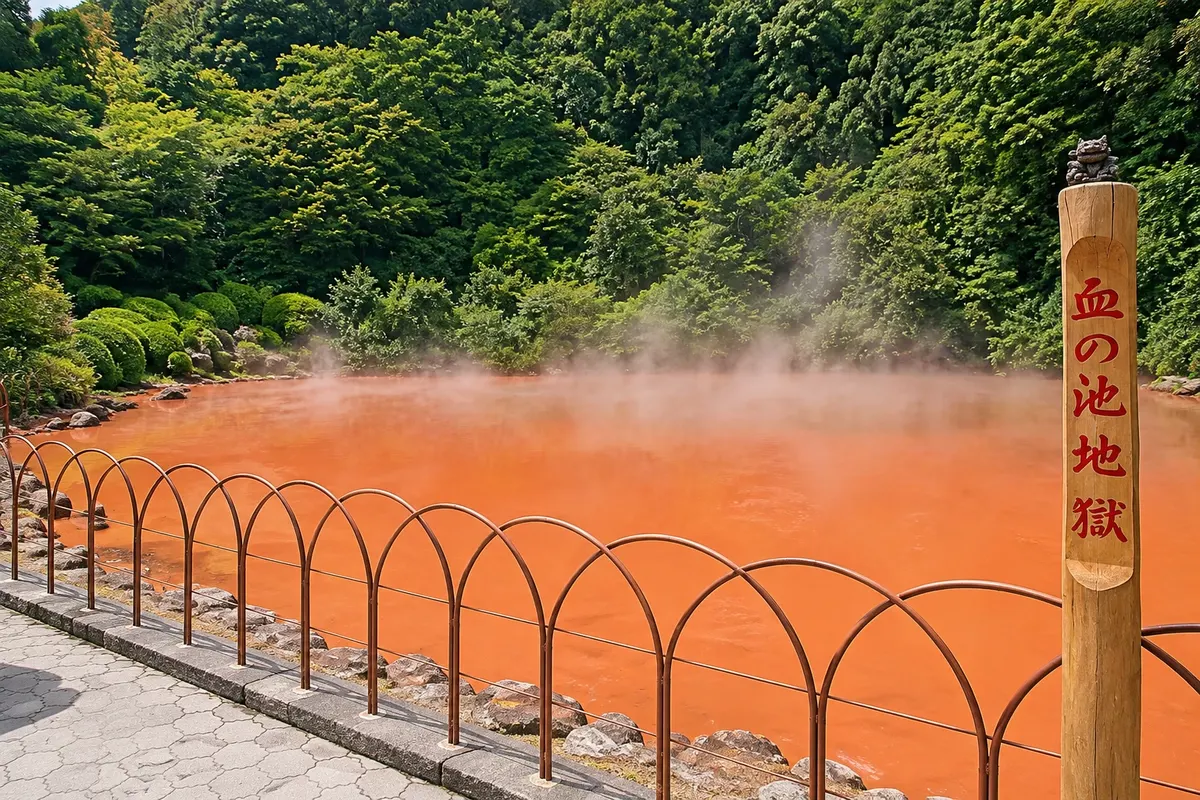
Geothermal phenomenon · Beppu, Oita
Beppu Jigoku (Hells of Beppu)
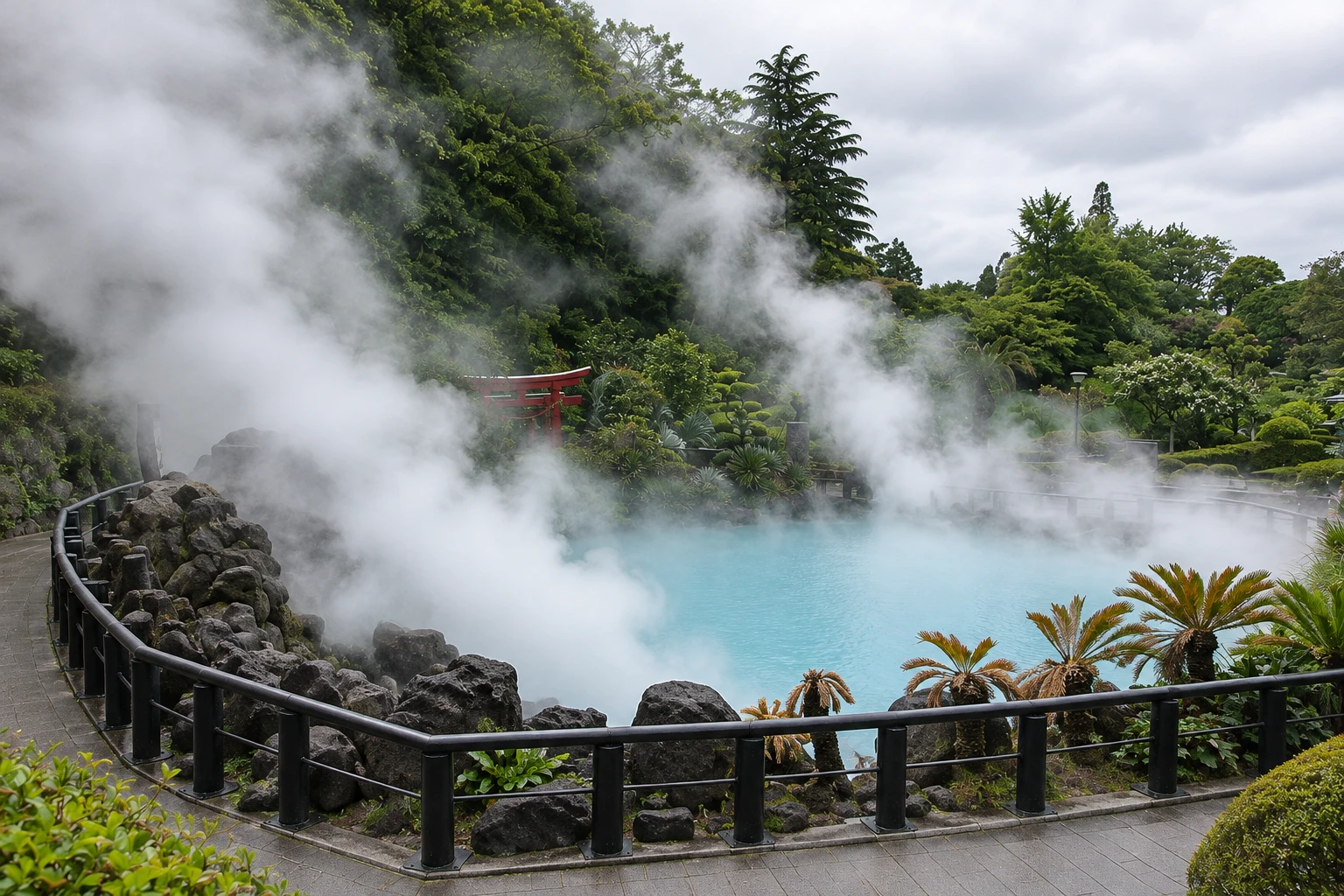
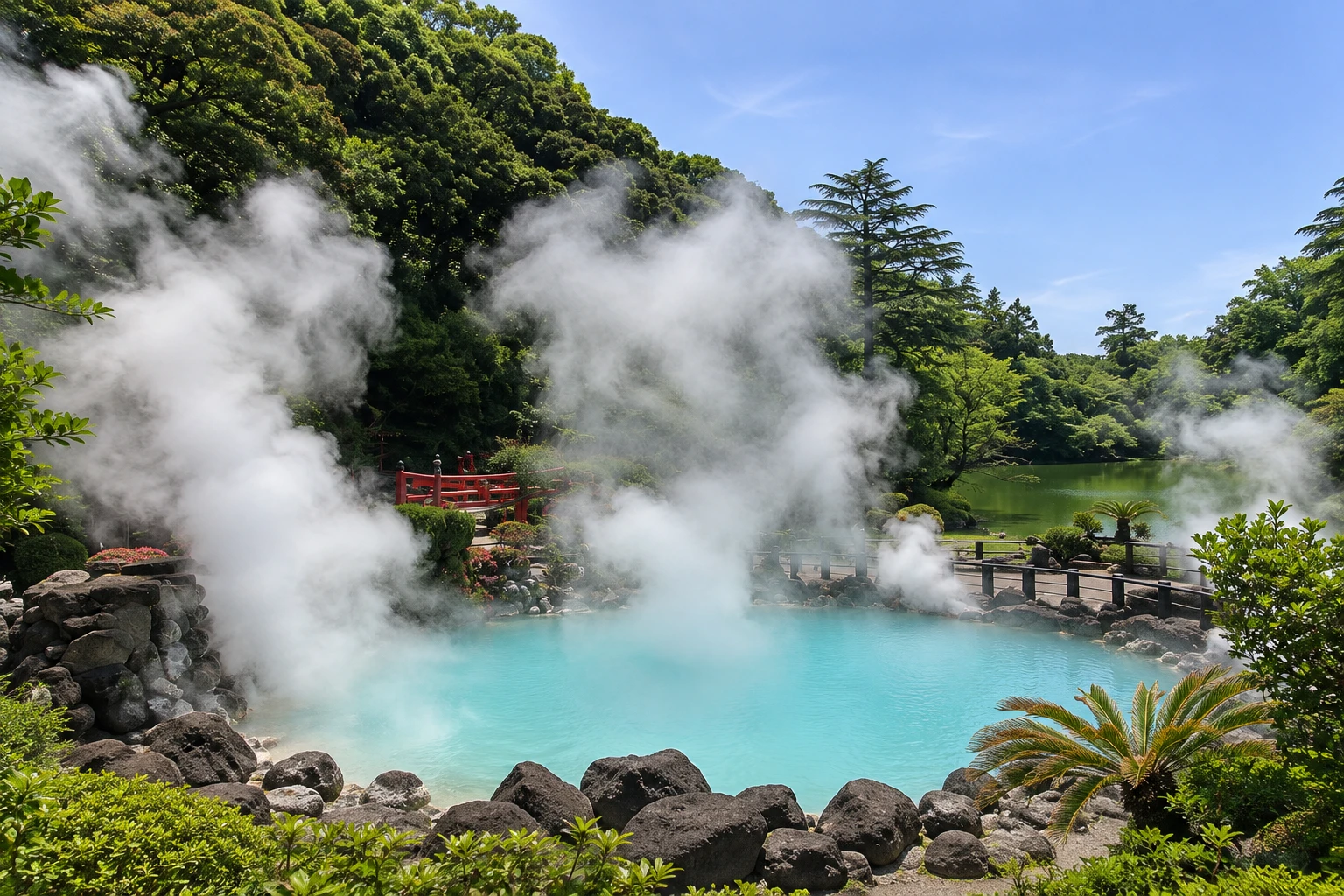
Seven hot springs visited as scenery: the cobalt blue of Umi Jigoku, the mud of Oniishibozu, the red of Chinoike and the geyser Tatsumaki, in Kannawa and Shibaseki.
Illustrative images. The pictures in this guide are illustrations based on the real place, not photographs, and may differ from it.

A look at the place
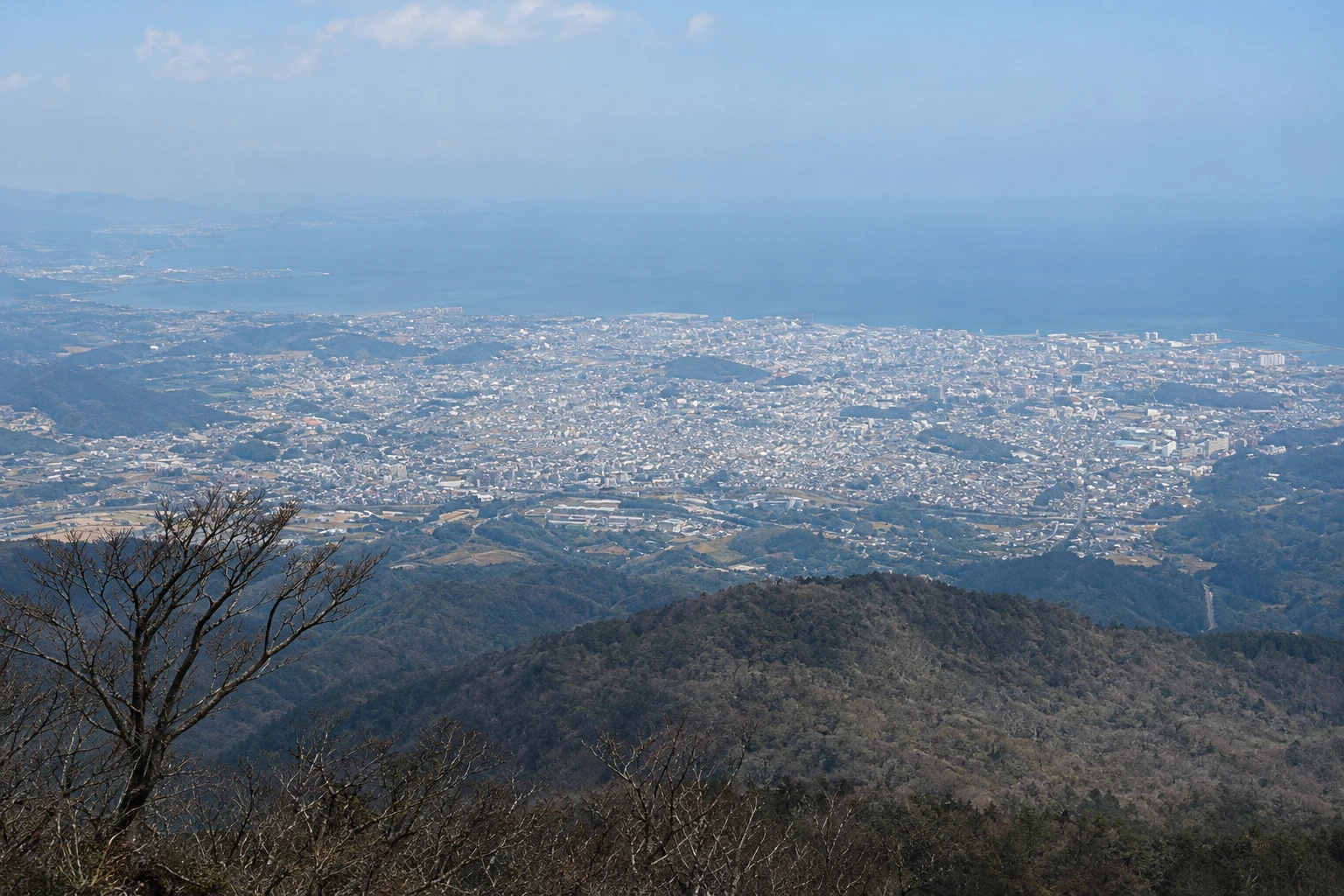
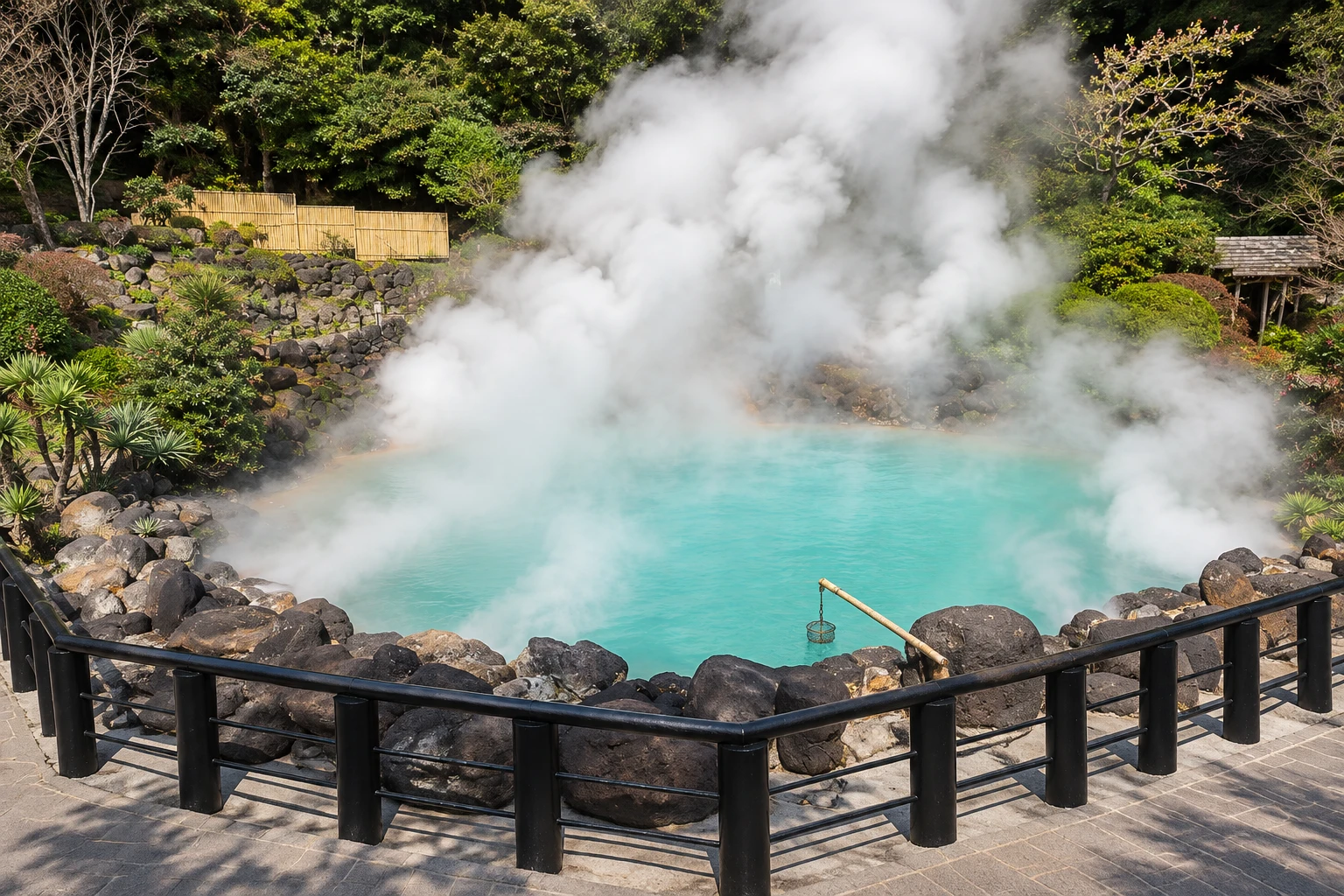
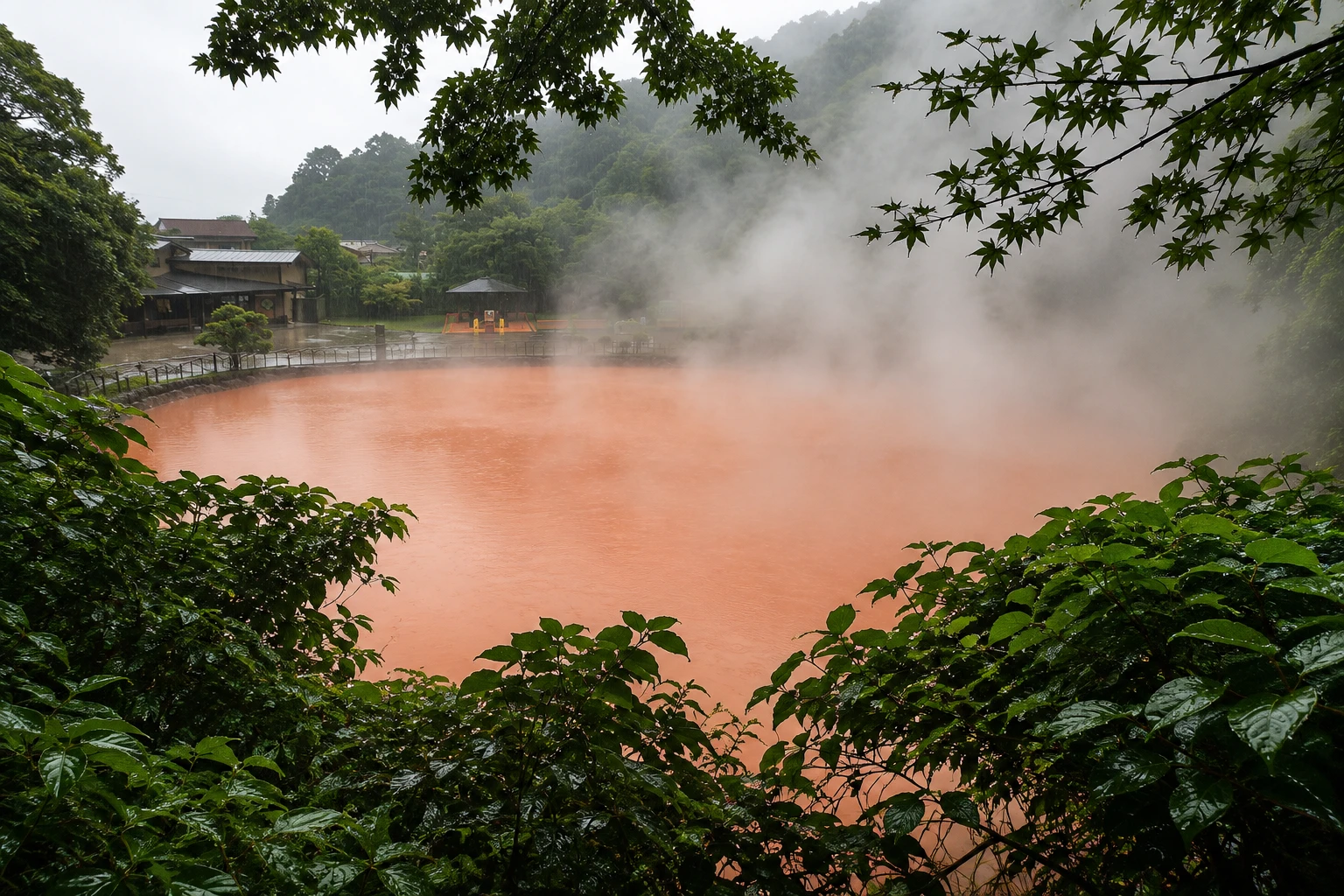
Beppu Jigoku (Hells of Beppu) in pictures
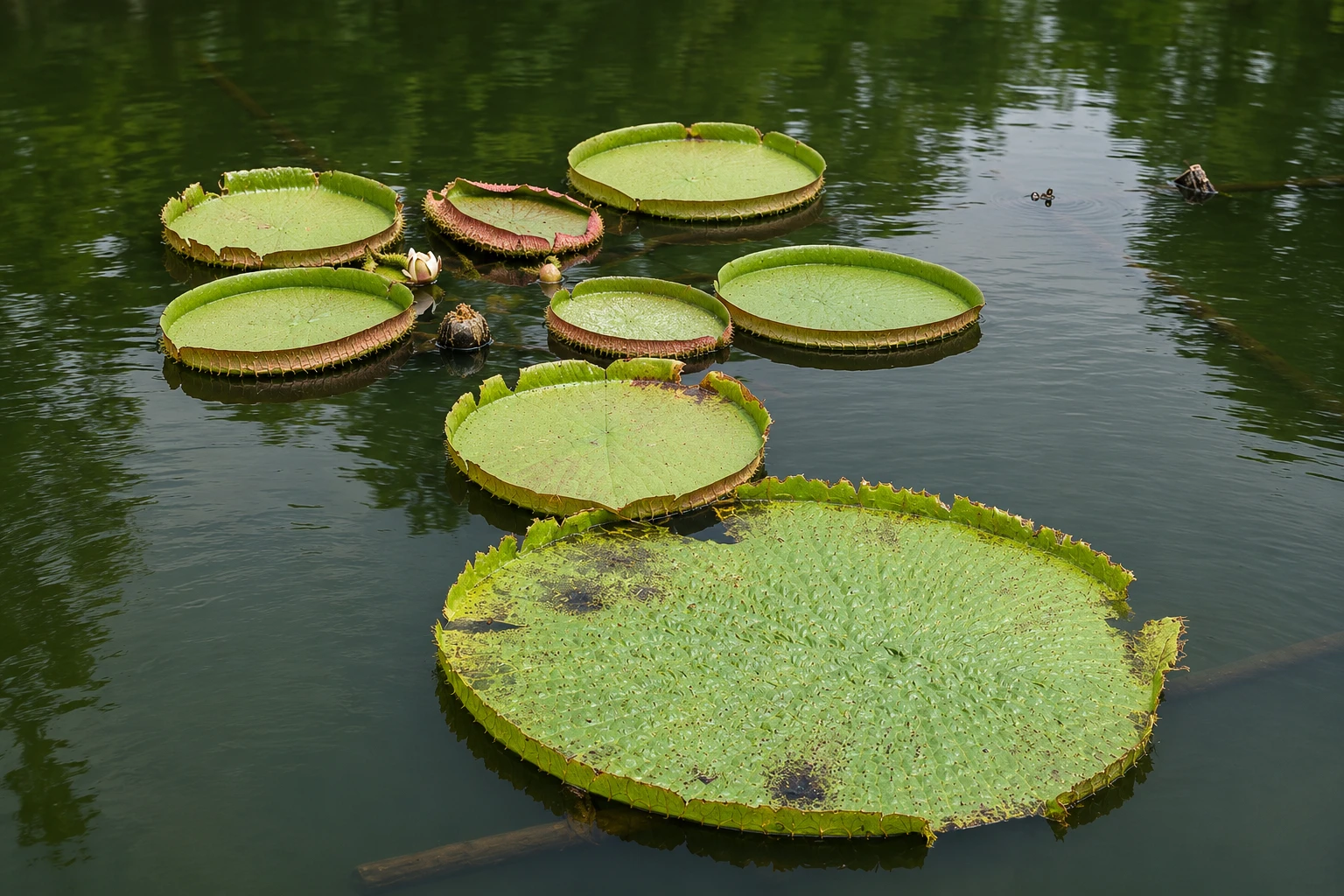
These pictures are illustrations based on the real place, not photographs. They may differ from the place.
Click the picture to enlarge it.
Discover
About Beppu Jigoku (Hells of Beppu)
The Beppu “hells,” called Jigoku Meguri, are seven hot springs that emerge at temperatures too high for bathing and are visited as scenic sites. The name comes from old texts describing a land of steam, boiling mud and hot ground where people could not live. Five are in Kannawa, in the north of the city, and two are in Shibaseki, about 3 km away.
Umi Jigoku, the “sea hell,” is a cobalt-blue pool near 100 °C that sends up a constant cloud of steam; it has a garden with water-lily ponds. Oniishibozu Jigoku consists of gray mud pools that form round bubbles, resembling shaved monk heads. Kamado Jigoku has several differently colored pools and a demon statue above a furnace. Oniyama Jigoku houses crocodiles kept warm by the hot water, and Shiraike Jigoku has a milky pond and a small aquarium.
In Shibaseki, Chinoike Jigoku, the “blood pond,” is a red clay pool considered one of the oldest hot springs mentioned in Japan. Beside it, Tatsumaki Jigoku is a geyser that usually erupts at roughly half-hour intervals for a few minutes; a stone slab contains the jet. Four of the hells — Umi, Chinoike, Tatsumaki and Shiraike — are protected as a National Scenic Spot.
The visit is on foot among the five Kannawa hells, which are close to each other, and by bus or taxi to Shibaseki. A joint ticket covers all seven. Several sites offer foot baths, eggs cooked in the hot spring water and steamed puddings. Miyuki Slope, just below, has steam chimneys rising from houses and kitchens where visitors cook their own food.
Before you go
Practical information
Cidade Turismo reviews its information regularly, but something may have changed. Check with the place before planning your trip.
How much time to set aside
About 2 hours for all seven hells, including travel between Kannawa and Shibaseki; one hour is enough for the Kannawa ones.
Best time
In the morning, before tour buses arrive around midday. In the cold months, November to March, the steam is denser and more visible. To see Tatsumaki in action, check the approximate time of the next eruption on site and arrive a few minutes early. Confirm opening hours before you go.
How to get there
From Beppu Station, city buses reach Kannawa in about 20 minutes; the five Kannawa hells are a few minutes’ walk from each other. To get to Shibaseki, take a bus or taxi about 3 km. There is parking at the hells.
Tip
Buy the joint ticket if you plan to see all seven. Start at Umi Jigoku, the most popular, right at opening, and save Shibaseki for the end of the circuit, timing your visit to coincide with a Tatsumaki eruption. Try the steamed pudding and the eggs cooked in the steam.
Official website
Get your questions answered
Frequently asked questions about Beppu Jigoku (Hells of Beppu)
Can you bathe in Beppu’s hells?
No. The water is far too hot, near 100 °C in some of them, and the ponds are for viewing only. Several hells have cooled foot baths, and there are bathhouses in the same area.
Is it worth seeing all seven hells?
If you have time, yes, because each is different. With limited time, prioritize Umi Jigoku, Oniishibozu, Chinoike and the geyser Tatsumaki.
How often does the Tatsumaki geyser spout?
It usually erupts at intervals of about every half hour, for a few minutes. The interval varies; on site, a sign or staff will indicate the approximate time of the next jet.
Are the hells near Beppu Station?
No, they are north of the center. Kannawa is about 20 minutes by bus from the station, and Shibaseki a few more minutes by bus or taxi.
Beyond the guide


