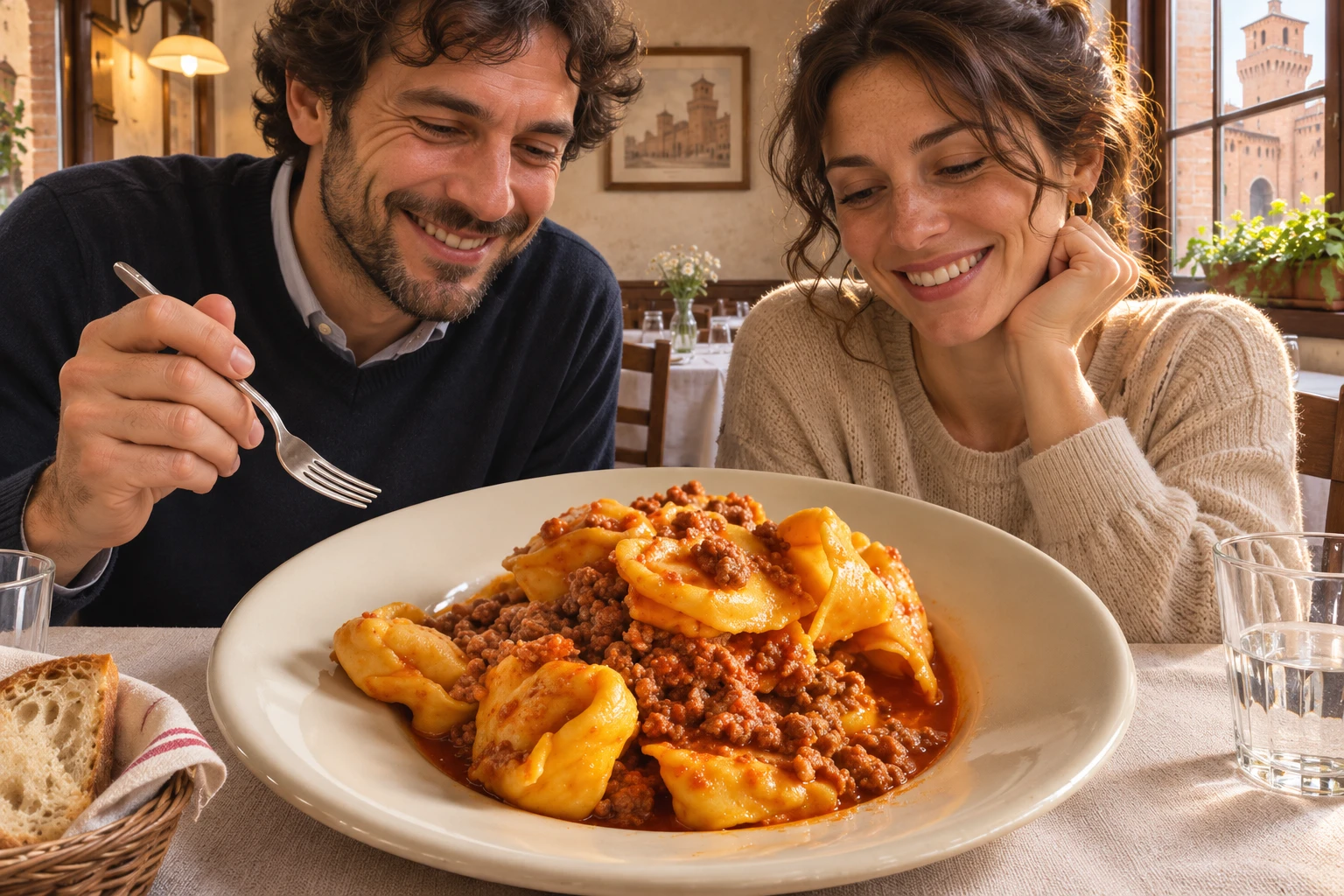
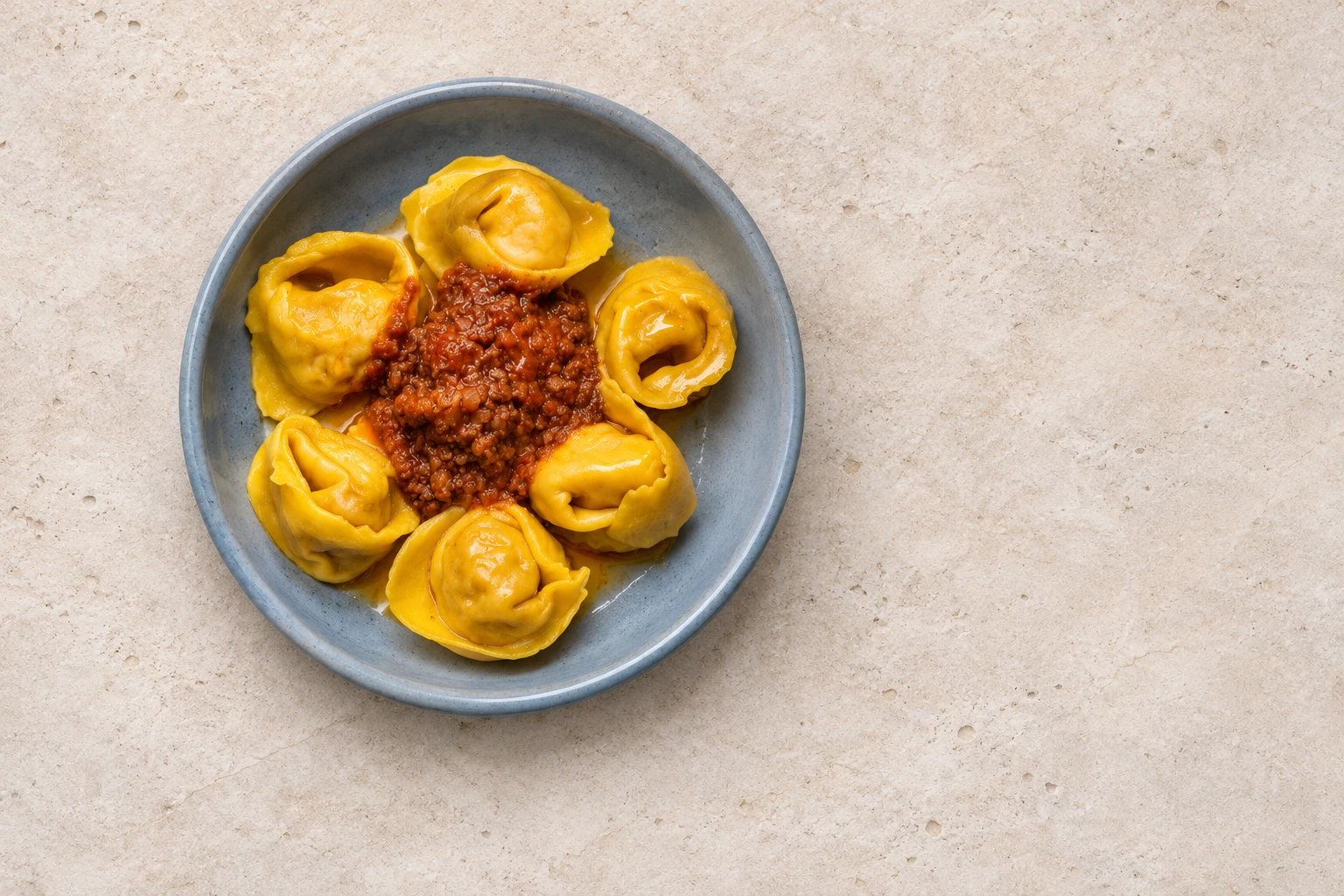
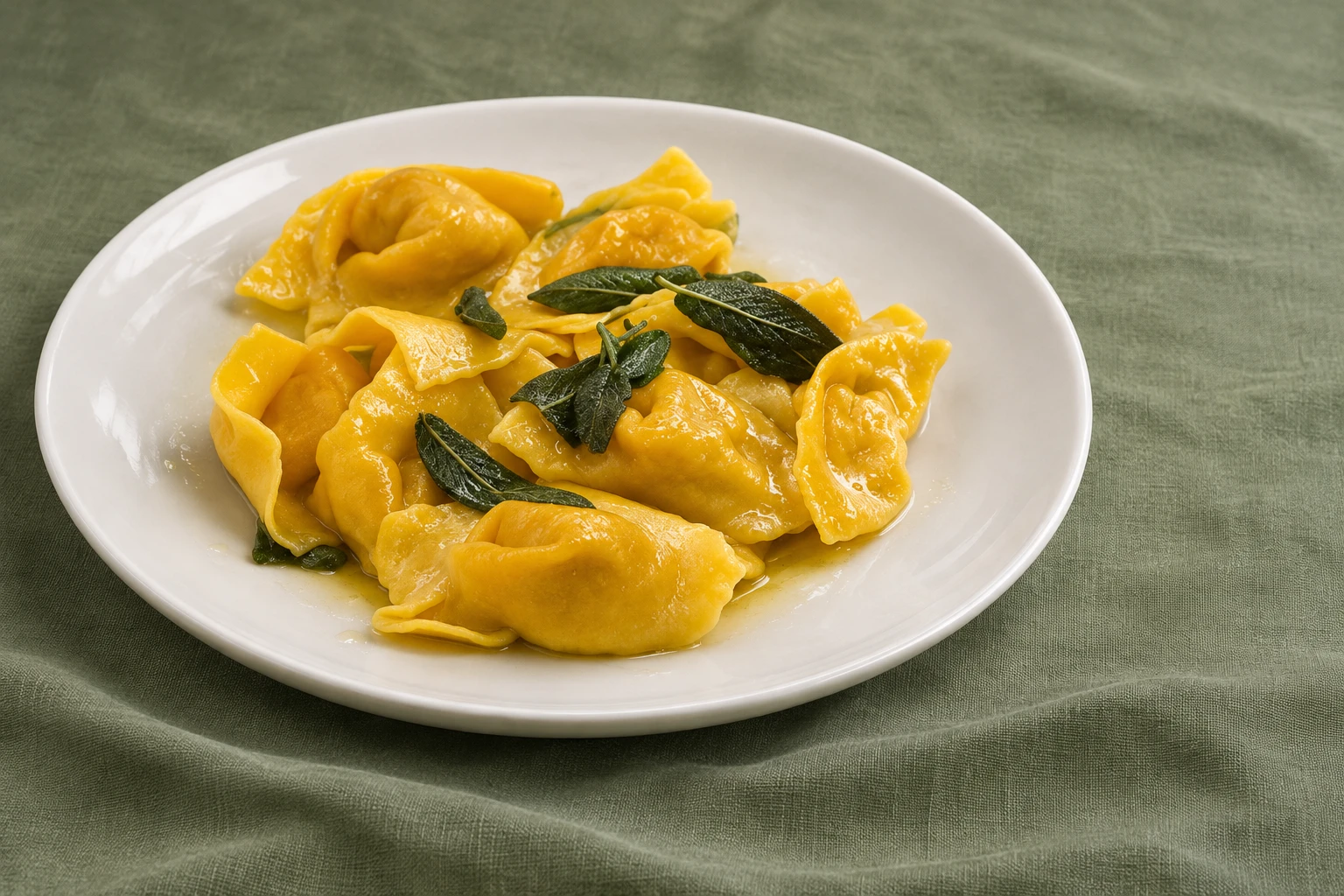
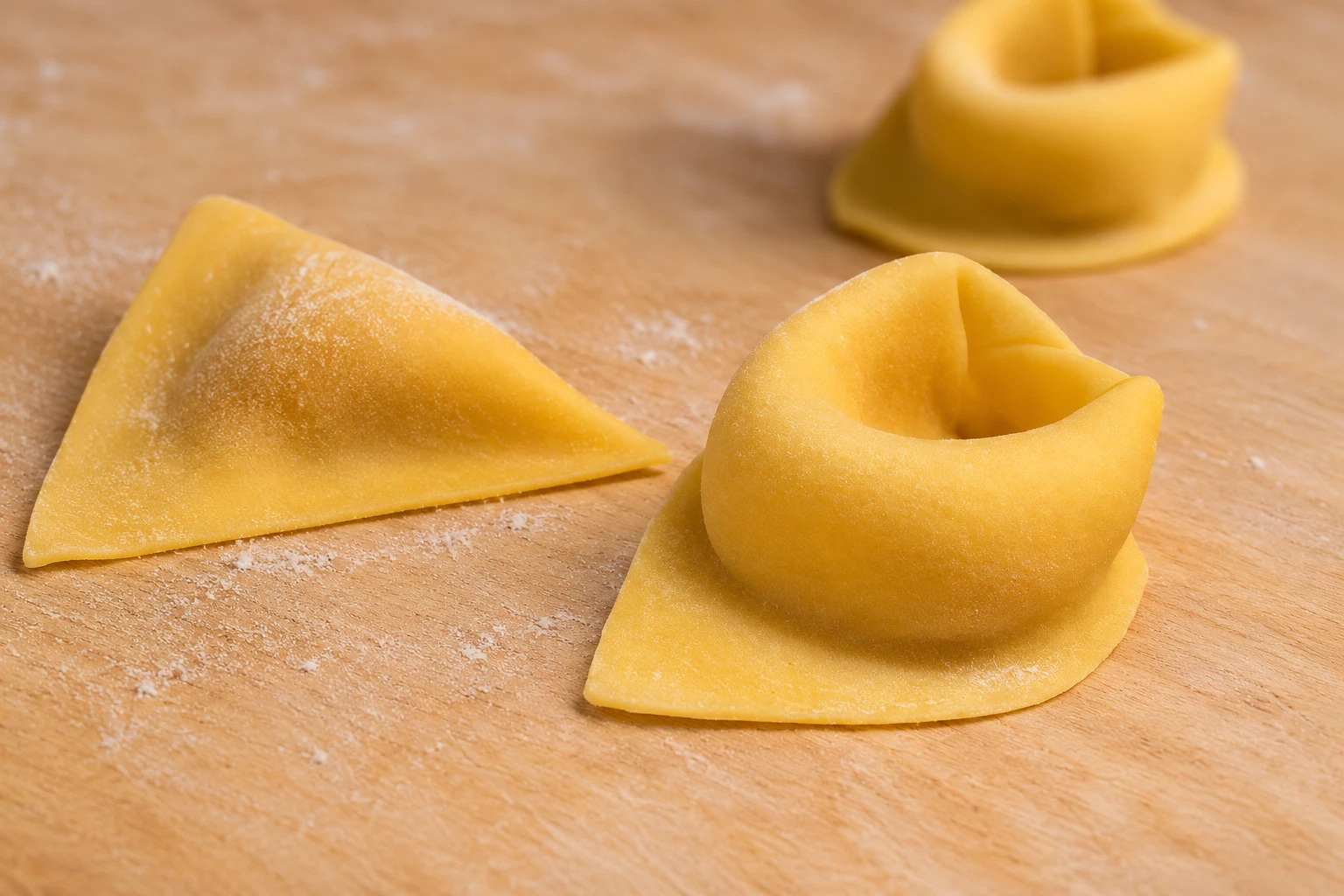
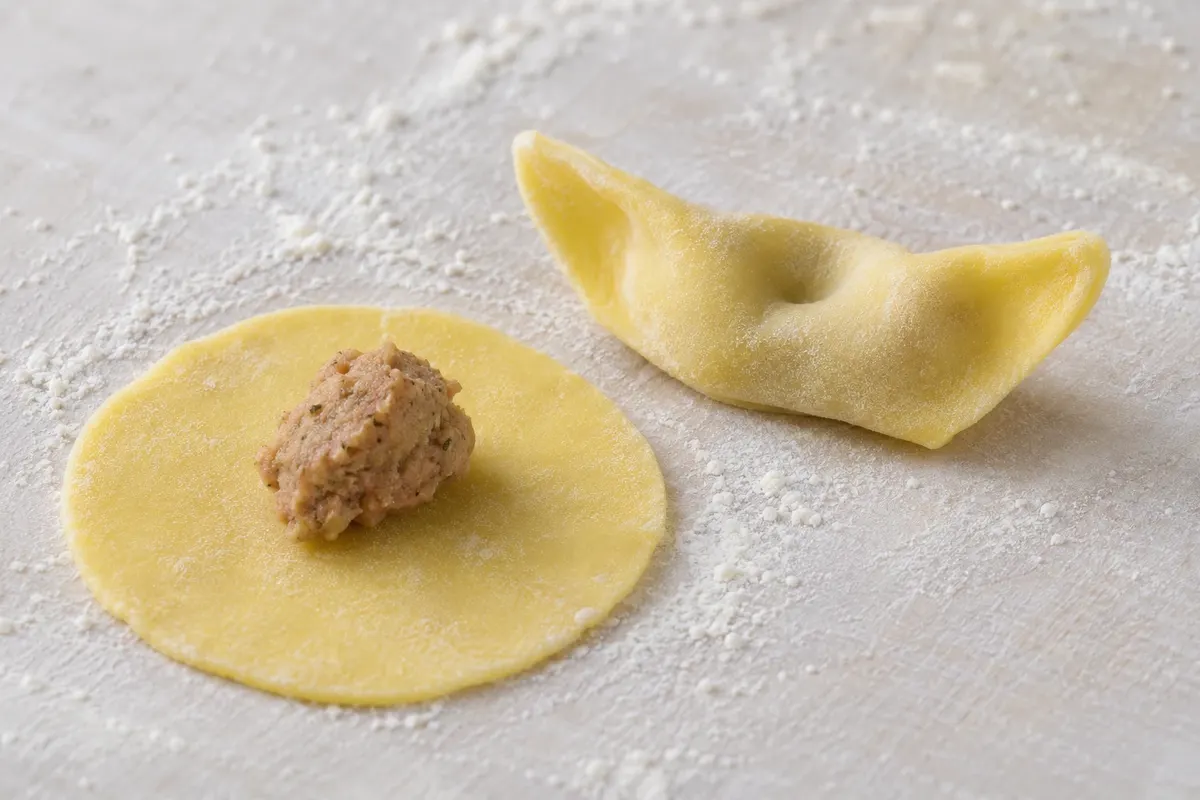
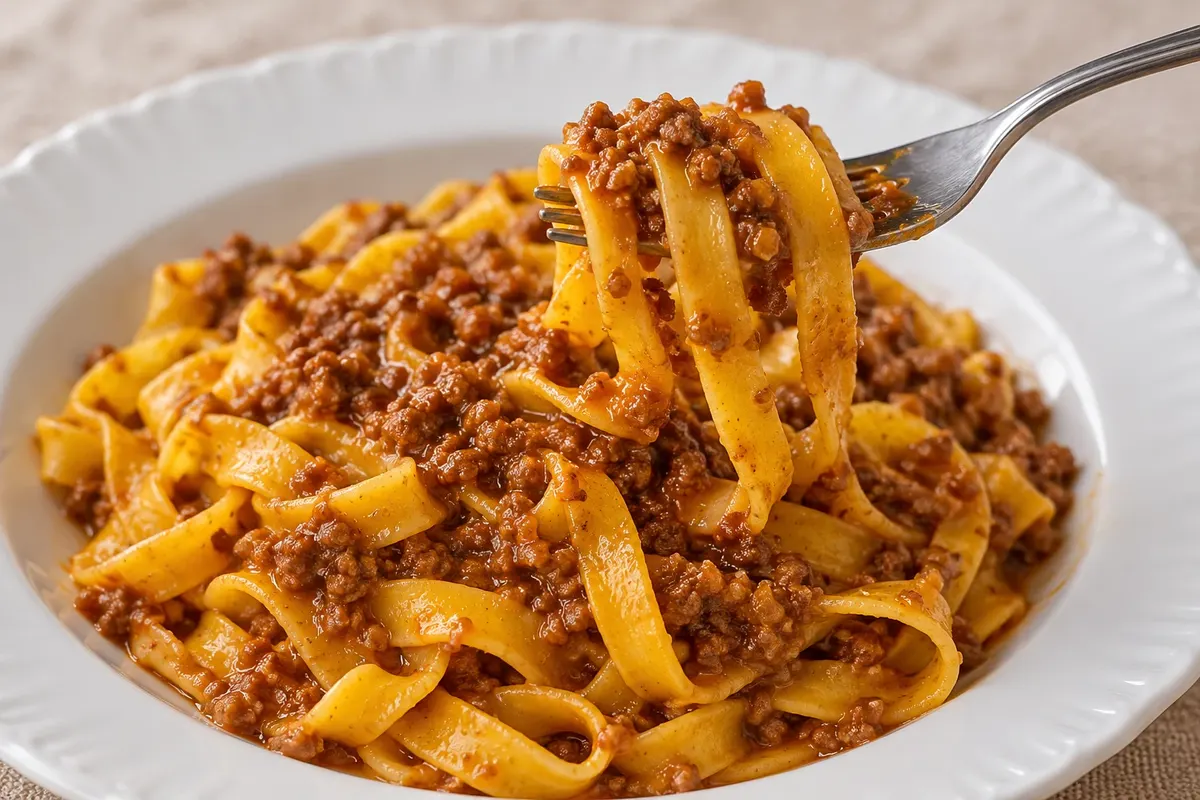
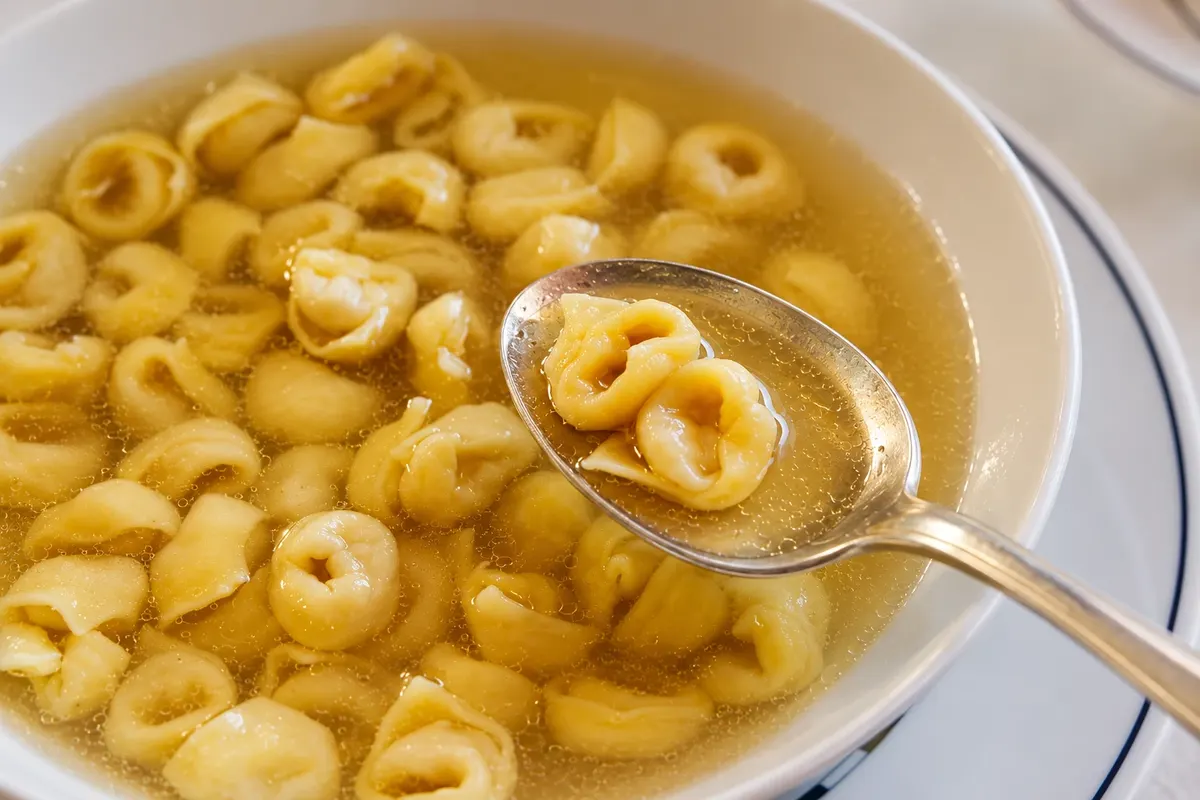
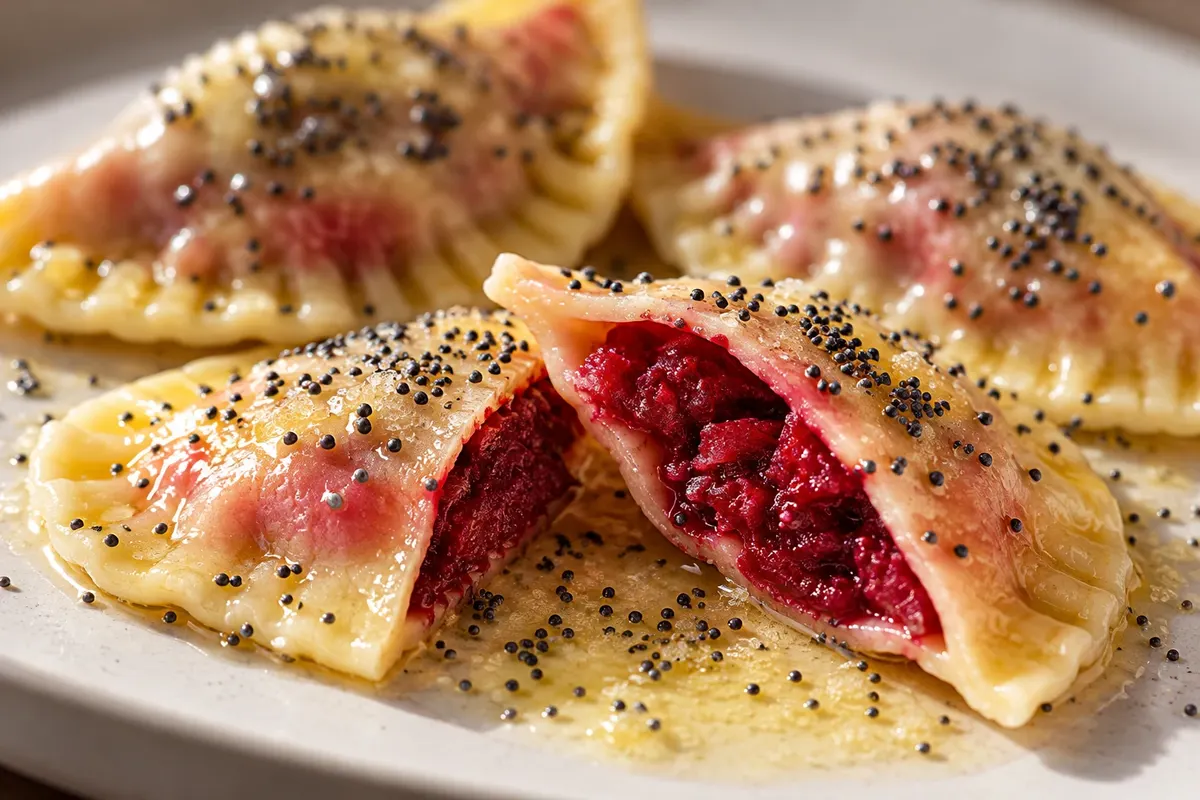
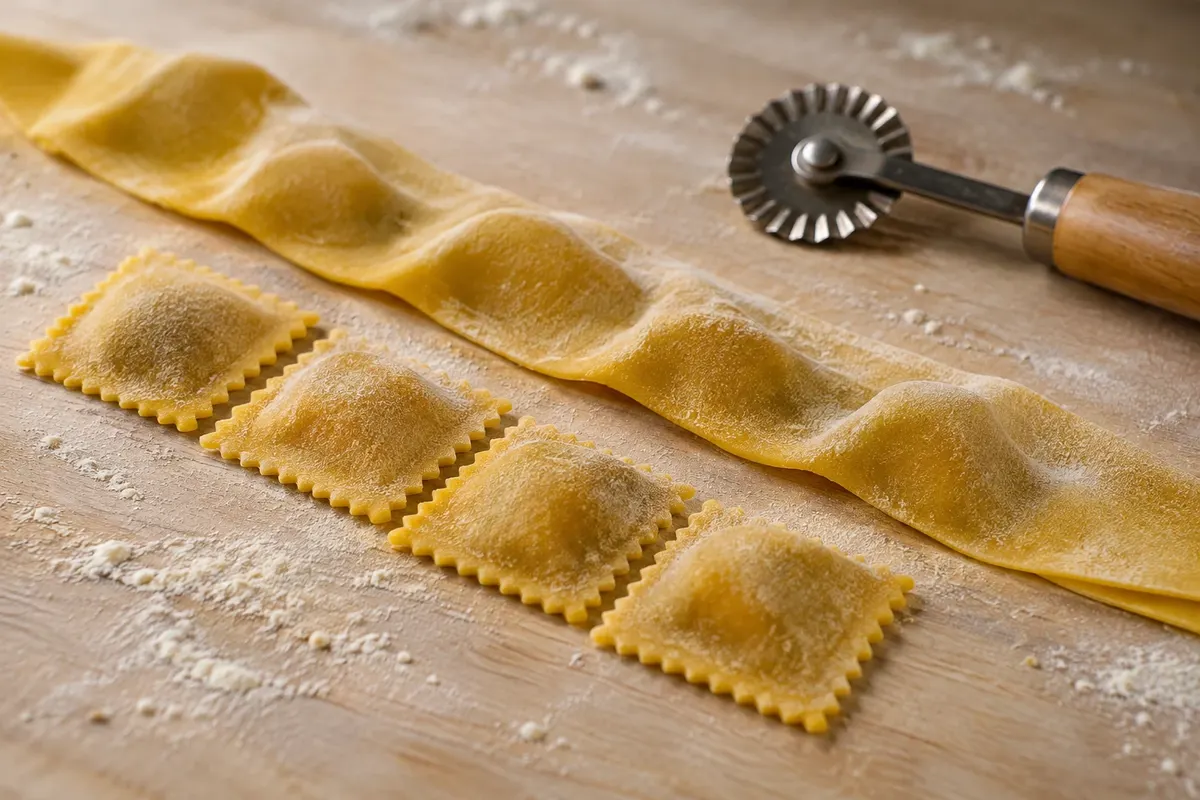
Cappellacci are Ferrara’s signature filled pasta. The filling is made with violina squash, a long, pale-skinned squash typical of the region. The squash is roasted to remove excess moisture, then mashed and mixed with grated cheese, breadcrumbs, and nutmeg. The flour-and-egg dough is rolled out thinly and cut into squares. Each square is filled and folded into a triangle, then the tips are joined to form a ring. The resulting shape resembles a farmer’s straw hat, which gives cappellacci their name. They are served with melted butter and sage or, in many homes, with meat ragù.
The recipe is associated with the court of the Este family, who ruled Ferrara during the Renaissance. Dello Scalco, a book by Duke Alfonso II d’Este’s cook, Giovanni Battista Rossetti, was published in 1584. It already mentions squash tortelli served with butter, considered the forerunners of cappellacci. Squash has long been part of Ferrara’s cooking, and families in the countryside also used the blossoms to make fritters.
In 2016, Cappellacci di zucca ferraresi were granted protected geographical indication status by the European Union. The designation requires the use of roasted violina squash and the distinctive hat shape, and limits production to the province of Ferrara. Unlike the filling in Mantua’s tortelli, the filling in cappellacci contains neither amaretti nor mostarda.


 Brazil
 Antarctica
 Argentina
 Bolivia
 Chile
 Colombia
 Ecuador
 Guyana
 French Guiana
 Falkland Islands (Malvinas)
 Paraguay
 Peru
 Suriname
 Uruguay
 Venezuela
 Germany
 Austria
 Belgium
 Croatia
 Denmark
 Slovakia
 Slovenia
 Spain
 Finland
 France
 Greece
 the Netherlands
 Hungary
 Ireland
 Iceland
 Luxembourg
 Norway
 Poland
 Portugal
 the United Kingdom
 the Czech Republic
 Sweden
 Switzerland
 Turkey
 Bermuda
 Canada
 the United States
 Greenland
 Mexico
 Saint Pierre and Miquelon
 the Dominican Republic
 Japan
 South Africa
 Egypt
 Australia
 Fiji
 New Zealand
 Papua New Guinea