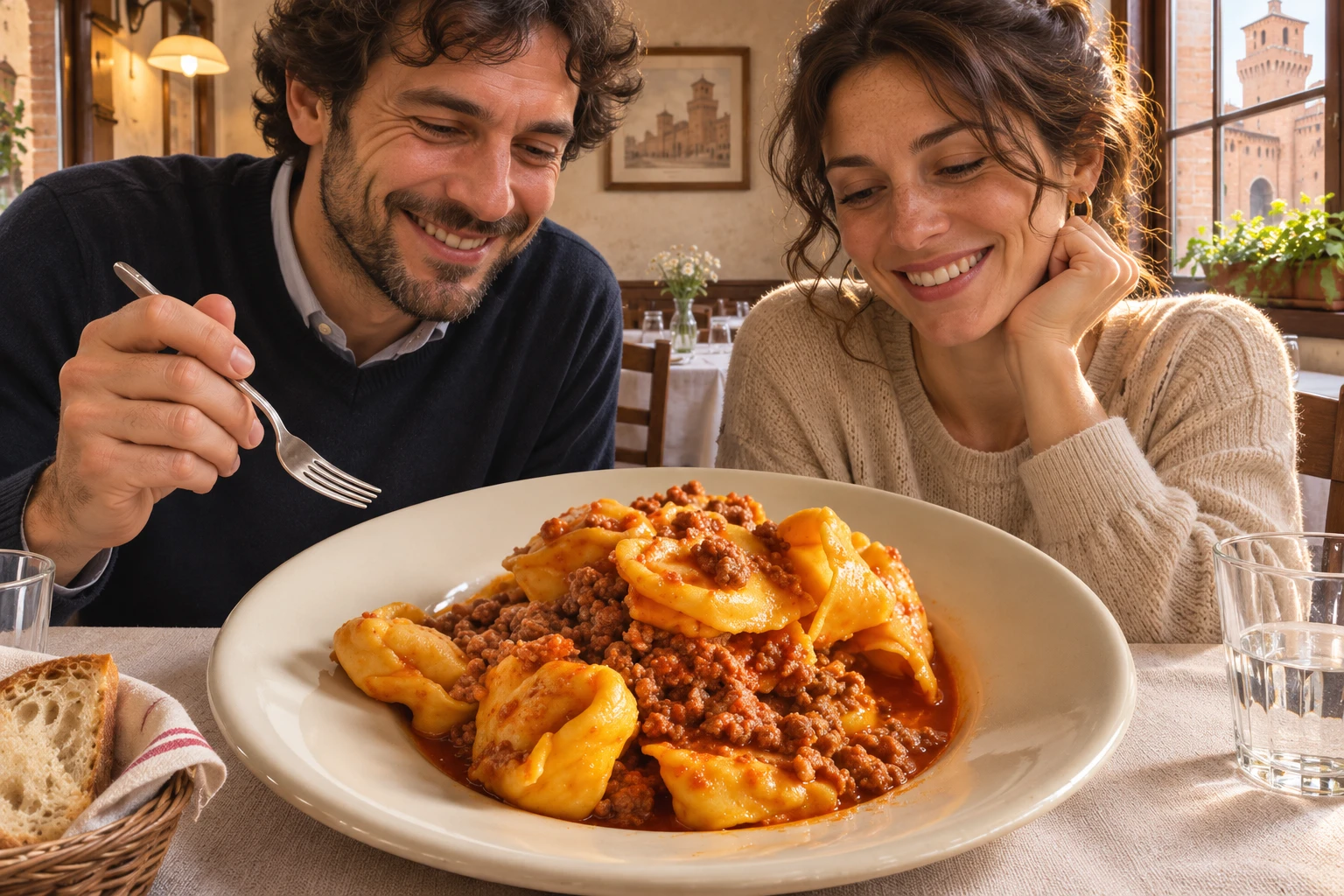
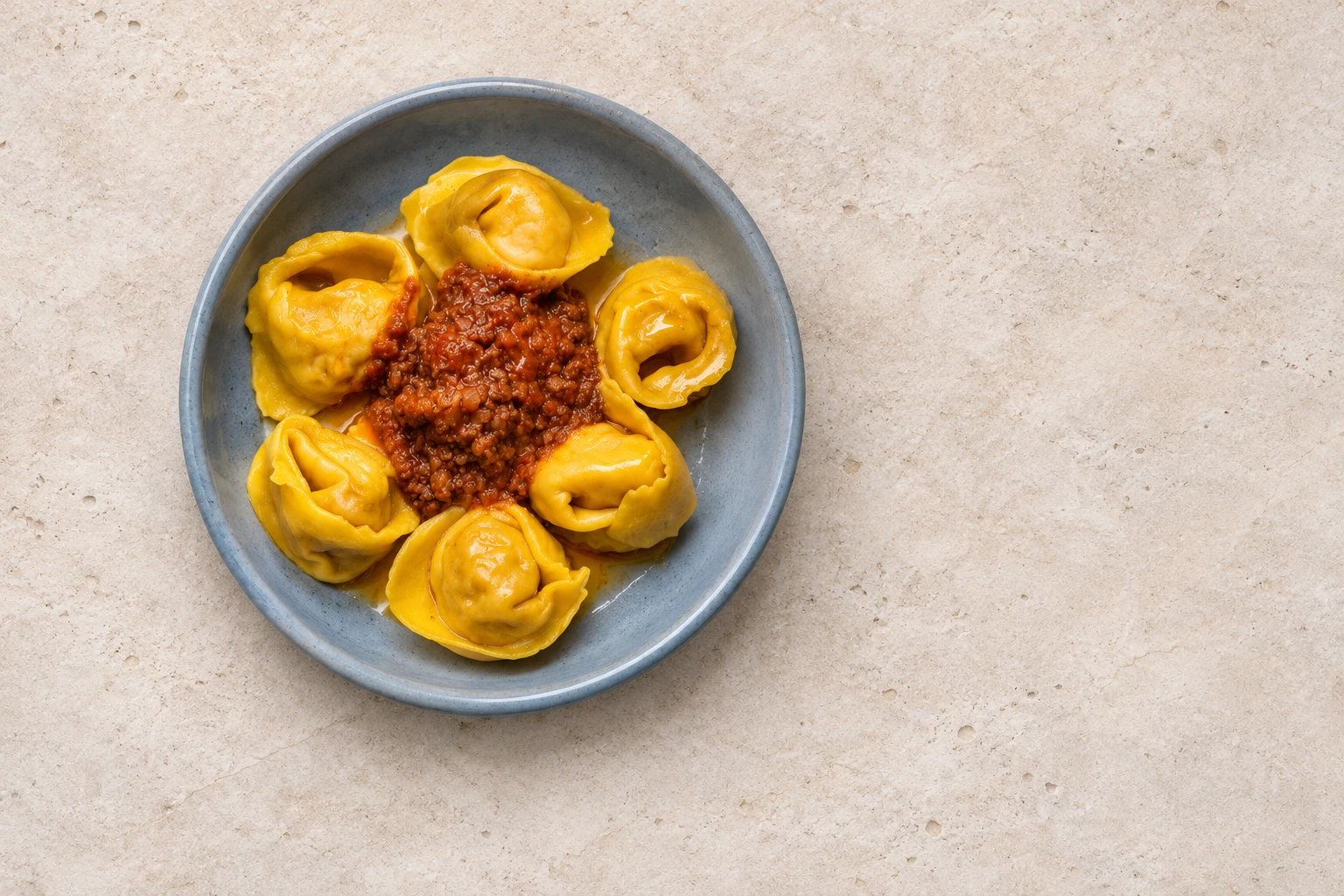
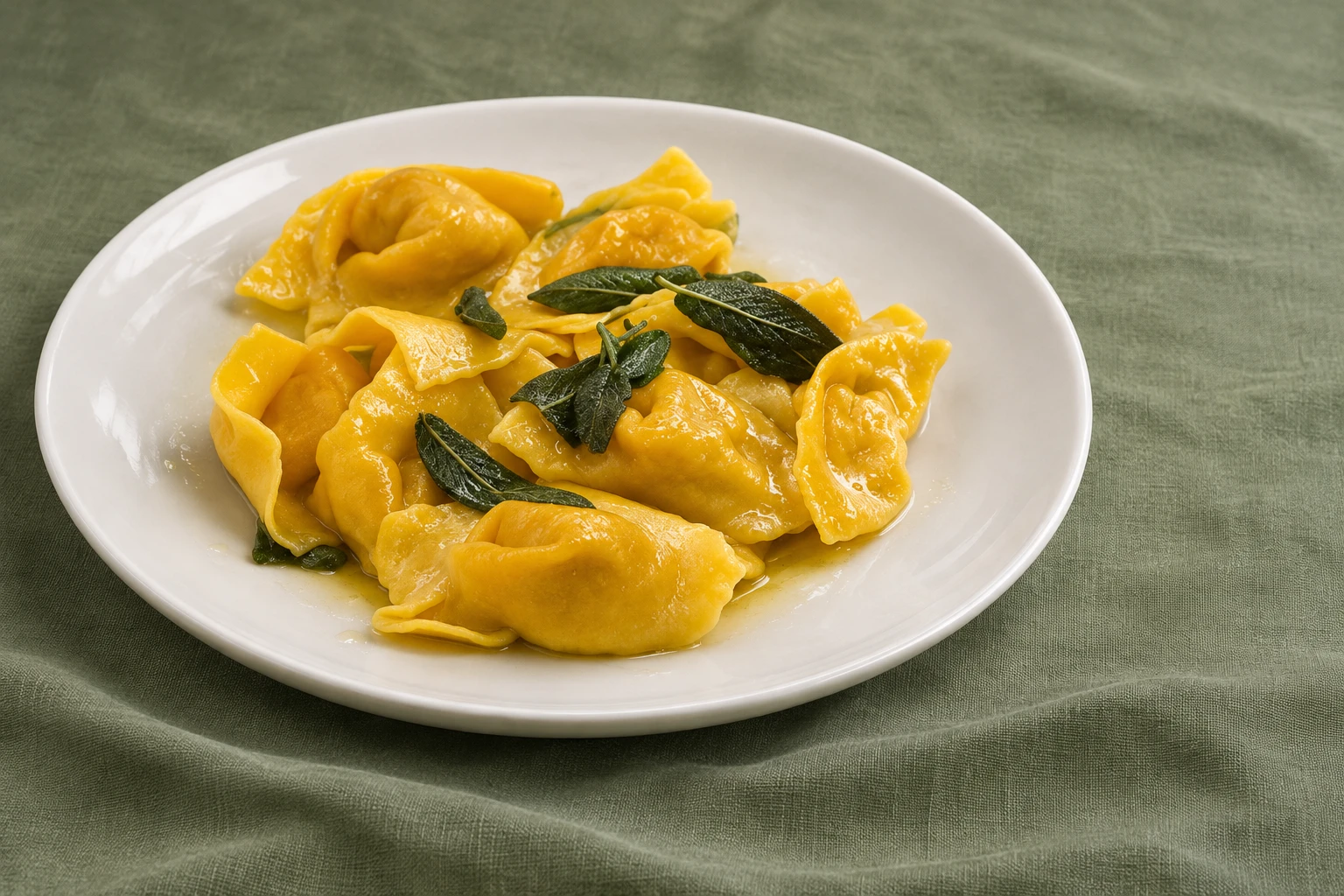
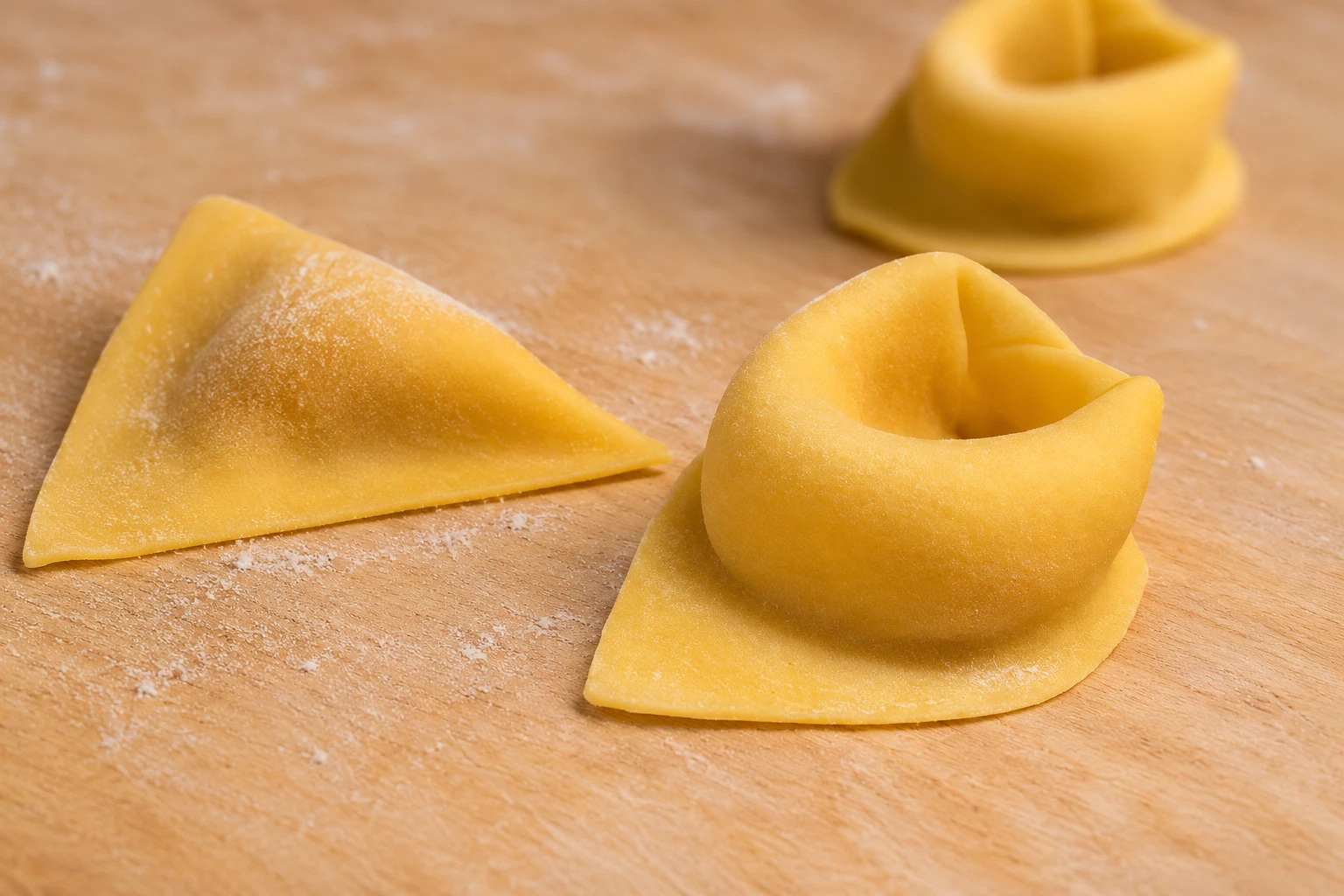
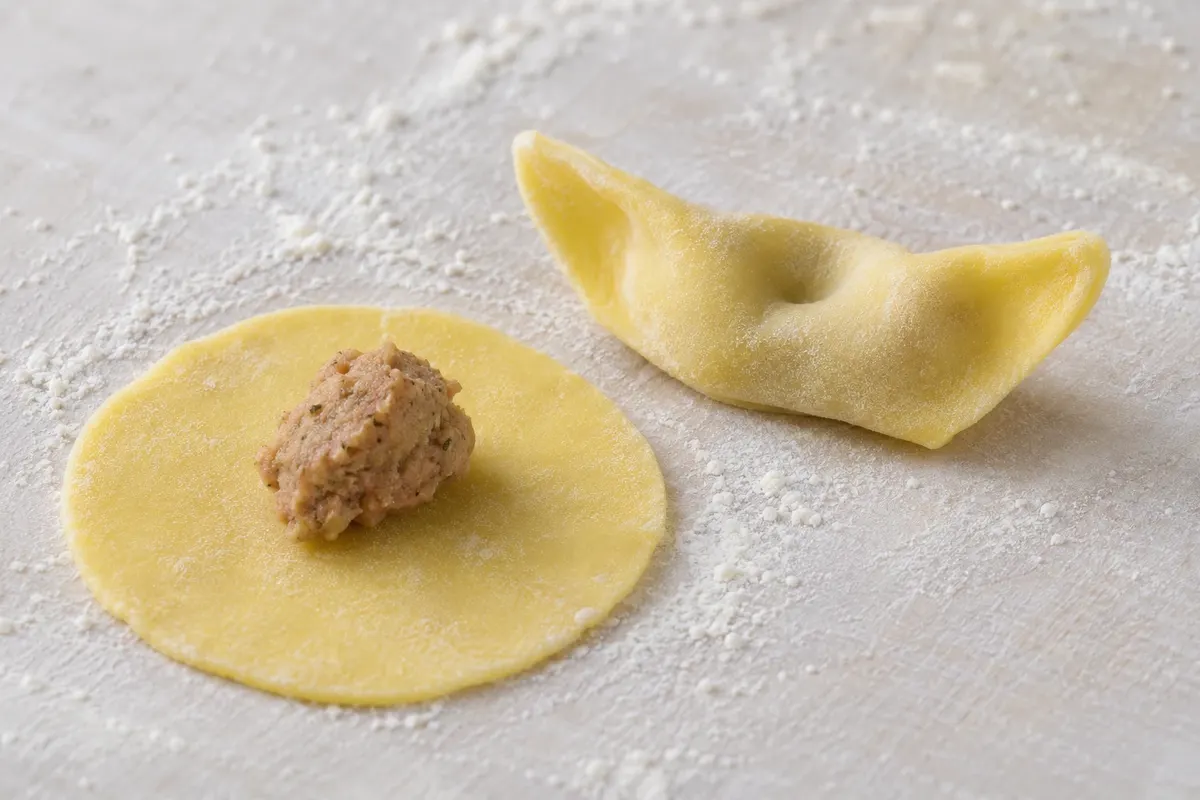
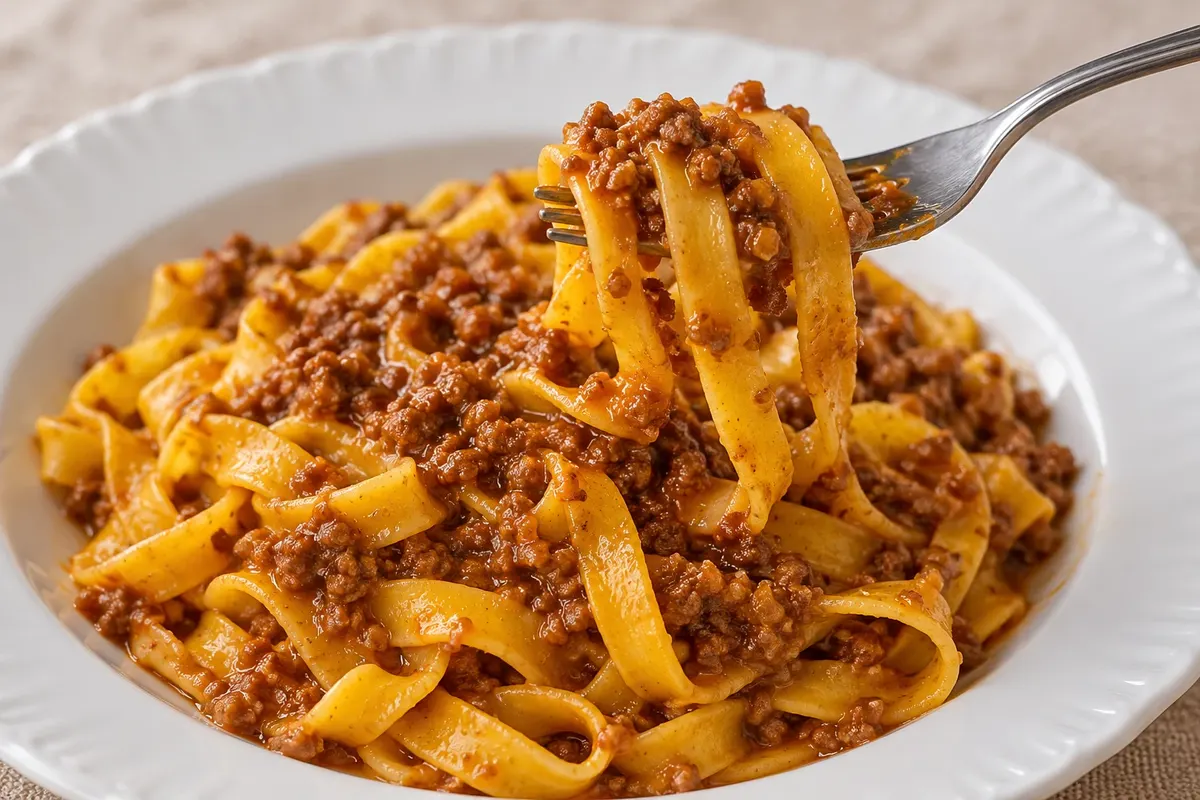
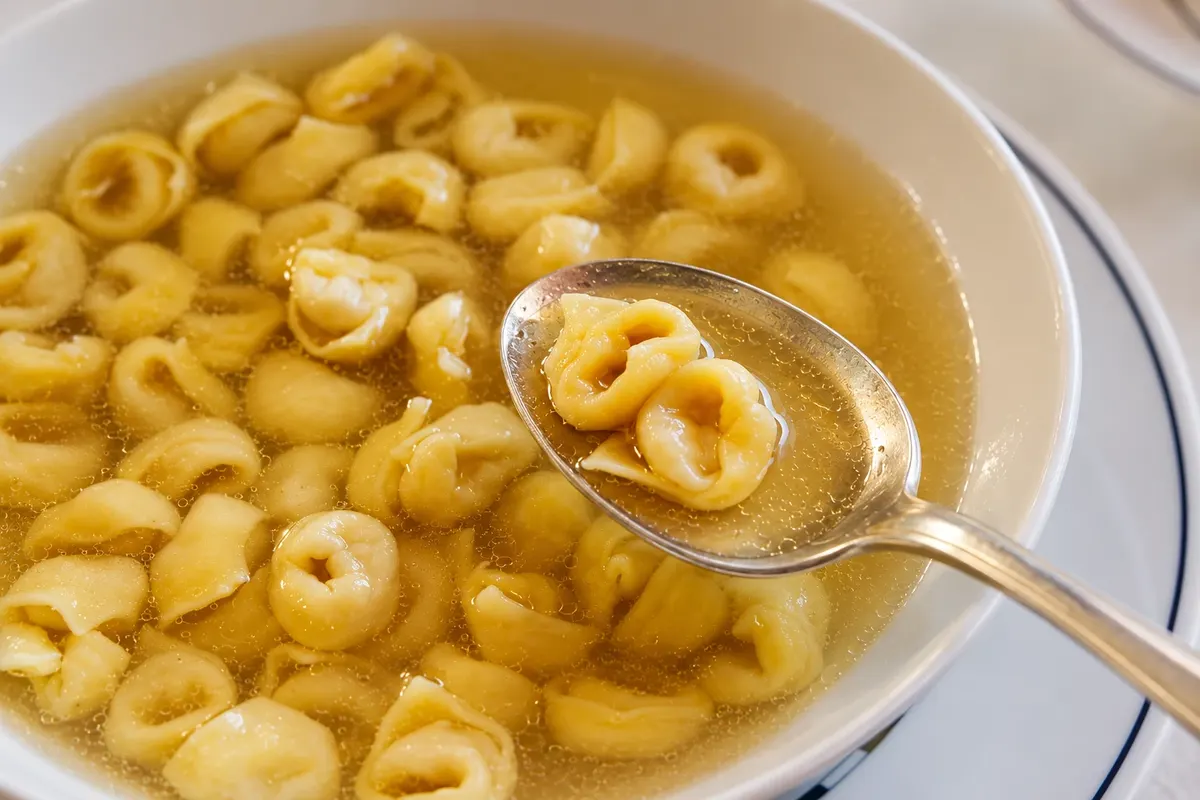
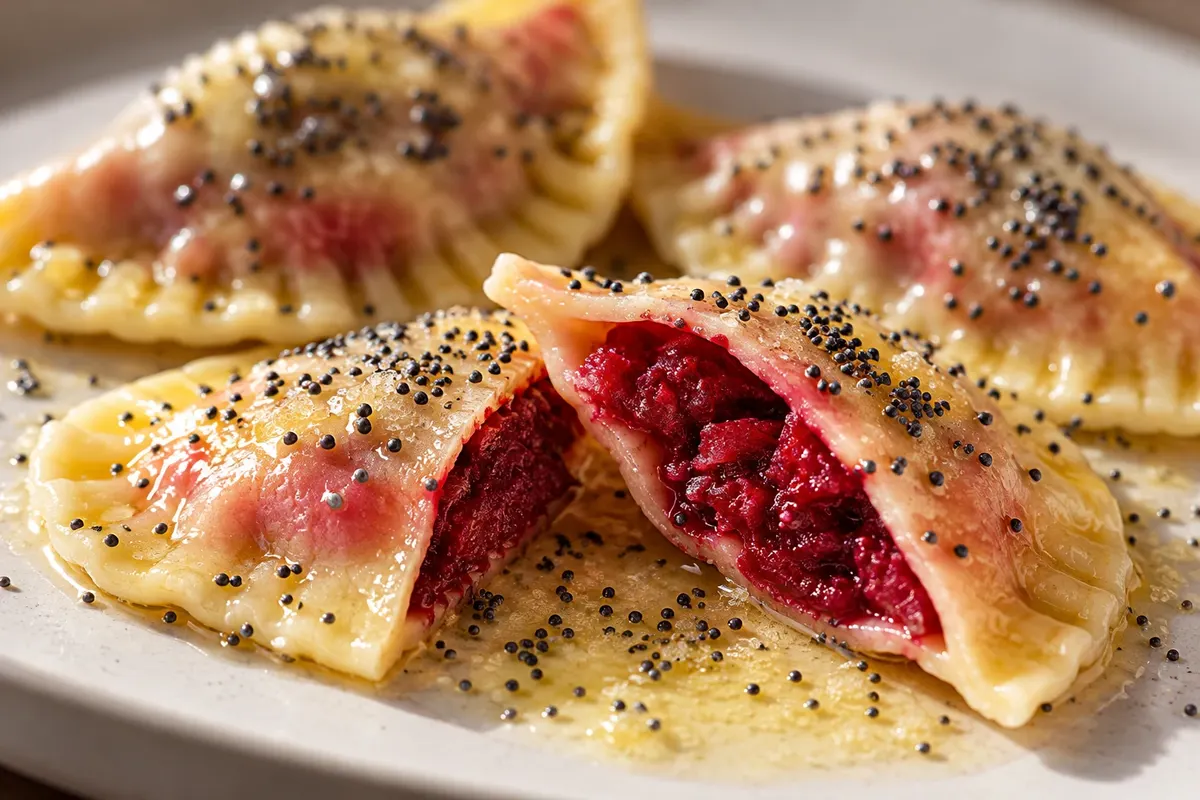
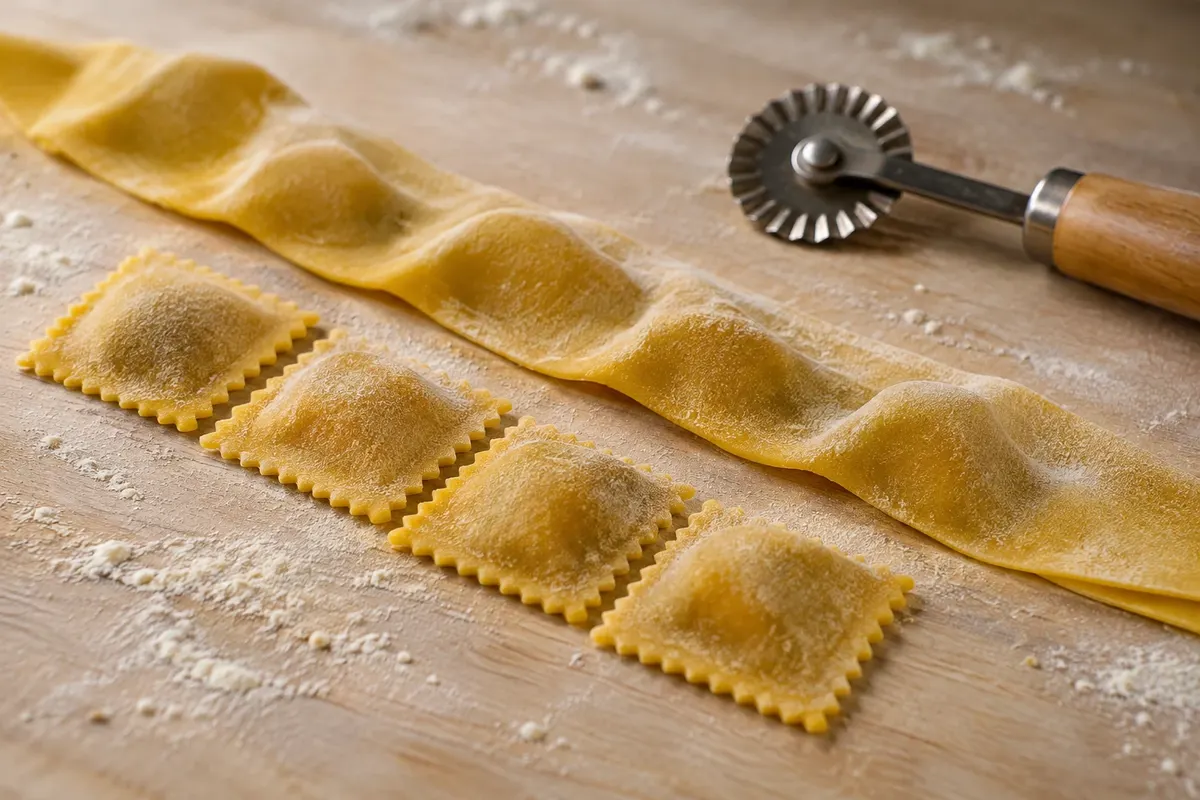
Cappellacci are Ferrara’s signature filled pasta. The filling is made with violina squash, a long, pale-skinned squash typical of the region. The squash is roasted to remove excess moisture, then mashed and mixed with grated cheese, breadcrumbs, and nutmeg. The flour-and-egg dough is rolled out thinly and cut into squares. Each square is filled and folded into a triangle, then the tips are joined to form a ring. The resulting shape resembles a farmer’s straw hat, which gives cappellacci their name. They are served with melted butter and sage or, in many homes, with meat ragù.
The recipe is associated with the court of the Este family, who ruled Ferrara during the Renaissance. Dello Scalco, a book by Duke Alfonso II d’Este’s cook, Giovanni Battista Rossetti, was published in 1584. It already mentions squash tortelli served with butter, considered the forerunners of cappellacci. Squash has long been part of Ferrara’s cooking, and families in the countryside also used the blossoms to make fritters.
In 2016, Cappellacci di zucca ferraresi were granted protected geographical indication status by the European Union. The designation requires the use of roasted violina squash and the distinctive hat shape, and limits production to the province of Ferrara. Unlike the filling in Mantua’s tortelli, the filling in cappellacci contains neither amaretti nor mostarda.


 Brasile
 Antartide
 Argentina
 Bolivia
 Cile
 Colombia
 Ecuador
 Guyana
 Guyana francese
 Isole Falkland
 Paraguay
 Perù
 Suriname
 Uruguay
 Venezuela
 Germania
 Austria
 Belgio
 Croazia
 Danimarca
 Slovacchia
 Slovenia
 Spagna
 Finlandia
 Francia
 Grecia
 Paesi Bassi
 Ungheria
 Irlanda
 Islanda
 Lussemburgo
 Norvegia
 Polonia
 Portogallo
 Regno Unito
 Cechia
 Svezia
 Svizzera
 Turchia
 Bermuda
 Canada
 Stati Uniti
 Groenlandia
 Messico
 Saint-Pierre e Miquelon
 Repubblica Dominicana
 Giappone
 Sudafrica
 Egitto
 Australia
 Figi
 Nuova Zelanda
 Papua Nuova Guinea