The festival
What is San Fermín
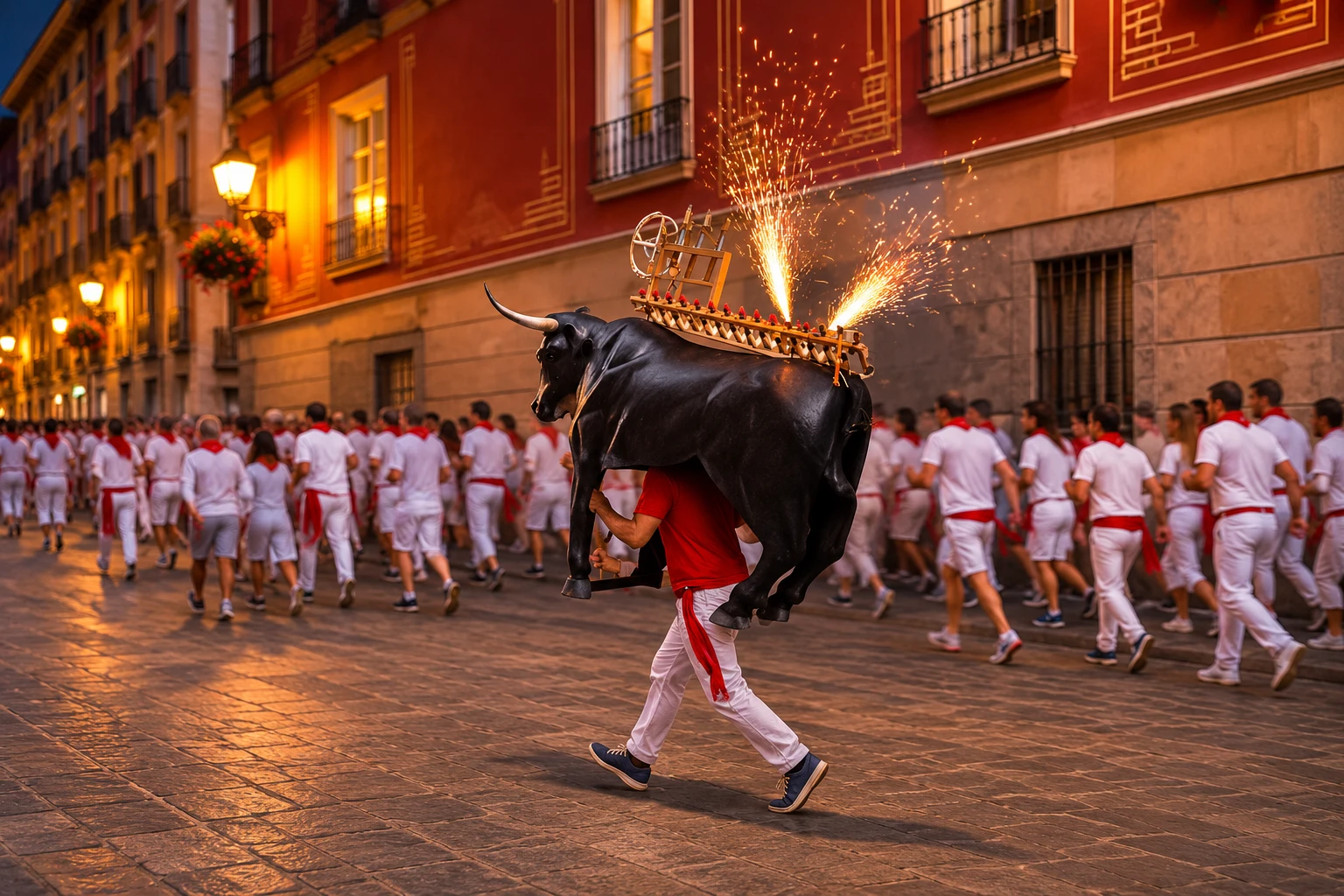
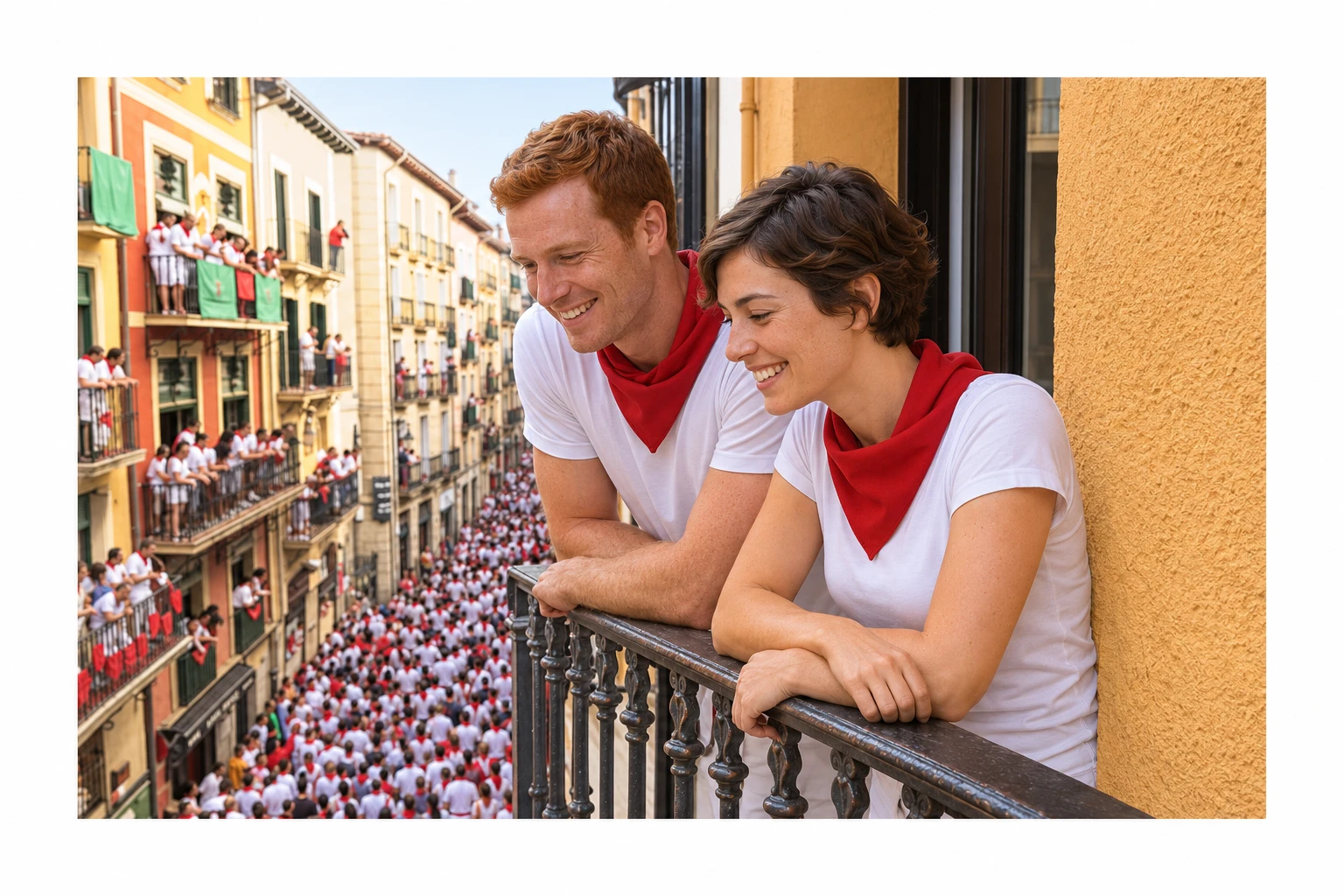
The San Fermín festivities, or Sanfermines, take over Pamplona from July 6 to 14. For nine days the old quarter of Navarre’s capital barely sleeps: there is music from dawn, a giants parade in the morning, the bull run in the morning, fireworks at night and street parties that go on late. Almost everyone wears the festival outfit—white shirt and pants or skirt, a red sash at the waist and a red neckerchief. The festival is declared of international tourist interest.
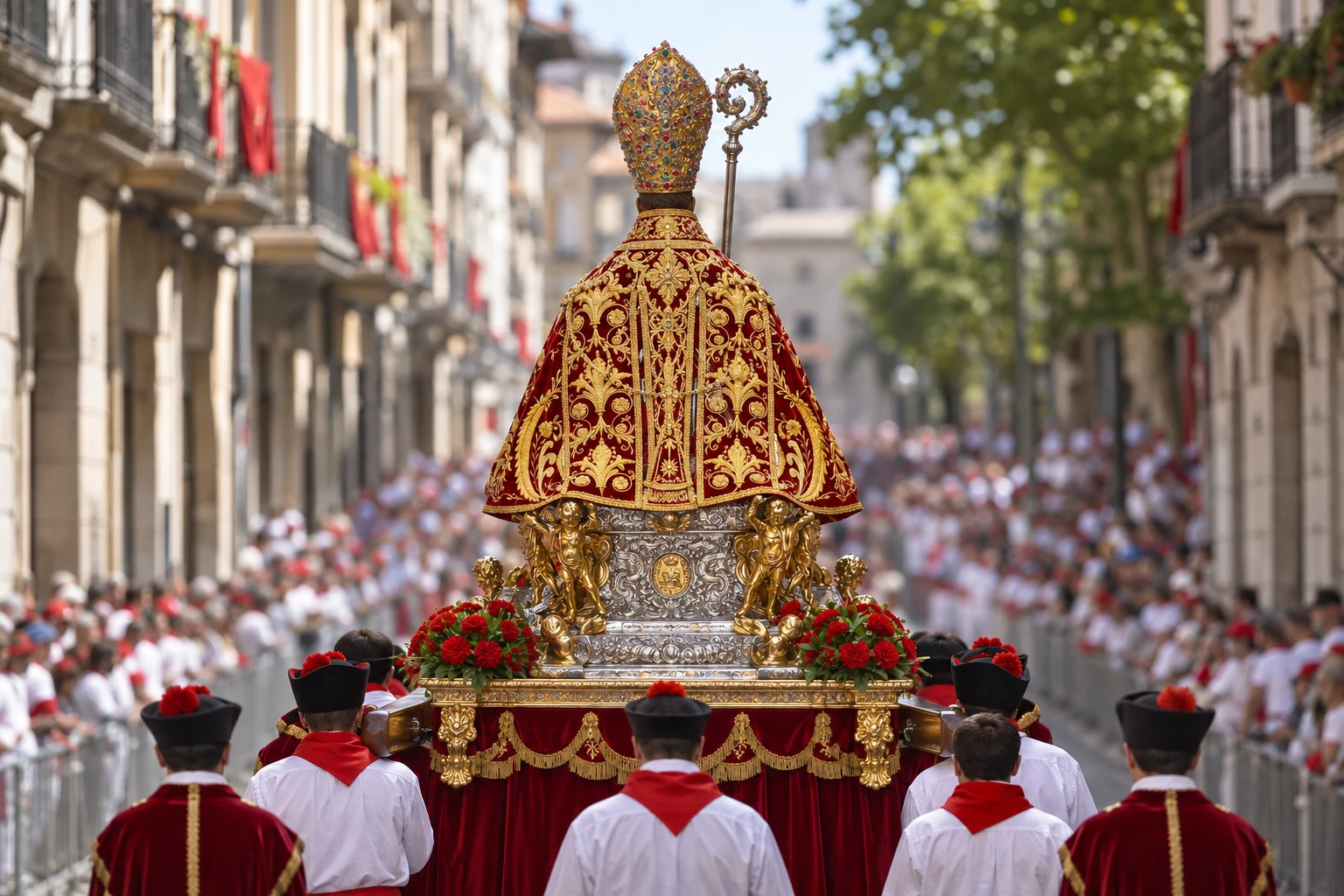
Saint Fermin, who according to tradition was the first bishop of Pamplona and died a martyr in Amiens, is co-patron of Navarre. In the Middle Ages the city celebrated him in the autumn with religious ceremonies and food for the poor; in 1591, because of bad weather in October, the town council moved the celebration to July 7, joining it to the summer fair, which already featured bullfights. The encierro began as a way to move bulls from the corrals outside the walls to the plaza where they would be fought in the afternoon, and wooden fences along the route already appear in the 18th century. In the 20th century, Ernest Hemingway’s novel The Sun Also Rises, after he first attended the festivities in 1923, spread Pamplona’s fame worldwide; a monument to the writer stands next to the bullring.
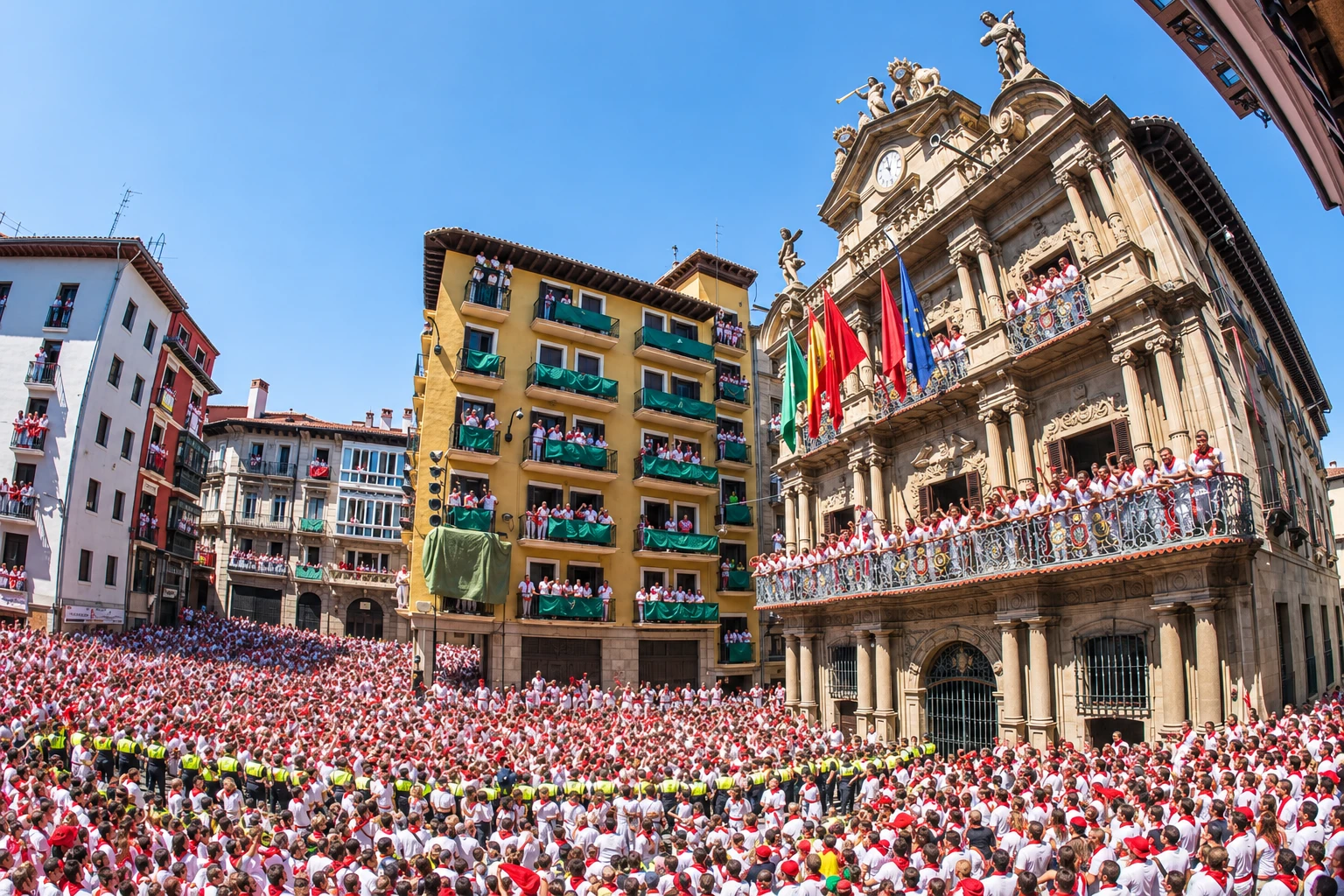
The opening is the Chupinazo: at noon on July 6, a rocket launched from the town hall balcony over the packed Plaza Consistorial starts the festivities, and everyone ties the red neckerchief around their neck. Those who cannot fit in the square follow on giant screens set up elsewhere in the city, such as Paseo de Sarasate and Plaza de los Fueros.
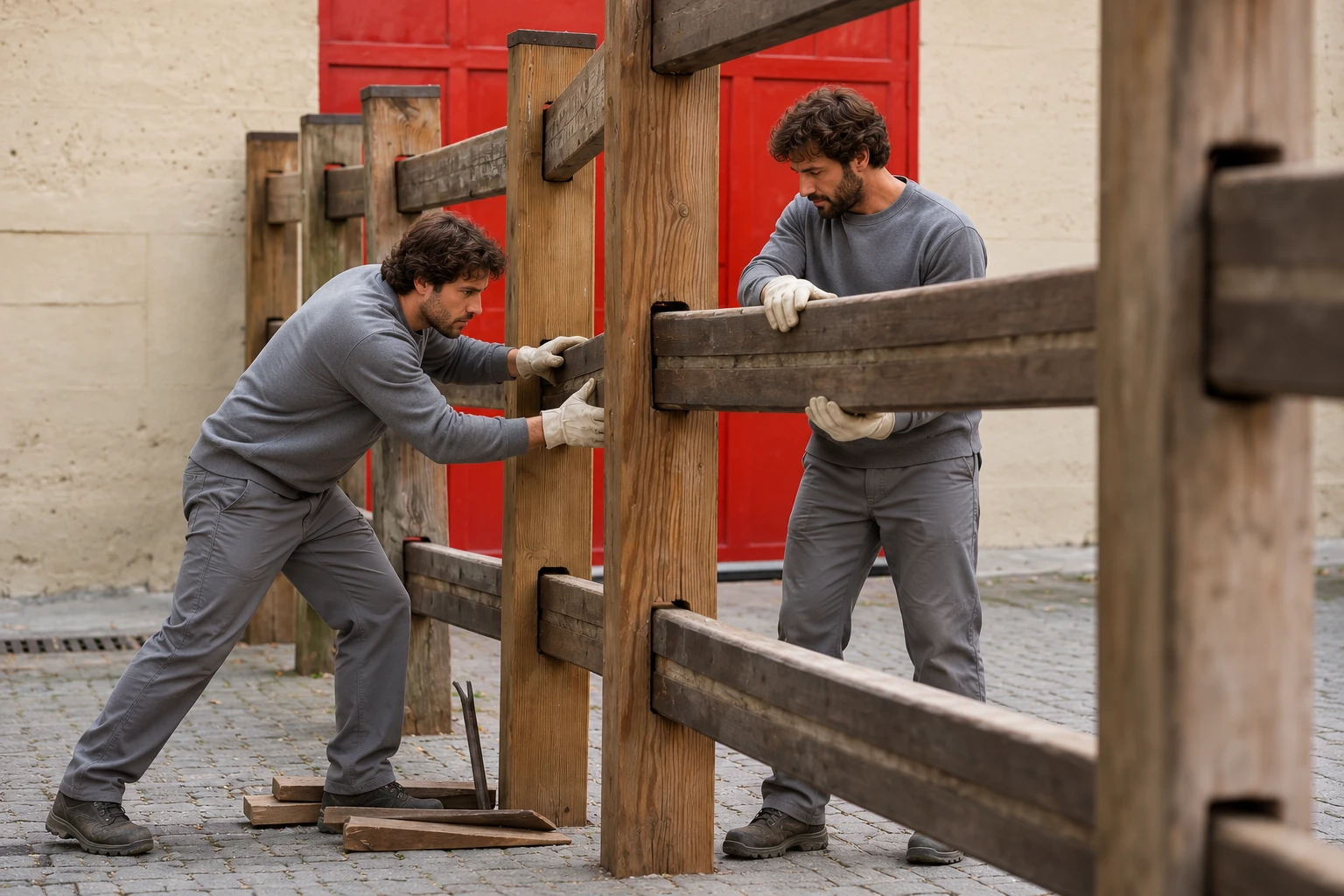
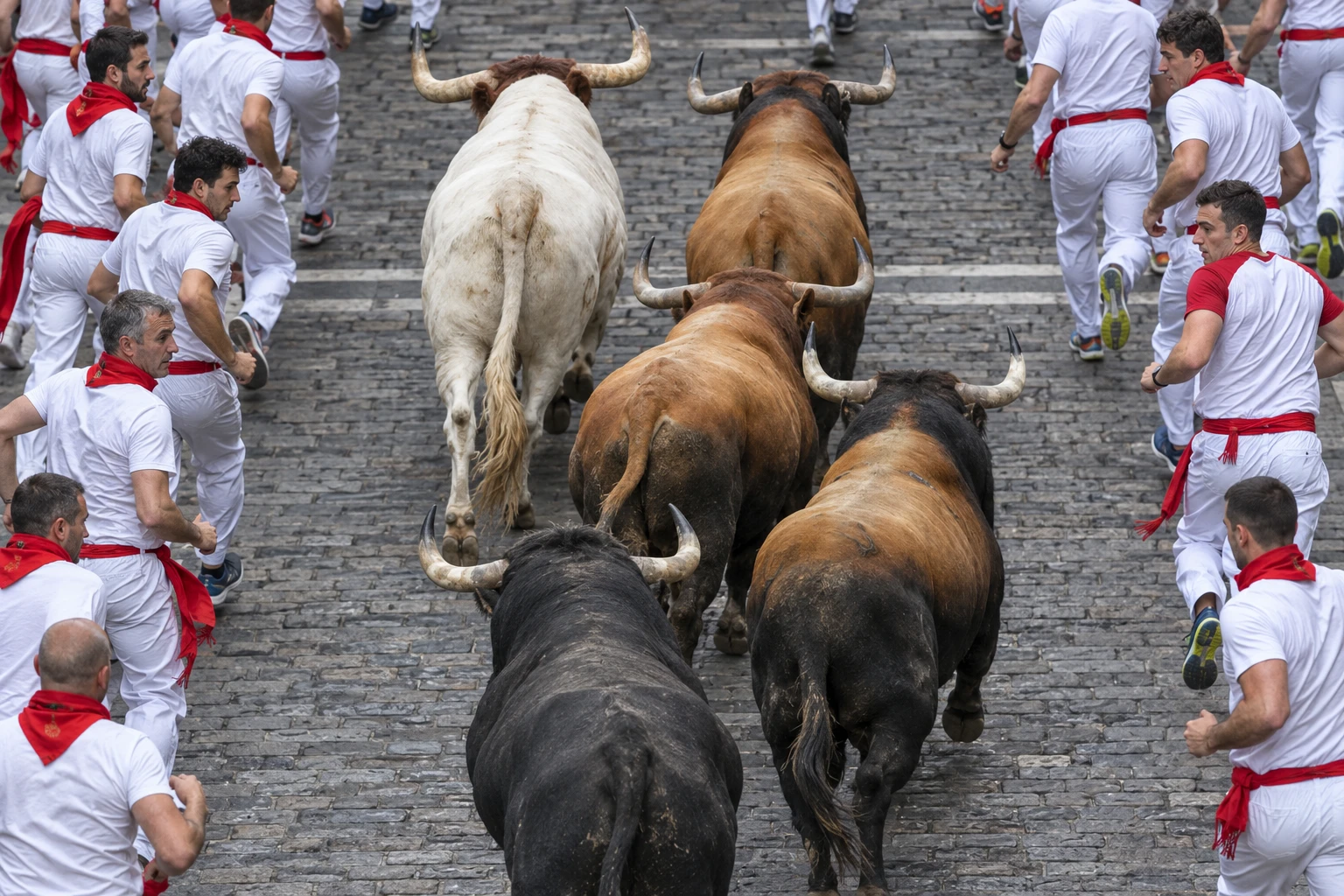
From July 7 to 14, every morning the bulls that will take part in that day’s bullfight run through the streets toward the bullring, accompanied by lead oxen, the cabestros, with runners in white ahead. Before the start, runners sing three times before a small image of Saint Fermin on the Cuesta de Santo Domingo, asking the saint for protection, many holding a rolled newspaper. The route is about 850 meters: it climbs the Cuesta de Santo Domingo, crosses the town-hall square, turns into Mercaderes, continues along the long Estafeta street, takes the Telefónica curve and enters the arena through the Callejón. The run usually lasts a few minutes and is marked by rockets: the first opens the corrals, the last signals that all the bulls are inside. Carpenters erect and dismantle part of the wooden fences of the route each day.
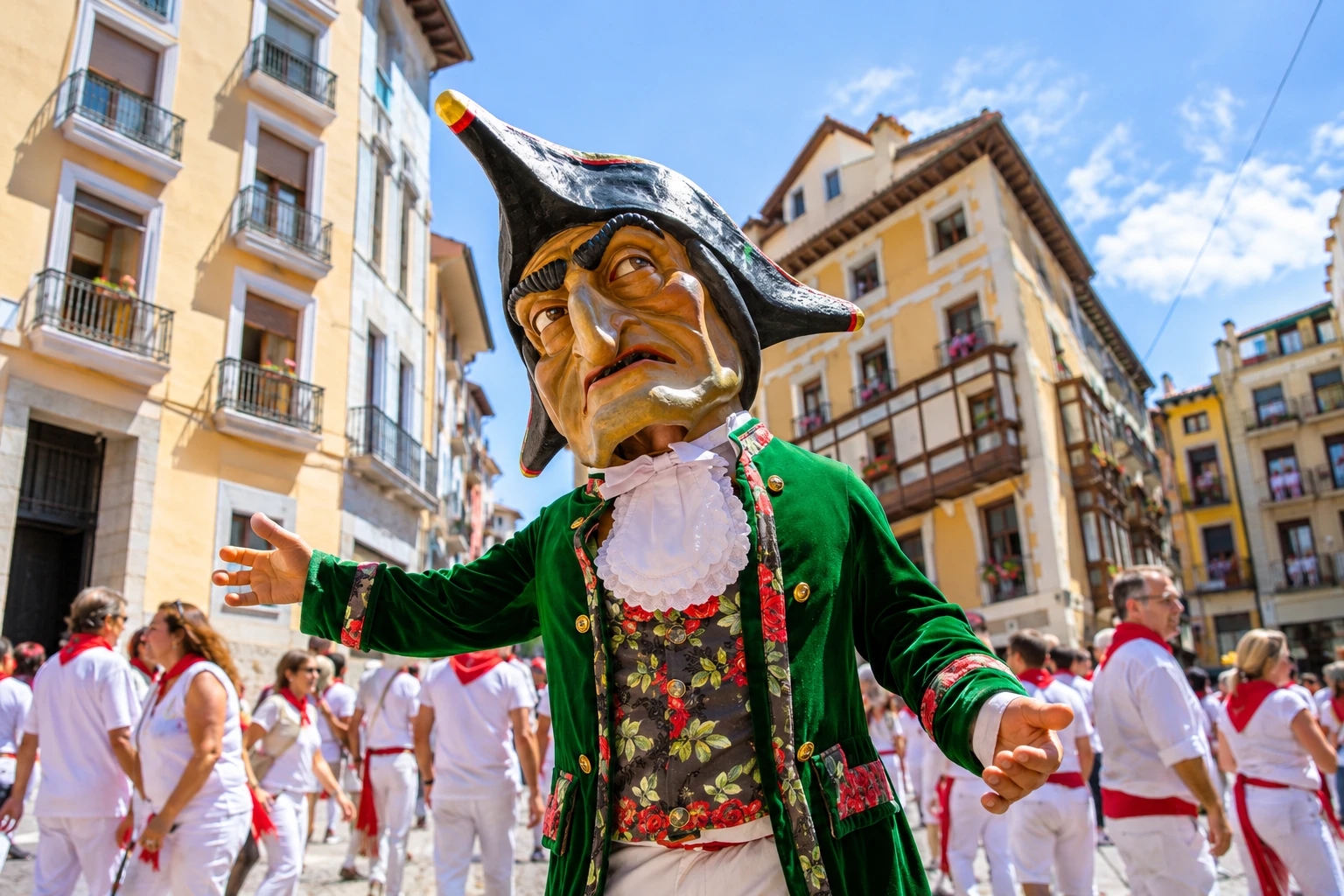
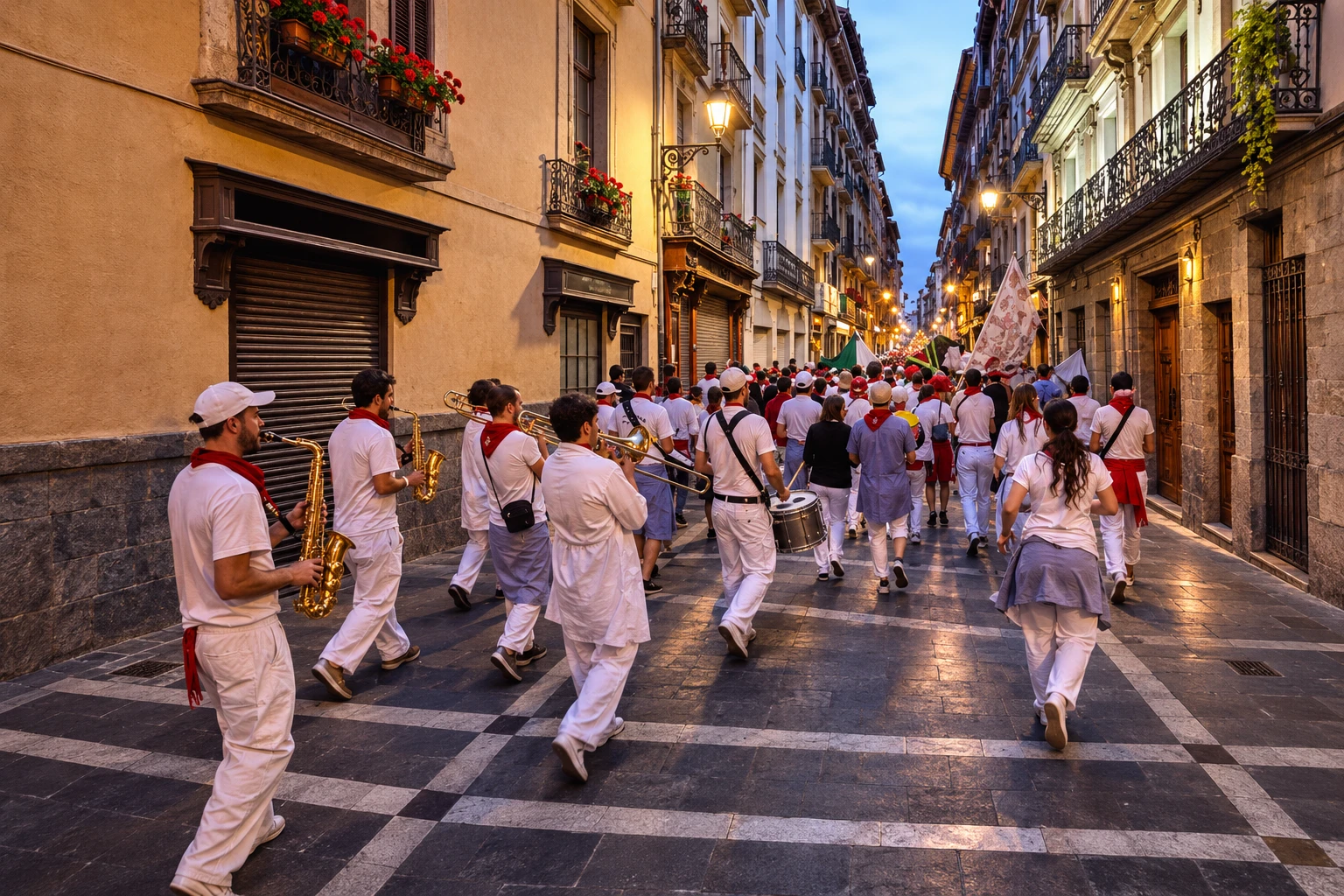
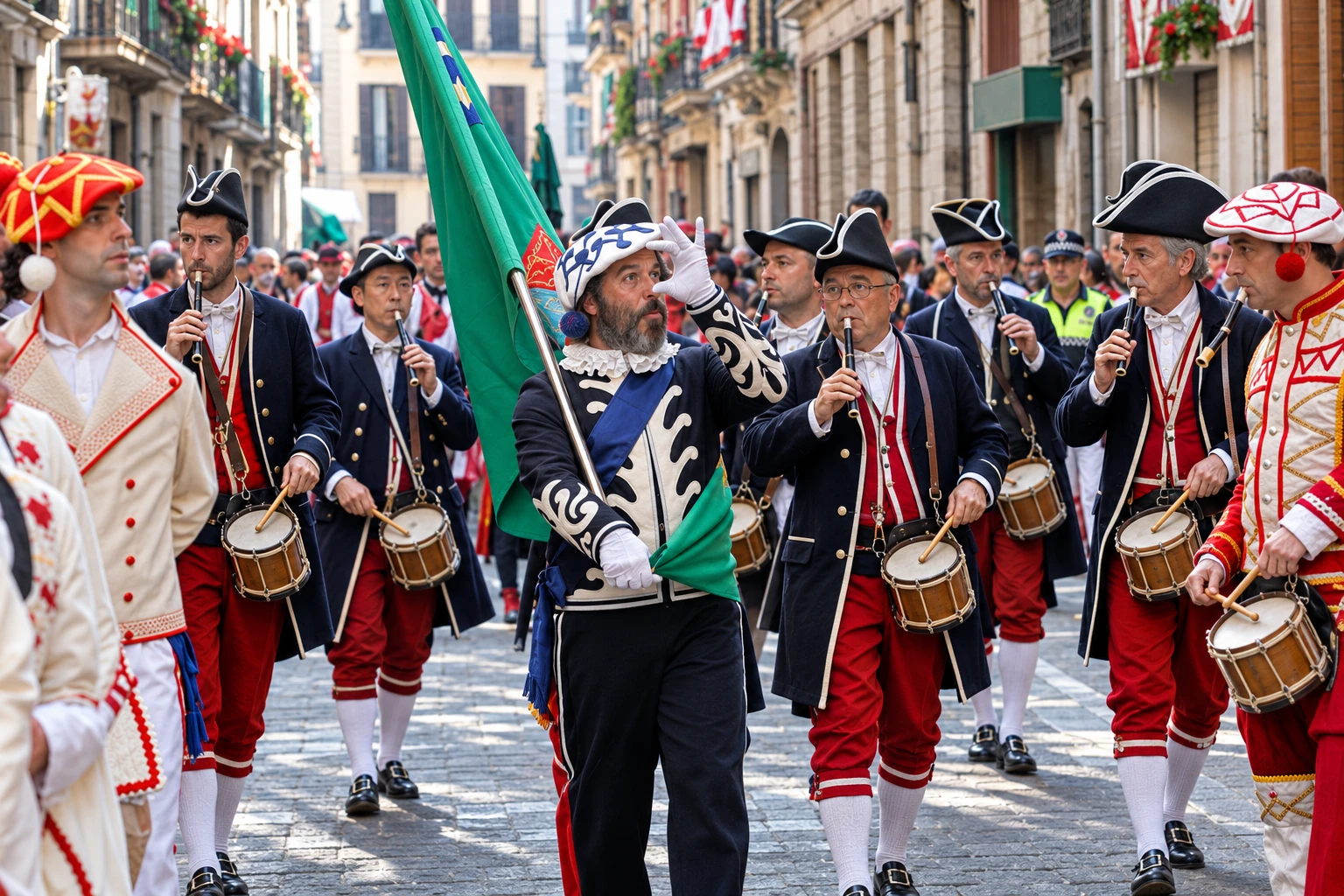
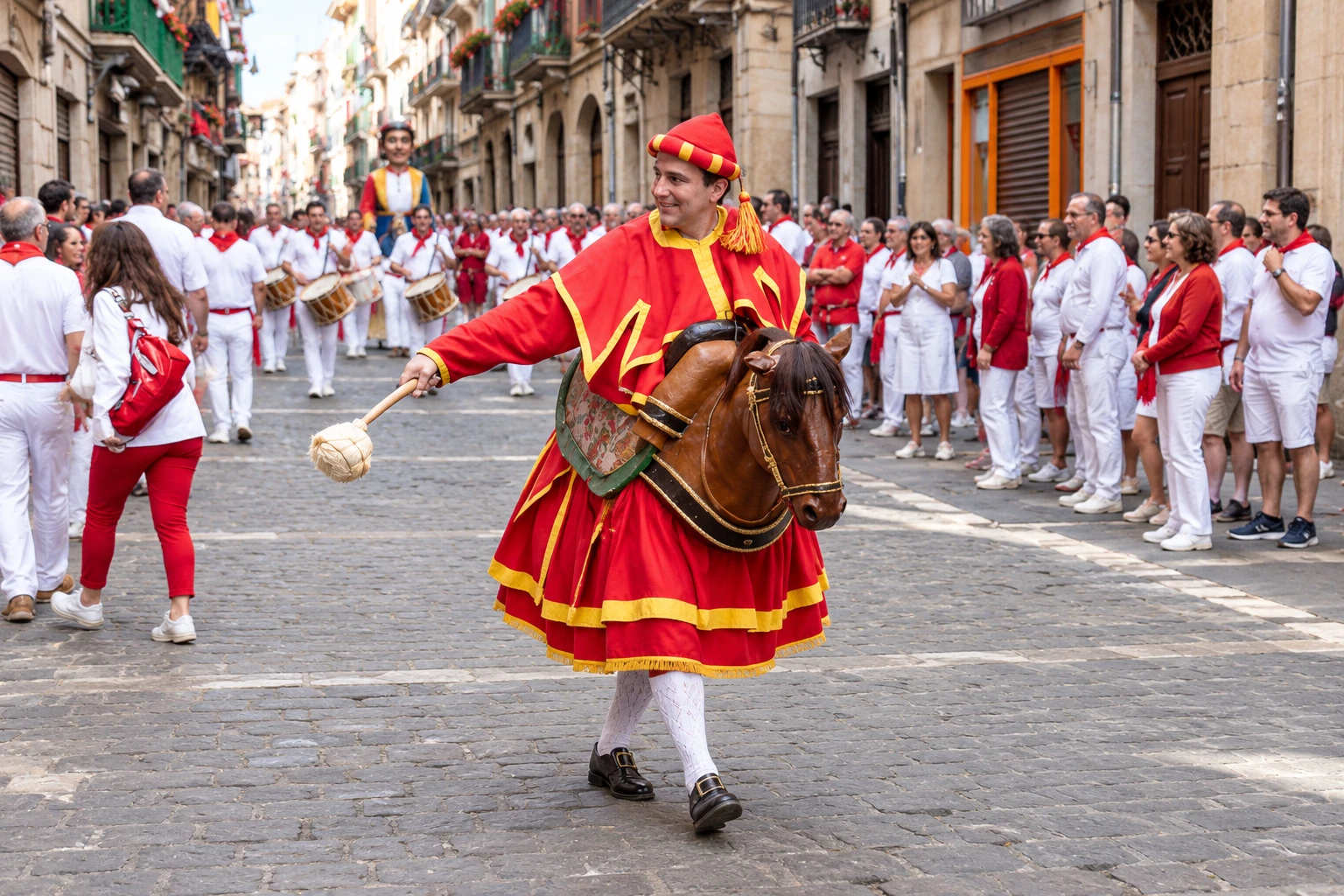
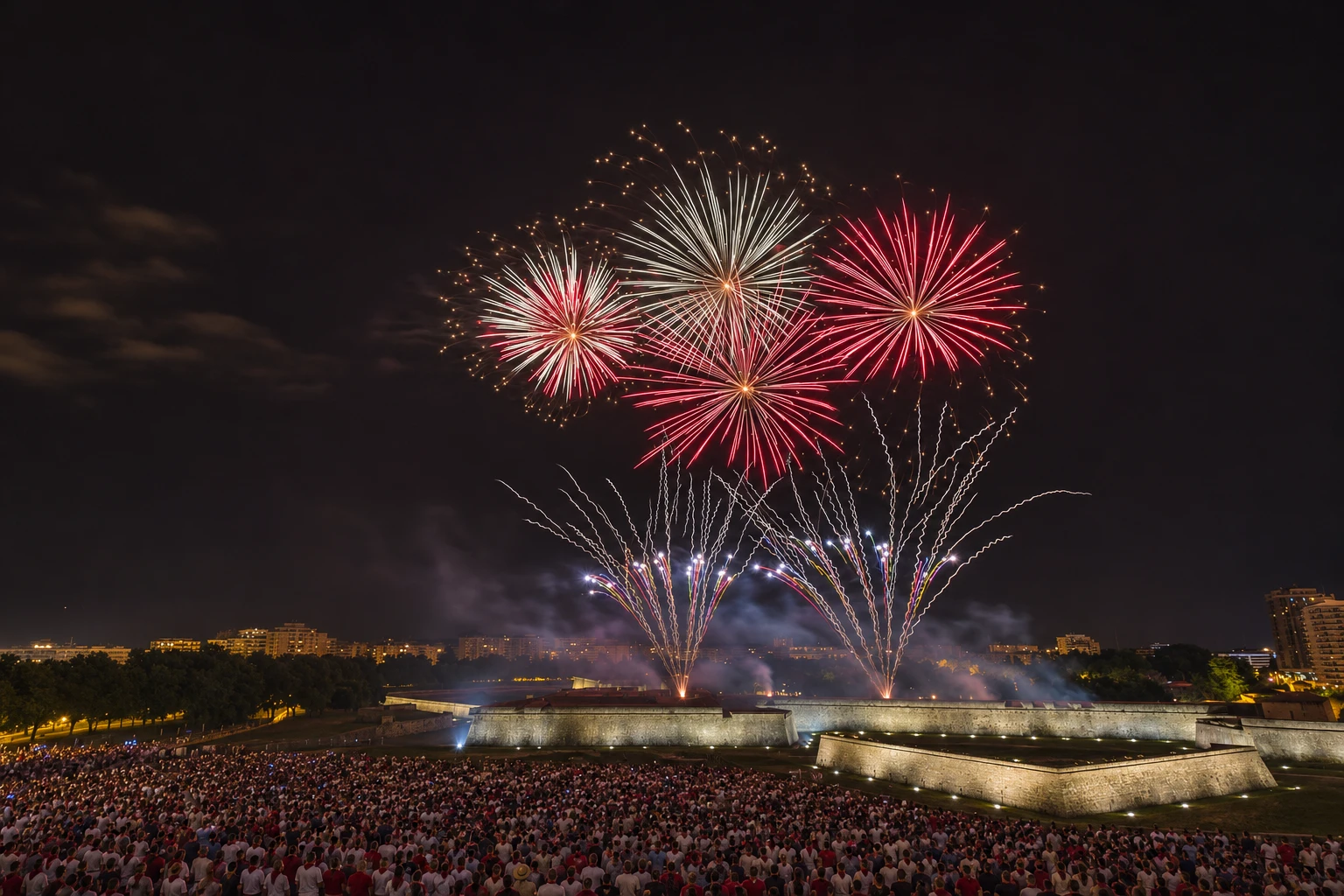
The rest of the day follows a different pace. Early on, the municipal band La Pamplonesa plays dianas through the center. After the encierro, the Comparsa de Gigantes y Cabezudos, with giants made in 1860 and cabezudos from 1890, parades the streets accompanied by pipers, and the kilikis and zaldikos chase after children. On July 7, the saint’s day, the image of Saint Fermin leaves in procession from the church of San Lorenzo through the central streets, with authorities, dantzaris, txistularis and the municipal band. In the afternoon there is a bullfight in the bullring, and the peñas, the city’s festival associations, march out in procession with their bands. At night, an international fireworks competition, a tradition dating back to the 17th century, lights the sky from the Citadel.
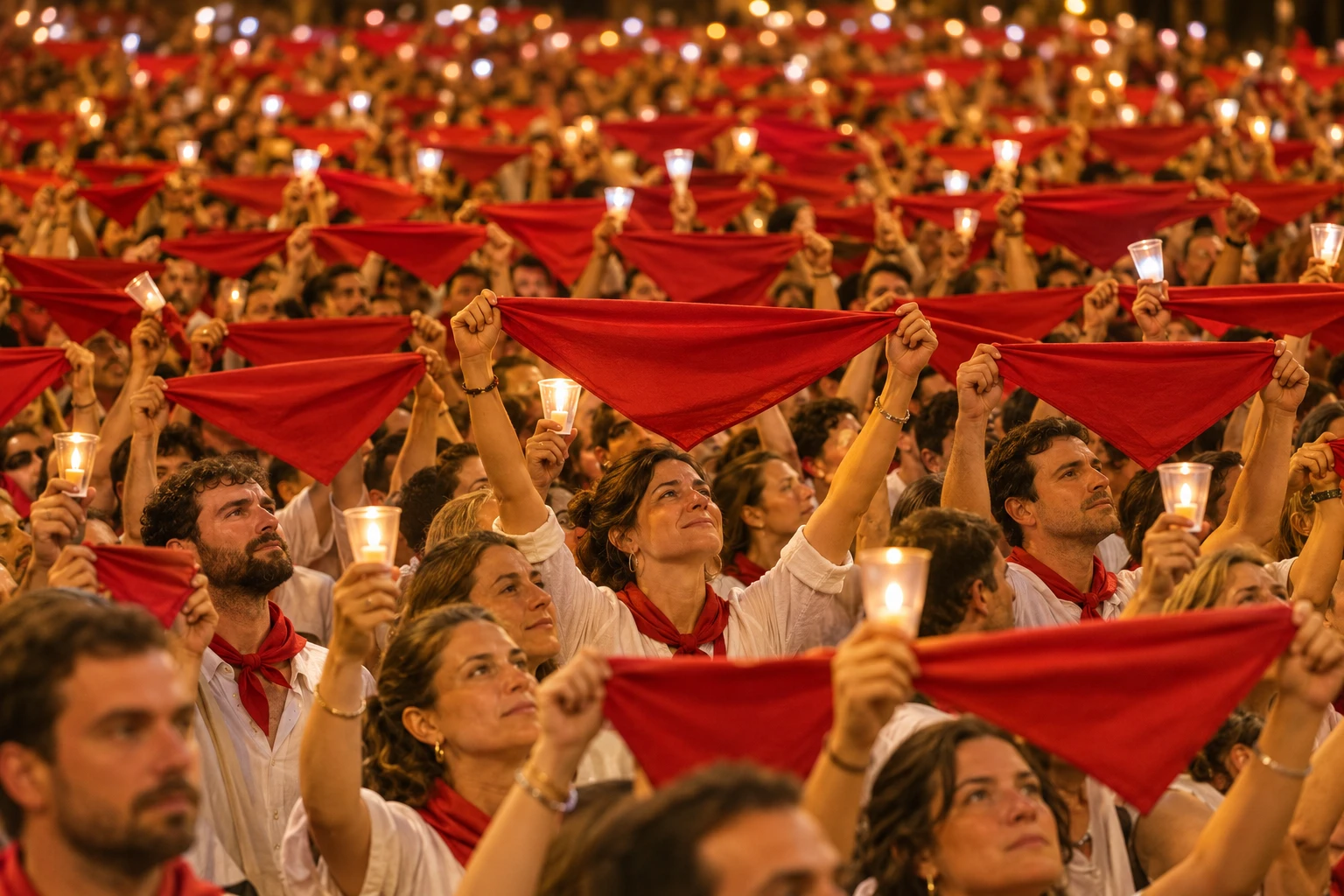
The ending is the Pobre de mí: at midnight on July 14, the Plaza Consistorial fills with people holding lit candles, who raise their red neckerchiefs and sing the farewell until the next year; many then leave the candle and neckerchief on the railings of the church of San Lorenzo. For visitors, San Fermín combines in one week a centuries-old religious tradition, the world-famous encierro and a street festival open to all.
How to enjoy it
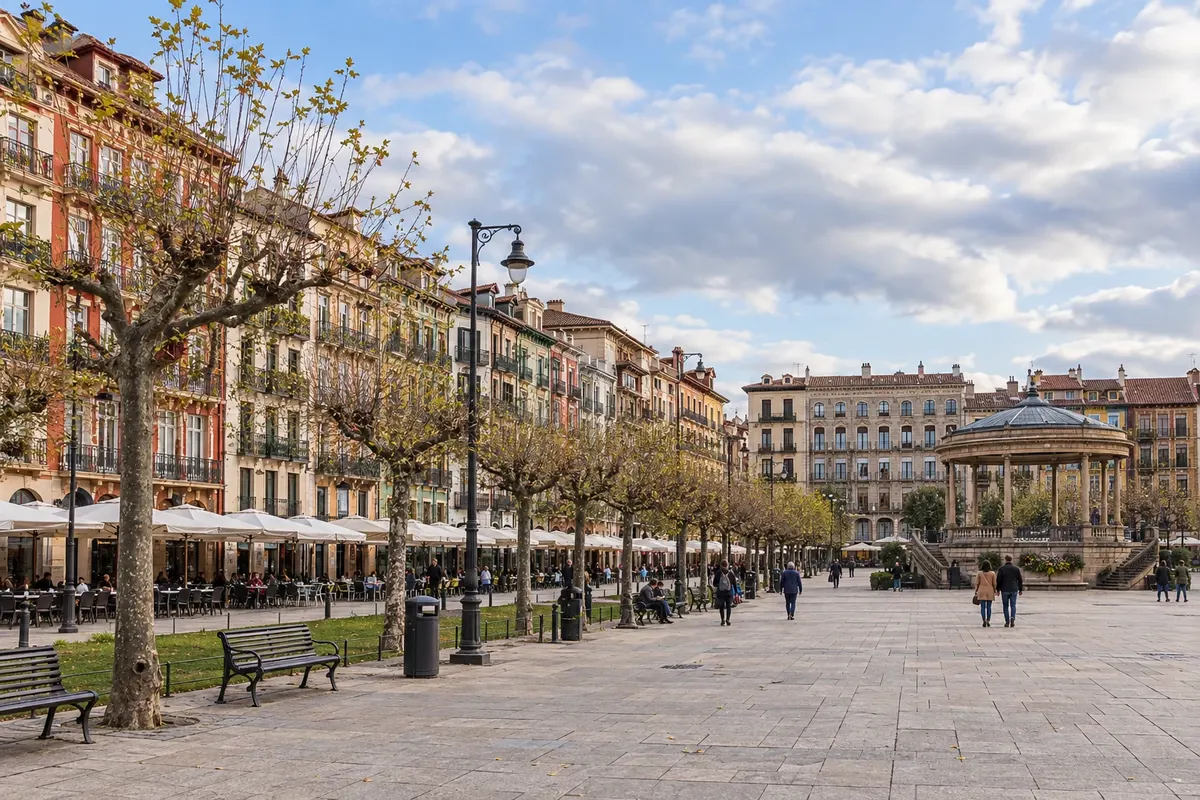
The old town, where almost everything happens, is largely pedestrian; you can reach all spots on foot, and urban buses, the villavesas, run extra service during the festivities, with changes to routes and timetables. To watch the encierro, arrive very early at the barriers along the route or try to get a seat in the bullring stands; there are also balconies rented by residents along the streets. Running has rules set by the town council: people under 18, anyone who has drunk alcohol or used drugs, and anyone carrying a bag, backpack or wearing unsuitable footwear are not allowed to run; filming or photographing along the route, provoking or touching the bulls and standing on the route without intent to run are prohibited, and you must obey police and shepherds. Runners enter the route before the start from the upper part, between the Cuesta de Santo Domingo and the town-hall square. At the Chupinazo, the town council does not allow glass, cans or sticks and advises against flip-flops and sandals. July 6 and 7 and weekends are the busiest; on weekdays the atmosphere is calmer. Bring white clothes and the red neckerchief, which can also be bought in Pamplona, and water for the July heat.
What to eat
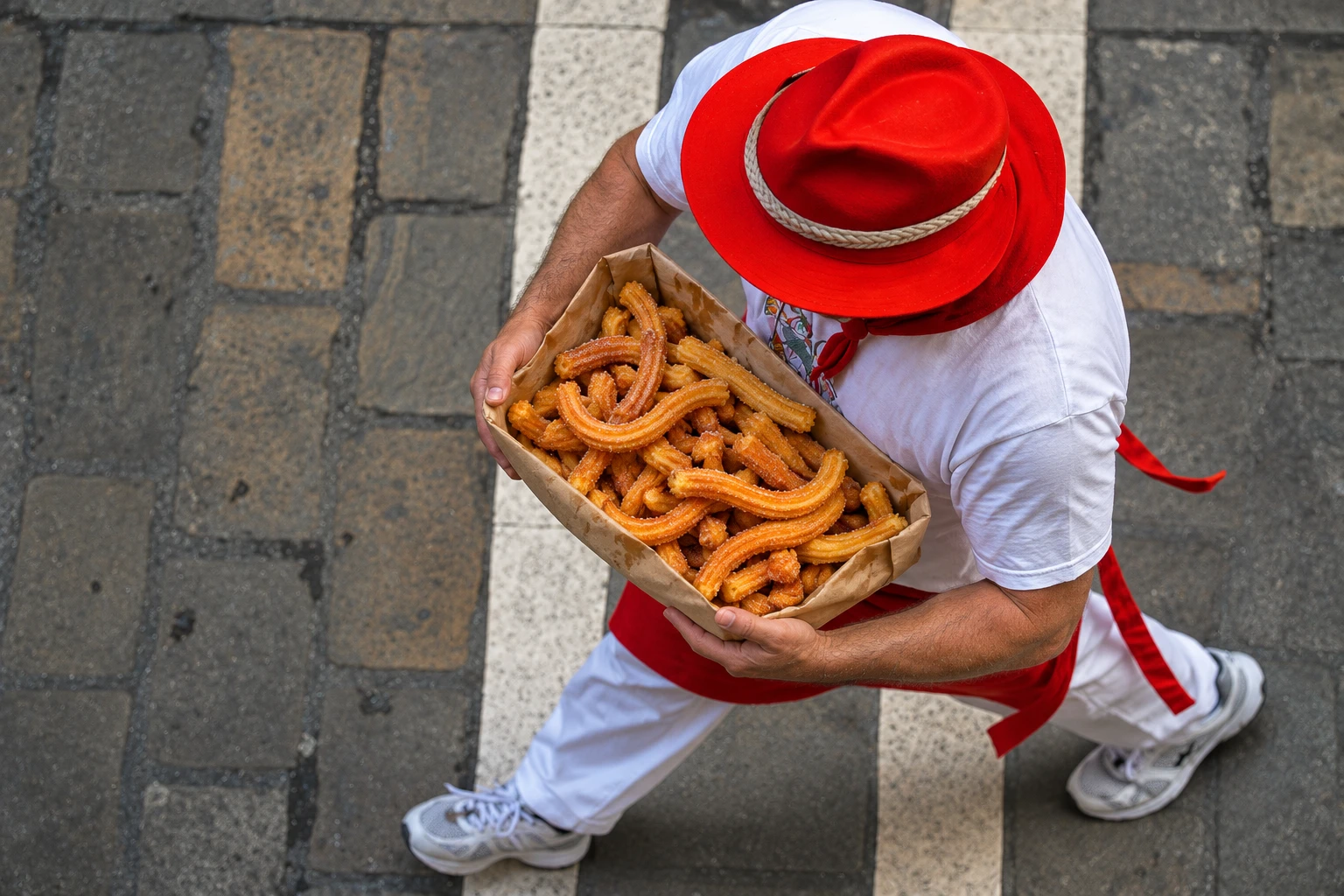
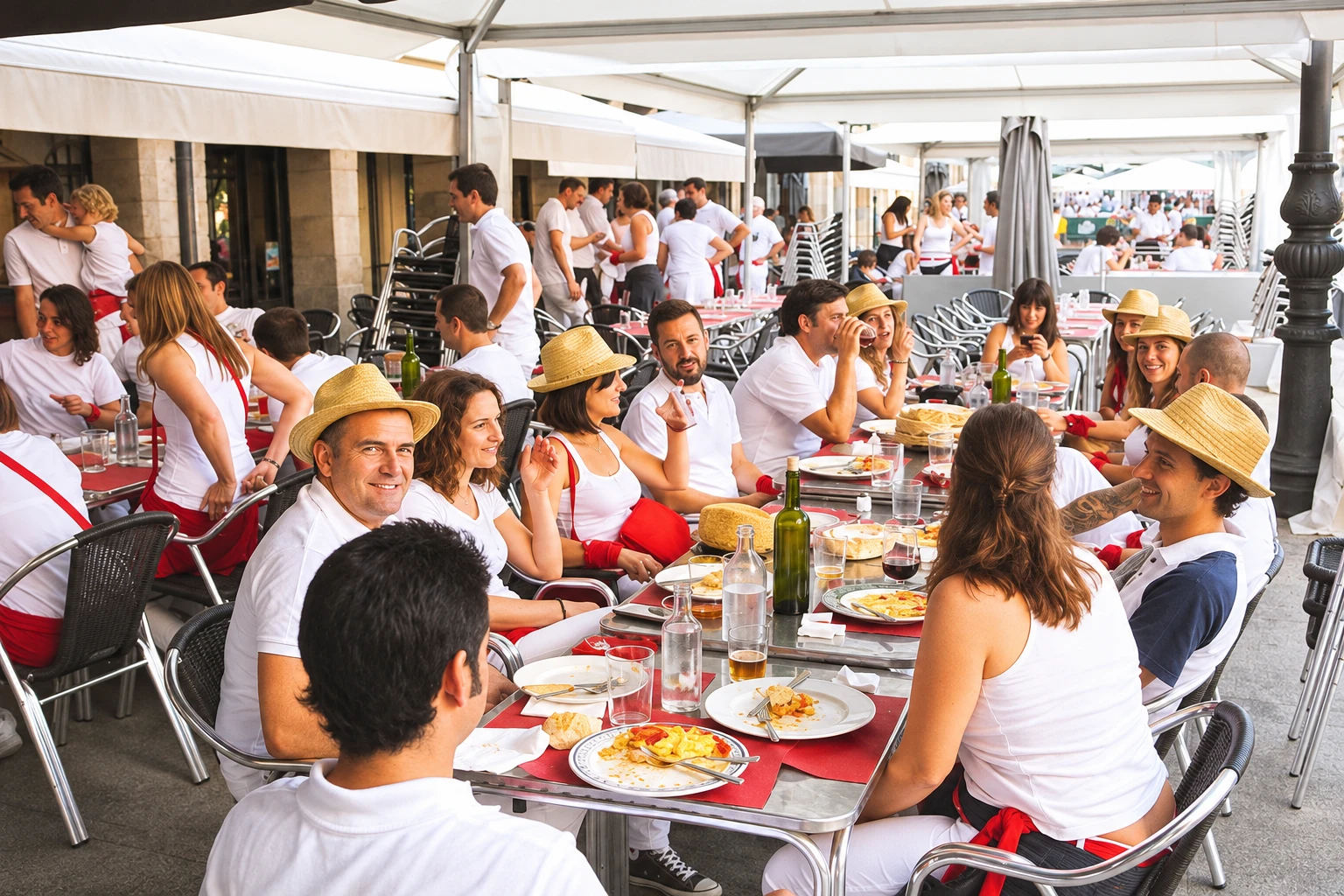
The almuerzo, the mid-morning meal, is a festival ritual: fried eggs with chistorra, the thin Navarrese sausage, or magras with tomato, after the encierro or the giants. Churros with hot chocolate are the breakfast for those returning from the run, and some traditional churrerías in the old town open only on these days. At lunch, Navarrese dishes fill the tables: bacalao ajoarriero, stewed oxtail, pochas (local beans), fresh fava beans, and lamb chilindrón. During the bullfight, the peñas have their merienda in the stands, with food brought from home. The bars on Calle Estafeta and in the Plaza del Castillo serve pinchos all day long.


 Brazil
 Argentina
 Bolivia
 Chile
 Colombia
 Ecuador
 Guyana
 French Guiana
 Falkland Islands (Malvinas)
 Paraguay
 Peru
 Suriname
 Uruguay
 Venezuela
 Germany
 Austria
 Belgium
 Croatia
 Denmark
 Finland
 France
 Greece
 the Netherlands
 Hungary
 Ireland
 Iceland
 Italy
 Luxembourg
 Norway
 Poland
 Portugal
 the United Kingdom
 the Czech Republic
 Sweden
 Switzerland
 Turkey
 Canada
 the United States
 Mexico
 the Dominican Republic
 South Africa
 Australia
 Fiji
 New Zealand
 Papua New Guinea

 January