The festival
What is La Tomatina
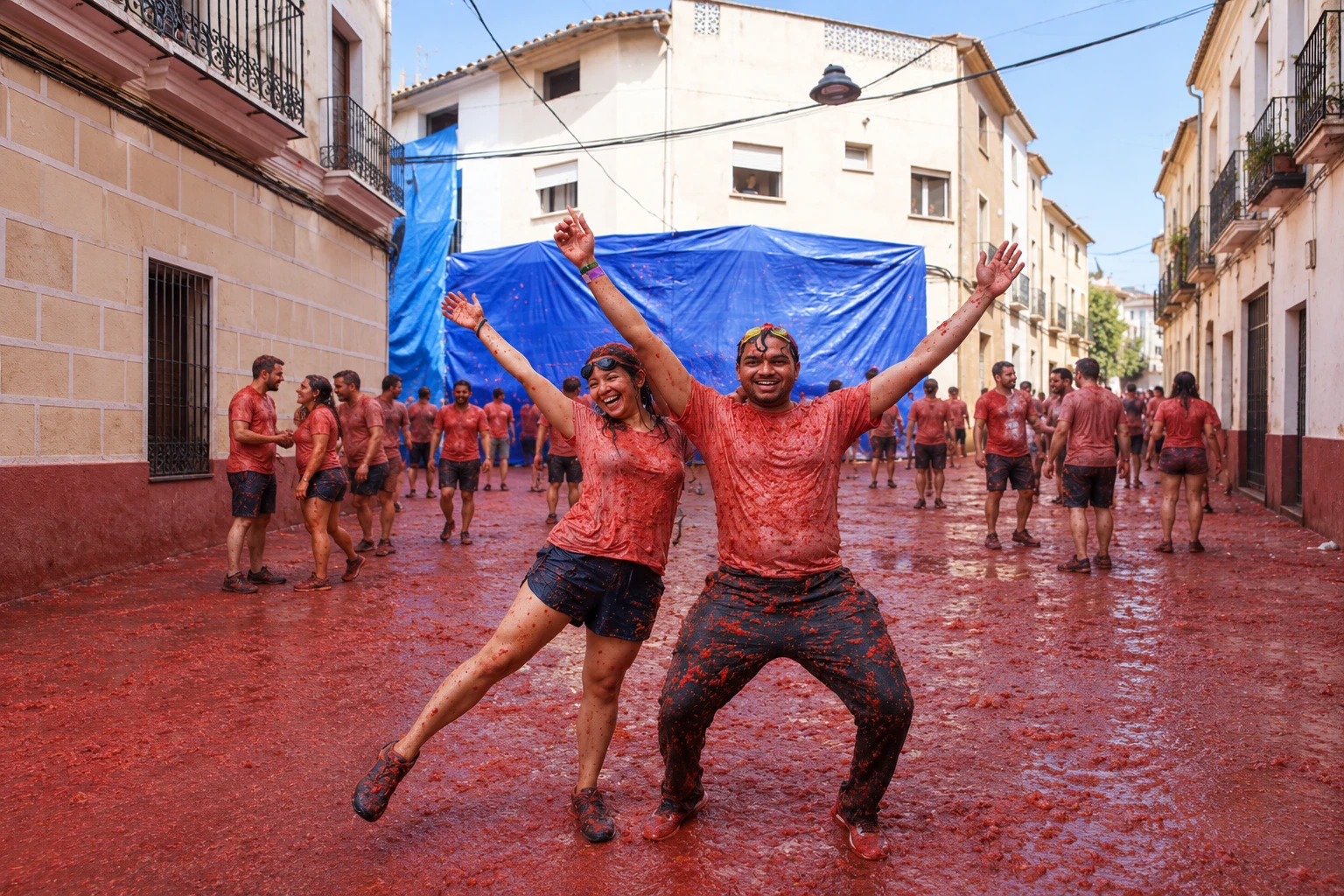
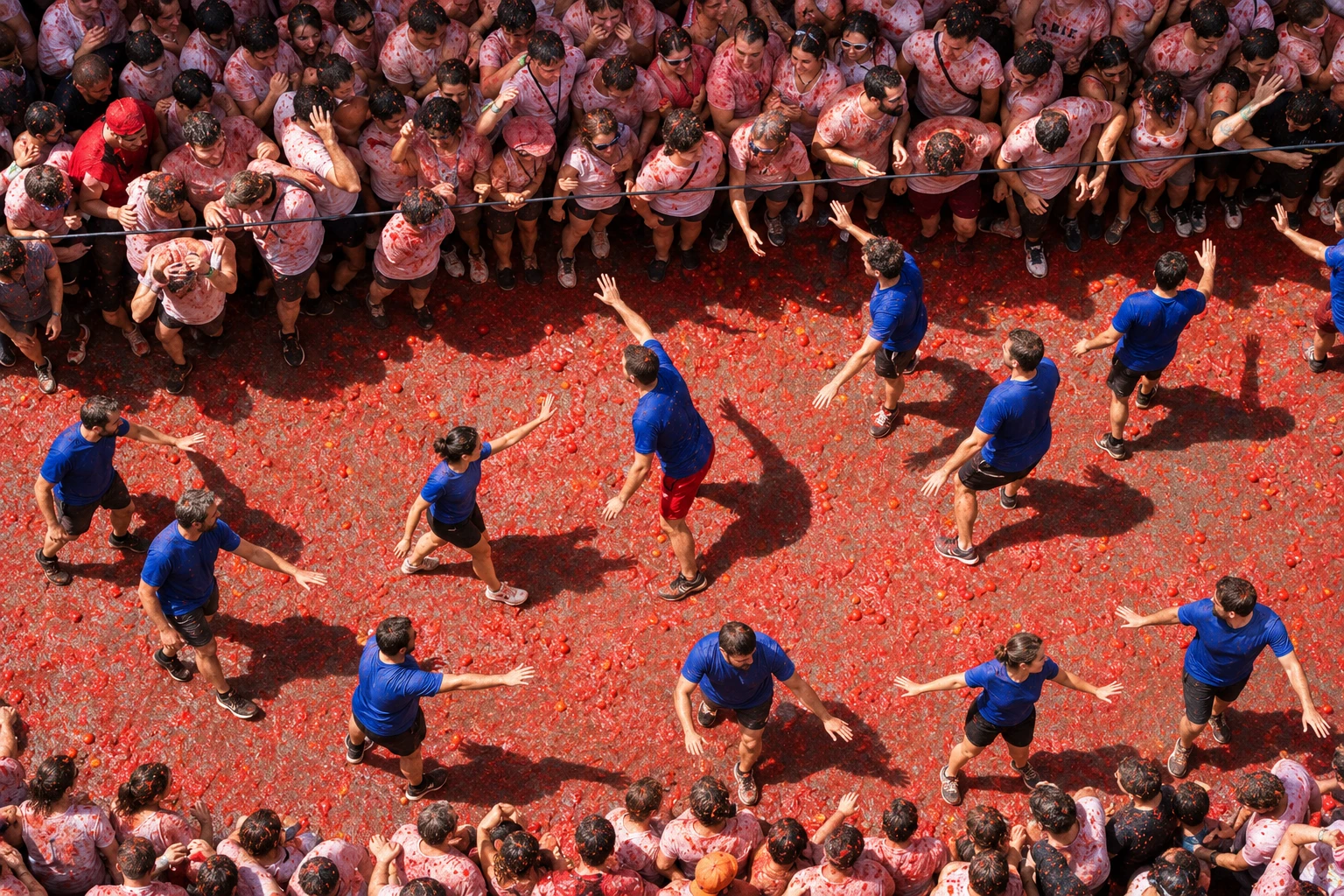
La Tomatina is the festival that made Buñol famous worldwide. On the last Wednesday of August, during the town’s week of patron saint festivities, the streets of the center become a battlefield where participants throw ripe tomatoes at each other for about an hour, until the ground, the walls and the people are stained red. Since 2002 it has been declared a Festival of International Tourist Interest.
Its origin dates to 1945. On the last Wednesday of August that year, during the parade of giants and big-headed figures for the feast of San Luis Beltrán, a fall provoked a fight in the Plaza del Pueblo, and young people grabbed tomatoes from a nearby produce stall to throw. The following year they returned to the square with tomatoes brought from home. The event was banned in the early 1950s, with fines and arrests, until 1957 when locals staged the Burial of the Tomato, a mock funeral procession with a coffin and funeral march. Soon after the festival was authorized and added to the official program. A Spanish television report in 1983 made La Tomatina known across Spain and, over time, abroad.
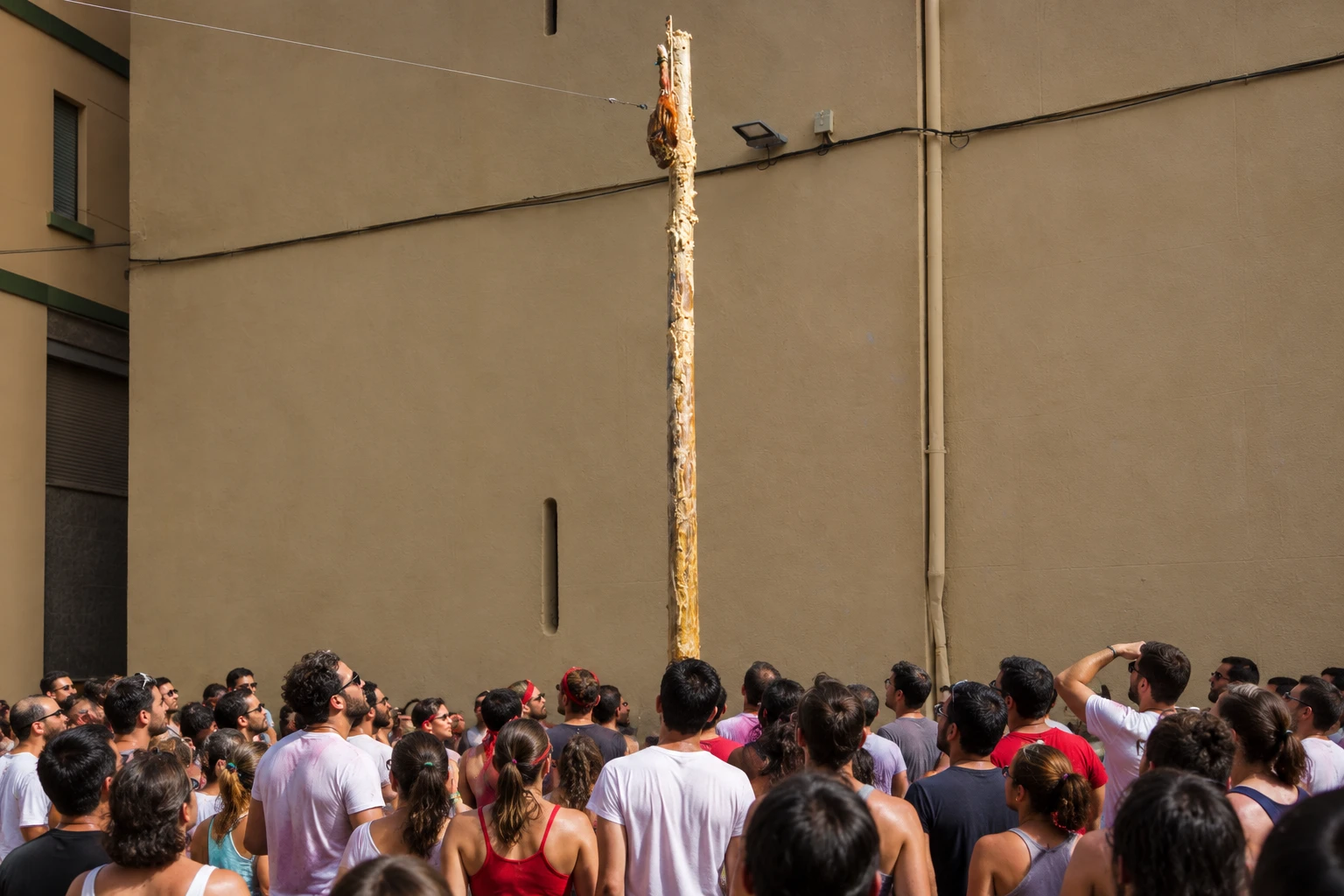
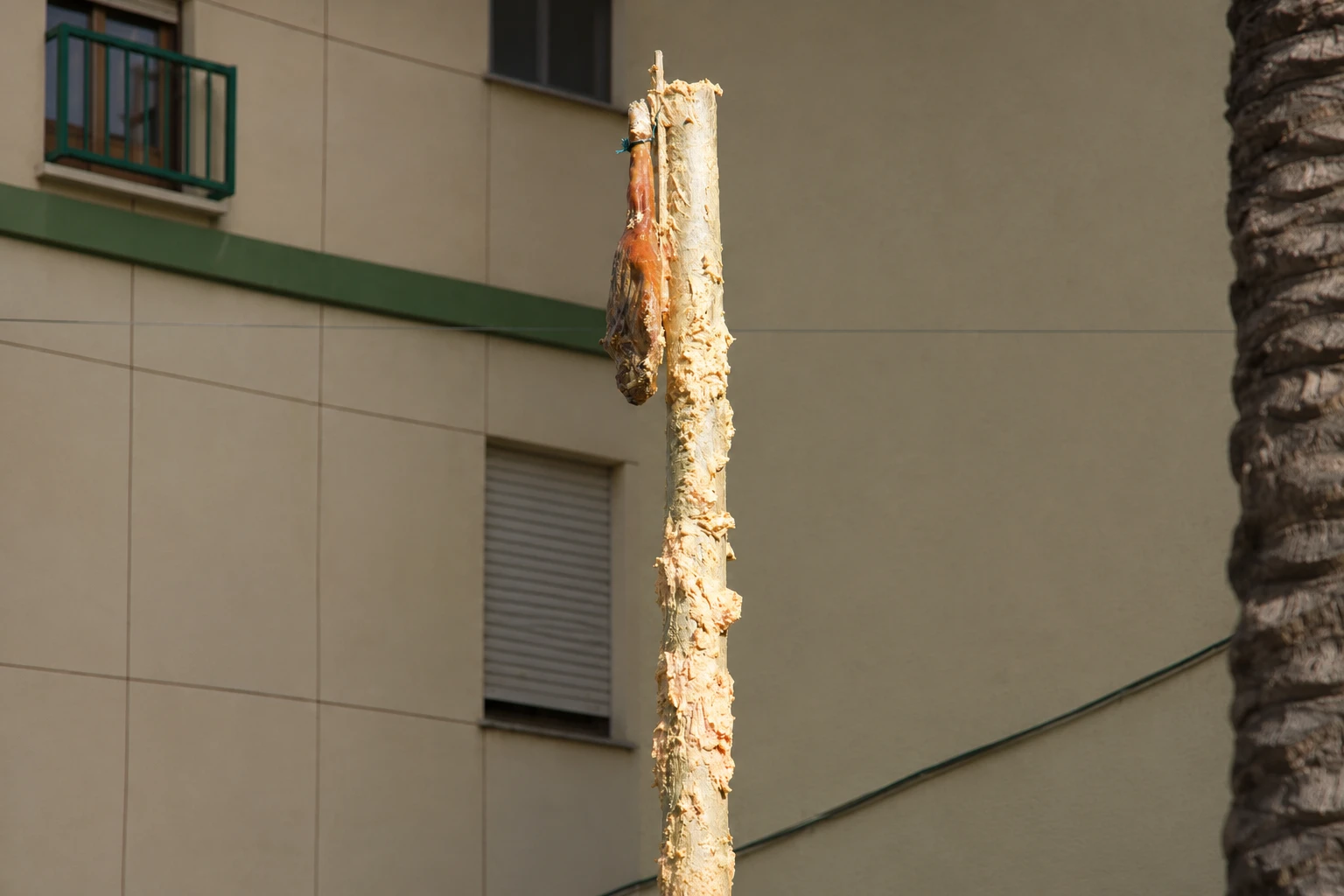
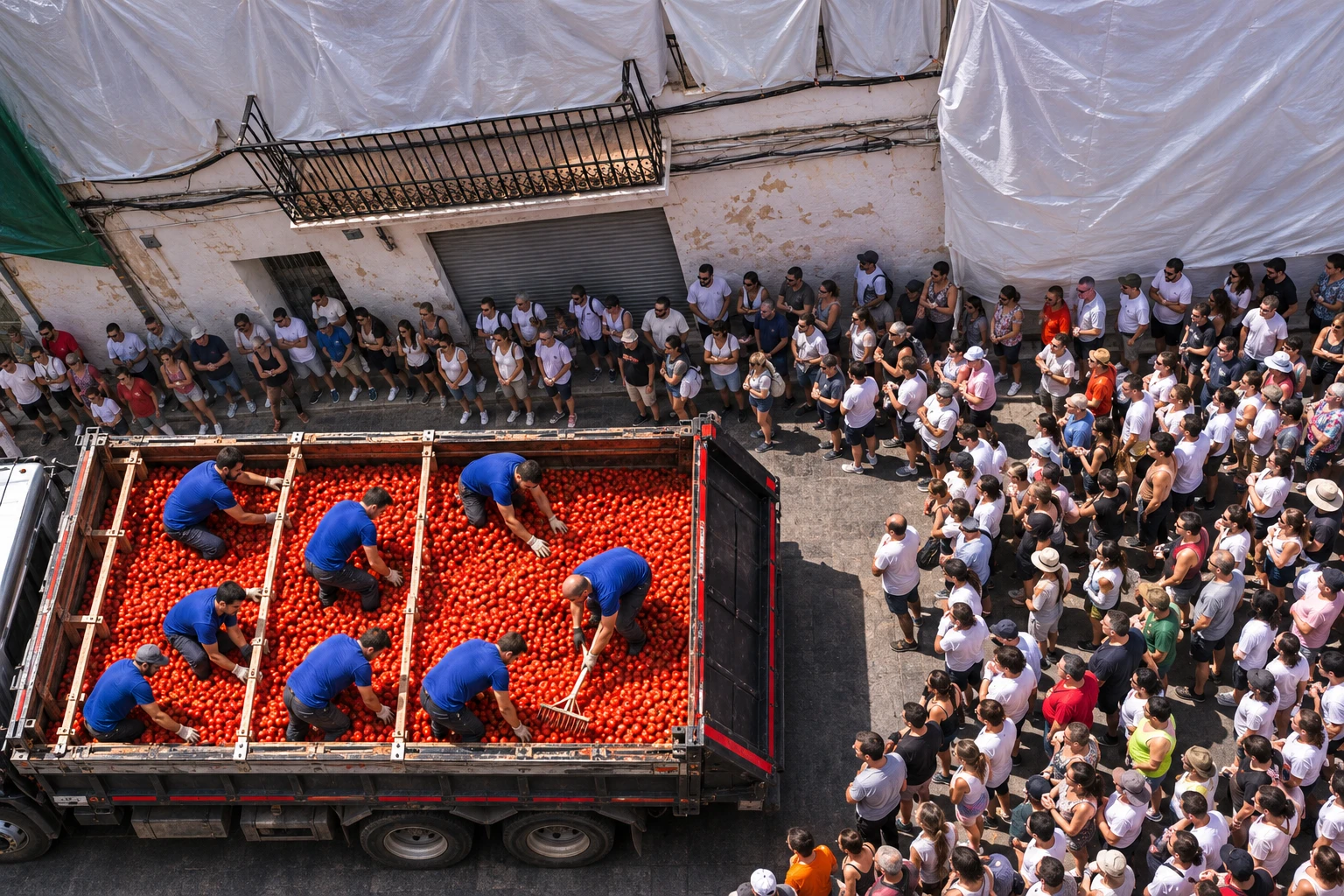
The day starts early. Participants arrive in Buñol in the morning to collect their access wristband, and the center is already full of music and people wearing old clothes, often white T-shirts that show stains more clearly. Mid-morning features the palo jabón: a greased pole with a ham on top that the most agile try to climb while the crowd cheers. Near late morning, trucks loaded with tomatoes enter the streets, and a rocket signals the start of the battle. The tomatoes, of a variety not really suited for eating fresh, are grown for the festival. For about an hour everyone throws at everyone else, with no teams or targets, until a second rocket signals that it’s over.
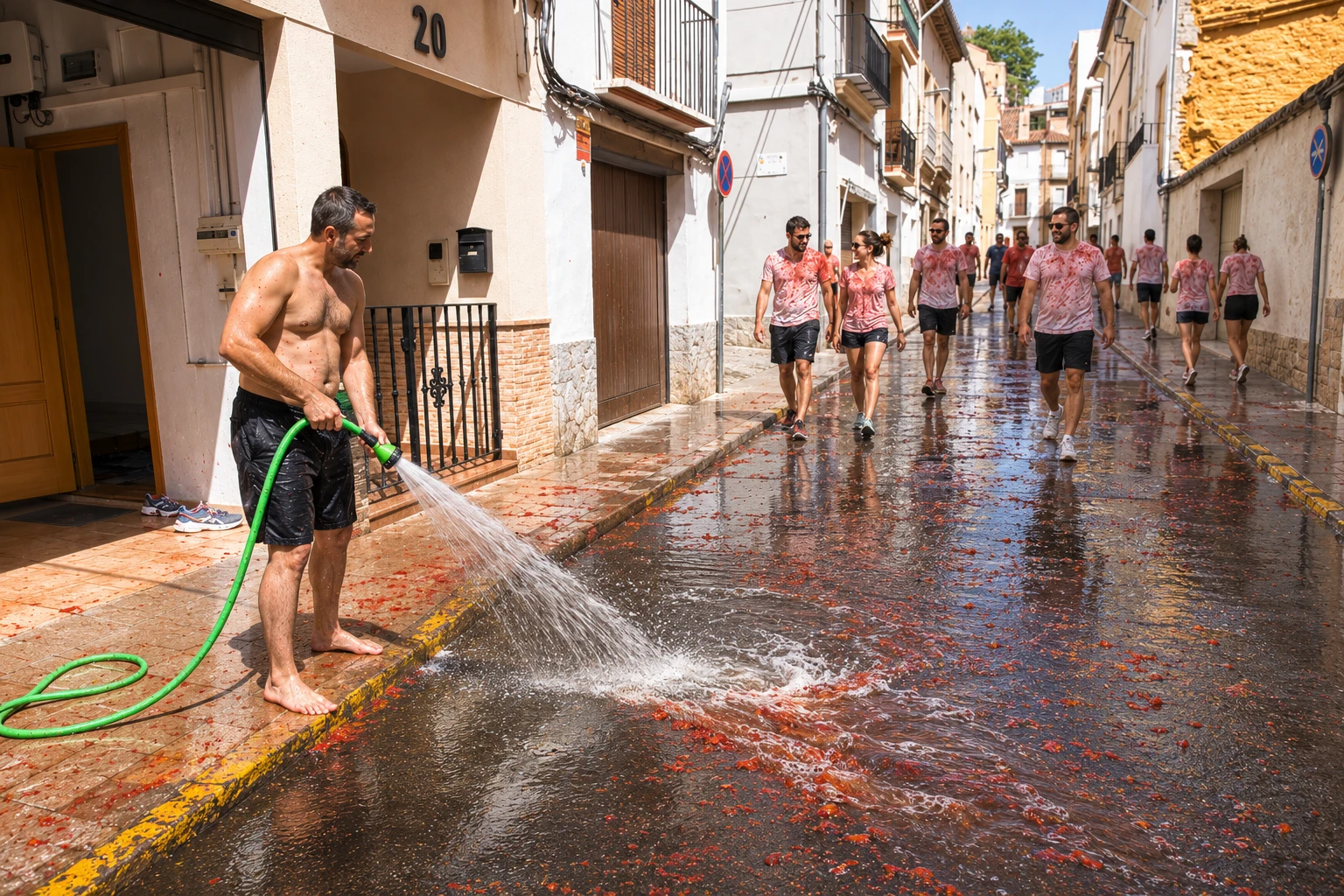
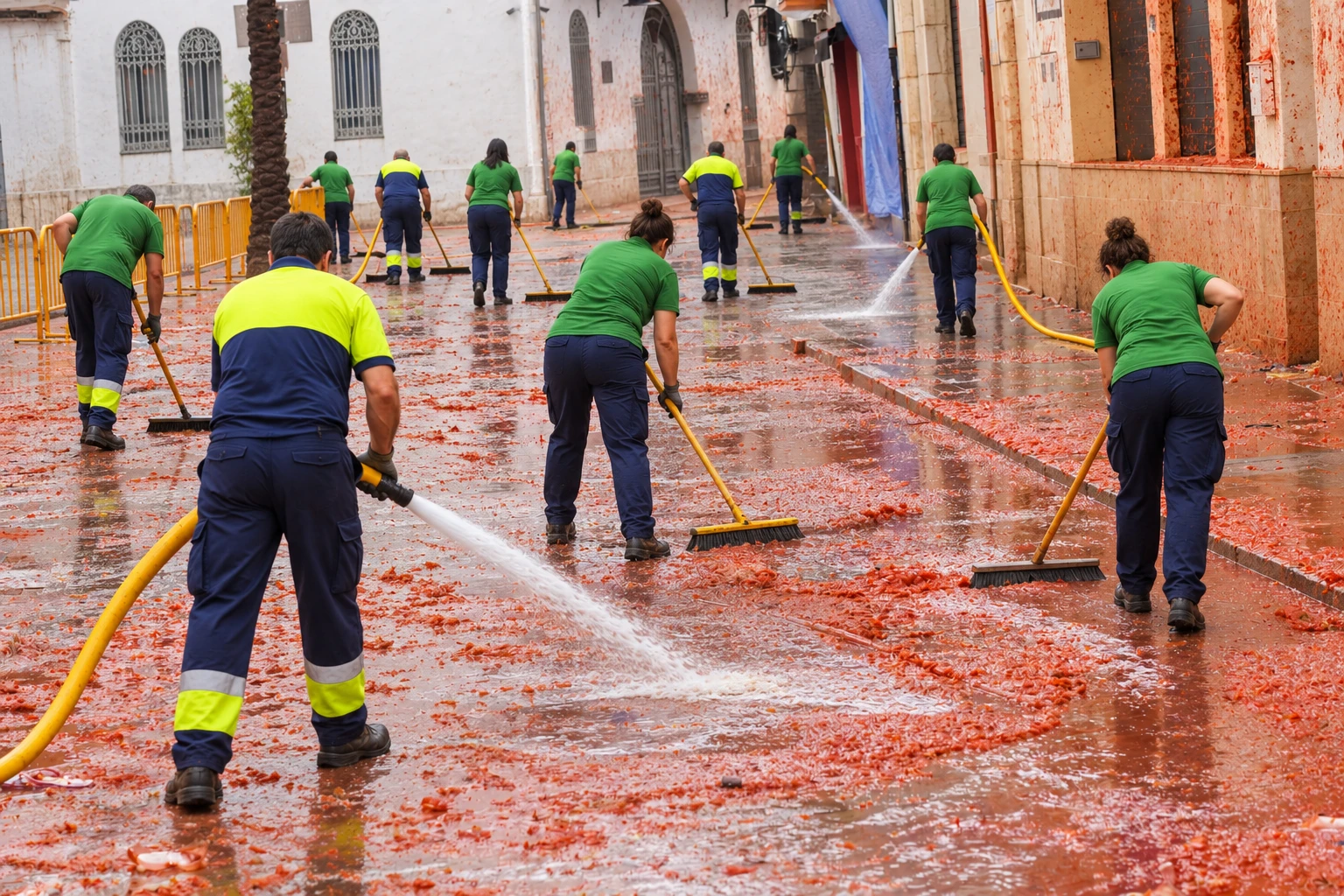
After the battle, the whole town washes off. The town hall sets up public showers, and residents open hoses from their doorways to help people remove the tomato before leaving. Since 2013, the town limits the number of participants and requires a ticket; part of the spots are reserved for Buñol residents, and there is a separate area for participants with disabilities. On the preceding Saturday there is a Children’s Tomatina for kids aged 4 to 14 accompanied by family members.
Buñol is about 40 km from Valencia, in a hilly area cut by the Buñol river, with an old town around a castle of Islamic origin. The Molino de Galán, an old mill next to the tourist office, houses the Tomatina museum, with an immersive room, photo panels and a virtual reality area. Nearby there are hiking trails and the Cueva del Turche natural area. For those visiting the region in August, the festival is a different way to experience the Valencian hinterland and a local tradition that has lasted for decades.
How to enjoy it
Most visitors arrive from Valencia on the same day. The commuter train, line C3, connects Valencia to Buñol and fills up early on that day; there are also organized buses leaving from Valencia. Driving is not recommended: access roads to Buñol close early in the morning and parking is far from the center. Arrive early in the morning to pick up your wristband and enter calmly. Organization rules ask that you: squeeze the tomato with your hand before throwing it, do not bring bottles or hard objects, do not tear or throw T-shirts, keep distance from the trucks, stop throwing when you hear the second rocket, and always follow staff instructions. Large backpacks, bags and selfie sticks are not allowed. Wear old clothes you can discard, closed shoes with good grip, and swimwear underneath; swim or diving goggles without glass protect your eyes from the tomato’s acidity. Take your phone and ID in a waterproof pouch attached to your body and a change of clothes for the return trip. On exit, the train back to Valencia also gets crowded; wait calmly or stay a bit longer in town.


 Brazil
 Argentina
 Bolivia
 Chile
 Colombia
 Ecuador
 Guyana
 French Guiana
 Falkland Islands (Malvinas)
 Paraguay
 Peru
 Suriname
 Uruguay
 Venezuela
 Germany
 Austria
 Belgium
 Croatia
 Denmark
 Finland
 France
 Greece
 the Netherlands
 Hungary
 Ireland
 Iceland
 Italy
 Luxembourg
 Norway
 Poland
 Portugal
 the United Kingdom
 the Czech Republic
 Sweden
 Switzerland
 Turkey
 Canada
 the United States
 Mexico
 the Dominican Republic
 South Africa
 Australia
 Fiji
 New Zealand
 Papua New Guinea