Barcelona

Popular festival · Barcelona

Festa Major de Gràcia

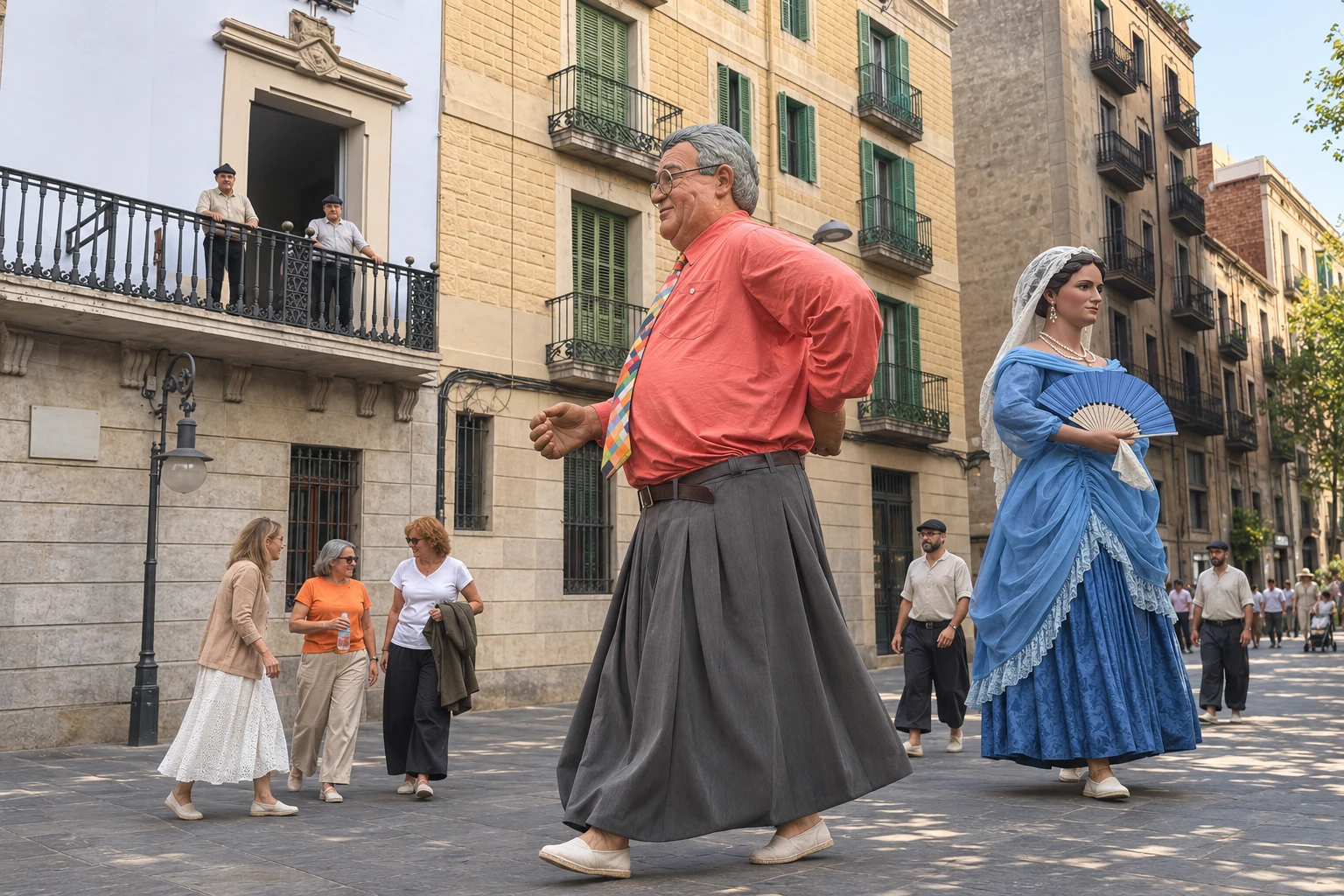
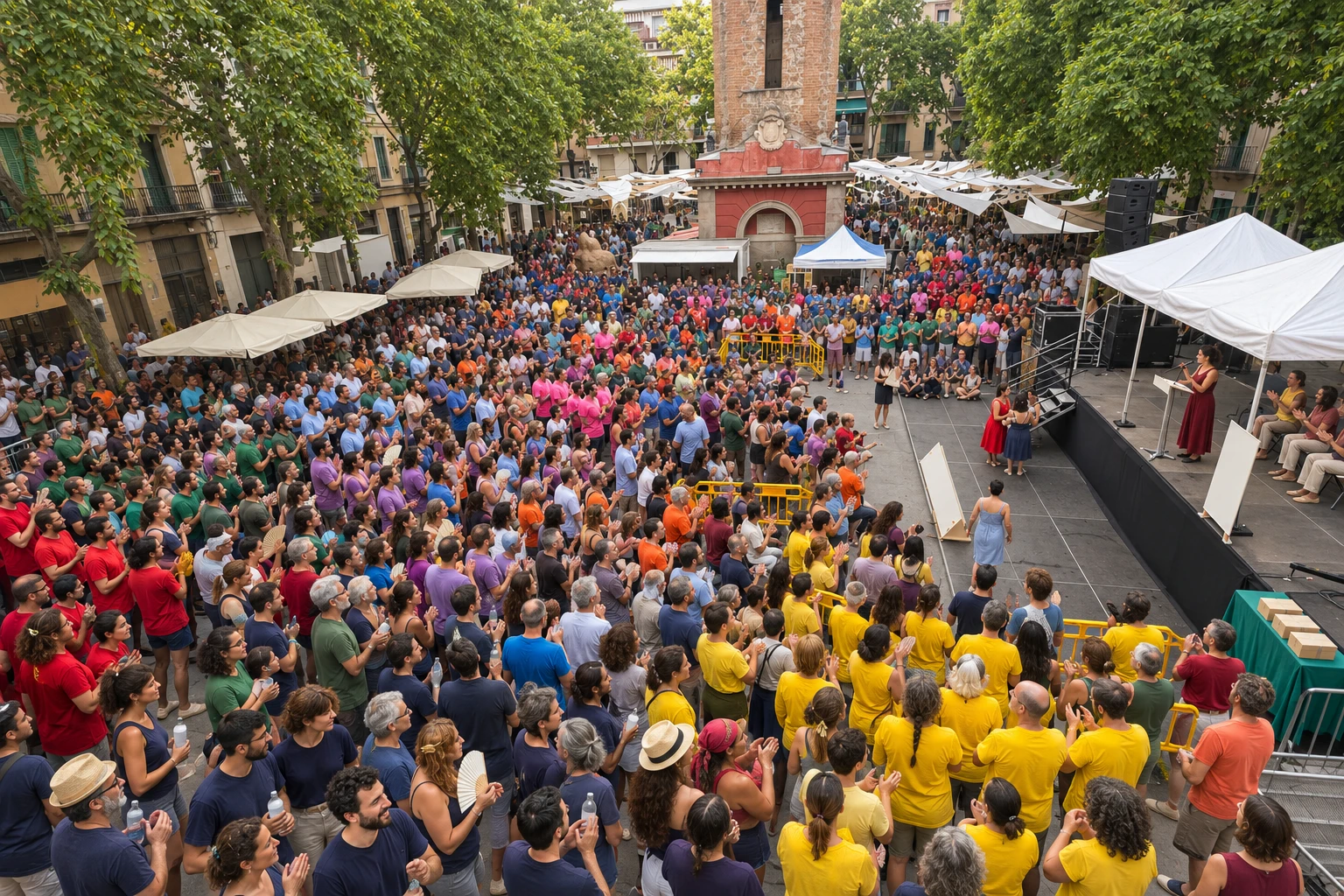
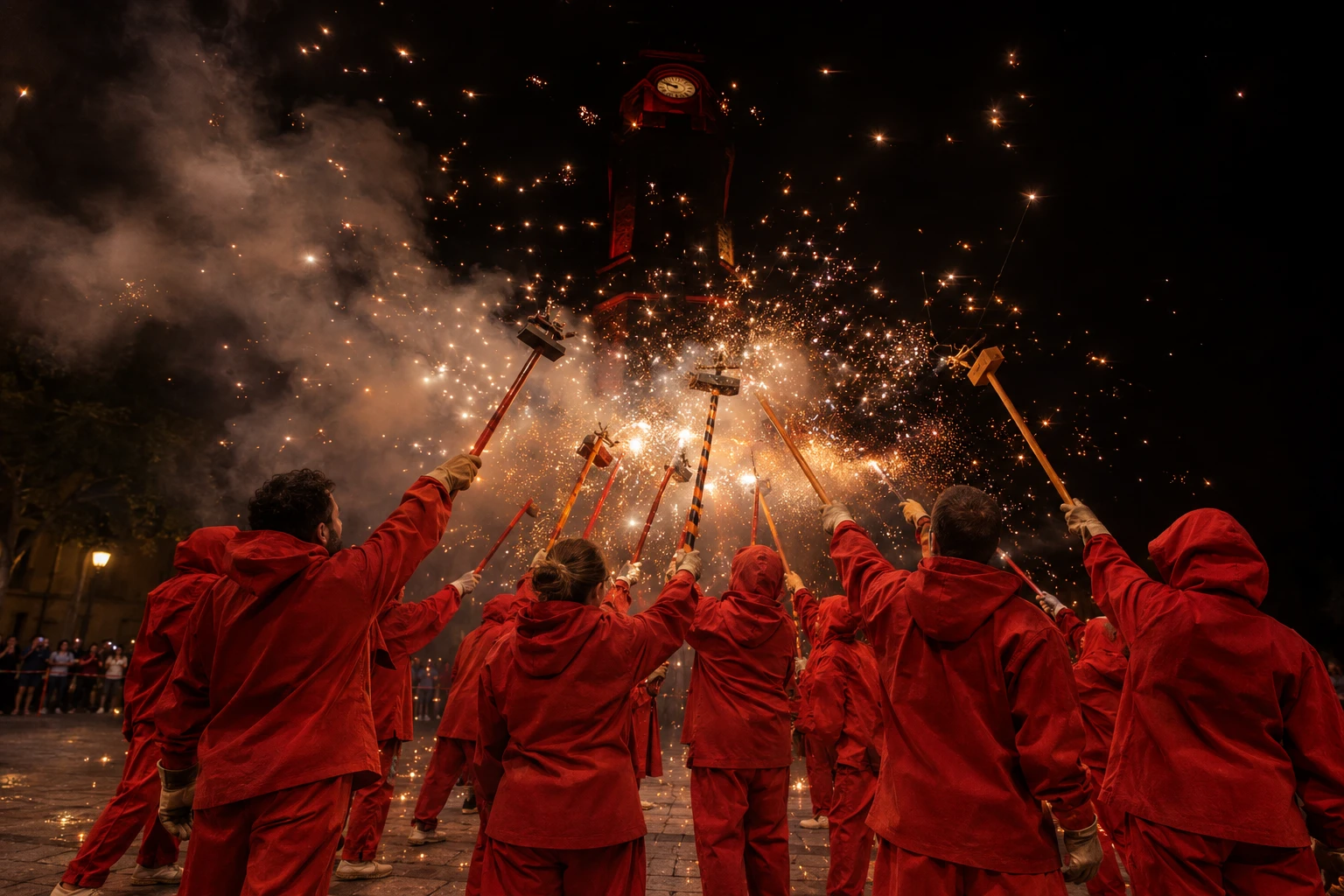
For one week in August, the streets of the Gràcia neighborhood in Barcelona are decorated by hand by the residents, who compete in a contest; there are concerts, castellers (human towers), gegants (giant figures) and correfoc in the squares of an old village now part of the city.

In the photo: Barcelona

Illustrative images. The pictures in this guide are illustrations based on the real place, not photographs, and may differ from it.

Get it on Google Play

Click a photo to enlarge it.

Festa Major de Gràcia — Barcelona
Festa Major de Gràcia
Festa Major de Gràcia — Barcelona
Festa Major de Gràcia
Festa Major de Gràcia — Barcelona
Festa Major de Gràcia

Festa Major de Gràcia — Barcelona

When

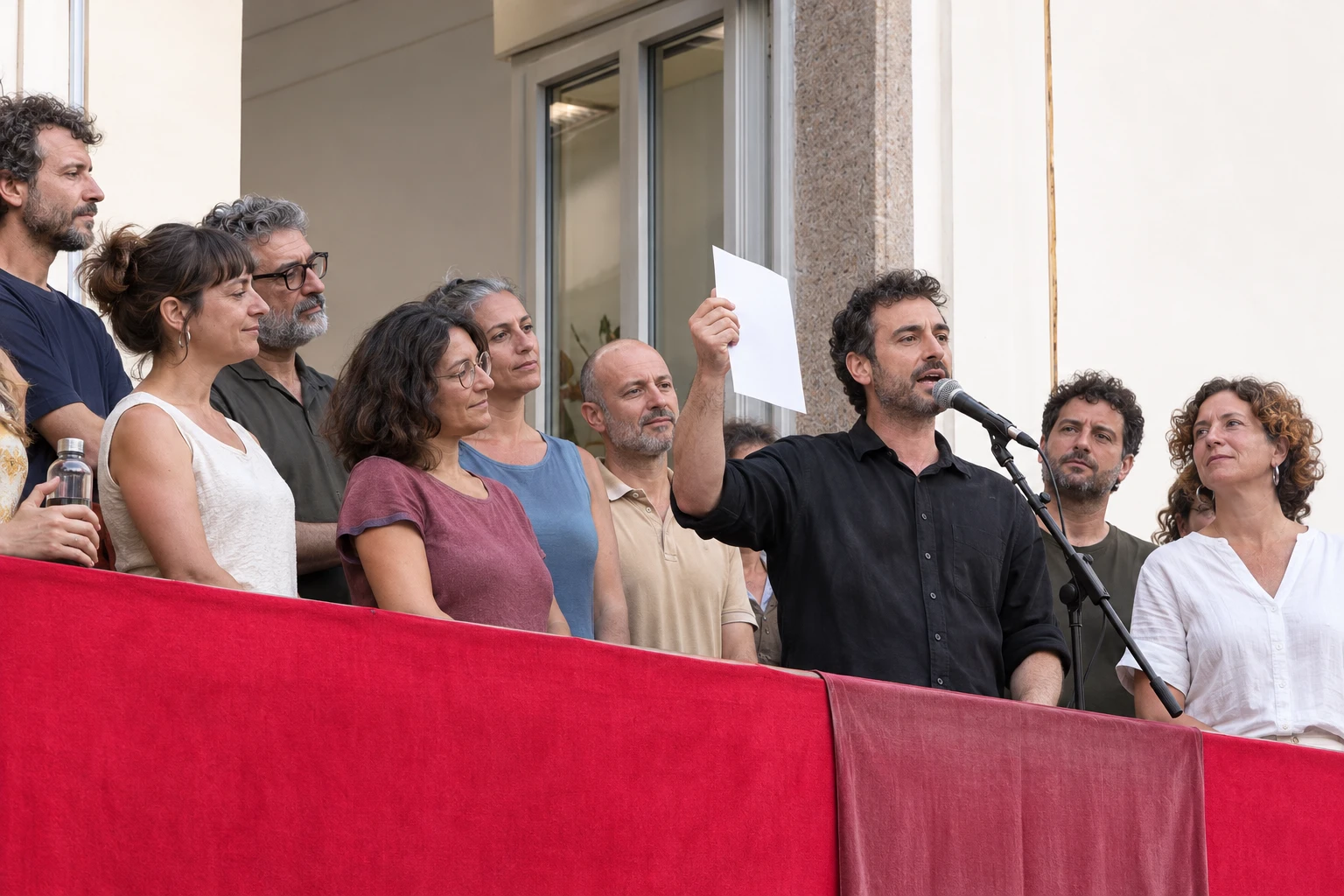
From August 15 to 21, starting on the day of the Assumption; the proclamation is read the evening before, on August 14.

August

Where

Gràcia

Barcelona

Catalunha

Organizer

Official website

Dates, program and tickets

Dates change every year: check this year's date before you travel.

The festival

What is Festa Major de Gràcia

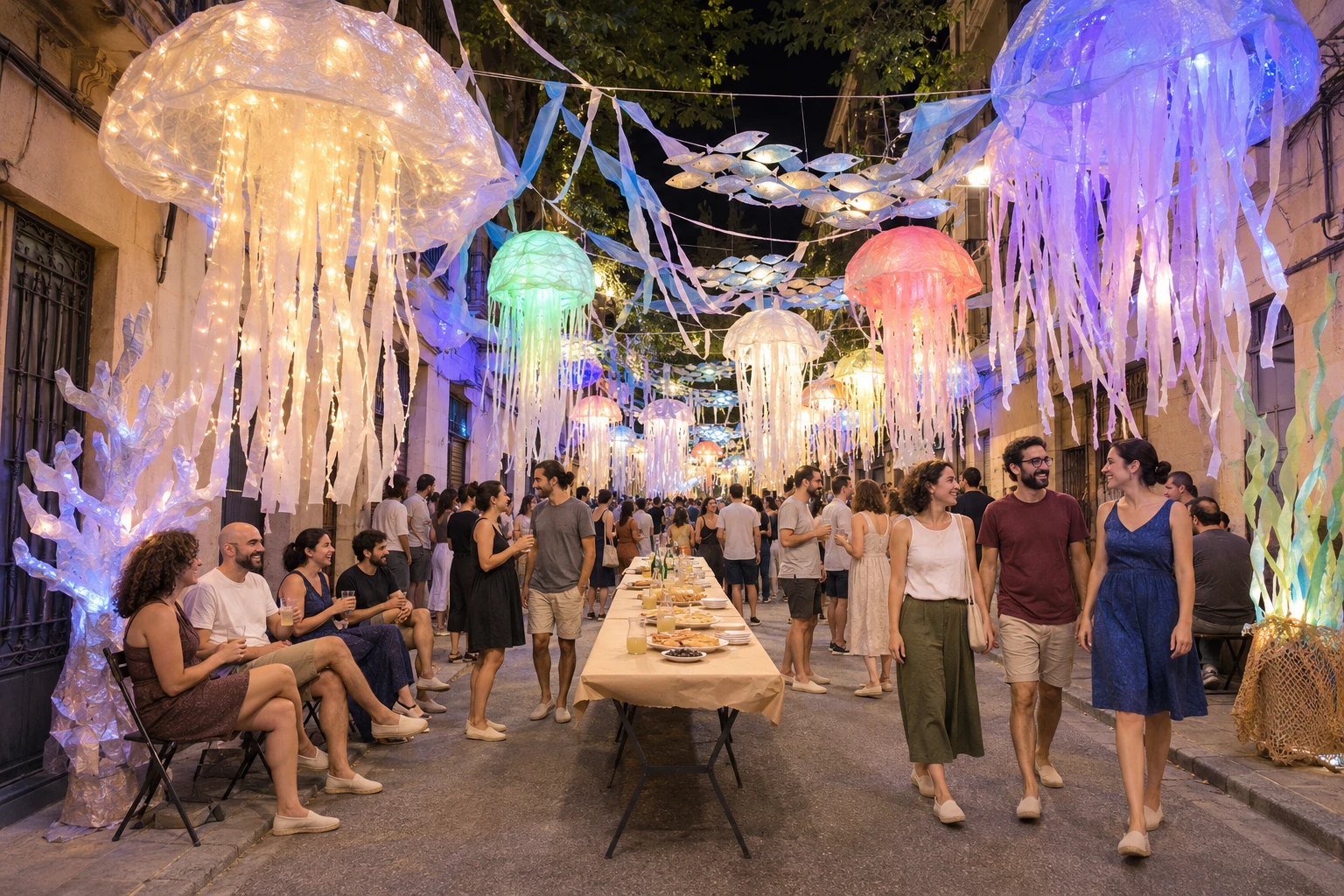
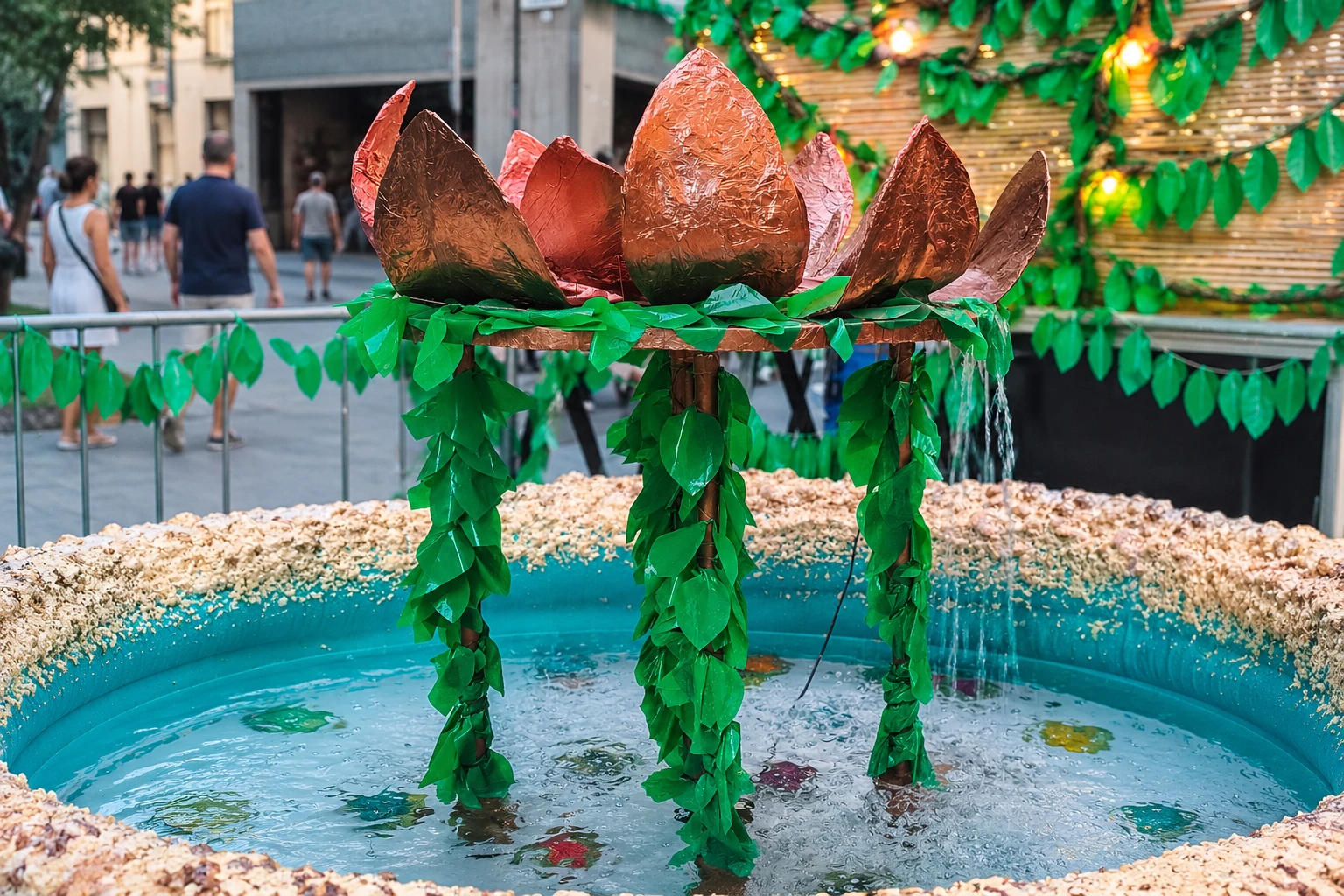
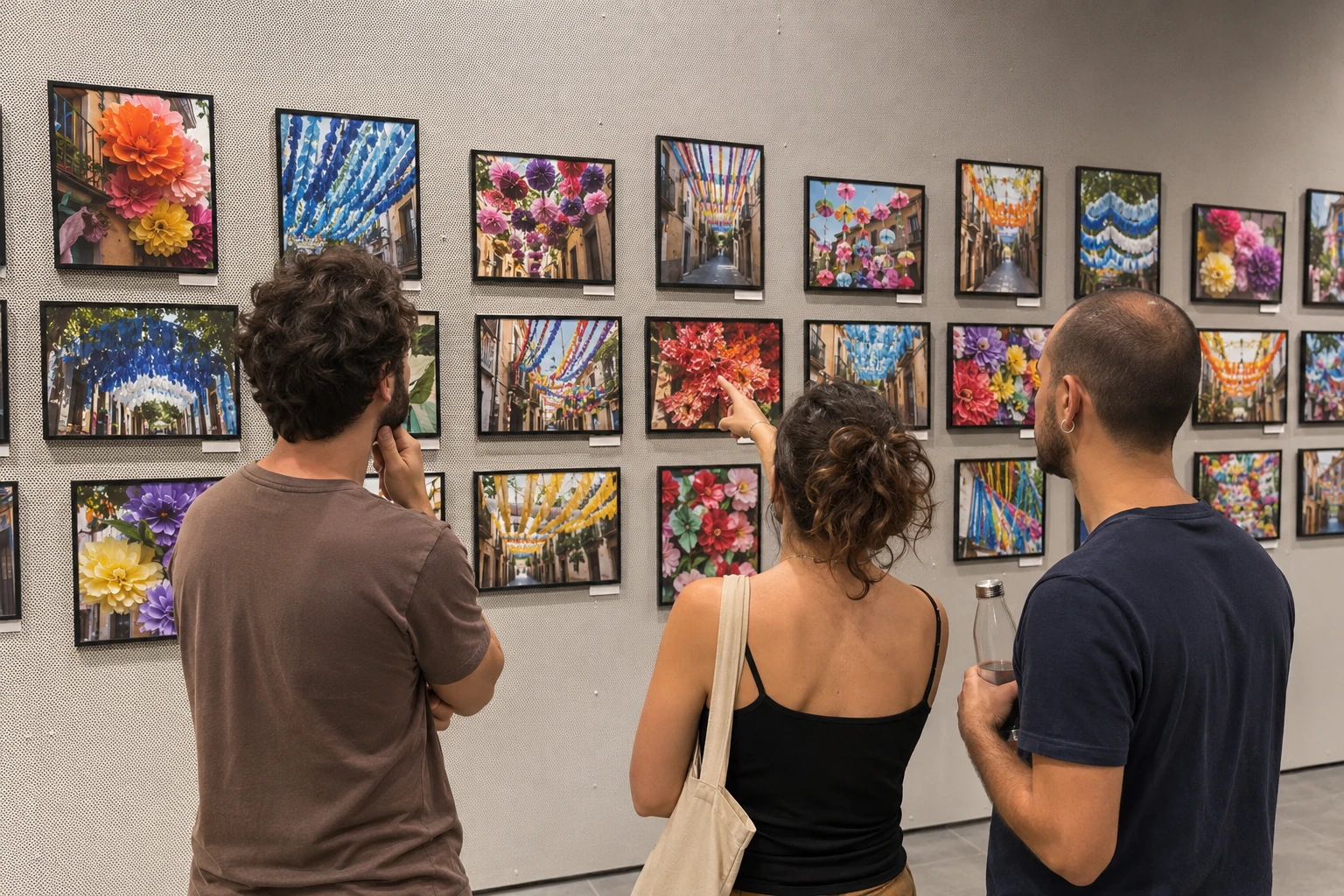
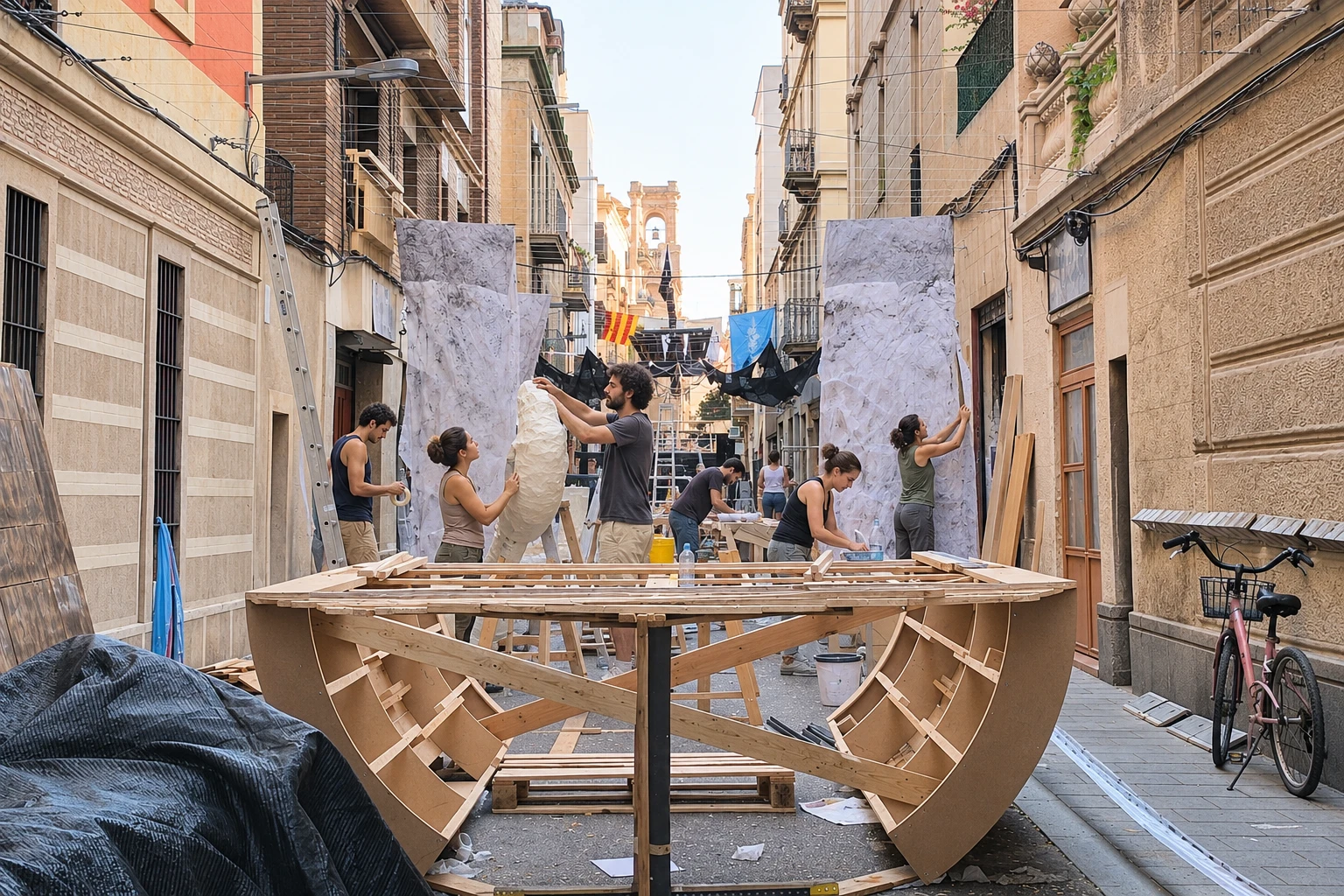
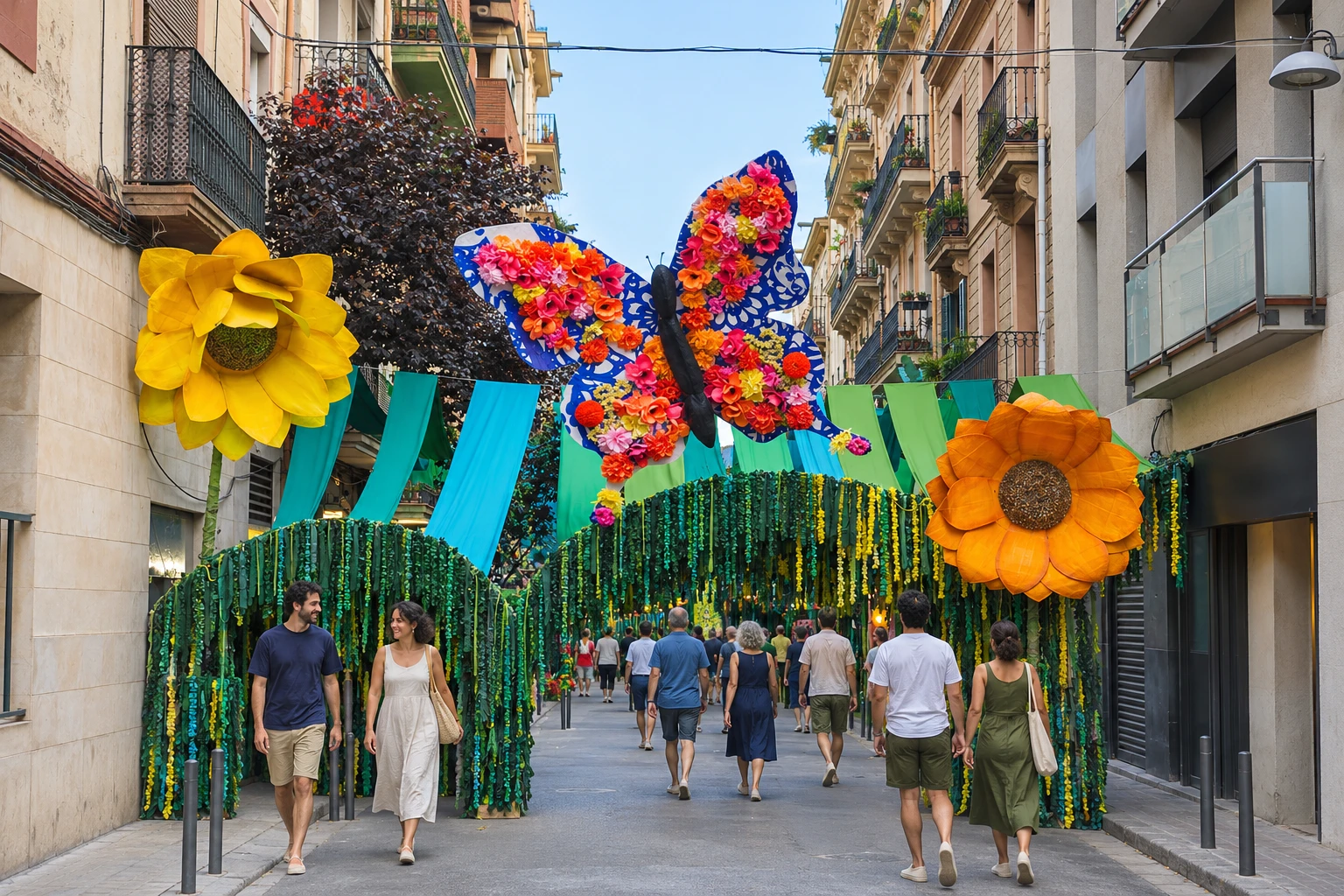
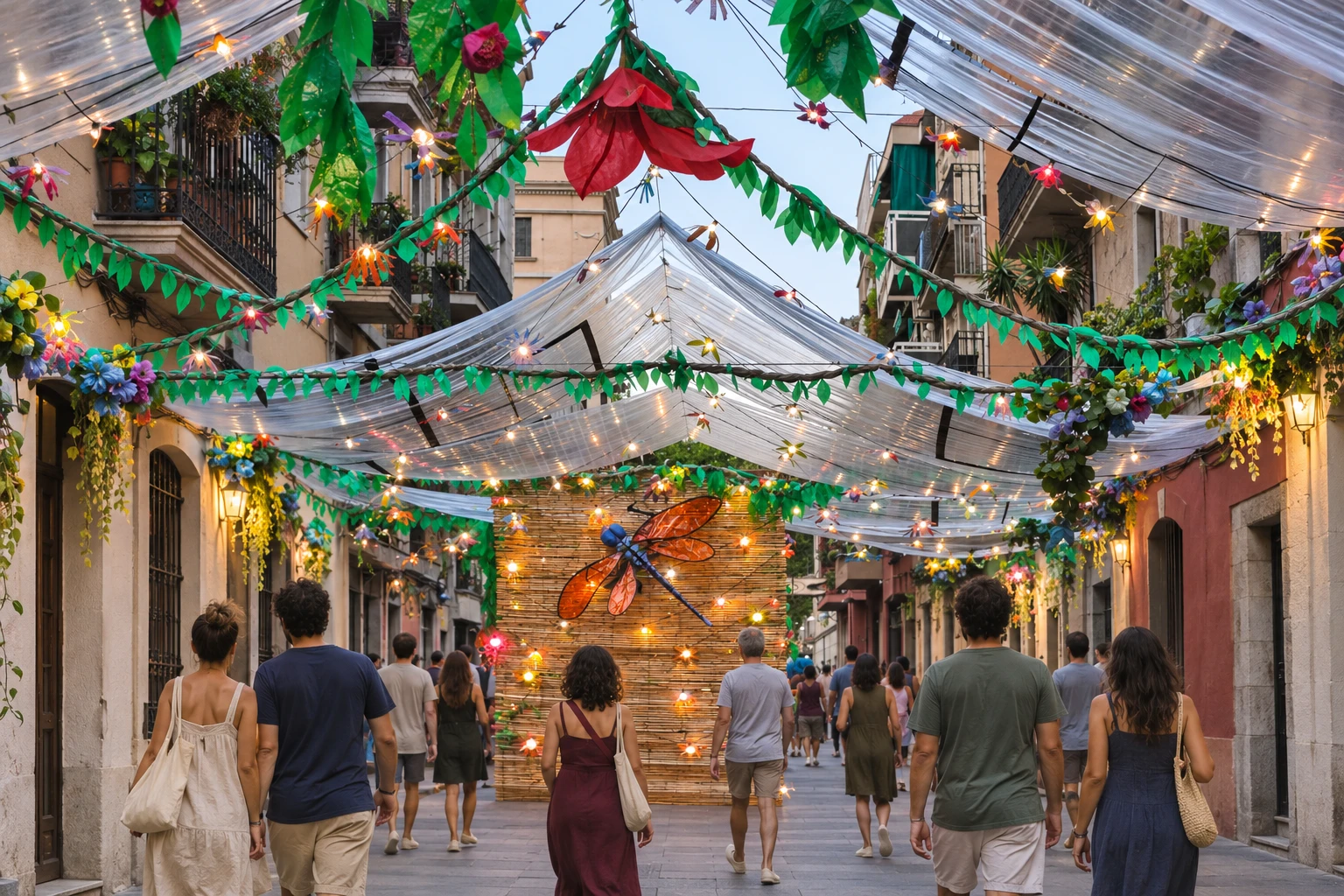
The Festa Major de Gràcia is Barcelona’s best-known neighborhood festival. From August 15 to 21, the streets and squares of Gràcia, a former independent village annexed to the city at the end of the 19th century, are covered by decorations put up by the residents themselves: entire ceilings of paper, fabric, cardboard and recycled materials that turn each street into a themed set, from forests to underwater scenes and imaginary cities. It is one of the traditional festivals declared of national interest in Catalonia.

The tradition of decorating the streets dates back more than a century and a half, and some streets have been decorated for the festival for over one hundred years, a fact commemorated today with plaques. Each street has its neighbors’ committee, which chooses the theme, designs the project and spends months producing the decoration, often with the help of children. On the night of August 14–15, the committees work late so everything is ready for the first day, when the neighborhood wakes to the sound of gralles, the Catalan reed instruments, and firecracker blasts announcing the start of the festival.

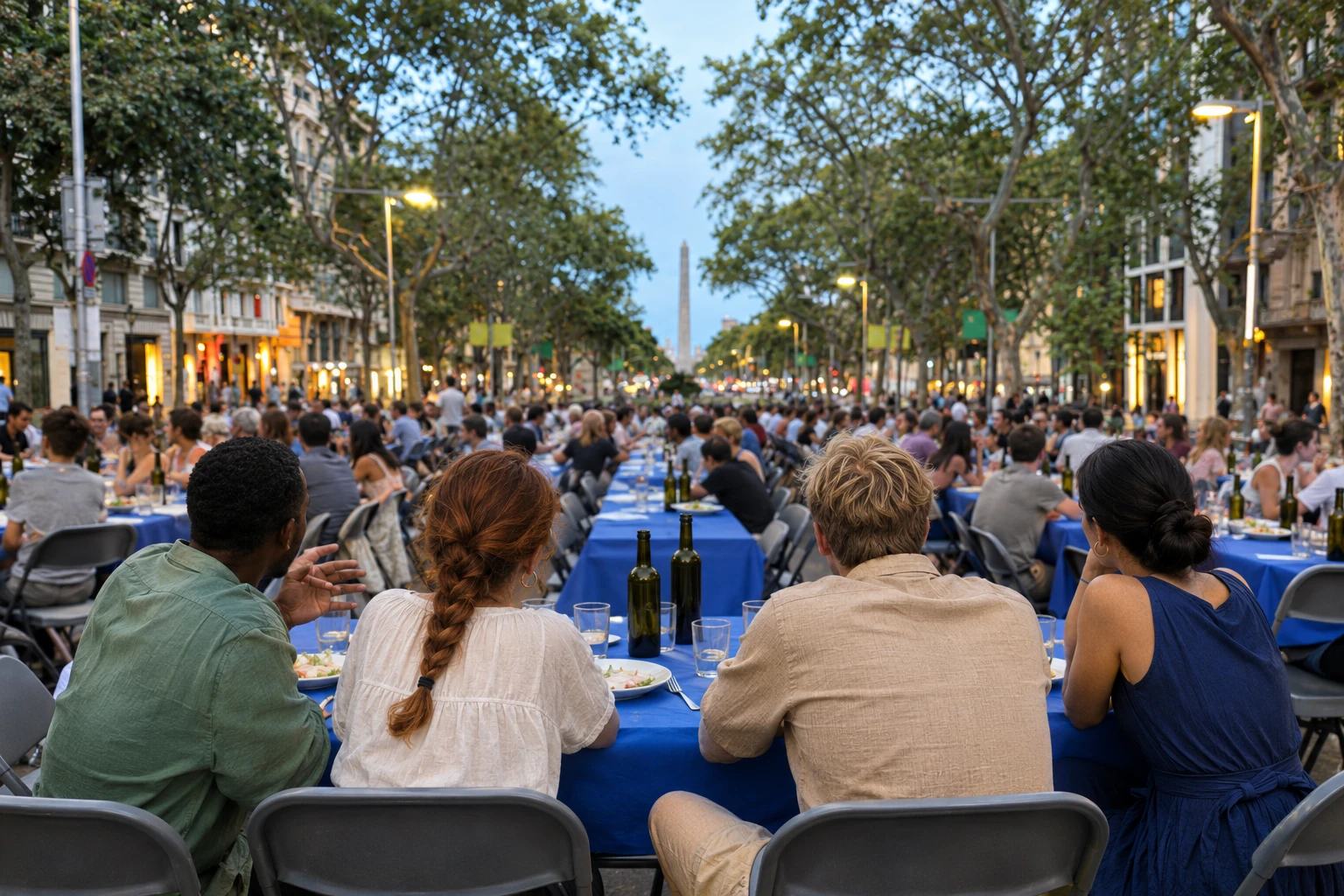
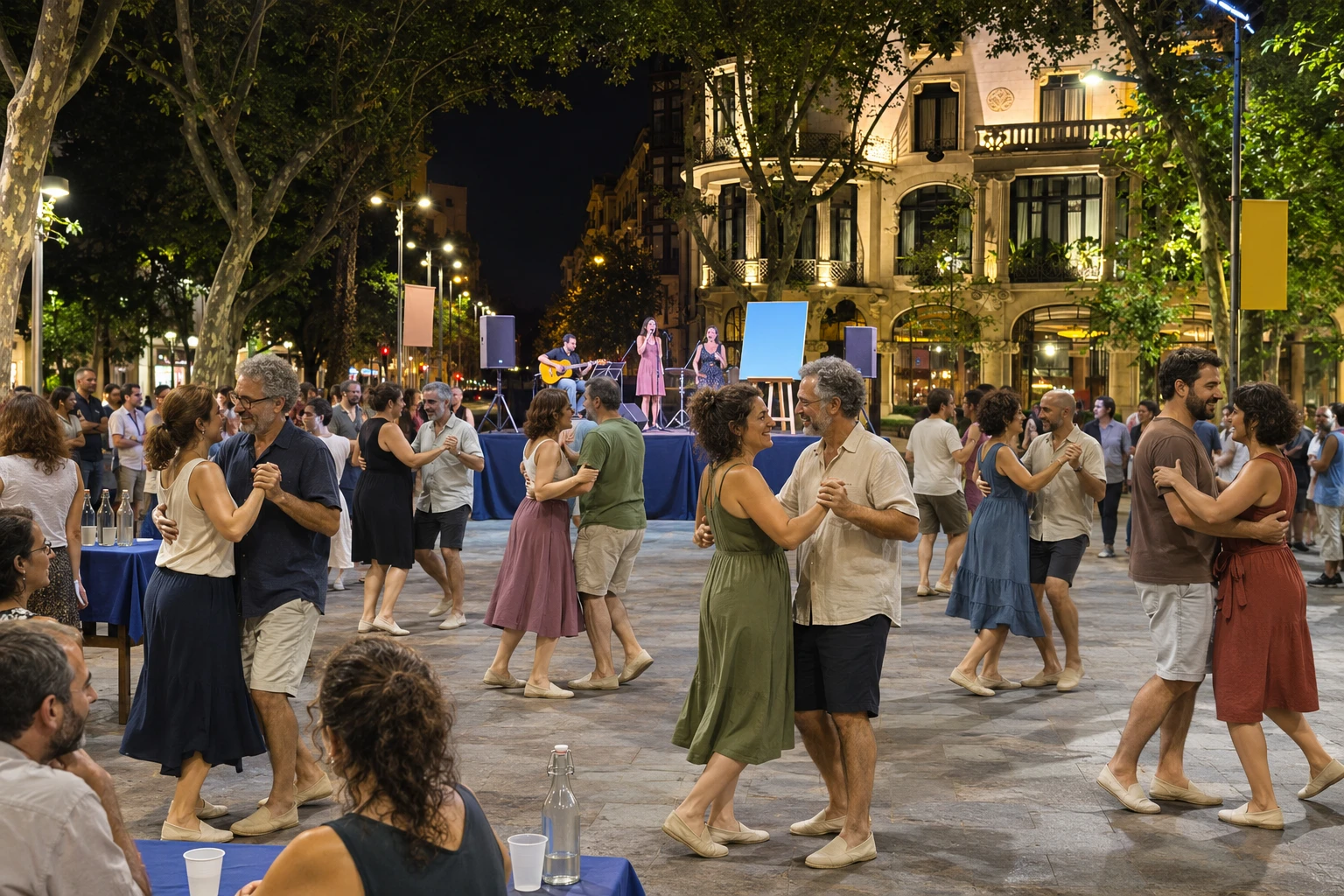
The decorated-streets contest is at the heart of the event. A jury visits the streets during the first days, and the prizes are awarded in Plaça de la Vila in a ceremony eagerly awaited by residents who fill the square. There are also contests for balconies, façades and decorated shops. Each decorated street is also a party space, with a stage, long tables, neighbor dinners, concerts and activities for children during the day and at night.

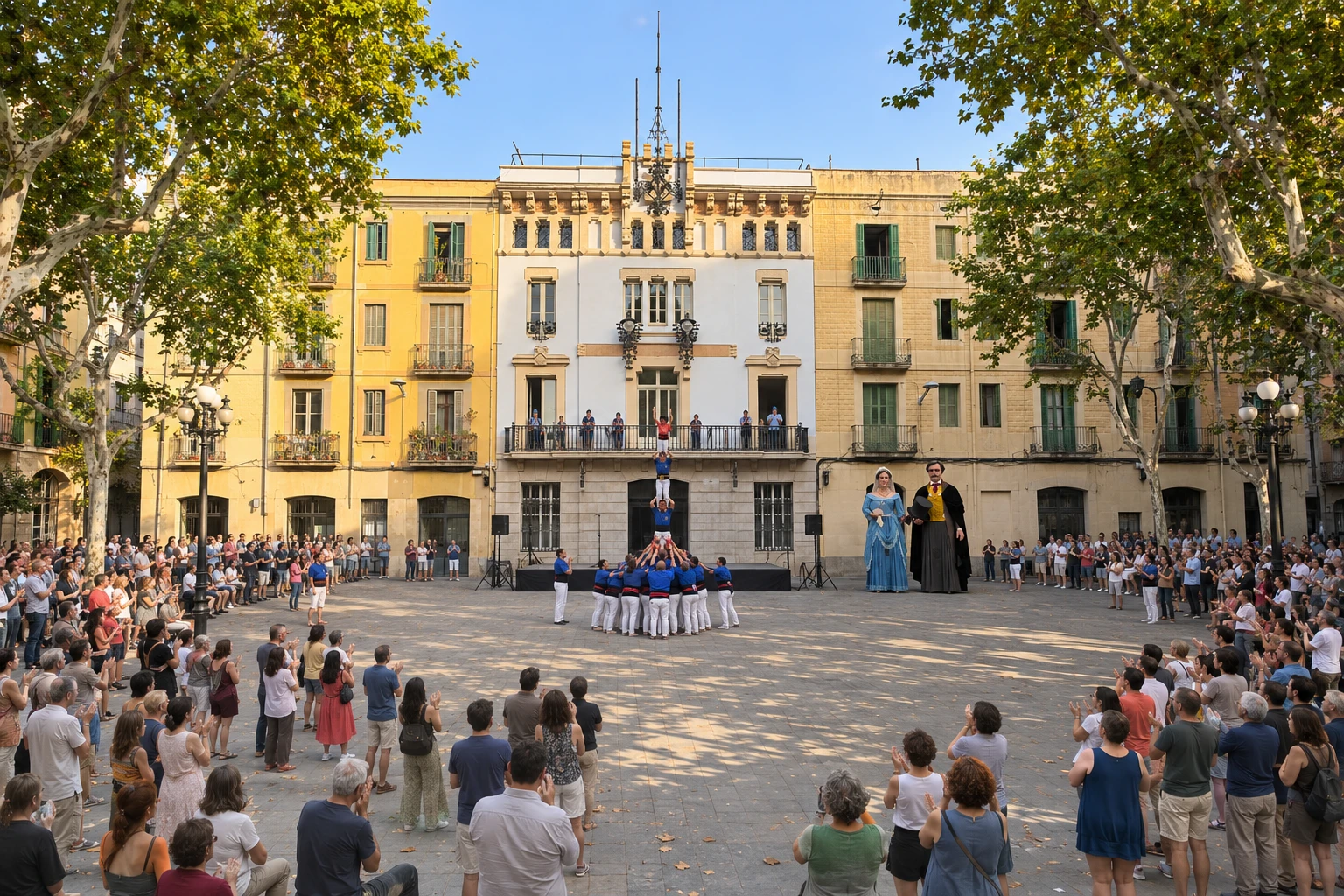
Catalan popular culture fills the squares. There is a major festival mass with the dance of the gegants and the Gràcia eagle, a diada castellera in Plaça de la Vila with groups forming human towers, parades of giants, big-headed figures and fire beasts, and a tribute to Saint Roch, one of the festival’s saints. The final day ends with the correfoc, when groups of devils and dragons from Gràcia and guests run through the streets throwing sparks, and with the Toca Dormir, the giants’ farewell procession.

Gràcia retains a village atmosphere, with narrow streets, squares with bars and low houses, near Park Güell and Casa Vicens. For visitors to Barcelona in August, the festival is a chance to see an entire neighborhood working together to make its party and to stroll at night among sets created by the neighbors.


Share: WhatsApp

What not to miss

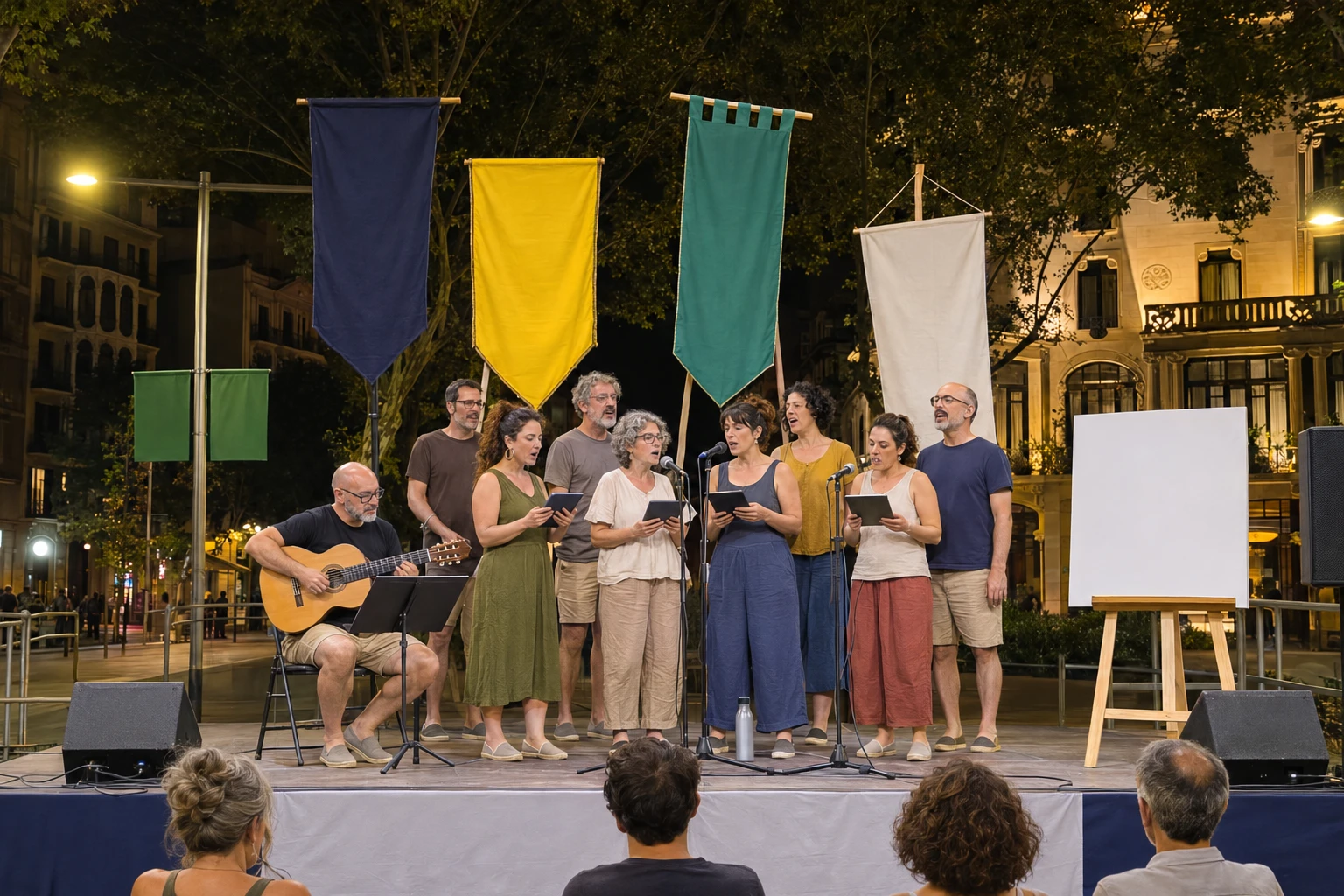
The decorated streets, explored slowly, preferably in daytime to see the details, and at night with the lights. The award ceremony for the decorated streets in Plaça de la Vila. The diada castellera in Plaça de la Vila, with human towers. The dance of the gegants and the Gràcia eagle after the festival mass on August 15. Parades of giants, big-headed figures and fire beasts through the streets. A concert on a street or square stage, such as Plaça del Sol or Plaça de la Virreina. The correfoc on the last day, August 21, and the giants’ Toca Dormir.

How to enjoy it

Gràcia is a few minutes from the center by metro and by FGC trains; inside the neighborhood, walk, because the decorated streets are close to each other. The official program includes a map of the decorated streets and the recommended access points, which can become mandatory during peak times. Crowds are larger at night, on Saturday and Sunday; weekday mornings let you see the decorations calmly. Some nights have low-volume programming to make cohabitation with residents easier. Respect the decorations, which are fragile and made by neighbors, and use the bins. Bring water and light clothing: August in Barcelona is usually hot and humid.

Plan ahead

In August Barcelona receives many tourists and rooms become more expensive and scarce; book early, preferably near a metro station. The festival program is open to the public, and some street dinners and activities may require prior registration. The Fundació Festa Major de Gràcia and the district publish the program and the list of decorated streets.

In the city

Make the most of Barcelona

August

Around the same time

Your questions

Questions about Festa Major de Gràcia

When is the Festa Major de Gràcia?

Every year from August 15 to 21, in the Gràcia neighborhood of Barcelona. The proclamation is read the evening before, and the festival ends with the correfoc on the night of August 21.

What are Gràcia’s decorated streets?

They are streets and squares covered with thematic decorations made by the residents using paper, fabric and recycled materials. They compete in a contest, with prizes awarded in Plaça de la Vila.

Do I need a ticket for the Festa Major de Gràcia?

No. The decorated streets, concerts and popular culture events are open to everyone. Only some neighbor dinners and activities require prior registration.

How do I get to the Festa Major de Gràcia?

By metro or FGC train, with stations inside the neighborhood a few minutes from the center. Once there, the best way is to walk between the decorated streets.

Festivals and events in Spain

Other festivals

Tamborrada of San Sebastián January
Popular festival · San Sebastián

Tamborrada of San Sebastián

On January 20, the feast day of Saint Sebastian, the city's patron: the celebration begins at midnight between January 19 and 20 and ends at the following midnight.

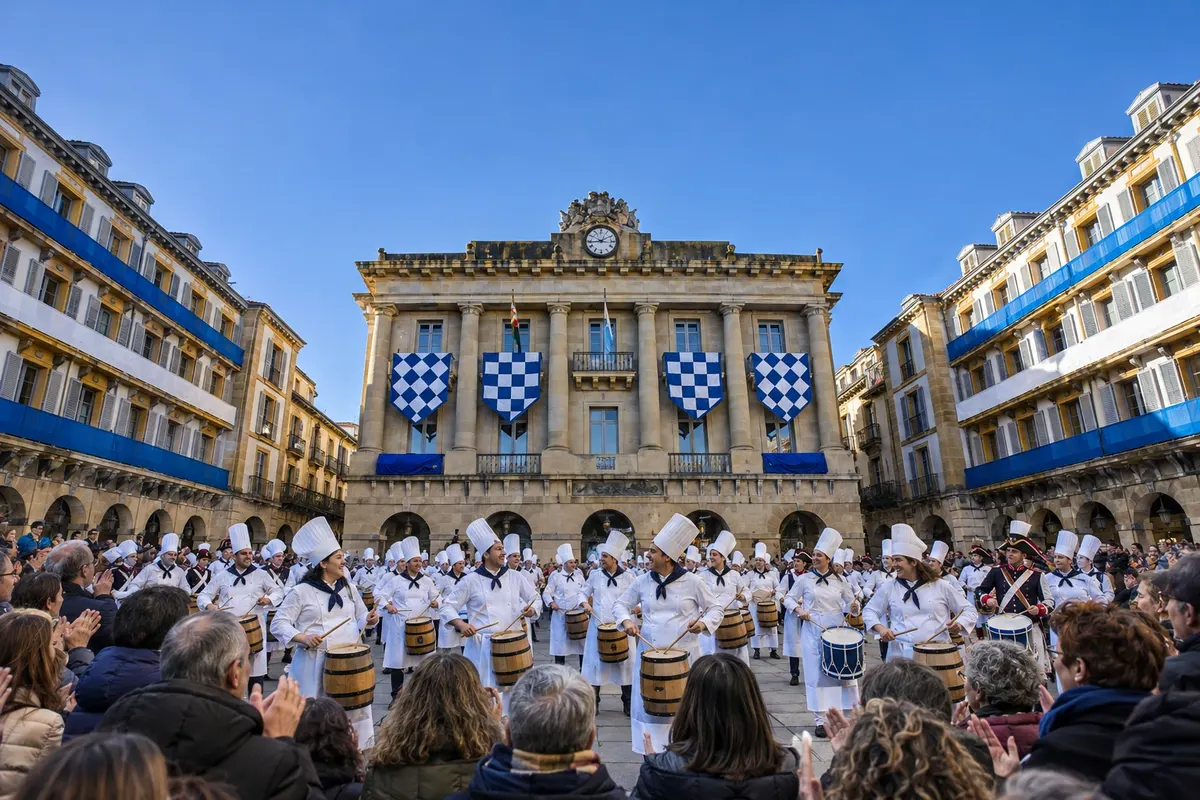
For 24 hours on January 20, San Sebastián, in the Basque Country, honors its patron saint to the sound of drums and barrels: uniformed companies parade through the city playing the marches of Raimundo Sarriegi, from the raising of the flag in Plaza de la Constitución until the lowering in the same square.

Carnival of Santa Cruz de Tenerife February/March
Popular festival · Santa Cruz de Tenerife

Carnival of Santa Cruz de Tenerife

At the end of winter, between February and March, following the movable Carnival calendar: the contests and the queen’s gala take place in the preceding weeks, and the streets celebrate from the opening cavalcade until the weekend after Ash Wednesday.

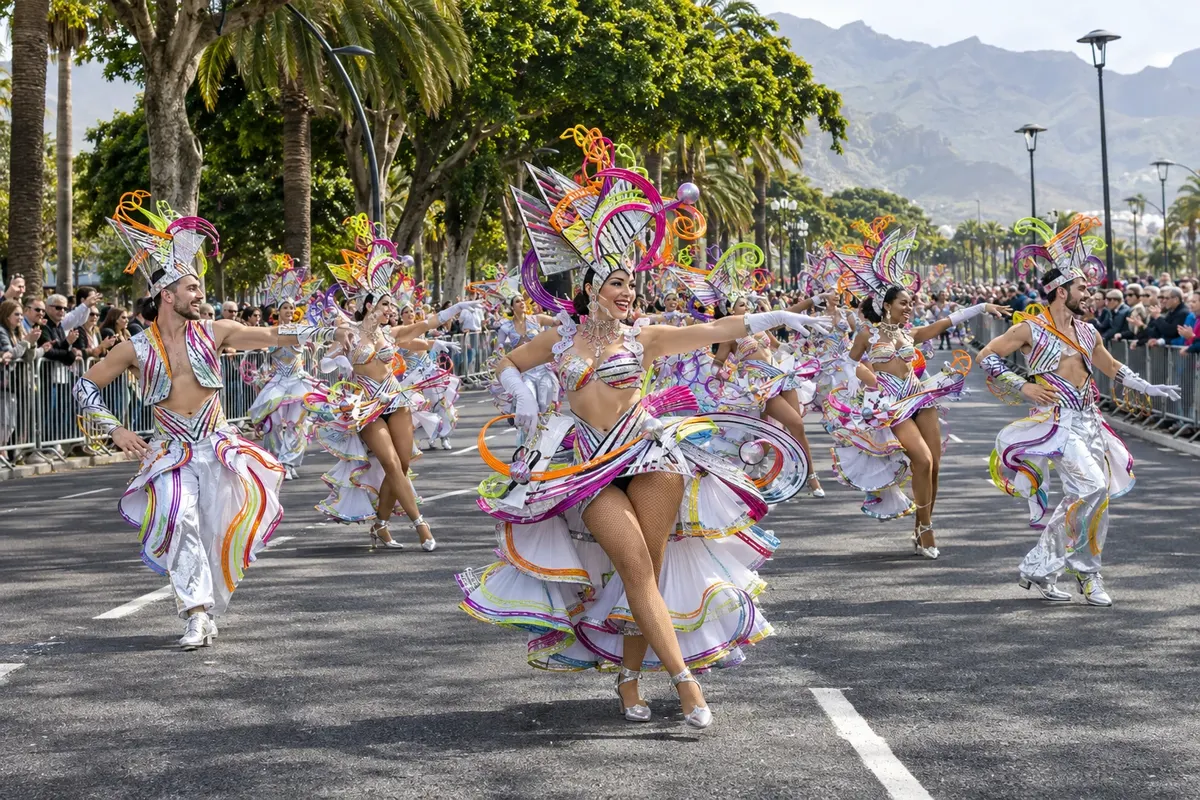
The capital of Tenerife’s Carnival, in the Canary Islands, with a monumental fantasy queen, murgas, comparsas and rondallas, the big Coso parade on Carnival Tuesday and balls that fill the squares and avenues of the center until dawn.

Holy Week in Seville March/April
Religious festival · Seville

Holy Week in Seville

From Palm Sunday to Easter Sunday, in March or April depending on the date of Easter; smaller processions begin on the previous Friday, Friday of Sorrows.

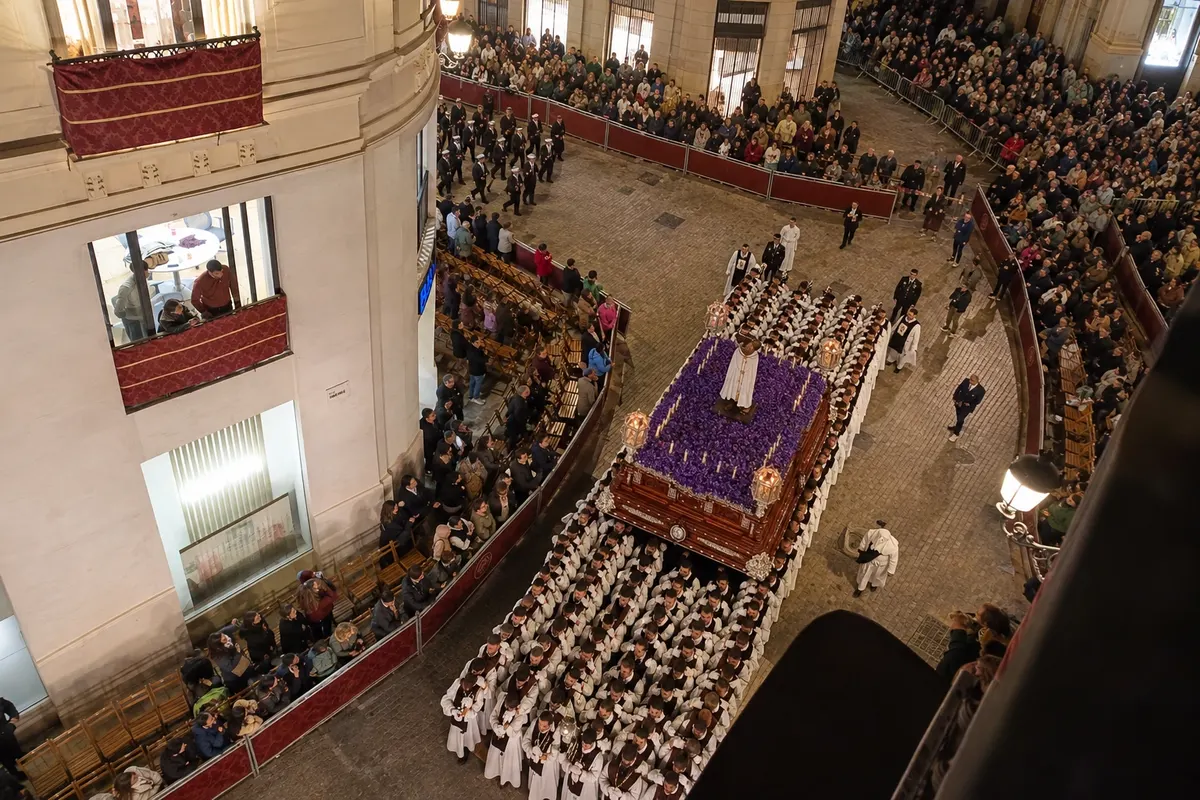
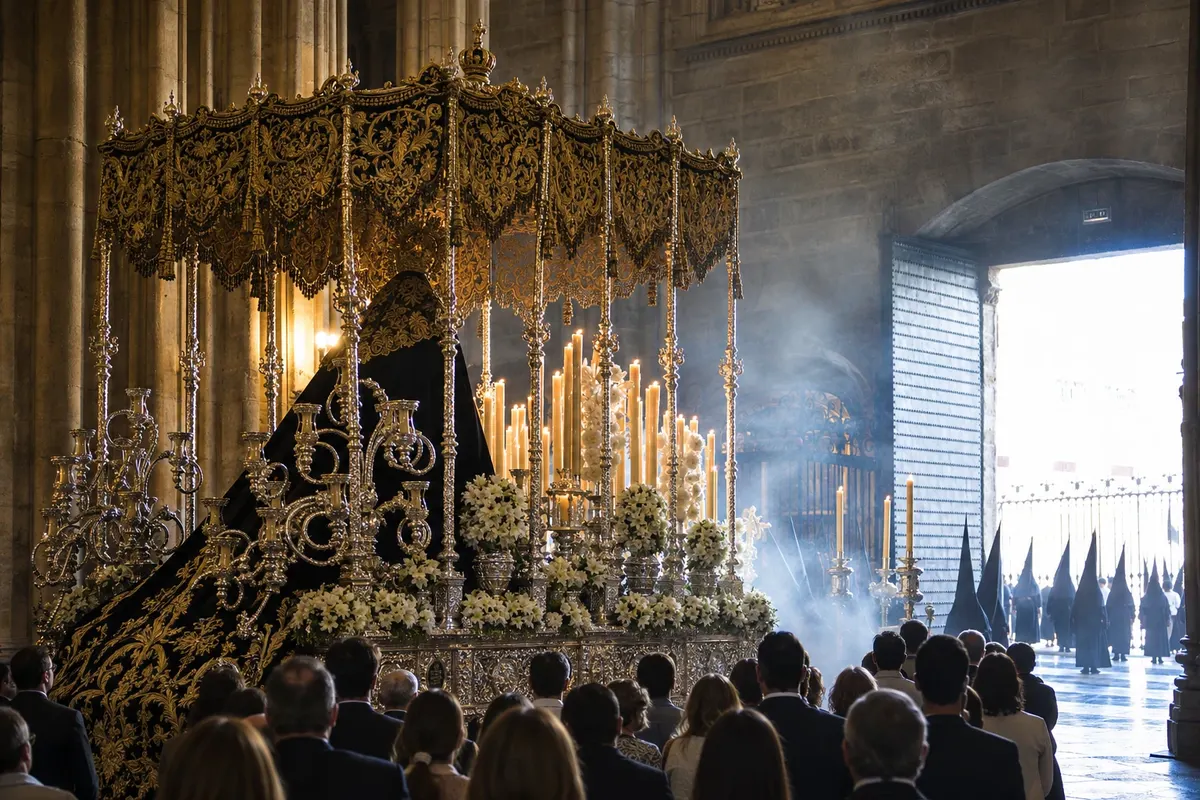
During Holy Week, the brotherhoods of Seville, the capital of Andalusia, carry images of Christ and the Virgin through the streets on gilded floats carried by costaleros and followed by long lines of penitents, on routes that pass by the cathedral day and night, until the early hours of Good Friday.

Seville April Fair April/May
Popular festival · Seville

Seville April Fair

In April or May, one or two weeks after Holy Week, depending on the date of Easter; it lasts about a week, from the night of the pescaíto and the alumbrao until the fireworks on the last night.

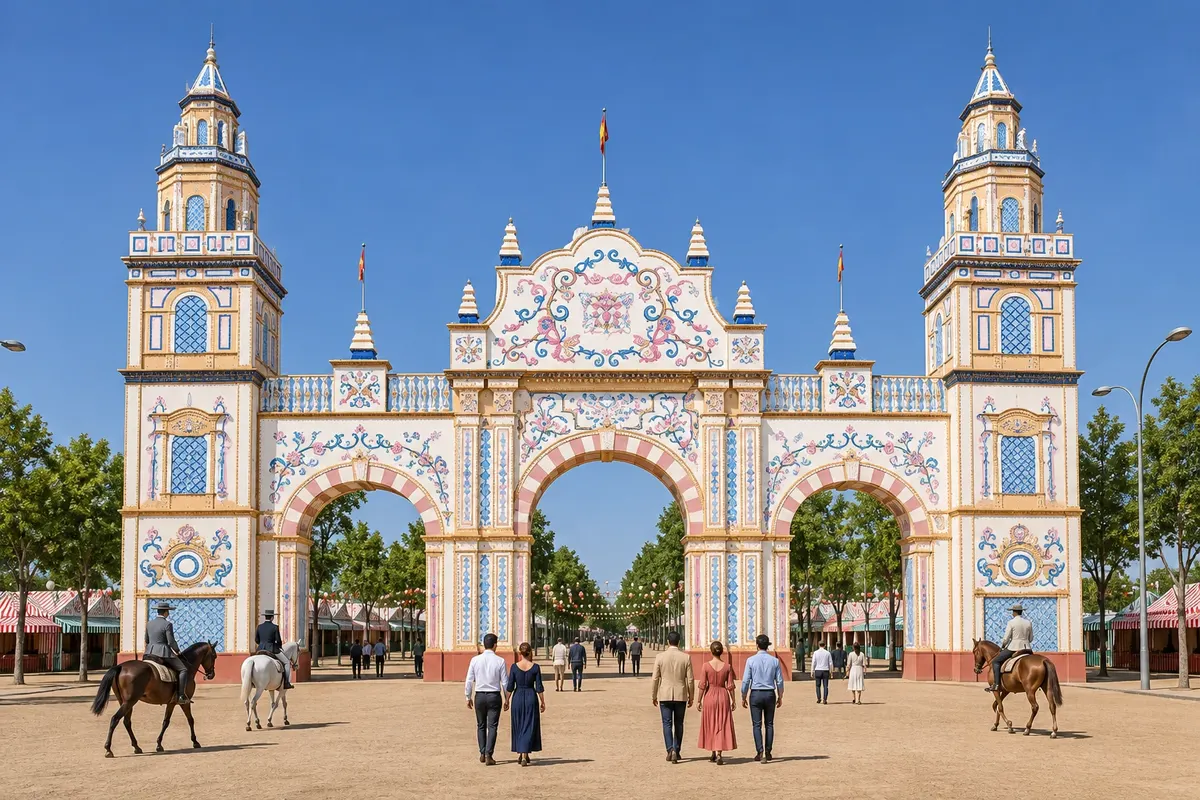
A weeklong party in Seville’s fairground, between Los Remedios and the Guadalquivir: streets of decorated casetas with lanterns, a noon parade of horses and carriages, flamenco-style dresses, sevillanas danced until the early hours, and the amusement park on the Calle del Infierno.

See the full calendar