

 Brazil
 Antarctica
 Argentina
 Bolivia
 Chile
 Colombia
 Ecuador
 Guyana
 French Guiana
 Falkland Islands (Malvinas)
 Paraguay
 Peru
 Suriname
 Uruguay
 Venezuela
 Germany
 Austria
 Belgium
 Croatia
 Denmark
 Slovakia
 Spain
 Finland
 France
 Greece
 the Netherlands
 Hungary
 Ireland
 Iceland
 Italy
 Luxembourg
 Norway
 Poland
 Portugal
 the United Kingdom
 the Czech Republic
 Sweden
 Switzerland
 Turkey
 Bermuda
 Canada
 the United States
 Greenland
 Mexico
 Saint Pierre and Miquelon
 the Dominican Republic
 Japan
 South Africa
 Egypt
 Australia
 Fiji
 New Zealand
 Papua New Guinea
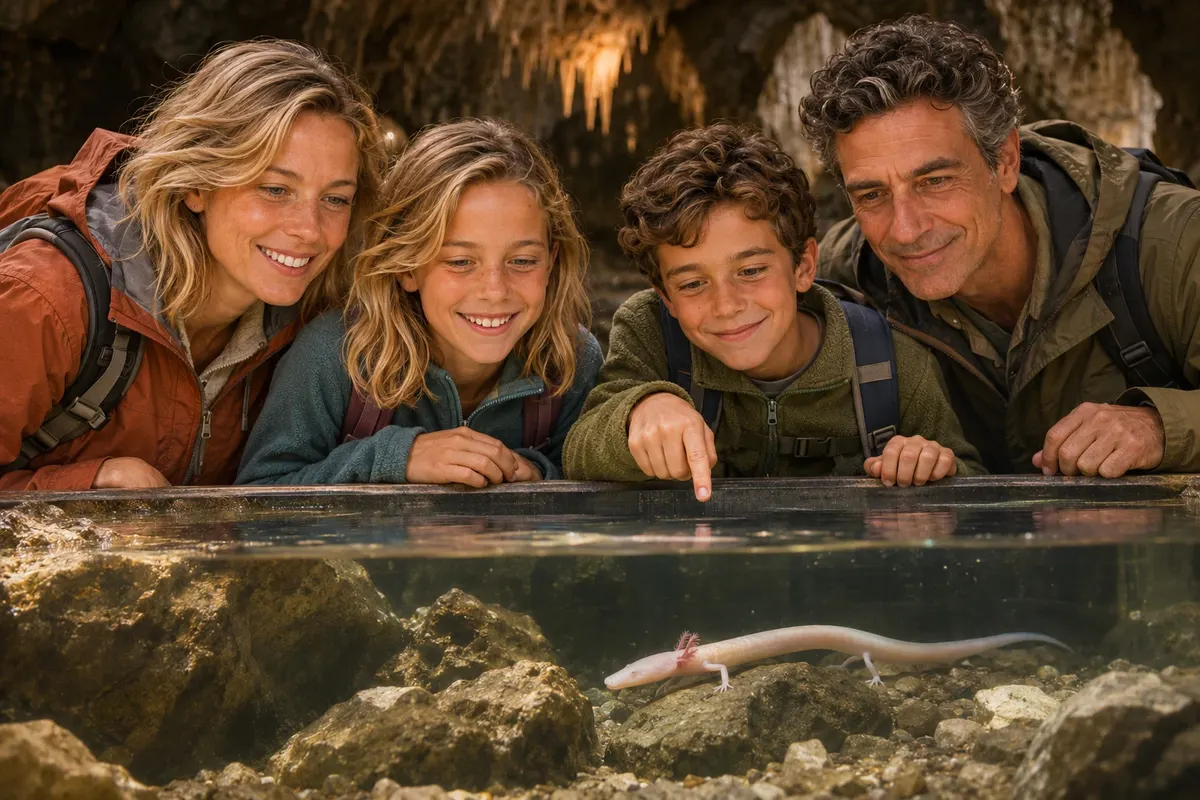
Illustrative images. The pictures in this guide are illustrations based on the real place, not photographs, and may differ from it.

Ecotourism
Fauna watching in Postojna
Observe the proteus in the Postojna cave and learn about its adaptations to life in darkness.
In the dimness of Postojna cave, first look for a light outline on the back of the aquarium. It may take a little while before your eyes can make out the head, the small legs and the reddish tufts behind it. That is the olm, a blind amphibian that spends its life in subterranean water. Fauna watching in Postojna begins with that waiting time.
How to see the olm in Postojna
The guided cave route combines a short train ride with a walk through the galleries. Along the visit there is a display aquarium with olms. Even while inside the cave system where the species lives, visitors observe the animals in an environment prepared for that purpose. You do not need to enter the water or look for them among the rocks.
Near the entrance is the vivarium, labeled Vivarium. The public area presents the underground fauna and explains how it is studied. If you are more interested in the animals than in the rock formations, allow time to read the exhibition and see that there is life even in the small spaces between the water and the limestone.
How to recognize the olm
The elongated body and pale skin are the first details you notice. Looking more closely, you can see four short legs. The red tufts on the sides of the head are external gills that help the animal breathe in the water. Its appearance inspired the nickname “baby dragon” that you hear in Postojna.
The scientific name is Proteus anguinus. In English signs, look for the word olm. This relative of salamanders lives in darkness and feeds on small aquatic invertebrates. A keen sense of smell and the ability to detect vibrations in the water help locate prey. Although its eyes are covered by skin, the olm senses light with its whole body.
When to visit the underground fauna
Inside the cave, the temperature varies little throughout the year. To choose a day, consider the availability of the tours and how much time you want to spend in the vivarium. Check the schedule of each visit, especially if you plan to do both on the same day and depend on transport to return.
Bring a jacket even if it’s warm on the surface. For the walking section, prefer closed shoes with grippy soles. If someone in your group has difficulty walking, ask which parts of the itinerary are on foot and how long you will be standing. Also allow time for the transfer between entrances.
Light, silence and distance from the glass
Give your eyes time to adjust. Keep flashlights put away, avoid touching the glass and follow staff instructions about camera use. A reflection from a phone screen can be enough to disturb someone next to you trying to see the animal in the dim light.
With children, it's worth agreeing beforehand what to look for. Can they spot the legs or the gills? When the olm is still, those details can still be seen. Wait for the group ahead to leave before looking closely and leave space for the next visitor to do the same.
Cave, vivarium or both visits
If your group wants to see the galleries and spot the olm during the tour, check the main Postojna cave circuit. If your interest is the underground fauna itself, check what is on display in the vivarium. Before buying tickets, see which entrances the chosen option includes and where each visit starts. The vivarium’s research area has a separate function from the public exhibition.
Frequently asked questions
What is the blind animal of Postojna cave?
It is the olm, also called the proteu. It is an aquatic amphibian with a pale, elongated body, four small legs and reddish gills visible on the head.
Will I see the olm free in the cave river?
On the tourist visit, the viewing point is an aquarium. The vivarium near the entrance lets you complement the tour with an exhibition about the cave environment and fauna.
Do I need to bring binoculars or a flashlight?
The aquarium is viewed up close and has its own lighting. The best way to make out the animal is to let your eyes adjust to the dimness and follow the staff’s directions.
Where to go: Wildlife watching
Pick a region or a state on the map, or type what you are looking for, to see the cities and who offers it in each.



Beyond the guide


