

 Brazil
 Antarctica
 Argentina
 Bolivia
 Chile
 Colombia
 Ecuador
 Guyana
 French Guiana
 Falkland Islands (Malvinas)
 Paraguay
 Peru
 Suriname
 Uruguay
 Venezuela
 Germany
 Austria
 Belgium
 Croatia
 Denmark
 Slovakia
 Spain
 Finland
 France
 Greece
 the Netherlands
 Hungary
 Ireland
 Iceland
 Italy
 Luxembourg
 Norway
 Poland
 Portugal
 the United Kingdom
 the Czech Republic
 Sweden
 Switzerland
 Turkey
 Bermuda
 Canada
 the United States
 Greenland
 Mexico
 Saint Pierre and Miquelon
 the Dominican Republic
 Japan
 South Africa
 Egypt
 Australia
 Fiji
 New Zealand
 Papua New Guinea
Illustrative images. The pictures in this guide are illustrations based on the real place, not photographs, and may differ from it.

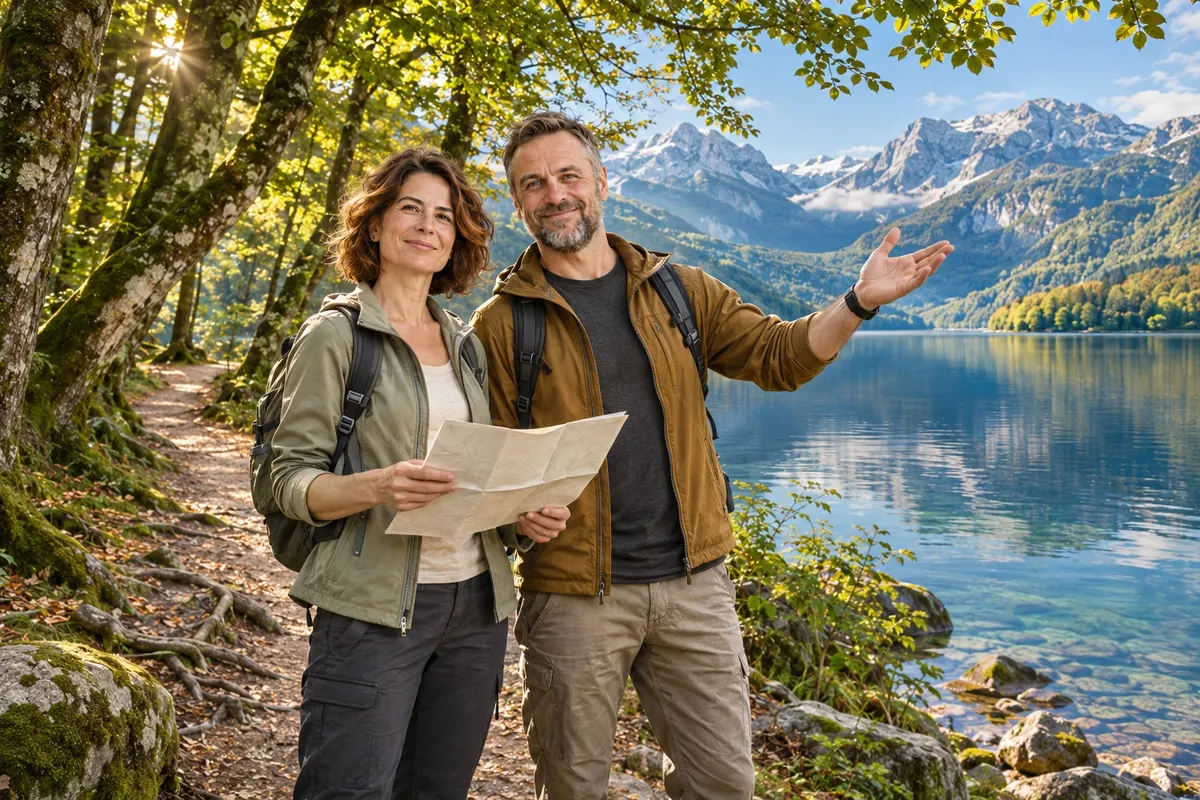
Nature
Ecotourism in Slovenia
Follow the Soča River on foot, see water spring from the rock at Savica, and discover how an amphibian lives in the darkness of the Postojna caves.
Water tells much of the story of a nature trip in Slovenia. In the mountains it appears in both arms of the Savica waterfall and continues to Lake Bohinj. In the Soča Valley, you can follow the river along trails and cross it on footbridges. In the Škocjan caves, the sound of the current comes from a canyon beneath the earth.
Things to do
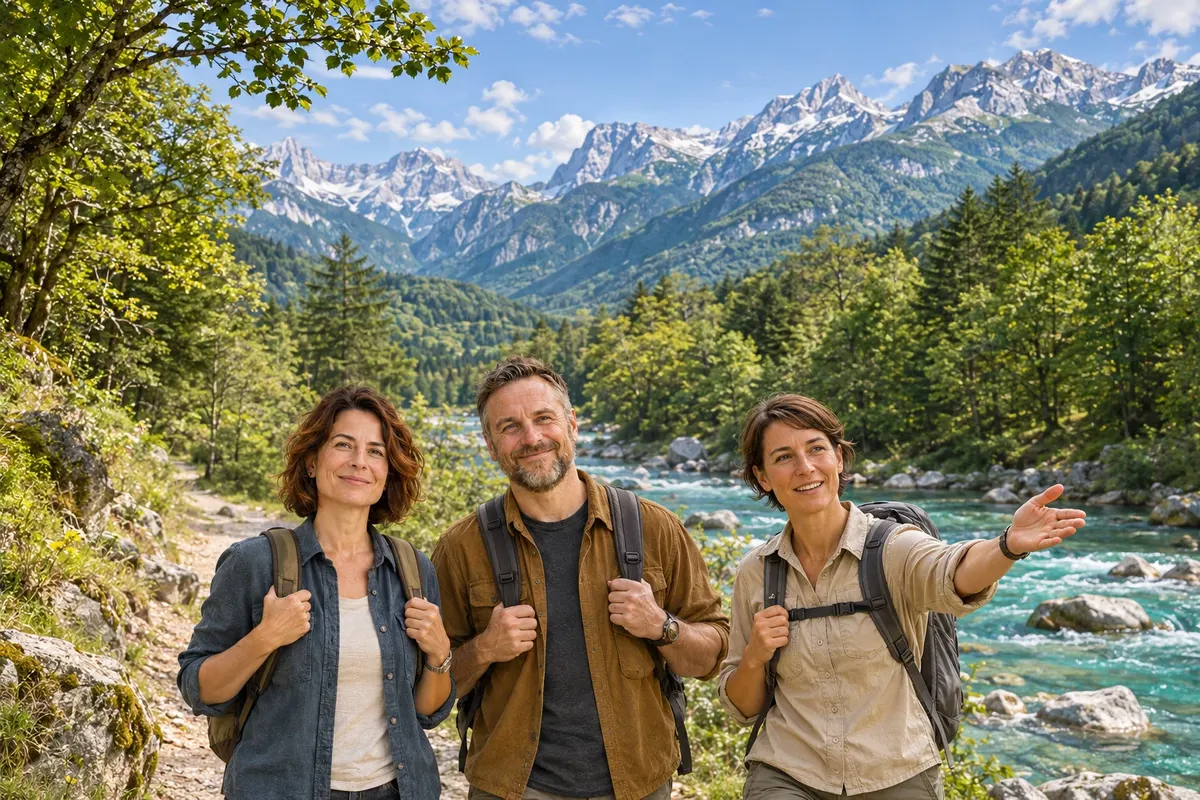
Guided hikes
Choose a walk along the Soča, by Lake Bohinj, or through the Solčava valleys.
Learn more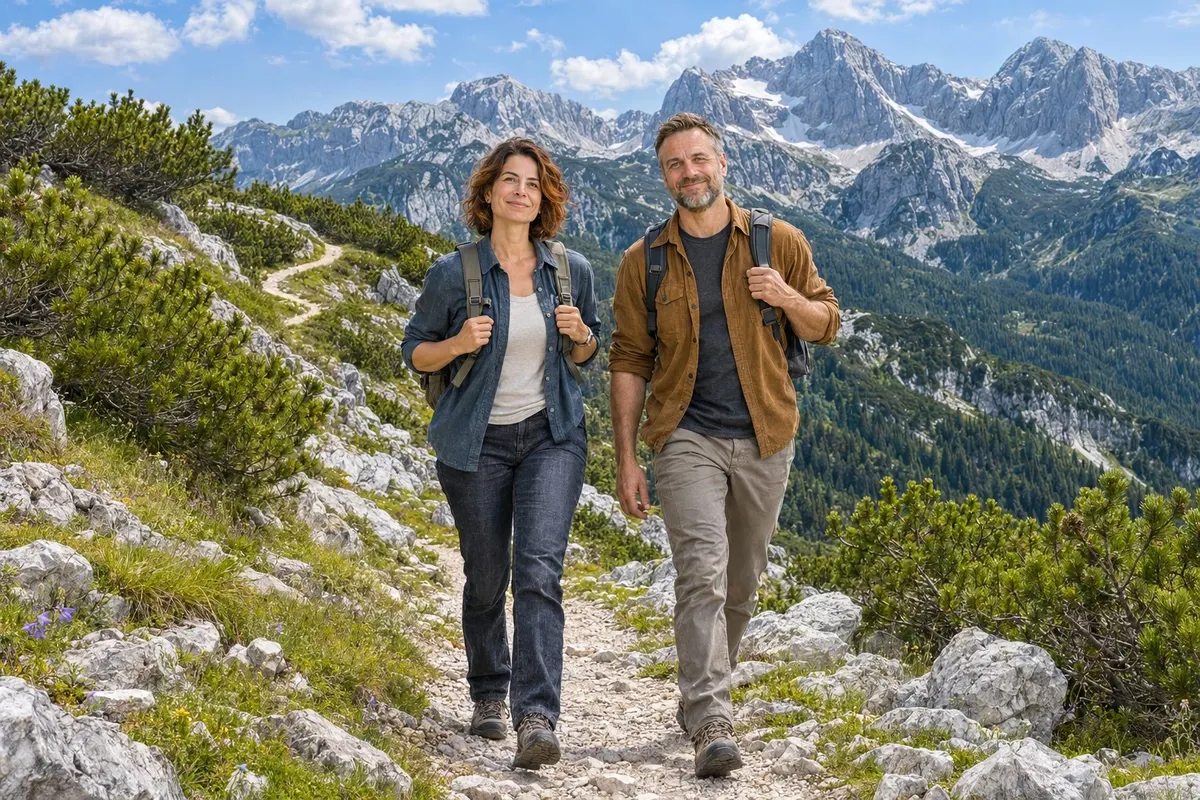
National and regional parks
Explore the mountains of Triglav National Park and the subterranean canyon of the Škocjan Regional Park.
Learn more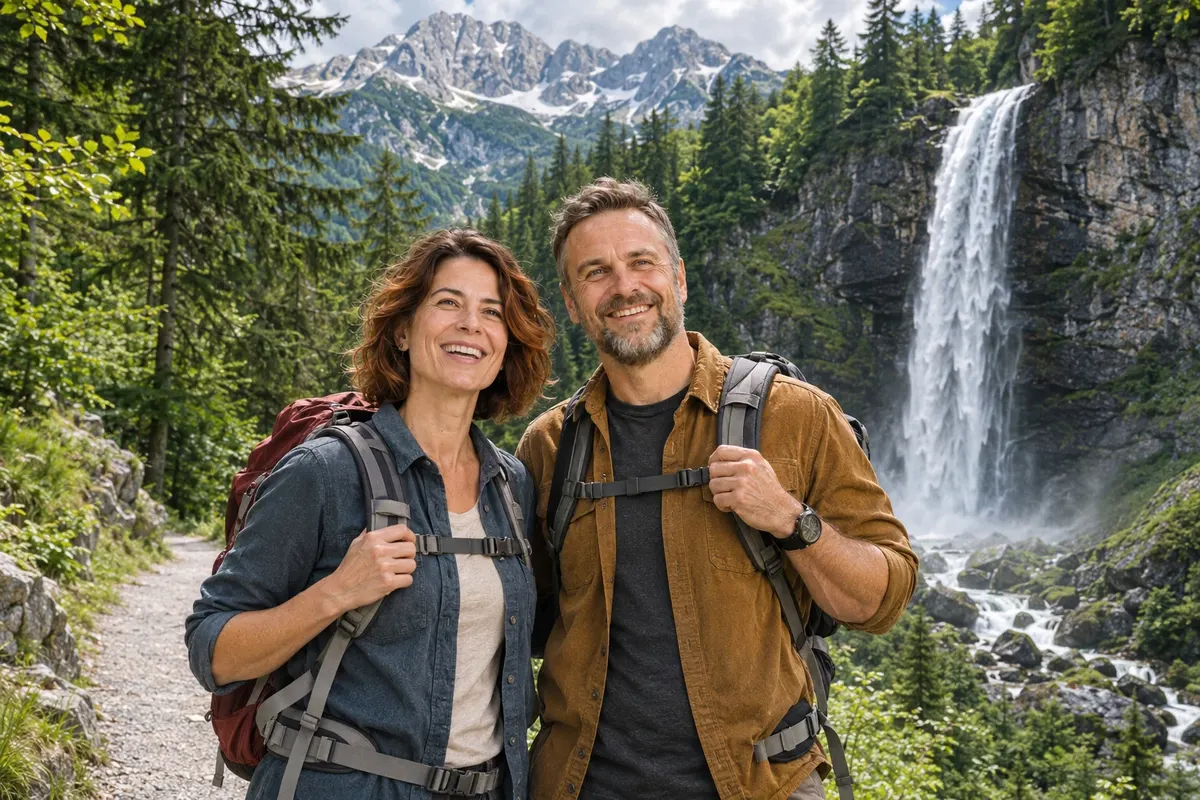
Waterfalls
Compare the viewpoints at Savica, Boka, Kozjak, and Rinka before choosing your trail.
Learn more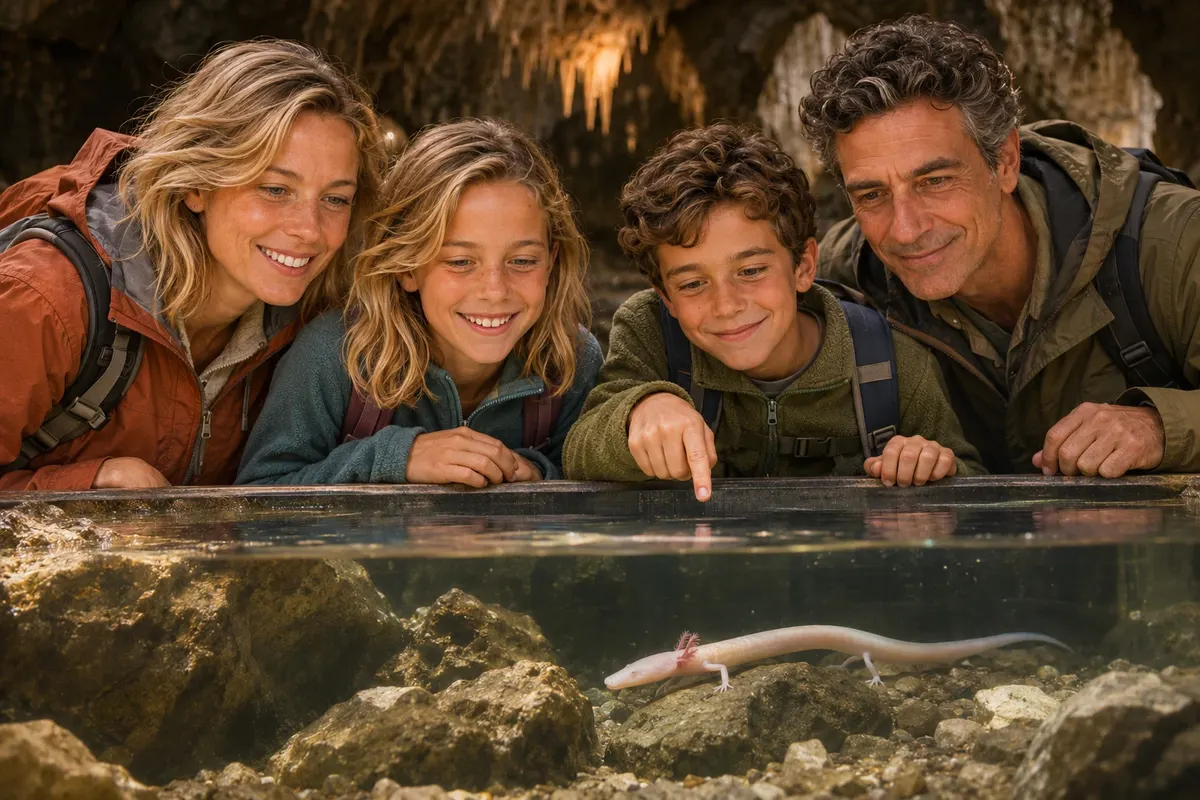
Wildlife watching
Observe the proteus in the Postojna cave and learn about its adaptations to life in darkness.
Learn moreWhere to go in Brazil
Pick a region or a state on the map, or type what you are looking for, to see the cities and who offers each activity.
- Kranjska Gora GO
- Ribčev Laz GO
- Bovec GR
- Kobarid GR
- Divača OK
- Postojna PN
- Solčava SA
To choose a base, first think about what you want to see up close. From Ribčev Laz you can start the day on the lake shore. In Solčava, the walk goes through valleys where meadows and farms are part of the landscape. In Postojna, save time to stand in front of an aquarium and discover, in the dim light, the outline of a proteus.
What is ecotourism
On an ecotourism trip, getting to know nature includes understanding what keeps that environment alive. At Savica, for example, the visible drop from the viewpoint is only part of the water’s route. The water has already flowed through the mountain interior before it appears, divided into two streams, on the rock face. It’s a detail easy to miss if you stop only to take a photo.
Local people are also part of that story. In the Solčava valleys, a regional guide can show how pasturelands fit between the forest and the slopes. Following the indicated path when crossing a rural area preserves the work of those who look after the fields you see from the trail.
Guided trails, parks, waterfalls and wildlife observation
On guided trails, the starting point changes the character of the outing. From Kranjska Gora, the Vršič pass takes the group into a high-altitude landscape. From Bovec, one option is to choose a section of the Soča trail and walk with the river in view. Arrange the return point with the guide if the route finishes far from where it began.
To visit protected areas, there are two very different environments. Triglav National Park brings together mountains, lakes and valleys. In the Škocjan Caves regional park, near Divača, the guided visit descends to an underground canyon. The bridge over the river gives a sense of depth that a photo of the entrance rarely conveys.
Waterfalls also demand different viewpoints. Boka appears from afar between cliffs near Bovec. In Kobarid, the Kozjak trail narrows until a terrace from which you see the water fall into a rock chamber. In Solčava, the Rinka fall marks the bottom of the Logar valley.
For wildlife observation, Postojna offers something rare to see on an outdoor walk. The proteus is an aquatic amphibian that lives in underground waters. In the cave, the animal is seen in an aquarium under controlled lighting. If you want to understand this habitat better you can include the nursery in the visit.
Outings for different paces
If you travel with children or people who walk at different paces you can start in Ribčev Laz. An out-and-back along the shore of Lake Bohinj lets you decide the return time without committing to a full circuit. To include Savica, consider separately the transfer to the start of the climb and the final steps.
For those who like full-day walks, Bovec lets you spend more time following the river. If you like geology, you can split your stay between visiting the Škocjan caves and wildlife observation in Postojna. Before choosing an underground tour for someone with reduced mobility, check the steps, the slope and the walking distance of the specific itinerary.
Where to do ecotourism in Slovenia
Ribčev Laz, Kranjska Gora and Bovec give access to different sides of Triglav National Park. In Ribčev Laz the reference is Lake Bohinj. Kranjska Gora lies by the park’s northern border and is a base for exploring Vršič. Bovec sits on the western side, a good choice to alternate mountain trails with the Soča valley.
Solčava serves as a base for the Logar valley and for Robanov kot. It’s worth choosing one valley to explore at a relaxed pace. In the first, the walk can end in front of Rinka. In the second, the interest is also in the path through the meadows and the views of the mountains that enclose the valley.
In the Postojna and Škocjan area, the two towns have distinct roles in the itinerary. Divača is the reference for visiting the Škocjan Caves park, a UNESCO World Heritage Site. Postojna is the base for the cave where the proteus is observed. Check the name on the ticket when planning transfers.
When to go to the valleys, mountains and caves
In spring, the melt can swell waterfalls like Boka while there is still snow on higher paths. In summer, longer days help fit in walks, but a storm can arrive while the group is still on a slope. Check the forecast for the trail altitude and park alerts the day before and before setting out.
In autumn, plan your return with daylight and check transport to the start of the walk. In winter, snow and ice change the type of outing possible on the same terrain. The Postojna cave has a more stable temperature throughout the year. Even on a warm day, bring a warm layer for the underground section.
How to organize the visit
Start from the base where you will sleep and mark the attraction’s entrance on the map. A walk described as short may count only the time between the parking lot and the viewpoint. If you walk from Ribčev Laz to Savica, for example, the lakeside path is part of the day and must be counted on the return as well.
When arranging a trail, ask for the total distance, the elevation gain and a description of the surface. Say if anyone has difficulty with stairs or with footbridges over water. Bring shoes with grippy soles, a layer against wind or rain, water and something to eat. Put the map away before you leave and carry your trash back to town.
Frequently asked questions
Which is Slovenia’s only national park?
It’s Triglav National Park. Ribčev Laz, Kranjska Gora and Bovec are bases to visit different parts of the park.
Where to combine trail and waterfall?
From Ribčev Laz, combine a stretch of Lake Bohinj with the climb to Savica. In Solčava, choose the Logar valley to finish the walk in front of Rinka.
What is the difference between Boka and Kozjak?
Boka, near Bovec, stands out for its height and can be seen from a distance. Kozjak, near Kobarid, only reveals the full fall when you reach the terrace between the rock walls.
Where to see the proteus in Slovenia?
In Postojna. There is an aquarium on the cave circuit and an exhibition dedicated to subterranean fauna in the nursery. Check which visits are included with the ticket you choose.
Do I need to climb a mountain to see Triglav?
You can visit the park from Lake Bohinj or follow parts of the Soča River on foot. Reaching the summit of Triglav is a mountaineering objective and requires different preparation.
More in Nature
Beyond the guide


