Vale dos Vinhedos
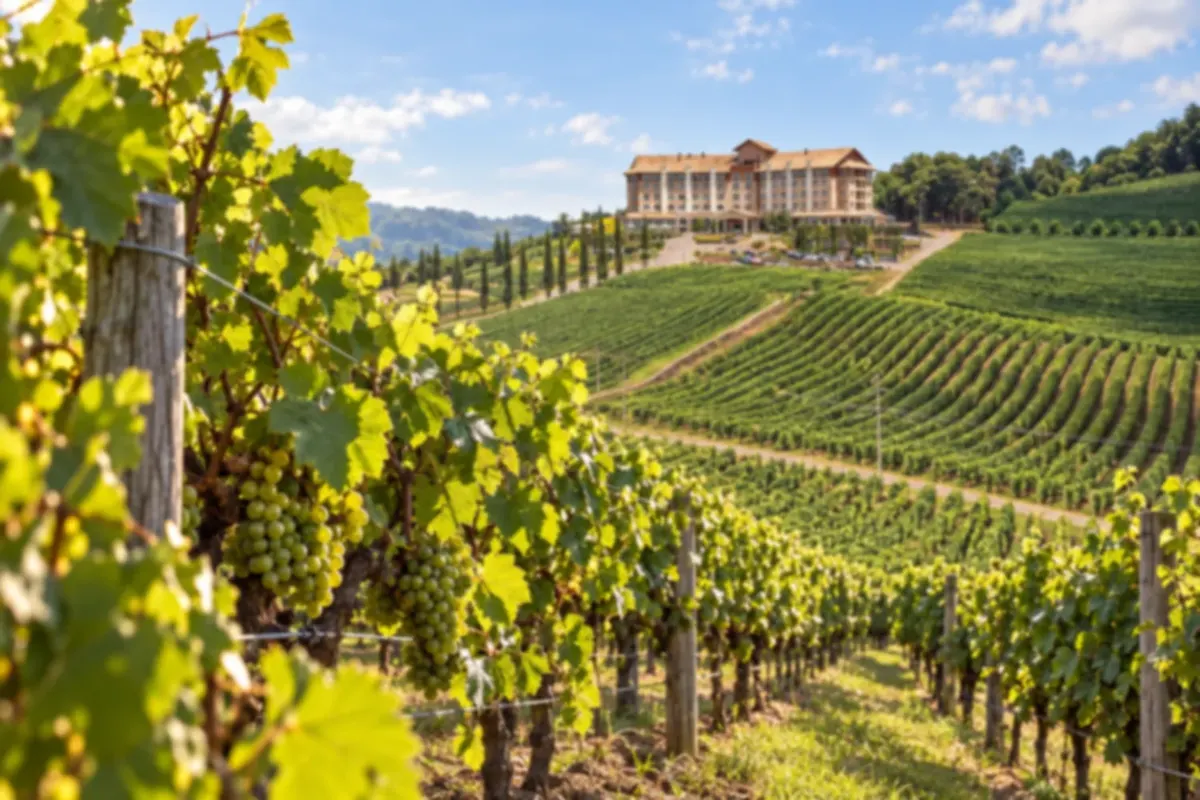
Brazil's benchmark wine region, with dozens of wineries open for visits, tastings and lunch among the vineyards. The landscape of hills covered in grapes is a portrait of Italian settlement in southern Brazil.
Antarctica
Rio Grande do Sul · Brazil
In the destination Serra Gaúcha.
Illustrative images. The pictures in this guide are illustrations based on the real place, not photographs, and may differ from it.
The city
Bento Gonçalves has a landscape and culture tied to Italian immigration and grape growing. You can explore rural routes and see historic buildings, trails and local traditions.
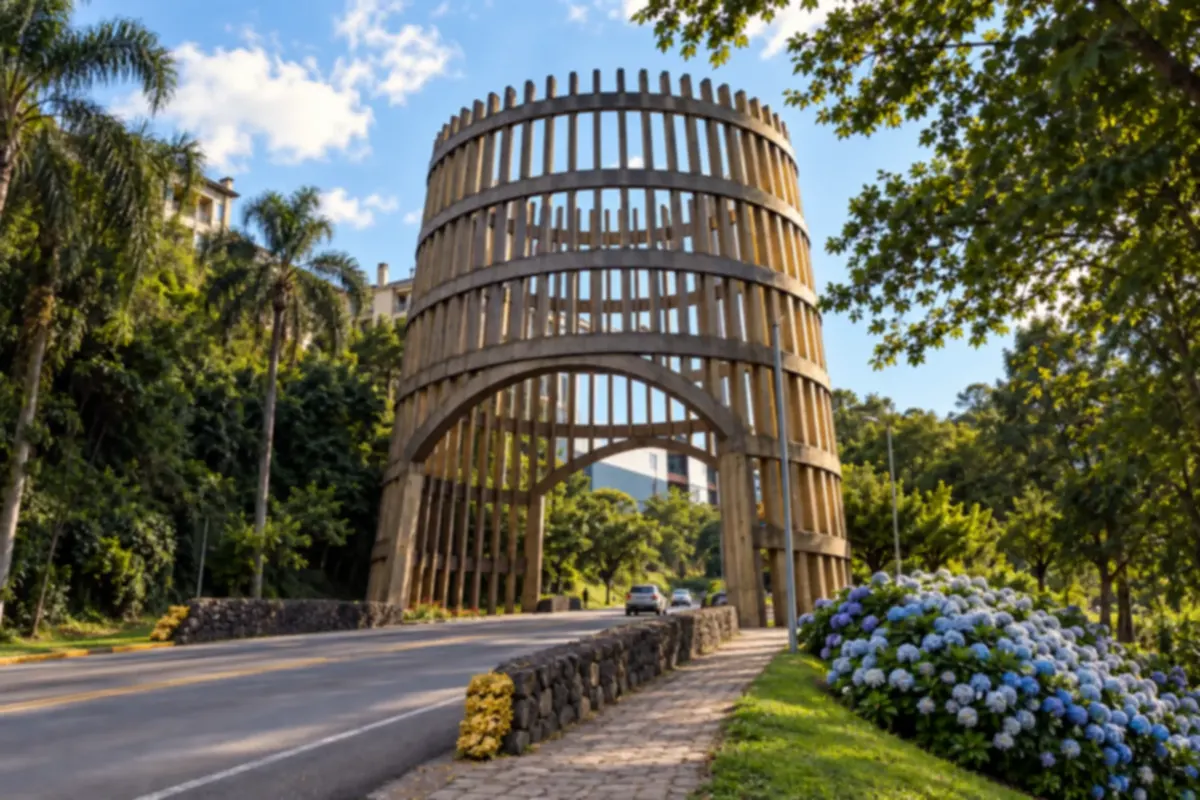
Bento Gonçalves is in the Serra Gaúcha, in Rio Grande do Sul, at about 690 meters above sea level and roughly 120 km from Porto Alegre. It’s the Brazilian city most associated with wine, known in the country as Brazil’s wine capital: wineries are found within the urban area, in the surrounding valleys and along rural roads, and the grape appears in the church in the shape of a wine cask, in the wine-colored fountain in the center and on the town’s entrance gate.
The story begins with Italian immigration. The place used to be a drovers’ stop called Cruzinha, named for a small cross, and became Colônia Dona Isabel; the first Italian families arrived at the end of 1875. The municipality became independent in 1890 and received the name Bento Gonçalves da Silva, leader of the Farroupilha Revolution. That origin is visible in the stone houses, the food and the town’s festivals.
The city has two parts that interest visitors. The center includes the Via del Vino, a pedestrian avenue with buildings from the colonization era, the City Hall and the Santo Antônio Sanctuary. In the Cidade Alta are the Maria Fumaça station, the steam train that goes to Carlos Barbosa, the Epopeia Italiana Cultural Park and the headquarters of Vinícola Aurora. The São Bento Church, shaped like a cask, and the Immigrant Museum complete what you can see in the urban area.
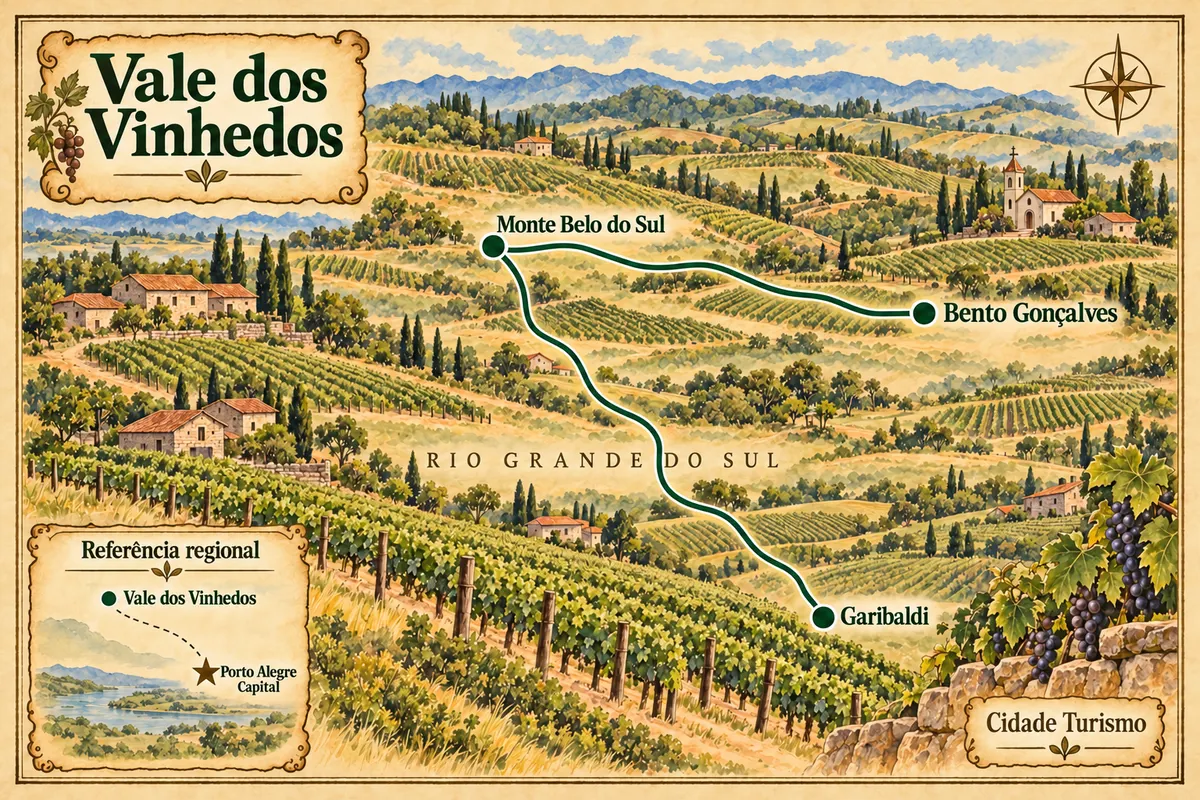
What brings most travelers, however, is in the rural districts. The Vale dos Vinhedos is explored via the Estrada do Vinho, with dozens of wineries open for visits, and it extends into Garibaldi and Monte Belo do Sul. The Caminhos de Pedra, in the São Pedro district, group together stone and wooden immigrant houses that are now ateliers, cantinas and cafés. The Vera Vista route connects the cantinas of Faria Lemos, Linha Eulália and the Vale do Rio das Antas, with the arched bridge on the road to Veranópolis.
The weather changes a lot through the year. From January to March it’s warm by day, with sudden rain showers, and the vindima, the grape harvest, takes place with events at the wineries. Autumn is drier and the vineyards turn yellow and red. From June to August it’s cold, with frost on some mornings, and this is the season most sought after for red wine and Italian food. Spring has mild days and more rain in October.
Two full days cover the center, the train and one of the rural routes; with three or four days you can take in the Vale dos Vinhedos, the Caminhos de Pedra and the Vera Vista at a relaxed pace. Distances between the routes require a car, a booked tour or the weekend tourist bus, and anyone planning to taste wine should leave the driving to someone else.
76 places to stay in Bento Gonçalves.
40 places to eat in Bento Gonçalves.
Bento Gonçalves highlights and titles
The local experience
Brazil's benchmark wine region, with dozens of wineries open for visits, tastings and lunch among the vineyards. The landscape of hills covered in grapes is a portrait of Italian settlement in southern Brazil.
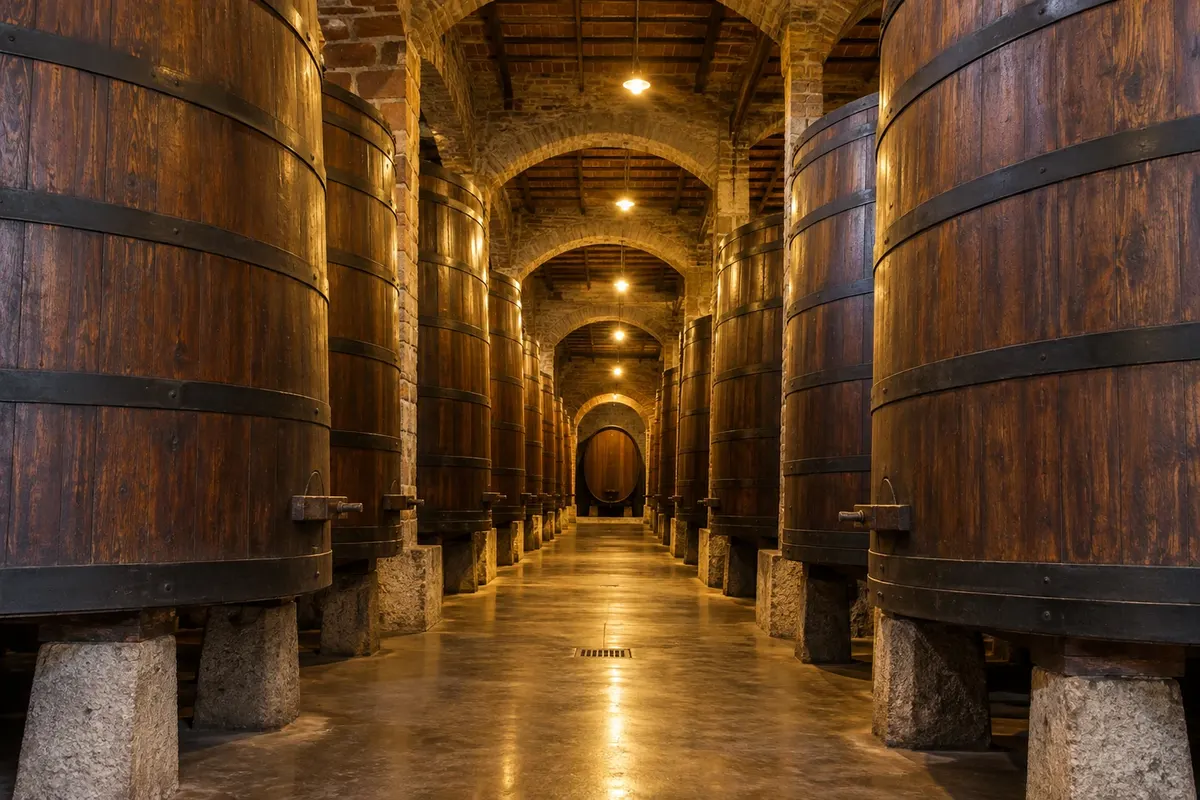
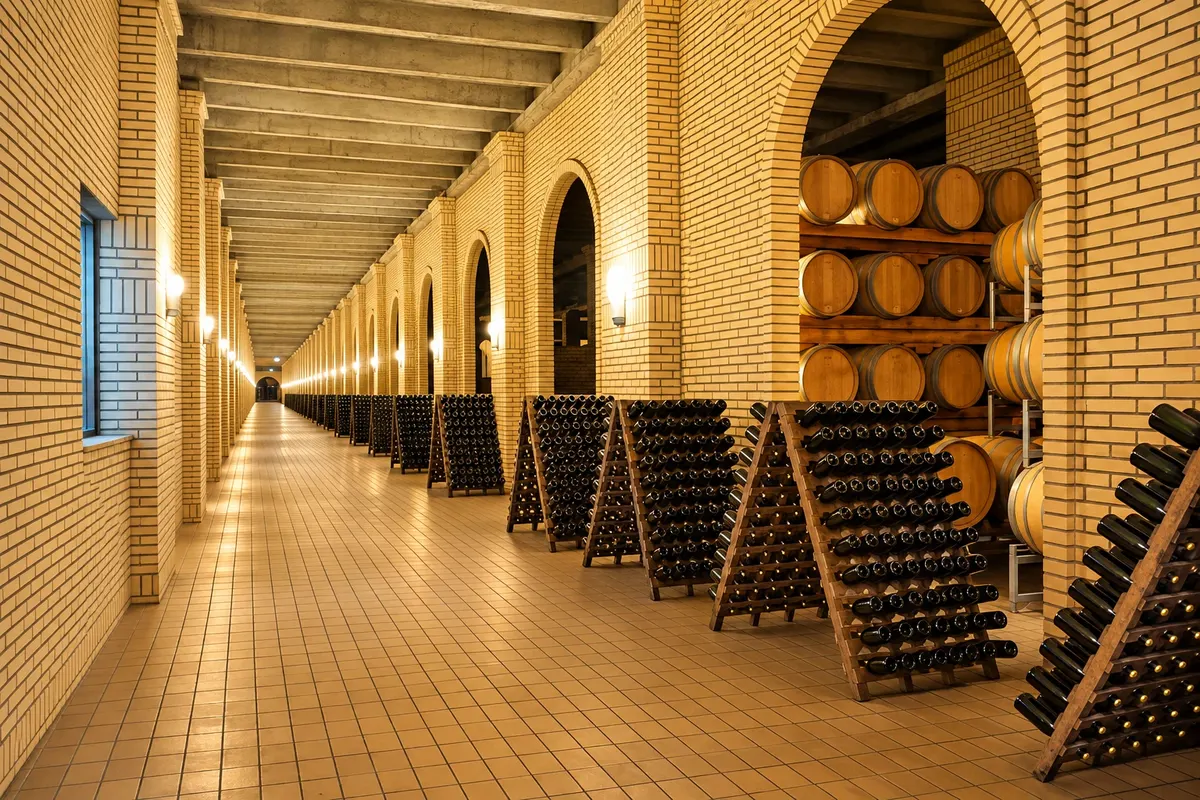
A cooperative founded in 1931 by 16 families, it now has more than 1,100 members and is in the city center. The guided tour goes through the underground cellars, with casks and tanks, and ends with a tasting.
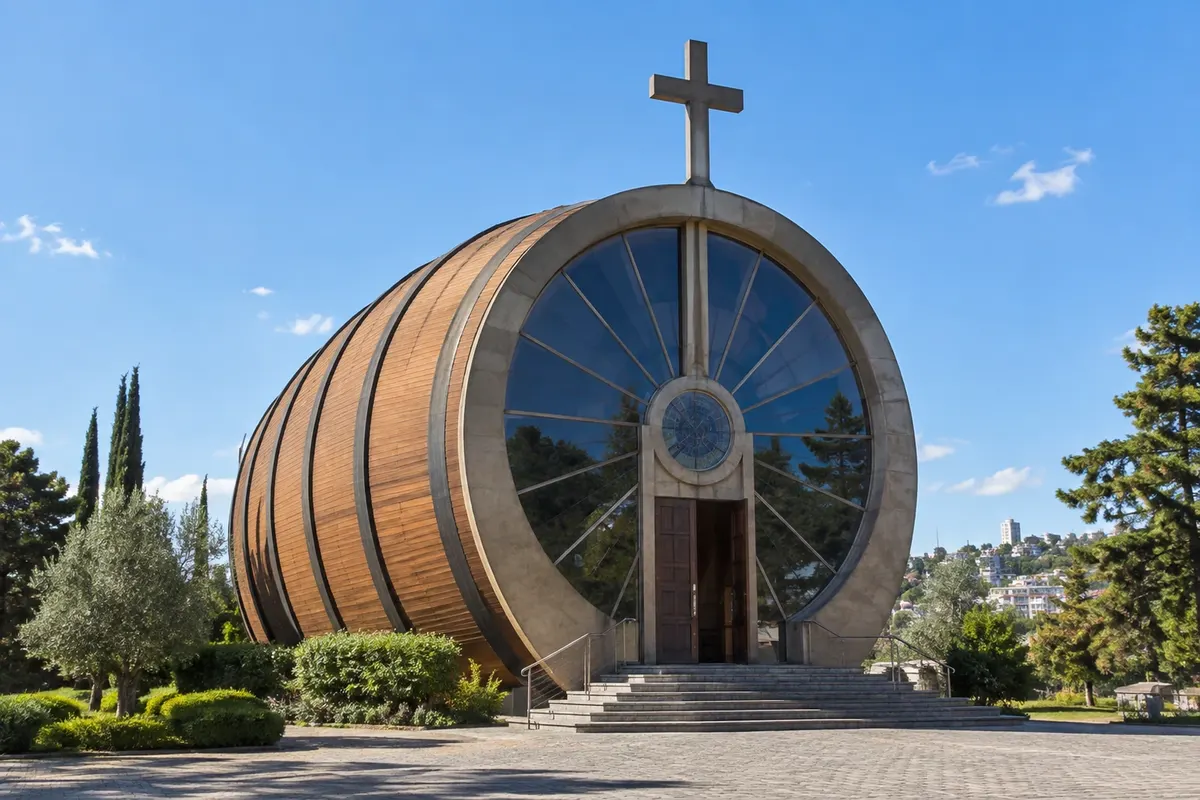
Built in the 1980s in honor of the Italian immigrants, the church is shaped like a pipa, a barrel used in winemaking. Inside are stained glass windows, a wooden altar and pews decorated with bunches of grapes.
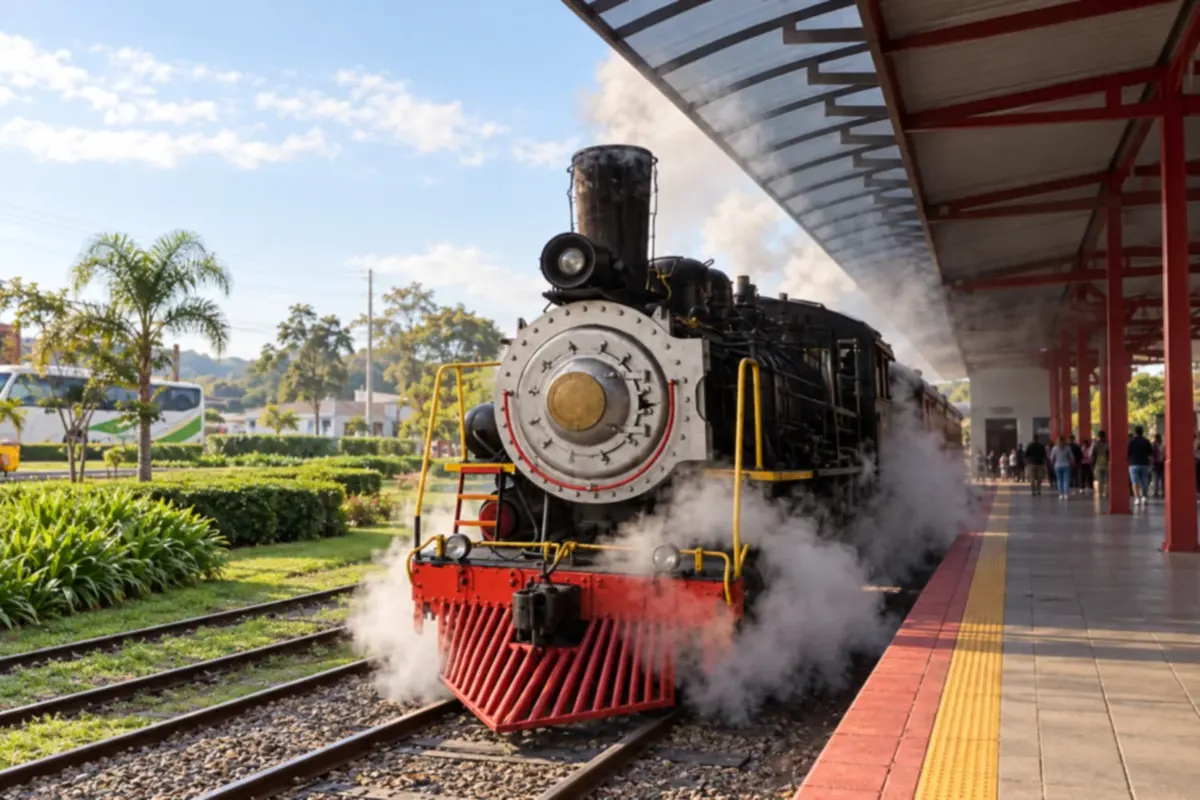
A steam locomotive that covers about 23 km between Bento Gonçalves, Garibaldi and Carlos Barbosa, with live music and wine and sparkling wine tastings on board. The stations preserve an early 20th-century feel.
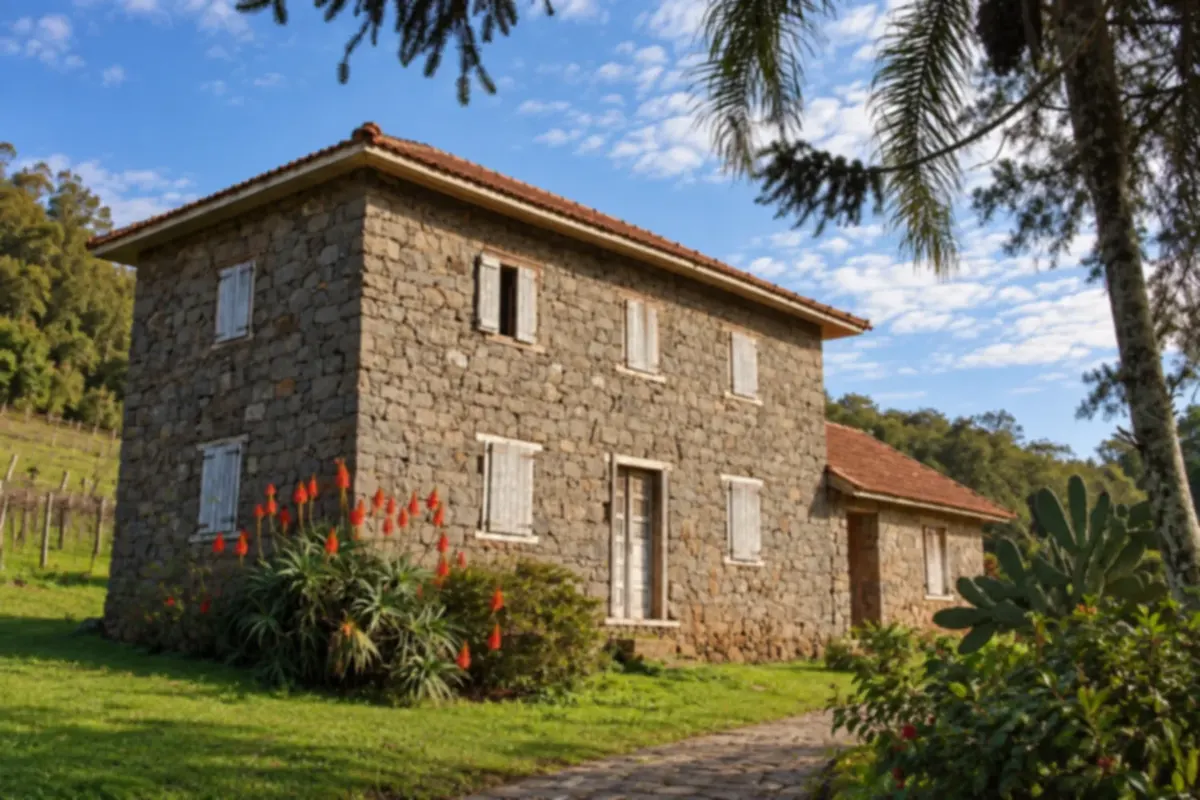
A rural route that preserves stone and wood houses built by Italian immigrants, now turned into workshops, mills, cantinas and cafés serving café colonial. It's a step back into the daily life of the first settlements.
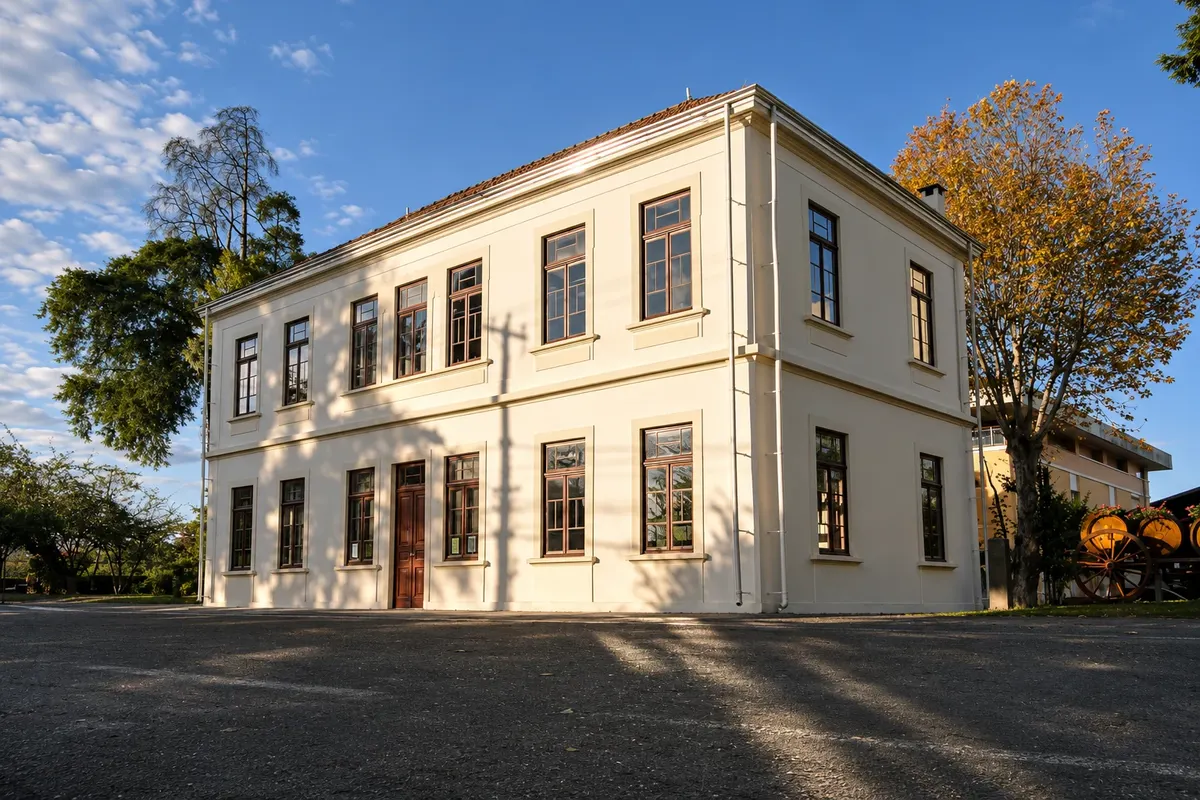
Bento Gonçalves municipal museum dedicated to Italian immigration, in the Planalto neighborhood. It gathers objects brought from Europe, tools and utensils of the first settlers, and a reconstruction of an immigrant family's bedroom.
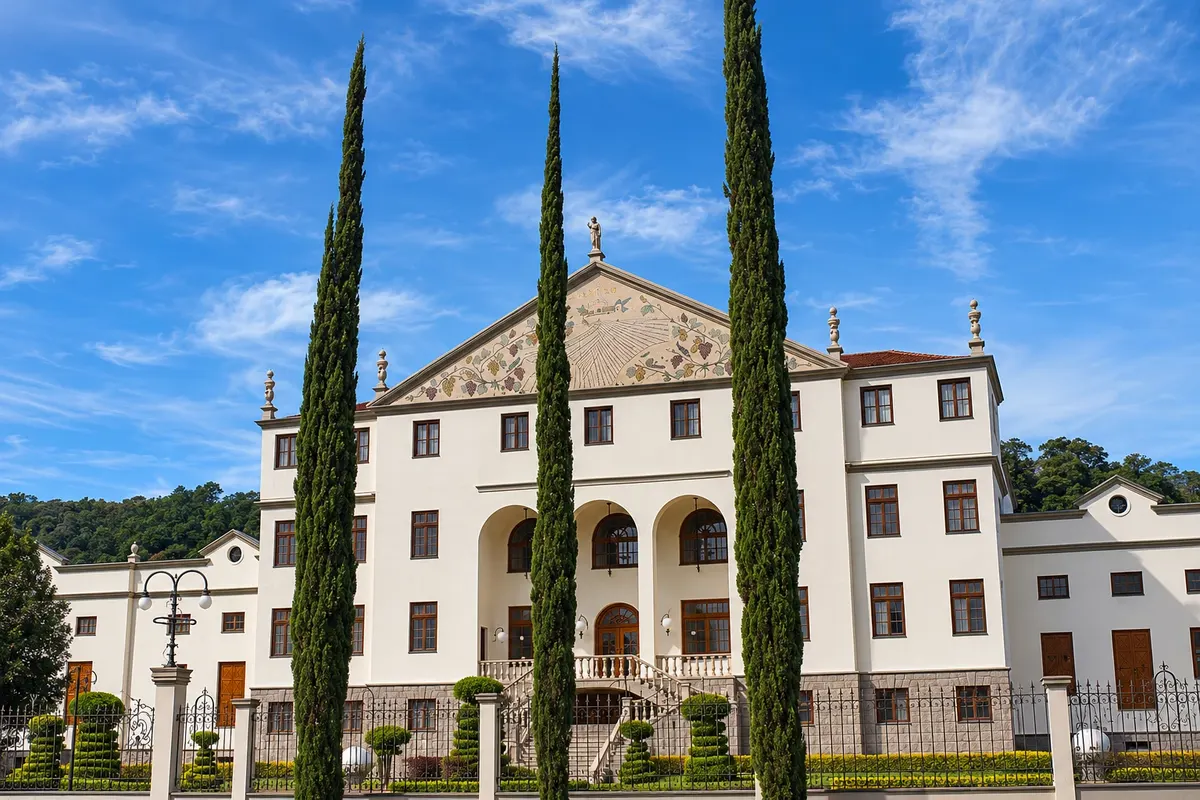
Family winery in the Vale dos Vinhedos, founded by descendants of Italian immigrants who arrived in 1875. It welcomes visitors to see the vineyards, the cellars and the wine and sparkling wine production process, with a guided tasting.
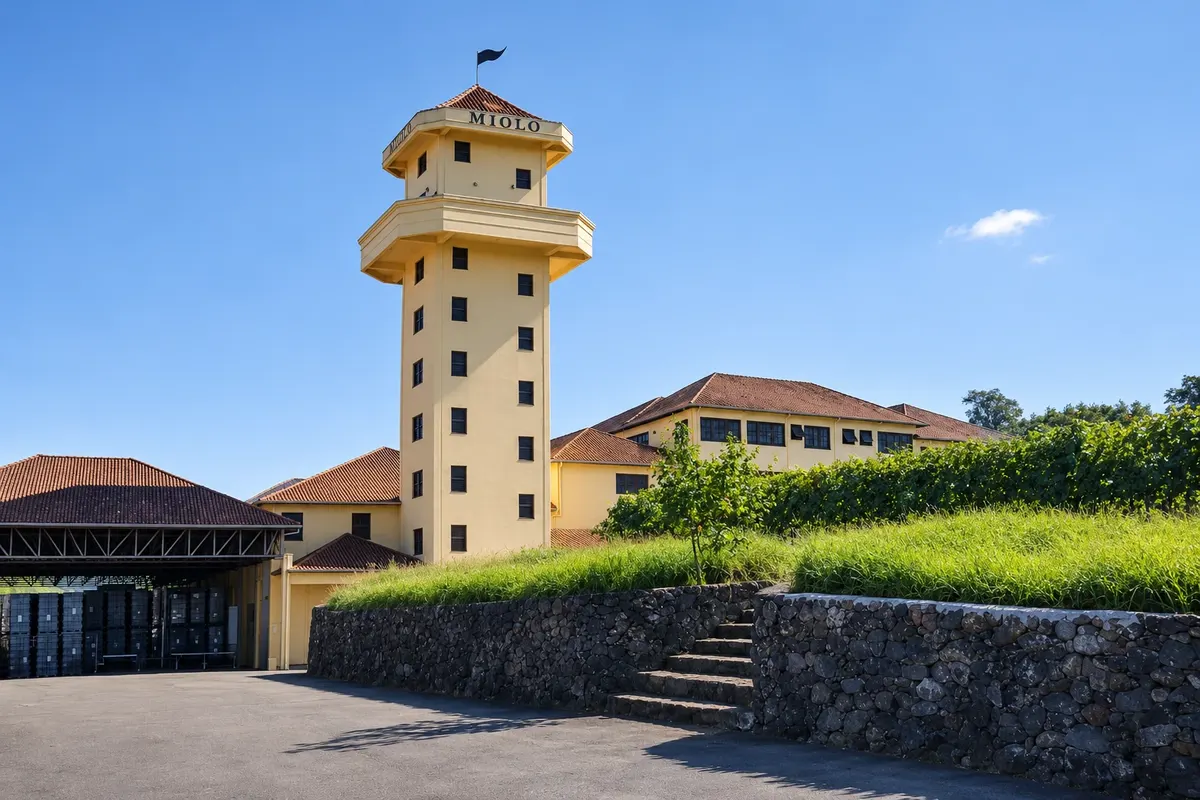
Miolo family winery in the Vale dos Vinhedos, on the plot of land purchased by immigrant Giuseppe Miolo, who arrived in 1897. It welcomes visitors to learn about the history, the vineyards, the cellar and the caves, with tasting.
Winery of an Italian immigrant family, founded in 1910, headquartered in the Tuiuty district in the interior of Bento Gonçalves. The guided tour shows the vineyards, production area, bottling line and a sparkling wine cellar, with tasting.
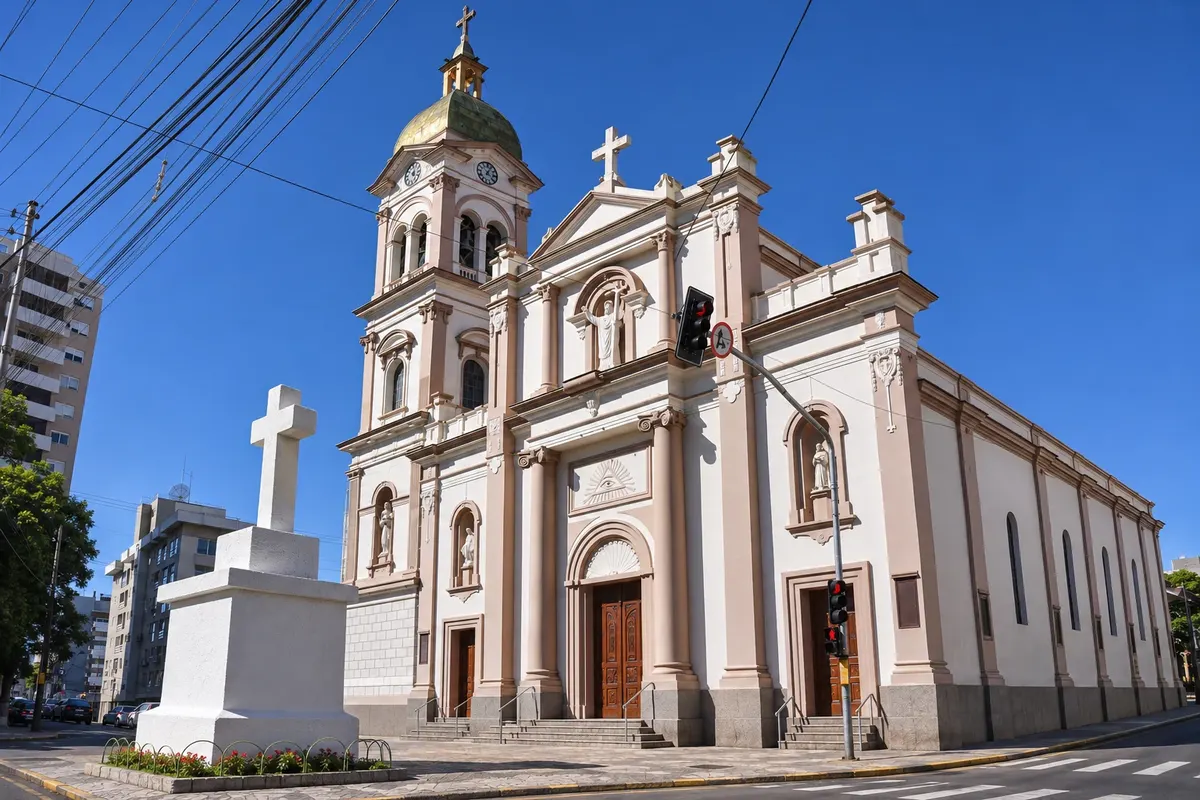
Main church and patron saint’s sanctuary of Bento Gonçalves, in the city center. Inside, paintings on the side walls depict miracles of Saint Anthony; nearby the first Mass of the old colony was celebrated.
Discover San Antonio Sanctuary
To choose before you go
Where each tour starts, how long it takes, how it is done, what is included and the price range.
The Via del Vino is the heart of downtown: a stretch of pedestrian promenade, benches, gardens and small squares along Rua Marechal Deodoro, designed in 1990 to mark the city’s 100th anniversary of emancipation. Around it are buildings from the colonization era, such as Casa Farina, from 1880, Casa Fasolo, from 1892, and the neoclassical City Hall building, from 1901. In front of City Hall is La Fontana, the fountain with water tinted the color of wine, surrounded by stones that imitate old wattle walls. Walking a little further brings you to the Sanctuary of Saint Anthony, a neoclassical church with a 40-meter bell tower, and to the Cruzinha, the 1926 monument that recalls the town’s original name from before Colônia Dona Isabel. That is where the self-guided urban route prepared by the Tourism Department ends; it has 33 points and a map. The São Bento Church is in another part of town and is worth the trip. Built in concrete in the shape of a wine cask, it opened in 1984 and has grape- and wine-themed decorations inside; Saint Benedict is regarded as the protector of grape growers. In the same square is the Monument to the Immigrant, and the official route continues from there to the Immigrant Museum, which operates in a historic building and preserves objects from life in the town from the late 19th century to the mid-20th century. At the city entrance, by the access highway, is the Pipa Pórtico, a gateway shaped like a wine cask that cars pass under. There is a tourist information center there, which is not always open.
Stops: Via del Vino, La Fontana fountain, City Hall, Sanctuary of Saint Anthony, Cruzinha, São Bento Church, Immigrant Museum, Pipa Pórtico.
Includes: There is no charge to walk along Via del Vino or to see the churches from the outside. The Municipal Tourism Office offers a walking tour of Via del Vino from Tuesday to Friday, by appointment. Museums and shopping are extra; confirm before you go whether the Immigrant Museum is open.
Tip: Check the self-guided route map for the distance between Via del Vino, São Bento Church and the Immigrant Museum before deciding to walk: the town has hills. To enter churches, avoid mass times.
Best time: All year. In late November and December, the Via del Vino hosts part of the Natal Bento program.
Cidade Alta is the neighborhood around the train station. Even if you don’t take the Maria Fumaça, it’s worth seeing the station, the displayed locomotive and the old railway workers’ houses, which are part of the official urban route. Next to the station is the Parque Cultural Epopeia Italiana. It has about 2,000 m² of built area and nine scenographic environments that tell the story of the Italian immigrants’ arrival in 1875, following the story of a couple, Lázaro and Rosa: life in Italy, the sea crossing and the early years in the highlands. The visit is led by an actor and lasts about 40 minutes. Those who buy the train tour already have park entry included. The park also has its own visiting days, which vary by month; confirm before you go. The self-guided city route then passes the Igreja Cristo Rei and reaches Vinícola Aurora, also in Cidade Alta. Aurora is a cooperative founded in 1931 by 16 producer families, and its headquarters are inside the town. The guided visit goes through the underground cellars, with casks and tanks, explains the production stages and ends with a tasting. The three sites are in the same neighborhood and fit into a half-day, before or after the train.
Stops: Bento Gonçalves Railway Station, Parque Cultural Epopeia Italiana, Igreja Cristo Rei, Vinícola Aurora.
Includes: Walking between the sites. Entry to Epopeia Italiana is charged separately for those without a train ticket. At Vinícola Aurora, confirm the visit and tasting conditions with the winery.
Tip: Aurora may require advance booking, especially for groups and on holidays; confirm before you go. If your train departs in the afternoon, visit the winery in the morning and reserve Epopeia for the time on your ticket.
Best time: All year. It’s a good option on a rainy day because almost everything is covered.
The steam train, also called the Wine Train, is the city’s best‑known excursion. The locomotive runs 23 km of track between Bento Gonçalves and Carlos Barbosa in about 1h30, with a stop at Garibaldi station. For those staying in Bento, everything begins and ends at the Cidade Alta station. There are two directions: board the train in Bento and return by bus from Carlos Barbosa, or go by bus to Carlos Barbosa and arrive in Bento by train. The bus between stations is included in the ticket, and the difference between directions is small. Onboard there are musical and dance performances of Italian and gaúcho traditions, and tastings of wine, sparkling wine and grape juice. In Garibaldi, the train stops for about 20 minutes, with a tasting of sparkling wine and grape juice. The ticket also includes a timed visit to the Parque Cultural Epopeia Italiana next to Bento station. Departures vary with the season. Outside high season, the train usually runs four days a week; in July, November, December and early January it runs almost daily. Most departures are in the afternoon, with extra morning services during busier periods and night rides around Christmas.
Stops: Bento Gonçalves Railway Station, Parque Cultural Epopeia Italiana, Garibaldi Station, Carlos Barbosa Station.
Includes: Steam‑train ride, bus between Bento Gonçalves and Carlos Barbosa, tastings, onboard performances and entry to the Epopeia Italiana. Small children travel on laps and there are reduced fares for some age groups; check the operator’s current table.
Tip: Buy in advance for July, holidays and year‑end periods, because tickets sell out. Arrive at the station with time to spare, choose the park visit time when you buy the ticket, and bring warm clothing in winter.
Best time: All year. July, November and December have more departures and greater demand.
Vale dos Vinhedos is a rural district of Bento Gonçalves, near the center, and continues through the municipalities of Garibaldi and Monte Belo do Sul. The road that crosses it is the RS-444, the Wine Road; smaller roads branch off it, like Via Trento, where several wineries are located. The valley’s wines and sparkling wines were the first in Brazil to receive a Denomination of Origin. If you go on your own you can build the day as you like. A good starting point is the Aprovale Tourist Information Center, the producers’ association, on RS-444; it’s open every day and helps choose what to visit. The official route list has about 30 wineries, from large ones like Miolo and Casa Valduga to family-run estates. Each place has its own way of hosting visitors, with guided tours, tastings and direct sales. Besides wine, the road has restaurants and cafés, a ceramics atelier, cookie and chocolate factories, a whisky distillery and hot-air balloon flights. The chapel known as the Igreja do Vinho, linked to the immigrants’ memory, receives visits by appointment. The right pace is two or three wineries a day, with lunch in between. The estates are far from each other: this is not a walkable outing.
Stops: Vale dos Vinhedos, Wine Road (RS-444), Aprovale Tourist Information Center, Miolo Winery, Casa Valduga.
Includes: Nothing is included: each visit, tasting and meal is paid separately, directly at each place. Check the current price list for each winery.
Tip: Schedule visits in advance, especially on weekends. If you’re drinking, don’t drive. Ride-hailing apps work well for leaving the town center, but on the return trip there are few cars in rural areas: arrange your return with a driver or use the weekend tourist bus.
Best time: All year. From January to March, the harvest brings grape picking and foot treading; from April to June, the vineyards change color.
The Caminhos de Pedra are in the São Pedro district, about 15 minutes from downtown. It is a 12 km rural road with stone and wood houses built by Italian immigrants, where families still work and welcome visitors. The route was organized in 1992 and is recognized by state law as historical heritage of Rio Grande do Sul. By car, the official starting point is the Casa da Memória Merlin, where the route association operates. The manor house was built in 1884 by immigrant Pietro Merlin and is the largest basalt stone house in the district; the guided visit, about 45 minutes, shows furniture and utensils of the first families. From there you choose your stops. At the Casa da Erva-Mate, mills powered by a water wheel grind the herb and there is a chimarrão tasting. The Casa da Tecelagem gives demonstrations of a handloom, Ferraria Ferri makes knives and the Casa do Tomate tells the history of the route with tastings of its products. For children there is Parque da Ovelha, Parque das Abelhas, with stingless bees, and Parque Casa na Árvore. Parque Domadores de Pedra is an open-air museum of stone sculptures. Along the way there are also cantinas, a brewery, cafés and Italian restaurants. Four or five stops make for a full day. Those who want to extend the trip can continue toward Pinto Bandeira, a neighboring municipality known for sparkling wine vineyards.
Stops: Casa da Memória Merlin, Casa da Erva-Mate, Casa do Tomate, Casa da Tecelagem, Ferraria Ferri, Parque da Ovelha, Parque Domadores de Pedra.
Includes: Nothing is included: the guided tour at Casa Merlin, parks and tastings are paid separately at each site. Check the current price list for each attraction.
Tip: Casa Merlin is closed on Sundays and each house has its own opening days: check before you leave. The Parque da Ovelha works by appointment. Start early, have lunch along the route and leave shopping for the end.
Best time: All year. In autumn the vine leaves change color; in winter combine the visit with a long lunch.
Vera Vista is the name of the route that grouped three itineraries of rural Bento Gonçalves: Cantinas Históricas, Encantos de Eulália and Vale do Rio das Antas. It’s a lesser-known side of the municipality, served by BR-470 and ERS-431, with wineries such as Dal Pizzol, Cristofoli, Salton and Cainelli, restaurants and viewpoints. In Faria Lemos, the district of the old cantinas, the Mirante do Campanário sits atop a bell tower: you climb 55 steps to see the surrounding valleys and, in the distance, the Vale dos Vinhedos. The Casa Histórica Cultural Todeschini, from 1890, accepts visits by appointment. On Linha Eulália, the Gasper Adventure Park offers zip line, climbing, rappelling and ATV rides, and on the same route the Sítio Zucchi works with rural tourism and grape harvesting in season. The Vale do Rio das Antas begins in Tuiuty, where Vinícola Salton and Cainelli are located, and follows BR-470. The road descends in curves to the river, with stands selling fruit and local products by the roadside and a viewpoint. At the bottom of the valley is the Ponte Ernesto Dornelles, on the border with Veranópolis, with two parallel arches between which the road passes. It is one of the most familiar images of Bento Gonçalves.
Stops: Faria Lemos, Campanário Viewpoint, Casa Histórica Cultural Todeschini, Linha Eulália, Gasper Adventure Park, Tuiuty, Ernesto Dornelles Bridge.
Includes: Nothing is included. Visits to the wineries, tastings, adventure-park activities and meals are paid separately; check each place’s current price list. The climb to the Mirante do Campanário is open to visitors free of charge.
Tip: Several places accept visitors only by appointment and opening days vary: call ahead. The BR-470 is a mountain road with curves and trucks; check the road conditions before you leave and avoid descending in fog.
Best time: All year. In January the route opens the harvest program with a festival of flavors; the clear days of autumn and winter favor the viewpoints.

The Ciao Bus is Bento Gonçalves’s double-decker tourist bus, operating on a hop-on, hop-off basis. The route has more than 30 stops in the town, in the Vale dos Vinhedos and in Monte Belo do Sul, in front of wineries, restaurants, cafés, shops and attractions. Stop number 1 is the Railway Station, in Cidade Alta, the same station for the Maria Fumaça train. You can get off wherever you like, stay as long as you need, and catch the next bus. On operating days a bus passes once an hour from morning until mid-afternoon, and the last loop returns to the station in the late afternoon. If you don’t have a car, it’s the easiest way to visit two or three wineries in the Vale dos Vinhedos on the same day without relying on a rideshare app to get back. It’s also suitable for visiting Monte Belo do Sul, the small neighboring town on top of a hill, without driving. The bus runs on Saturdays and Sundays. Dates may change or be canceled, so check the schedule and the stop map before planning your day.
Stops: Bento Gonçalves Railway Station, Vale dos Vinhedos, Monte Belo do Sul.
Includes: Transport between stops for the ticket period (1 or 2 days). Visits, tastings and meals at the stops are paid separately; check the current price list.
Tip: Book in advance on holidays and in high season. With a bus every hour, choose at most three or four stops and schedule winery visits according to the bus timetable.
Best time: Weekends year‑round, according to the operator’s calendar.
The vindima is the grape harvest, and in Bento Gonçalves it runs from January to March. During this period the city organizes Bento em Vindima, the official program that gathers what wineries, restaurants and rural estates prepare for the harvest. The most sought-after activities are grape picking, done by day or at night among the vines, and grape stomping, where visitors crush the clusters with their feet. There are also picnics in the vineyards, the merendim (a typical Italian-colony snack), meals paired with wines and tuk-tuk tours among the rows of vines. The calendar includes fixed-date events. In January the Vera Vista route holds the Vindima Flavors Festival. Between late January and early February the Wine Marathon takes place, a race that goes through Bento Gonçalves, Monte Belo do Sul and Garibaldi. The Caminhos de Pedra promote a masked ball, February features an outdoor dinner and in March the Vale dos Vinhedos Festival closes the harvest. Each winery sets the days, the number of people and what it offers, and the dates depend on the grape’s ripeness, which changes from year to year.
Stops: Vale dos Vinhedos, Caminhos de Pedra, Vera Vista.
Includes: Varies by winery: generally, the activity includes a guide and a tasting or meal. Transportation to the estate is extra; check each house’s current price list.
Tip: Book weeks in advance, especially for February weekends. Wear lightweight clothes that can get stained, a hat and sunscreen: it gets hot and afternoon rain showers are common.
Best time: January to March; February usually concentrates most of the activities.
Day by day
Suggestions to plan the trip. Change the order of the days according to the weather and tour availability.
Arrive early and go straight to the Vale dos Vinhedos via the Wine Road. In one morning you can visit two wineries if you book tours and tastings; have lunch in the valley. Whoever is driving shouldn’t drink: for a day trip, the simplest option is to come with a driver or on a tour. In the early afternoon, head to the Cidade Alta and board the Maria Fumaça at the Bento Gonçalves station. The ride takes three to four hours, including the visit to the Epopeia Italiana next to the station, and the return bus from Carlos Barbosa. Check in advance whether there is a departure on your chosen day, because the train does not run every day of every month. If the train doesn’t run, replace the afternoon with a visit to Vinícola Aurora in Cidade Alta and a walk along the Via del Vino in town, stopping at the São Bento Church before hitting the road.
Start at Via del Vino in downtown: the La Fontana fountain, the colonial-era houses, the City Hall and the Santuário Santo Antônio. Pass by Igreja São Bento, the barrel-shaped church, and the Immigrant Museum if it’s open. Before lunch, go up to Cidade Alta for the guided tour of Vinícola Aurora through its underground cellars. In the afternoon, board the Maria Fumaça at the station, with the visit to the Epopeia Italiana at the time shown on your ticket. In the evening, have Italian food downtown or in the Vale dos Vinhedos.
In the morning, drive the Caminhos de Pedra starting from Casa da Memória Merlin: the guided tour of the manor, Casa da Erva-Mate and one or two more stops, with lunch included in the route. In the afternoon, cross the town to Vale dos Vinhedos for two wineries with scheduled visits and watch the end of the day among the vines. If it’s Sunday, invert the order: Casa Merlin is closed and the valley should be in the morning. Those who will taste at both routes need a designated driver.
City day. In the morning, walk along Via del Vino to Santuário Santo Antônio and the Cruzinha, then visit Igreja São Bento and the Immigrant Museum. In Cidade Alta, tour Vinícola Aurora. In the afternoon, take the Maria Fumaça ride from the station, including the Epopeia Italiana. If the train doesn’t run that day, swap this activity with another day.
Reserve the day for the Wine Road. Stop at the Aprovale Tourist Information Center, visit a large winery in the morning, have lunch in the valley and choose two family-run wineries for the afternoon. Between visits, there are studios, a chocolate factory and a whiskey distillery along the way. On Saturdays and Sundays, the Ciao Bus handles transport: it departs from the train station and stops in front of several wineries, hourly. On other days, arrange a driver for the round trip. During harvest, from January to March, swap one visit for a grape harvest or grape stomping.
In the morning, tour Caminhos de Pedra starting at Casa da Memória Merlin, with three or four stops and lunch on the route. After lunch, head north through the Vera Vista route. Climb the 55 steps of the Mirante do Campanário in Faria Lemos, and descend via BR-470 to Ponte Ernesto Dornelles over the Rio das Antas, stopping at a Tuiuty winery on the way there or back. In fog or heavy rain, stay in Faria Lemos and leave the descent to the river for another trip. Those with a fourth day can go to Monte Belo do Sul, 17 km away, or Garibaldi, the neighboring sparkling wine town.
Best time to go
The seasons shown are the most usual ones; nature doesn't always follow the calendar.
Bento during Vindima · Festival Sabores da Vindima
Lows around 18 °C and highs near 27 °C, with rain showers late in the afternoon. Vindima begins: wineries open grape harvesting and treading to visitors, and the Vera Vista route hosts the Festival Sabores da Vindima. At the start of the month, the Maria Fumaça still runs almost every day. Book harvest activities in advance and leave outdoor visits for the morning.
Peak of the grape harvest · Wine Marathon · Carnival
Lows around 18 °C and highs of 26 °C, with frequent short showers. This is the busiest month of the harvest, with picking, grape-treading, picnics among the vines and outdoor dinners. The Wine Marathon, a race through vineyards, usually takes place between late January and early February. Weekends and Carnival fill the best-known wineries: book everything in advance.
End of the grape harvest · Vale dos Vinhedos Festival
Lows around 17 °C and highs around 25 °C; the heat subsides and nights cool down. The harvest ends, and the Vale dos Vinhedos Festival marks the close of the season in the second half of the month. After the festival, the town becomes calmer and it’s easy to book winery visits. Good month for the Caminhos de Pedra and the viewpoints at Vera Vista.
Autumn in the vineyards · Easter
Lows near 14 °C and highs of 23 °C, with little rain. The vineyard leaves begin to yellow and redden, and the afternoon light favors the viewpoints and photos in Vale dos Vinhedos. The town prepares an Easter program. Traffic is light outside holidays; nights already call for a jacket.
Autumn · Professional Wine Fair
Lows around 11 °C and highs of 19 °C, with rainfall below the annual average. Cold sets in and wineries are quiet during weekdays. The town hosts a major professional wine fair aimed at the industry: book accommodation early if your trip falls on those dates. A good month for long lunches on rural routes.
ExpoBento and Fenavinho · Start of winter
Lows near 10 °C and highs of 18 °C, with cold mornings and frost on some days. It’s the month of ExpoBento, the city’s multi-sector fair, held together with Fenavinho, the National Wine Festival, at the Events Park for about ten days. There are hundreds of exhibitors, wineries and gastronomy, and the city fills on the fair’s weekends.
Cold · High winter season
Coldest month: lows around 9 °C and highs of 18 °C, with early mornings that can approach 0 °C. Brazilian school holidays fill hotels, wineries and the Maria Fumaça steam train, which runs on most days. Book trains, tours and restaurants in advance. It’s the season for red wine, soups, pasta and fireplaces; bring a heavy coat.
Cold · Biennial furniture fair
Lows near 10 °C and highs of 20 °C, with little rain. Holiday traffic drops but the cold persists, leaving the wineries calmer. In August the city hosts industry furniture fairs, which increase hotel demand for a few days; check the dates when booking.
Spring · Semana Farroupilha
Lows around 11 °C and highs of 21 °C. Rain returns and days become longer. In September Rio Grande do Sul celebrates Semana Farroupilha, with gaucho tradition festivities also in Bento Gonçalves around the 20th. Activity is moderate and it’s easy to schedule visits at the wineries.
Bento Balloon Festival · National Wine Tasting
Lows near 13 °C and highs of 22 °C. It’s the month with the highest rainfall, with cloudy days; bring a rain poncho and closed shoes. Around the October 12 holiday, Bento Balloon Festival gathers balloons, shows and wineries in a city park. The National Wine Tasting, an industry event that presents the vintage wines, also takes place in October.
Bento’s Christmas opens · Christmas in the Vineyards
Lows around 14 °C and highs of 24 °C, with less rain than in October. Natal Bento opens in the second half of the month, with programming at Via del Vino, in squares and neighborhoods. In the Vale dos Vinhedos, Christmas in the Vineyards features concert nights, and the Maria Fumaça runs special night trips for Christmas. The train returns to near-daily operation.
Natal Bento · Christmas on the Tracks
Lows near 17 °C and highs of 26 °C, with afternoon rain showers. Natal Bento runs throughout the month and into early January, with attractions in the town center, and Christmas on the Tracks occupies the Maria Fumaça station on some nights. Check winery opening hours at Christmas and New Year’s.
Plan the journey
Bento Gonçalves does not have an airport with commercial flights. The two nearest are Hugo Cantergiani in Caxias do Sul, about 45 km away, and Salgado Filho in Porto Alegre, about 115 km away.
Caxias do Sul’s airport is small, with few flights, typically to São Paulo and Campinas depending on the airline and season. In winter, fog can close the runway and divert flights to Porto Alegre. There are no regular buses or shared transfers from the airport: travel onward by taxi, ride-hailing app, rental car, or a private transfer booked in advance, in under an hour.
Porto Alegre’s airport receives flights from several state capitals and is the choice of most travelers. From there, the road trip takes about two hours by intercity bus, transfer, taxi, ride-hailing app, or rental car. Routes can change: check with the airline before buying tickets.
From Porto Alegre, two companies connect the capital’s bus station to Bento Gonçalves: Bento Transportes and Unesul. The trip takes from 2h10 to 2h45, depending on the schedule and stops. Bento Transportes buses also stop at Salgado Filho Airport on some departures, with fewer services on weekends; Unesul buses depart only from the bus station. If you arrive by plane buy a ticket that boards at the airport and leave margin after landing.
From Caxias do Sul, Ozelame runs the line to Bento Gonçalves with several departures per day. Direct buses take about 1h10 and those that stop along the way up to 1h40. They depart from Caxias bus terminal, not from the airport, which is about 7 km away.
There are no direct buses from Gramado and Canela: you must go to Caxias do Sul and change buses there, which takes much of the day.
Bento Gonçalves bus terminal is near the center; from there a taxi or rideshare takes you to hotels. Check the current timetable before traveling.
From Salgado Filho Airport in Porto Alegre there are transfers booked in advance, shared or private, that drop passengers at hotels in Bento Gonçalves or in the Vale dos Vinhedos. accredited airport taxis and ride‑hail cars also make the trip in about two hours.
From Caxias do Sul airport, transfers are private and must be reserved in advance; taxis and app cars are available at the exit.
In all cases, give the exact lodging address: hotels and pousadas in the Vale dos Vinhedos and Caminhos de Pedra are in rural areas, outside town. Prices are paid separately and vary by date and vehicle type; check each company’s current rates and book early in July, on holidays and during the grape harvest.
From Porto Alegre it’s about 120 km, in just under two hours. The most used route follows BR-116 to São Leopoldo, RS-240 to Portão, ERS-122 to São Vendelino and, from there, ERS-446 and BR-470 to Bento Gonçalves. There are toll plazas along the way. Avoid leaving the capital at peak hours.
From Caxias do Sul it’s about 42 km via RS-453, passing through Farroupilha, in under an hour. The road is mostly single carriageway.
From Gramado and Canela it’s about 120 km and roughly two hours. The fastest route goes down via Nova Petrópolis, Feliz and Bom Princípio; there’s another via Caxias do Sul that’s shorter in distance but slower.
To the north, BR-470 connects Bento Gonçalves to Veranópolis, descending to the Rio das Antas. To the west, RS-444 crosses the Vale dos Vinhedos and reaches Monte Belo do Sul, 17 km away. Garibaldi lies just to the south, and Carlos Barbosa follows.
Mountain roads have curves, trucks and winter fog. Check road conditions before you leave.
In the center and Cidade Alta you can walk within each neighborhood, with hills, and use taxi or ride‑hail apps between them.
Rural routes are another story. Vale dos Vinhedos, Caminhos de Pedra and the Vera Vista route lie in different directions, and wineries are spread across kilometers of road. A car gives freedom, but drivers should not drink. Apps easily take you from the center to the wineries; on the return, vehicles are few in rural areas and waits can be long.
For that reason many people hire a driver for the day or book an agency tour, group or private, with hotel pickup. On Saturdays and Sundays the Ciao Bus circulates, a double-decker tourist bus that departs from the railway station and stops at more than 30 points in the city, in Vale dos Vinhedos and in Monte Belo do Sul.
You don’t need a car for the Maria Fumaça: the station is in Cidade Alta and the return from Carlos Barbosa by bus is included in the ticket.
If you stay in Vale dos Vinhedos or Caminhos de Pedra, arrange your nighttime transport with your accommodation.
Get your questions answered
At most of them, yes, especially on weekends and holidays. Some accept walk-ins, but don't count on it.
Yes, with a booked tour or a tourist bus that stops at the wineries. If you plan to drink, it's the best choice.
From the Bento Gonçalves station, in the Cidade Alta neighborhood. The train goes to Carlos Barbosa, stopping in Garibaldi, and the return is by bus. There are also departures in the opposite direction, from Carlos Barbosa. Operating days change with the season: check before you buy.
Caxias do Sul is closer, about 40 km away. Porto Alegre, a little over 110 km away, has more flights and more schedule options.
Two full days are enough for the city center, the Maria Fumaça train, and one of the rural routes. With three or four days you can include the Vale dos Vinhedos, the Caminhos de Pedra, and the Vera Vista route, without rushing and allowing time for long lunches. If you only come for a day trip you can visit two wineries and take the train.
Not for the city center, Cidade Alta, or the Maria Fumaça. For the Vale dos Vinhedos, the Caminhos de Pedra, and the Vale do Rio das Antas you need some form of transport: your own car, a hired driver, an agency tour, or—on weekends—the Ciao Bus tourist bus. If you plan to taste wine, you should not drive.
It depends on what you’re looking for. From January to March the vindima (harvest) takes place, with grape picking and treading, during hot days and occasional downpours. From April to June there is less rain and the vineyards change color. July is the coldest and busiest month, good for red wine and Italian food. Spring is quieter. In June there is ExpoBento with Fenavinho, and from late November to early January there is Natal Bento.
Grape harvesting runs from January to March, with February usually offering the most activities. During that period, the Bento em Vindima program includes daytime and nighttime harvests, grape treading, picnics in the vineyards, and dinners. Each winery’s dates depend on grape ripening and spaces are limited: book in advance.
In the center and Cidade Alta you’re close to the Maria Fumaça station, restaurants, and shops, and taxis and ride‑hail apps are easy to find. In the Vale dos Vinhedos you sleep among the vineyards and next to the wineries, but you depend on a car or arranged transport to go out at night. For stays of four nights or more some travelers split their accommodation between the city and one of the rural routes.
Almost all city activities work in the rain. Winery visits take place in covered areas, like the underground cellars at Vinícola Aurora. Epopeia Italiana is an indoor park, the Maria Fumaça runs in rain, and the Immigrant Museum and the houses on the Caminhos de Pedra are good shelters. Only the viewpoints and the descent to the Rio das Antas require clear weather.
Children most enjoy the Maria Fumaça and Epopeia Italiana. On the Caminhos de Pedra there’s Parque da Ovelha, Parque das Abelhas, and Parque Casa na Árvore. Parque de Aventuras Gasper, in Linha Eulália, has ziplines and ropes courses for older kids. Many wineries welcome children on visits and serve grape juice.
Walk along the Via del Vino, see the La Fontana fountain, the Santuário Santo Antônio, Igreja São Bento and the Pipa Pórtico, drive the Estrada do Vinho and the Caminhos de Pedra, and stop at Ponte Ernesto Dornelles over the Rio das Antas. The climb to the Mirante do Campanário in Faria Lemos is open to visitors. Guided tours, tastings, and parks have separate fees.
It’s about 120 km and roughly two hours by car, via Bom Princípio, Feliz, and Nova Petrópolis. There’s no direct bus: you must change in Caxias do Sul, and the trip takes most of the day. Gramado agencies sell day trips to Bento Gonçalves with transport included.
They’re different trips, about 120 km apart. Bento Gonçalves is the wine city, with wineries, Italian heritage, and rural routes, at a calmer pace. Gramado has a lively center, theme parks, shops, and Natal Luz. With five days or more you can split your stay between the two.
They are held together in June at the Bento Gonçalves Events Park, for about ten days. ExpoBento is a multisector fair with hundreds of exhibitors, and Fenavinho is the National Wine Festival, with wineries, food, and shows. Dates change every year: check before you book.
The church was built of concrete in the shape of a wine cask to honor the city and its work with grapes. Saint Benedict is considered the protector of vineyard workers, and the interior has grape and wine motifs. It opened in 1984 and became one of the city’s landmarks.
Yes. The Maria Fumaça train, the Epopeia Italiana show, the Via del Vino, the houses and parks of the Caminhos de Pedra, the viewpoints and the Rio das Antas bridge don’t depend on wine. Many wineries serve grape juice during visits, and the region’s Italian food—pastas, galeto, and polenta—is an attraction on its own.
It’s rare. Snow has fallen in the city in some winters, but you can’t plan a trip expecting it. From June to August you can expect cold weather, with frost on some mornings.
Brazilian routes
Wineries, rural landscape and Italian heritage between Bento Gonçalves, Monte Belo do Sul and Garibaldi.
Beyond the guide