

 Antarctica
 Argentina
 Bolivia
 Chile
 Colombia
 Ecuador
 Guyana
 French Guiana
 Falkland Islands (Malvinas)
 Paraguay
 Peru
 Suriname
 Uruguay
 Venezuela
 Germany
 Austria
 Belgium
 Croatia
 Denmark
 Slovakia
 Slovenia
 Spain
 Finland
 France
 Greece
 the Netherlands
 Hungary
 Ireland
 Iceland
 Italy
 Luxembourg
 Norway
 Poland
 Portugal
 the United Kingdom
 the Czech Republic
 Sweden
 Switzerland
 Turkey
 Bermuda
 Canada
 the United States
 Greenland
 Mexico
 Saint Pierre and Miquelon
 the Dominican Republic
 Japan
 South Africa
 Egypt
 Australia
 Fiji
 New Zealand
 Papua New Guinea
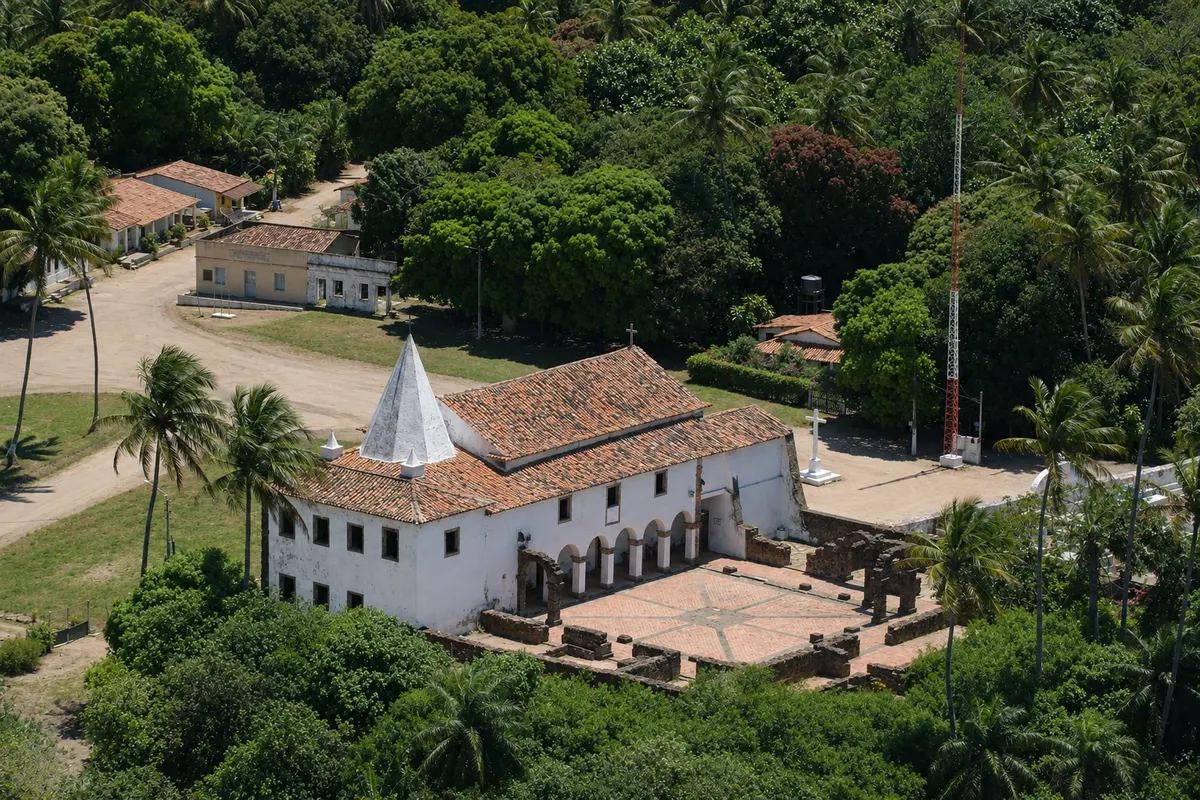
Historic site · Cabo de Santo Agostinho, PE
Nazaré Village
Small village on the headland of Cabo de Santo Agostinho, inside Parque Metropolitano Armando de Holanda Cavalcanti, with the Church of Our Lady of Nazaré, the ruins of the Carmelite convent and viewpoints over Suape Bay.
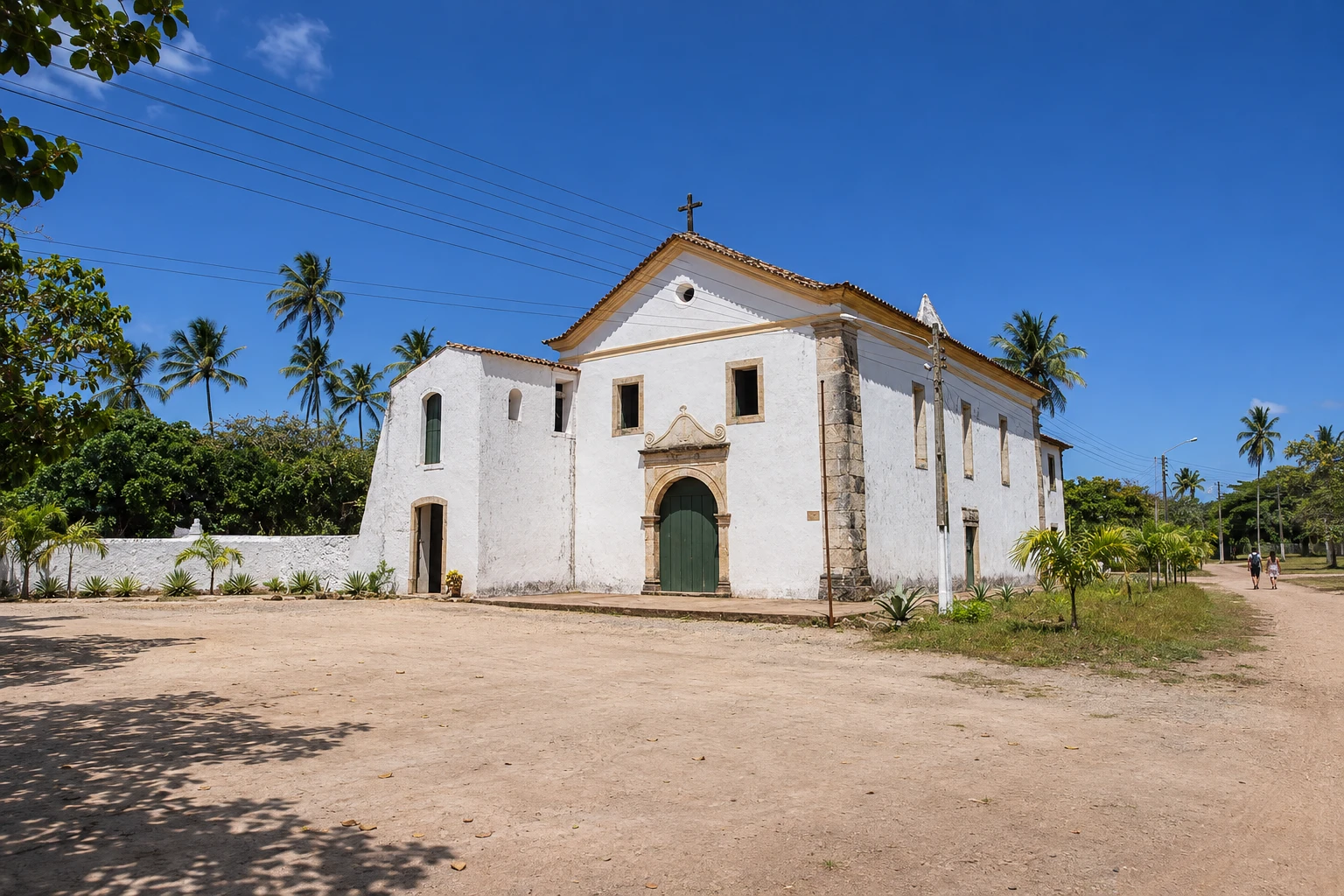
In the photo: Aerial view of the Church of Our Lady of Nazaré and the village atop the headland.
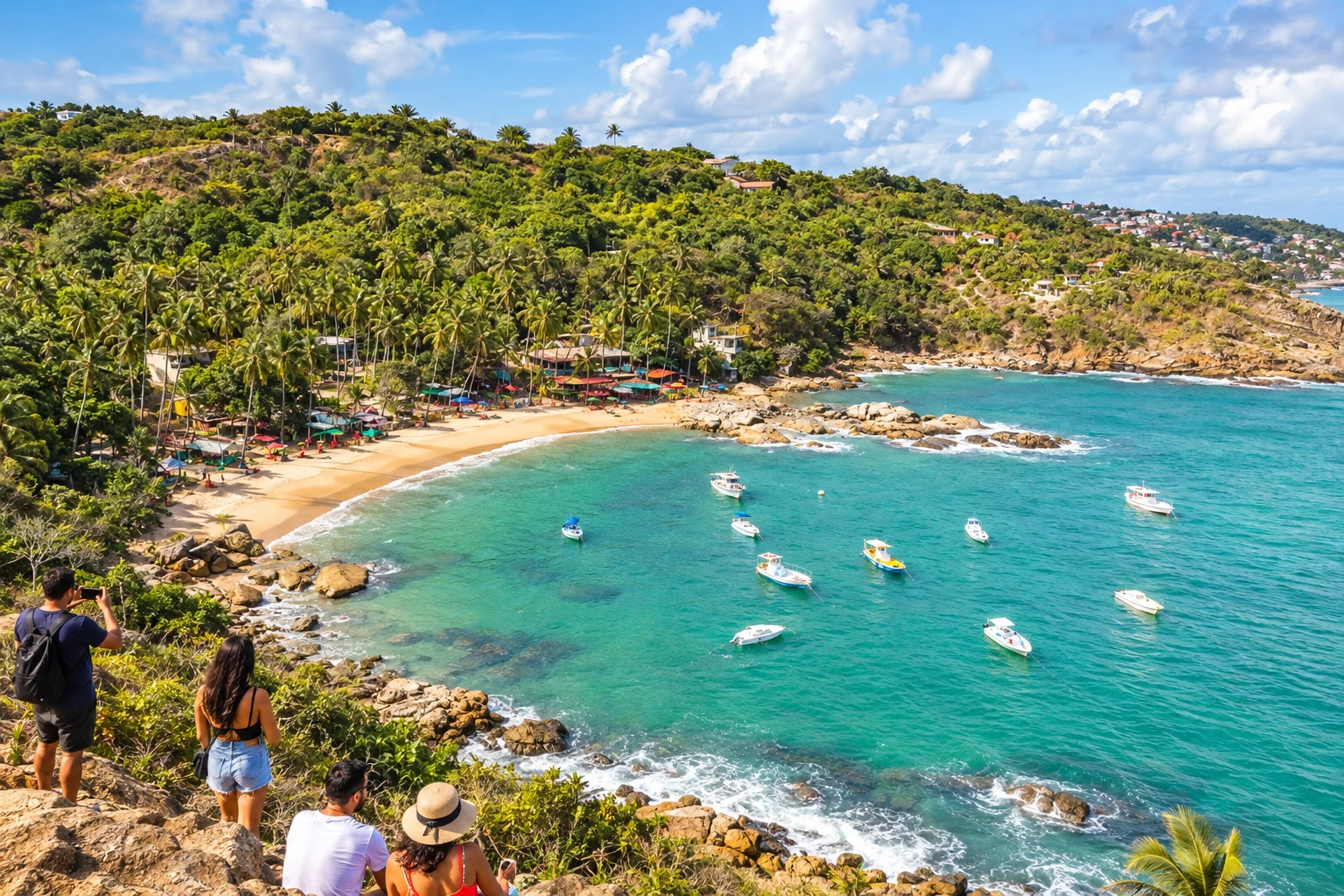
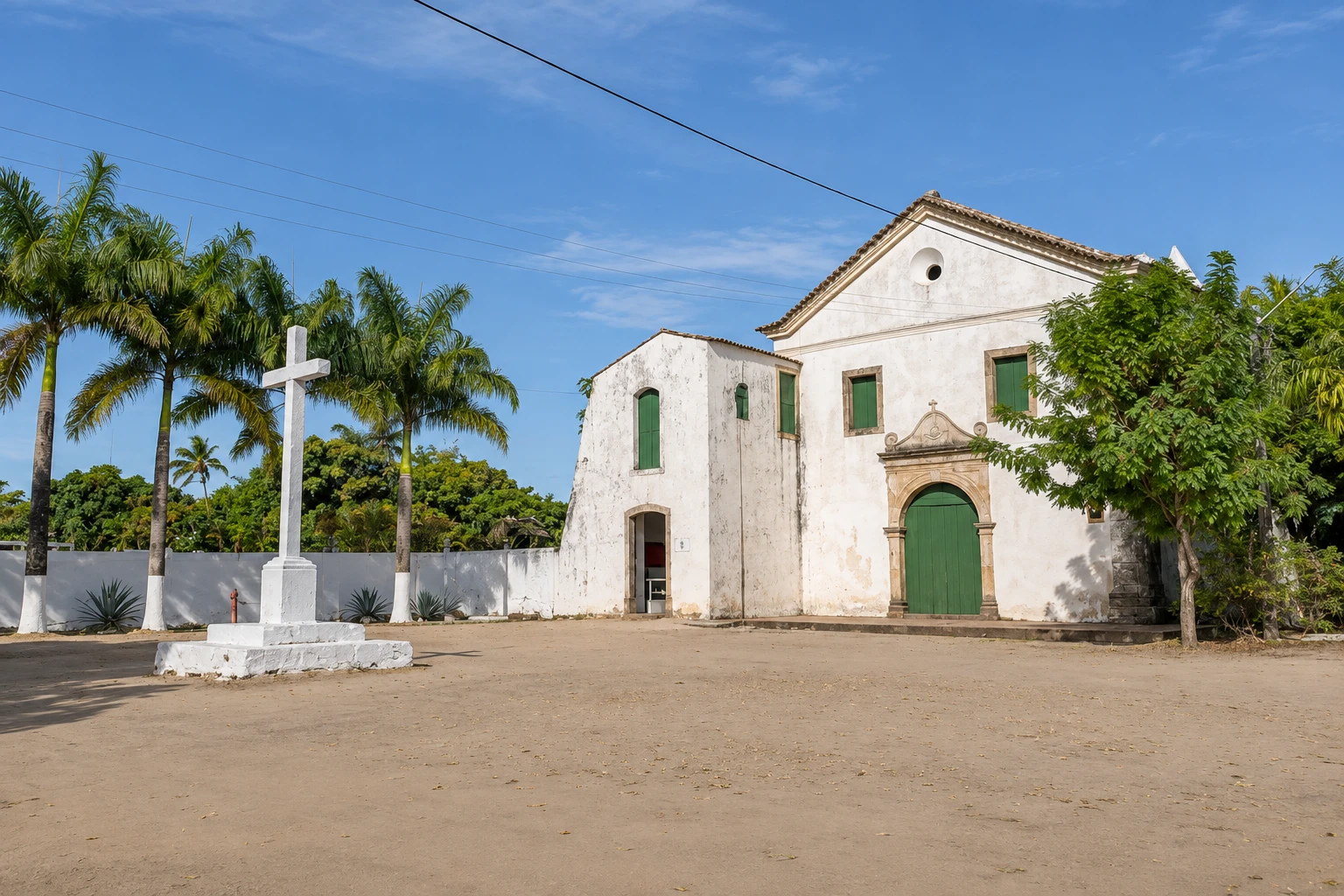
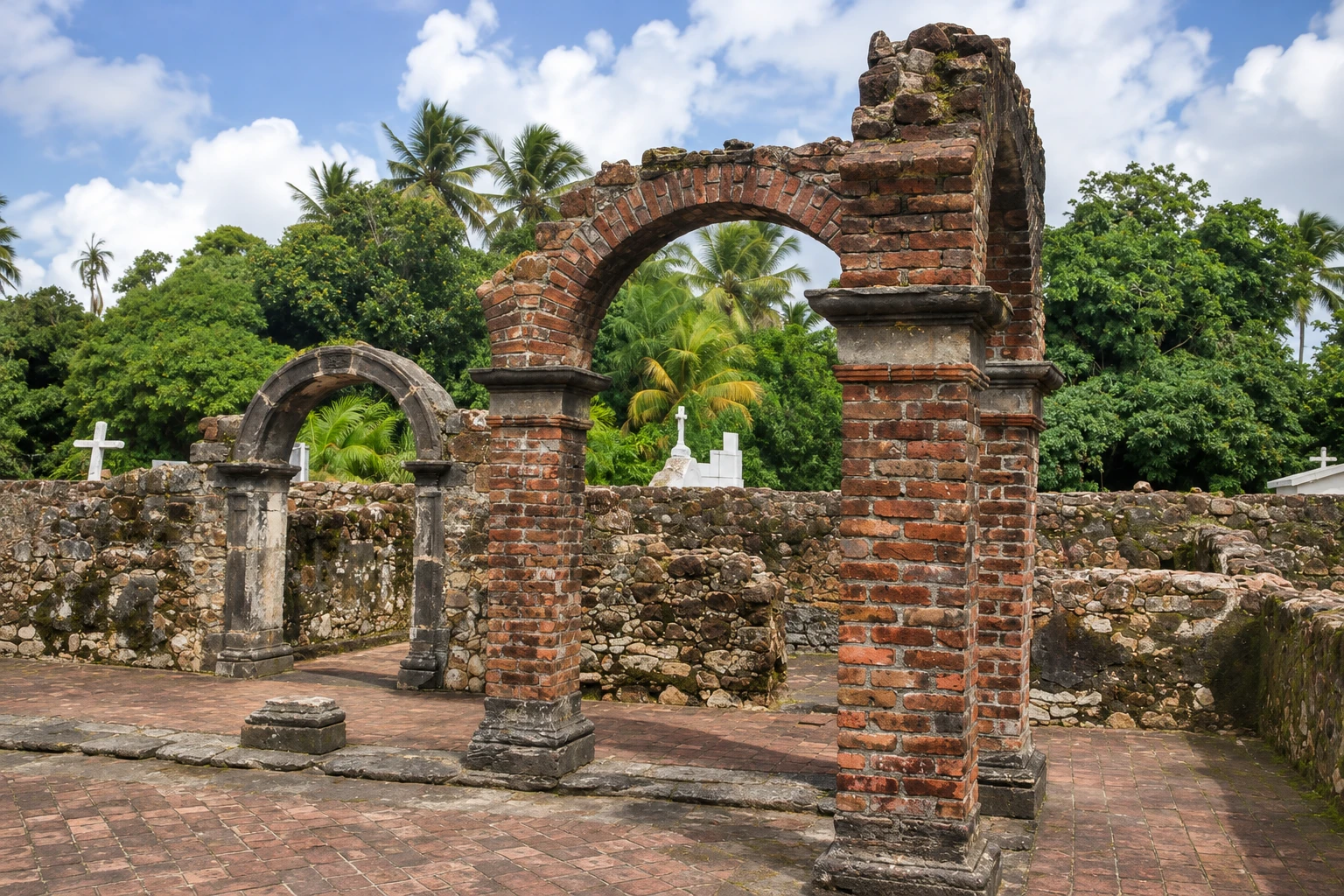
Illustrative images. The pictures in this guide are illustrations based on the real place, not photographs, and may differ from it.


A look at the place
Nazaré Village in pictures
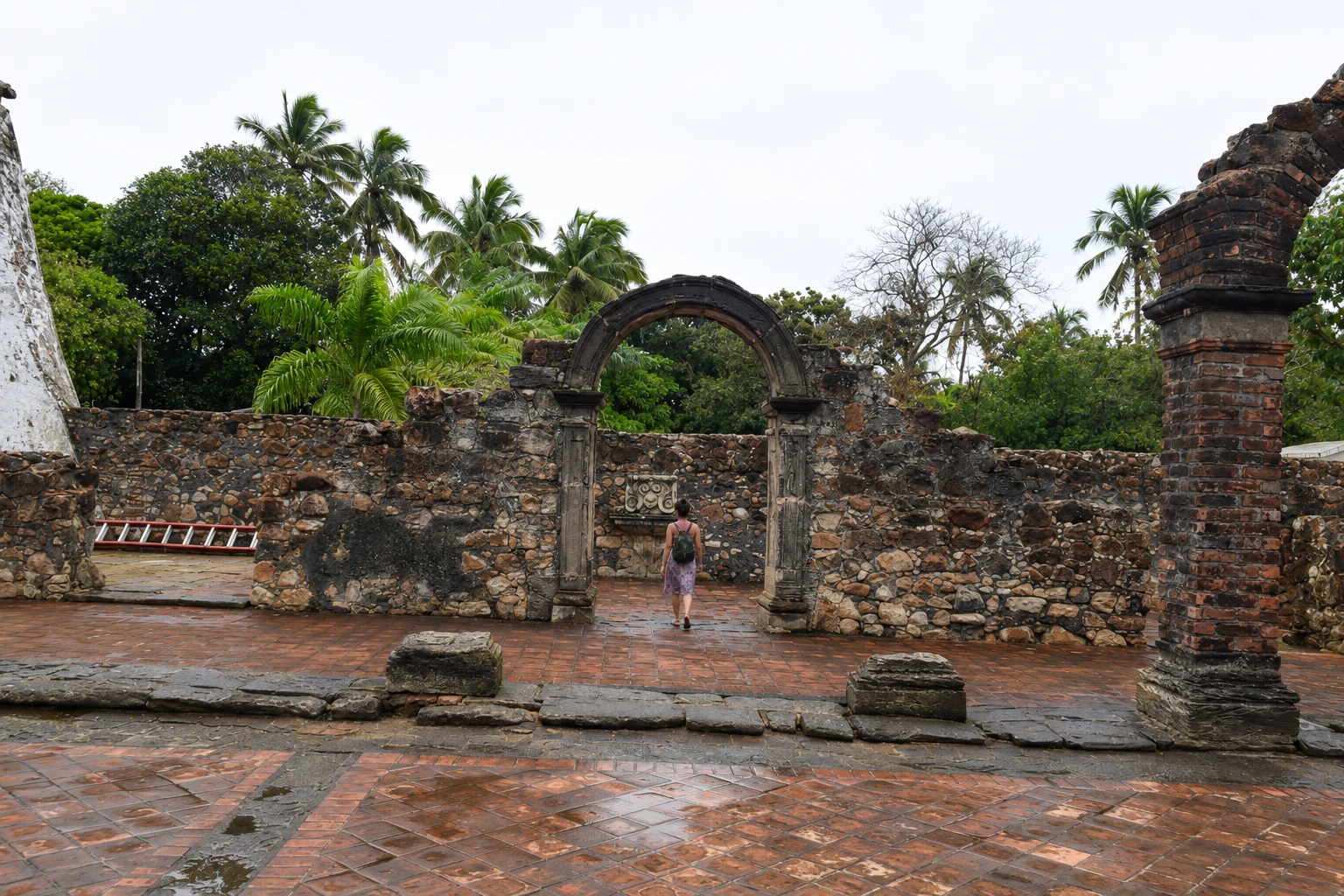
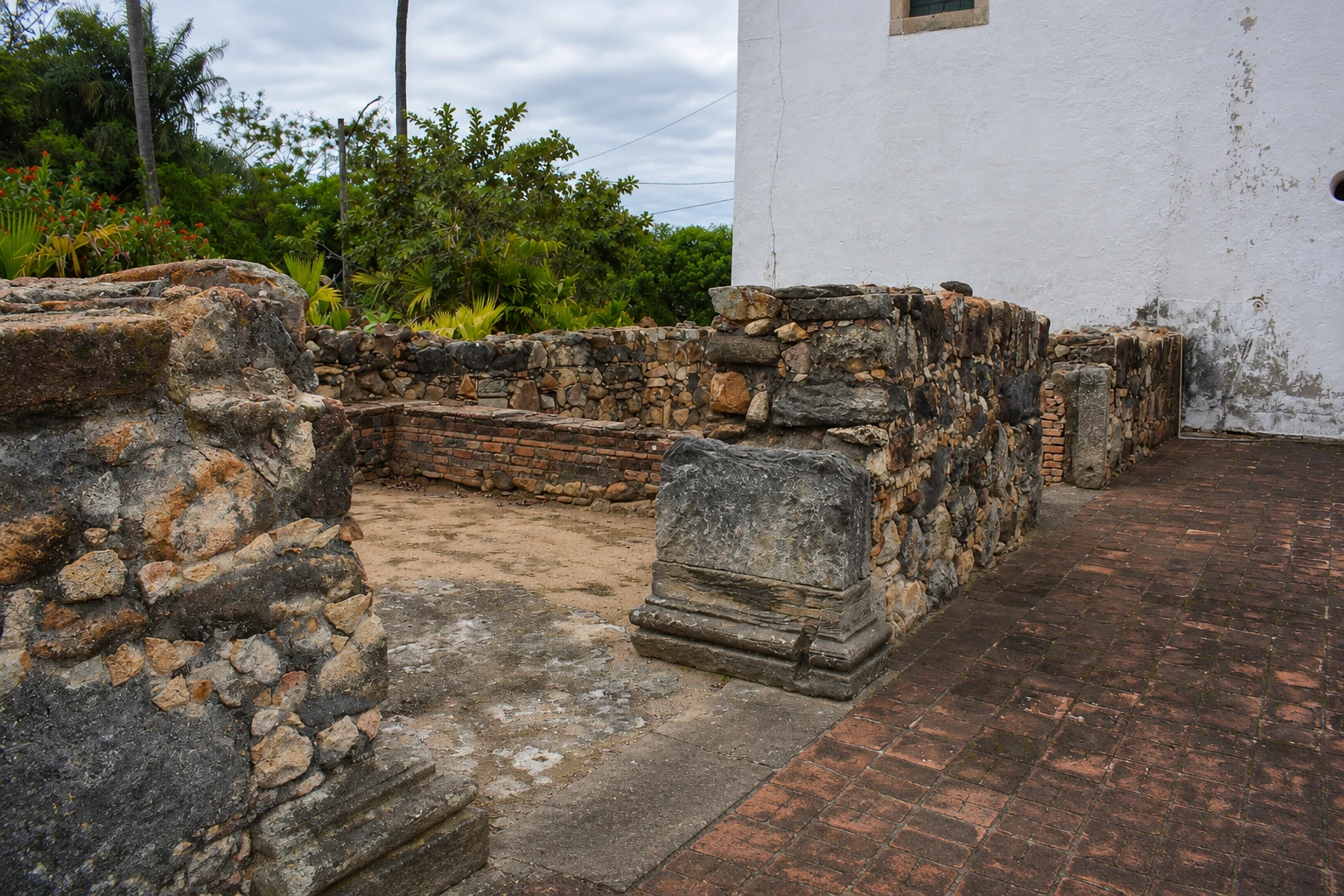
These pictures are illustrations based on the real place, not photographs. They may differ from the place.
Click the picture to enlarge it.
Discover
About Nazaré Village
The Village of Nazaré sits atop the headland of Cabo de Santo Agostinho, the granite hill that juts into the sea between the beaches of Calhetas and Suape. It is a small settlement within Parque Metropolitano Armando de Holanda Cavalcanti, a protected area created in 1979 and managed by the Suape Complex.
The village center is the Church of Our Lady of Nazaré, of simple architecture. The church already served as a landmark for sailors at the end of the 16th century. Beside it are the ruins of the old Carmelite convent, whose construction began in 1692, with walls of Cabo granite blocks and sandstone from the reefs. The ruins are protected by Iphan.
The headland has a place in coastal history: Suape Bay, just below, is pointed to by historians as the spot where the Spanish navigator Vicente Yáñez Pinzón anchored in January 1500. In the following centuries the Portuguese fortified the cape, and remains of those defenses appear along the path down to the sea.
Visits are on foot or by car along the park roads. Besides the church and the convent, there are the ruins of the Old Chapel, the Lighthouse Keeper’s House and viewpoints overlooking Suape Bay, the port and the open sea. The granite outcrops, in shades of gray and pink, are part of the proposed geopark for the southern Pernambuco coast.
From the village a road descends to the ruins of Forte Castelo do Mar, at the tip of the cape, and to the beaches of Suape and Calhetas.
Before you go
Practical information
Cidade Turismo reviews its information regularly, but something may have changed. Check with the place before planning your trip.
How much time to set aside
1 to 2 hours for the church, the convent ruins and the viewpoints; half a day if combined with Forte Castelo do Mar.
Best time
From September to February, the driest months on the southern coast of Pernambuco, when the park’s dirt roads are in better condition. In the morning or late afternoon the sun is milder for walking among the ruins and viewpoints.
How to get there
The village is about 20 km by road from downtown Cabo de Santo Agostinho via PE-060 and the road that climbs the headland from Suape or Gaibu. Access is by car, taxi or ride-hailing app; there is no regular transport to the top of the hill.
Tip
Wear closed shoes to walk among the ruins and on the dirt trails to the viewpoints, and bring water. After heavy rain the park’s dirt roads can become slippery.
Get your questions answered
Frequently asked questions about Nazaré Village
What to see in the Village of Nazaré, in Cabo de Santo Agostinho?
The Church of Our Lady of Nazaré, the ruins of the Carmelite convent, the ruins of the Old Chapel, the Lighthouse Keeper’s House and the viewpoints over Suape Bay.
How to get to the Village of Nazaré?
By car, taxi or ride-hailing app via PE-060 and the road that climbs the headland from Suape or Gaibu. There is no regular transport to the village.
When was the Nazaré convent built?
Construction of the Carmelite convent began in 1692. Today only the ruins remain, protected by Iphan, beside the Church of Our Lady of Nazaré.
Can you combine a visit to the Village of Nazaré with the beach?
Yes. Roads descend from the village to the ruins of Forte Castelo do Mar, to Praia de Suape and to Calhetas.
Beyond the guide


