

 Antarctica
 Argentina
 Bolivia
 Chile
 Colombia
 Ecuador
 Guyana
 French Guiana
 Falkland Islands (Malvinas)
 Paraguay
 Peru
 Suriname
 Uruguay
 Venezuela
 Germany
 Austria
 Belgium
 Croatia
 Denmark
 Slovakia
 Slovenia
 Spain
 Finland
 France
 Greece
 the Netherlands
 Hungary
 Ireland
 Iceland
 Italy
 Luxembourg
 Norway
 Poland
 Portugal
 the United Kingdom
 the Czech Republic
 Sweden
 Switzerland
 Turkey
 Bermuda
 Canada
 the United States
 Greenland
 Mexico
 Saint Pierre and Miquelon
 the Dominican Republic
 Japan
 South Africa
 Egypt
 Australia
 Fiji
 New Zealand
 Papua New Guinea
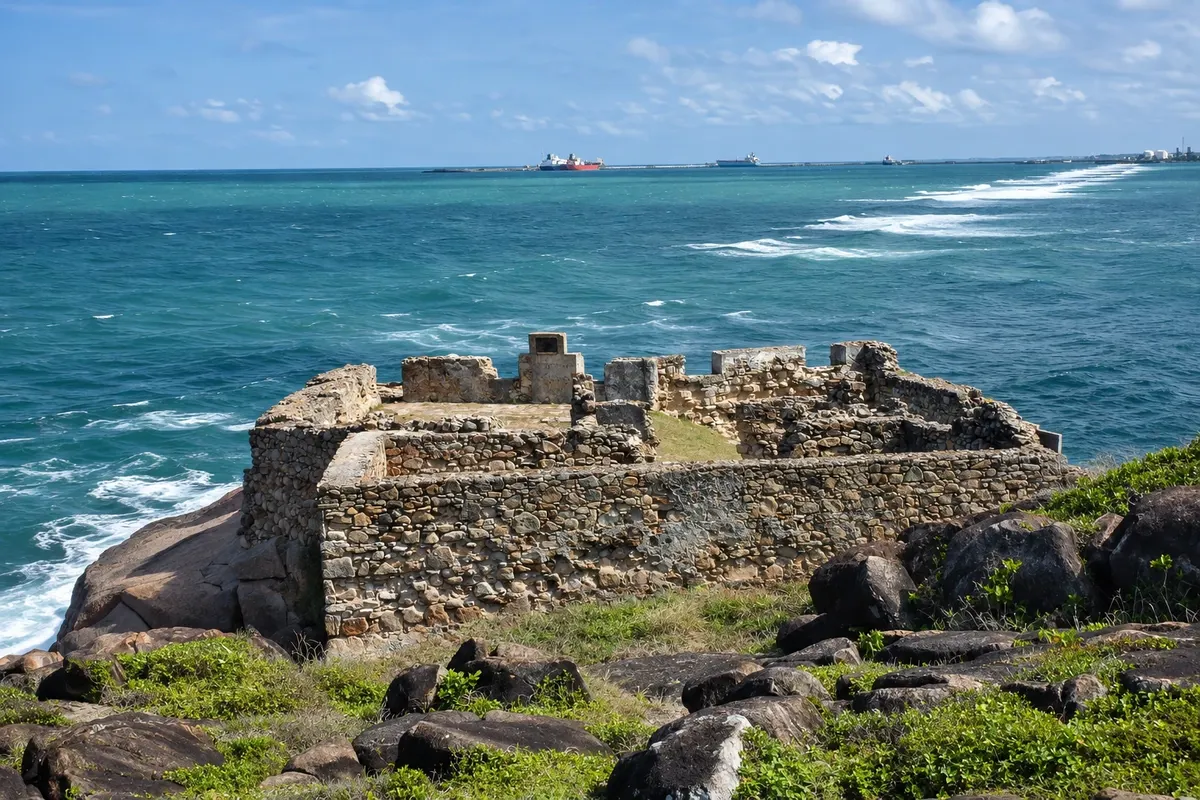
Fort · Cabo de Santo Agostinho, PE
Fort Castelo do Mar
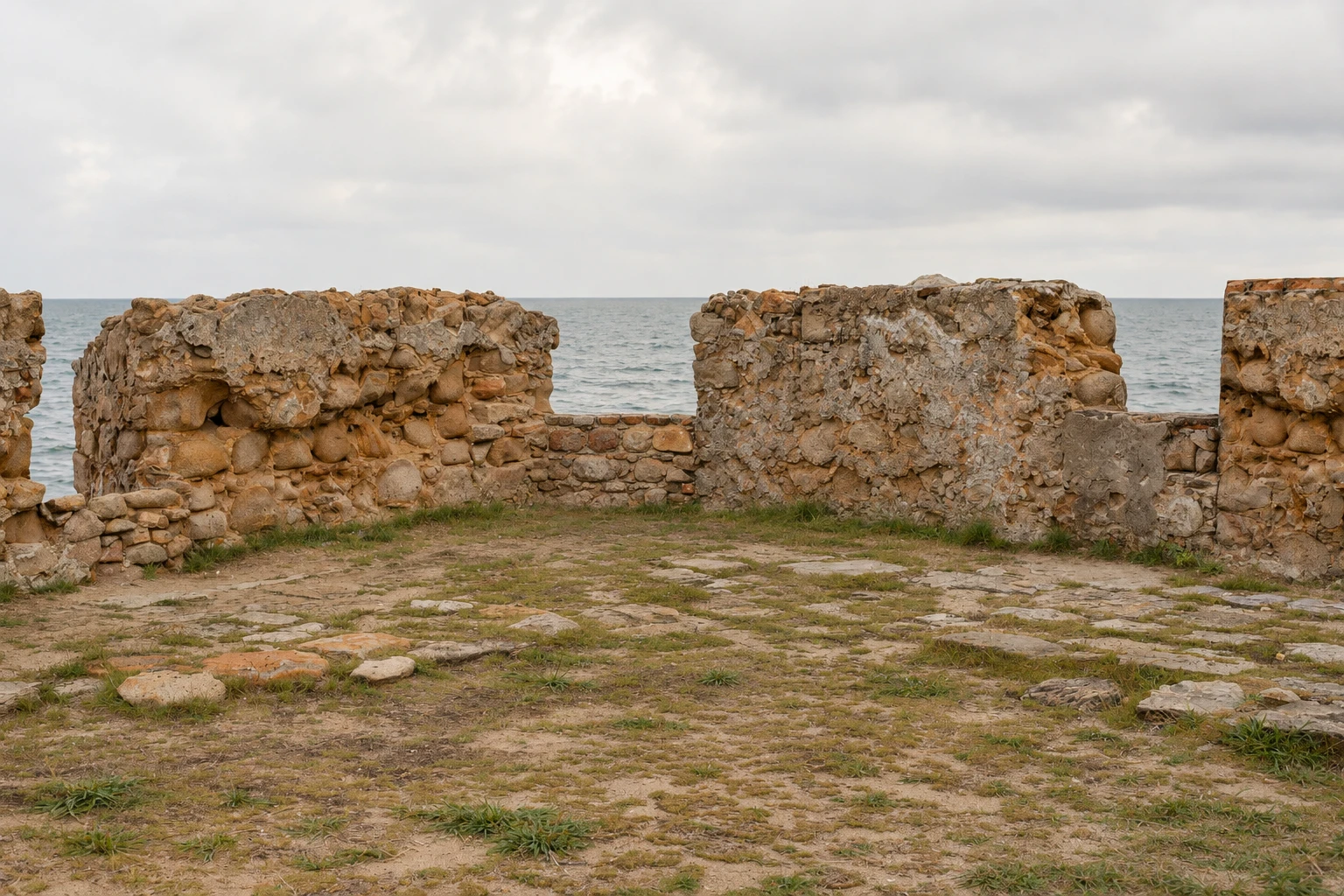
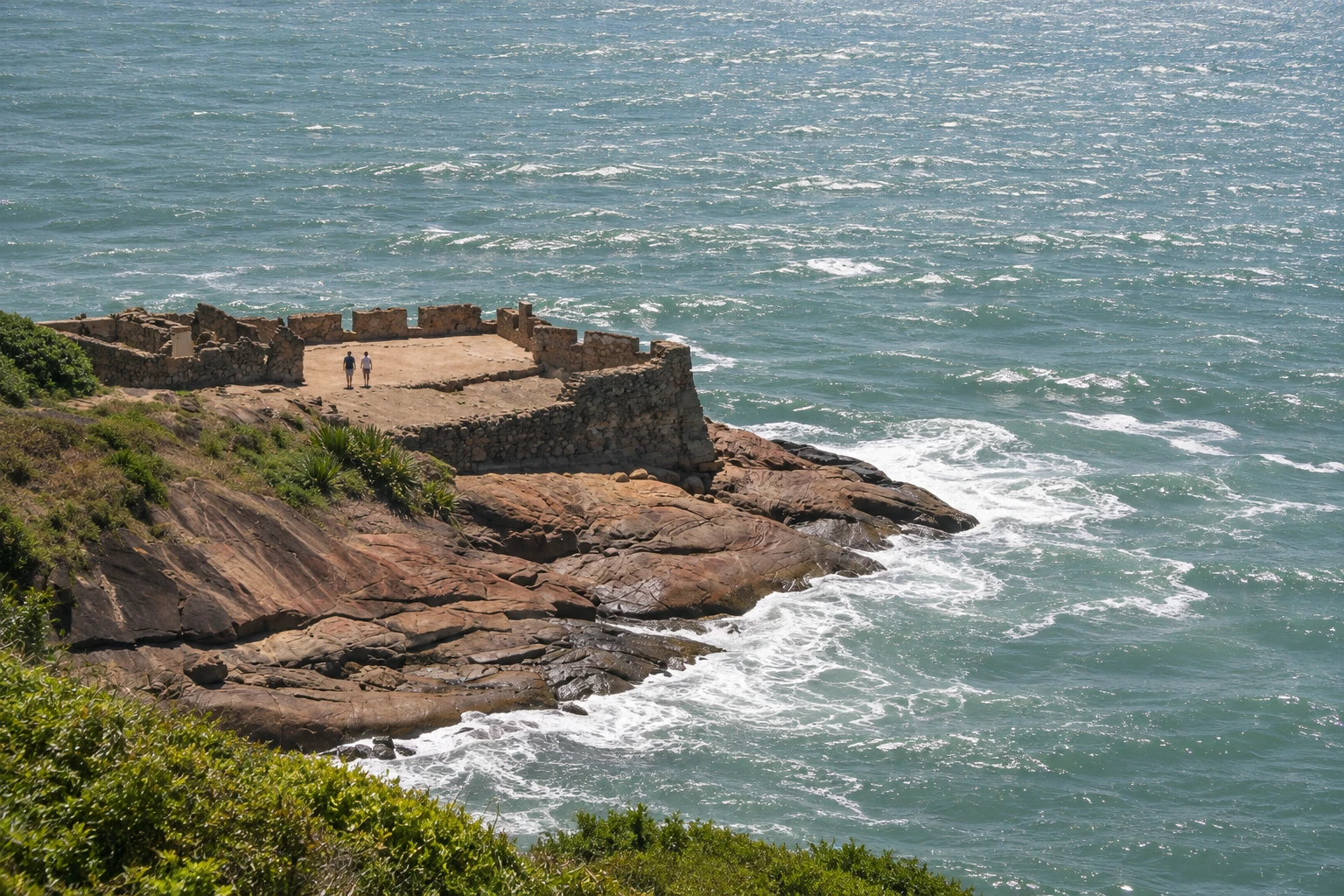
Ruins of a 17th-century Portuguese fort, built of stone and lime, on the granite rocks of the tip of Cabo de Santo Agostinho, facing the ocean and the entrance to Suape Bay.
In the photo: Walls of Forte Castelo do Mar on the granite of the cape’s tip.
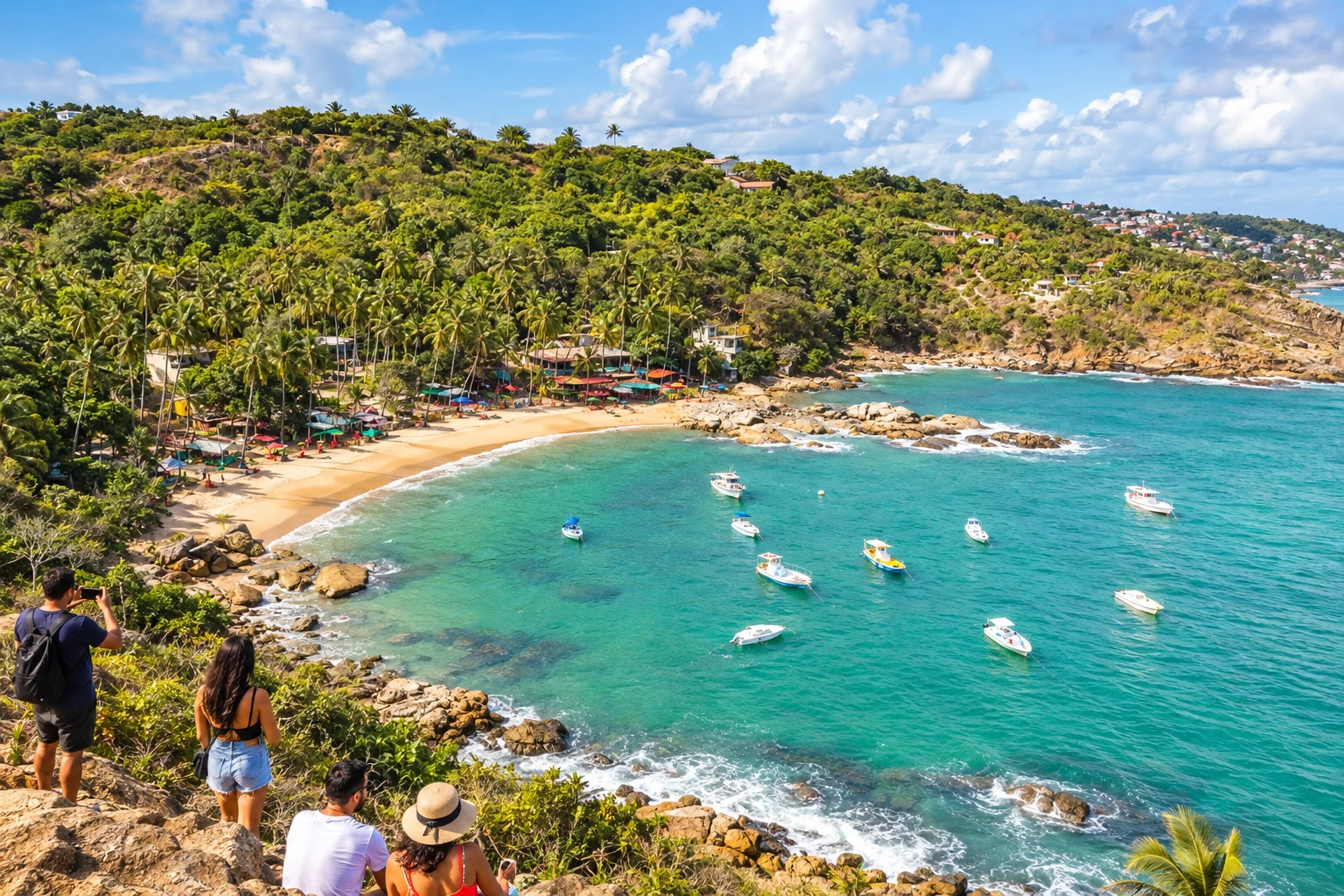
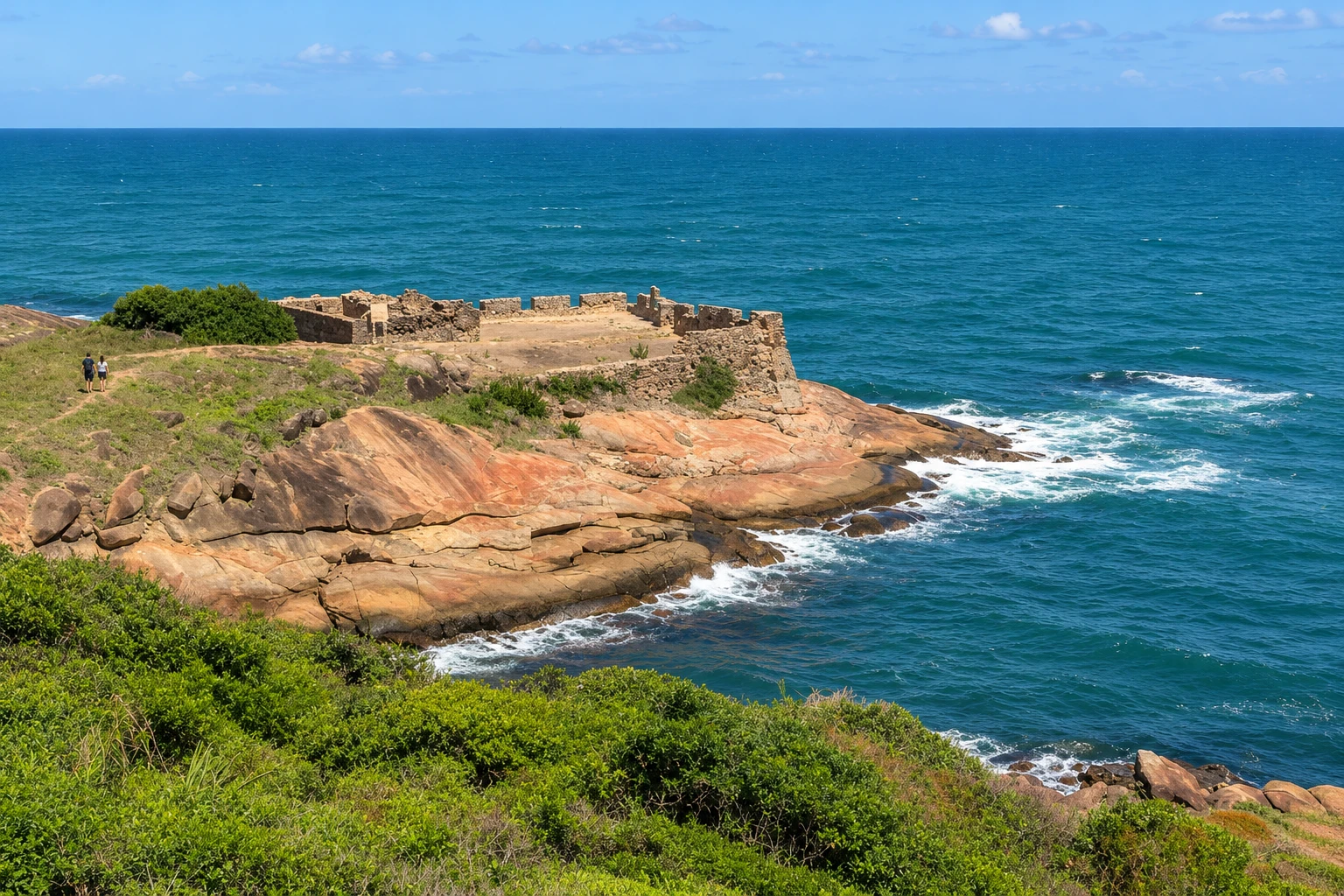
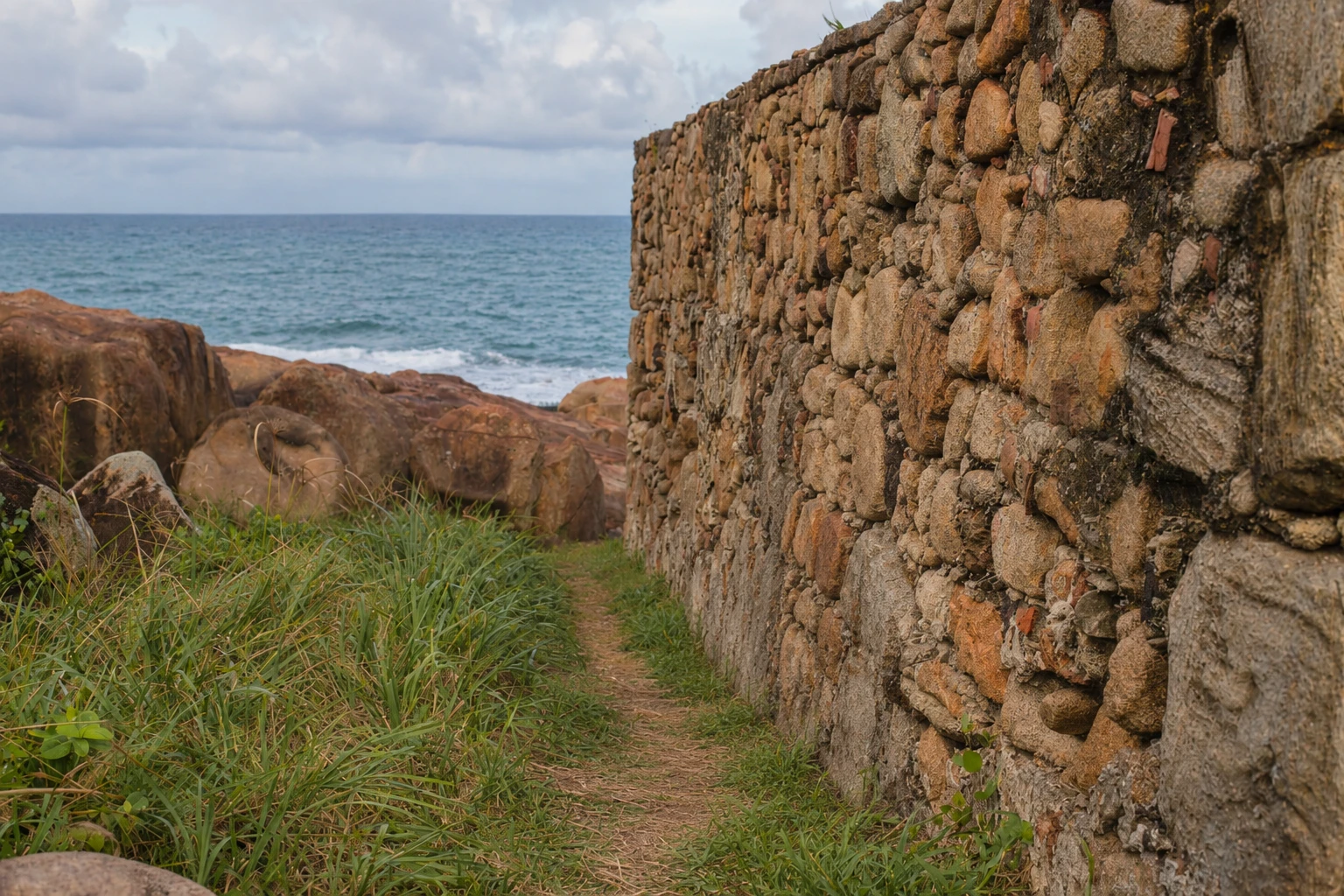
Illustrative images. The pictures in this guide are illustrations based on the real place, not photographs, and may differ from it.


A look at the place
Fort Castelo do Mar in pictures
These pictures are illustrations based on the real place, not photographs. They may differ from the place.
Click the picture to enlarge it.
Discover
About Fort Castelo do Mar
The Forte Castelo do Mar is the ruin of a fortification on the tip of the promontory of Cabo de Santo Agostinho, below the village of Nazaré. It was built by the Portuguese in the first half of the 17th century, of stone and lime, directly on the granite blocks of the cape, to watch the sea and the entrance to Suape Bay.
The fort was part of a set of defenses on the promontory. Nearby are the ruins of the fort’s barracks and the São Jorge batteries, also from the 17th century. An engraving from 1634 already shows the Castelo do Mar beside the Nazaré fort, from the time of the disputes between the Portuguese and the Dutch along the Pernambuco coast.
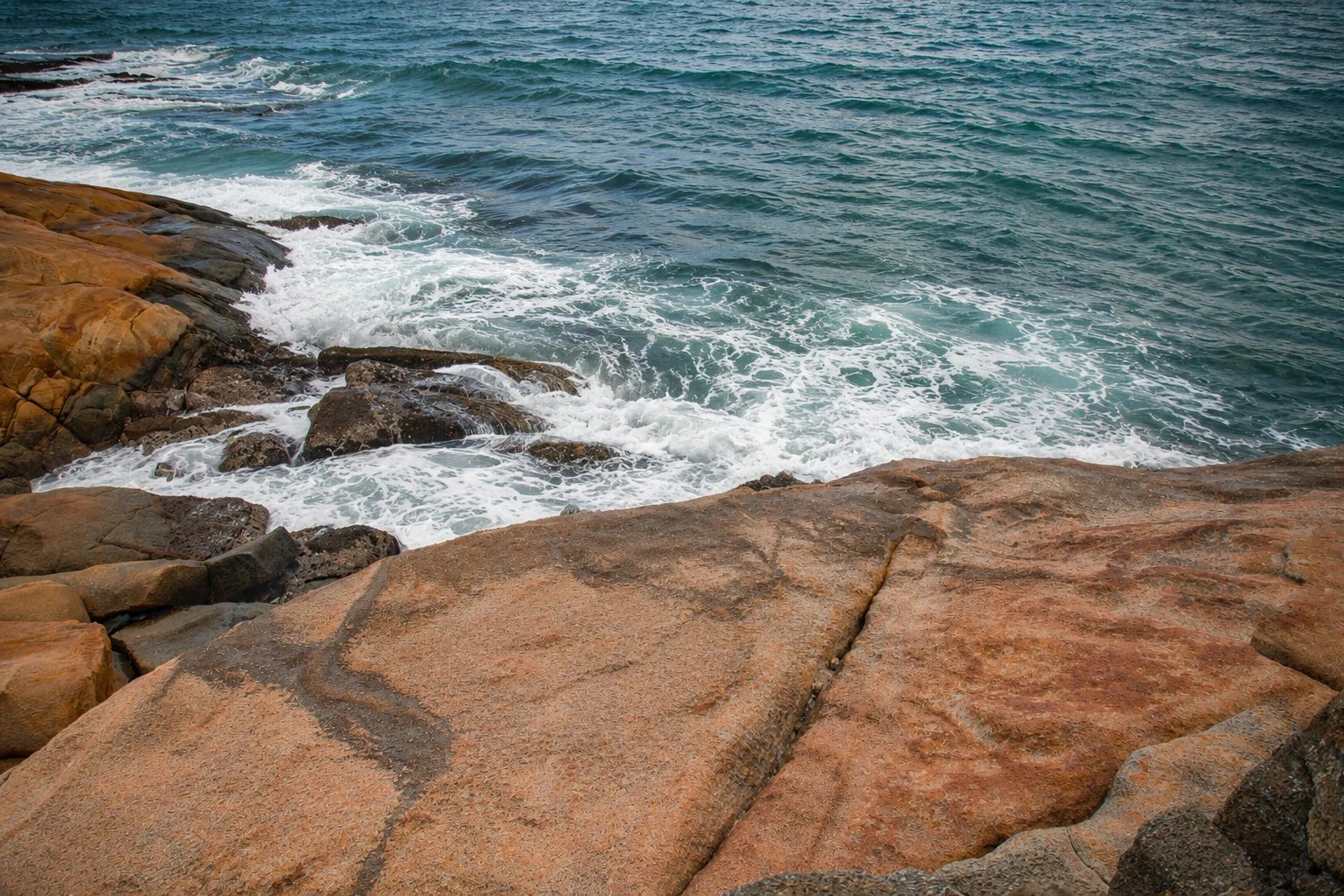
What remains of the fort are walls and parts of the structures, without roofs, integrated into the rocks. The visit consists of walking among the walls and climbing to the higher parts to see the sea breaking on the stones, Suape Bay on one side and the open ocean on the other.
The site is within the Armando de Holanda Cavalcanti Metropolitan Park and is part of the proposed geopark of the southern Pernambuco coast, notable for its granite rocks and for a rhyolite dyke that cuts the promontory near the batteries.
The visit pairs well with the village of Nazaré, a few minutes by car, where the Church of Our Lady of Nazaré and the ruins of the Carmelite convent are located, and with a sea bath at Suape Beach or Calhetas.
Before you go
Practical information
Cidade Turismo reviews its information regularly, but something may have changed. Check with the place before planning your trip.
How much time to set aside
From 30 minutes to 1 hour among the ruins and surrounding rocks.
Best time
From September to February, when it rains less and the dirt road to the fort is in better condition. In the late afternoon the light is softer over Suape Bay.
How to get there
The fort is about 20 km by road from the center of Cabo de Santo Agostinho. Take the PE-060 toward Suape, go up to the village of Nazaré and follow the dirt road that descends to the cape tip. Access is by car, taxi, or ride-hailing app.
Tip
Wear shoes with good grip: the rocks get slippery near the sea. After heavy rain, the dirt road can be difficult for low-clearance cars.
Get your questions answered
Frequently asked questions about Fort Castelo do Mar
When was Forte Castelo do Mar built?
It was built by the Portuguese in the first half of the 17th century, of stone and lime, on the granite of the tip of Cabo de Santo Agostinho.
How do I get to Forte Castelo do Mar?
By car, taxi, or ride-hailing app. Take the PE-060 toward Suape, go up to the village of Nazaré and descend the dirt road to the cape tip.
What is there to see at Castelo do Mar?
The fort’s walls on the rocks, the ruins of the barracks and the São Jorge batteries, and the view of Suape Bay and the open ocean.
Can I visit Castelo do Mar and the village of Nazaré on the same trip?
Yes. They are on the same promontory, a few minutes by car, and can be visited in a single morning or afternoon.
Beyond the guide


