

 Antarctica
 Argentina
 Bolivia
 Chile
 Colombia
 Ecuador
 Guyana
 French Guiana
 Falkland Islands (Malvinas)
 Paraguay
 Peru
 Suriname
 Uruguay
 Venezuela
 Germany
 Austria
 Belgium
 Croatia
 Denmark
 Slovakia
 Slovenia
 Spain
 Finland
 France
 Greece
 the Netherlands
 Hungary
 Ireland
 Iceland
 Italy
 Luxembourg
 Norway
 Poland
 Portugal
 the United Kingdom
 the Czech Republic
 Sweden
 Switzerland
 Turkey
 Bermuda
 Canada
 the United States
 Greenland
 Mexico
 Saint Pierre and Miquelon
 the Dominican Republic
 Japan
 South Africa
 Egypt
 Australia
 Fiji
 New Zealand
 Papua New Guinea
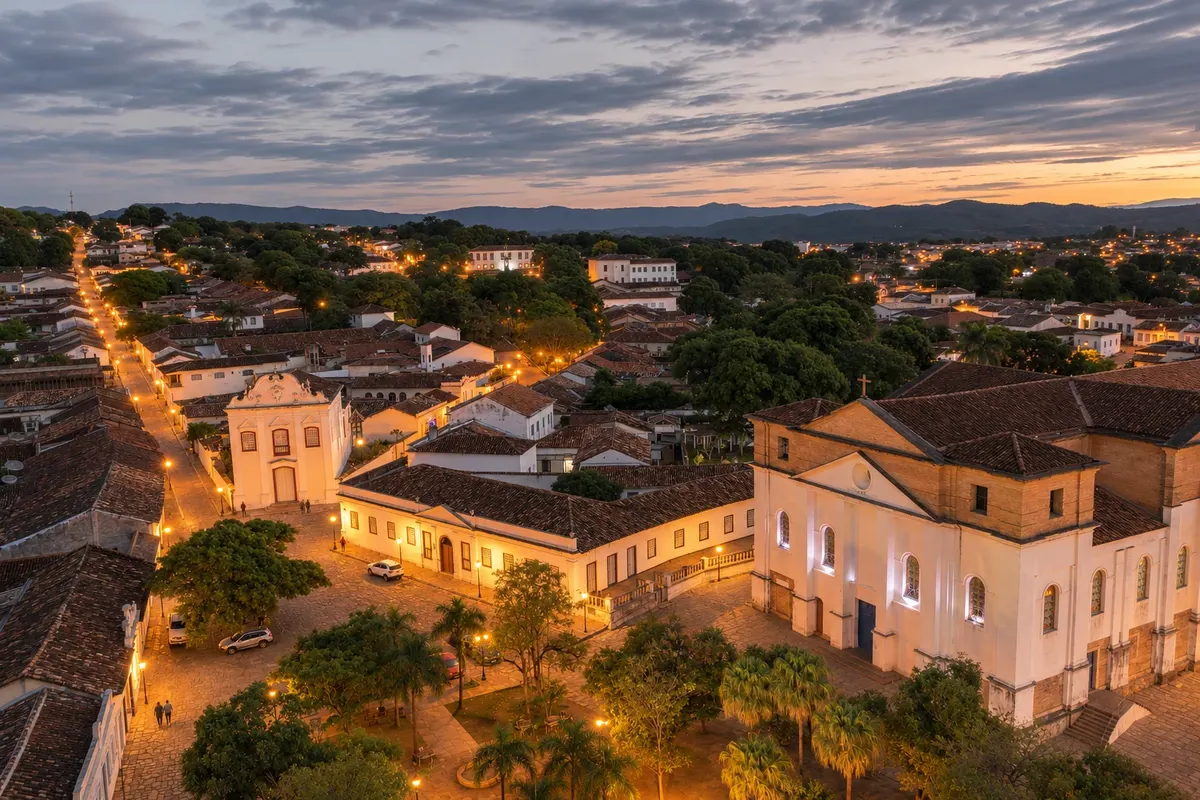
Historic center · Cidade de Goiás, GO
Historic Center of Goiás
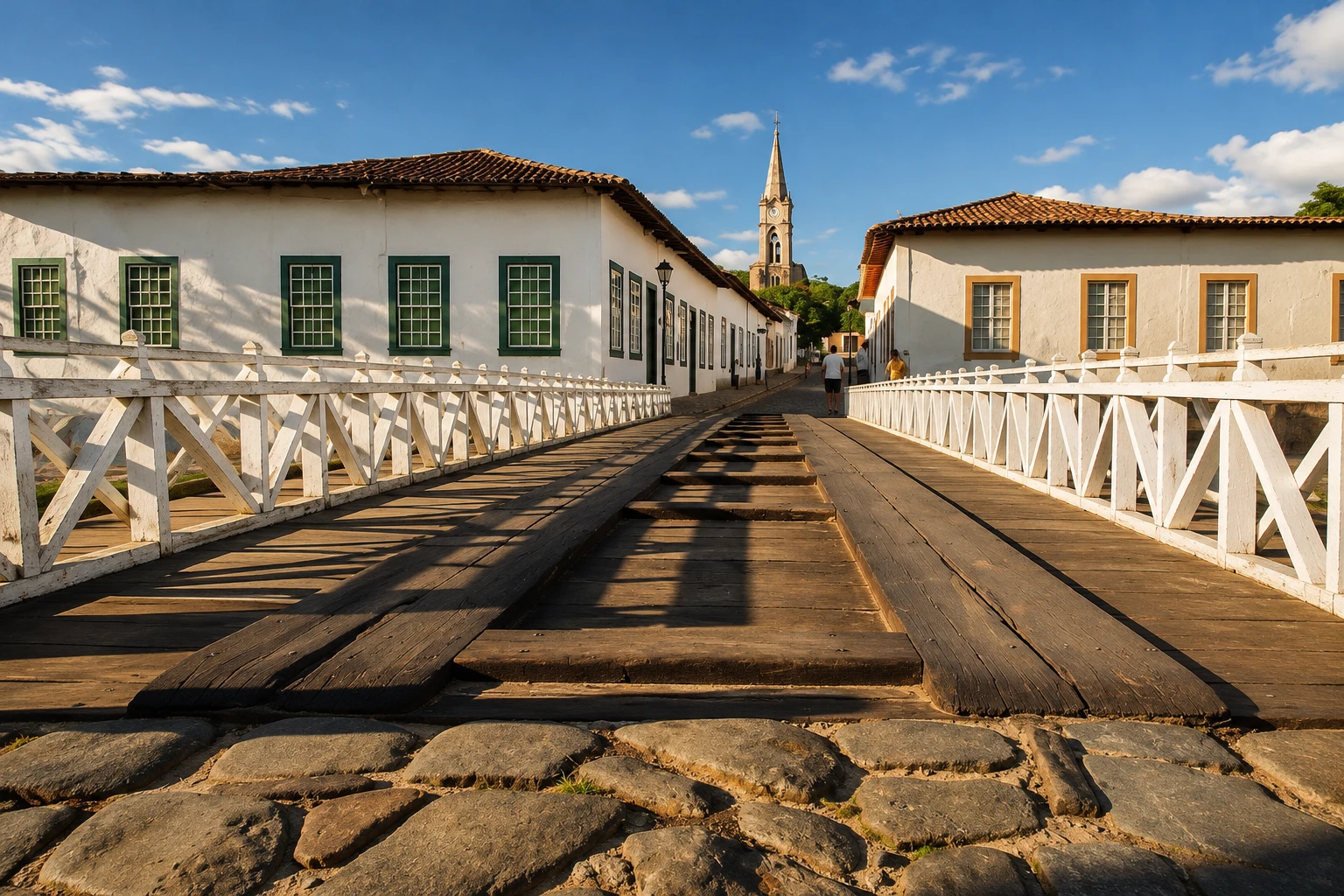
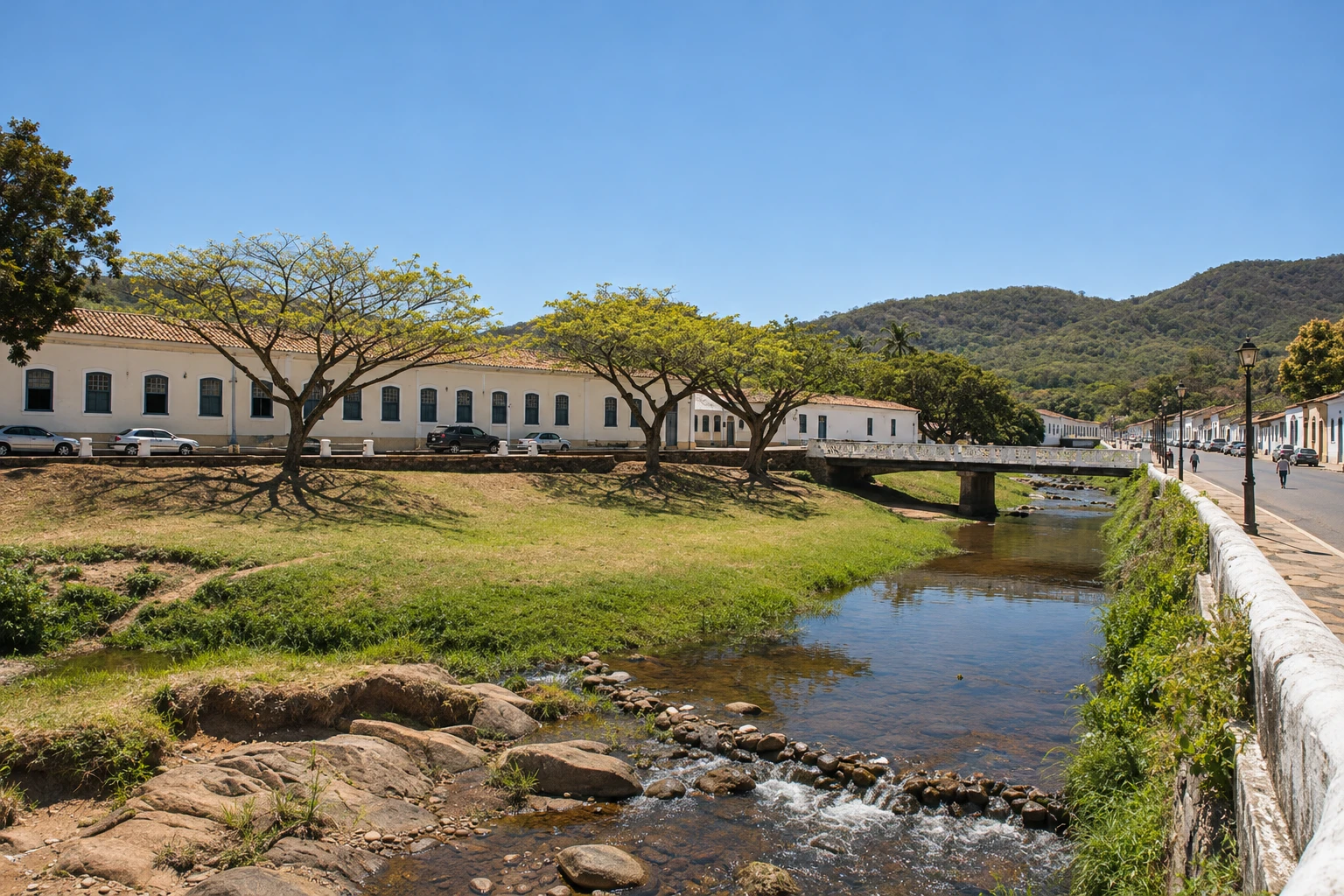
Colonial ensemble of the former Vila Boa, a UNESCO World Heritage Site since 2001, on the banks of the Vermelho River. Stone streets, 18th- and 19th-century houses, churches, fountains and museums such as the Casa de Cora Coralina and the Museum of the Flags.
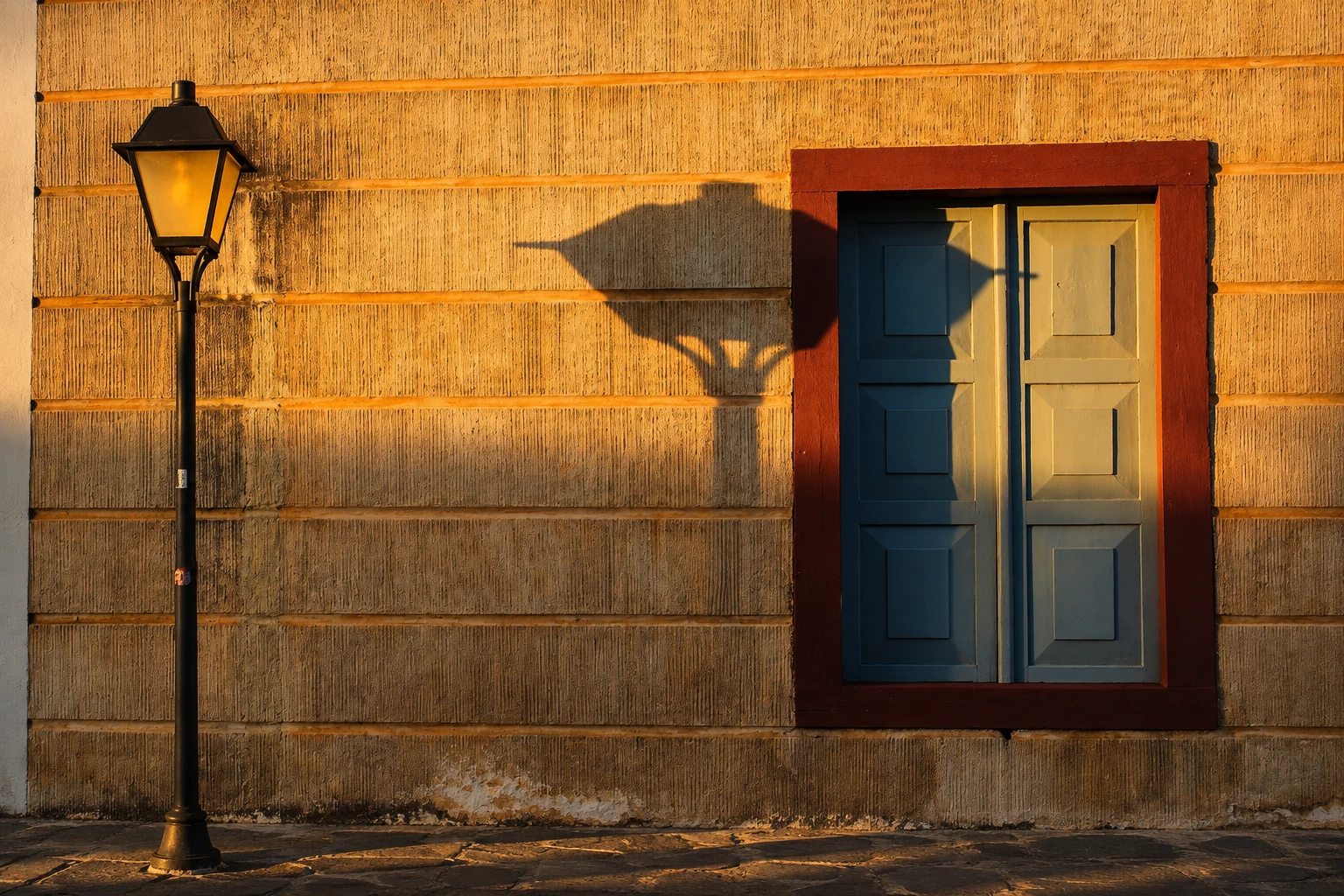
In the photo: Squares and colonial houses of Goiás Historic Downtown at dusk.
Illustrative images. The pictures in this guide are illustrations based on the real place, not photographs, and may differ from it.


A look at the place
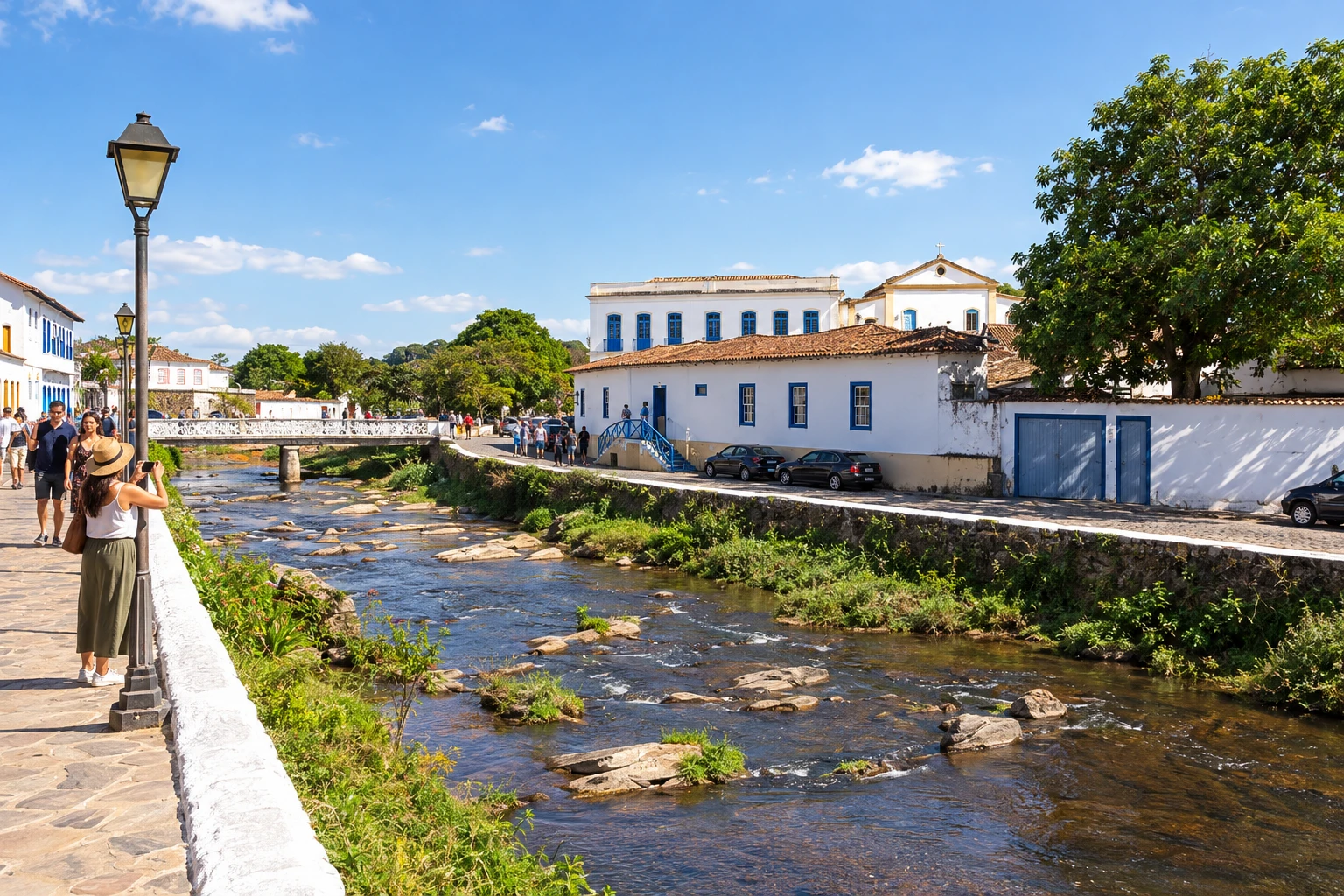
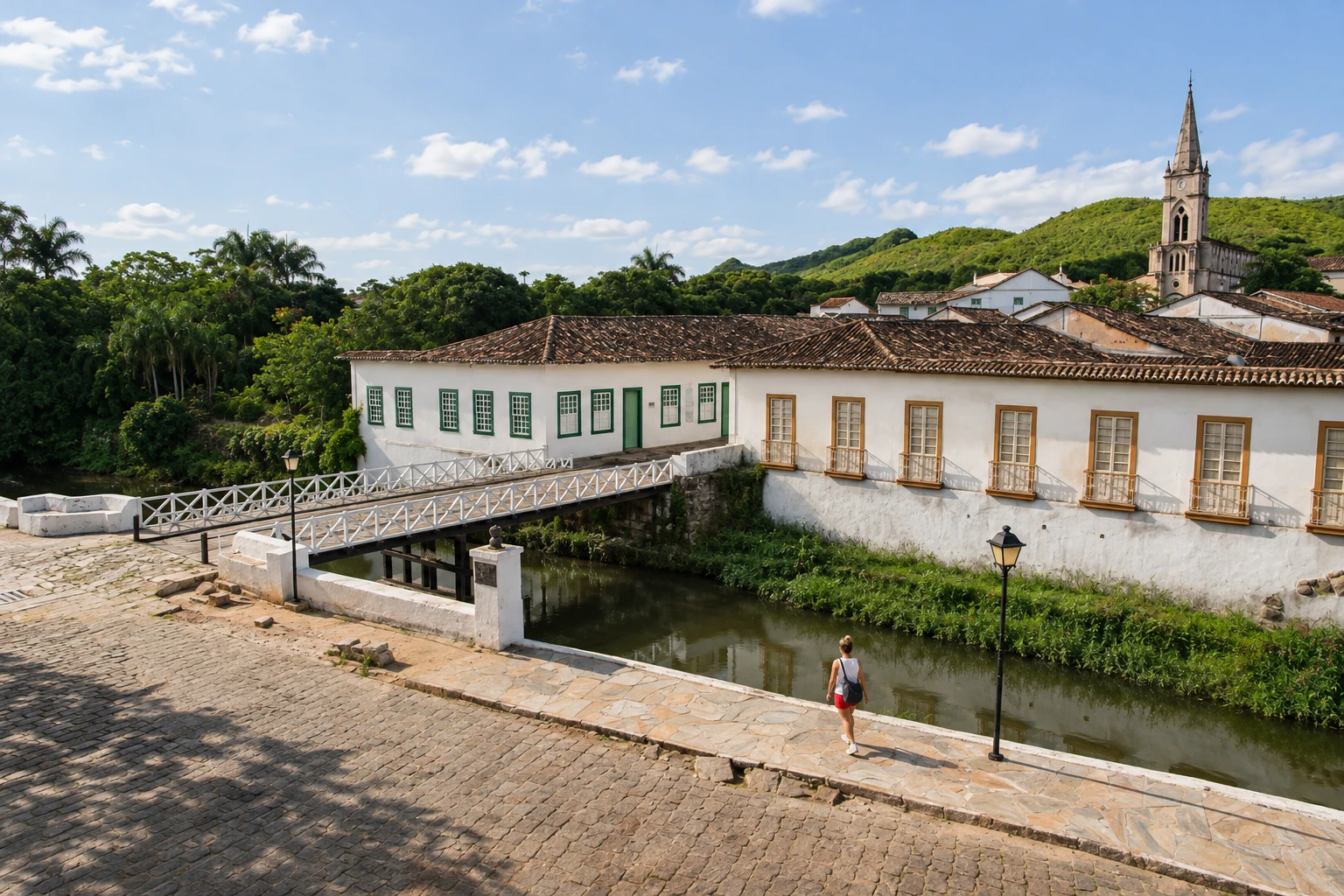
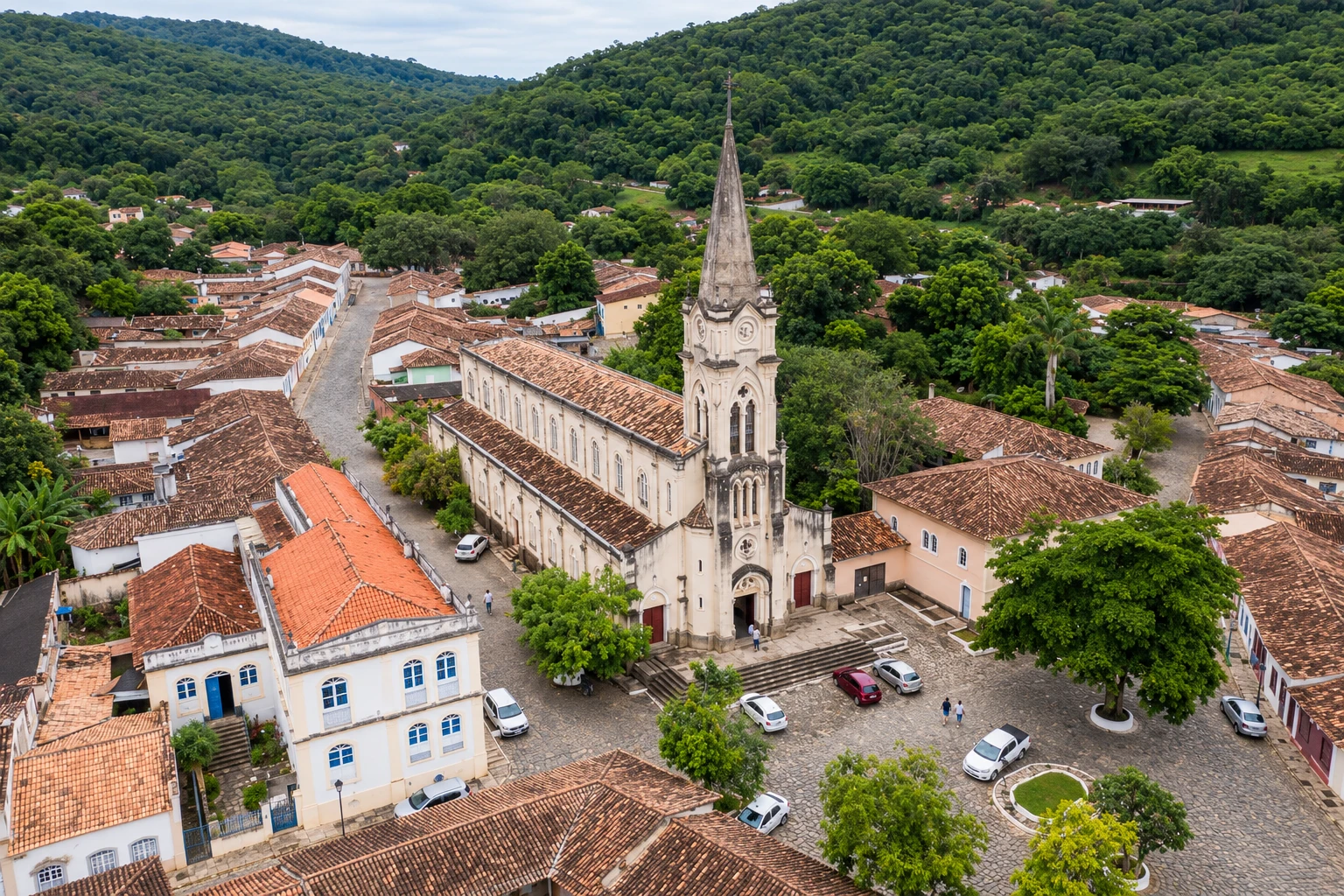
Historic Center of Goiás in pictures
These pictures are illustrations based on the real place, not photographs. They may differ from the place.
Click the picture to enlarge it.
Discover
About Historic Center of Goiás
The Historic Downtown of Goiás is the core of the former Vila Boa, founded in the 18th century during the gold rush and the state capital of Goiás until the government moved to Goiânia in the 1930s. The economic decline that followed helped preserve the ensemble: sources say about 90% of the original architecture remains.
The complex is protected by Iphan and was inscribed by UNESCO on the World Heritage List in 2001. What you see are cobbled streets, single-story and two-story colonial houses with whitewashed walls and colorful windows, squares with fountains and churches, all crossed by the Vermelho River, which runs through the center under small bridges.
The churches mark the walk. São Francisco de Paula, from 1761, sits by the river and is pointed to as the oldest in the town; Boa Morte houses the sacred art museum with works by Veiga Valle. Among the museums are the Casa de Cora Coralina, where the poet lived, the Museum of the Flags in the old Town Hall and Jail building, and the Palácio Conde dos Arcos, the former government seat.
The simplest way to explore the center is on foot, unhurried, going up and down the hills between the squares. At night, the façade lighting and the activity of the bars around the squares change the city’s rhythm.
At Easter Week, the Fogaréu Procession walks the streets of the center by torchlight and draws visitors from across the country. At other times, the town is quiet and invites you to stay more than one day.
Before you go
Practical information
Cidade Turismo reviews its information regularly, but something may have changed. Check with the place before planning your trip.
How much time to set aside
A full day to walk around the center and visit two or three museums; two days to see everything at a relaxed pace.
Best time
From May to September, in the dry season, days tend to be sunny and nights cooler. The Fogaréu Procession takes place at Easter Week, when the town is crowded. On weekdays the center is quieter for walking.
How to get there
The historic center is the heart of the town of Goiás, about 140 km from Goiânia via GO-070. If you arrive by car you can leave the vehicle on nearby streets and continue on foot, since the distances between squares and museums are short.
Tip
Wear comfortable, firm-soled shoes: the stone streets are uneven and some stretches of the hills are steep. Reserve a late afternoon to see the low light on the façades and the bridges over the Vermelho River.
Get your questions answered
Frequently asked questions about Historic Center of Goiás
Since when has the City of Goiás been a World Heritage Site?
Since 2001, when UNESCO inscribed the Historic Downtown of Goiás on the World Heritage List. The ensemble is also protected by Iphan.
What to visit in the Historic Downtown of Goiás?
Casa de Cora Coralina, the Museum of the Flags, Palácio Conde dos Arcos, the Museum of Sacred Art of Boa Morte, the Church of São Francisco de Paula and the squares with fountains along the Vermelho River.
When is the Fogaréu Procession in the City of Goiás?
During Easter Week. The procession traverses the streets of the historic center by torchlight.
Why is the City of Goiás called Goiás Velho?
Because it was the state’s former capital, the Vila Boa from the gold era, until the government moved to Goiânia in the 1930s. The city’s official name is Goiás.
Beyond the guide


