

 Antarctica
 Argentina
 Bolivia
 Chile
 Colombia
 Ecuador
 Guyana
 French Guiana
 Falkland Islands (Malvinas)
 Paraguay
 Peru
 Suriname
 Uruguay
 Venezuela
 Germany
 Austria
 Belgium
 Croatia
 Denmark
 Slovakia
 Slovenia
 Spain
 Finland
 France
 Greece
 the Netherlands
 Hungary
 Ireland
 Iceland
 Italy
 Luxembourg
 Norway
 Poland
 Portugal
 the United Kingdom
 the Czech Republic
 Sweden
 Switzerland
 Turkey
 Bermuda
 Canada
 the United States
 Greenland
 Mexico
 Saint Pierre and Miquelon
 the Dominican Republic
 Japan
 South Africa
 Egypt
 Australia
 Fiji
 New Zealand
 Papua New Guinea
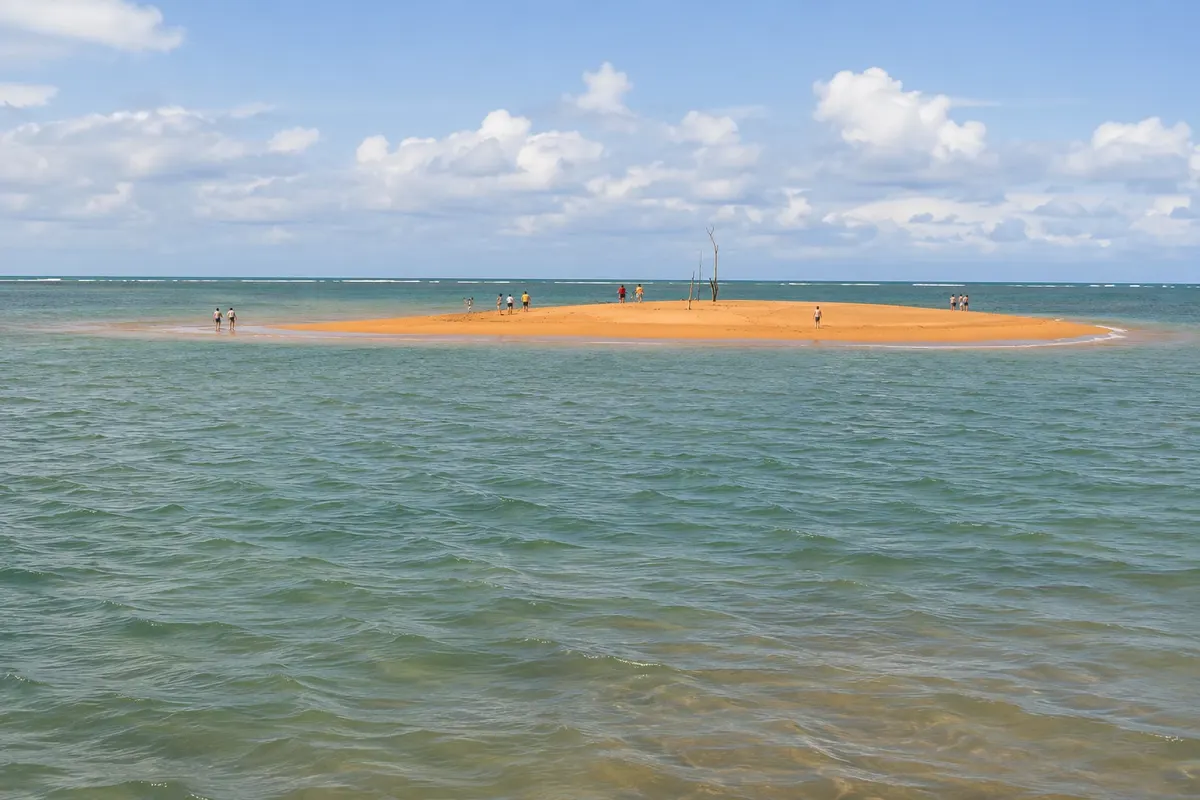
Marine park · Santa Cruz Cabrália, BA
Coroa Alta
A marine park off the coast of Santa Cruz Cabrália, featuring a sandbank that remains exposed even at high tide and natural pools among the reefs, visited by boat via the João de Tiba River.
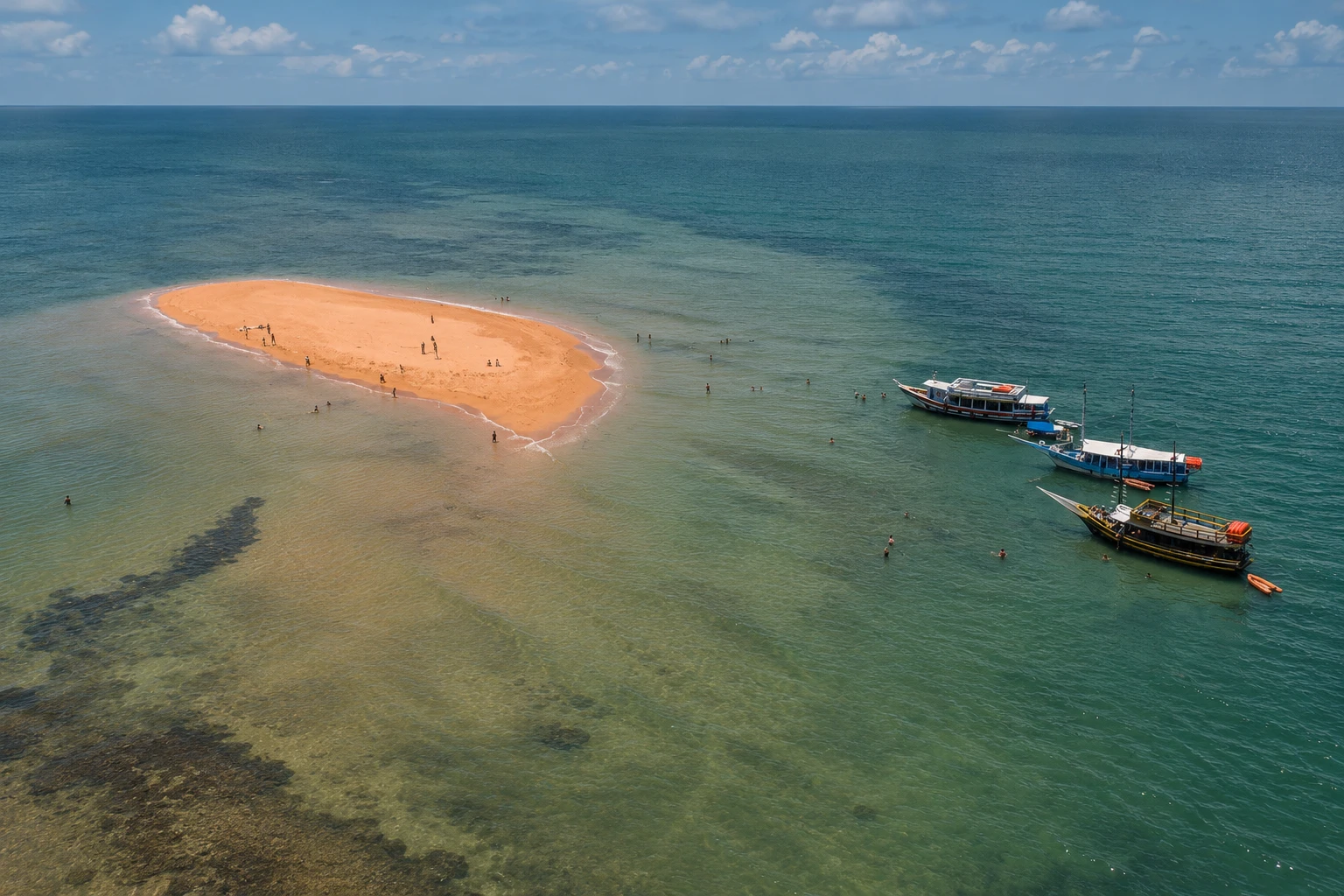
In the photo: Orange sandbank of Coroa Alta, surrounded by the sea.
Illustrative images. The pictures in this guide are illustrations based on the real place, not photographs, and may differ from it.


A look at the place
Coroa Alta in pictures
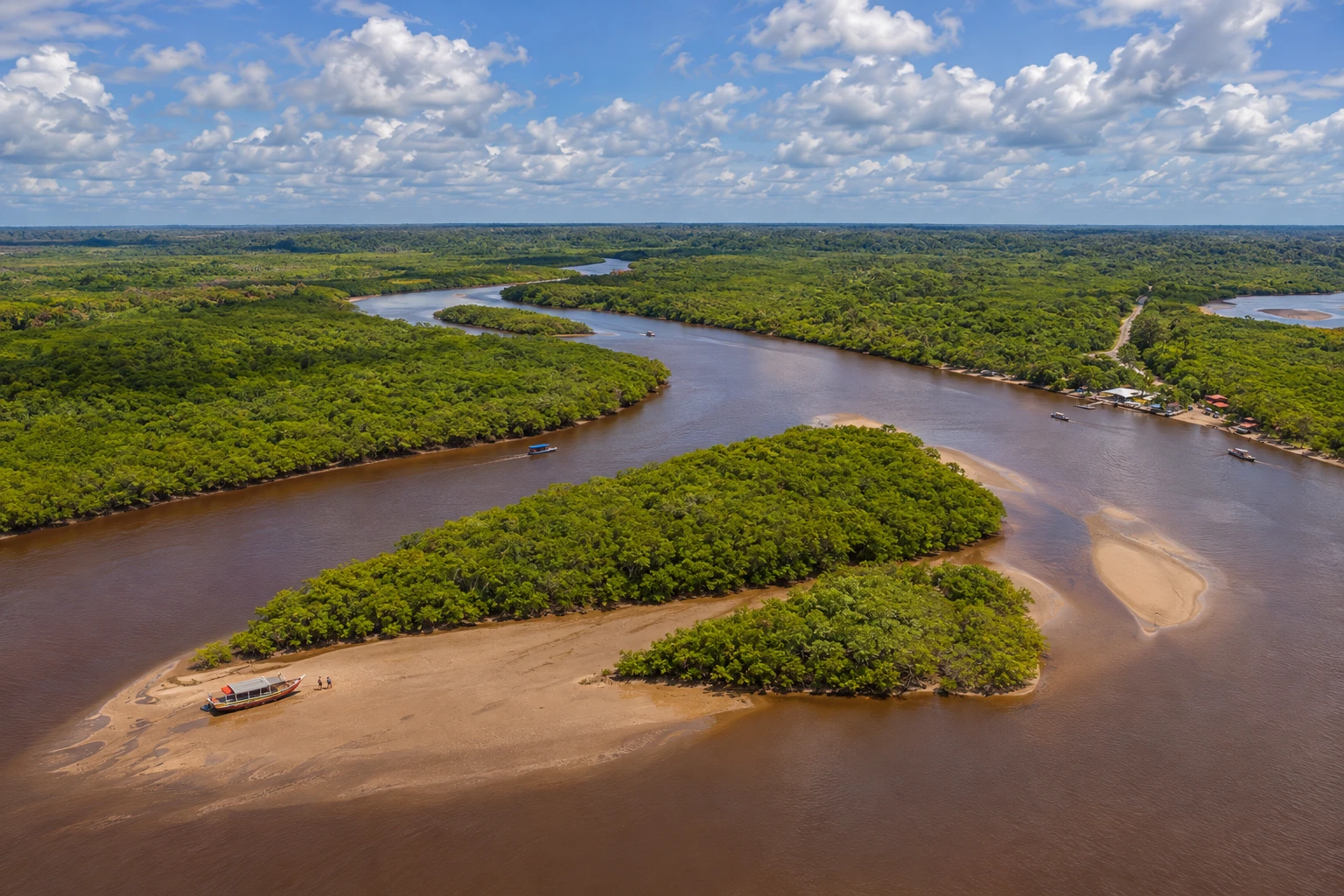
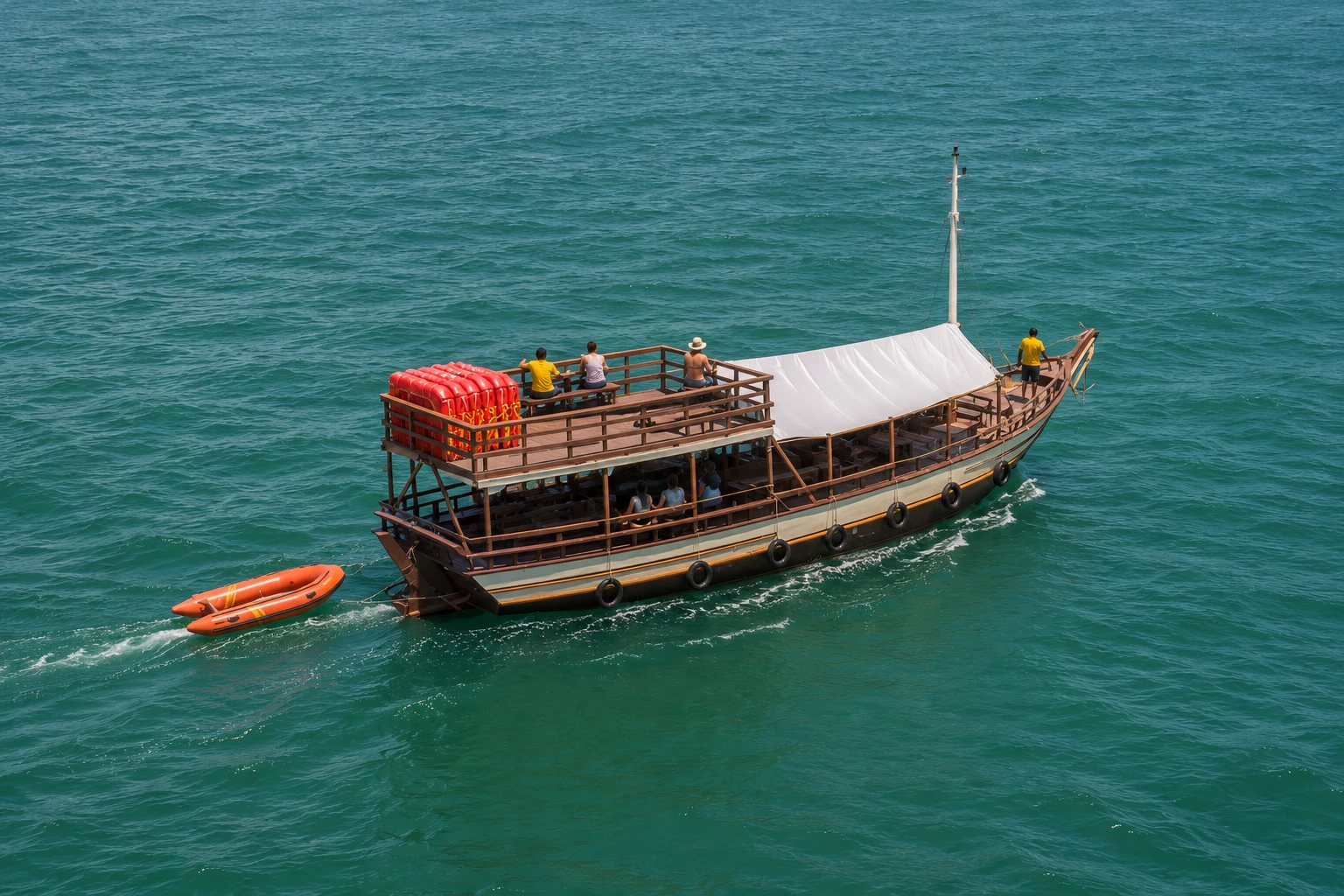
These pictures are illustrations based on the real place, not photographs. They may differ from the place.
Click the picture to enlarge it.
Discover
About Coroa Alta
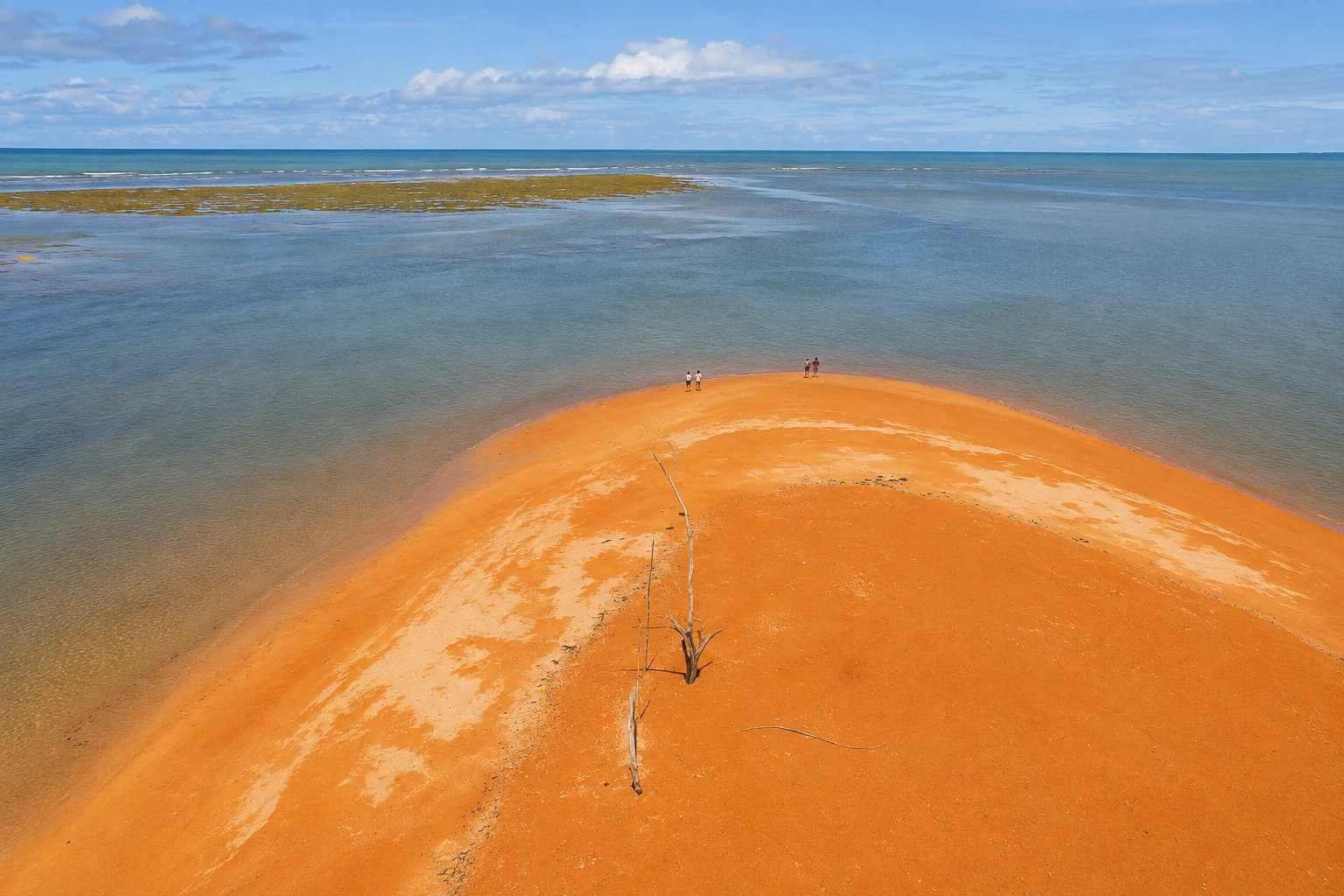
Coroa Alta is a set of coral reefs a few kilometers off the coast of Santa Cruz Cabrália, protected as a municipal marine park. The name comes from the orange sandbank that sits above the water even at high tide, out in the middle of the sea.
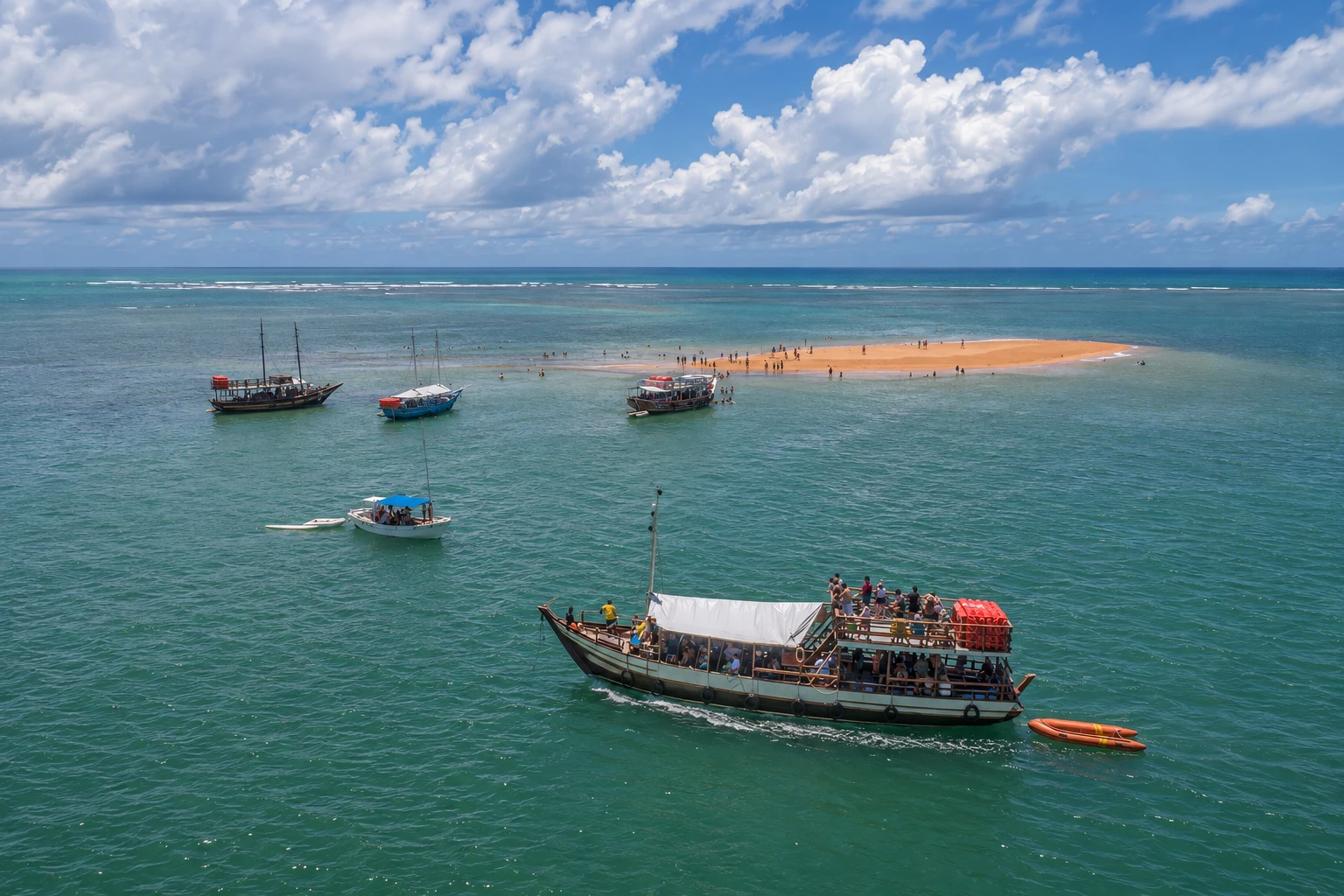
The tour starts at the Santa Cruz Cabrália pier, at the mouth of the João de Tiba River. Boats and schooners travel down the river through mangroves and head out to open sea to reach the reefs, a crossing of about one hour.
At low tide, the reefs around the sandbank are exposed and form shallow natural pools, good for floating and watching fish, corals and starfish with a mask and snorkel. The sandbank serves as a base: you can walk on it, swim in the sea and wait for the tide.
Many tours also stop at Ilha Paraíso, near the mouth of the João de Tiba River, known for homemade sweets sold there and for swimming in calmer waters. A full day on the sea and the river is long, and most of the time is spent under the sun, with no shade on the reefs.
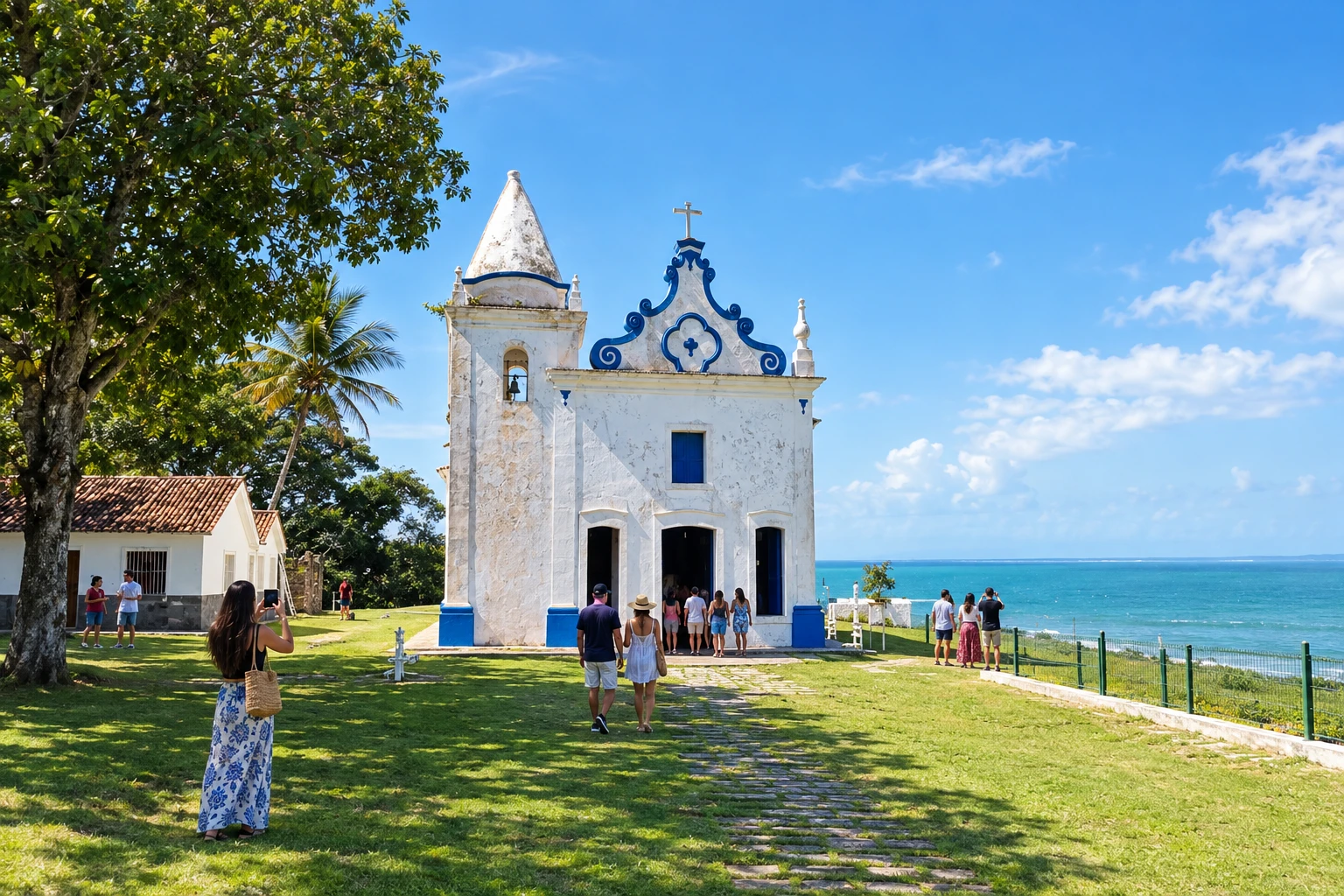
Before or after the boat trip, the visit pairs well with the Cidade Alta of Santa Cruz Cabrália, with the church and houses on the cliff overlooking the river mouth and the sea with the reefs, and with Coroa Vermelha beach, where the first mass in Brazil was held.
Before you go
Practical information
Cidade Turismo reviews its information regularly, but something may have changed. Check with the place before planning your trip.
How much time to set aside
A full day, including the boat along the river, the hours at the reefs and the stop at the island.
Best time
On days of low tide, when the pools appear; check the tide table before booking. From September to March the weather tends to be drier, and the calm sea makes the water more transparent.
How to get there
Boats leave from the Santa Cruz Cabrália pier, at the mouth of the João de Tiba River, in the town center. From Porto Seguro, the town is about 25 km along the north coastal road; agencies in both towns sell the tour with transport.
Tip
Choose a day of very low tide, bring a diving mask, hat, reef‑safe sunscreen and water. Do not step on the corals or take shells or pieces of the reef.
Get your questions answered
Frequently asked questions about Coroa Alta
What is the Coroa Alta tour like?
Boats leave from the Santa Cruz Cabrália pier, go down the João de Tiba River through mangroves and head out to sea to the reefs in about one hour. There, visitors stay on the sandbank and in the natural pools; many tours also stop at Ilha Paraíso on the return.
Why is it called Coroa Alta?
Because of the orange sandbank that remains above the water even at high tide, in the middle of the reefs. Around it, at low tide, the natural pools form.
Do you need low tide to go to Coroa Alta?
To enjoy the natural pools, yes. The sandbank stays exposed even at high tide, but the pools between the corals only appear at low tide. Check the tide table before booking.
Can you go to Coroa Alta from Porto Seguro?
Yes. Porto Seguro agencies sell the tour with transport to Santa Cruz Cabrália, about 25 km along the north coastal road, where the boats depart. The day is long and occupies from morning to late afternoon.
What is the difference between Coroa Alta and Coroa Vermelha?
Coroa Alta is a marine park of reefs at sea, off Santa Cruz Cabrália, visited by boat. Coroa Vermelha is a beach and a neighborhood in the same municipality, where the first mass in Brazil was held.
Beyond the guide


