

 Antarctica
 Argentina
 Bolivia
 Chile
 Colombia
 Ecuador
 Guyana
 French Guiana
 Falkland Islands (Malvinas)
 Paraguay
 Peru
 Suriname
 Uruguay
 Venezuela
 Germany
 Austria
 Belgium
 Croatia
 Denmark
 Slovakia
 Slovenia
 Spain
 Finland
 France
 Greece
 the Netherlands
 Hungary
 Ireland
 Iceland
 Italy
 Luxembourg
 Norway
 Poland
 Portugal
 the United Kingdom
 the Czech Republic
 Sweden
 Switzerland
 Turkey
 Bermuda
 Canada
 the United States
 Greenland
 Mexico
 Saint Pierre and Miquelon
 the Dominican Republic
 Japan
 South Africa
 Egypt
 Australia
 Fiji
 New Zealand
 Papua New Guinea
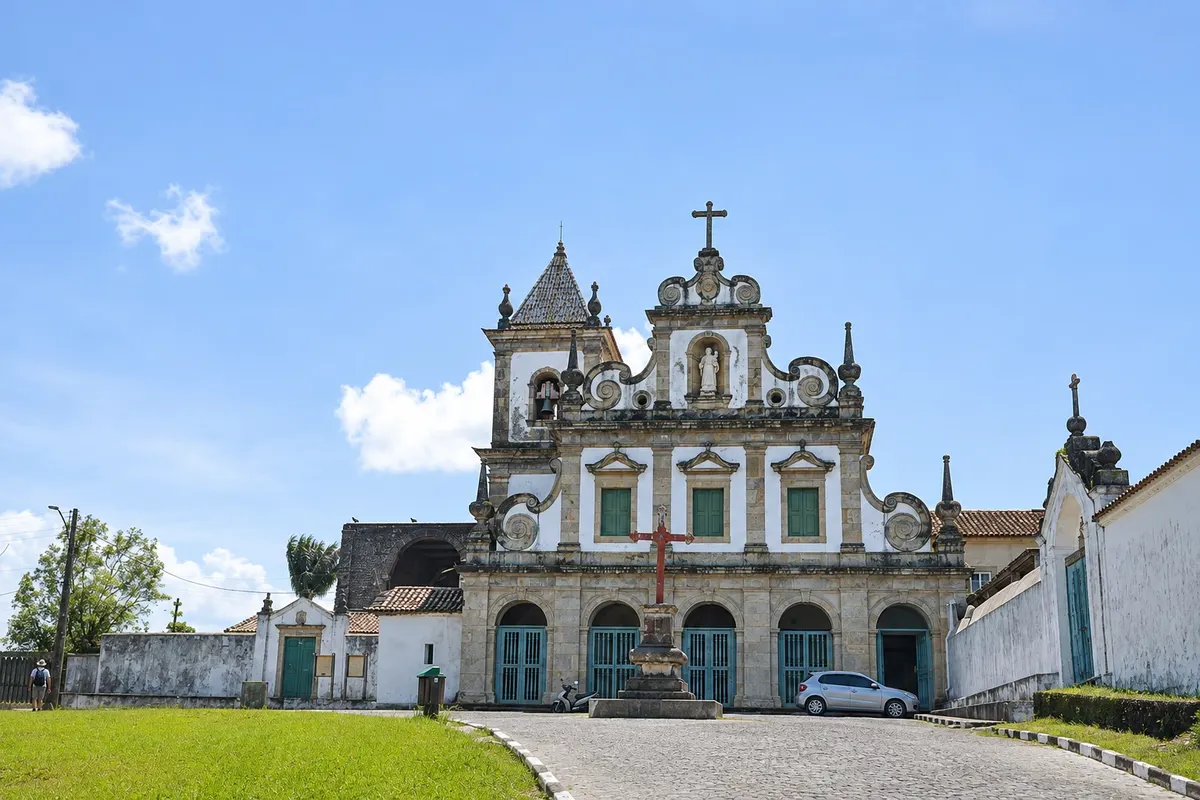
Convent · Cairu, BA
Convent of Saint Anthony
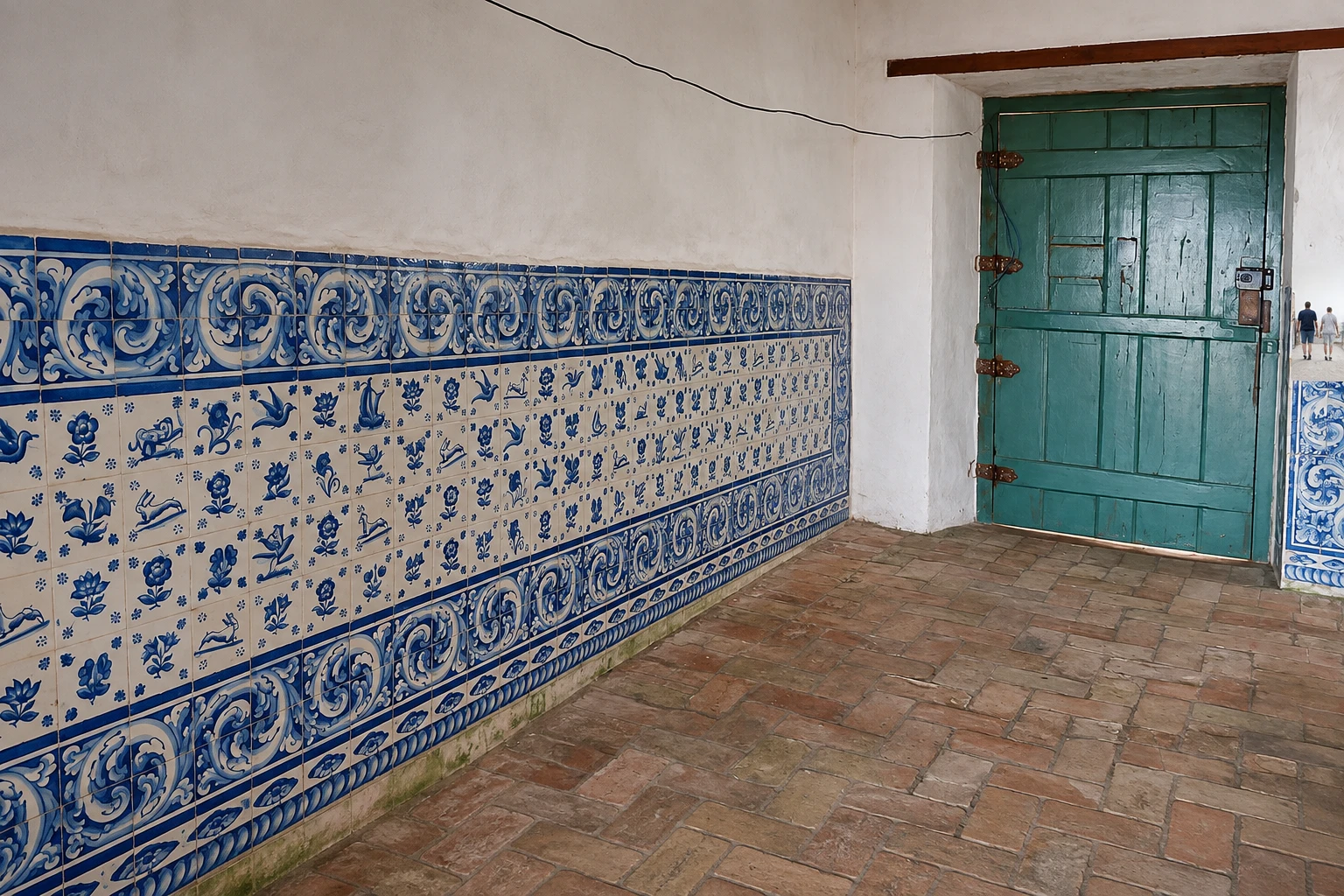
A 17th-century Franciscan church and convent in the town seat of Cairu, listed as national heritage. The façade is cited among the earliest Baroque examples in Brazil, and the sacristy is lined with Portuguese tiles.
In the photo: Baroque façade and crucifix of the Convent of Saint Anthony, in Cairu.
Illustrative images. The pictures in this guide are illustrations based on the real place, not photographs, and may differ from it.


A look at the place
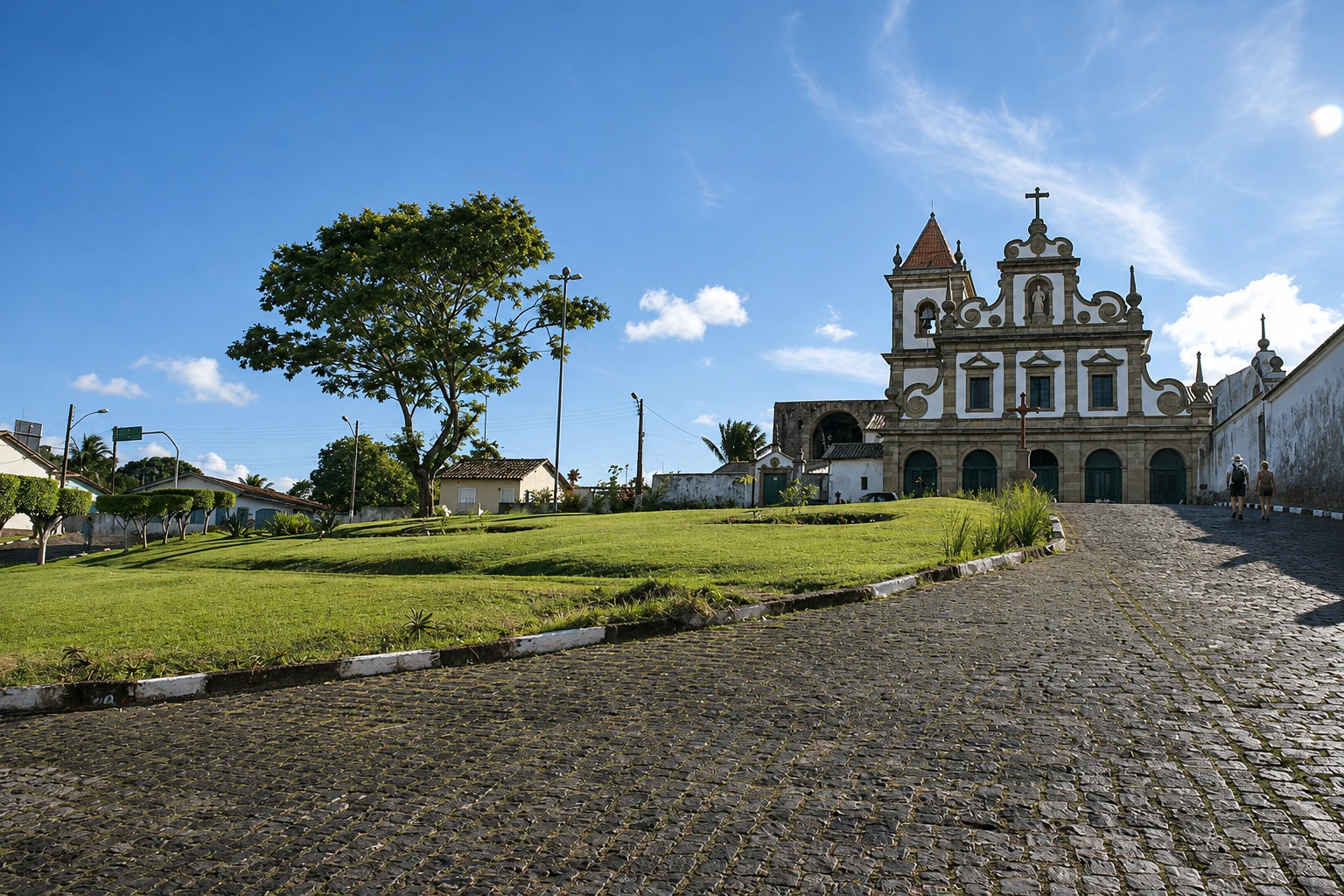
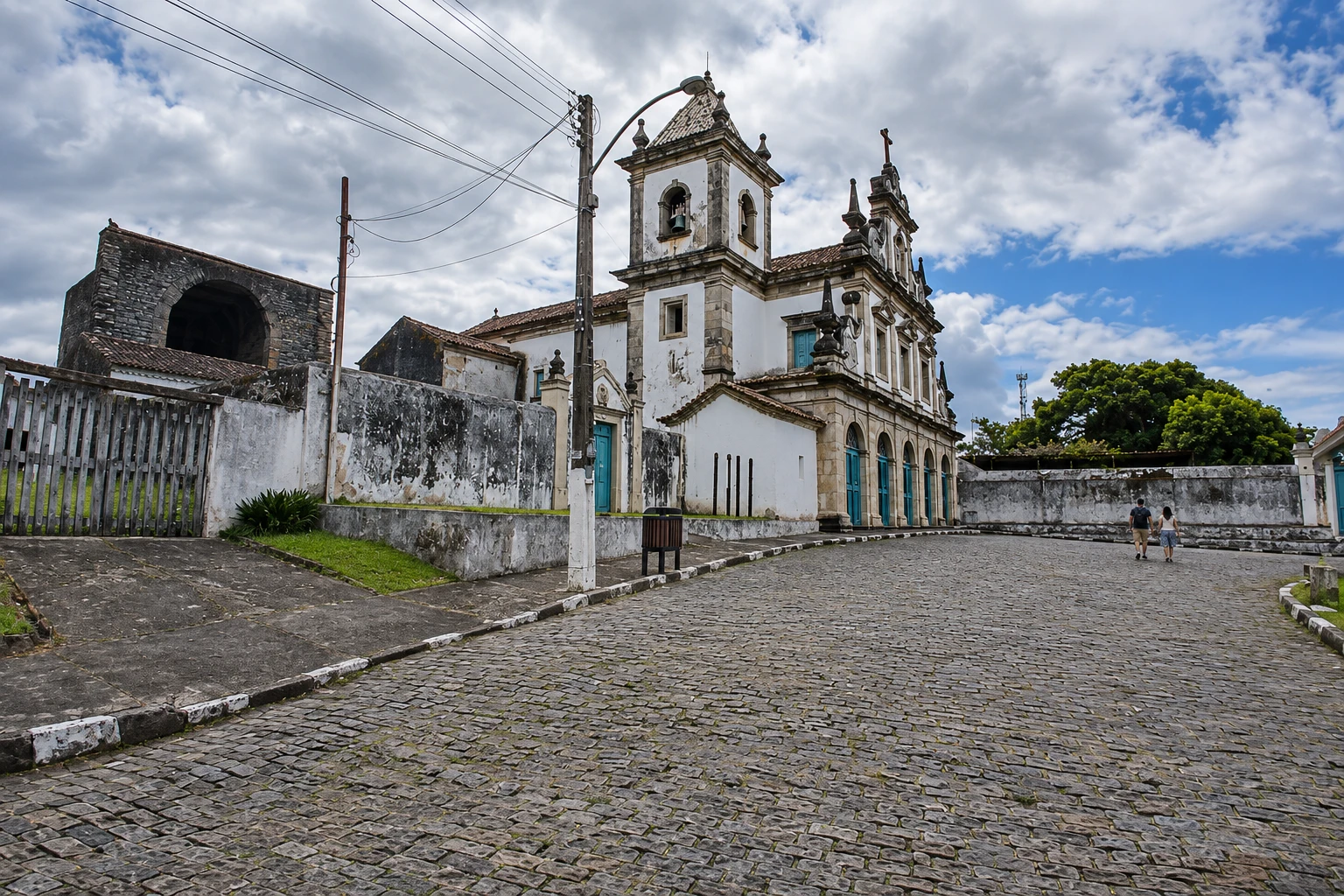
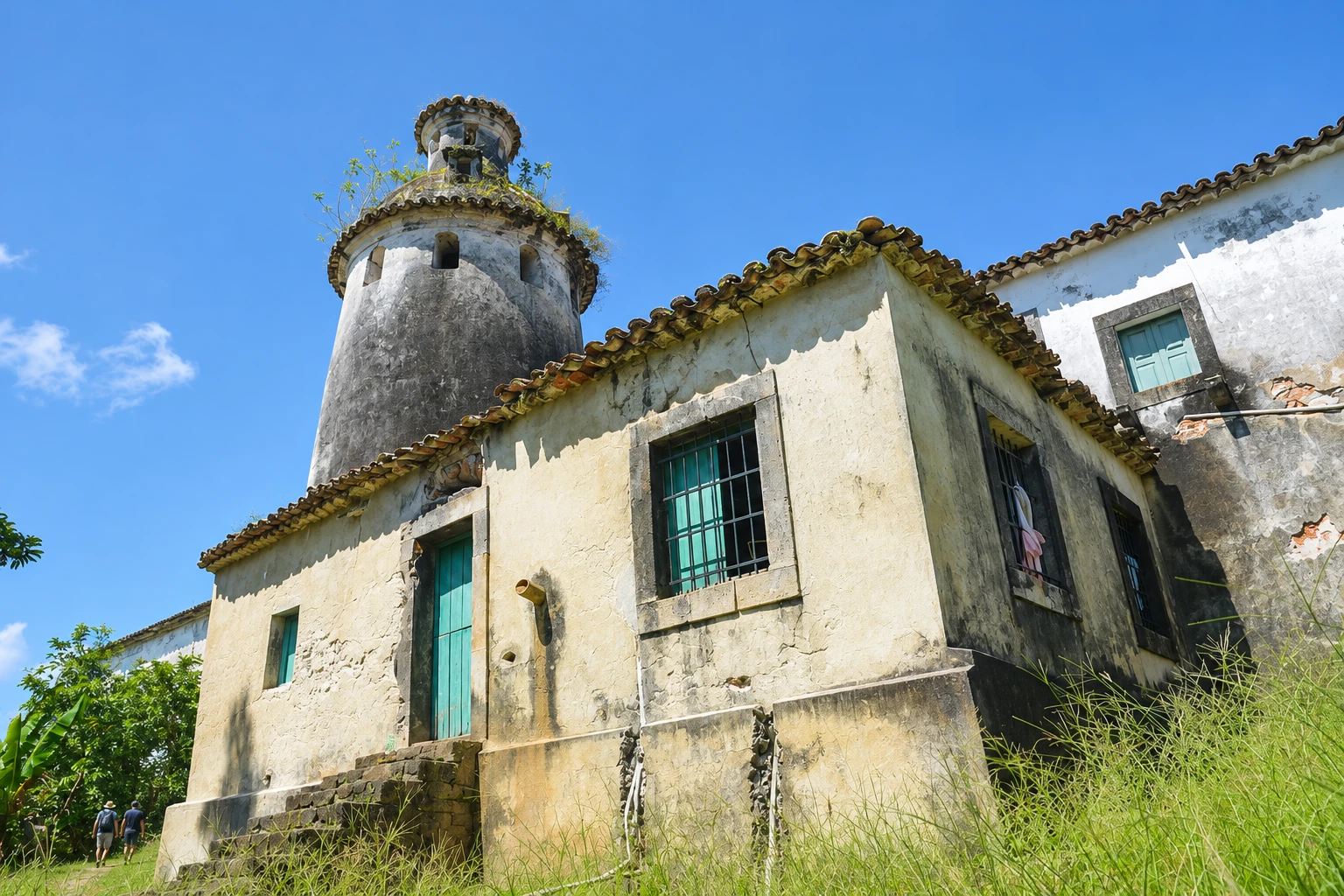
Convent of Saint Anthony in pictures
These pictures are illustrations based on the real place, not photographs. They may differ from the place.
Click the picture to enlarge it.


Discover
About Convent of Saint Anthony
The Convent of Saint Anthony is located in the town seat of the municipality of Cairu, in a small town with old streets on the Island of Cairu, between the mainland and Tinharé Island. The complex includes the church and the convent of the Franciscan friars, who arrived there in the mid-17th century. The municipality of Cairu comprises 26 islands, including Tinharé, home to Morro de São Paulo, and Boipeba, but the town seat has a much different pace from the beaches.
Masonry construction began in the 1650s and continued in the years that followed. Scholars consider the church’s façade to be one of the earliest expressions of Baroque architecture in Brazil. Because of this value, the complex was listed as national historical heritage in 1941.
On a visit, the façade facing the square, the church nave, and the sacristy covered with Portuguese tiles attract attention. Some parts of the complex have undergone restoration and may have restricted access.
The church is an active place of worship. During services, visits inside should be discreet: do not circulate through the nave or use flash photography.
The town seat of Cairu is much smaller and calmer than Morro de São Paulo and Boipeba. Besides the convent, it’s worth walking around the square to see the Mother Church of Our Lady of the Rosary a few steps away, and the pier, where you can watch the boats moving through the archipelago’s channels.
Before you go
Practical information
Cidade Turismo reviews its information regularly, but something may have changed. Check with the place before planning your trip.
How much time to set aside
About an hour for the convent and the square; half a day if you include the boat trip there and back.
Best time
Morning or early afternoon, when the façade has good light. Outside service times, visiting the interior is more peaceful.
How to get there
The town seat of Cairu is on an island and is reached by boat from Valença or Morro de São Paulo via the archipelago’s channels. Some boat tours departing from Morro de São Paulo include a stop at the town seat. From the pier, the convent is a few minutes on foot.
Tip
Arrange your return boat before disembarking, since departures to Morro de São Paulo and Valença are not very frequent. Wear appropriate clothing to enter a church.
Get your questions answered
Frequently asked questions about Convent of Saint Anthony
Where is the Convent of Saint Anthony of Cairu?
In the town seat of the municipality of Cairu, on the Island of Cairu, near the Mother Church of Our Lady of the Rosary and a few minutes’ walk from the pier. It is not in Morro de São Paulo, but in the small town that gives the municipality its name.
Why is the Convent of Saint Anthony of Cairu important?
It is a 17th-century Franciscan complex listed as national heritage in 1941. Its façade is considered one of the earliest manifestations of Baroque architecture in Brazil.
How to get from Morro de São Paulo to the Convent of Saint Anthony?
By boat through the archipelago’s channels to the town seat of Cairu. Some boat tours from Morro de São Paulo include a stop at the town seat; from the pier the convent is a few minutes on foot.
What to see at the Convent of Saint Anthony of Cairu?
The Baroque façade, the church nave, and the sacristy lined with Portuguese tiles, plus the square in front and the nearby Mother Church.
Beyond the guide


