

 Antarctica
 Argentina
 Bolivia
 Chile
 Colombia
 Ecuador
 Guyana
 French Guiana
 Falkland Islands (Malvinas)
 Paraguay
 Peru
 Suriname
 Uruguay
 Venezuela
 Germany
 Austria
 Belgium
 Croatia
 Denmark
 Slovakia
 Slovenia
 Spain
 Finland
 France
 Greece
 the Netherlands
 Hungary
 Ireland
 Iceland
 Italy
 Luxembourg
 Norway
 Poland
 Portugal
 the United Kingdom
 the Czech Republic
 Sweden
 Switzerland
 Turkey
 Bermuda
 Canada
 the United States
 Greenland
 Mexico
 Saint Pierre and Miquelon
 the Dominican Republic
 Japan
 South Africa
 Egypt
 Australia
 Fiji
 New Zealand
 Papua New Guinea
Historical heritage · Joinville, SC
Palmenallee
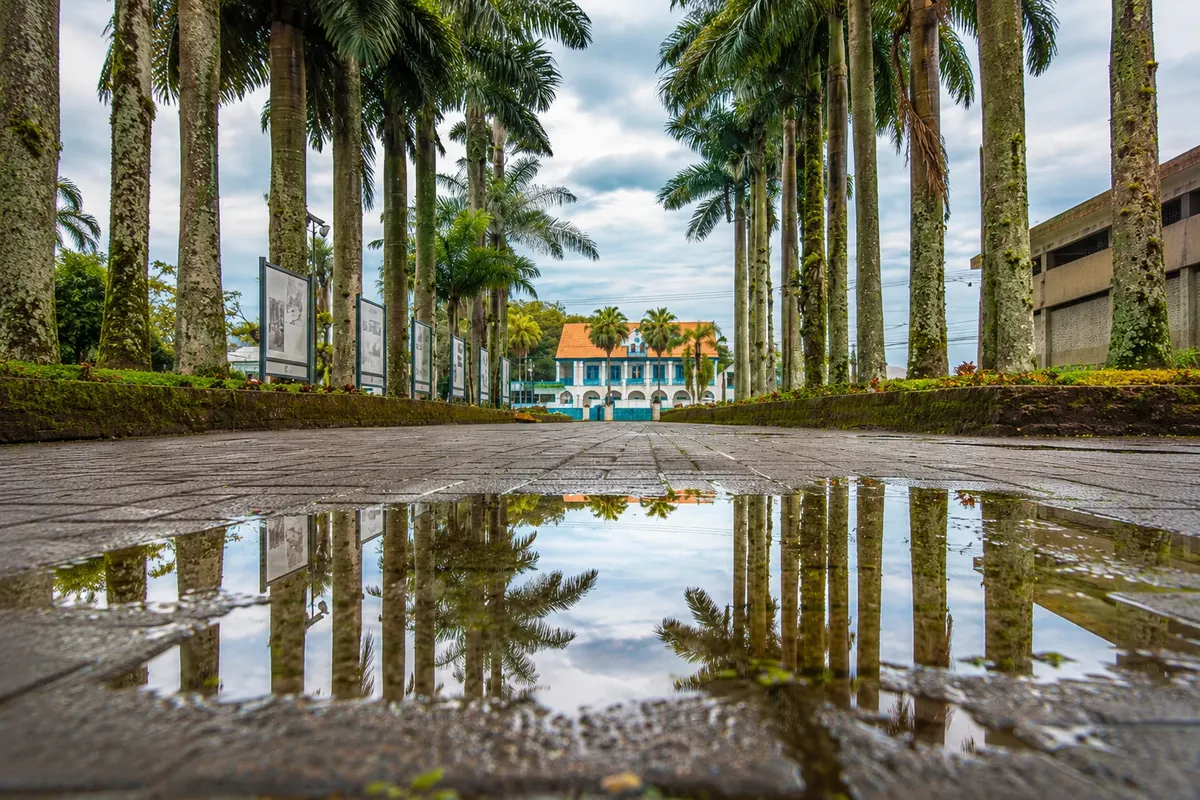
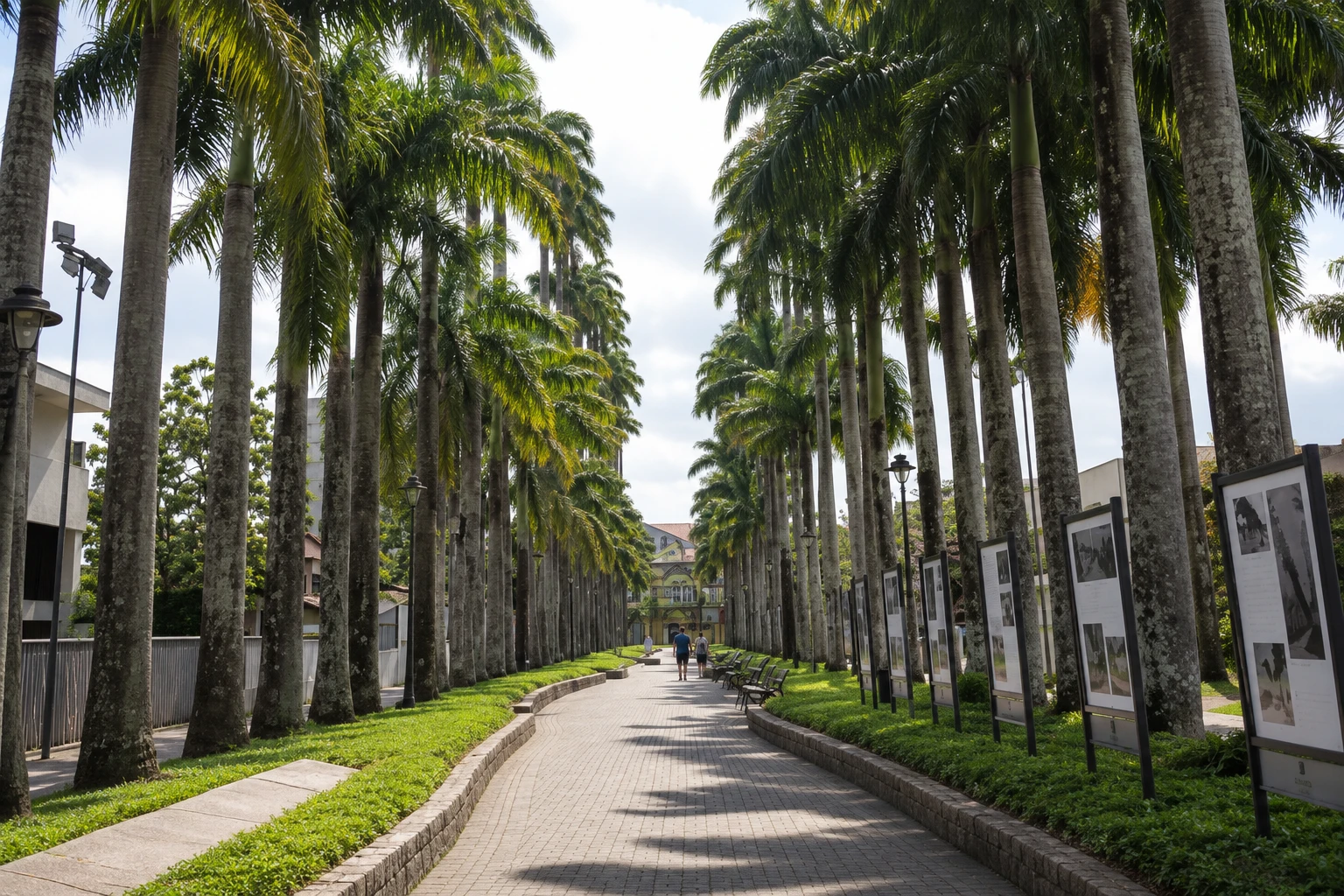
Alameda Brüstlein, the avenue of imperial palms planted between 1871 and 1873 in front of the former Palace of the Colônia Dona Francisca, today the National Museum of Immigration and Colonization. Listed by IPHAN in 2005.
In the photo: Low axial view of the avenue with two rows of tall imperial palms, puddle reflecting the palms, and the blue-and-white manor house of the museum in the background.
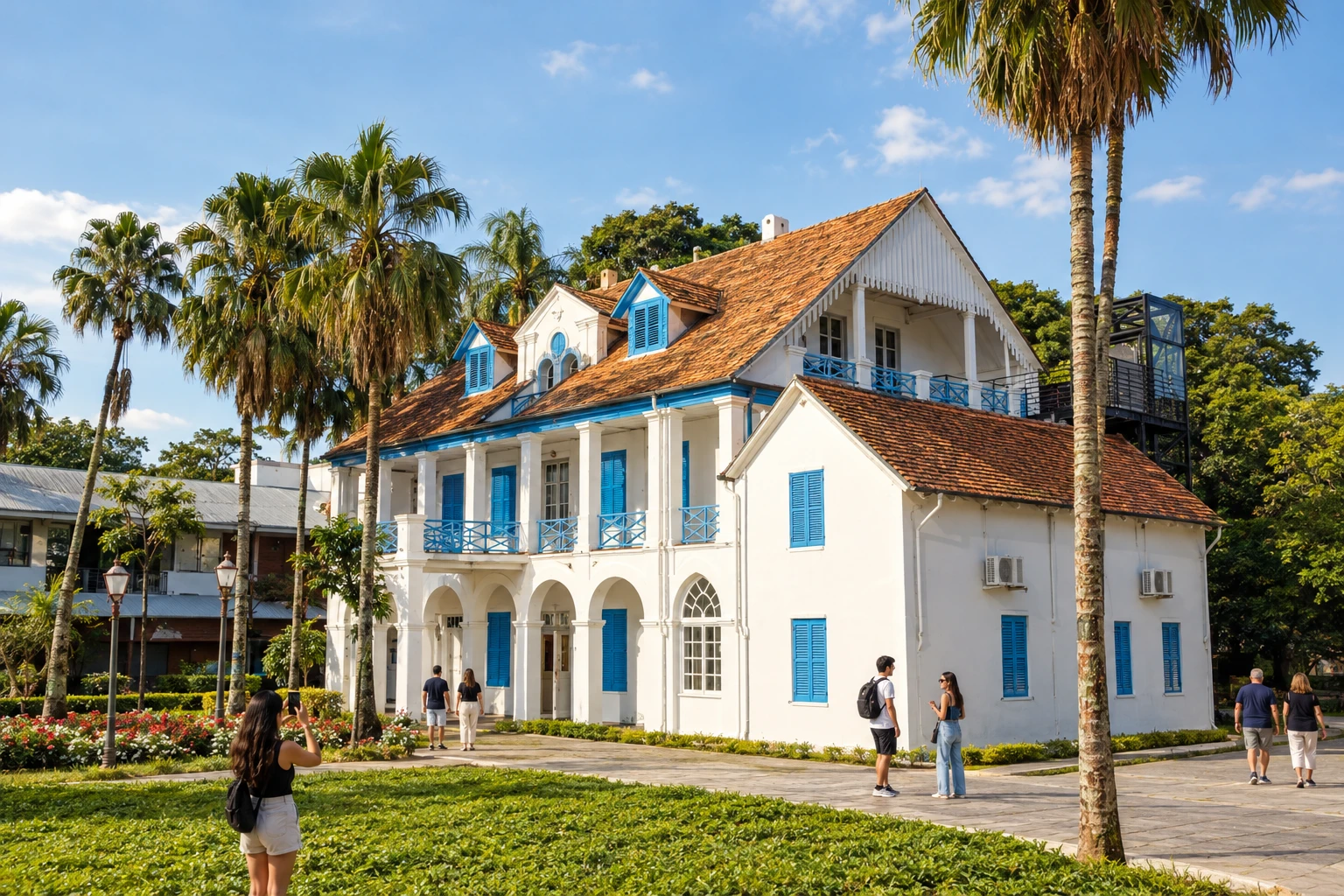
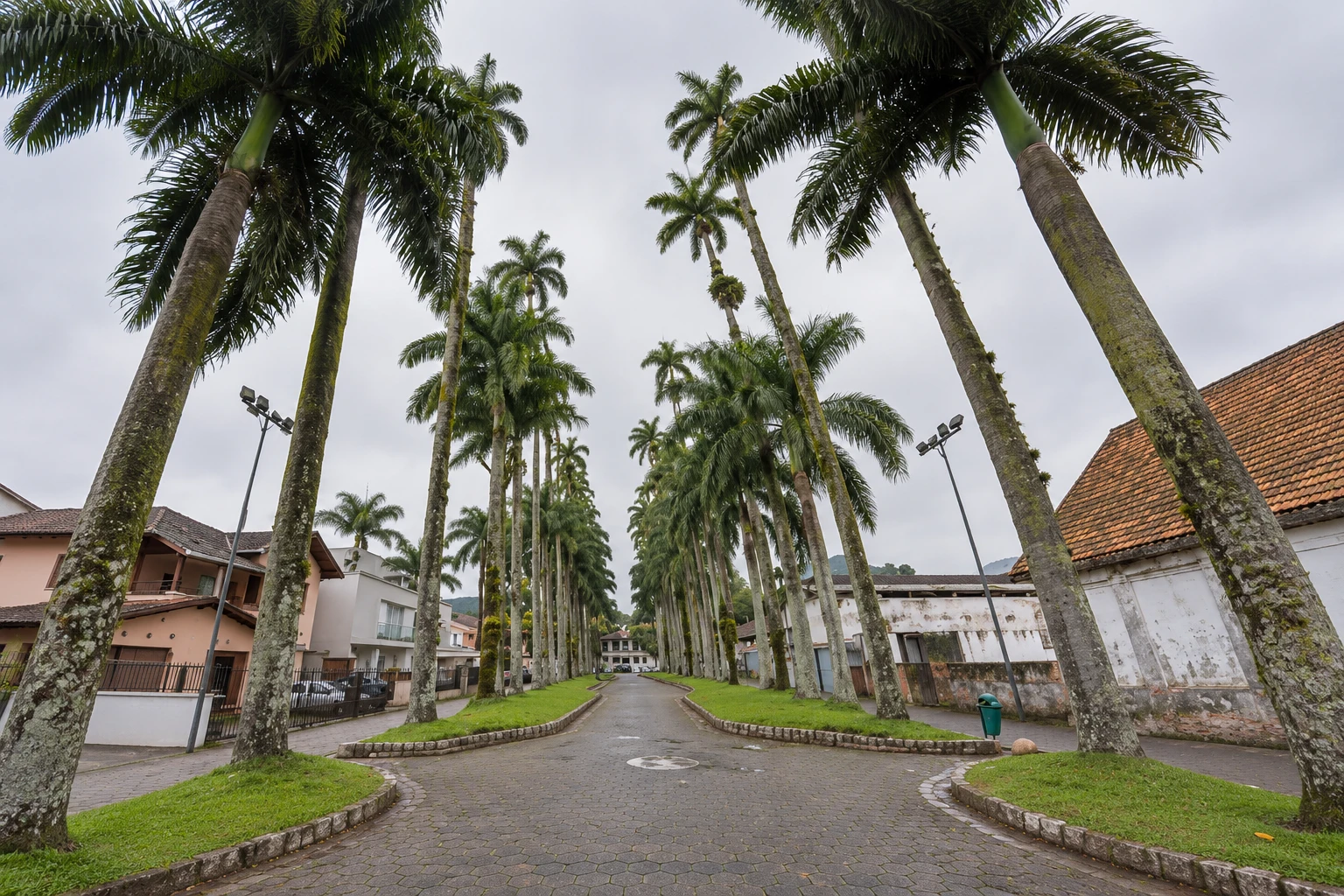
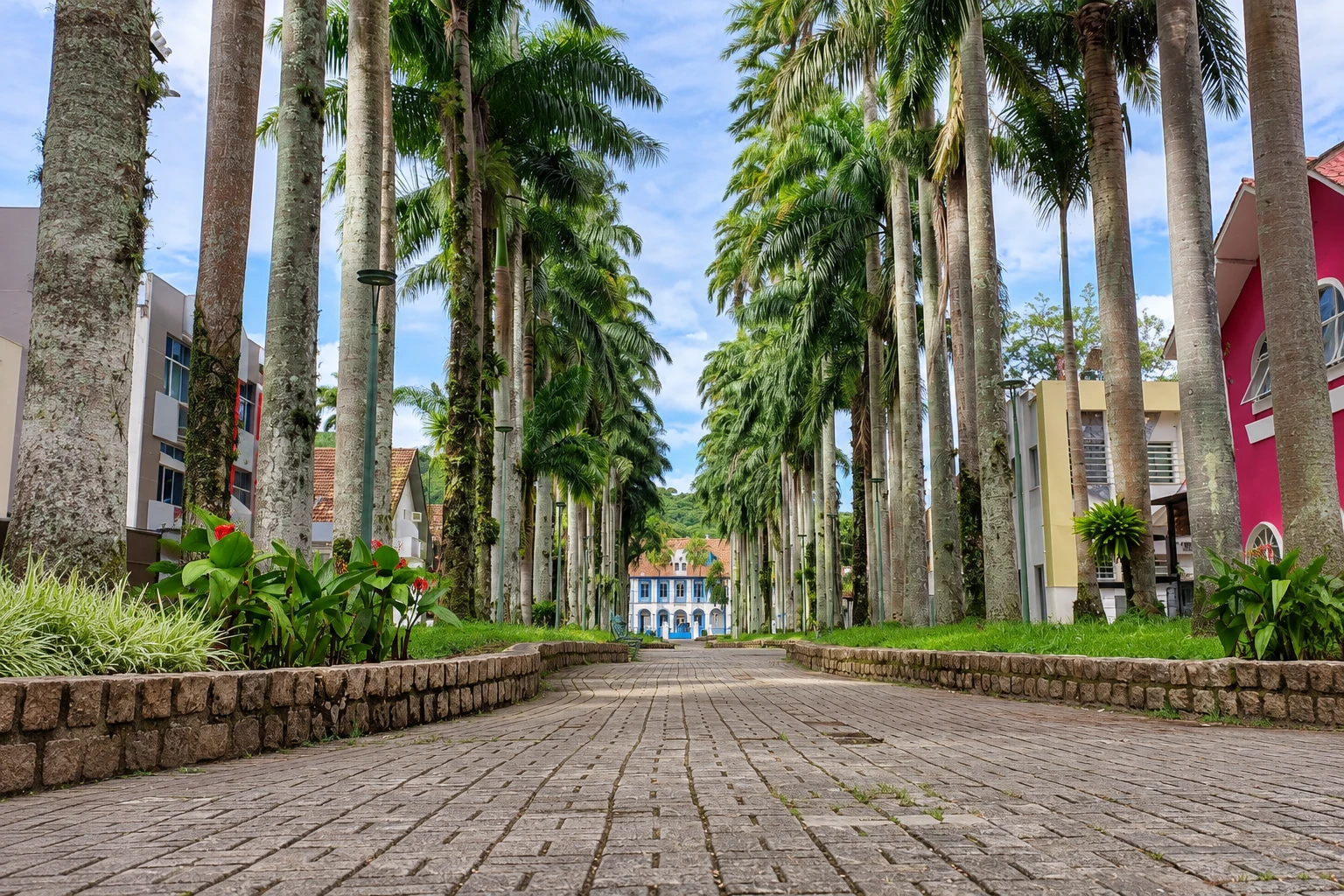
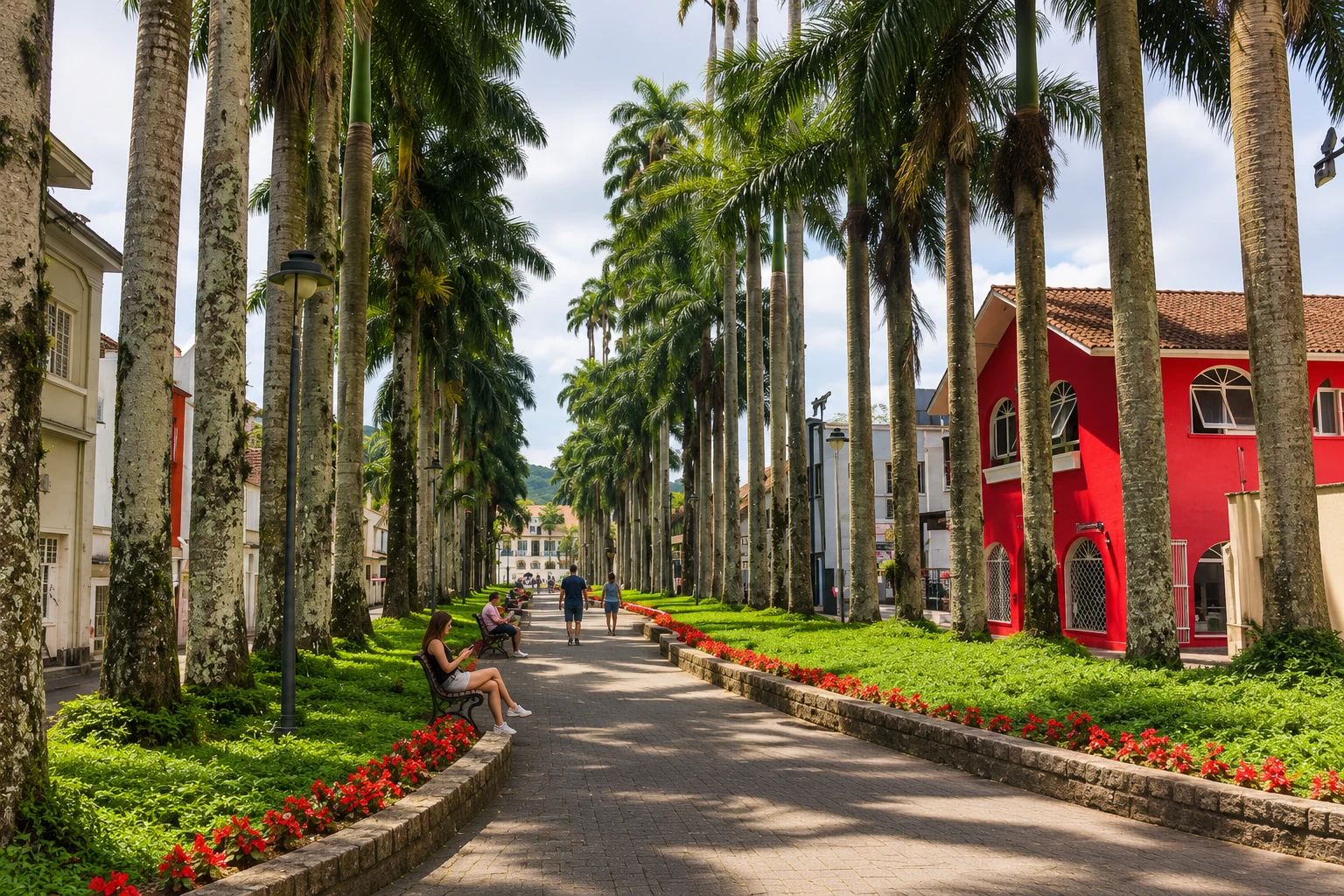
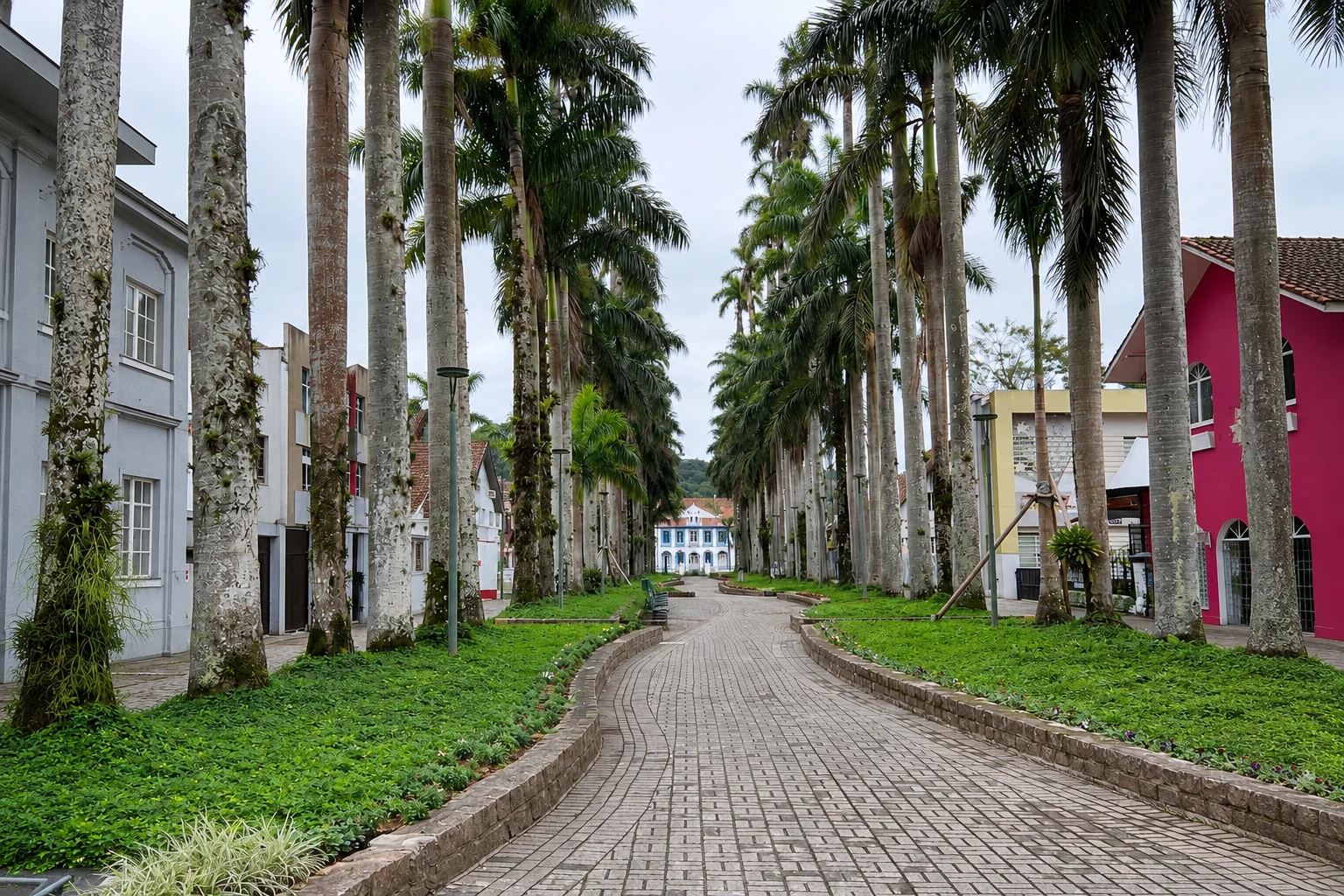
Illustrative images. The pictures in this guide are illustrations based on the real place, not photographs, and may differ from it.


A look at the place
Palmenallee in pictures
These pictures are illustrations based on the real place, not photographs. They may differ from the place.
Click the picture to enlarge it.
Discover
About Palmenallee
Rua das Palmeiras is the common name for Alameda Brüstlein, in downtown Joinville. It is an avenue flanked by two rows of tall imperial palms that lead to the manor house that houses the National Museum of Immigration and Colonization, and it is one of the city’s postcards.
The story begins in the early years of Colônia Dona Francisca. The colony director, Frédéric Brüstlein, asked Johann Niemeyer to bring imperial palm seeds from the Rio de Janeiro Botanical Garden for the garden in front of the Maison de Joinville, the manor house that today holds the museum. The seeds arrived in June 1867, were grown in a nursery and, once they exceeded one meter, were replanted along the avenue between 1871 and 1873.
At first, the street was called Palmenallee in German, the palm avenue. In 1912 it received the name Alameda Brüstlein in honor of the former director, but the name Rua das Palmeiras remained the most commonly used. In 2005 the avenue was listed by IPHAN as national historical and artistic heritage.
The visit is a short walk in the shade of the palms, with the museum in the background. The avenue is one of Joinville’s most photographed spots, and the contrast between the straight trunks of the palms and the manor house behind them nicely summarizes the historical city-center landscape.
Next to it are the National Museum of Immigration and Colonization, with its garden and half-timbered house, and a few blocks away are Joinville Cathedral and the Public Market.
Before you go
Practical information
Cidade Turismo reviews its information regularly, but something may have changed. Check with the place before planning your trip.
How much time to set aside
20 to 40 minutes for the avenue. With the National Museum of Immigration and Colonization, 2 to 3 hours.
Best time
All year. Morning and late-afternoon light is best for photos among the palms.
How to get there
Rua das Palmeiras is in downtown Joinville, a few blocks from the Cathedral and the Public Market. From the city center you can walk there; the museum at the end of the avenue has an entrance on Rua Rio Branco.
Tip
Visit together with the National Museum of Immigration and Colonization, which is at the end of the avenue. For photos with fewer people, go early.
Get your questions answered
Frequently asked questions about Palmenallee
Why is Rua das Palmeiras called that?
Because of the imperial palms planted between 1871 and 1873 from seeds brought from the Rio de Janeiro Botanical Garden. The official name is Alameda Brüstlein, in honor of Frédéric Brüstlein, director of Colônia Dona Francisca.
Is Rua das Palmeiras a protected site?
Yes. The avenue was listed by IPHAN in 2005 as national historical and artistic heritage.
What is at the end of Rua das Palmeiras?
The National Museum of Immigration and Colonization, installed in the former palace of Colônia Dona Francisca, with a garden and a half-timbered house.
Can you visit Rua das Palmeiras at any time?
Yes. The avenue is a public space in the city center. The museum at its end has its own opening hours.
Beyond the guide


