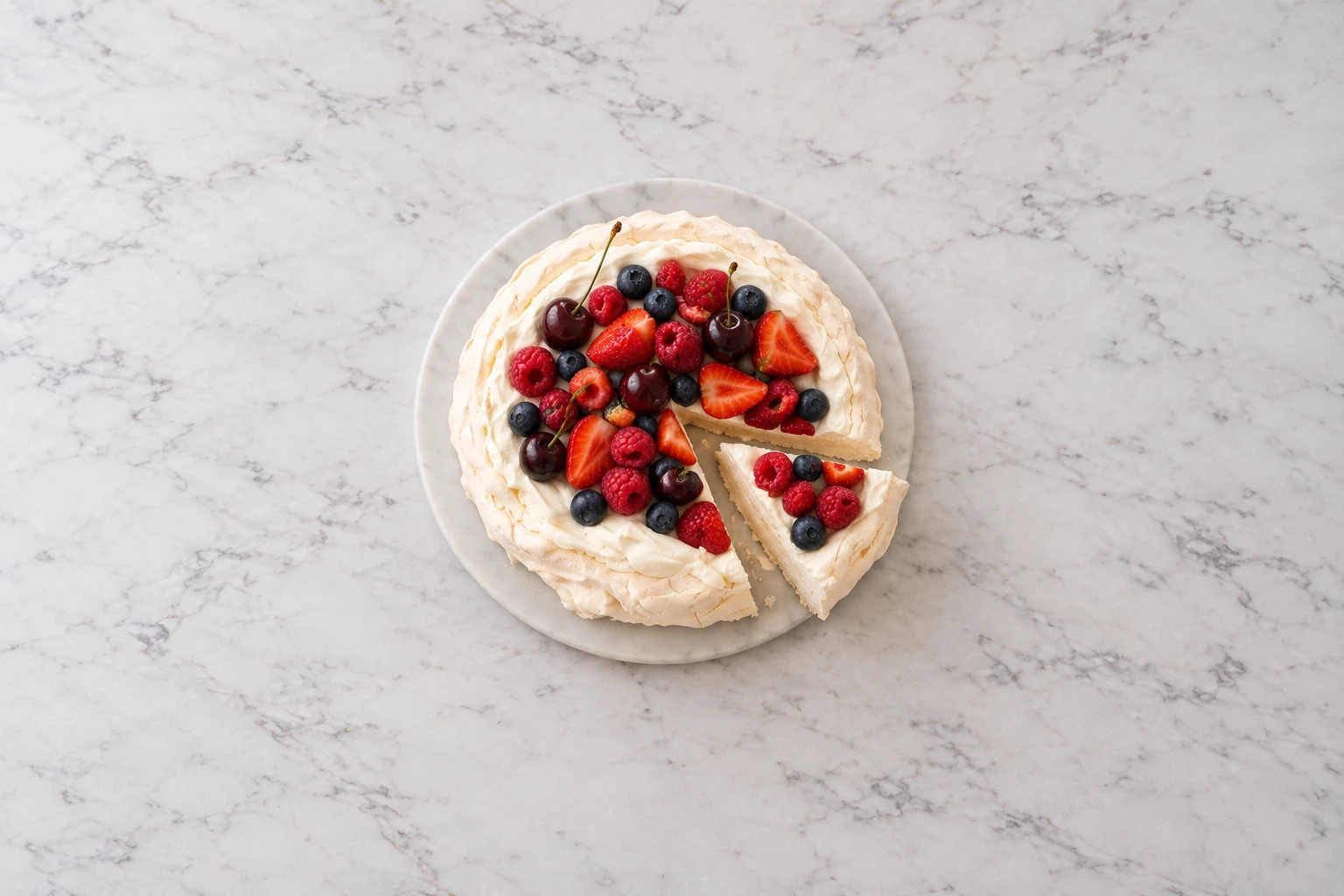
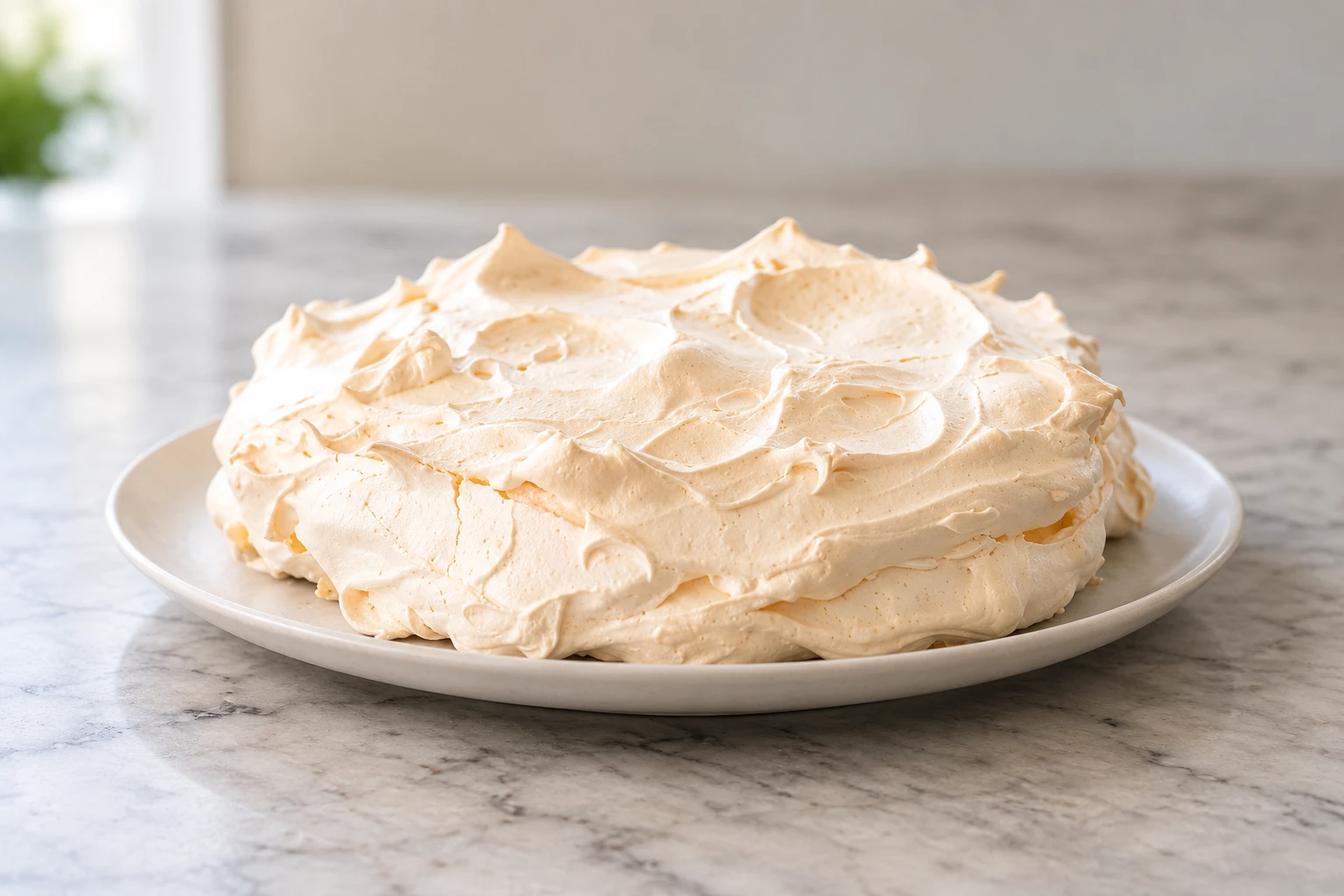
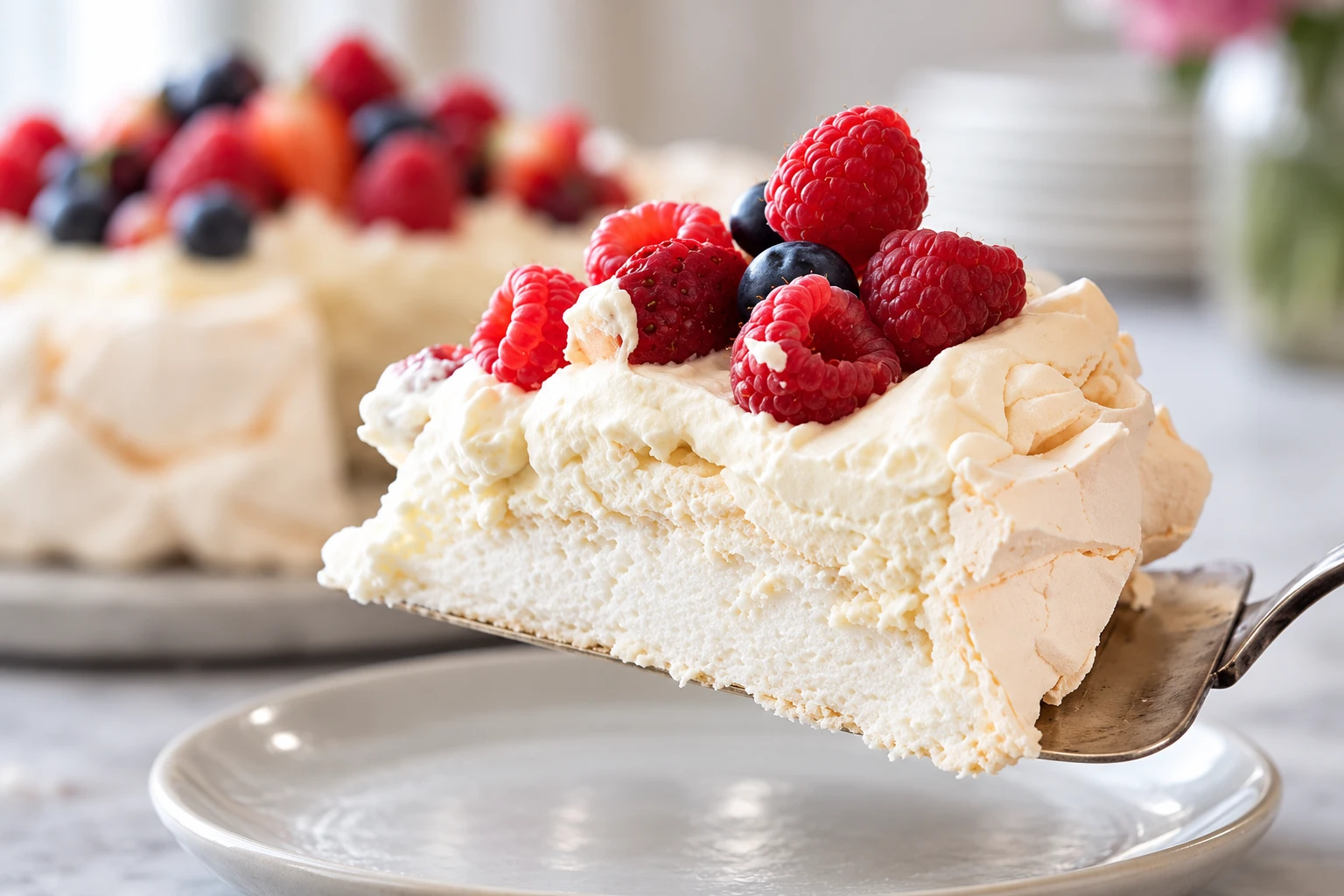
The pavlova is named after the Russian ballerina Anna Pavlova, who toured Australia and New Zealand in 1926 and returned to Australia in 1929. It is a tall meringue disk, baked at a low temperature until a dry, crisp shell forms while the interior remains soft, like marshmallow. On top goes whipped cream and fruit.
The Australian version of the origin story gives a place and a person: the cook Herbert Sachse, known as Bert, of the Esplanade Hotel in Perth, Western Australia. According to this account, in 1935 he created the sweet for the hotel’s afternoon tea, and someone remarked that it was as light as Pavlova. This version was repeated for decades.
Anthropologist Helen Leach of the University of Otago questioned that account. She gathered hundreds of recipes and found meringue cakes called pavlova in New Zealand publications predating 1935. Leach also showed that the dessert evolved gradually, with recipes exchanged among cooks in both countries. The dispute remains a matter of national pride on both sides, and for that reason pavlova is often presented as representing the whole of Australia, not a single city.
In Australia, pavlova is the dessert of the year-end celebrations, which fall in summer. The topping usually includes seasonal fruits such as strawberry, kiwi, mango and passion fruit pulp, and every family has its own way of assembling it.


 Brazil
 Argentina
 Bolivia
 Chile
 Colombia
 Ecuador
 Guyana
 French Guiana
 Falkland Islands (Malvinas)
 Paraguay
 Peru
 Suriname
 Uruguay
 Venezuela
 Germany
 Austria
 Belgium
 Croatia
 Denmark
 Spain
 Finland
 France
 Greece
 the Netherlands
 Hungary
 Ireland
 Iceland
 Italy
 Luxembourg
 Norway
 Poland
 Portugal
 the United Kingdom
 the Czech Republic
 Sweden
 Switzerland
 Turkey
 Canada
 the United States
 Mexico
 the Dominican Republic
 South Africa
 Fiji
 New Zealand
 Papua New Guinea