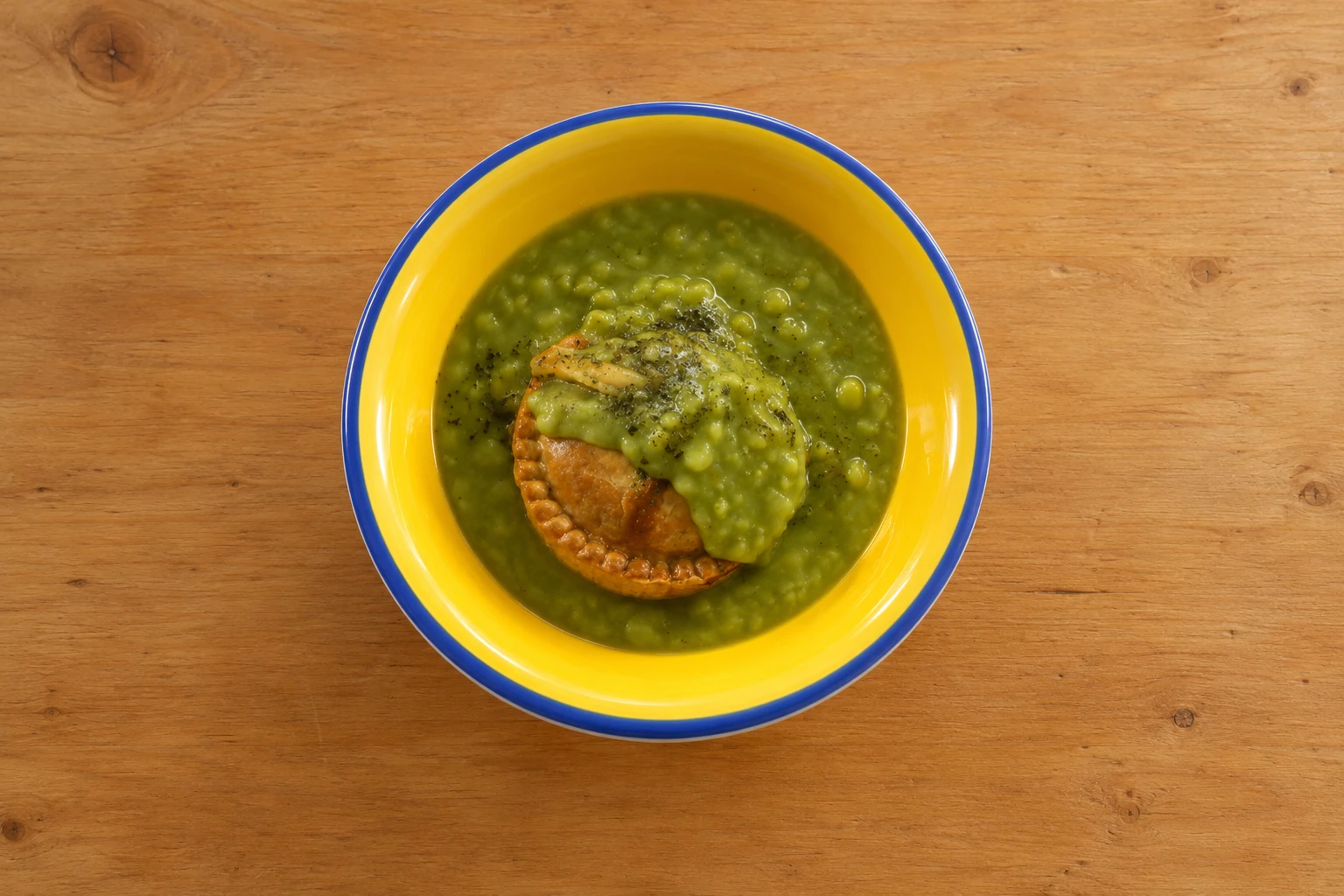
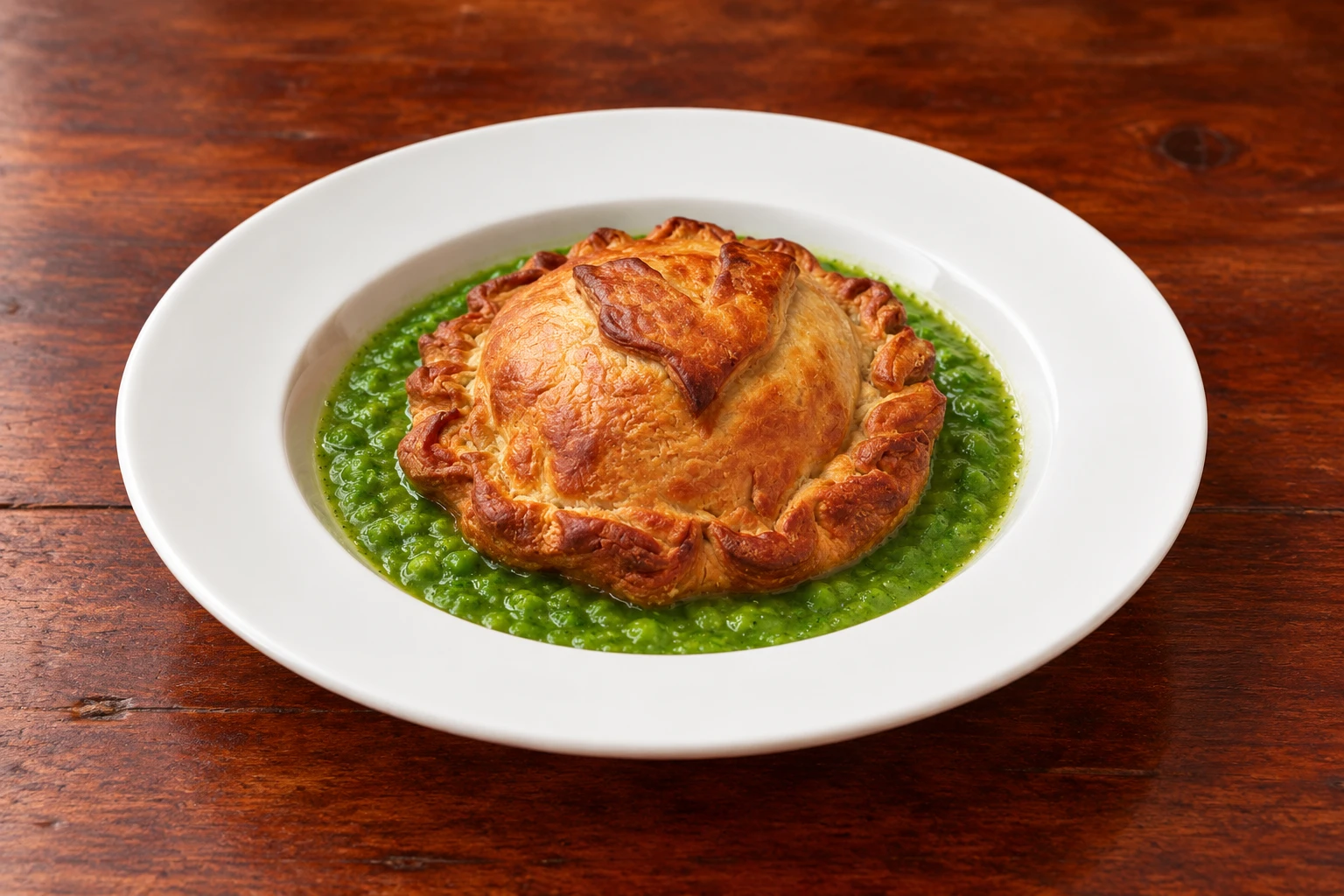
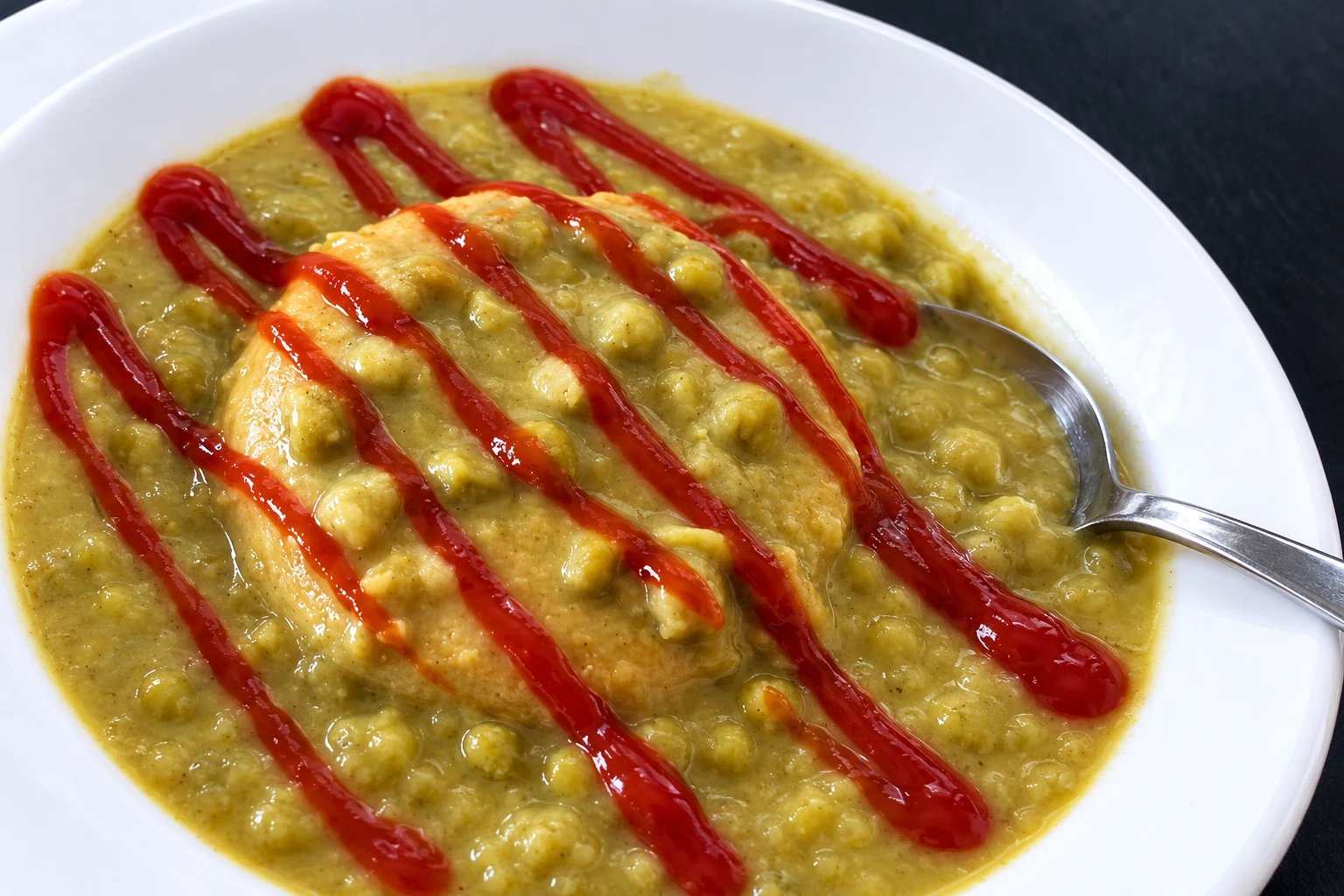
The pie floater brings together two simple dishes: an Australian meat pie, with puff pastry filled with beef and gravy, and a thick dry pea soup. The pie is placed in the middle of the deep plate, often upside down, and the soup sits around it like a green lake. Tomato sauce is poured on top; some prefer vinegar or Worcestershire sauce. It is eaten with a spoon, breaking the pastry into the soup.
In Adelaide, the dish is linked to the pie carts, horse‑ or hand‑drawn stalls that set up at night in the city centre and sold pies, pasties, chips, and hot food late into the night. Sources place the first carts in the second half of the 19th century, and by the 1880s there were already more than ten in the centre. The best‑known spots were in front of the central post office and on North Terrace beside the railway station. The last regular cart closed in 2010.
The dish’s origin lies in English traditions of pea soup served with dumplings or pastry, which in England were also called floaters, and in the pie and pea suppers of the country’s north. One account credits the pie floater to Ern “Shorty” Bradley, a baker from Port Pirie, a town in the same state, in the 1890s. This is oral tradition; the earliest printed record is a 1914 advertisement for Bradley’s night stall in Port Pirie offering floaters.
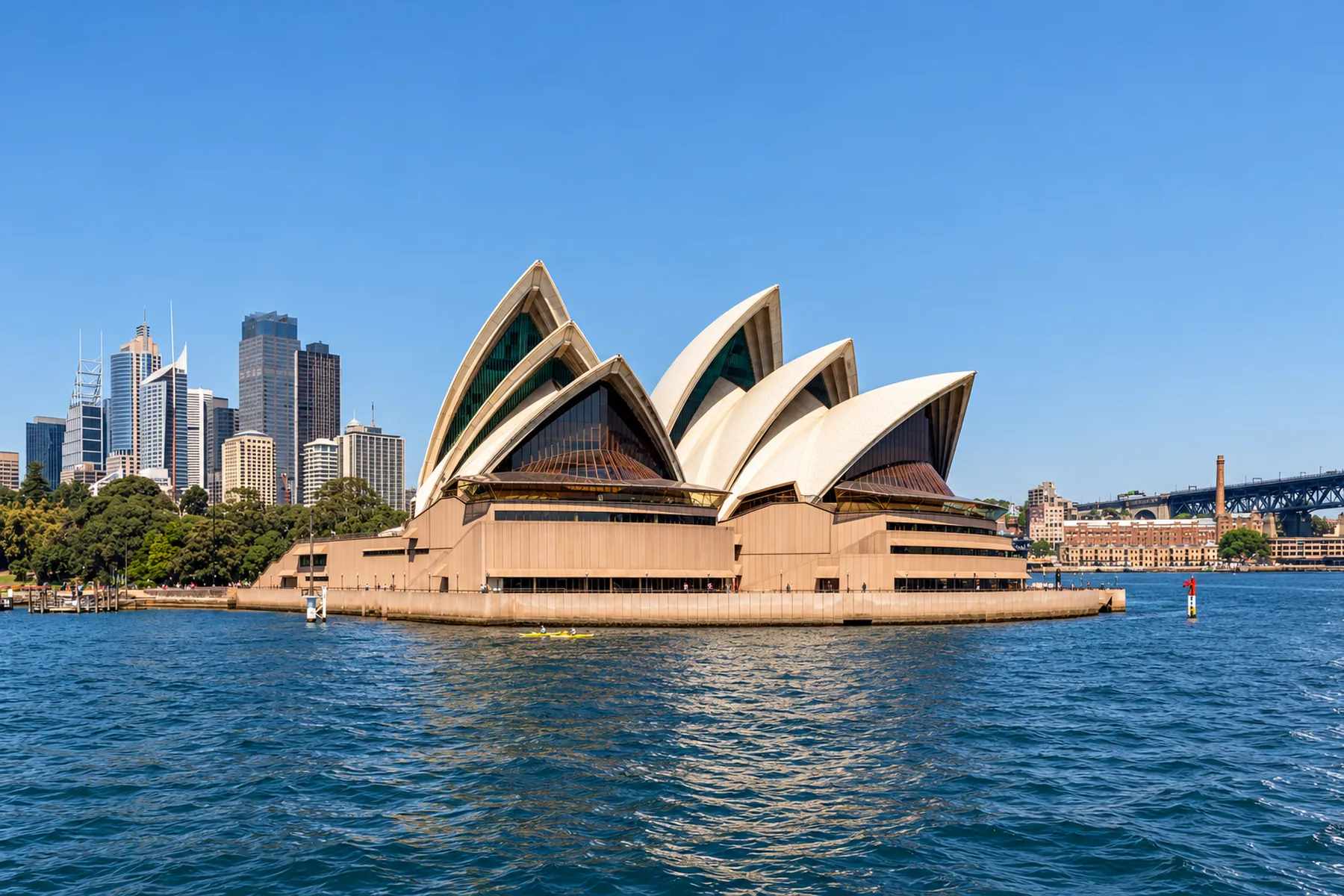
In 2003, the National Trust of South Australia included the pie floater in its list of South Australian Heritage Icons. Without the carts, the dish survives in bakeries and in some city pubs, sometimes in more elaborate versions. Sydney also has a version, served from a traditional city street stall.


 Brazil
 Argentina
 Bolivia
 Chile
 Colombia
 Ecuador
 Guyana
 French Guiana
 Falkland Islands (Malvinas)
 Paraguay
 Peru
 Suriname
 Uruguay
 Venezuela
 Germany
 Austria
 Belgium
 Croatia
 Denmark
 Spain
 Finland
 France
 Greece
 the Netherlands
 Hungary
 Ireland
 Iceland
 Italy
 Luxembourg
 Norway
 Poland
 Portugal
 the United Kingdom
 the Czech Republic
 Sweden
 Switzerland
 Turkey
 the United States
 Mexico
 the Dominican Republic
 South Africa
 Fiji
 New Zealand