Pie floater
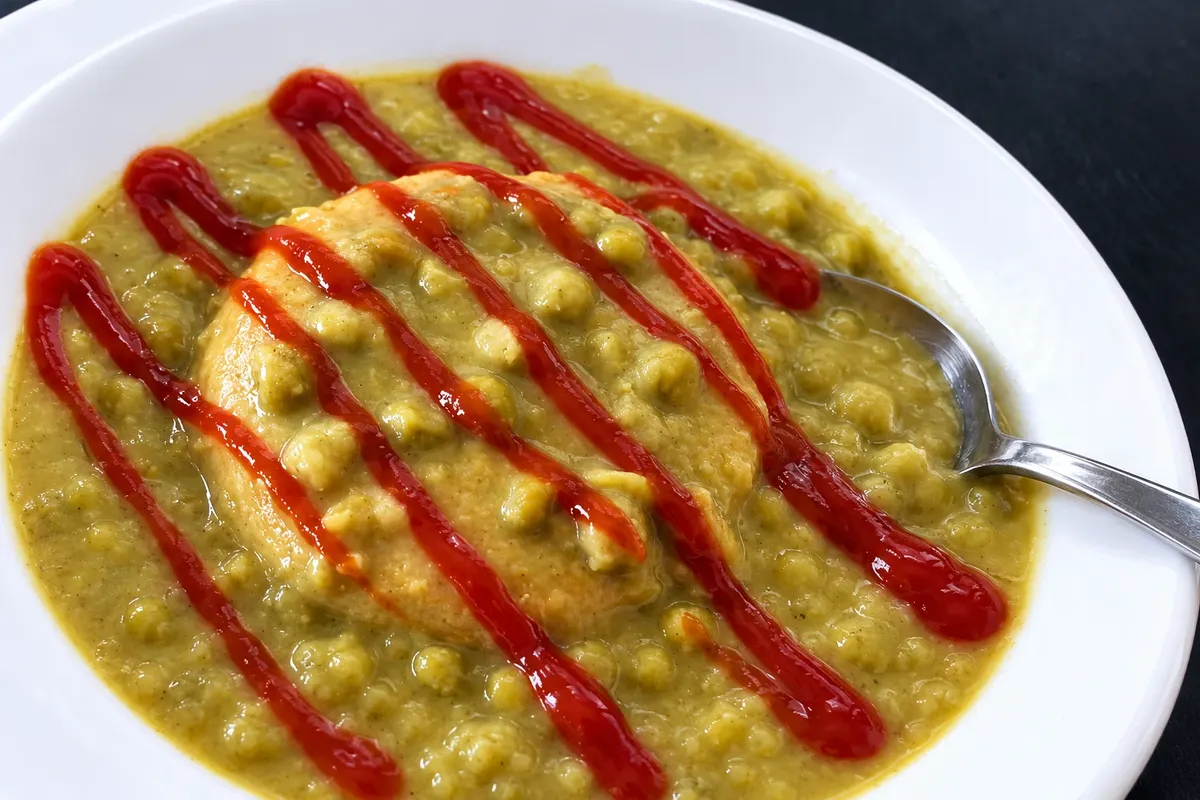
Meat pie served in a deep plate of thick pea soup, usually turned upside down and topped with tomato sauce. It was the dish of the food carts that sold late‑night food in central Adelaide since the 19th century.
Flavors · Tasmânia
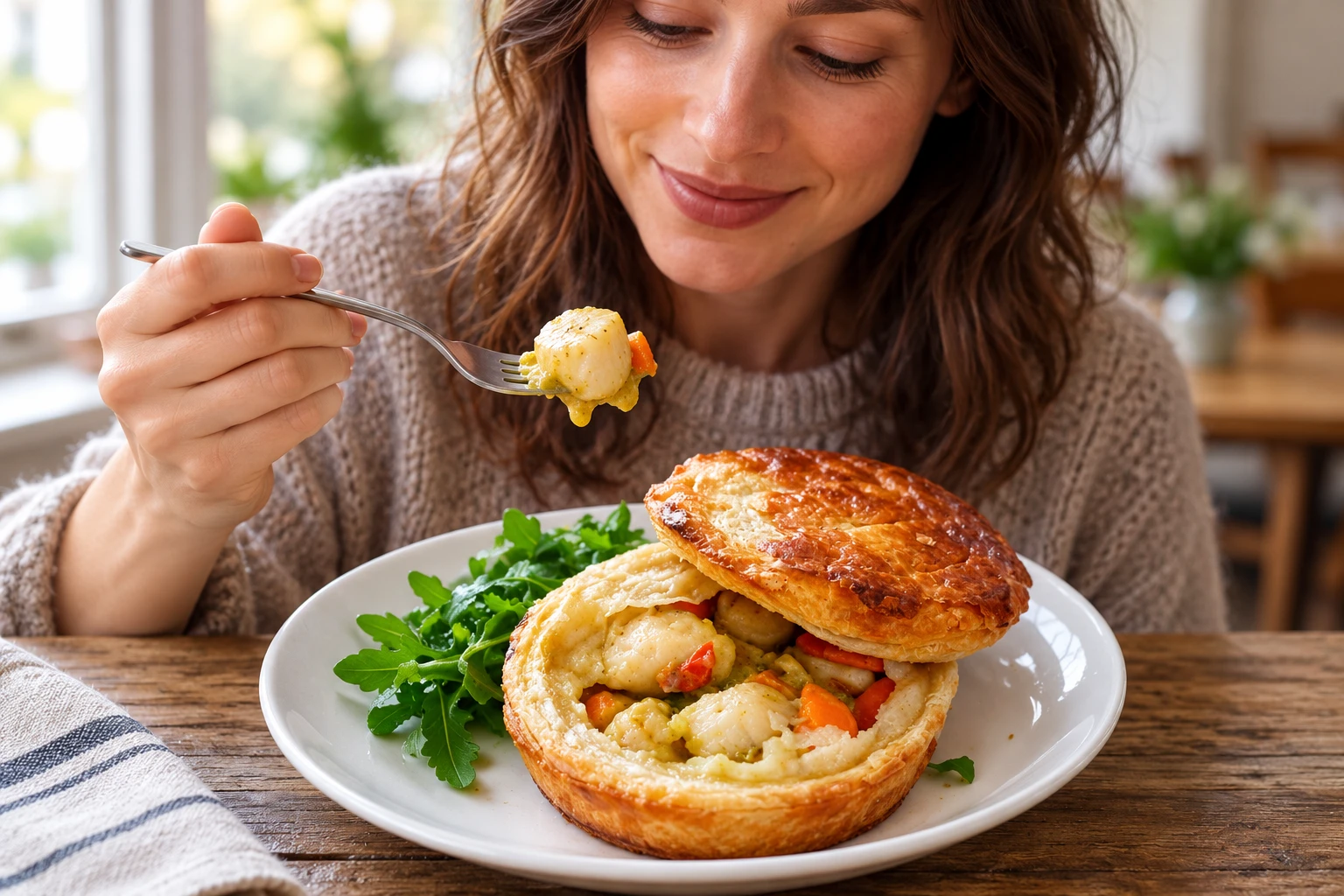
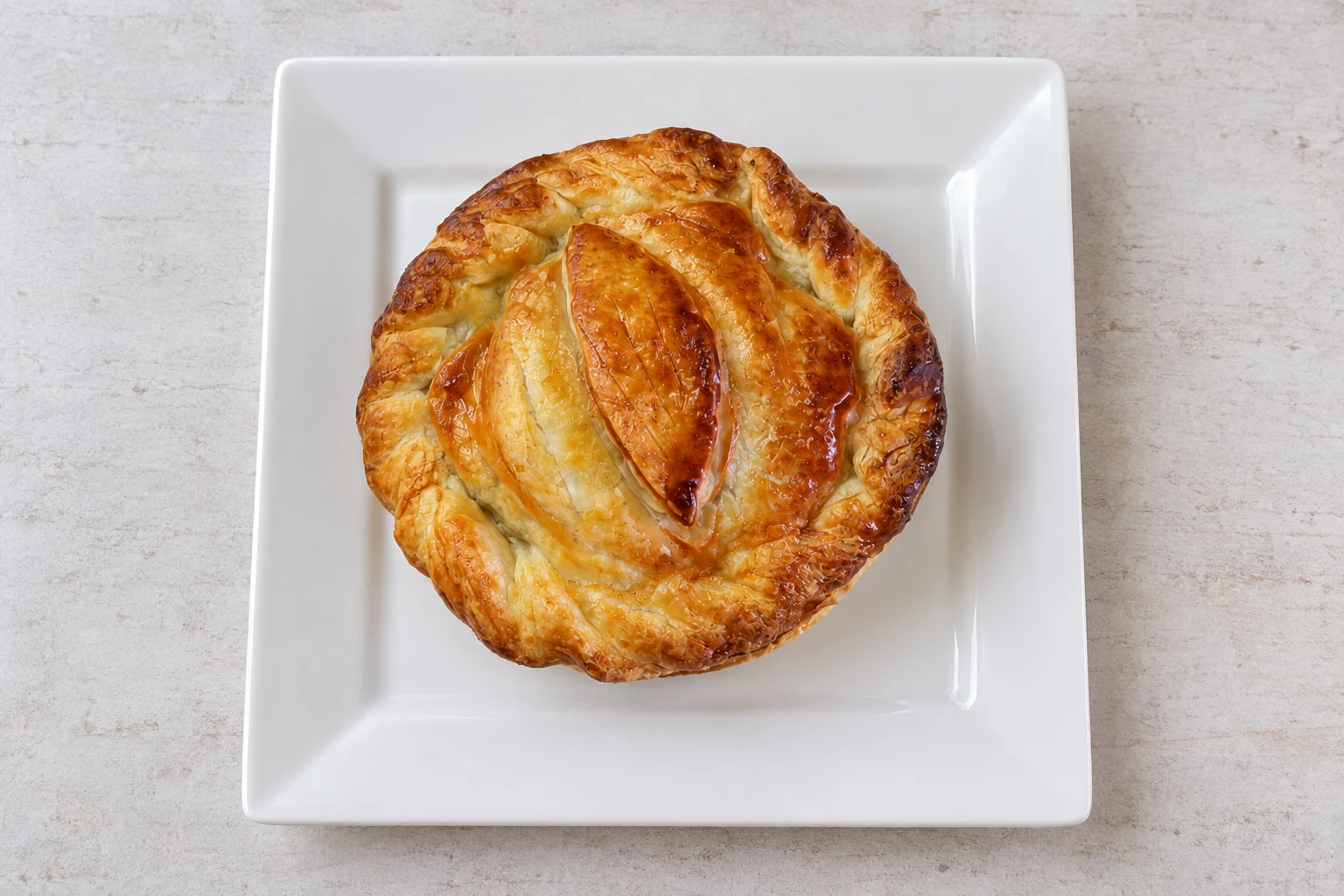
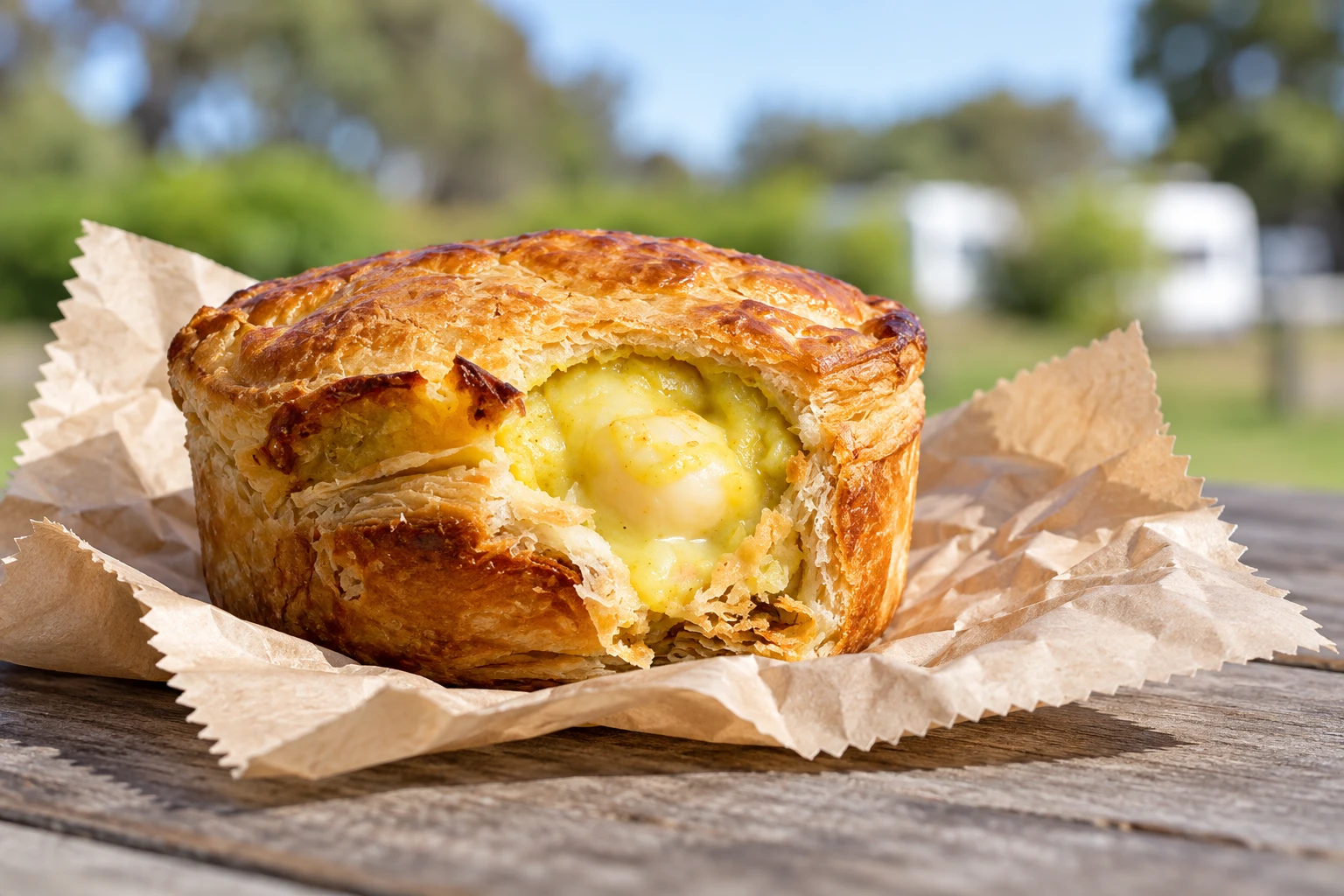
Individual puff pastry pie with scallops and a creamy curry sauce, sold in bakeries, cafés and markets across Tasmania and presented as a specialty of the island.
Traditional dish from Tasmânia
Also known as: curried scallop pie, Tassie scallop pie
Illustrative images. The pictures in this guide are illustrations based on the real place, not photographs, and may differ from it.
Click a photo to enlarge it.
Scallop pie — Tasmânia, Australia
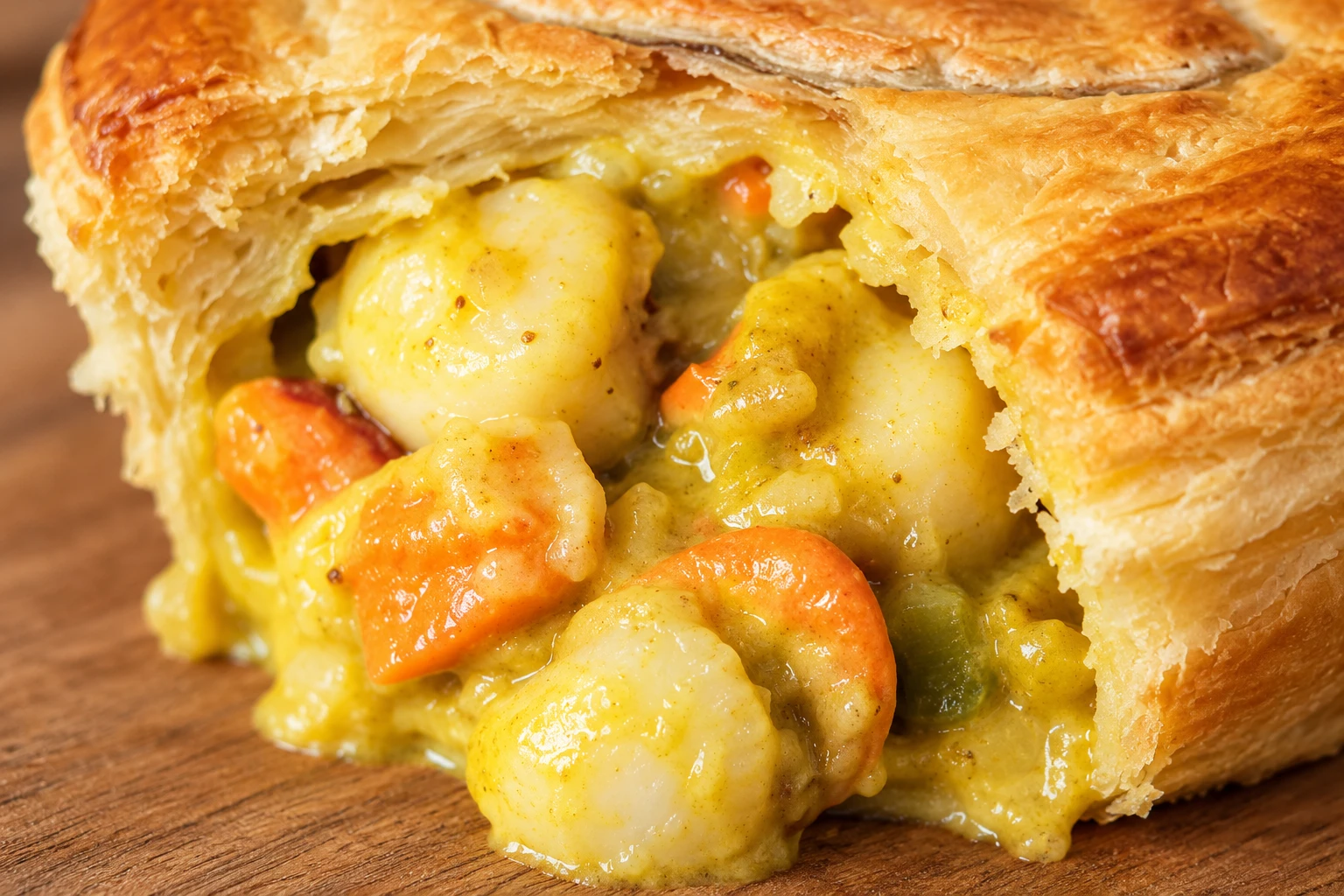
The scallop pie is an individual hand-sized puff pastry pie filled with whole scallops in a béchamel sauce seasoned with curry. The traditional curry is mild: the powder used on the island, produced in Tasmania since the 19th century, contains no cumin. Some bakeries prefer their own spice blends so as not to overpower the scallop’s flavor, and there is also a mornay version with a cheese sauce.
The scallop used is the commercial southern Australian scallop (Pecten fumatus), called lupa in palawa kani, the language of the Tasmanian Aboriginal people. Fishing began as an amateur activity in the Derwent River estuary in the early 20th century and became commercial in 1919. Since then, scallop beds have undergone long closures for recovery, and today the opening of each area depends on annual surveys. Fresh scallops typically appear in winter.
No one knows who created the pie or exactly when. scallop dishes with curry, without pastry, were already common in Tasmania in the 1920s, and recipes for the pie were sent to local newspapers in the 1930s. Some of those older recipes used bread or breadcrumbs instead of pastry. The combination in the puff pastry version brings together the British savory pie tradition, the island’s scallops, and the mild curry.
The scallop pie is sold in bakeries, cafés, markets and food trailers all around the island, from Hobart to inland towns and the east and northwest coasts. It is eaten hot, by hand as a snack, or as a meal served with chips and salad. At the Tassie Scallop Fiesta, the annual scallop festival held in Bridport in the island’s northeast, a contest chooses the best curry scallop pie.

Tasmânia
Island specialty sold in bakeries across Tasmania, with no known city of origin.
Puff pastry, whole scallops, béchamel sauce and mild curry powder; in the mornay version, cheese sauce replaces the curry.
Hot, straight from the oven, held in the hand or served on a plate with sides.
Year-round at the island’s bakeries and cafés; fresh scallops typically appear in winter, from June to August, the season of the Bridport festival.
Your questions
It’s the island’s most typical scallop savory: a crisp pastry outside and, inside, scallops in a light white curry sauce.
Yes. Many bakeries also offer an option with a white sauce gratinéed with cheese. The curry version is considered the traditional one.
No one knows for sure. Curried scallops served without pastry appear in the 1920s; recipes called scallop pie circulated in the local press in the 1930s, but not all used pastry.
Flavors of Australia

Meat pie served in a deep plate of thick pea soup, usually turned upside down and topped with tomato sauce. It was the dish of the food carts that sold late‑night food in central Adelaide since the 19th century.

Sweet yeasted dough, fried, split on the side and filled with raspberry or strawberry jam and whipped cream, with sugar on the outside. In South Australia it was called a Berliner until World War I, when it acquired the name of the British marshal Lord Kitchener.

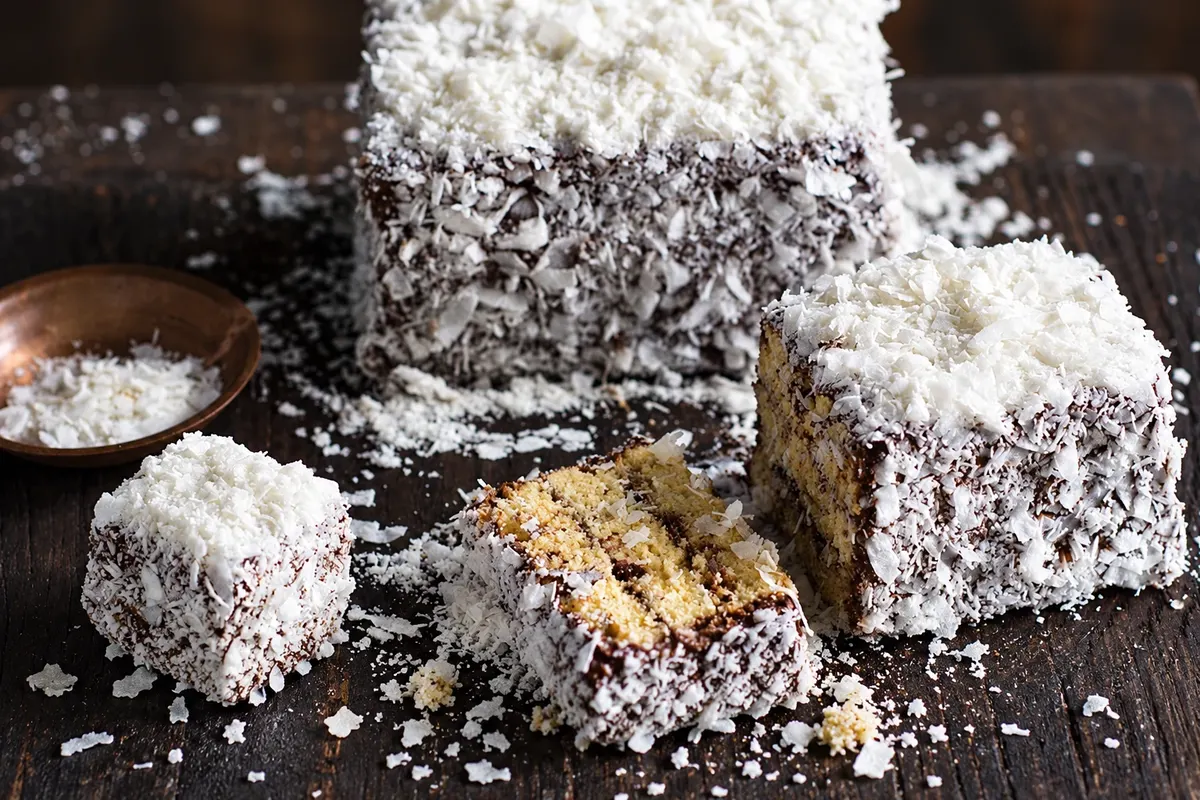
Cube of sponge cake dipped in a thin chocolate coating and then in dry shredded coconut. It is named after Lord Lamington, governor of Queensland, and the most accepted version places its creation at the governor’s official residence in Brisbane around 1900.

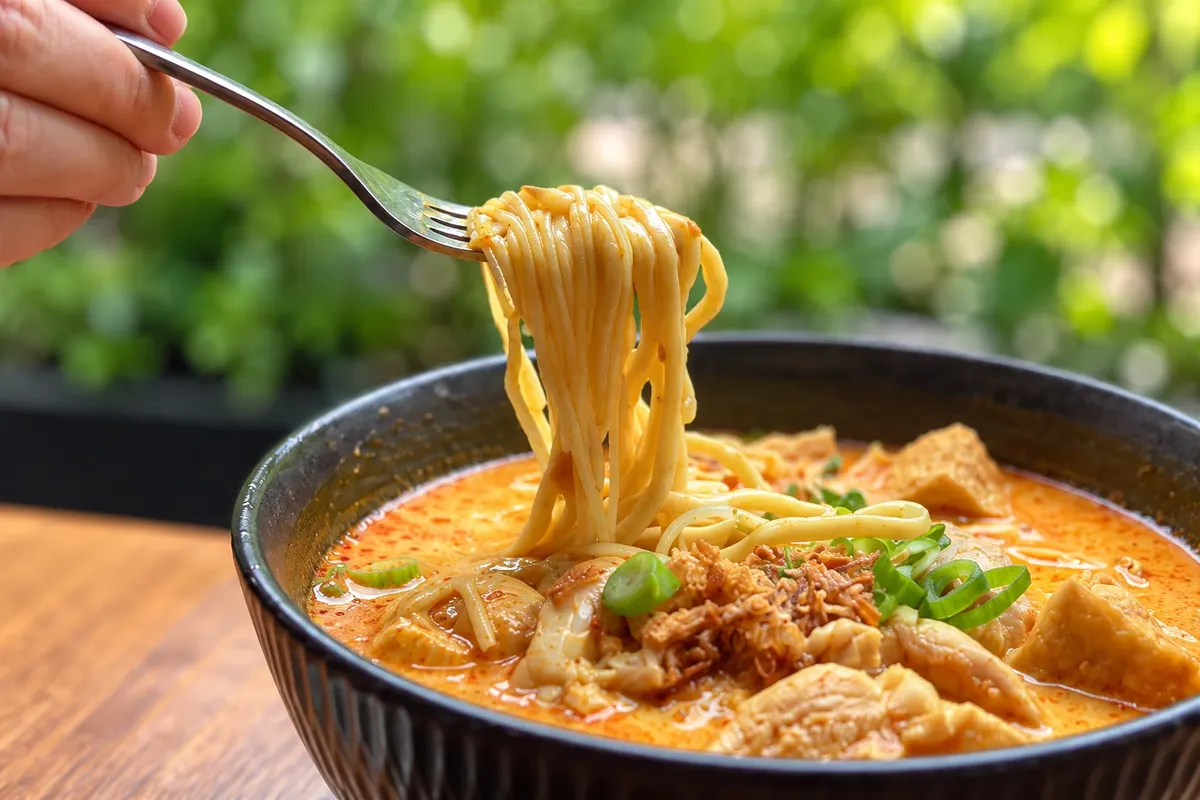
Spicy noodle soup with coconut and spices, a legacy of Peranakan cuisine. Darwin has adopted it as a city dish: it’s the weekend breakfast at the markets and it even has its own festival.

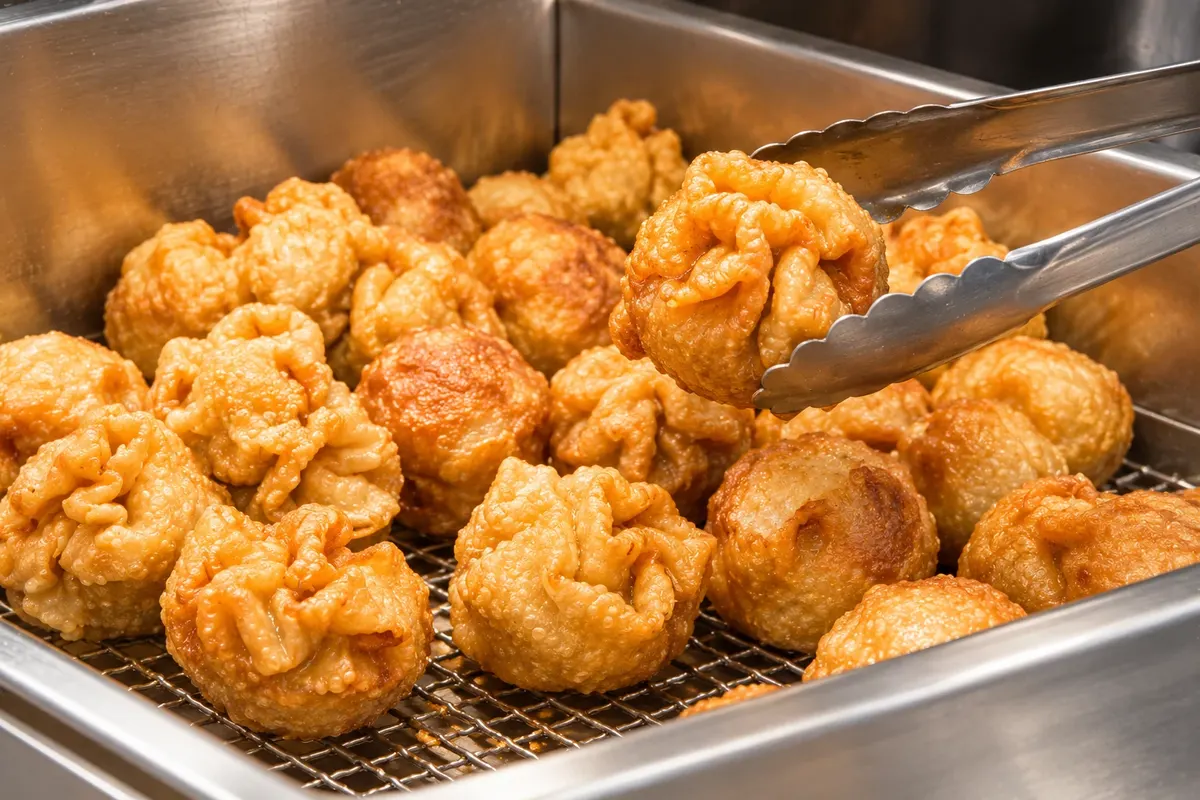
Chinese-Australian dumpling with a thick wrapper, filled with pork and vegetables, steamed or fried. It originated as an adaptation of the Cantonese siu mai made in Melbourne’s Chinatown in the 1940s and spread through the country’s fish-and-chips shops.

Espresso coffee with steamed milk and a thin layer of foam, stronger in coffee than a latte. The best-known menu record is from a café in Sydney in 1985; New Zealand contests the drink’s origin.