Pie floater
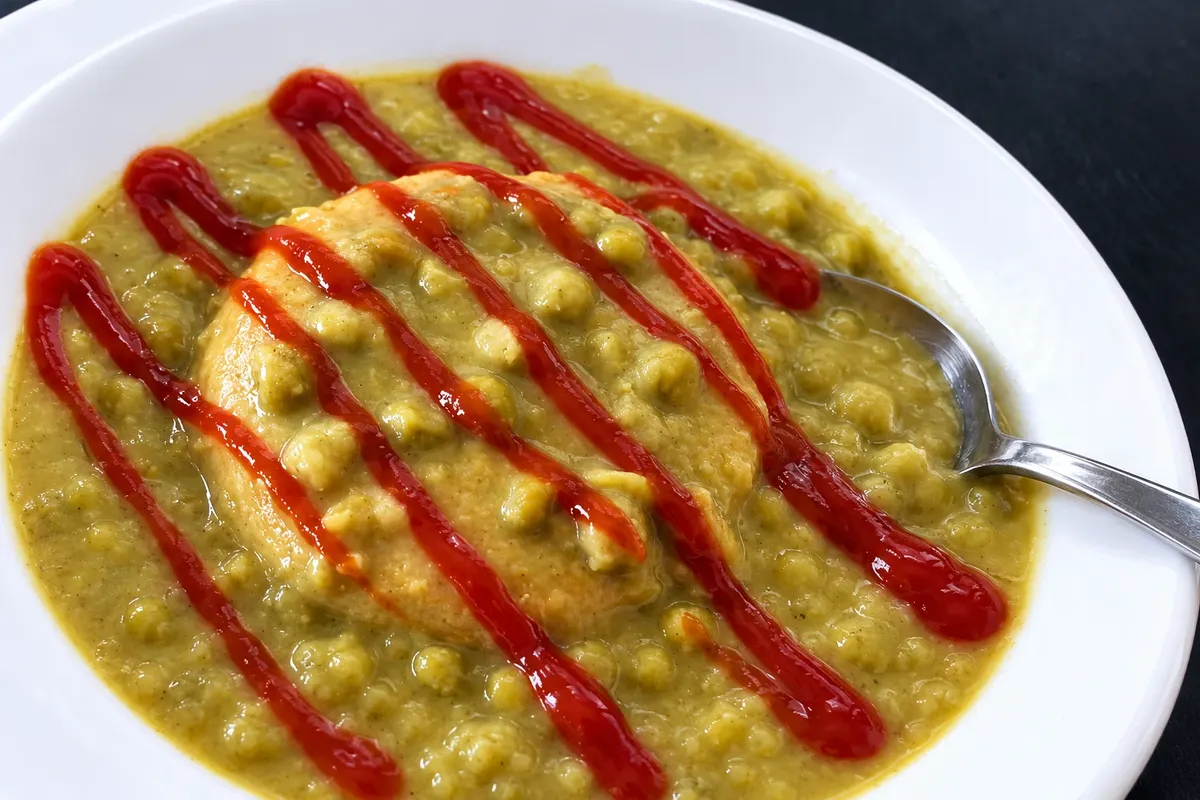
Meat pie served in a deep plate of thick pea soup, usually turned upside down and topped with tomato sauce. It was the dish of the food carts that sold late‑night food in central Adelaide since the 19th century.
Flavors · Darwin
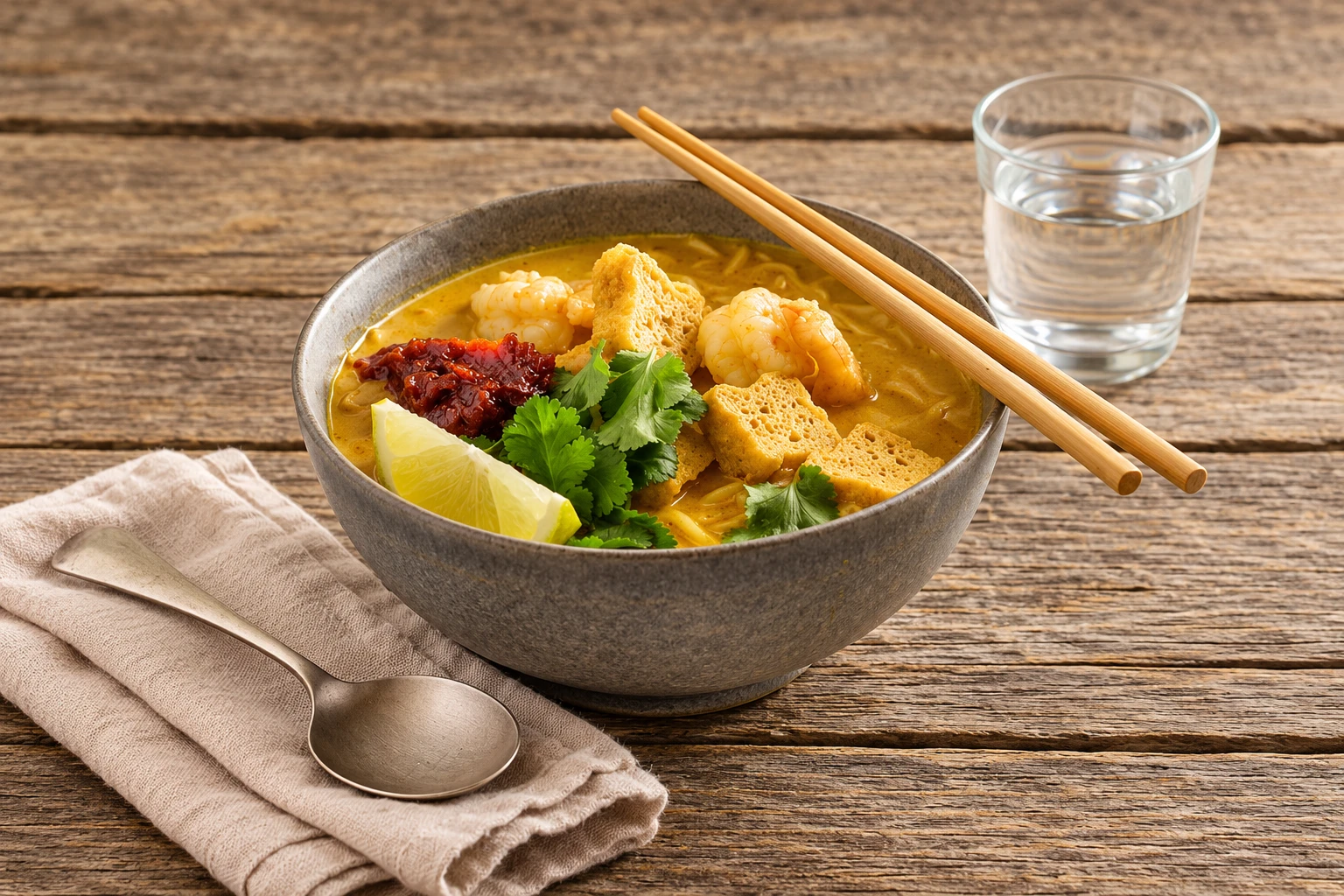
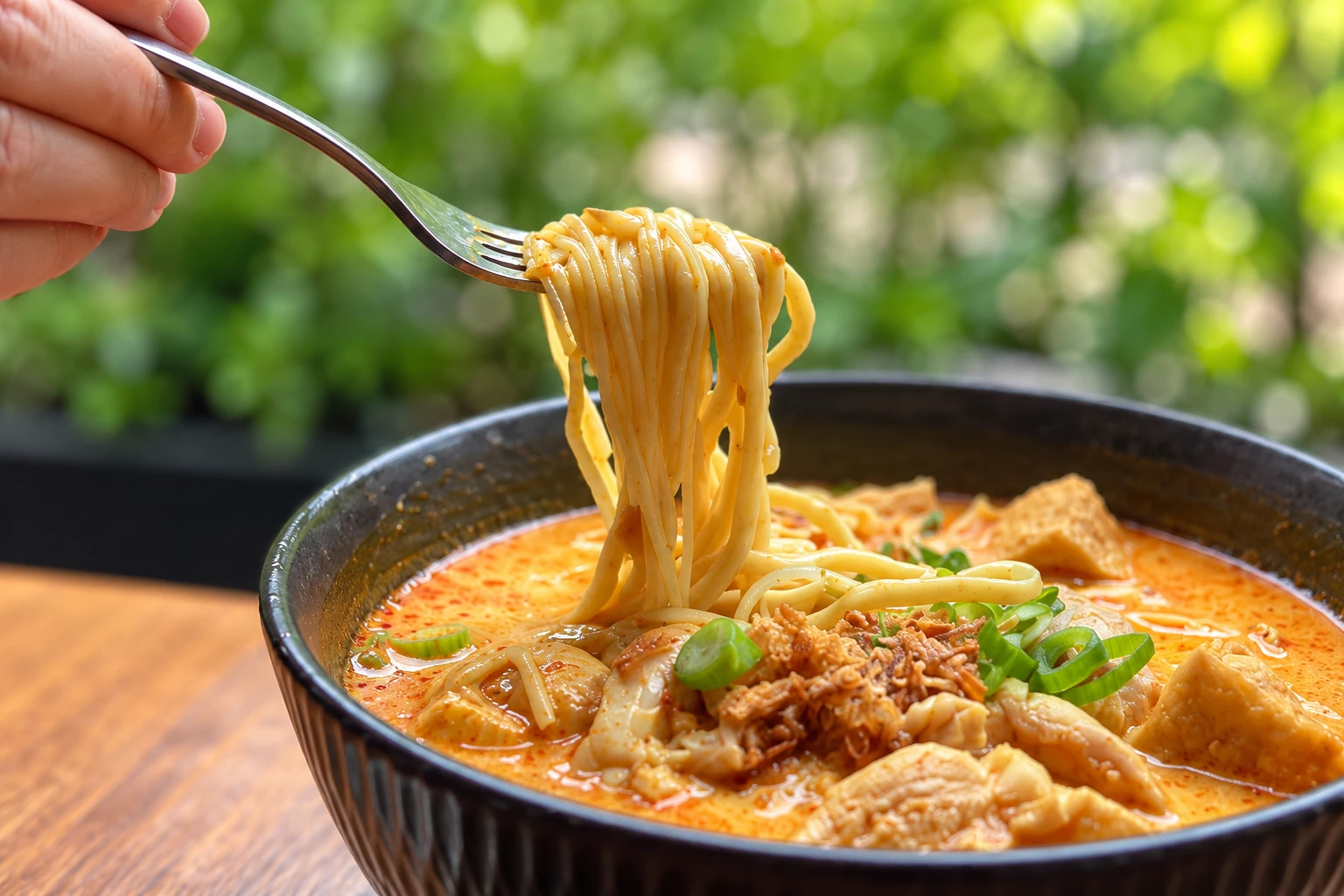
Spicy noodle soup with coconut and spices, a legacy of Peranakan cuisine. Darwin has adopted it as a city dish: it’s the weekend breakfast at the markets and it even has its own festival.
Traditional dish from Darwin, Território do Norte
Also known as: curry laksa, laksa lemak, Darwin laksa
Illustrative images. The pictures in this guide are illustrations based on the real place, not photographs, and may differ from it.
Click a photo to enlarge it.
Laksa — Darwin, Australia
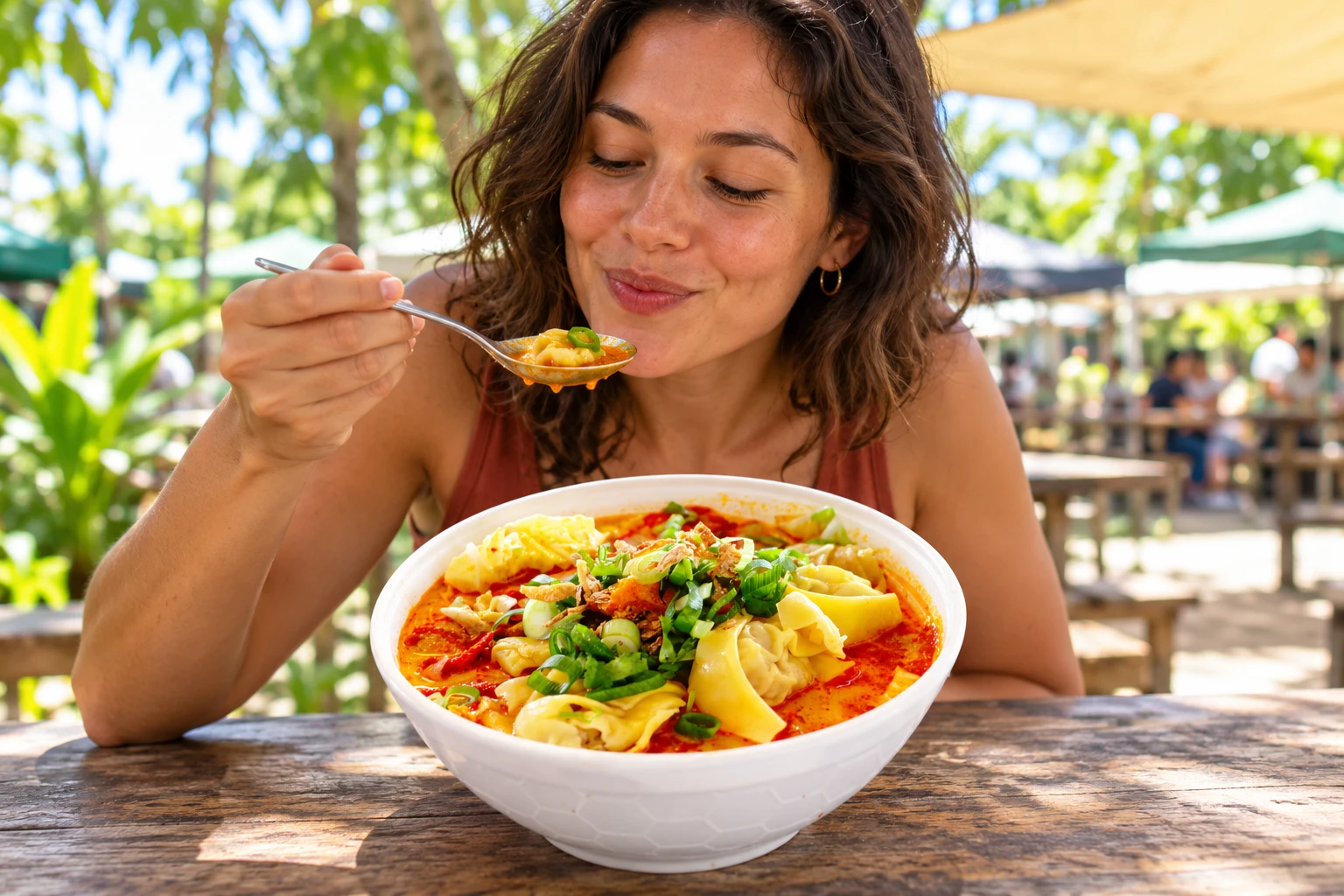
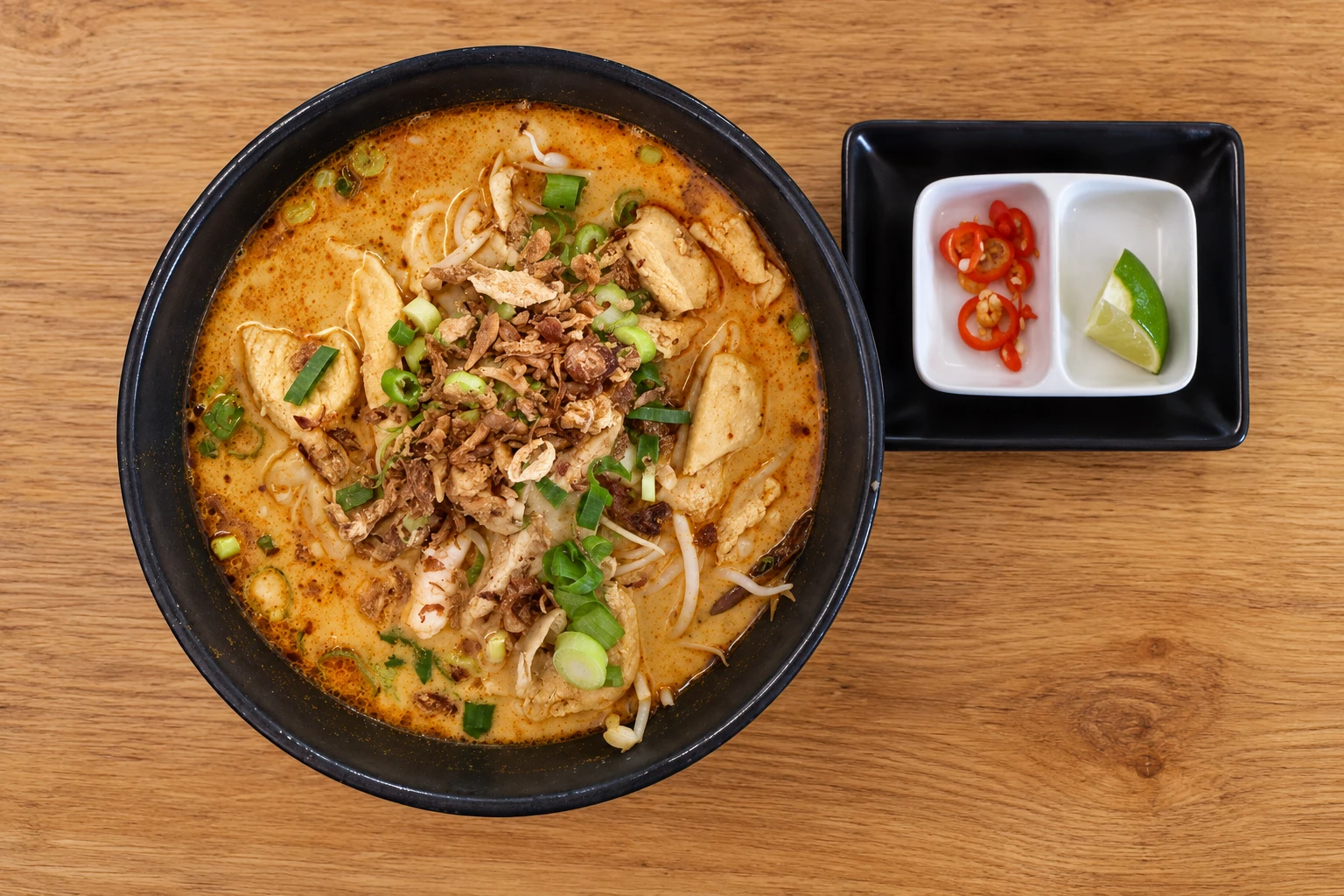
Laksa is a Southeast Asian noodle soup. In Darwin, the most common version is curry laksa: a curry broth with coconut milk, scented with lemongrass and galangal, served in a deep bowl with noodles, chicken or prawns, fish cakes, wonton, fried tofu and bean sprouts, finished with cilantro, fried shallots and chili oil. Each cook keeps their own recipe for the spice paste, and there are Malay-style and Indonesian versions, yellow-broth variants, and even ones with crocodile meat.
The dish originated with the Peranakan, communities formed by the meeting of Chinese merchants with the peoples of Malaysia, Singapore and Indonesia. There, Chinese noodles acquired chiles, spices and coconut milk. There are two main families: creamy curry laksa, and assam laksa, without coconut, with fish and tamarind, featuring a sour broth.
Laksa did not originate in Darwin, and there is no precise record of how it reached northern Australia. The city is closer to Jakarta than to Sydney and has a long history of Asian immigration. By the late 19th century the Chinese community already numbered thousands in the Northern Territory, and later families arrived from across Southeast Asia. More than three in ten residents were born outside Australia, and laksa became a dish common to all those communities.
On weekends many people have laksa for breakfast at the outdoor markets of Parap on Saturdays and Rapid Creek on Sundays. Some arrive early and bring their own bowl.
In 2019 the Territory government created the Darwin International Laksa Festival. For about a month, in October or November depending on the edition, a laksa trail runs through restaurants, stalls and cafés in the region, and on the festival day a blind tasting chooses the best version, awarded the Golden Bowl. Darwin is called Australia’s laksa capital, a phrase used by the government itself and by official tourism bodies.

Darwin , Território do Norte
Dish adopted by Darwin and its Asian communities, with an annual festival created by the Territory government in 2019.
Curry paste, coconut milk, lemongrass, galangal and chile; rice or wheat noodles; chicken, prawns, fish cakes or wonton; fried tofu, bean sprouts, boiled egg and herbs.
Very hot, in a deep bowl, eaten with a spoon and chopsticks or a fork. Condiments may be added to taste.
All year round, for breakfast or lunch; at weekend markets, especially in the morning. The festival usually takes place in October or November; check the schedule.
Your questions
In the city it is almost always curry laksa, creamy and spicy, with noodles and a topping of meat or prawns. Recipes vary from stall to stall.
No. The recipe came from Southeast Asia. Darwin adopted it because of its Asian communities, and it’s unclear exactly when it arrived in the city.
In the local spring, in October or November depending on the edition. The program includes a laksa trail and a closing festival day. Confirm the dates before you travel.
Flavors of Australia

Meat pie served in a deep plate of thick pea soup, usually turned upside down and topped with tomato sauce. It was the dish of the food carts that sold late‑night food in central Adelaide since the 19th century.

Sweet yeasted dough, fried, split on the side and filled with raspberry or strawberry jam and whipped cream, with sugar on the outside. In South Australia it was called a Berliner until World War I, when it acquired the name of the British marshal Lord Kitchener.

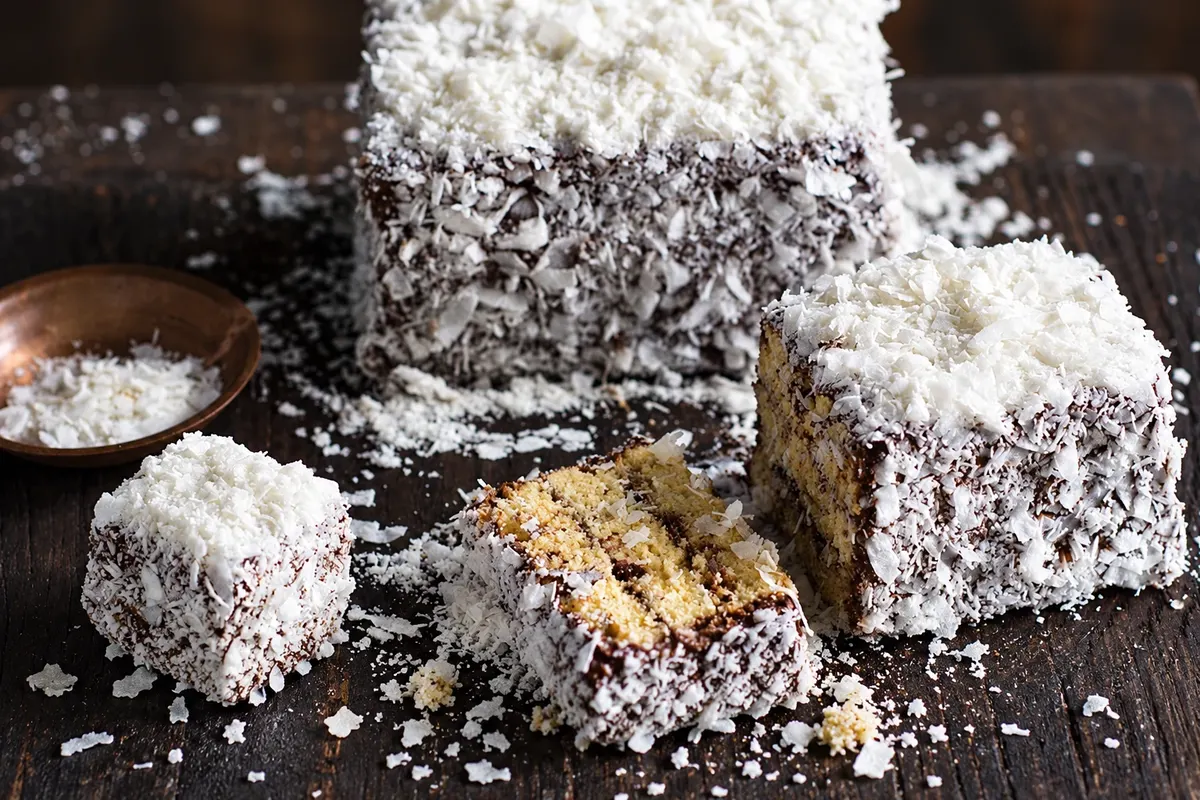
Cube of sponge cake dipped in a thin chocolate coating and then in dry shredded coconut. It is named after Lord Lamington, governor of Queensland, and the most accepted version places its creation at the governor’s official residence in Brisbane around 1900.

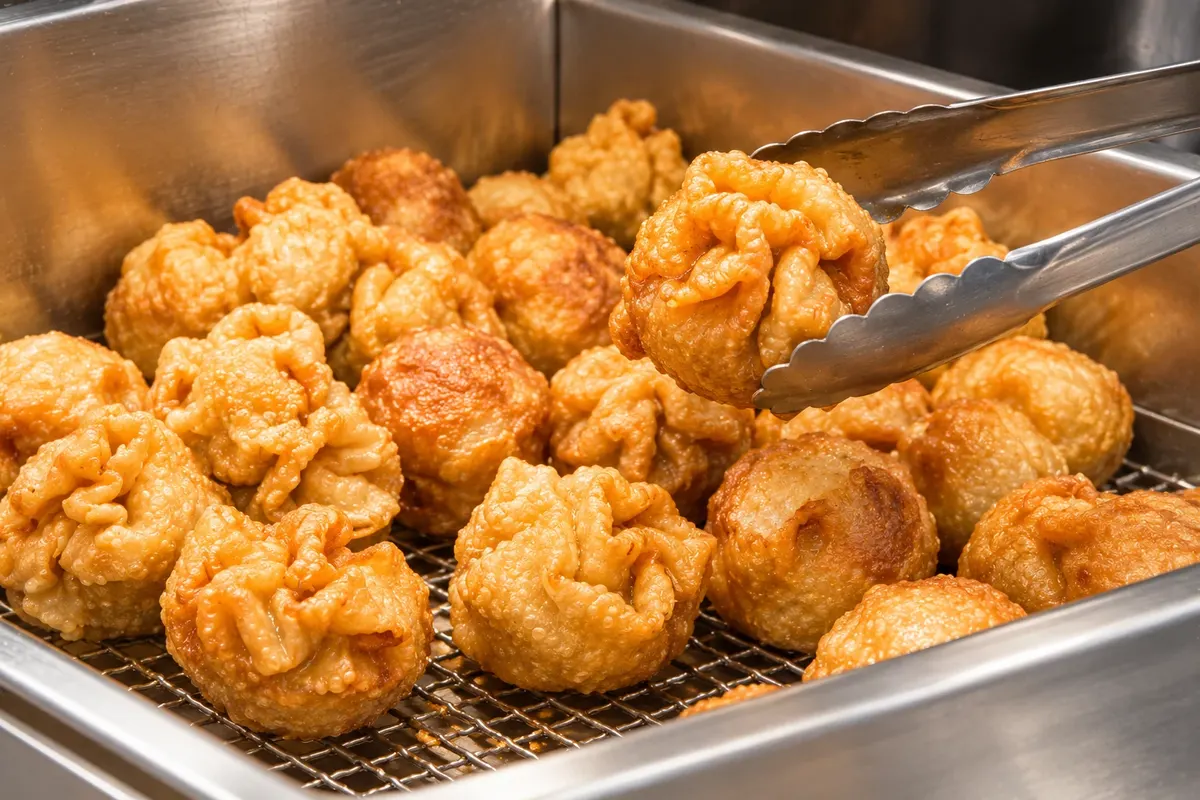
Chinese-Australian dumpling with a thick wrapper, filled with pork and vegetables, steamed or fried. It originated as an adaptation of the Cantonese siu mai made in Melbourne’s Chinatown in the 1940s and spread through the country’s fish-and-chips shops.

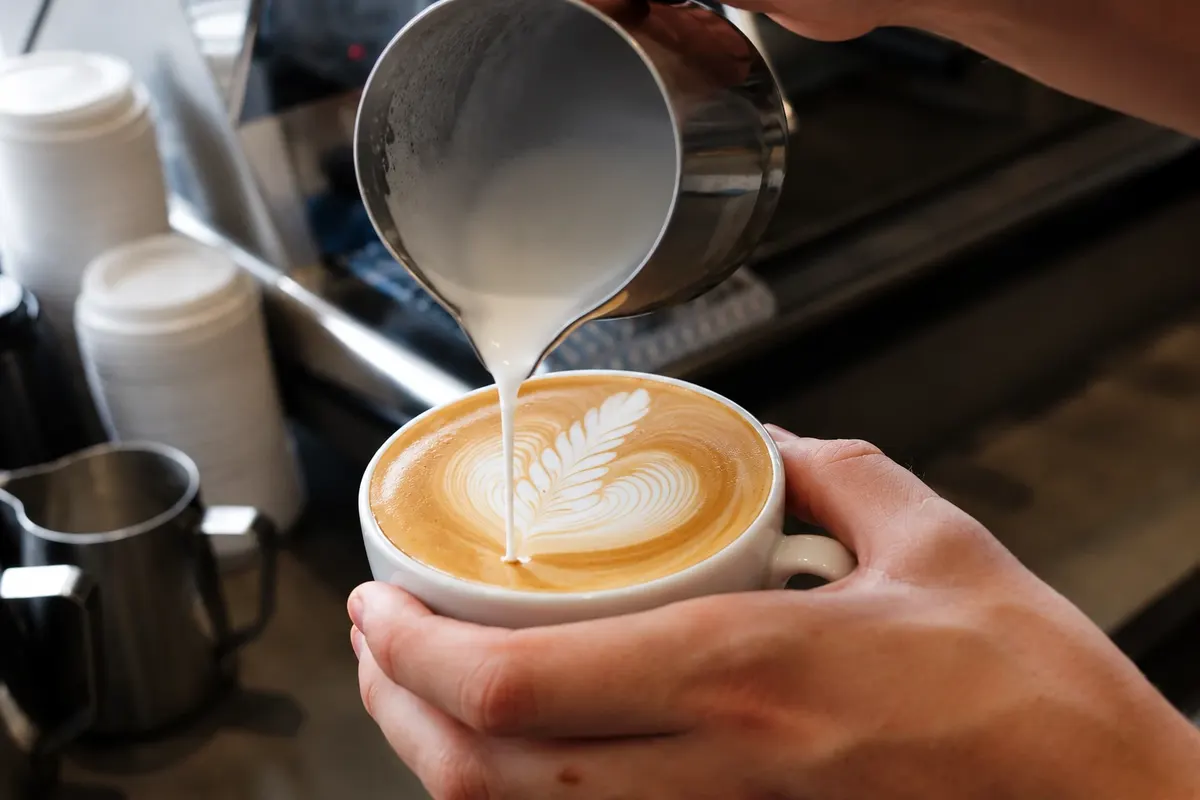
Espresso coffee with steamed milk and a thin layer of foam, stronger in coffee than a latte. The best-known menu record is from a café in Sydney in 1985; New Zealand contests the drink’s origin.

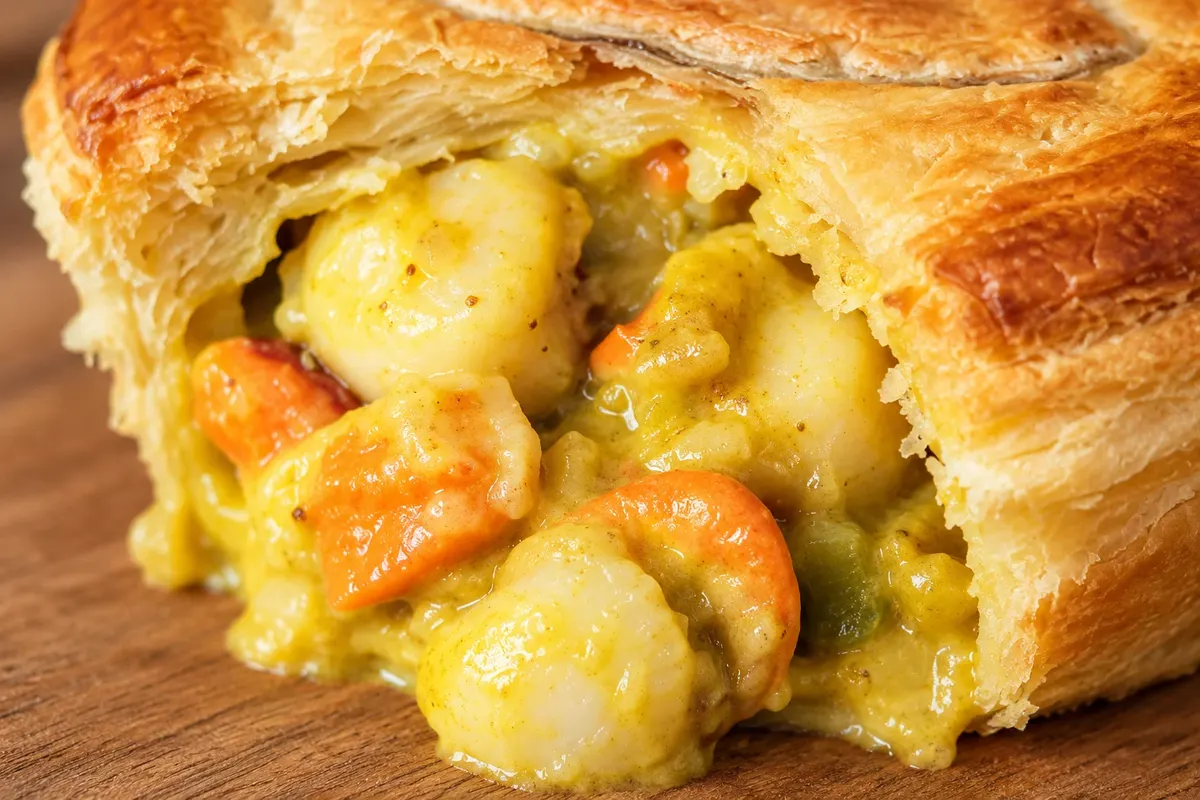
Individual puff pastry pie with scallops and a creamy curry sauce, sold in bakeries, cafés and markets across Tasmania and presented as a specialty of the island.