2 cities

 Turkey
 Brazil
 Argentina
 Bolivia
 Chile
 Colombia
 Ecuador
 Guyana
 French Guiana
 Falkland Islands (Malvinas)
 Paraguay
 Peru
 Suriname
 Uruguay
 Venezuela
 Germany
 Austria
 Belgium
 Croatia
 Denmark
 Spain
 Finland
 France
 Greece
 the Netherlands
 Hungary
 Ireland
 Iceland
 Italy
 Luxembourg
 Norway
 Poland
 Portugal
 the United Kingdom
 the Czech Republic
 Sweden
 SwitzerlandTurkey
 the Dominican Republic
 Fiji
Province · Sudeste da Anatólia (Mesopotâmia)
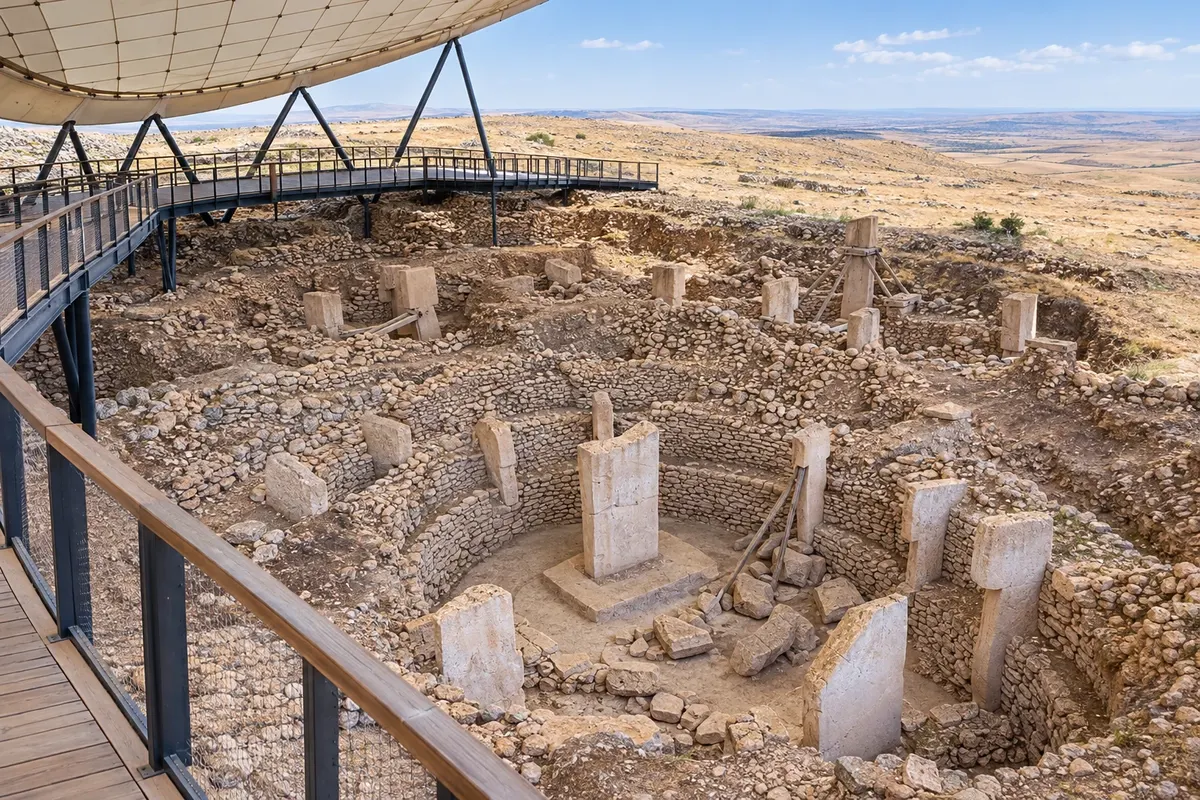
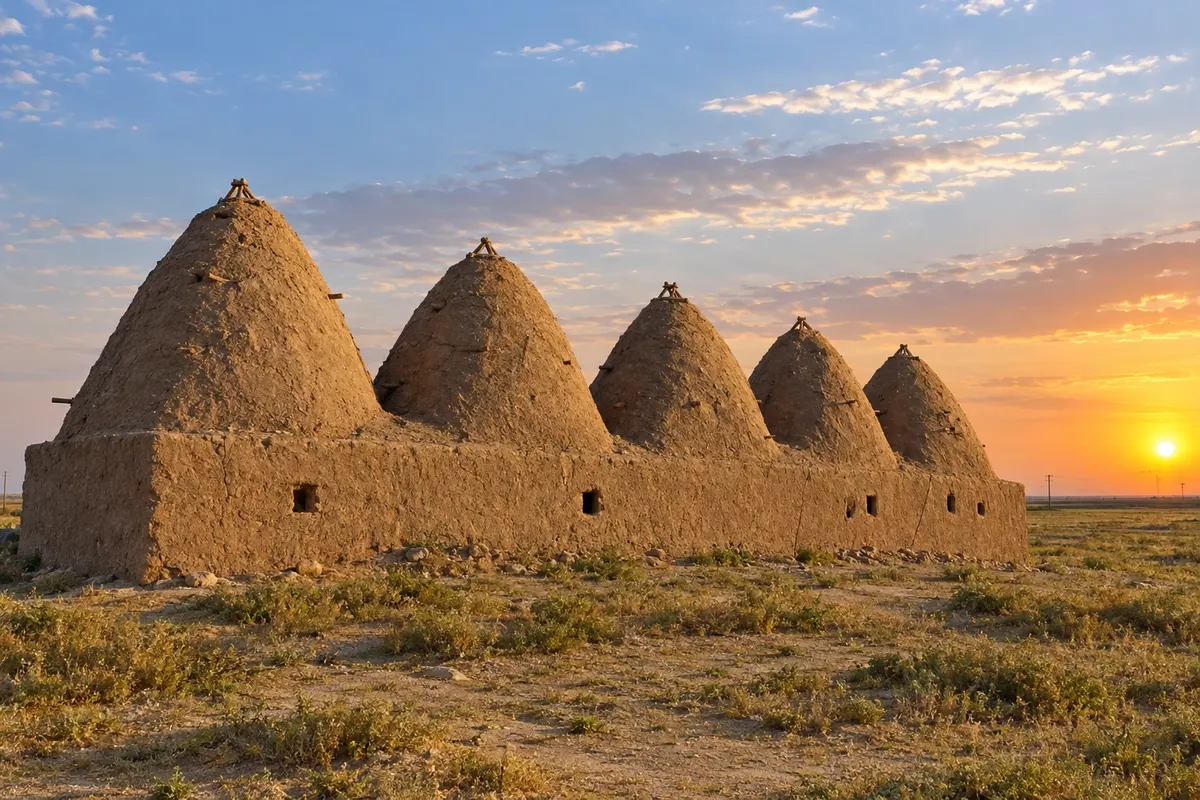
Şanlıurfa has Göbekli Tepe, a sanctuary of stone pillars about 11,000 years old and a World Heritage Site, the Balıklıgöl lagoon, the beehive houses of Harran and the boats of Halfeti.
In the photo: Beehive houses of Harran
Illustrative images. The pictures in this guide are illustrations based on the real place, not photographs, and may differ from it.

The province
Şanlıurfa, ancient Edessa, also called Urfa, lies beside the Harran plain, irrigated by the waters of the Euphrates. Local tradition links the city to the prophet Abraham: Balıklıgöl, the lagoon of carp considered sacred, sits in a park at the foot of the citadel, surrounded by mosques and madrasas.
About 15 km away, Göbekli Tepe has circular enclosures of T-shaped stone pillars with animal reliefs, erected roughly 11,000 years ago; it is a UNESCO World Heritage Site. The Şanlıurfa Museum, one of the country's largest, and the Haleplibahçe Mosaic Museum help explain the site and other Neolithic settlements in the region.
To the south, Harran has mud-brick houses with domed roofs, the so-called beehive houses, the tower of the Great Mosque and the ruins of one of the oldest cities in Mesopotamia. To the northwest, Halfeti, on the shore of the Birecik dam lake, offers boat trips to Rumkale and the village of Savaşan, with a minaret rising from the water; karagül, a rose with almost black petals, is cultivated there.
The cuisine is spicy: isot, a dark local pepper, seasons çiğ köfte and kebabs. The sıra geceleri, nights of music and conversation, preserve Urfa’s musical tradition.
Destinations
Cities
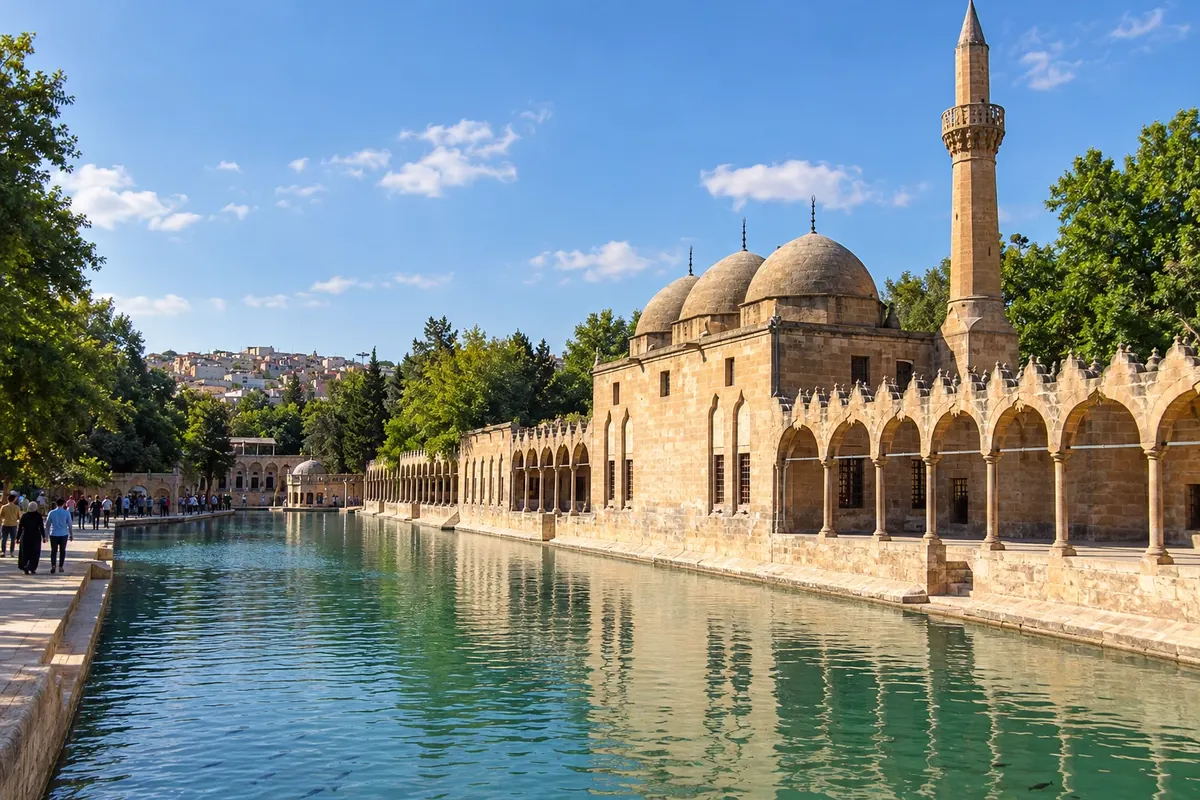
Şanlıurfa brings together the Balıklıgöl lagoon, archaeological museums and access to Göbekli Tepe. The old quarter allows walking among religious spaces and commercial streets; the museums help interpret the long human occupation of the region.
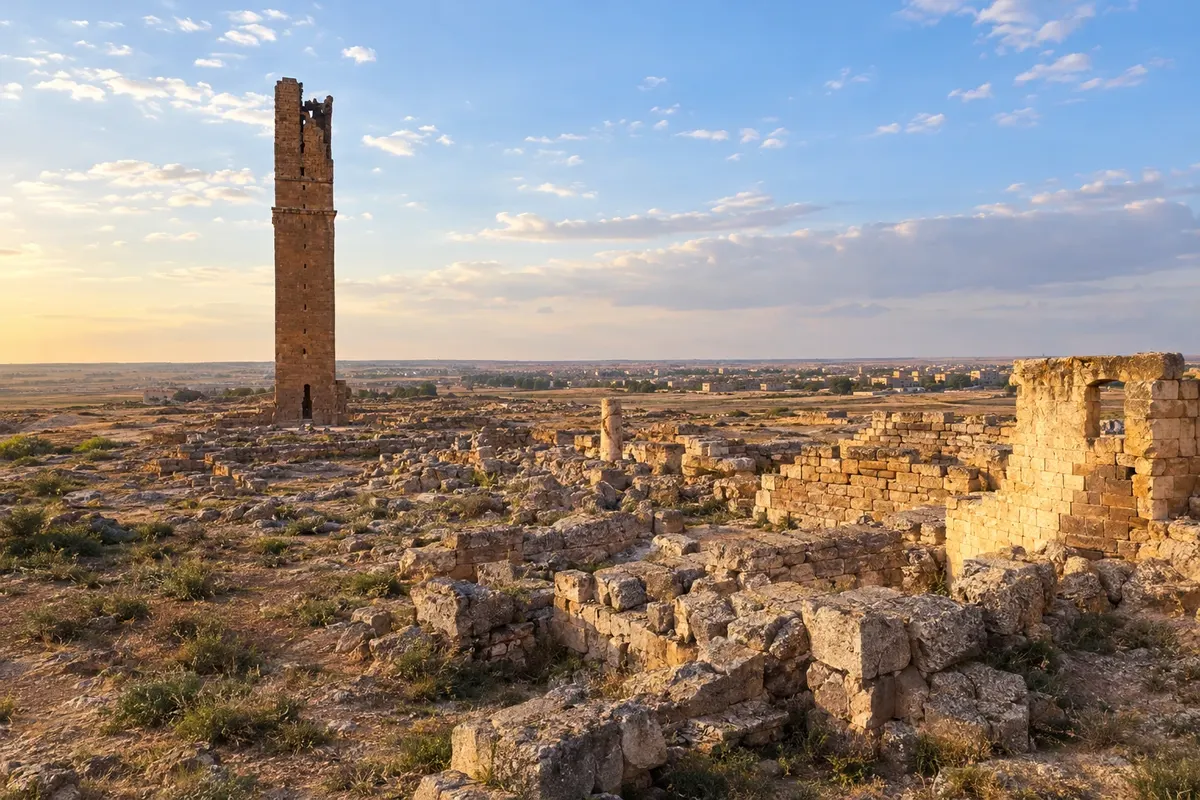
Harran combines remains of an ancient city with traditional cone‑roofed houses. The open, dry terrain differs from the more compact streets of Şanlıurfa. The visit requires seeing both the form of the dwellings and the archaeological structures of the settlement.
March to May and October to November bring milder days for the outdoor sites. From June to September the heat is strong on the plains; visit Göbekli Tepe and Harran early. Halfeti's karagül typically blooms in spring and autumn.
Şanlıurfa GAP Airport (GNY) is about 35 km from the center. Göbekli Tepe and Harran are less than an hour's drive away; Halfeti is about an hour and a half. For Mount Nemrut in Adıyaman, allow roughly three hours by road.
Your questions
Two to three hours for the visitor centre and the walkway over the enclosures. Combine it with the city museum, which has replicas and finds from the site.
Yes, by car or on a tour from Şanlıurfa. Start early to avoid the heat in the open areas.
It is an evening of conversation, food and traditional Urfa music, featuring string and percussion instruments, held in homes or restaurants that arrange sessions for visitors.
Two days for the city, Göbekli Tepe and Harran; three to include Halfeti. Many itineraries then continue on to Nemrut and to Mardin.