2 cities

 Turkey
 Brazil
 Argentina
 Bolivia
 Chile
 Colombia
 Ecuador
 Guyana
 French Guiana
 Falkland Islands (Malvinas)
 Paraguay
 Peru
 Suriname
 Uruguay
 Venezuela
 Germany
 Austria
 Belgium
 Croatia
 Denmark
 Spain
 Finland
 France
 Greece
 the Netherlands
 Hungary
 Ireland
 Iceland
 Italy
 Luxembourg
 Norway
 Poland
 Portugal
 the United Kingdom
 the Czech Republic
 Sweden
 SwitzerlandTurkey
 the Dominican Republic
 Fiji
Province · Istambul
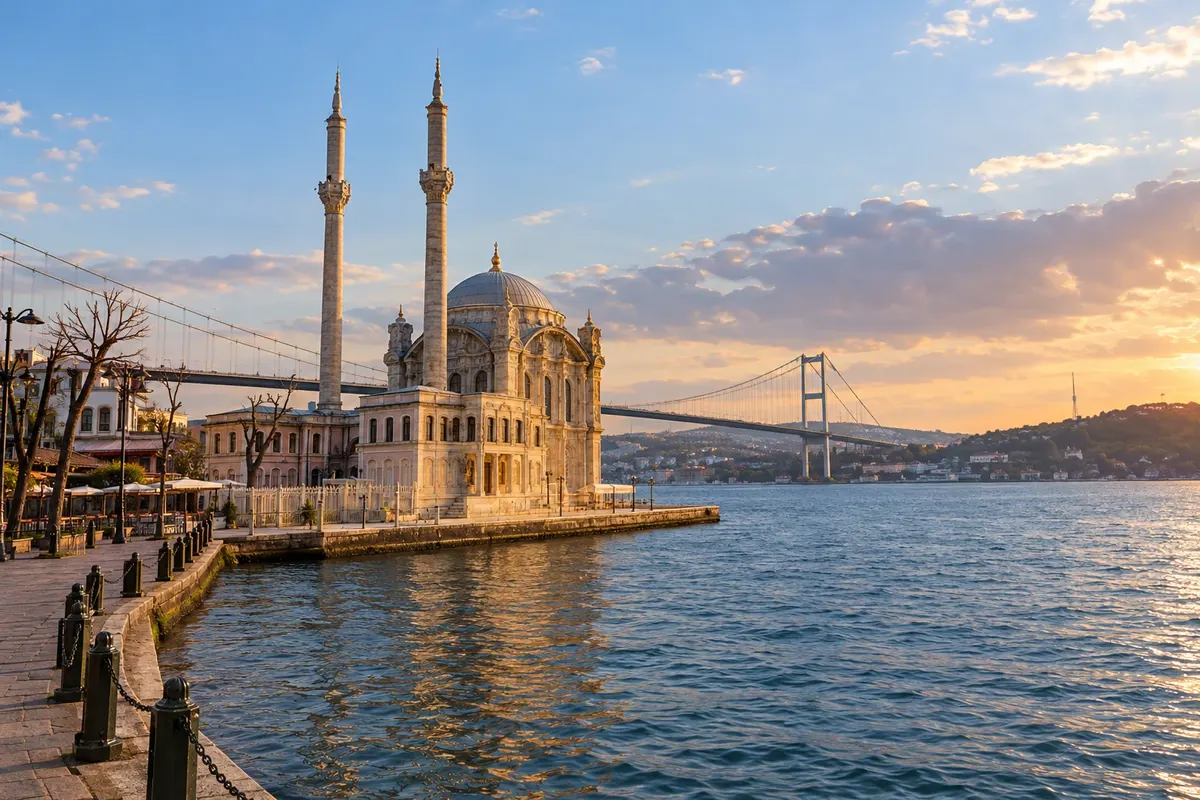
Istanbul is split between Europe and Asia, with the Bosphorus in the middle: Hagia Sophia, Ottoman palaces, bazaars and ferries that cross from one side of the city to the other.
In the photo: Ortaköy Mosque and the bridge over the Bosphorus, Istanbul
Illustrative images. The pictures in this guide are illustrations based on the real place, not photographs, and may differ from it.

The province
The province of Istanbul (İstanbul) occupies both banks of the Bosphorus, the strait that links the Black Sea to the Sea of Marmara and separates Europe from Asia. It is Turkey’s largest city and the entry point for most trips to the country. The historic center is on the European side, between the Sea of Marmara and the Golden Horn.
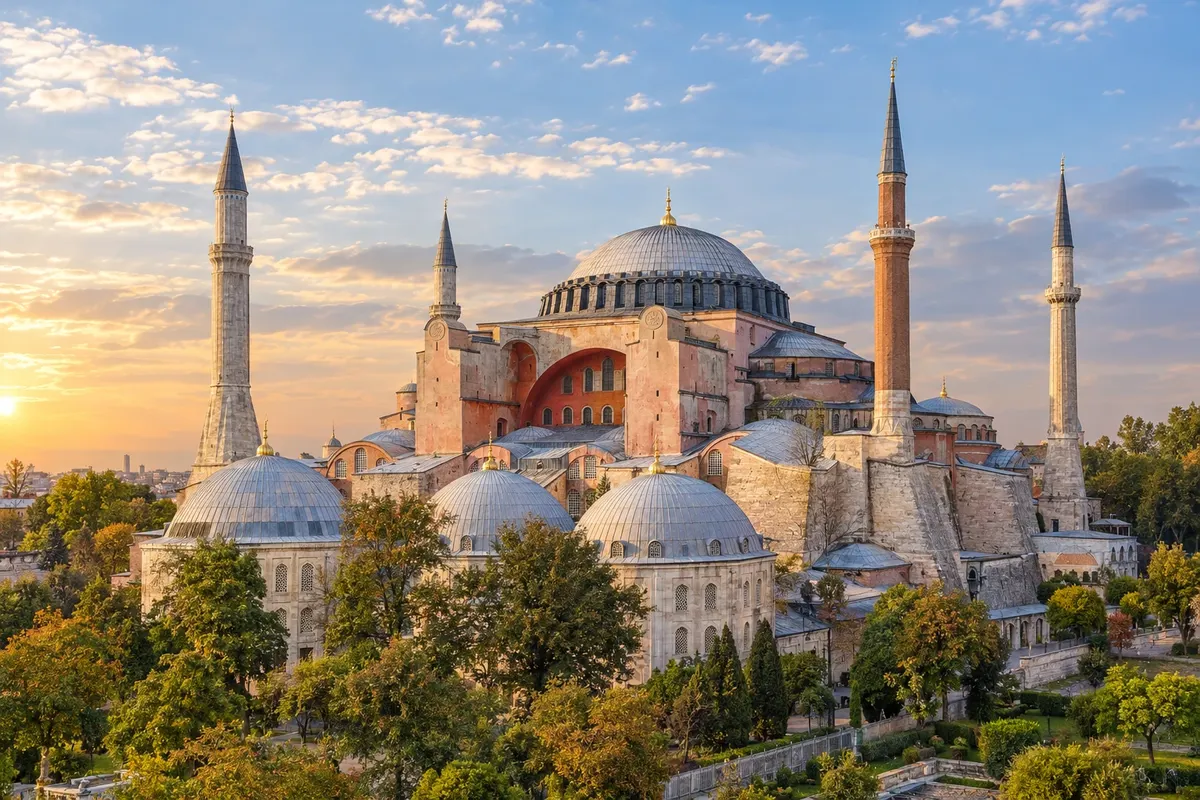
The city was Byzantium, then Constantinople, capital of the Byzantine Empire, and from 1453 the capital of the Ottoman Empire. From that history remain Hagia Sophia (Ayasofya), the Blue Mosque, Topkapı Palace, the Basilica Cistern and the Süleymaniye Mosque, which are part of Istanbul’s historic areas, a UNESCO World Heritage site.
Commerce continues in the same places as centuries ago: the Grand Bazaar (Kapalıçarşı) and the Spice Market. On the other side of the Golden Horn, the Galata Tower and İstiklal Avenue lead to Beyoğlu; on the Bosphorus shores are the Dolmabahçe and Beylerbeyi palaces. On the Asian shore, Kadıköy and Üsküdar are reached by ferry.
On the table, the Turkish breakfast (kahvaltı), meze, balık ekmek, a fish sandwich sold by the piers, and simit, the sesame ring sold on the streets. Tea served in a small glass accompanies the entire day.
Beyond the city, the province includes the Princes’ Islands in the Sea of Marmara. Büyükada, the largest of them, can be visited on a day trip by ferry from Istanbul’s piers.
Destinations
Cities
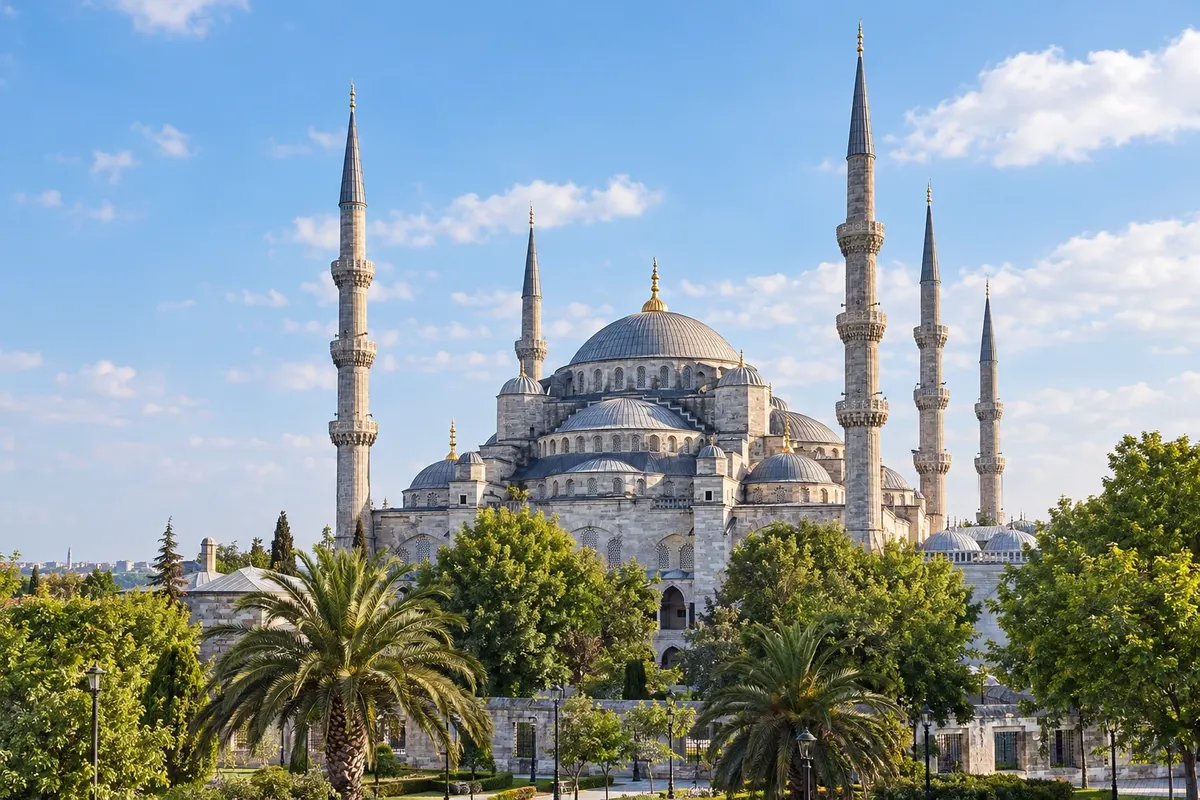
Istanbul spreads across Europe and Asia, with the Bosphorus between its shores. Sultanahmet concentrates Hagia Sophia, the Blue Mosque, Topkapı and the Basilica Cistern; Galata, Beyoğlu and the Asian neighborhoods expand the route. Turkey’s largest city serves as a gateway and requires planning days by area, using rail transit and ferries.
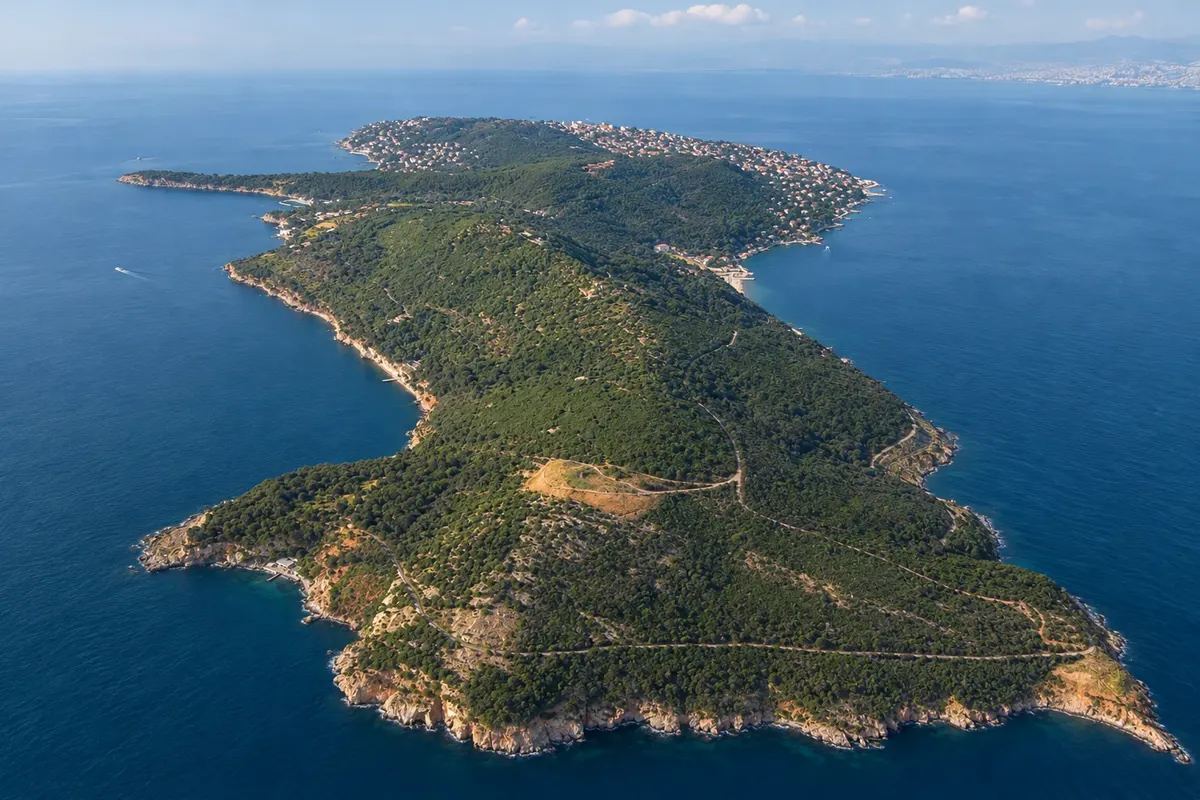
Büyükada is the largest of the Princes’ Islands in the Sea of Marmara. The ferry lands near the shopping streets and wooden houses; from there, tree-lined paths rise into the interior. It’s a base for walking and changing the pace of the trip, with routes that should be chosen according to willingness to tackle the hills.
From April to June and from September to October temperatures are usually milder for walking. July and August are hot and humid, with long days. From December to February winter tends to be cold and rainy, and in some years it snows. The seasons are reversed compared with Brazil.
Istanbul has two international airports: Istanbul Airport (IST), on the European side, and Sabiha Gökçen (SAW), on the Asian side. Connections with Brazil may be direct or with a stopover, depending on the season and airline. Check before booking. From both airports there are metro, bus and taxi connections to the city. The high-speed train (YHT) links Istanbul with Ankara, Eskişehir and Konya, and long-distance buses depart for the whole country. The Marmaray, a train that passes under the Bosphorus, connects the two sides of the city.
Your questions
Four to six days allow you to see the historic peninsula (Hagia Sophia, the Blue Mosque, Topkapı and the Grand Bazaar), Galata and Beyoğlu, a Bosphorus cruise and the Asian shore. With an extra day you can include Büyükada in the Princes’ Islands.
Istanbul Airport (IST) is on the European side, the same as the historic peninsula, Galata and Beyoğlu. Sabiha Gökçen (SAW) is on the Asian side and is usually more convenient for those staying in Kadıköy or Üsküdar. In both cases, allow for traffic when estimating transfer times.
Public ferries cross the Bosphorus between piers such as Eminönü, Karaköy, Beşiktaş, Kadıköy and Üsküdar. The Marmaray passes under the strait, and the Bosphorus bridges carry cars and buses.
In mosques, women cover their heads and everyone enters with shoulders and knees covered, and without shoes. At the most visited ones, like the Blue Mosque, there are often scarves available at the entrance. Tourist visits may be restricted during prayer times: check before going.
Tram, metro, funicular, bus and ferries form an integrated network, paid with the city transport card (İstanbulkart), rechargeable at machines in stations. In the historic peninsula, the T1 tram runs through Sultanahmet and the Grand Bazaar.
For those with five days or more, yes. Büyükada, the largest of the islands, has wooden mansions, churches and monasteries and is explored on foot or by bicycle, without the city’s traffic. Ferries depart from piers such as Kabataş and Bostancı.