9 cities

 Turkey
 Brazil
 Argentina
 Bolivia
 Chile
 Colombia
 Ecuador
 Guyana
 French Guiana
 Falkland Islands (Malvinas)
 Paraguay
 Peru
 Suriname
 Uruguay
 Venezuela
 Germany
 Austria
 Belgium
 Croatia
 Denmark
 Spain
 Finland
 France
 Greece
 the Netherlands
 Hungary
 Ireland
 Iceland
 Italy
 Luxembourg
 Norway
 Poland
 Portugal
 the United Kingdom
 the Czech Republic
 Sweden
 SwitzerlandTurkey
 the Dominican Republic
 Fiji
Province · Capadócia
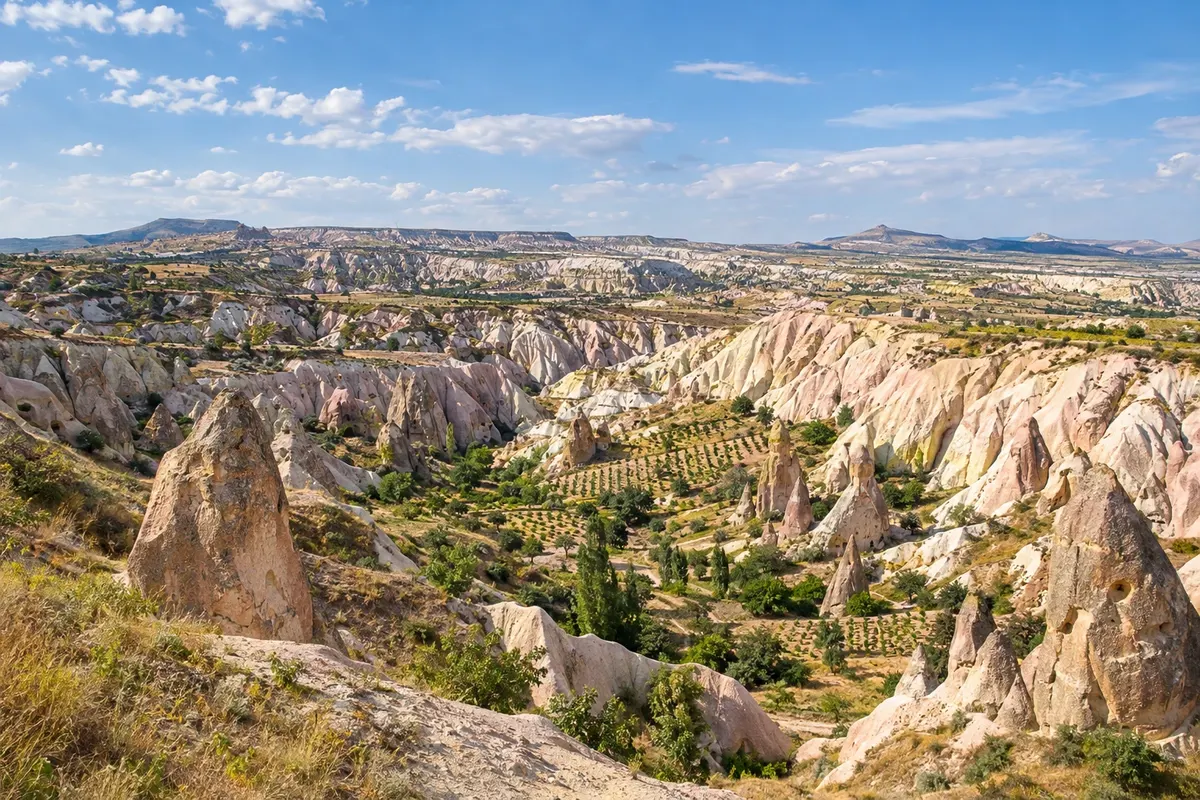
Nevşehir is the heart of Cappadocia, with Göreme’s fairy chimneys, rock‑cut churches, underground cities and the balloons that rise at dawn when weather permits.
Illustrative images. The pictures in this guide are illustrations based on the real place, not photographs, and may differ from it.

The province
The province of Nevşehir occupies the center of Cappadocia, a region of plateaus formed by the ash of ancient volcanoes like Erciyes and Hasan. Rain and wind carved the soft rock into valleys, cones and columns—the fairy chimneys—and for centuries locals dug homes, dovecotes and churches into them. Göreme National Park and the rock sites of Cappadocia are a UNESCO World Heritage Site.
Göreme is the base for most travelers. The Göreme Open‑Air Museum gathers churches with Byzantine frescoes, and nearby are the Red Valley (Kızılçukur) and the Love Valley (Aşk Vadisi). Uçhisar has a rock fortress overlooking the region and the Pigeon Valley; Ortahisar, another fortress in the village center. In Avanos, on the banks of the Kızılırmak river, pottery is the local tradition, and close by are Paşabağları, with multi‑capped chimneys, and the open‑air museum of Zelve. Çavuşin has an old village carved into the hillside.
Ürgüp concentrates the Three Beauties (Üç Güzeller) and wineries that keep Cappadocia’s wine tradition; Mustafapaşa preserves stone houses of former Greek families. To the south, the underground cities of Derinkuyu and Kaymaklı descend several levels below ground, with tunnels, stables and wheel‑shaped stone doors.
Balloon flights launch before sunrise for much of the year but depend on the wind and are canceled in bad weather. At the table, testi kebabı is cooked in a sealed clay pot that is broken in front of the diner. To the north, Hacıbektaş preserves the Hacı Bektaş Veli complex, the historical center of the Bektashi tradition.
Destinations
Cities
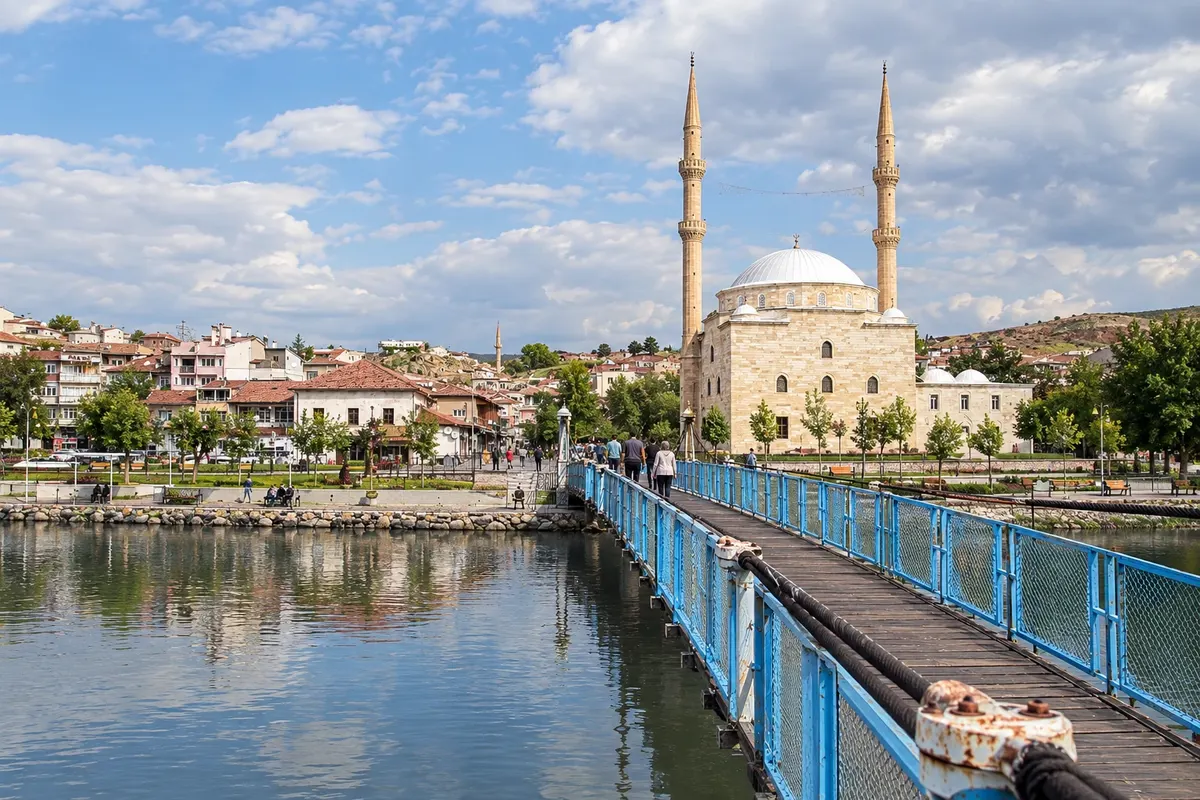
Avanos developed along the Kızılırmak River and is known for pottery. The urban core has workshops and streets to stroll; nearby, Paşabağ and Zelve show other forms of occupation and erosion of Cappadocia’s rock.
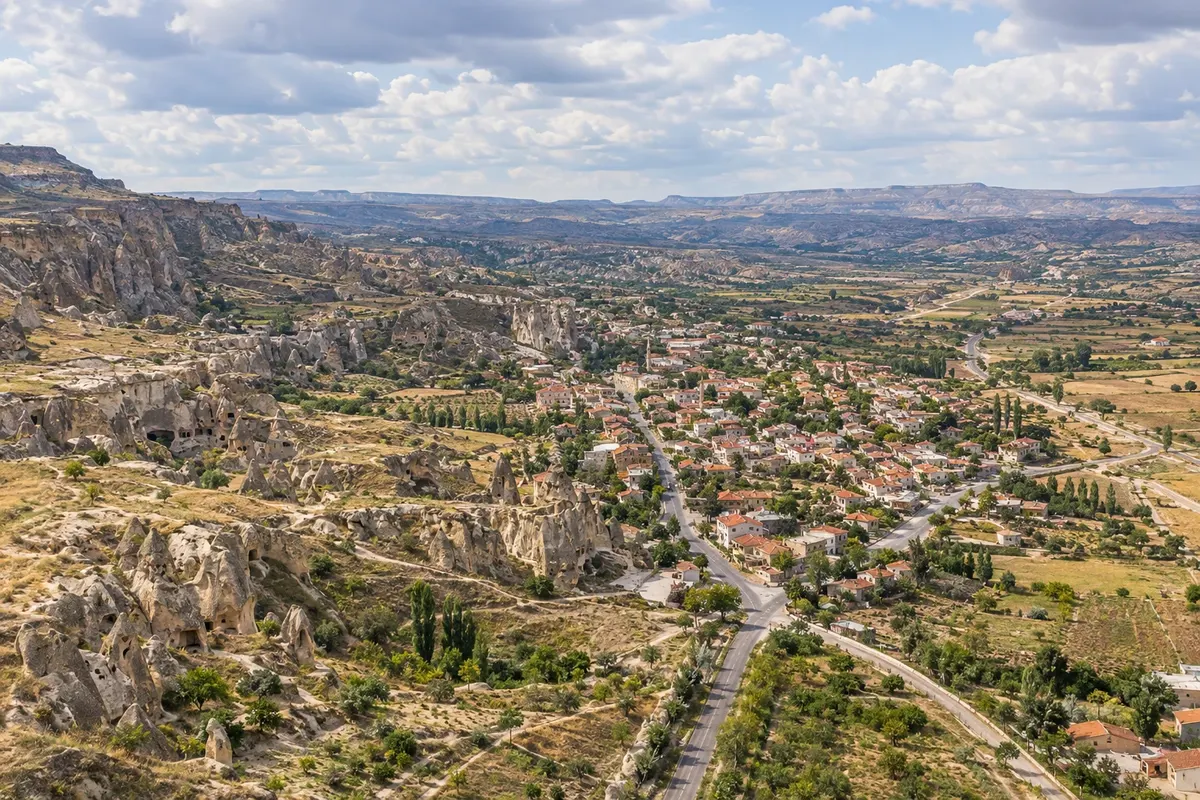
Çavuşin sits at the base of a carved hillside near Göreme. The village shows the relationship between ancient rock homes, religious spaces, and the built core below. It’s a suitable stop for anyone who wants to understand human settlement in the valleys of Cappadocia.
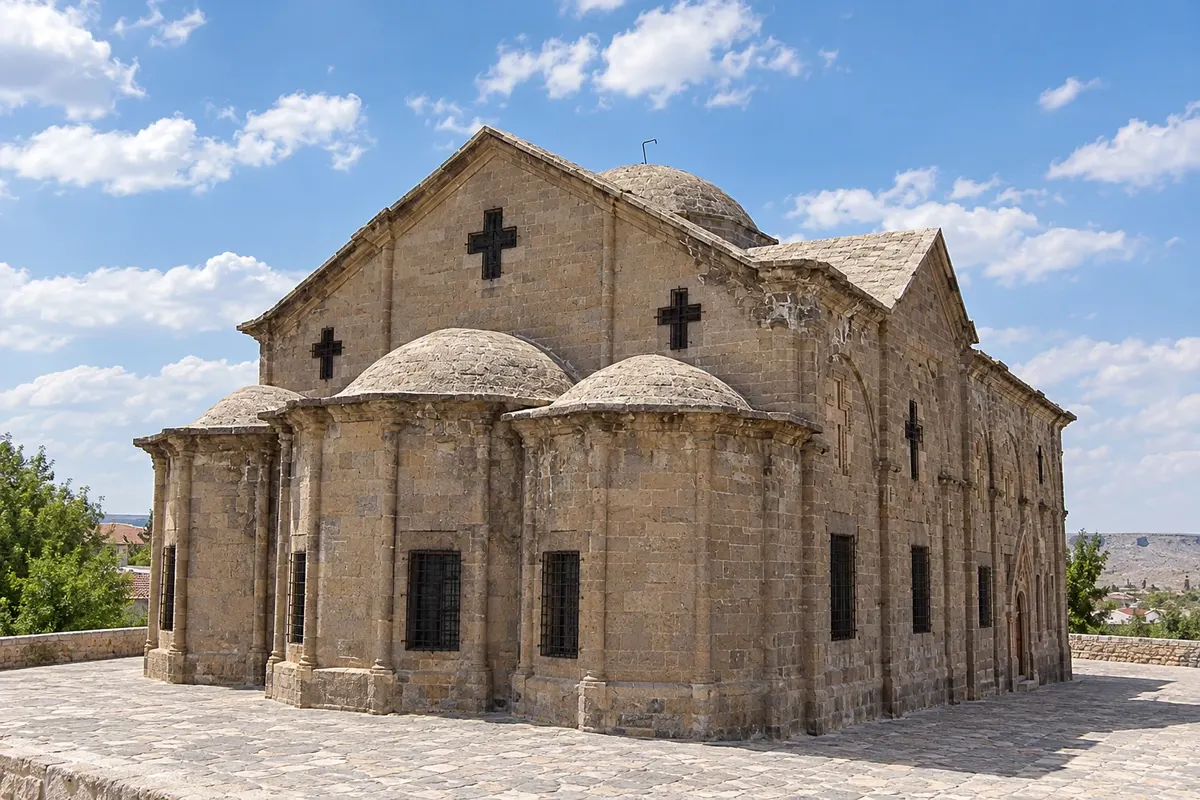
Derinkuyu lies on the plateau south of Nevşehir. The underground city is the main reason to visit: corridors and excavated spaces show how communities adapted the subsurface for shelter and the organization of communal life.
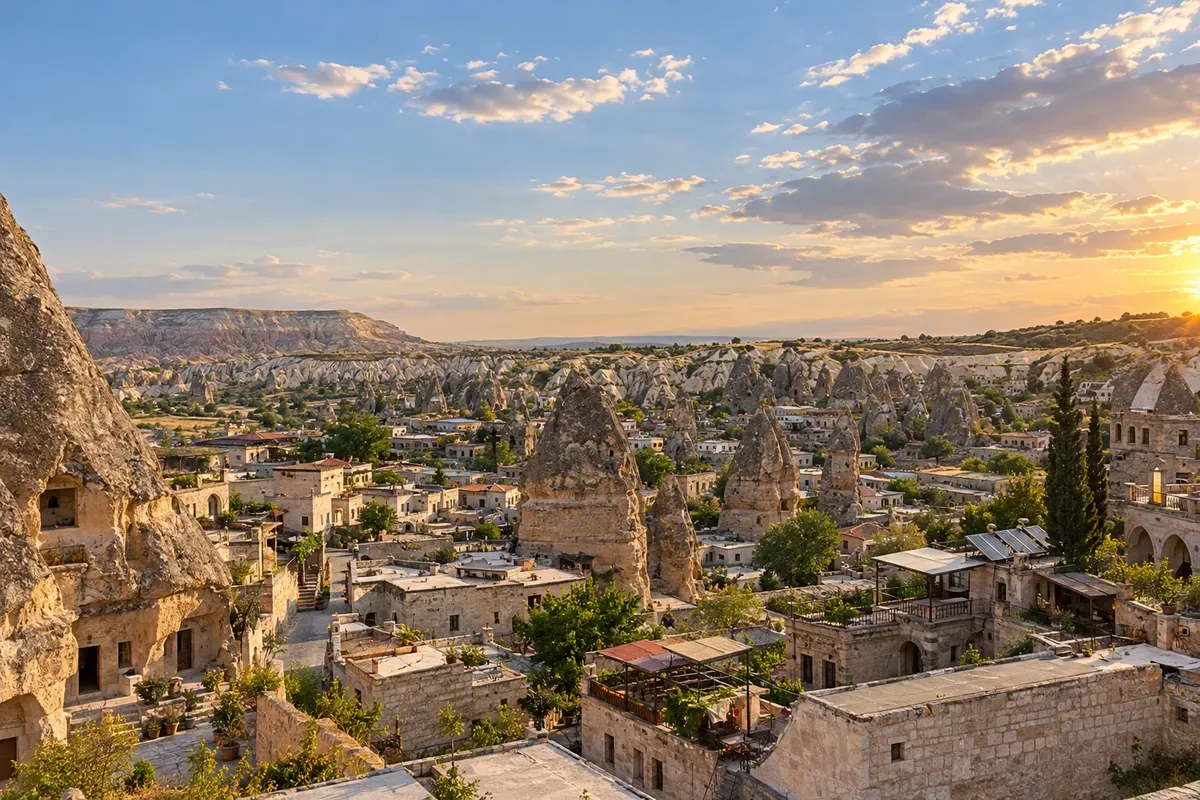
Göreme occupies a valley of carved rock and fairy chimneys. It is the main tourist base in Cappadocia, with services for tours and access to the open-air museum. The Red Valley extends the route for walks among the landscape formations.
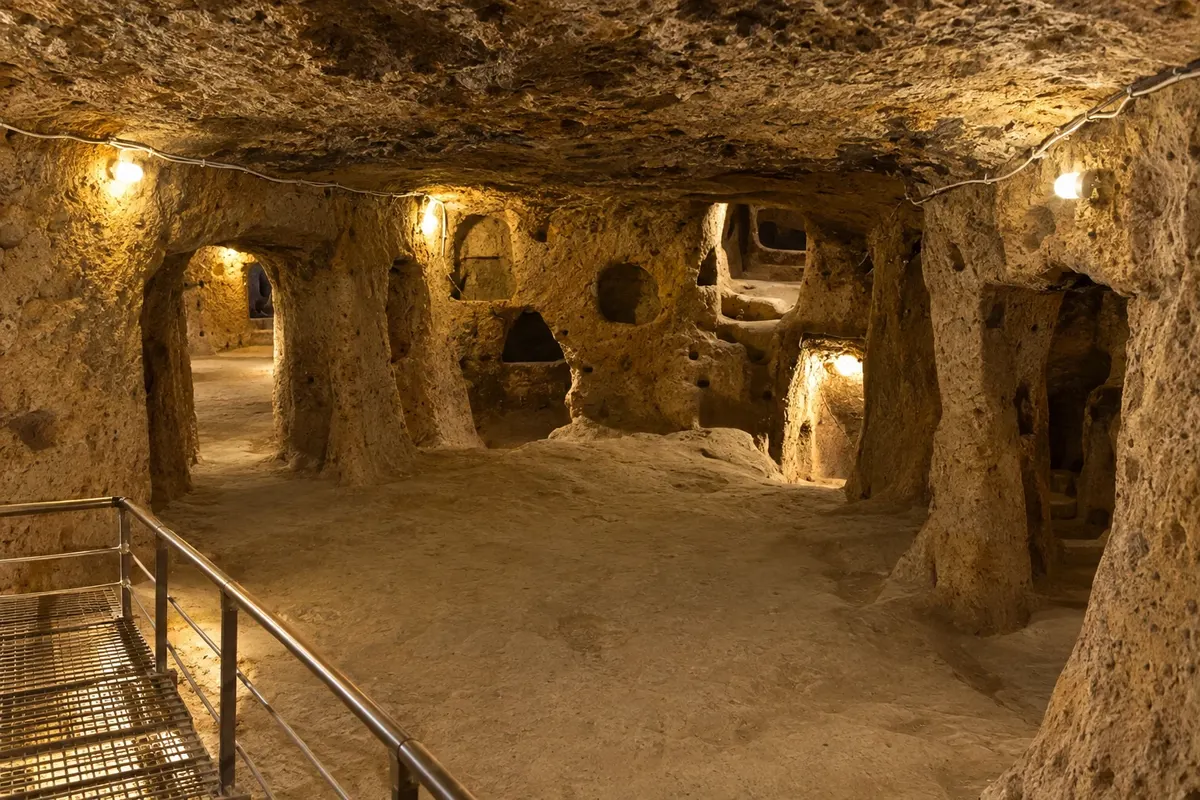
Kaymaklı is a village south of Nevşehir with an underground city open to visitors. The route brings travelers close to storage, circulation and shelter spaces carved into the rock over different phases of occupation.
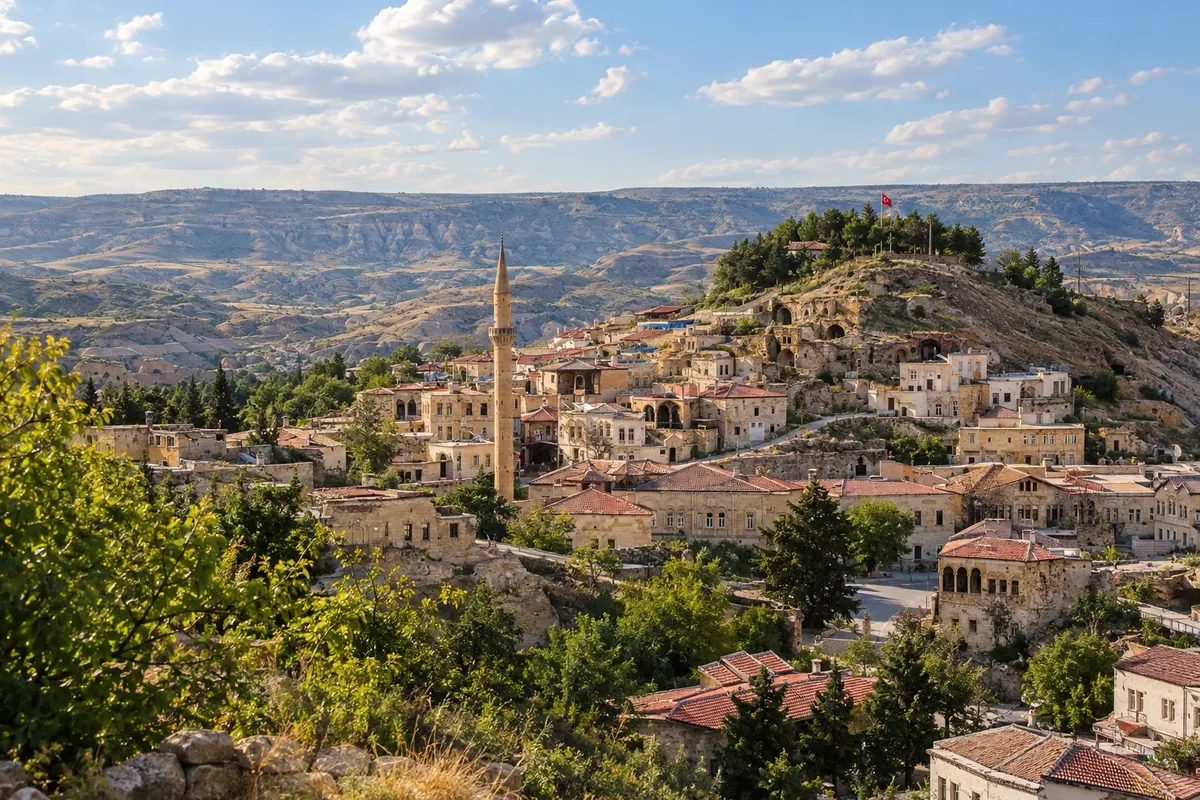
Mustafapaşa, also known by its historic name Sinasos, preserves stone houses and architectural details tied to the Greek history of Cappadocia. The core lets you experience an urban landscape different from centers organized around large rock formations.
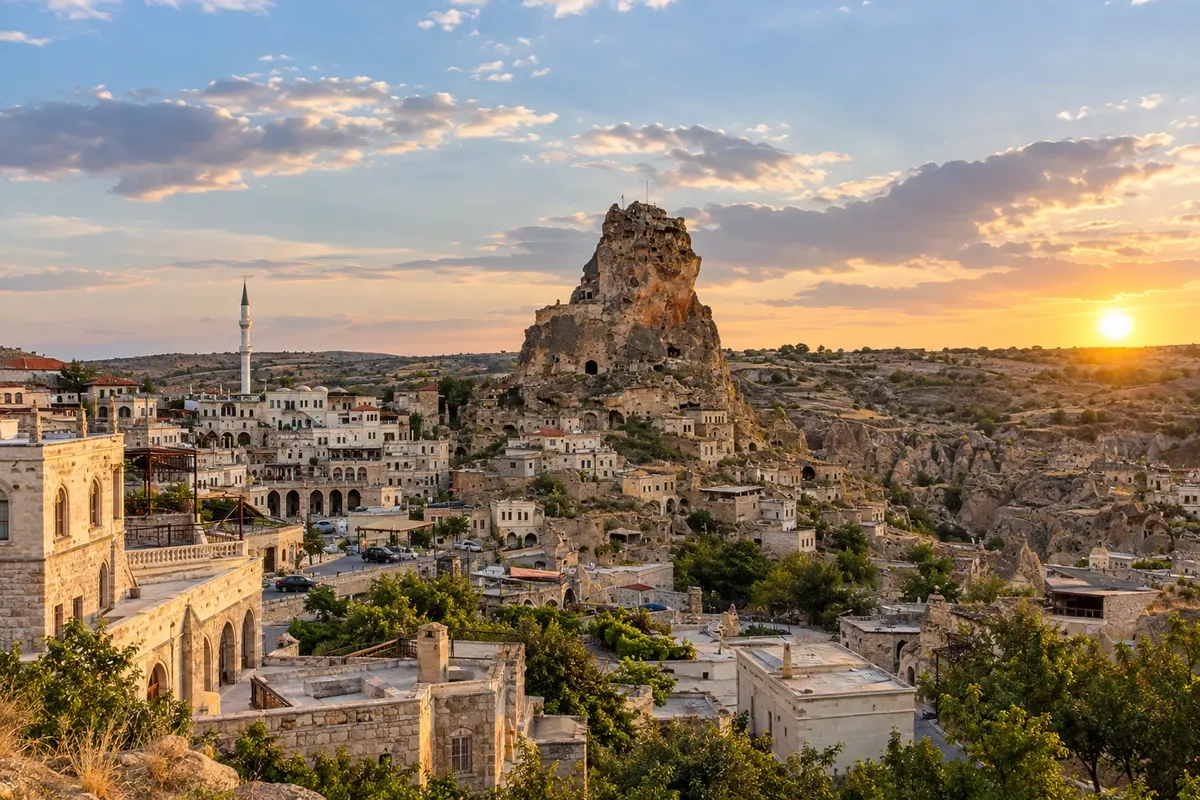
Ortahisar is organized around a carved rock that gives the village its name. Stone houses and hillside passages show a Cappadocian core tied both to the landscape and to storage spaces hewn into the rock.
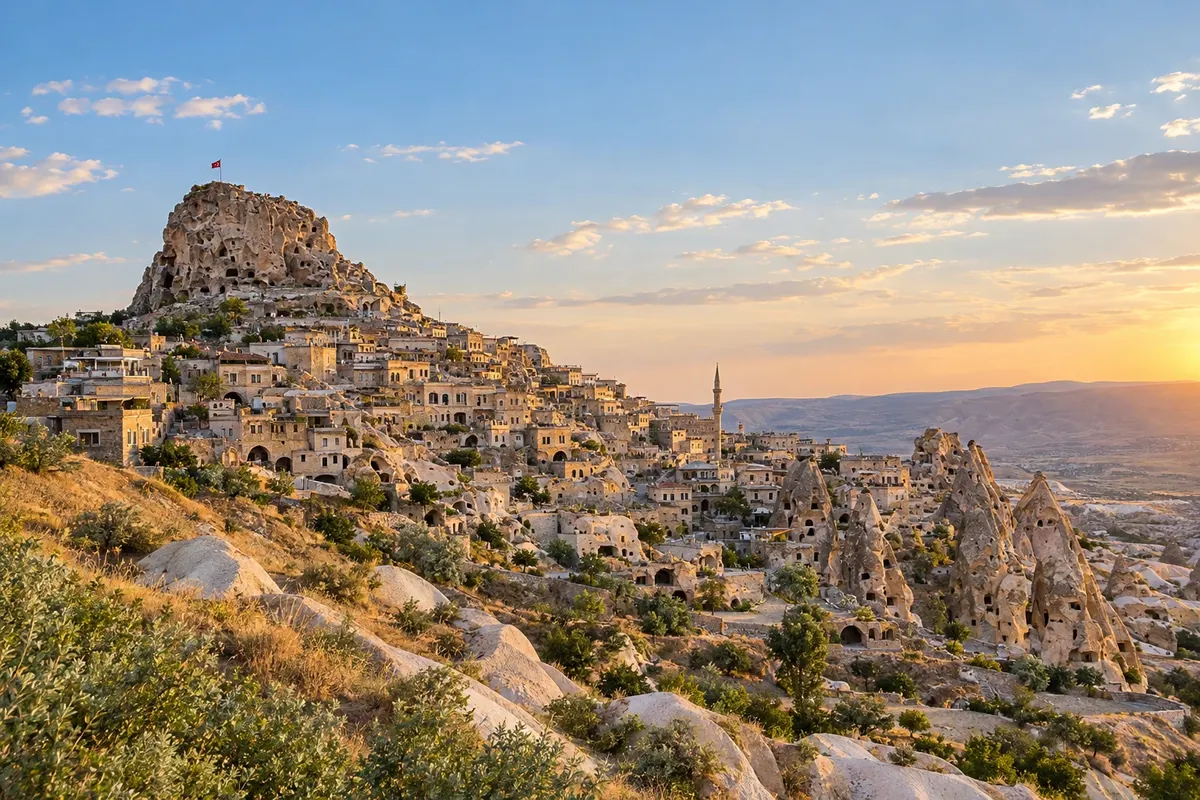
Uçhisar is spread around a carved rock that defines the Cappadocia skyline. The core combines hillside houses, viewpoints and paths that lead to the valleys. Climbing the castle lets you understand the layout of the villages and surrounding formations.
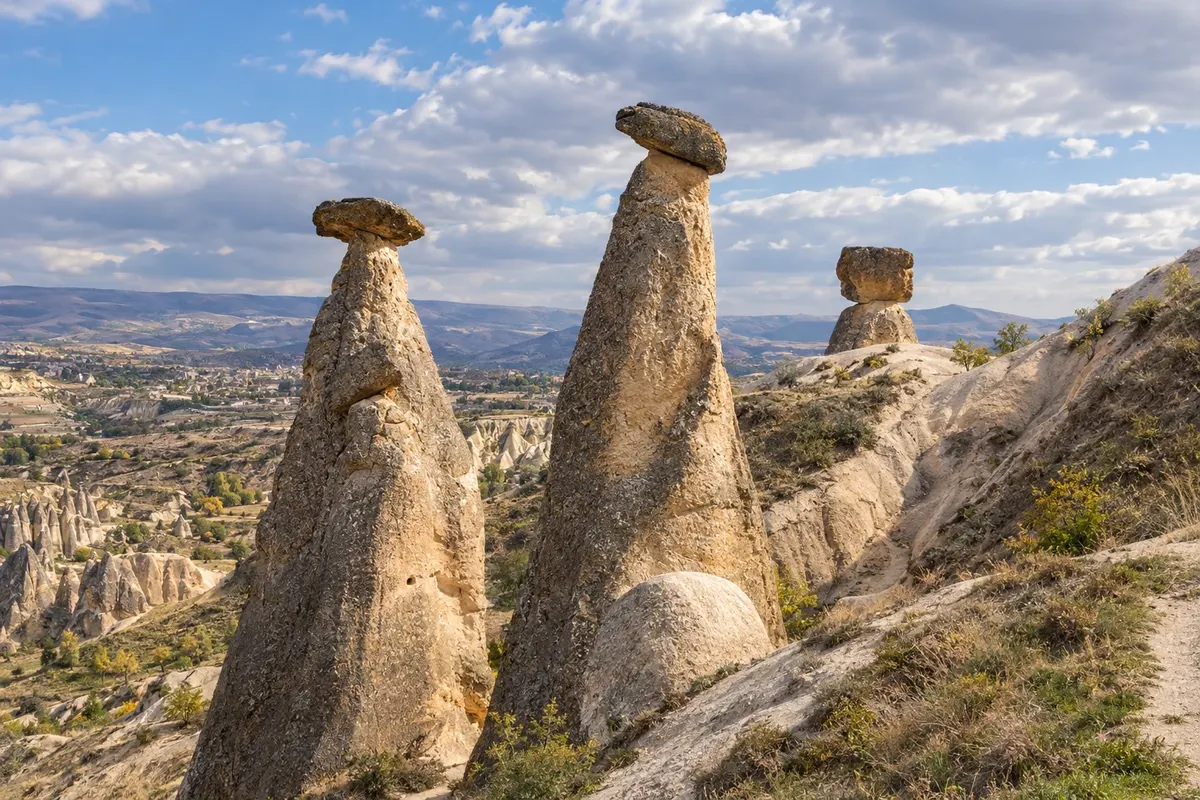
Ürgüp is one of the lodging centers of Cappadocia, with stone houses, rugged relief and a tradition linked to the vineyards. The Üç Güzeller formations lie at the western access to the town and show, at close range, the erosion that shapes the fairy chimneys.
April to June and September to October are usually the best months for walking the valleys, with mild days and cool nights. July and August are hot and dry during the day. From December to March it is often very cold, sometimes with snow on the fairy chimneys; balloons fly year‑round when weather allows.
Nevşehir‑Kapadokya Airport (NAV) is about 40 km from Göreme; Kayseri Airport (ASR), about 75 km away, usually has more flights. Both receive flights from Istanbul. There are overnight buses from Istanbul, Ankara and the coast to Nevşehir and Göreme. Between villages there are minibuses, walking trails and organized tours.
Your questions
Three days allow you to see the main valleys, the Göreme Open‑Air Museum, one underground city and Uçhisar, with a morning spare in case a balloon flight is rescheduled. With four or five days, include the Ihlara Valley in neighboring Aksaray.
No. Flights depend on the wind and are authorized day‑by‑day; cancellations are common in winter and on rainy days. Book the ride at the start of your stay to allow time for rescheduling.
Derinkuyu is deeper; Kaymaklı is more spread out and closer to Göreme. Both have narrow, low passages. If time is limited people pick one; full‑day tours typically include one of them.
It is not required. Göreme, Uçhisar and Çavuşin are linked by trails and minibuses, and agencies sell full‑day tours. A car gives you freedom to visit Mustafapaşa, Soğanlı and the underground cities at your own pace.
Göreme is the most practical base, close to the valleys and the balloon launch site. Uçhisar and Ortahisar are quieter, and Ürgüp has more restaurants and services. Many accommodations occupy houses carved into the rock.