Göreme
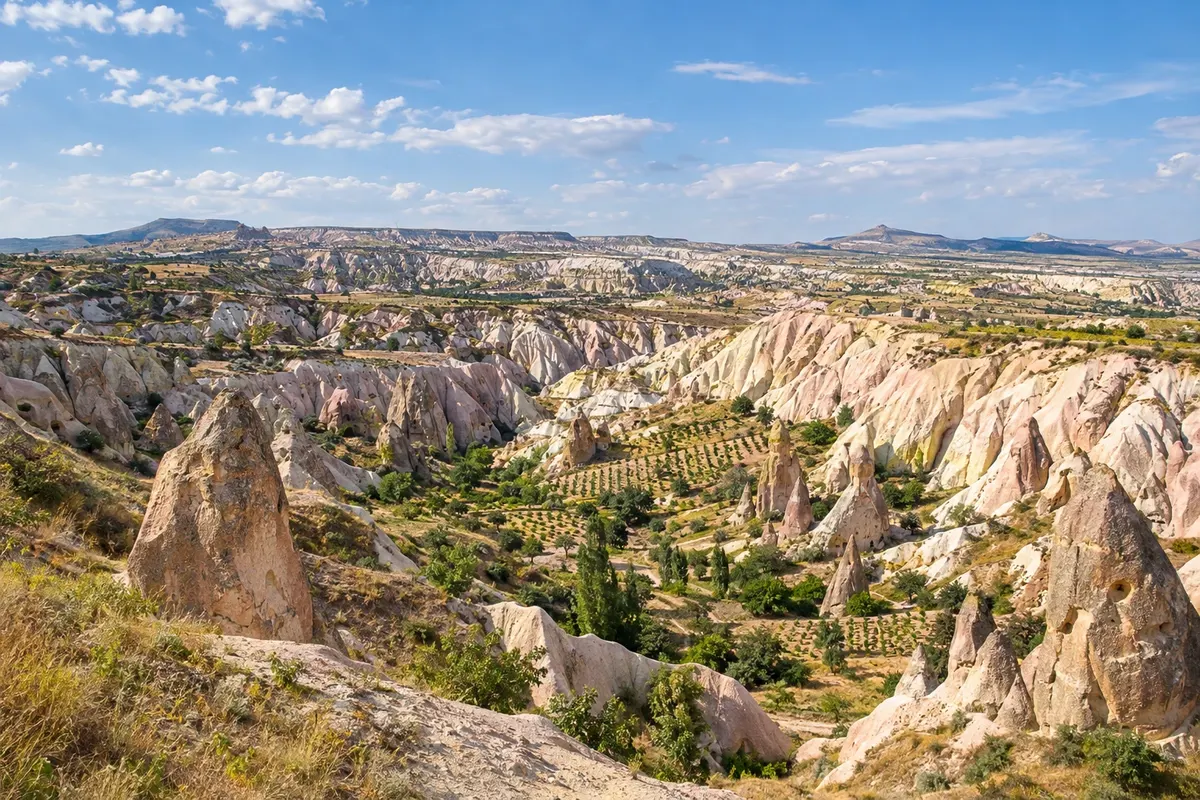
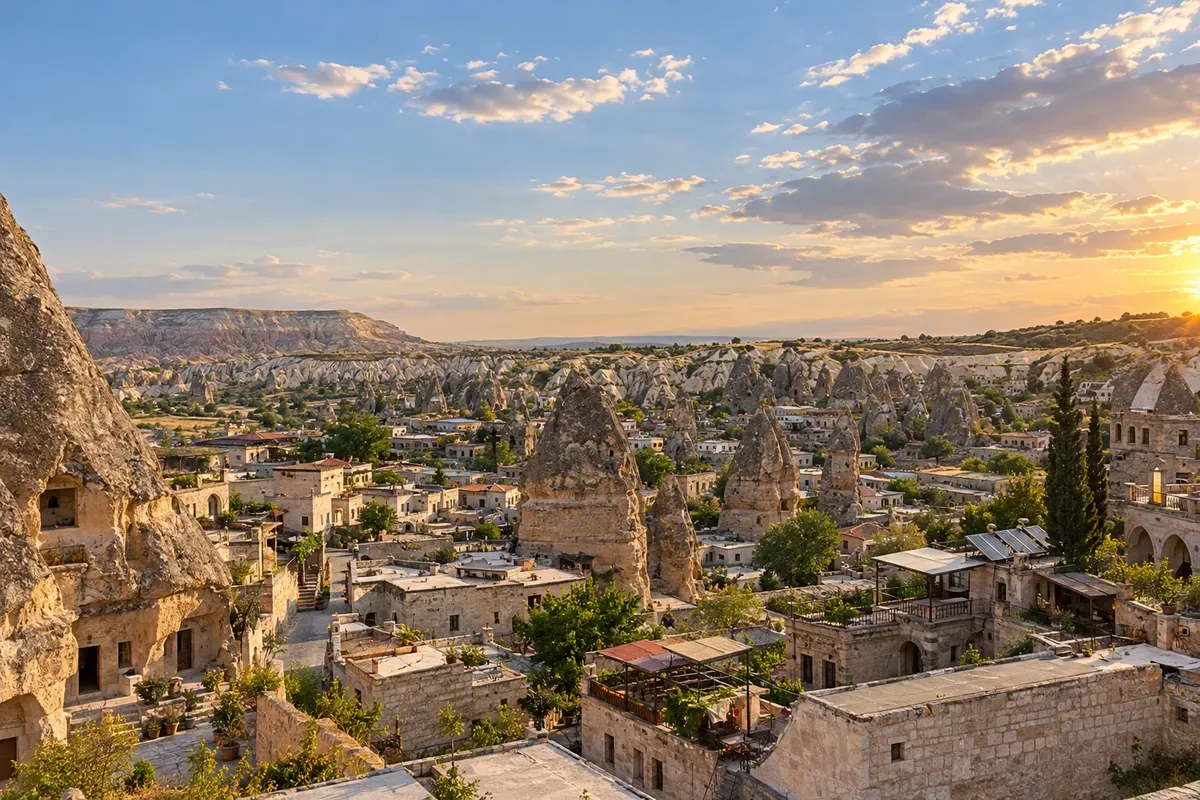
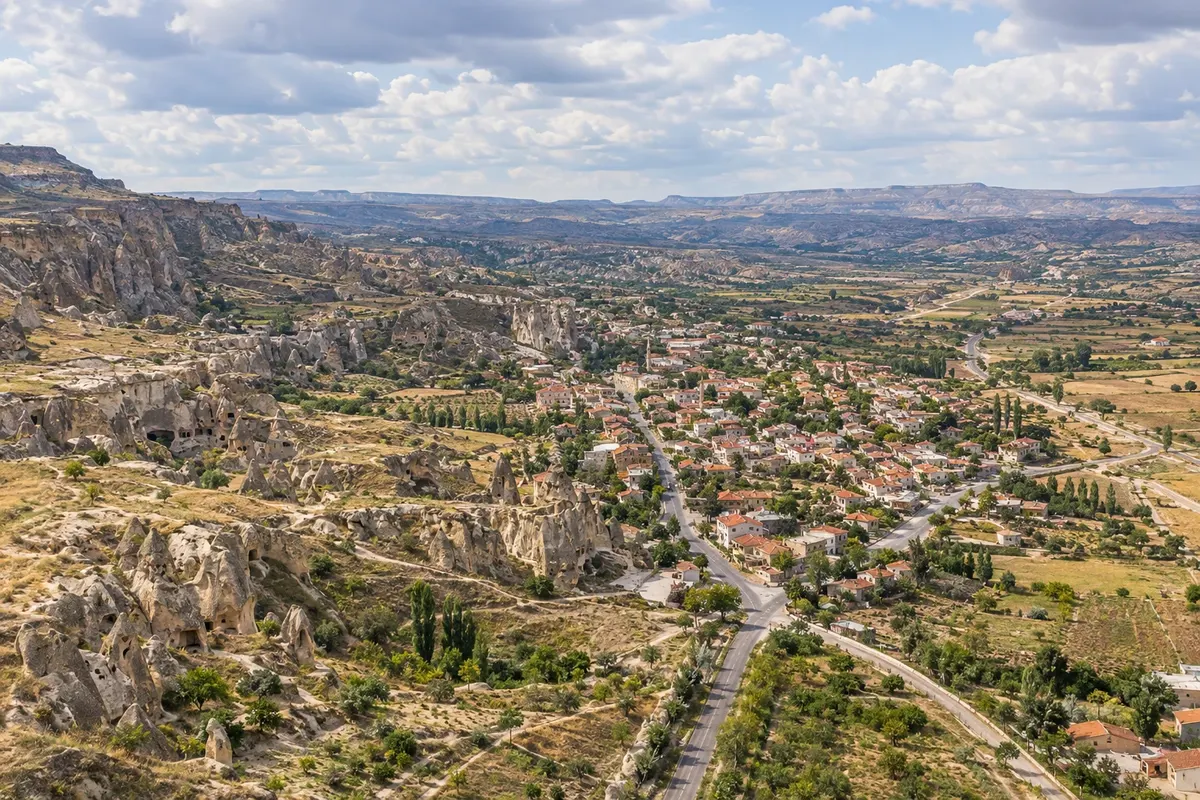
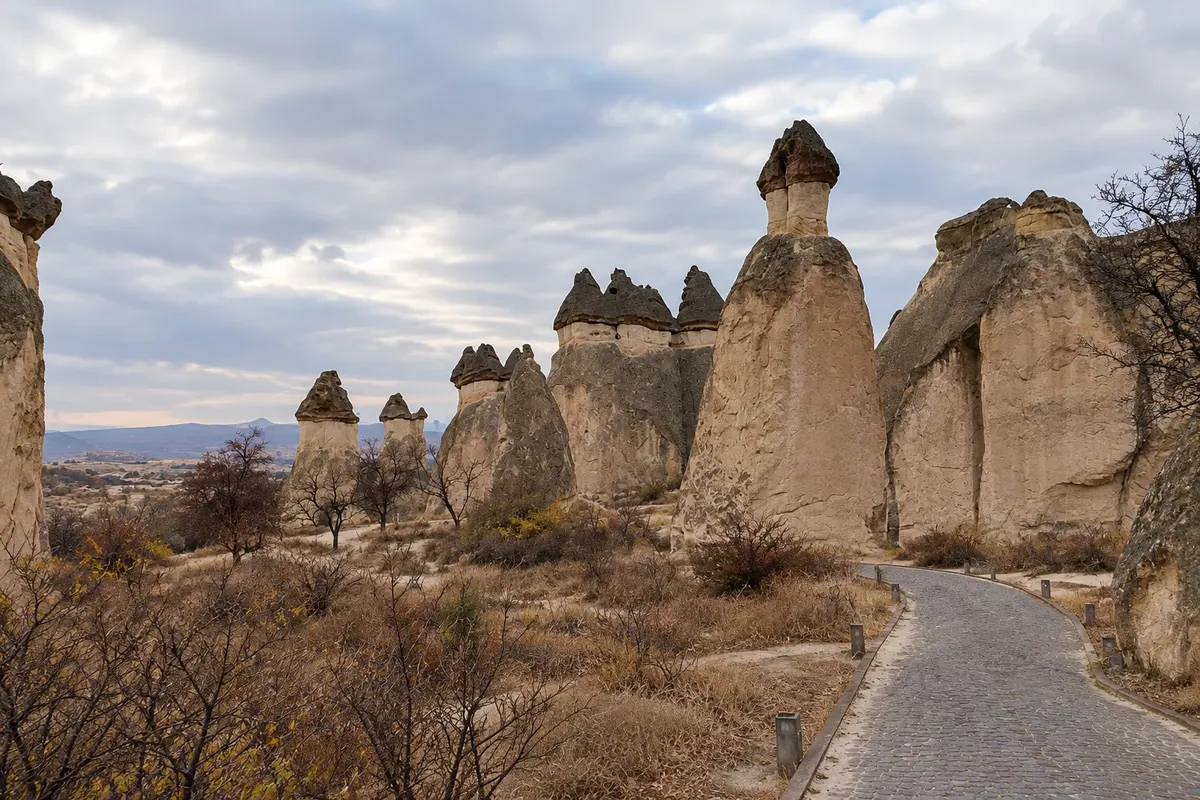
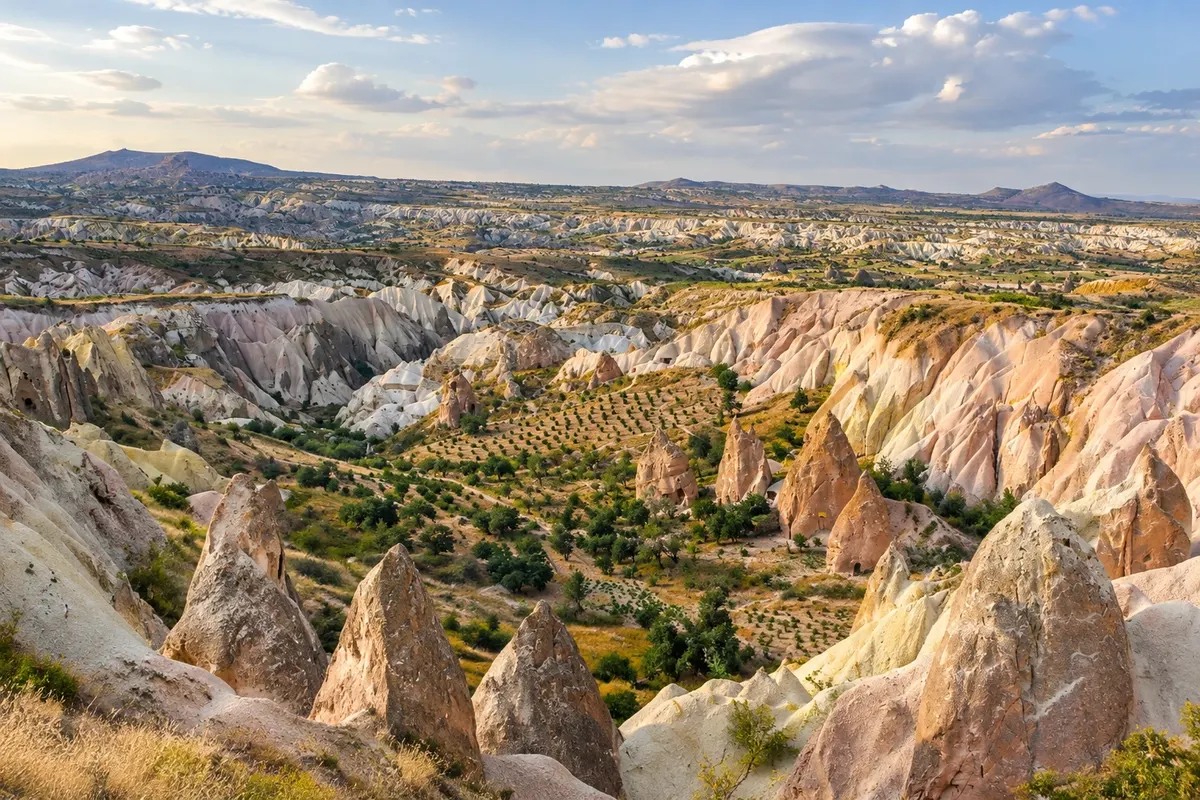
Göreme occupies a valley of carved rock and fairy chimneys. It is the main tourist base in Cappadocia, with services for tours and access to the open-air museum. The Red Valley extends the route for walks among the landscape formations.
Nevşehir · Aksaray · Kayseri · Turkey
Tuff valleys, Byzantine paintings and stone villages in the interior of Cappadocia.
In the photo: Kızılçukur Valley, Cappadocia
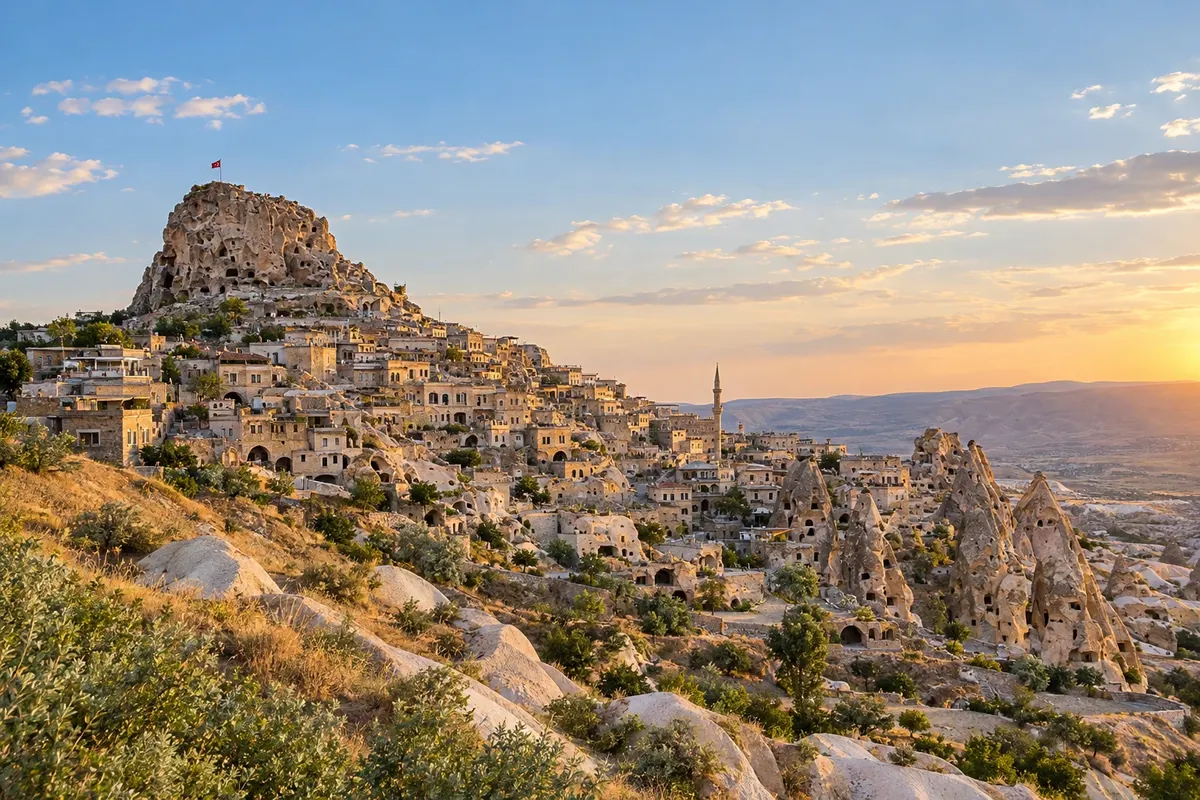
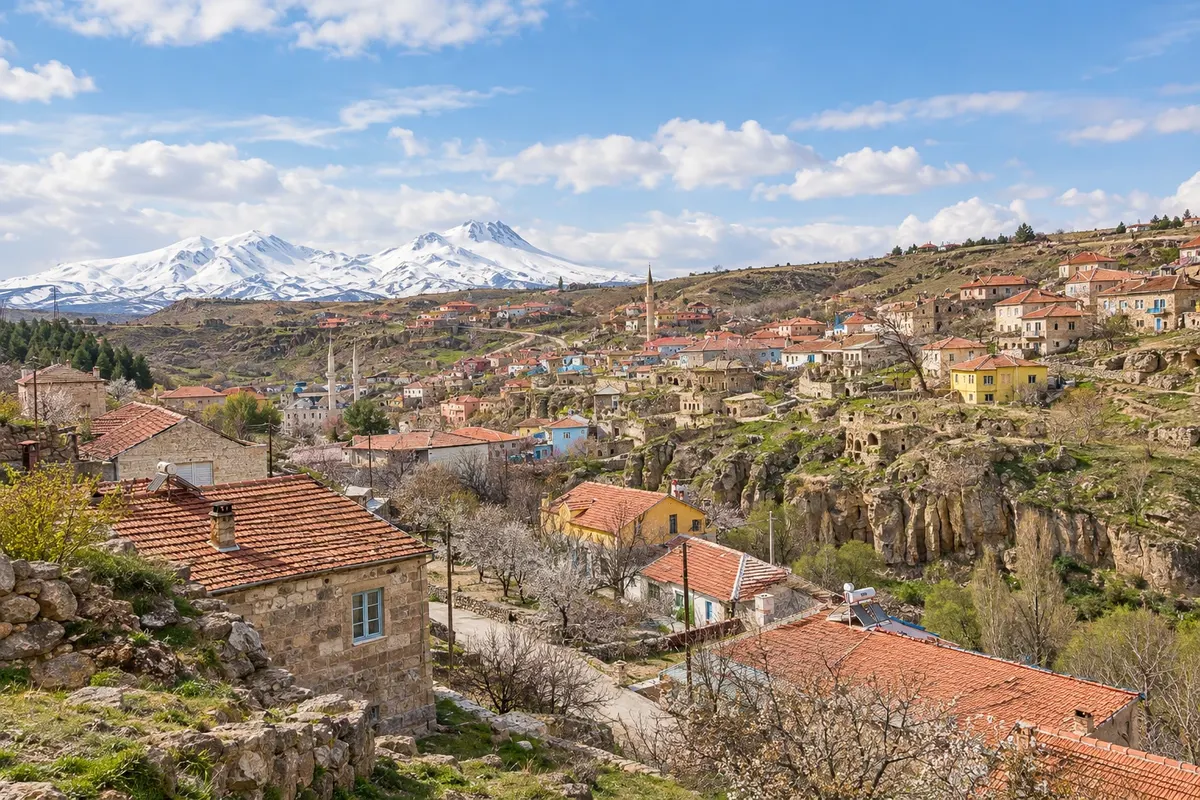
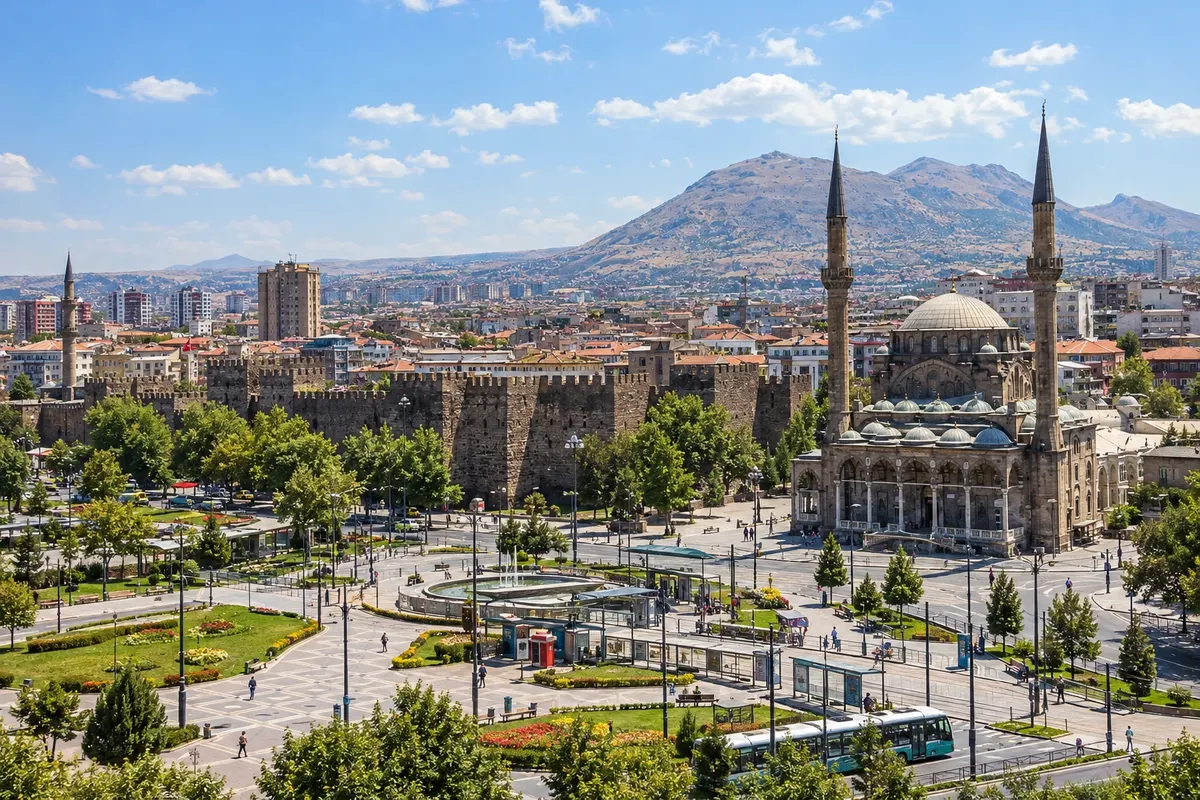
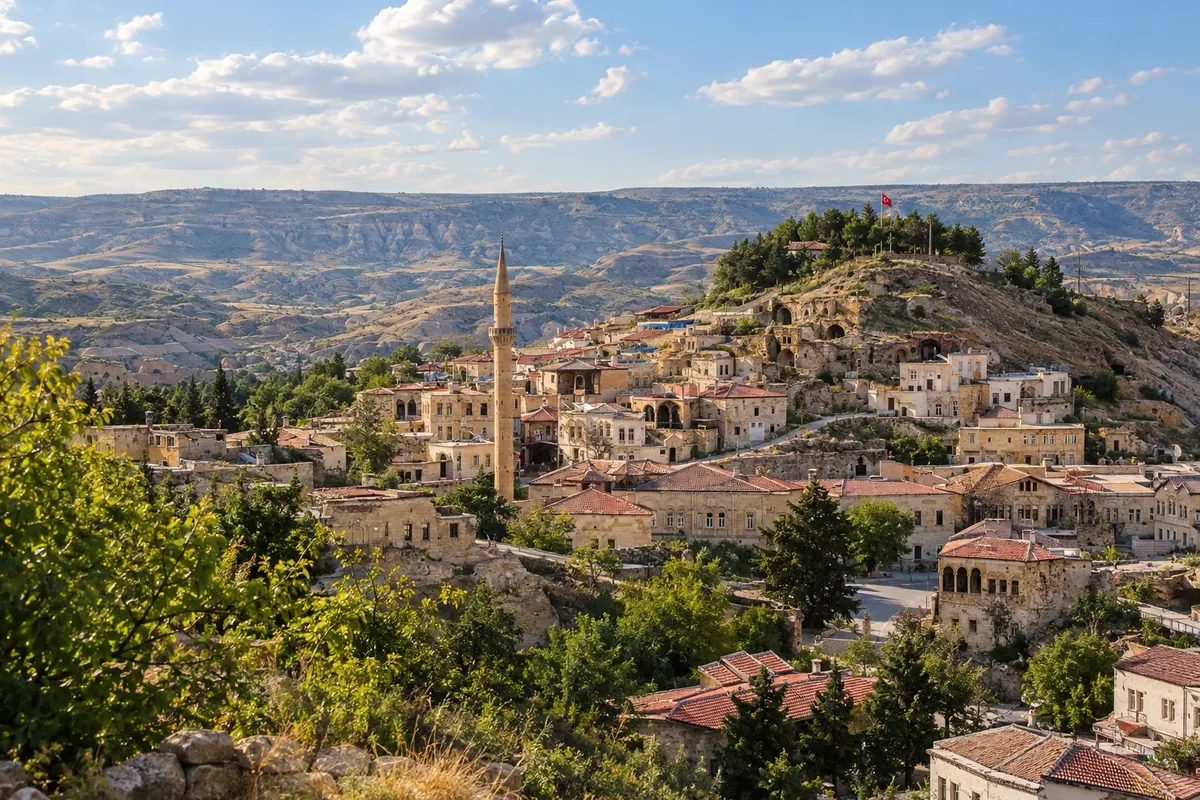
Illustrative images. The pictures in this guide are illustrations based on the real place, not photographs, and may differ from it.
Get to know the place
Cappadocia brings together valleys of volcanic rock, rock-cut churches and underground cities in the interior of Anatolia.
Göreme is a practical base to combine the formations known as fairy chimneys with the region’s Christian heritage. Uçhisar and Ortahisar have large rocks that served as fortresses; Ürgüp offers another accommodation hub, and Avanos connects the route to the pottery tradition.
Kaymaklı and Derinkuyu show underground environments used by communities over the centuries. Further southwest, Ihlara offers a canyon walk with rock churches. These areas are separate: split the itinerary by direction rather than trying to cover everything in one day.
Balloon flights depend on wind and flight authorization. Book more than one morning in the region if this activity is part of your trip, while still planning visits on the ground.
This destination brings together 11 cities: Göreme, Uçhisar, Ürgüp, Avanos, Ortahisar, Derinkuyu, Kaymaklı, Ihlara, Kayseri, Çavuşin, Mustafapaşa.

One destination, many paths
Start with one city or combine several in your itinerary.
Limites: Natural Earth (domínio público). Ilhas do Mármara e dos Príncipes: geoBoundaries / © colaboradores do OpenStreetMap (CC BY-SA). Adaptação do Cidade Turismo.
✈ Nevşehir Kapadokya Havalimanı (NAV), in Gülşehir · 40 km to Göreme
✈ Kayseri Havalimanı (ASR), in Kayseri · 75 km to Göreme
Arrive via Kayseri (ASR) or Nevşehir-Kapadokya (NAV) airports, with connections according to your booked segment. Arrange transfer to Göreme or another base: the airport is not in the core valley area. Intercity buses are another option.
Suggested arrival point: Göreme
Göreme occupies a valley of carved rock and fairy chimneys. It is the main tourist base in Cappadocia, with services for tours and access to the open-air museum. The Red Valley extends the route for walks among the landscape formations.
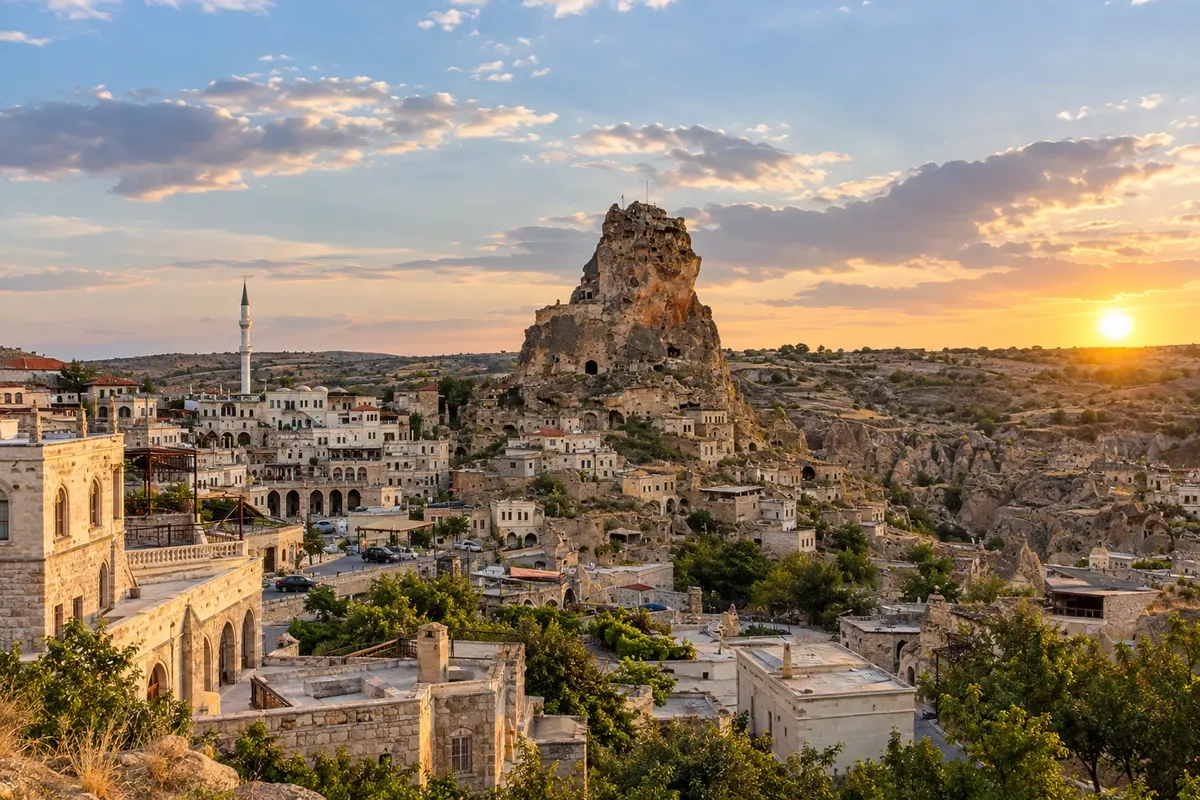
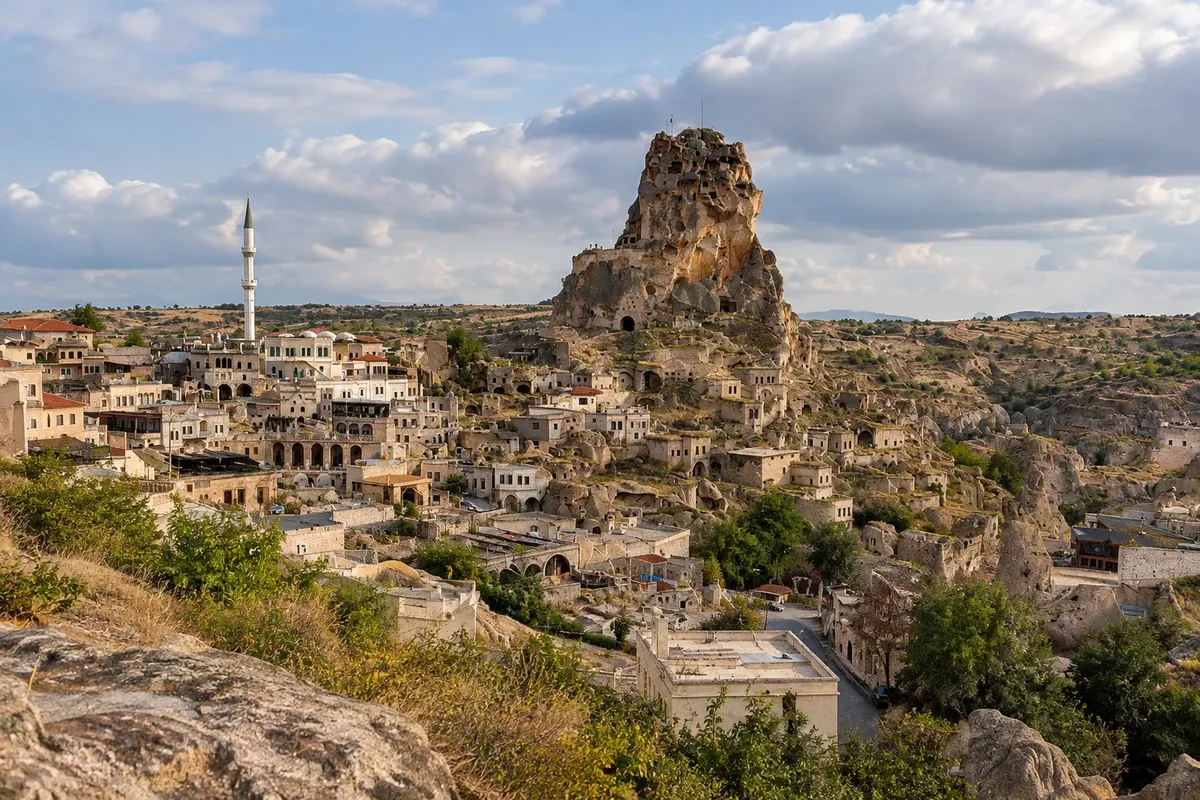
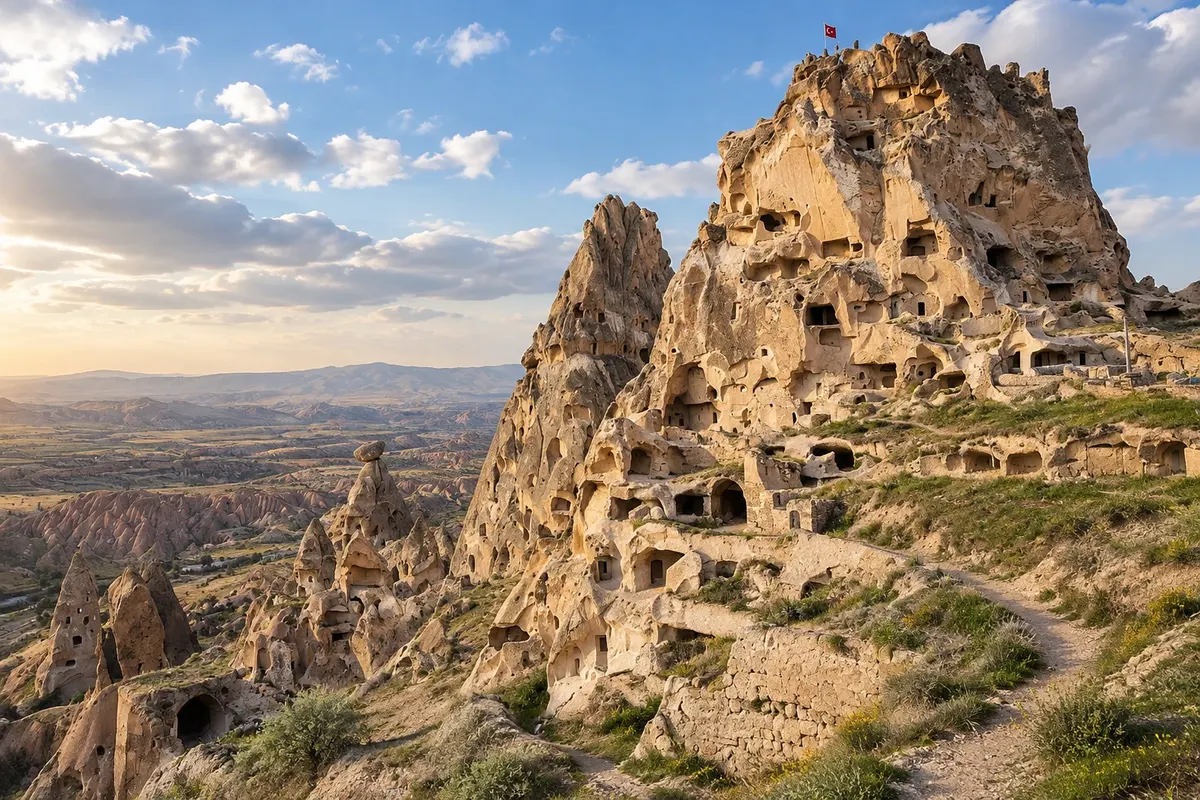
Uçhisar is spread around a carved rock that defines the Cappadocia skyline. The core combines hillside houses, viewpoints and paths that lead to the valleys. Climbing the castle lets you understand the layout of the villages and surrounding formations.
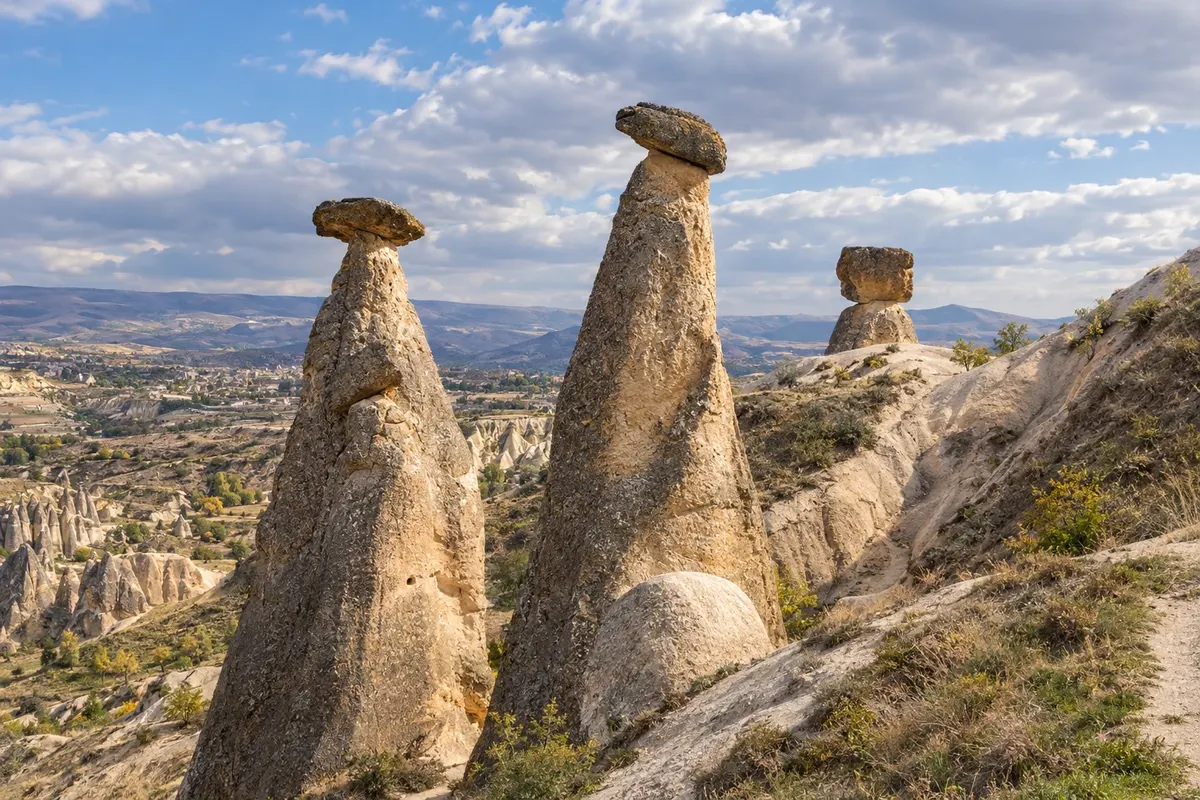
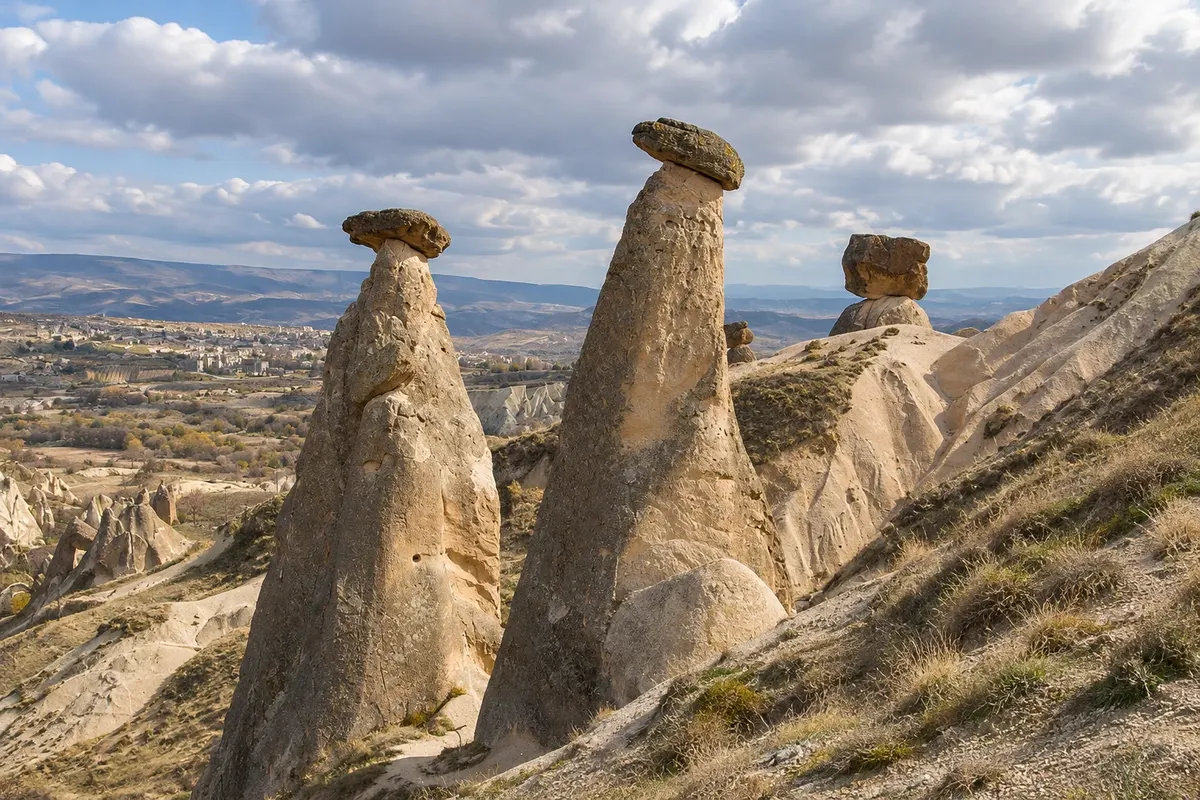
Ürgüp is one of the lodging centers of Cappadocia, with stone houses, rugged relief and a tradition linked to the vineyards. The Üç Güzeller formations lie at the western access to the town and show, at close range, the erosion that shapes the fairy chimneys.
Avanos developed along the Kızılırmak River and is known for pottery. The urban core has workshops and streets to stroll; nearby, Paşabağ and Zelve show other forms of occupation and erosion of Cappadocia’s rock.
Ortahisar is organized around a carved rock that gives the village its name. Stone houses and hillside passages show a Cappadocian core tied both to the landscape and to storage spaces hewn into the rock.
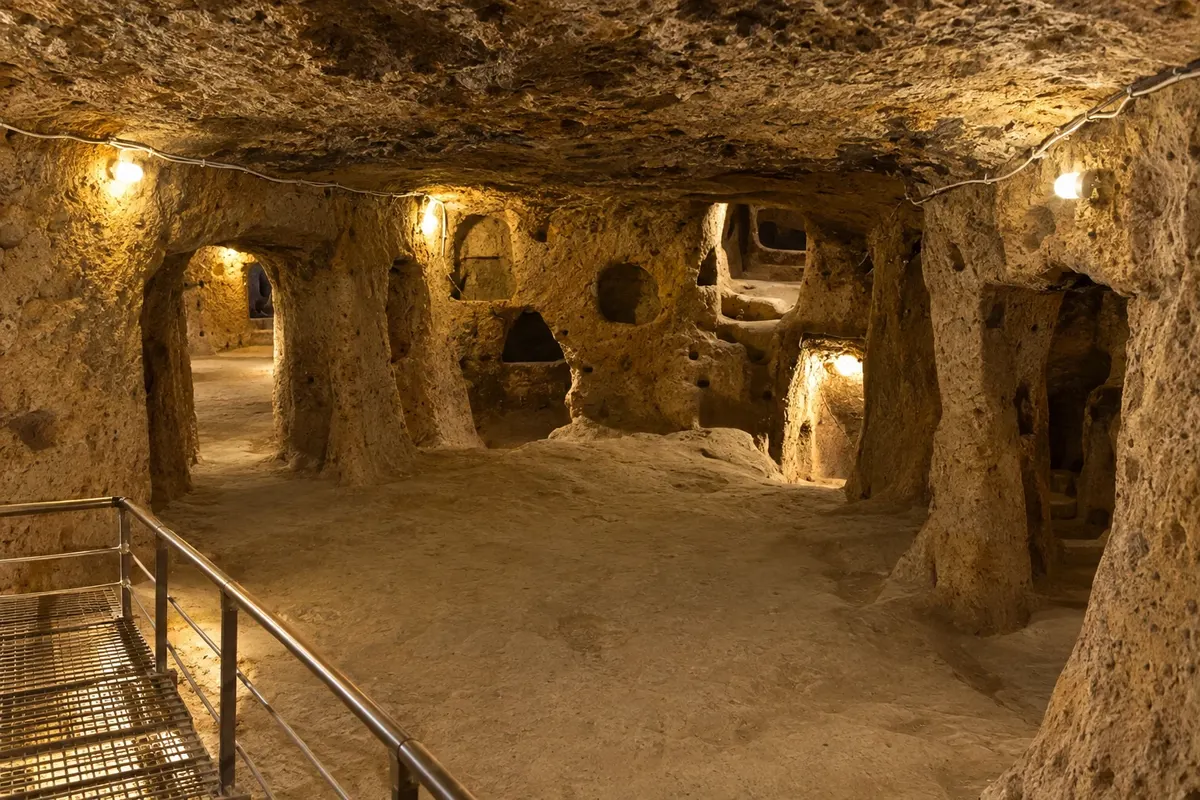
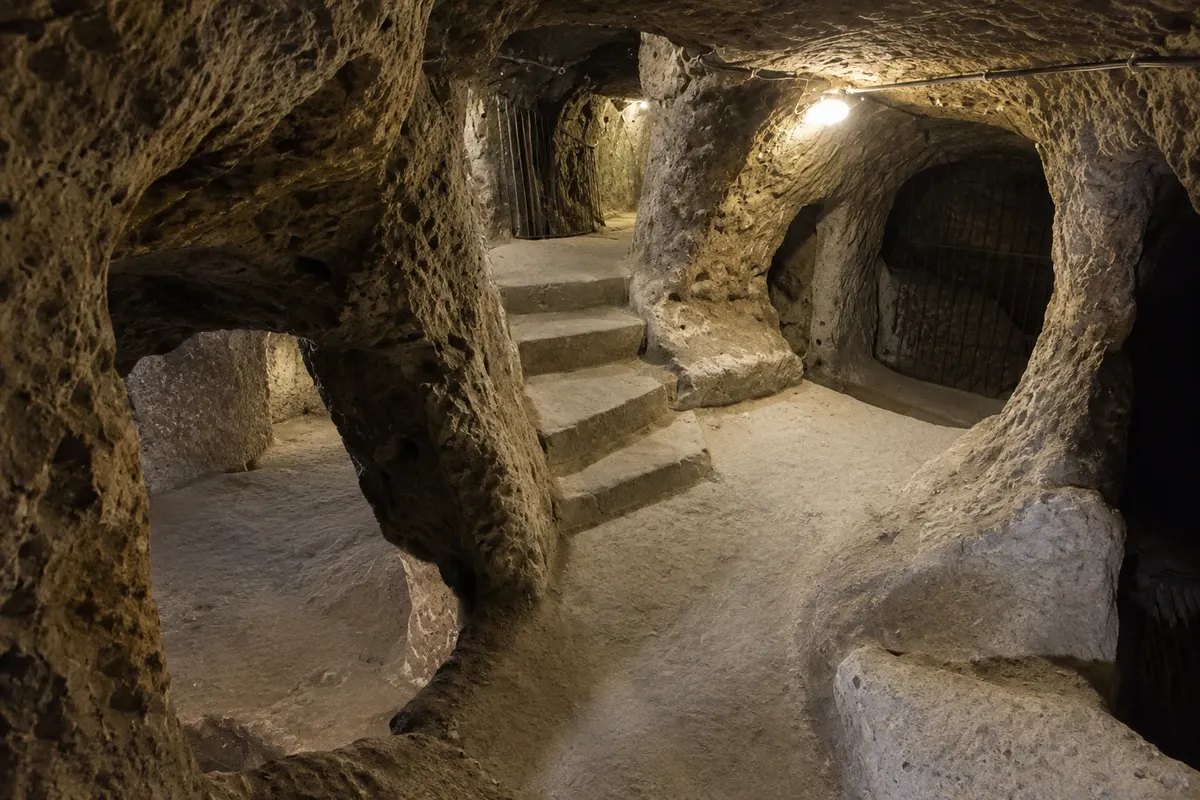
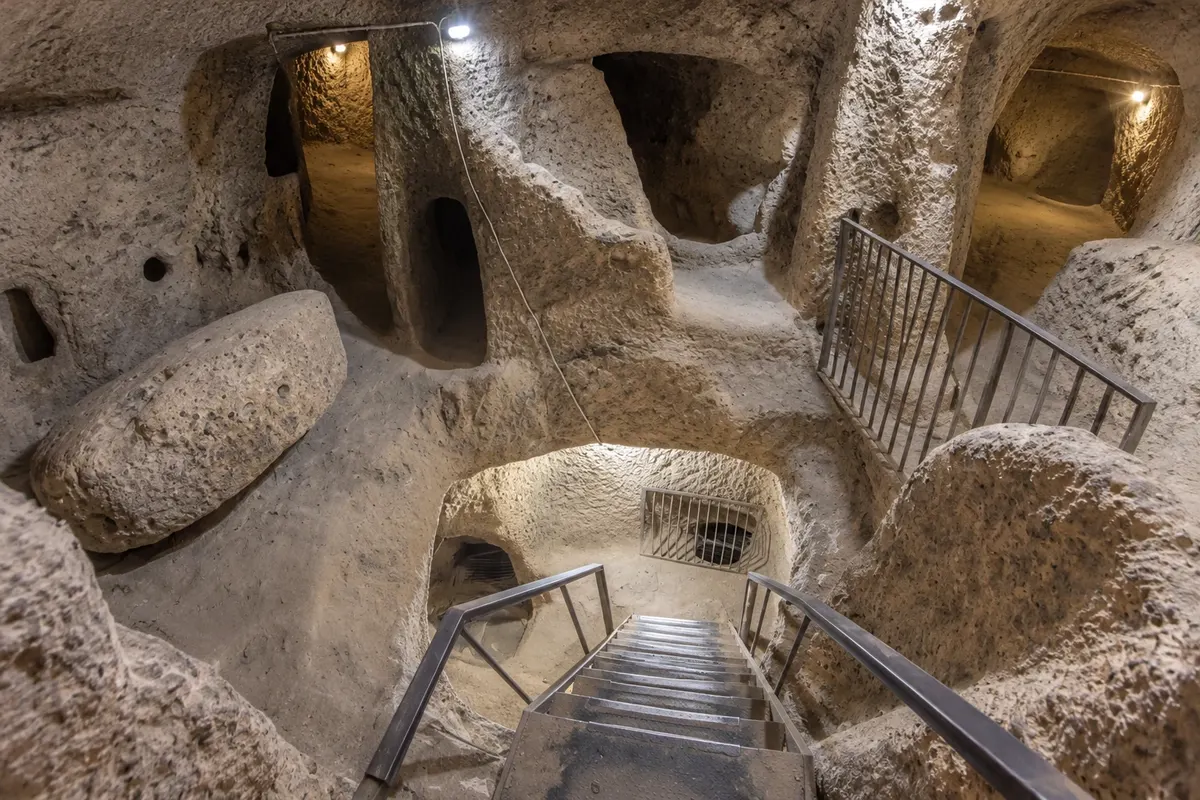
Derinkuyu lies on the plateau south of Nevşehir. The underground city is the main reason to visit: corridors and excavated spaces show how communities adapted the subsurface for shelter and the organization of communal life.
Kaymaklı is a village south of Nevşehir with an underground city open to visitors. The route brings travelers close to storage, circulation and shelter spaces carved into the rock over different phases of occupation.
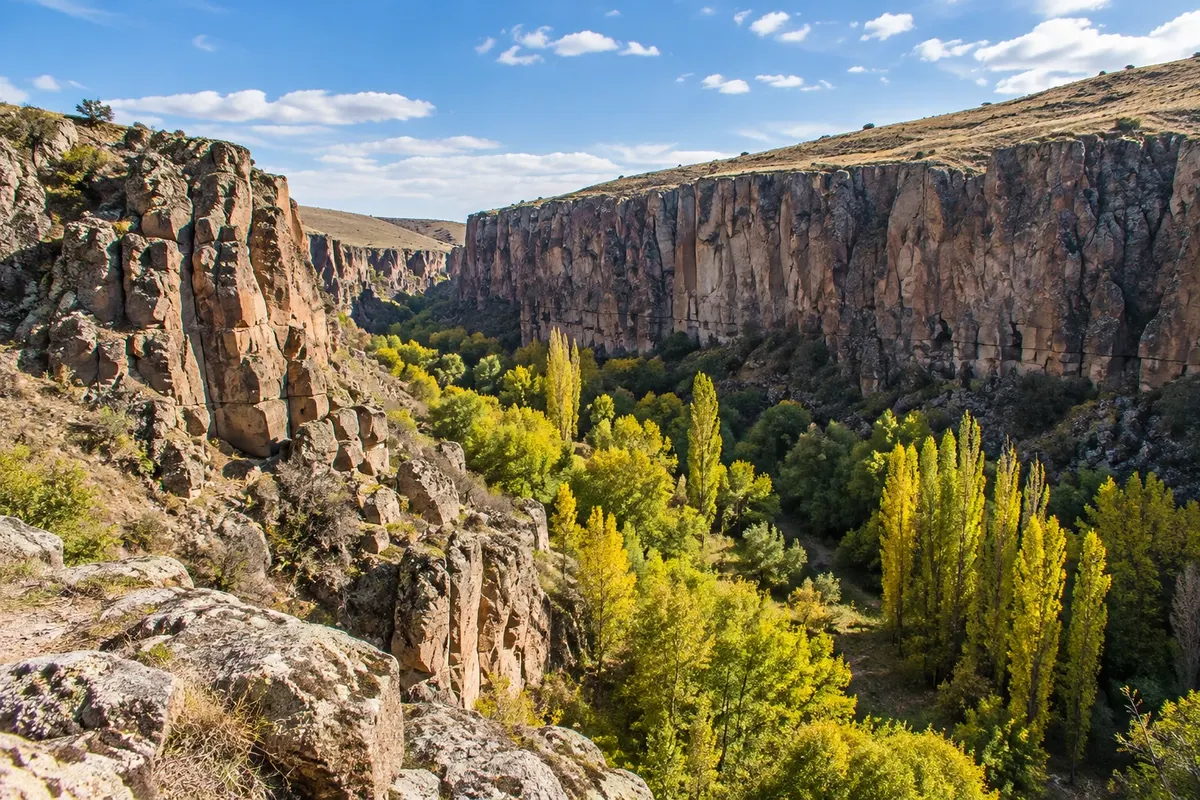
Ihlara sits beside the Melendiz River canyon, in a landscape different from the valleys nearer Göreme. The walk combines the wooded valley floor with churches carved into the slopes. The Selime complex extends the outing at the northern end.
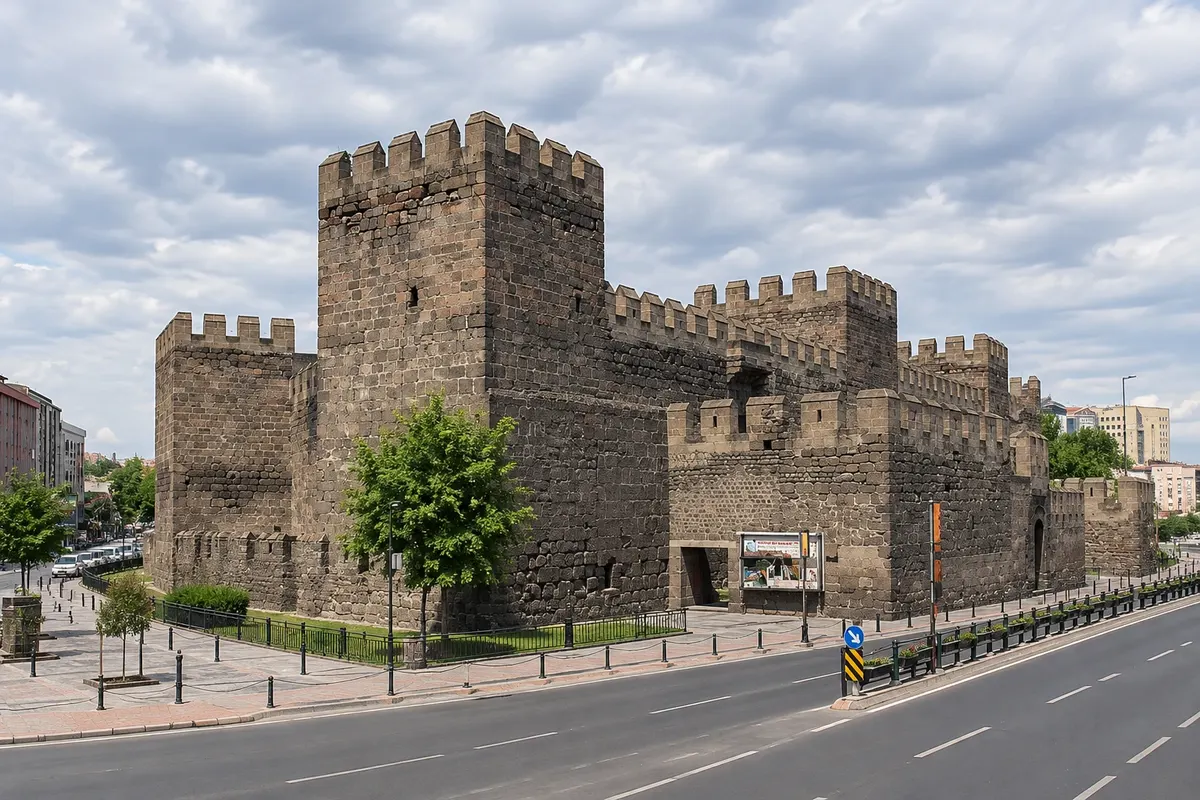
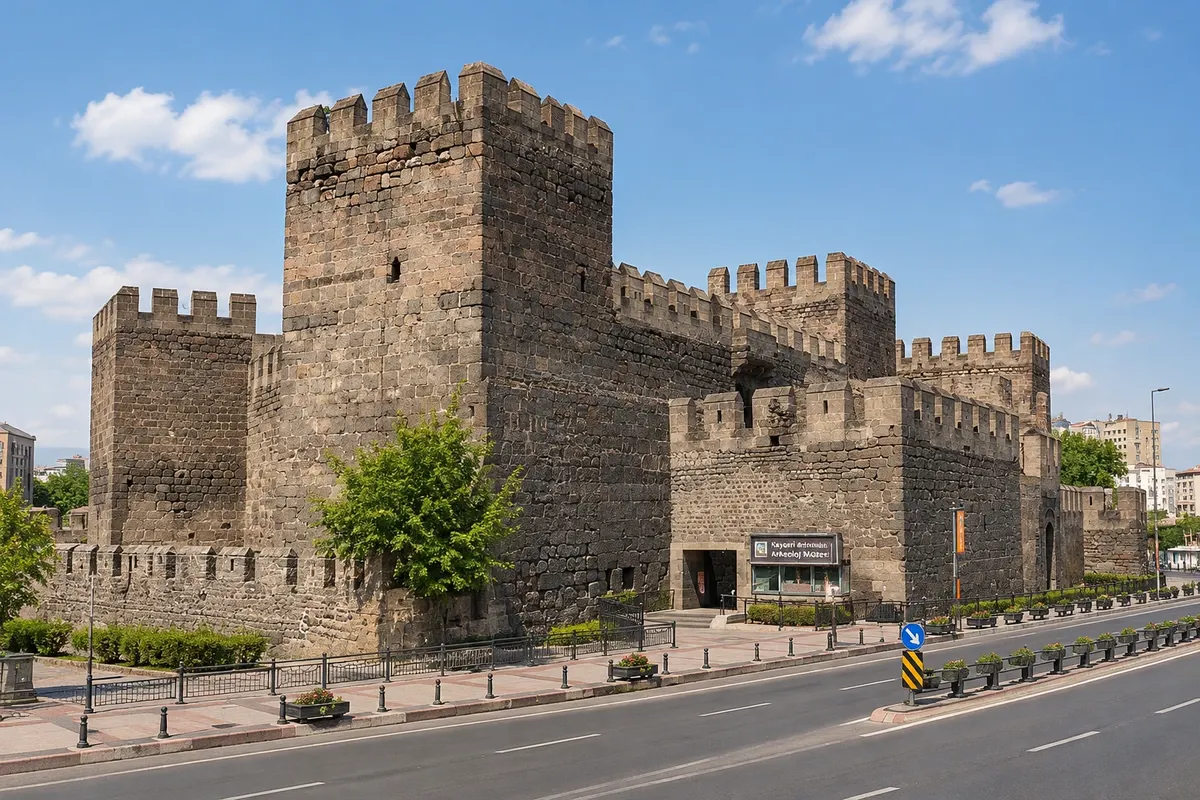
Kayseri has its own urban itinerary on the eastern side of Cappadocia. The castle and the Archaeological Museum, the Gevher Nesibe medical complex converted into the Museum of Seljuk Civilizations, and the Hunat Hatun complex let you explore layers of the region’s history before heading to the valleys. Mantı and pastırma add the local cuisine to the visit.
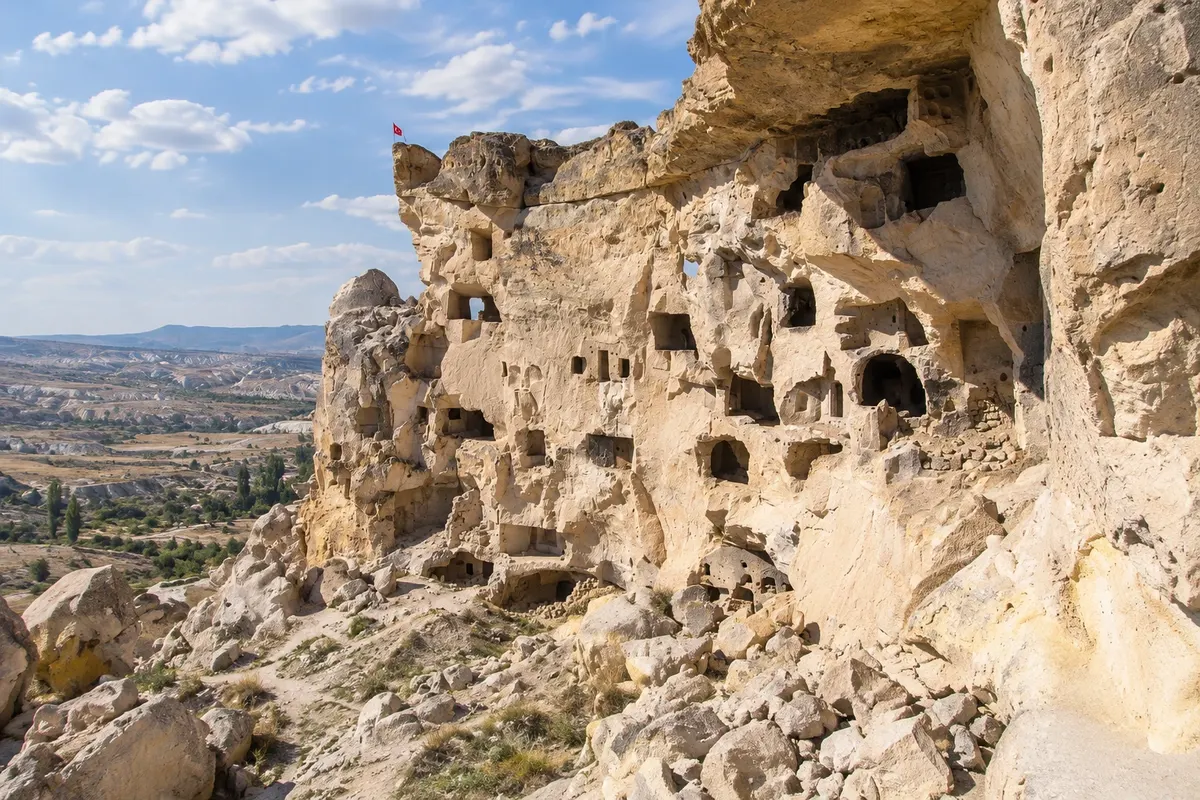
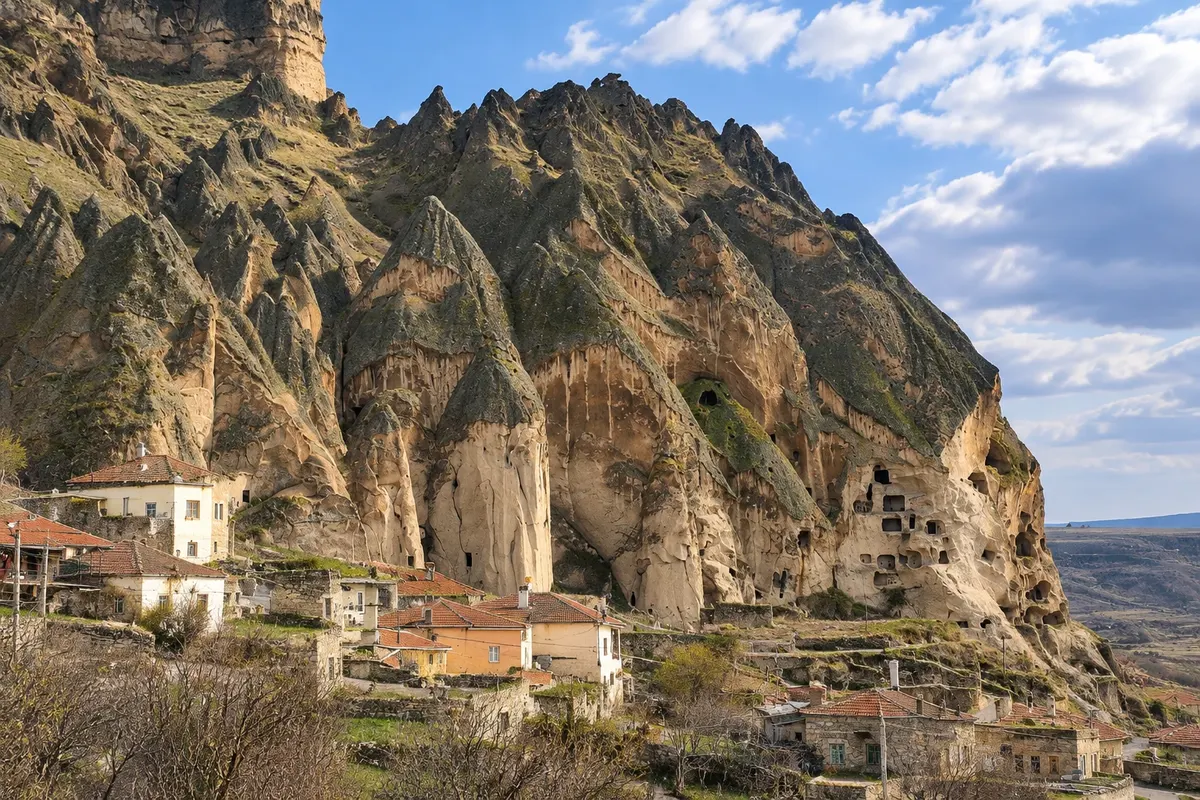
Çavuşin sits at the base of a carved hillside near Göreme. The village shows the relationship between ancient rock homes, religious spaces, and the built core below. It’s a suitable stop for anyone who wants to understand human settlement in the valleys of Cappadocia.
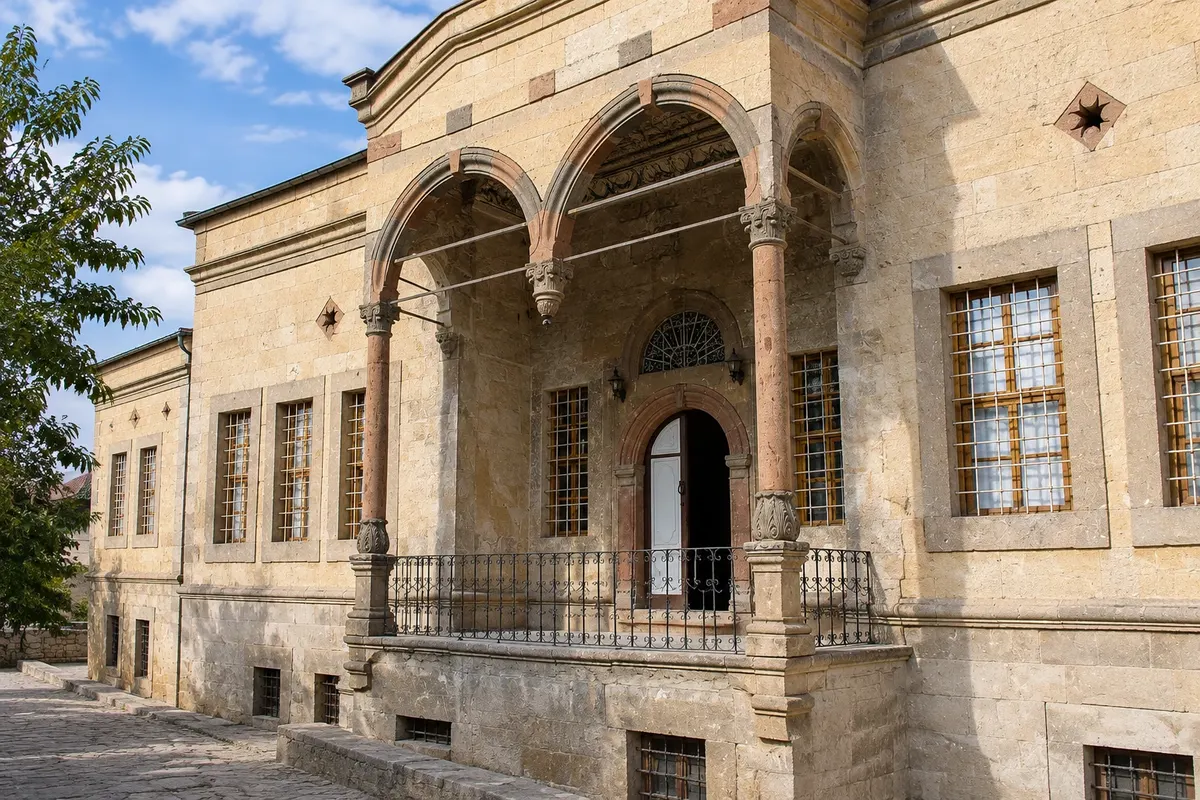
Mustafapaşa, also known by its historic name Sinasos, preserves stone houses and architectural details tied to the Greek history of Cappadocia. The core lets you experience an urban landscape different from centers organized around large rock formations.
The local experience
Corridors, rooms and ventilation shafts show the structure of a community established beneath Cappadocia.
Facades and rock-cut spaces at different levels reveal the old settlement core on the Çavuşin hillside.
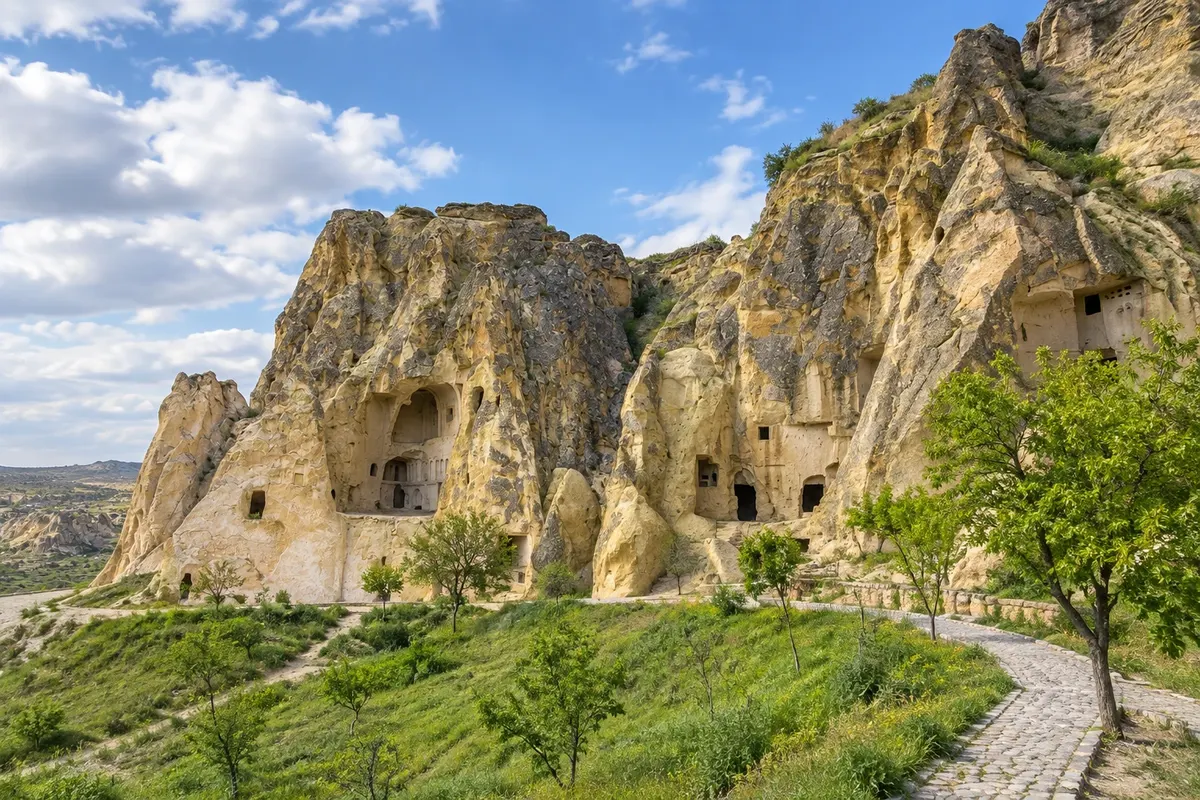
Churches carved into tuff, with Byzantine paintings and monastic spaces in Göreme’s historic complex.
Melendiz River canyon with trails on the valley floor and churches carved into the rock walls.
Shelter, storage and food-preparation spaces connect in an underground circuit.
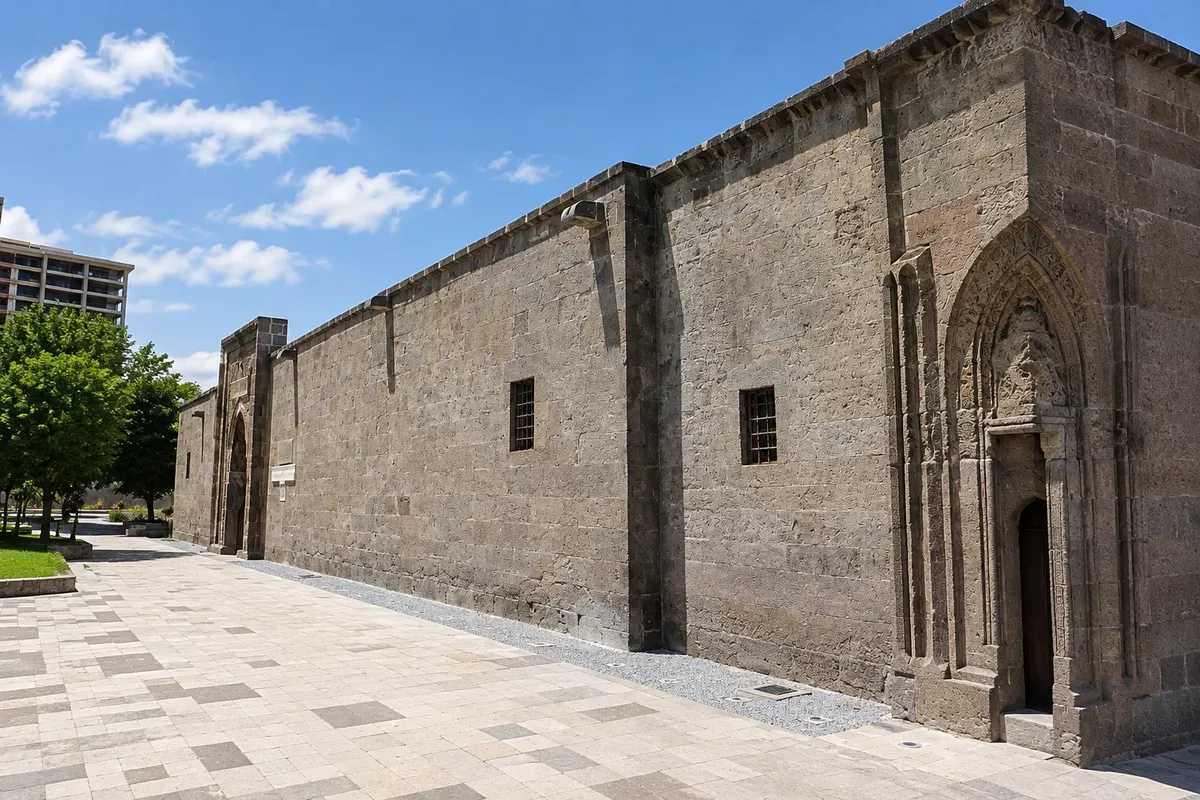
Stone walls in central Kayseri show ancient and Seljuk phases of the city’s defenses.
Doorways, courtyards and stone façades reveal another tradition of domestic architecture in the former Sinasos.
Large carved rock in the center of the village, among stone houses and traditional storage spaces.
Grouped fairy chimneys and excavated cavities in the sector known as the Vale of the Monks, near Avanos.
Tuff columns topped by blocks show erosion shapes at a scenic stop near Ürgüp.
Carved rock with a climb by steps and views over Cappadocia’s valleys and villages.
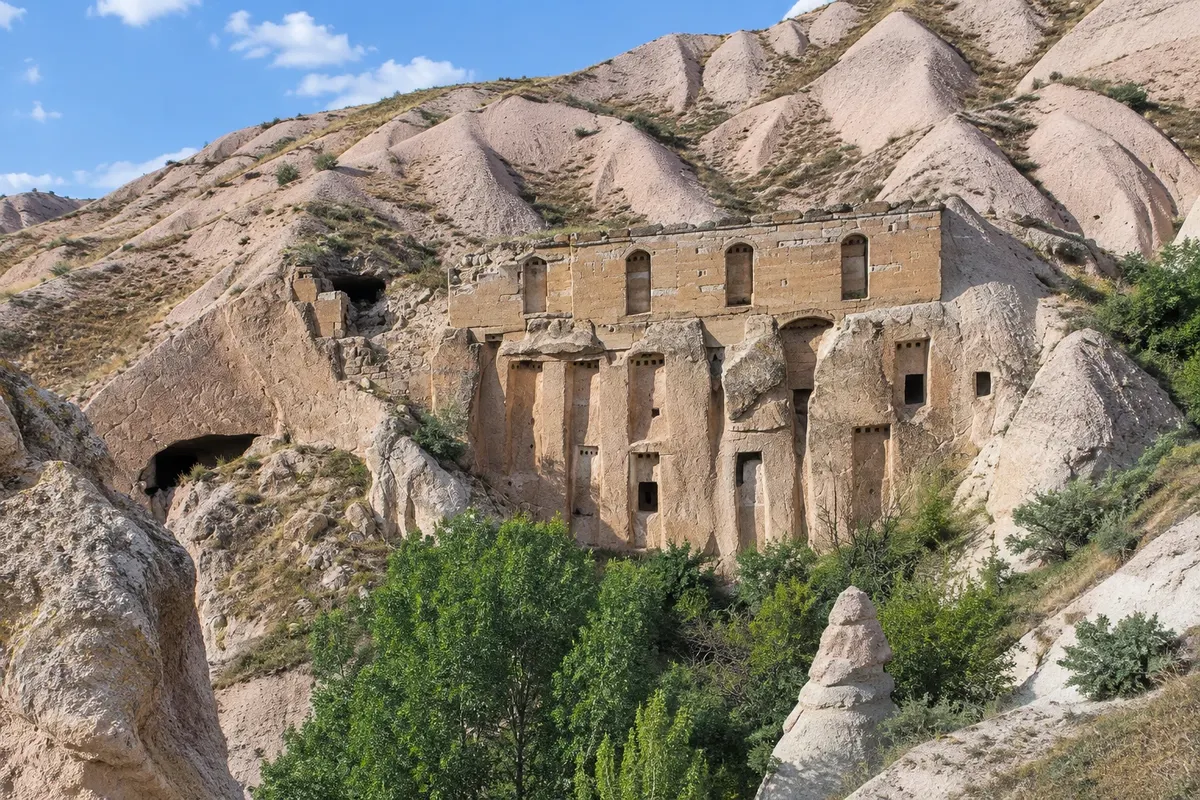
Dovecotes carved into the tuff walls show everyday uses of the rock in the valley between Uçhisar and Göreme.
Regional collection within the castle, featuring finds from Kültepe and materials from various phases of Anatolia.
Paths between ridges and reddish tuff walls, with opportunities for hiking and panoramic viewing.
Monastic complex hewn into the tuff, with passages and worship spaces on a slope at the north of the Ihlara valley.
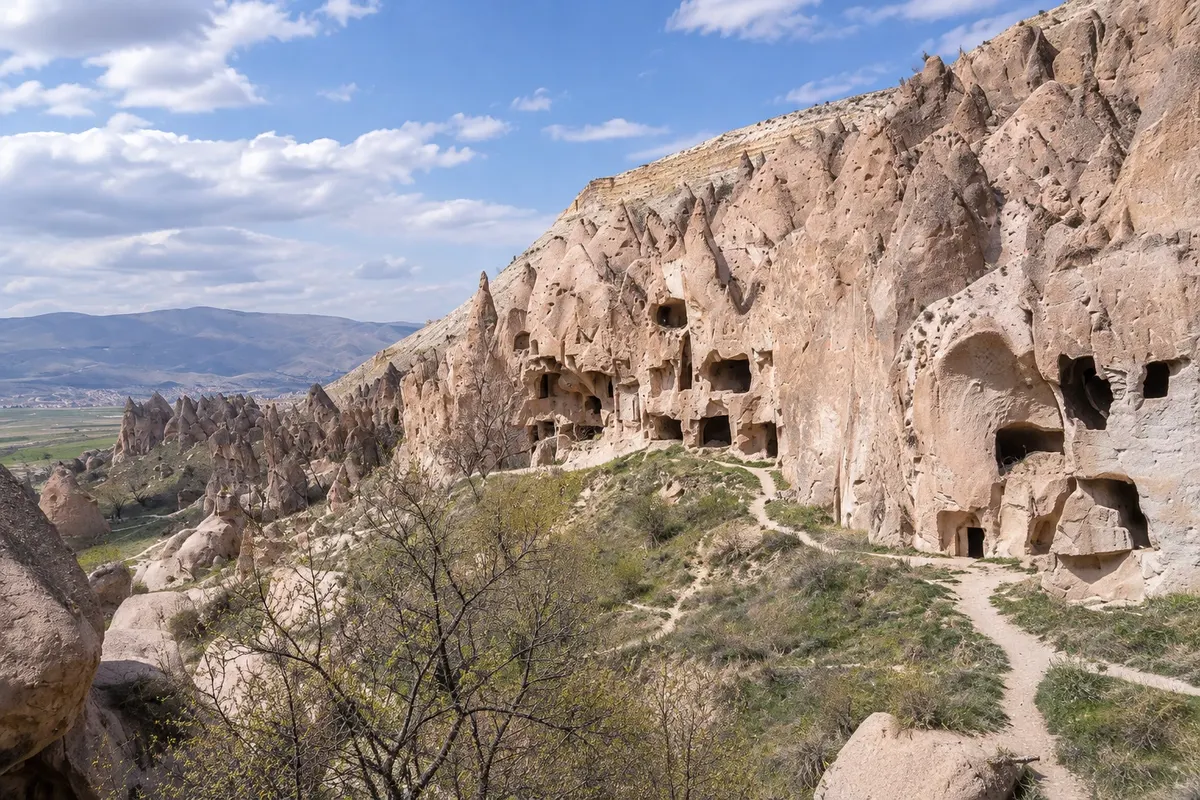
Ancient dwellings and religious spaces in the rock reveal the organization of a settlement in the Zelve valleys.
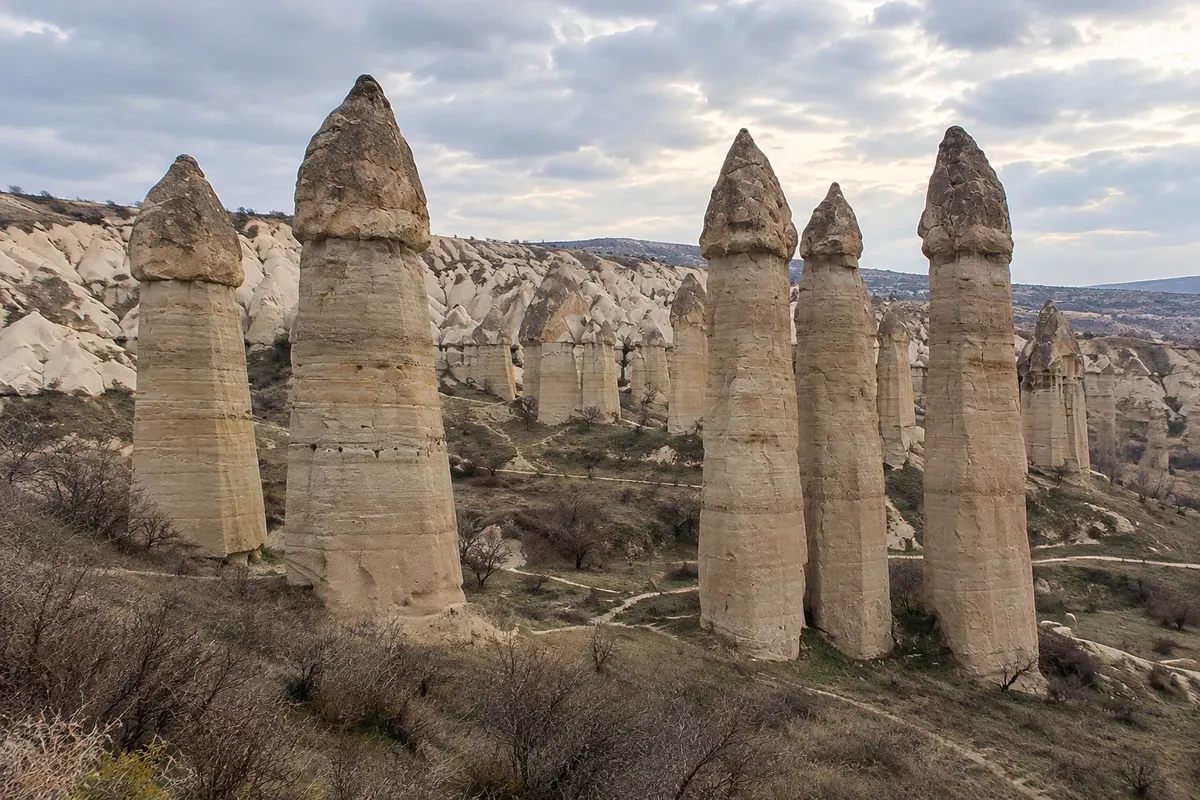
Elongated tuff columns form the Love Valley, with viewing and walking options near Göreme.
The Gevher Nesibe medical complex presents Seljuk civilization and the history of spaces for education and medical care.
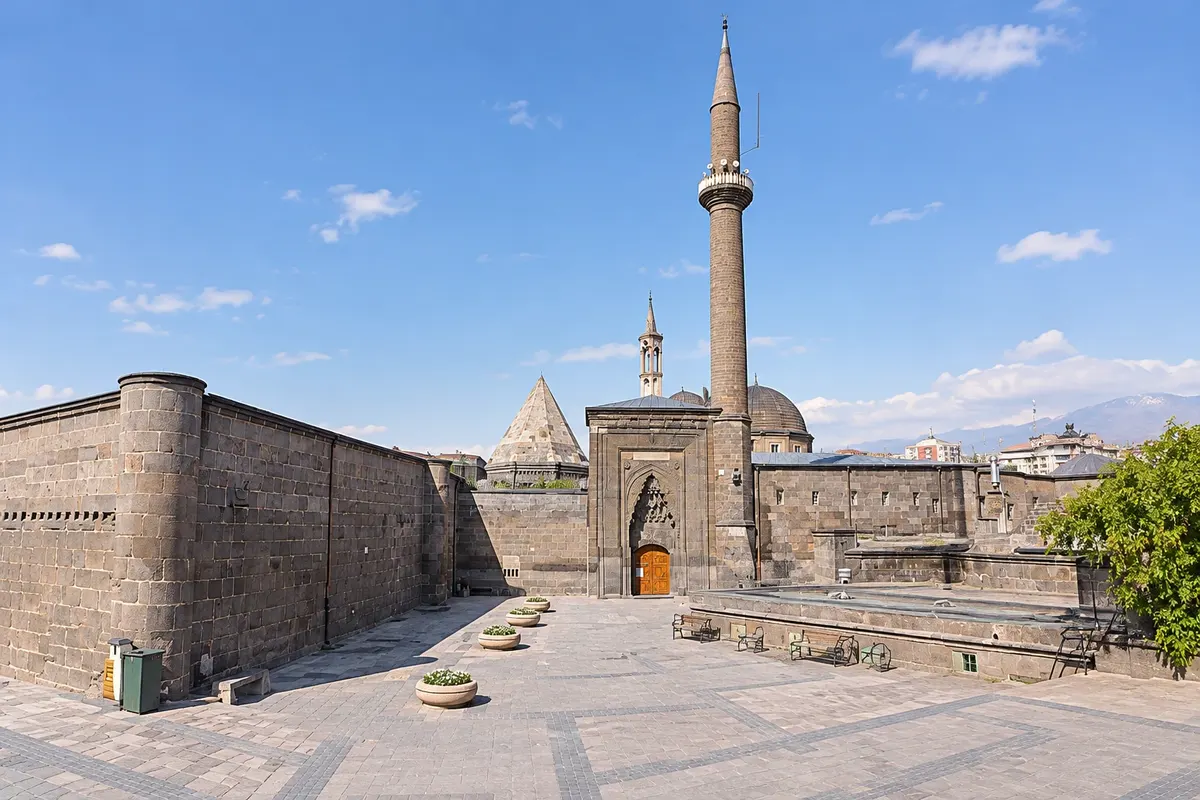
Mosque, madrasa, tomb, and bath make up a Seljuk stone complex next to Kayseri's central area.
Before you go
A little planning leaves more time to enjoy the journey.
In the Cappadocia valleys, April to June and September to October usually favor outdoor touring. The plateau is hot and dry in July and August and can see snow and severe cold from December to March; balloon flights depend on wind in any month.
The seasons shown are the most usual ones; nature doesn't always follow the calendar.
Four days allow you to spread Göreme, the nearby valleys, Avanos and an underground circuit. With five or six days, include Ihlara at a more relaxed pace. Reserve extra mornings if you want to attempt a balloon flight.
Göreme concentrates services for tours and makes the first visit easy. Uçhisar has hillside accommodation; Ürgüp offers urban infrastructure and road access. Ortahisar and Avanos allow a different connection with local life but require arranging transfers to the valleys.
Take your trash with you, follow the signs and support local businesses. In natural areas, follow the visiting guidelines.
Get your questions answered
Göreme lets you stay close to some valleys and tour departure points. Uçhisar and Ürgüp are also bases, with differences in terrain and transfers.
No. Operations depend on weather conditions and flight authorization. Spreading your stay over several nights increases the chances of rescheduling.
Compare the available connections and the transfer offered to your accommodation. Both serve Cappadocia, but neither eliminates the road portion to the valleys.
Yes, with transfers and organized tours. For hikes, set the start and end points; links between valleys and villages do not always match bus corridors.