1 city

 Turkey
 Brazil
 Argentina
 Bolivia
 Chile
 Colombia
 Ecuador
 Guyana
 French Guiana
 Falkland Islands (Malvinas)
 Paraguay
 Peru
 Suriname
 Uruguay
 Venezuela
 Germany
 Austria
 Belgium
 Croatia
 Denmark
 Spain
 Finland
 France
 Greece
 the Netherlands
 Hungary
 Ireland
 Iceland
 Italy
 Luxembourg
 Norway
 Poland
 Portugal
 the United Kingdom
 the Czech Republic
 Sweden
 SwitzerlandTurkey
 the Dominican Republic
 Fiji
Province · Anatólia Central
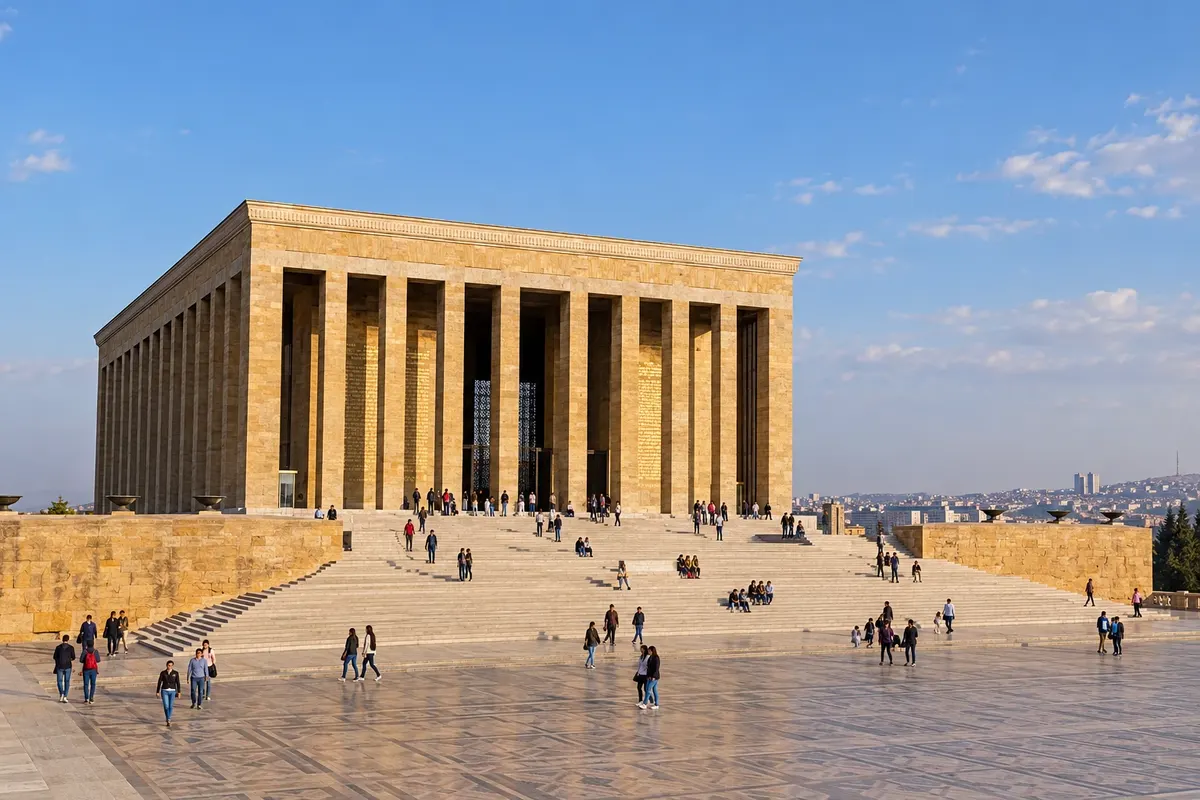
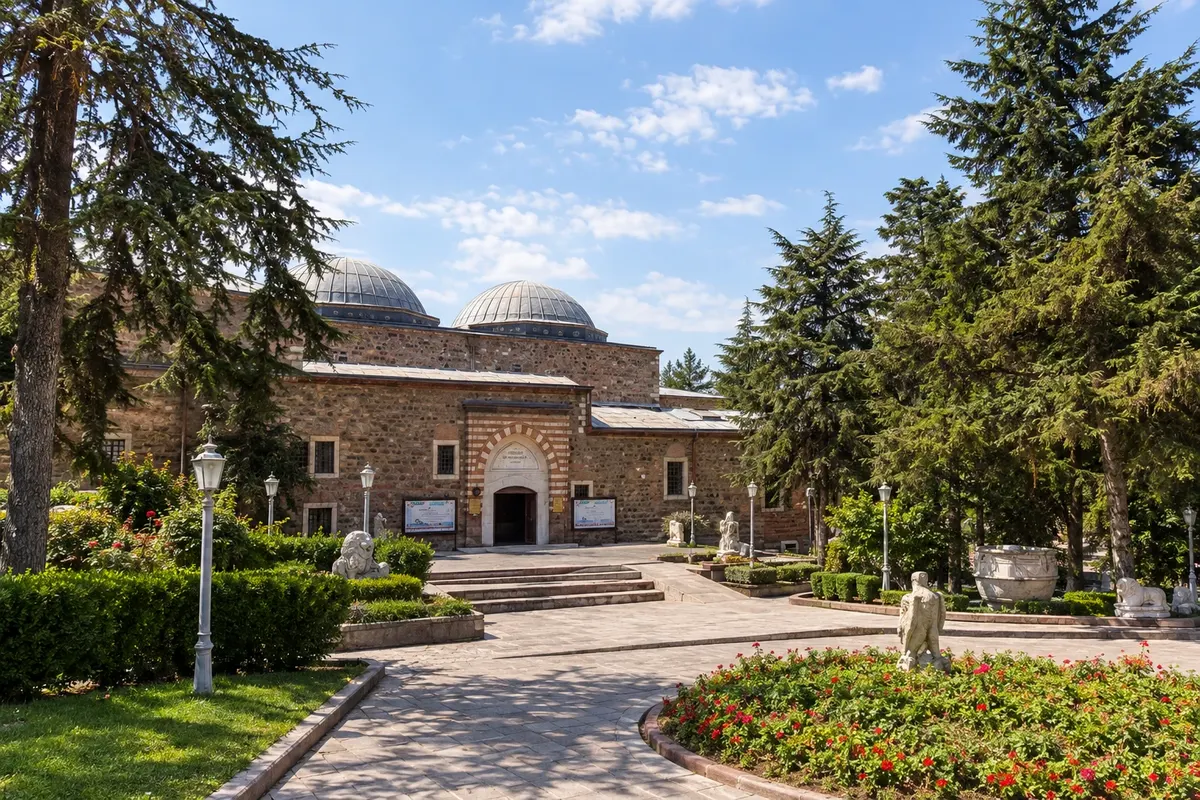
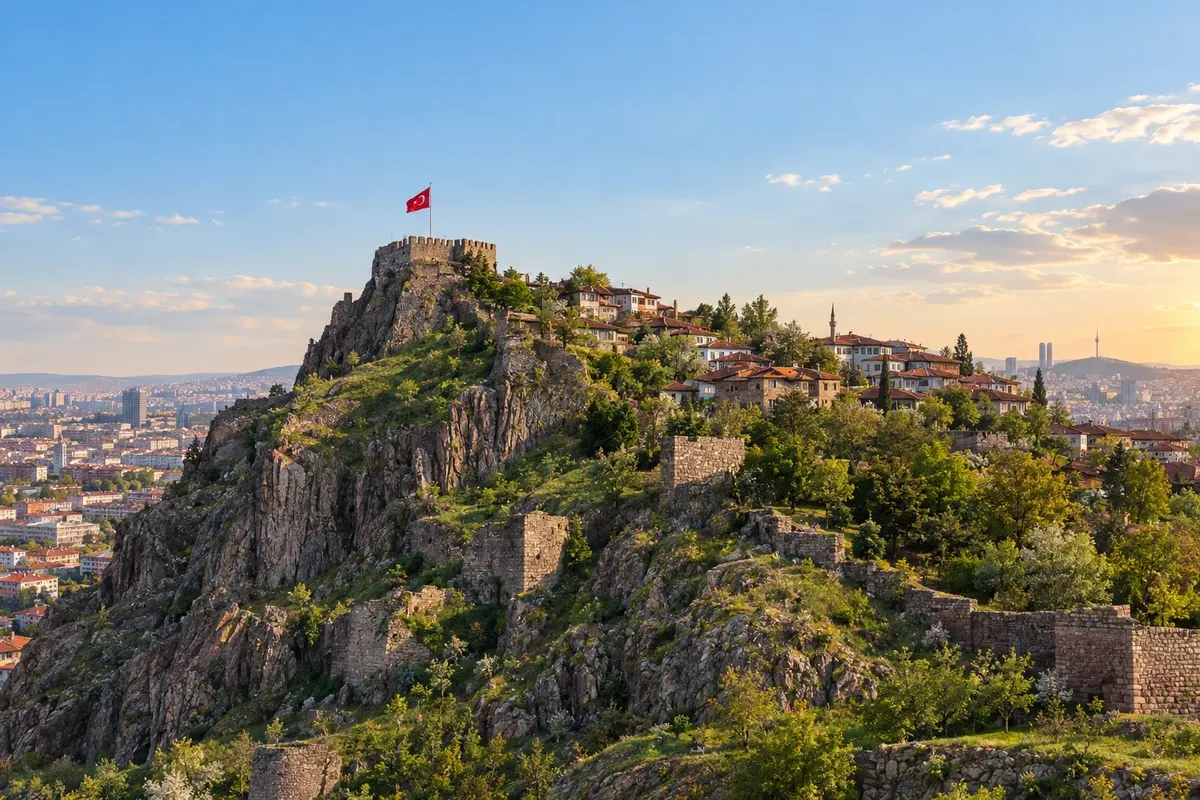
Ankara, the capital of Turkey, has Atatürk’s mausoleum, the Museum of Anatolian Civilizations, the old citadel and Gordion, the Phrygian capital of King Midas.
In the photo: Ankara Citadel (Ankara Kalesi)
Illustrative images. The pictures in this guide are illustrations based on the real place, not photographs, and may differ from it.

The province
Ankara has been the capital of Turkey since 1923 and is one of the country’s largest cities, located in the center of the Anatolian plateau. It is a city of ministries, universities and wide avenues, and preserves the sites most connected to the founding of the republic.
The Anıtkabir, mausoleum of Mustafa Kemal Atatürk, sits on a hill with a ceremonial plaza and a museum. The Museum of Anatolian Civilizations, housed in a restored Ottoman bazaar, brings together pieces from the Neolithic site of Çatalhöyük, Hittite artifacts, Phrygian objects and Urartian pieces. Above the old Ulus quarter, the citadel (Ankara Kalesi) has Byzantine walls and old houses, and nearby are the Temple of Augustus and Rome, the Hacı Bayram mosque and Roman baths. The Aslanhane mosque, with columns and a wooden roof, is part of the ensemble of medieval wooden mosques of Anatolia, a World Heritage Site.
In Polatlı, to the southwest, Gordion was the capital of the Phrygian kingdom, tied to the legends of King Midas and the Gordian knot. The large wooden tomb under an earthen mound can be seen from the inside, and the site is a UNESCO World Heritage Site. Beypazarı, to the northwest, preserves Ottoman houses and is known for silverwork and carrots; Kızılcahamam has thermal springs and forests.
The capital is the most common starting point for Hattusa, the Hittite capital at Boğazkale in the neighboring province of Çorum. At the table, Ankara tava—rice with oven-roasted lamb—is the city’s dish.
Destinations
Cities
The months from April to June and from September to October are usually the most pleasant. Summers are hot and dry, with cool nights; winters are often cold, with snow on some days. Museums operate year-round, which makes the capital a good choice even in winter.
Esenboğa Airport (ESB), north of the capital, handles domestic and international flights. High-speed trains link Ankara with Istanbul, Eskişehir, Konya, Karaman and Sivas, and the AŞTİ bus terminal has services to all over the country. In the city, the metro and buses connect the center with Ulus and the Anıtkabir.
Your questions
Two days allow you to see the Anıtkabir, the Museum of Anatolian Civilizations, the citadel and Ulus. With a third day you can visit Gordion or Beypazarı; Hattusa requires a full day.
Yes, with the high-speed train, but the day becomes tiring, with several hours of travel each way. Spending a night in the capital makes the visit more relaxed.
The collection follows chronological order: paintings and figurines from Çatalhöyük, bronze pieces from Alacahöyük, Hittite reliefs, Phrygian objects from Gordion and Urartian artifacts. Allow two hours.
The mausoleum sits on a hill near the center, with access via the Avenue of the Lions. There is a changing of the guard and a museum about the War of Independence and Atatürk’s life. There is no entrance fee; check opening days before you go.
Gordion is to the southwest, in Polatlı, and can be done in half a day. Hattusa, at Boğazkale, lies to the east, about two and a half hours by road, and requires a full day with Yazılıkaya.