4 cities

 Turkey
 Brazil
 Argentina
 Bolivia
 Chile
 Colombia
 Ecuador
 Guyana
 French Guiana
 Falkland Islands (Malvinas)
 Paraguay
 Peru
 Suriname
 Uruguay
 Venezuela
 Germany
 Austria
 Belgium
 Croatia
 Denmark
 Spain
 Finland
 France
 Greece
 the Netherlands
 Hungary
 Ireland
 Iceland
 Italy
 Luxembourg
 Norway
 Poland
 Portugal
 the United Kingdom
 the Czech Republic
 Sweden
 SwitzerlandTurkey
 the Dominican Republic
 Fiji
Province · Costa Turquesa
Muğla is the Turquoise Coast: Bodrum, Marmaris, Datça, Fethiye, Ölüdeniz, Göcek and Dalyan, with pine‑lined coves, rock-cut tombs and gulet cruises.
Illustrative images. The pictures in this guide are illustrations based on the real place, not photographs, and may differ from it.

The province
Muğla occupies southwest Turkey, where the Aegean meets the Mediterranean, with one of the country's most indented coastlines: peninsulas, gulfs and pine‑fringed coves. The capital, also called Muğla, lies inland and preserves old houses with tall chimneys; most travelers stay on the coast.
Bodrum, ancient Halicarnassus, has St. Peter’s Castle housing the Museum of Underwater Archaeology, and the site of the Mausoleum at Halicarnassus, one of the Seven Wonders of the Ancient World. The peninsula hosts marinas and coves such as Gümüşlük, Yalıkavak and Türkbükü.
Marmaris and İçmeler sit in a sheltered bay, a departure point for boat trips and for the Datça peninsula, with the ancient city of Cnidus at its tip. Further east, Dalyan has rock‑cut tombs above the river, the ruins of Kaunos and İztuzu beach, a turtle nesting area.
Fethiye is the base for the Ölüdeniz lagoon, paragliding from Mount Babadağ, the abandoned village of Kayaköy, Butterfly Valley and the Saklıkent canyon. Göcek, among islands and bays, is one of the hubs for gulet cruises, the traditional wooden boat, known as the Blue Voyage (Mavi Yolculuk).
On the table, Bodrum’s çökertme kebabı—meat over fried potatoes with yogurt—fish and herb meze. Pine honey from Muğla is a typical product of the province.
Destinations
Cities
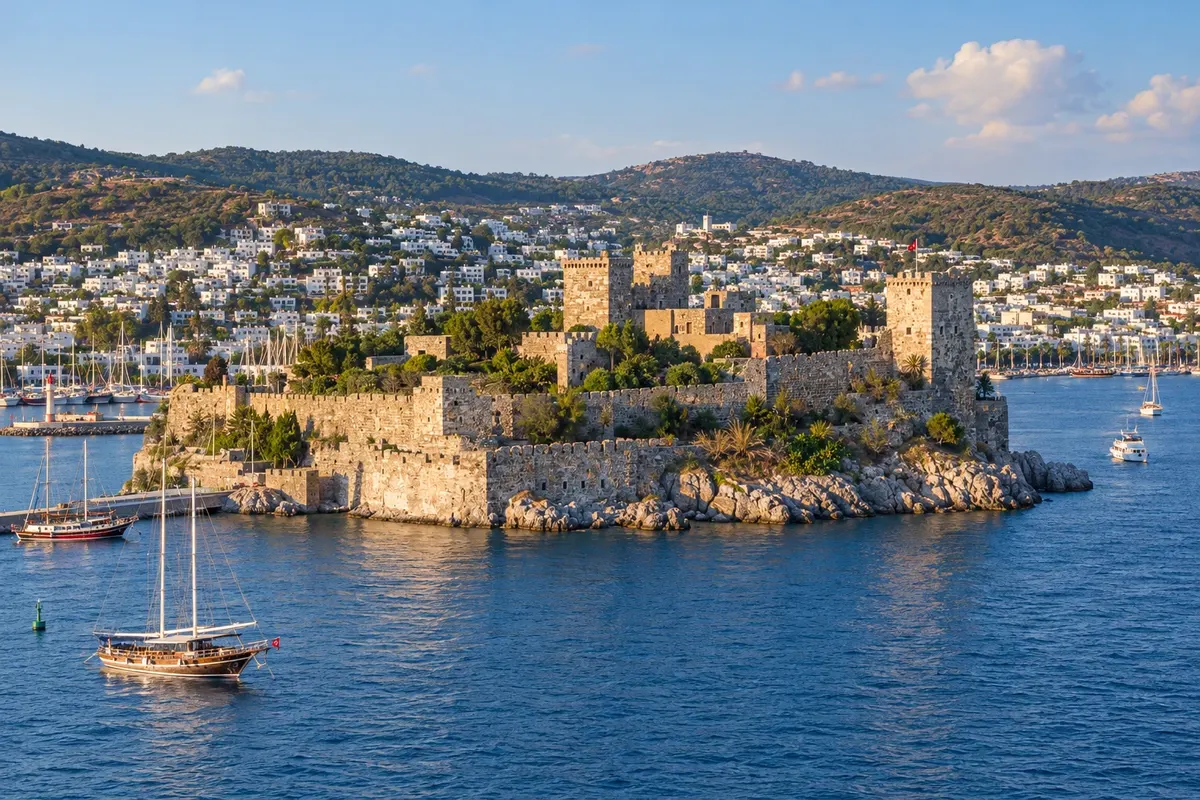
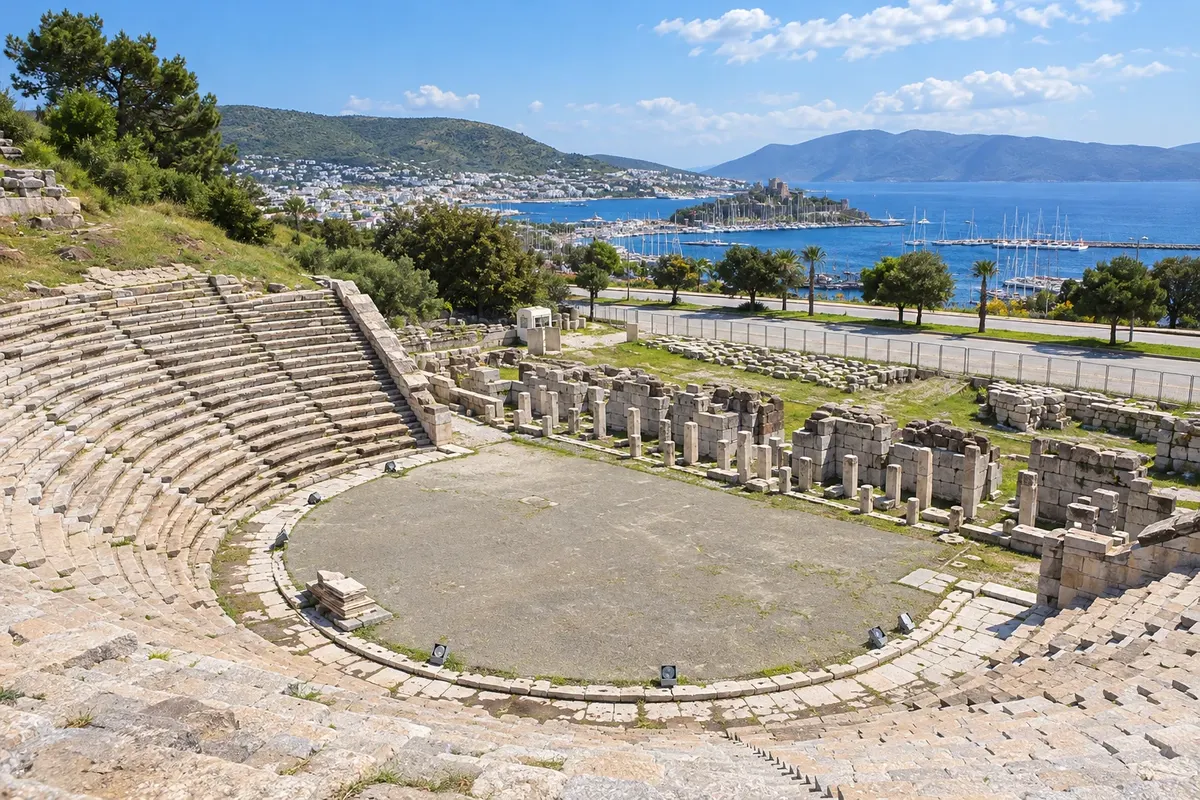
Bodrum occupies ancient Halicarnassus, with a castle and the Museum of Underwater Archaeology on the waterfront. The mausoleum and the theatre add remains of the ancient city. The peninsula widens the itinerary to coves and settlements such as Gümüşlük, Yalıkavak and Türkbükü, which have different locations and access.
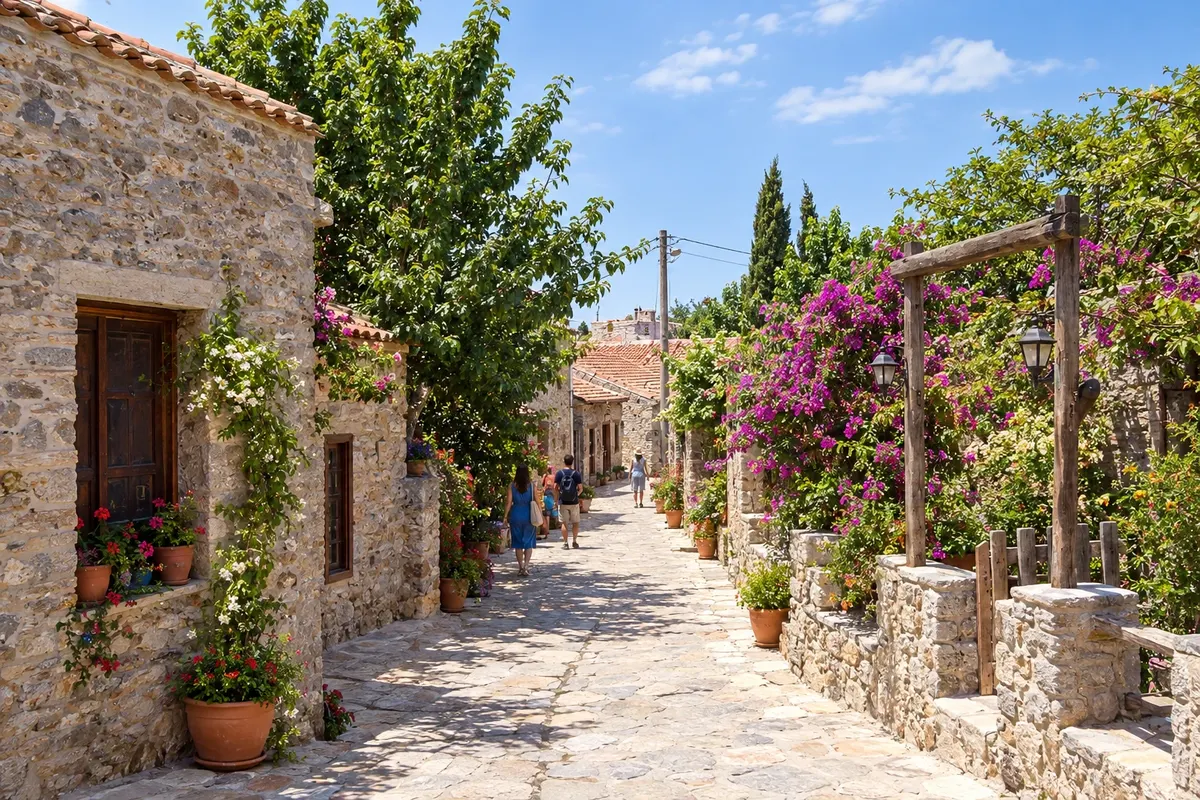
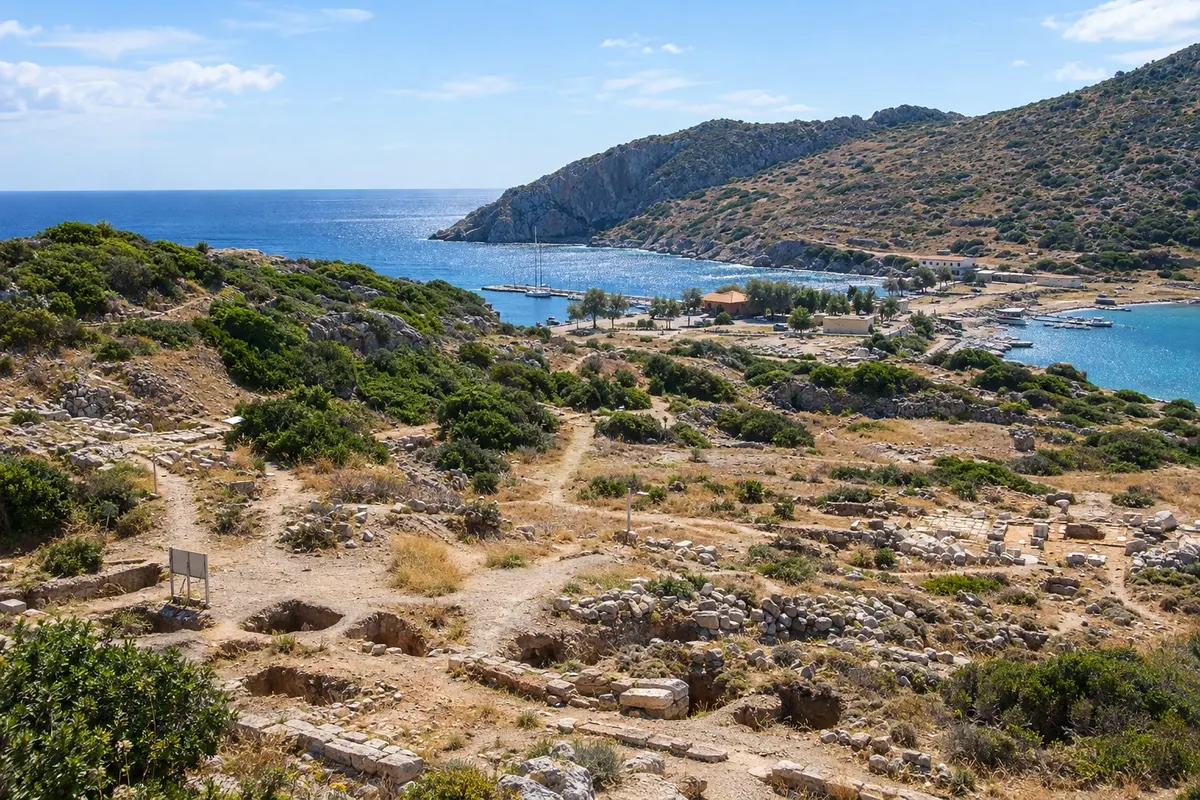
Datça stretches along a peninsula of coves and coastal settlements. Eski Datça adds stone houses in an inland cluster, while Knidos sits at the tip and requires its own road. Having a base allows spreading landscape and archaeology over different days instead of treating the whole peninsula as a single beach.
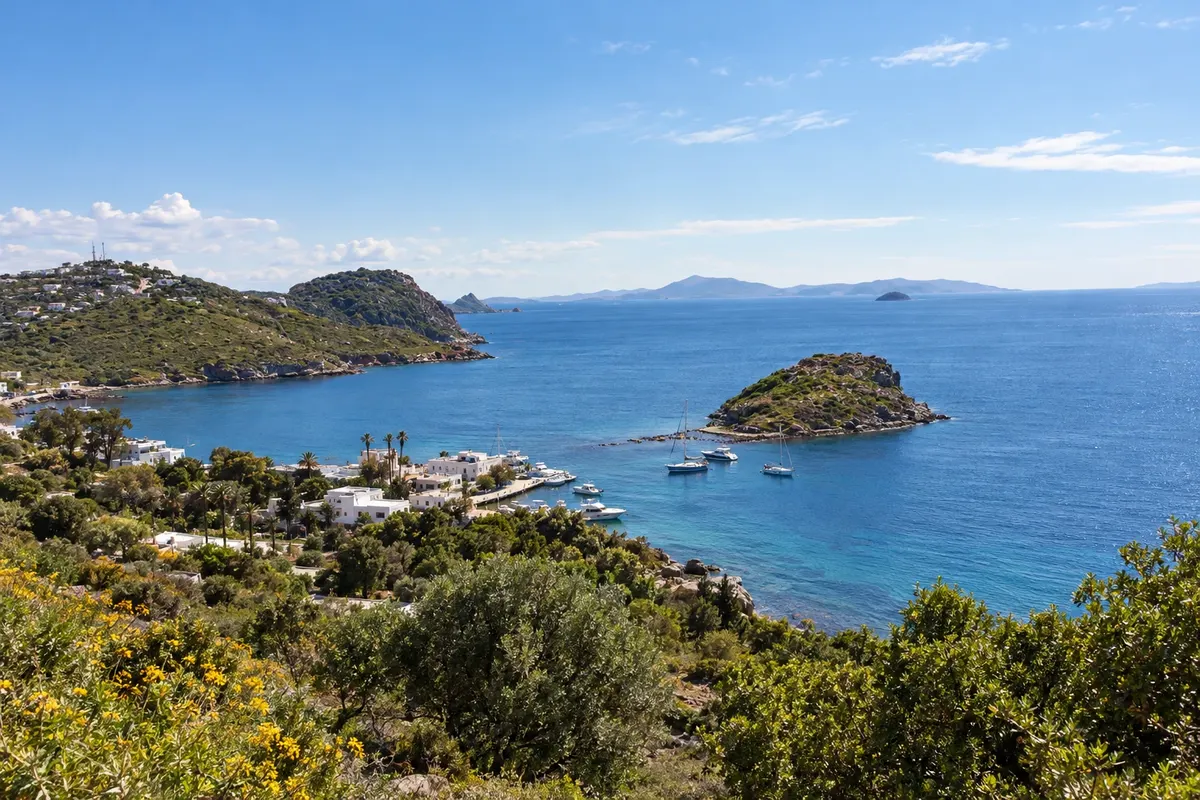
Gümüşlük includes a cove and the settlement linked to the ancient Myndos on the west side of the peninsula. The shoreline allows a scenic walk, with attention to archaeological protection zones. It’s a choice for slowing the pace between Bodrum’s heritage visits and other coastal stretches.
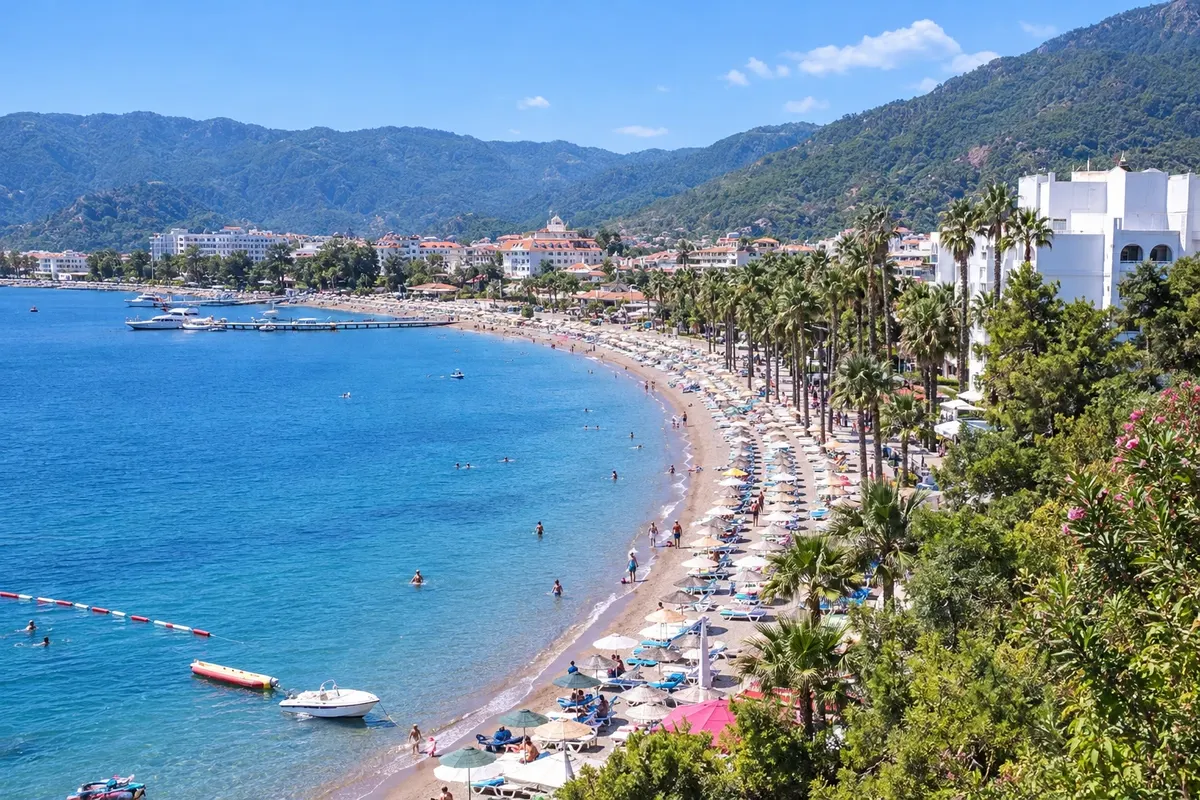
İçmeler is a bay-side settlement near Marmaris, with a beach and walking areas along the shore. The tree-covered slopes form the backdrop, while the center concentrates access points and services. A visit here works as a coastal stop, not requiring a boat trip or a club stay.
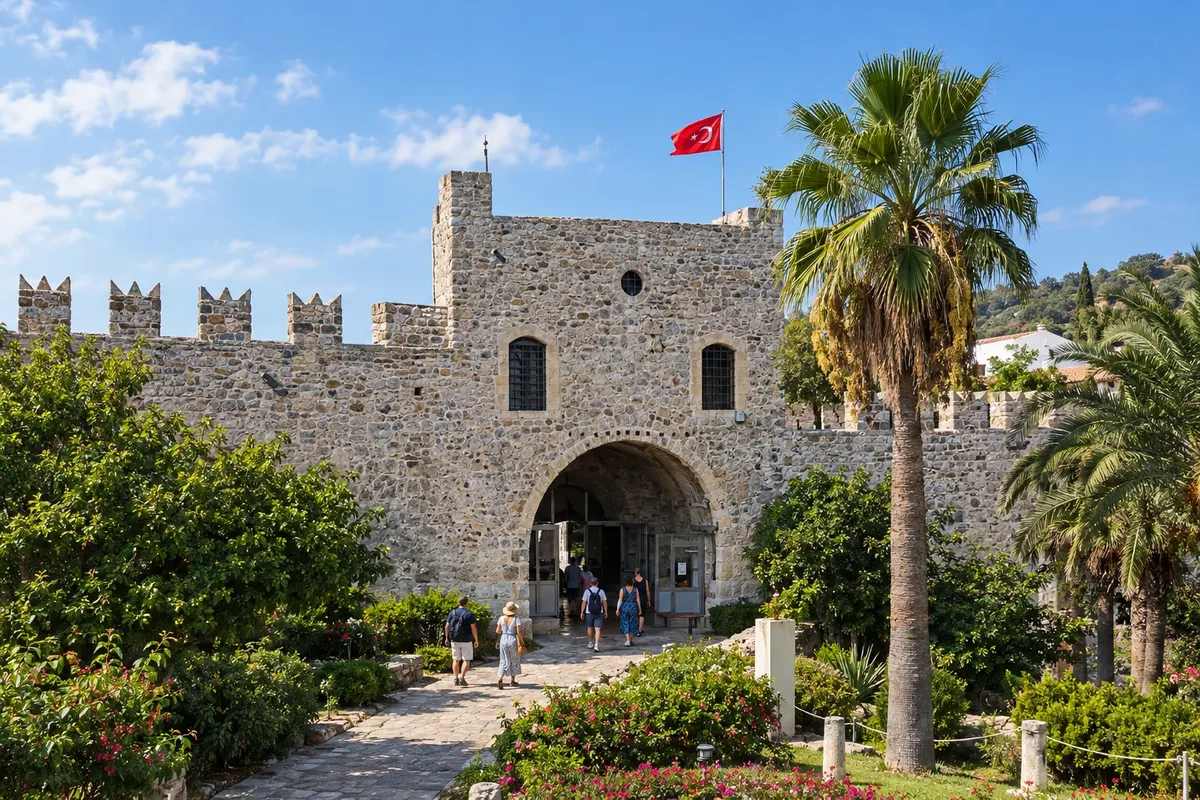
Marmaris is centered on a bay and a port quarter with a castle and museum. The waterfront allows urban walks, while Sedir requires a boat trip and a road transfer to the embarkation point. The town also serves as a base for İçmeler and for gulet trips, whose routes should be checked separately.
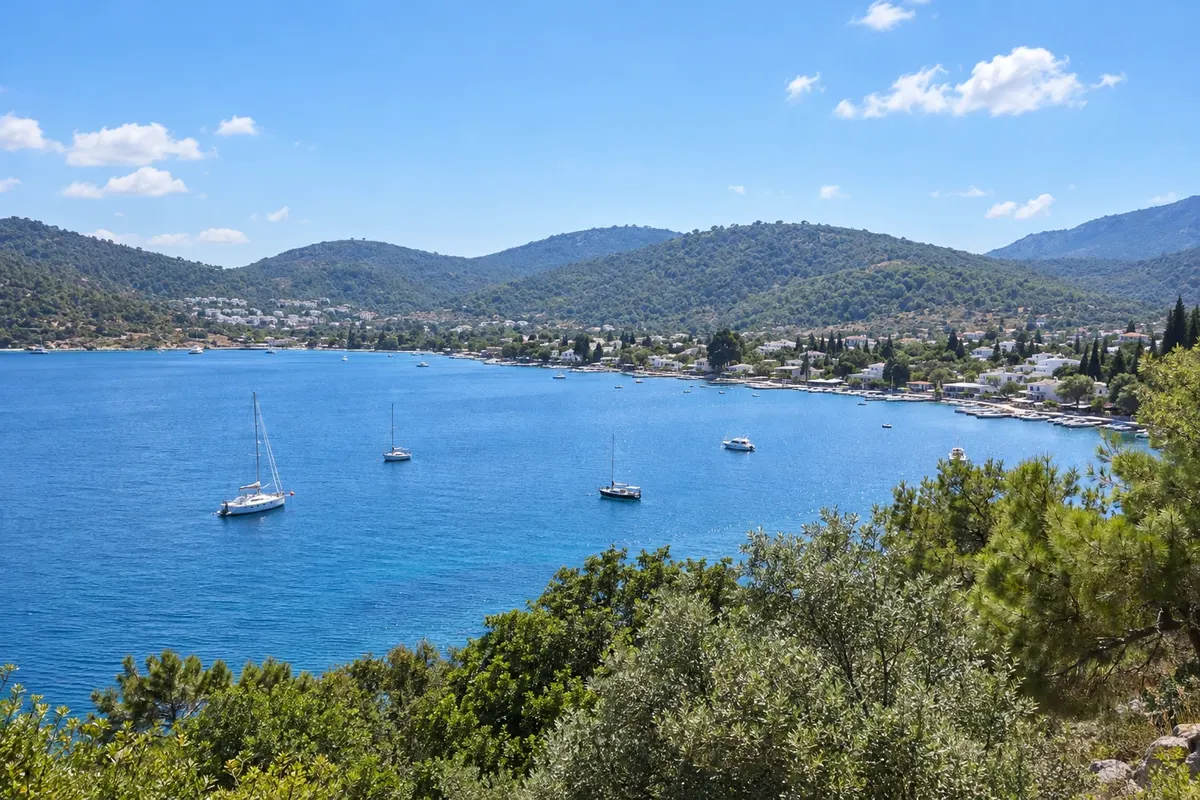
Türkbükü is a coastal settlement on the northern part of the Bodrum peninsula. The bay concentrates seaside stay options, with accesses and services that should be compared. The visit can be short, but basing yourself locally requires considering the road to the castle and the sites in central Bodrum.
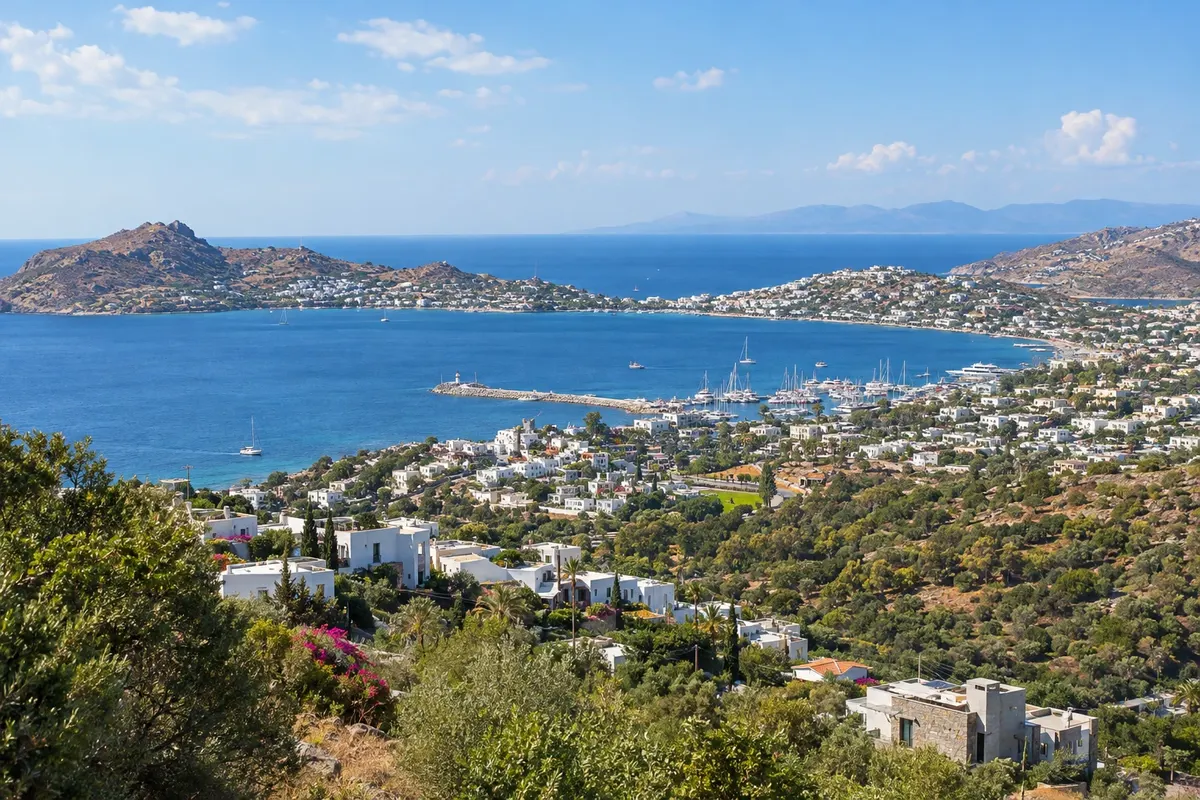
Yalıkavak is located on the northern part of the Bodrum peninsula, around a bay associated with boating. The central waterfront offers an urban stroll, while other coastal options depend on the chosen access. The presence of marinas does not replace the landscape as the reason to visit nor does it require visiting specific businesses.
May, June, September and October usually combine sea and hiking with milder temperatures. July and August are the hottest, busiest months, with the boat and beach season at its peak. From November to March it rains more, and some excursions and beach services operate less frequently.
The province has two airports: Milas‑Bodrum (BJV), serving Bodrum and the peninsula, and Dalaman (DLM), serving Fethiye, Göcek, Dalyan and Marmaris. Both have domestic flights—mainly from Istanbul and Ankara—and seasonal international flights. Check before booking. Long‑distance buses connect the coastal cities with each other and with İzmir and Antalya.
Your questions
Bodrum has marinas, nightlife and coves on the peninsula; Marmaris has a large bay and boat trips, with Datça nearby; Fethiye is a base for Ölüdeniz, Kayaköy, Saklıkent and hiking routes. With a week or more you can combine two of them.
Milas‑Bodrum (BJV) serves the Bodrum peninsula. Dalaman (DLM) is closer to Göcek, Dalyan, Fethiye and Marmaris. Choose based on where you’re staying and check transfer times.
It’s a multi‑day trip on a traditional wooden boat, the gulet, stopping in coves to swim and sleeping aboard. The most common departures are from Bodrum, Marmaris, Göcek and Fethiye, between May and October.
İztuzu beach, in Dalyan, is a nesting area for the loggerhead turtle, which typically nests between May and September. At that time the beach has protection rules and closes at night.
Tandem flights with an instructor launch from Mount Babadağ and land on the Ölüdeniz shore, with views of the lagoon. They depend on wind and weather: confirm with the operator on the day.