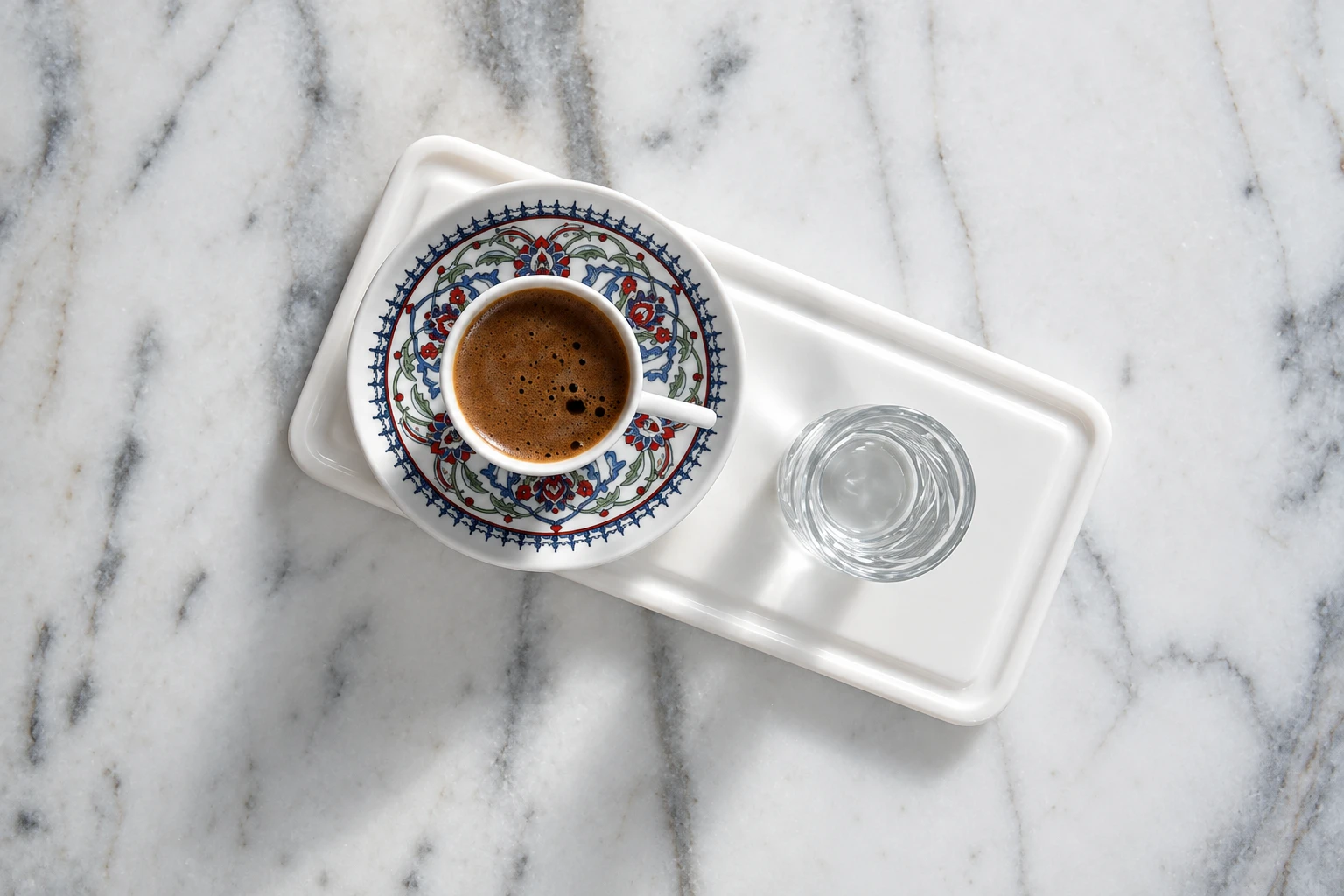
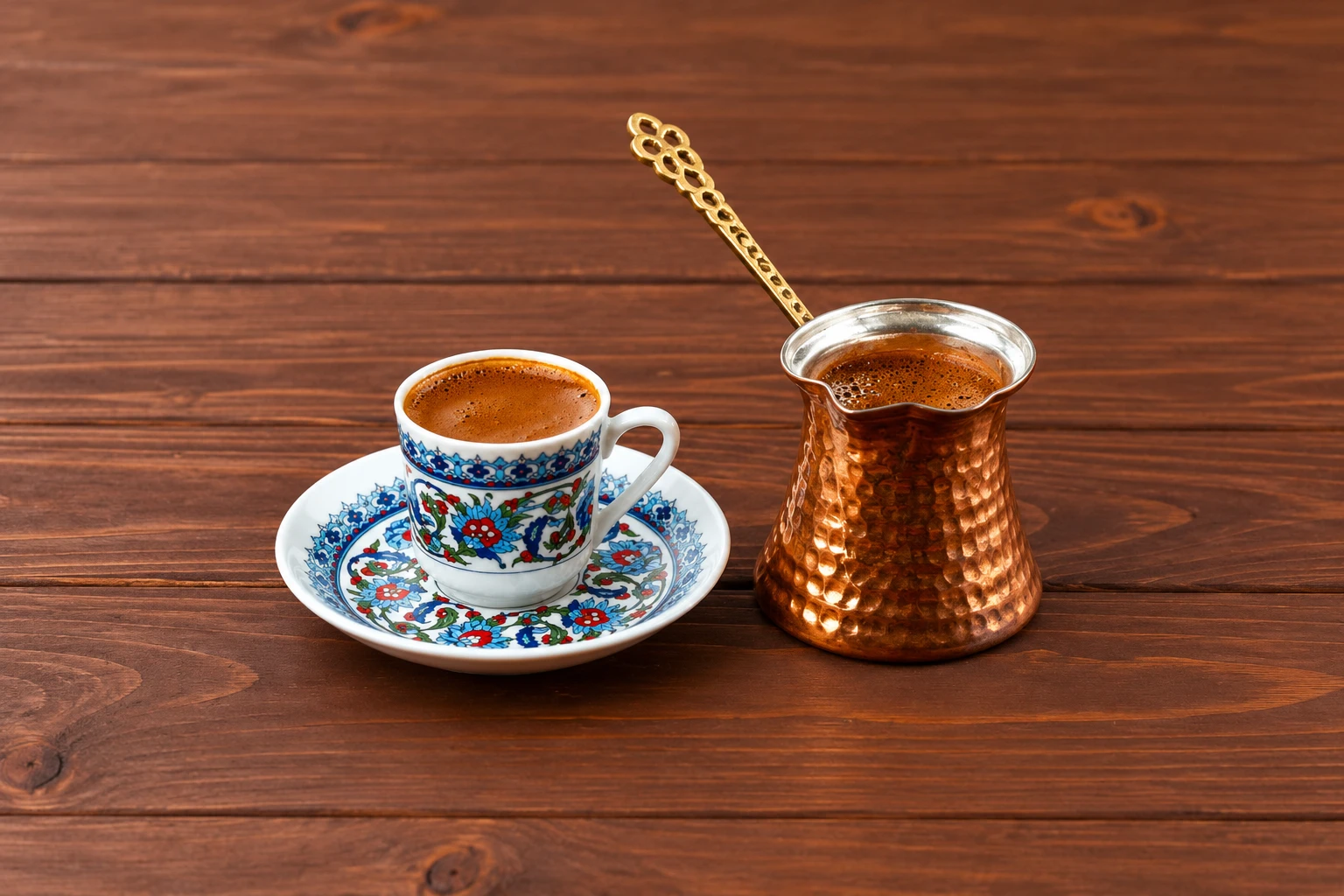
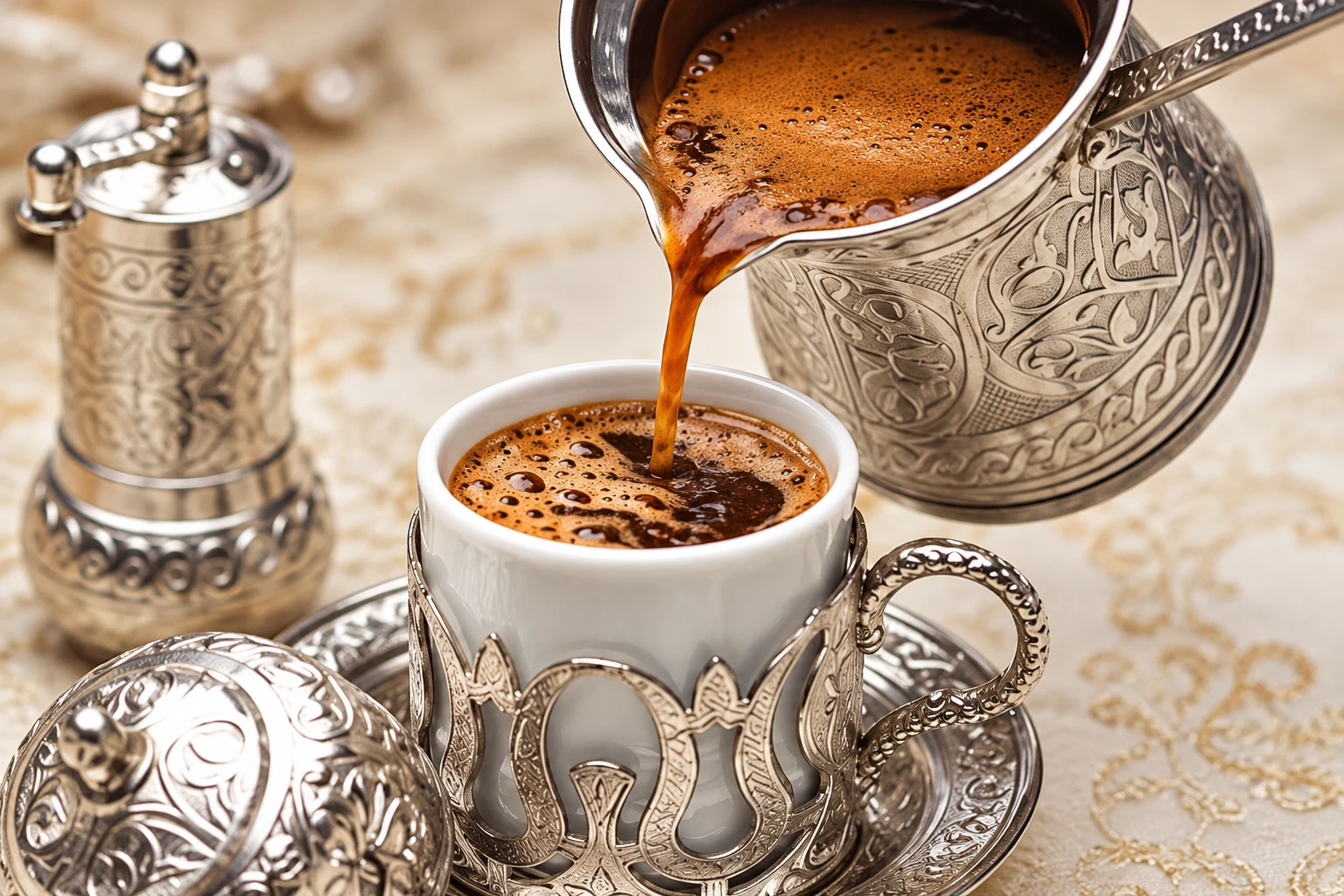
Turkish coffee starts with roasted beans ground into a very fine powder. The grounds, cold water and sugar, if desired, are placed together in a cezve, a small long-handled coffee pot, which is slowly heated until the foam rises. Sugar is added beforehand, so you order the coffee sade (without sugar), az şekerli (a little), orta (medium) or şekerli (sweet). The drink is served in small cups, unfiltered: the grounds settle at the bottom and the foam stays on top.
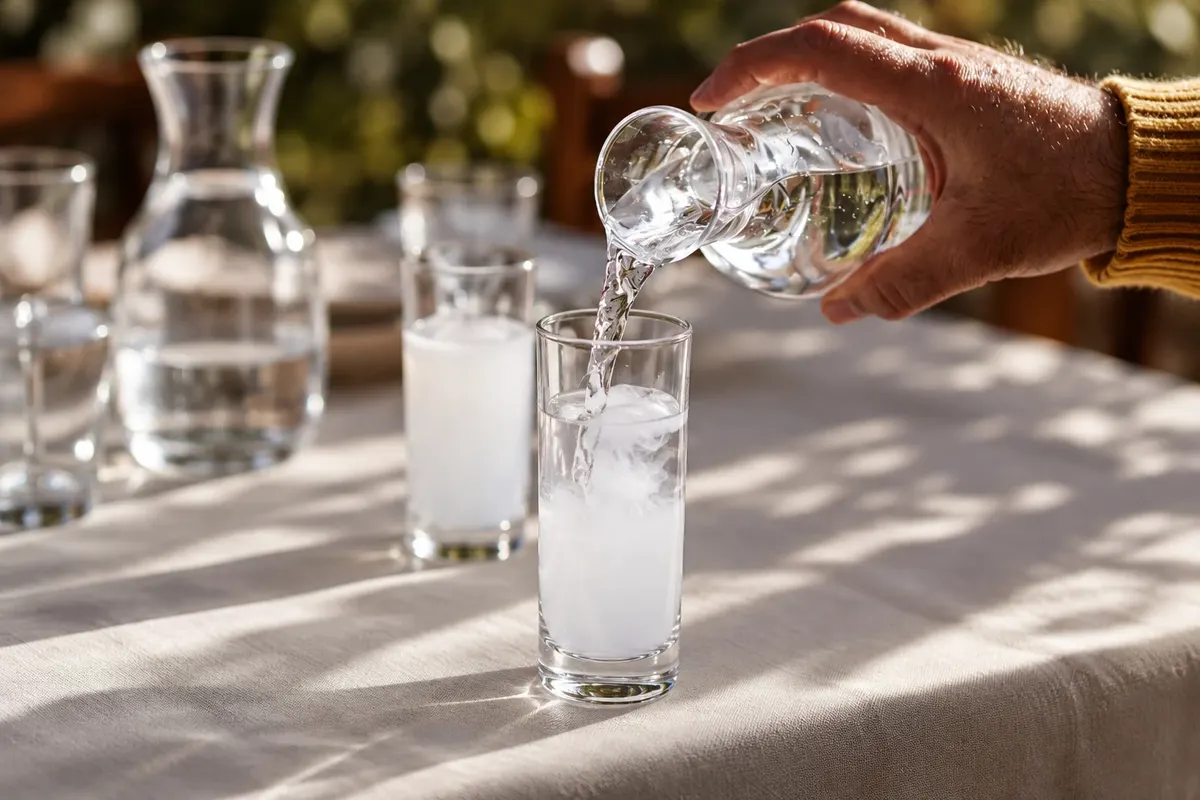
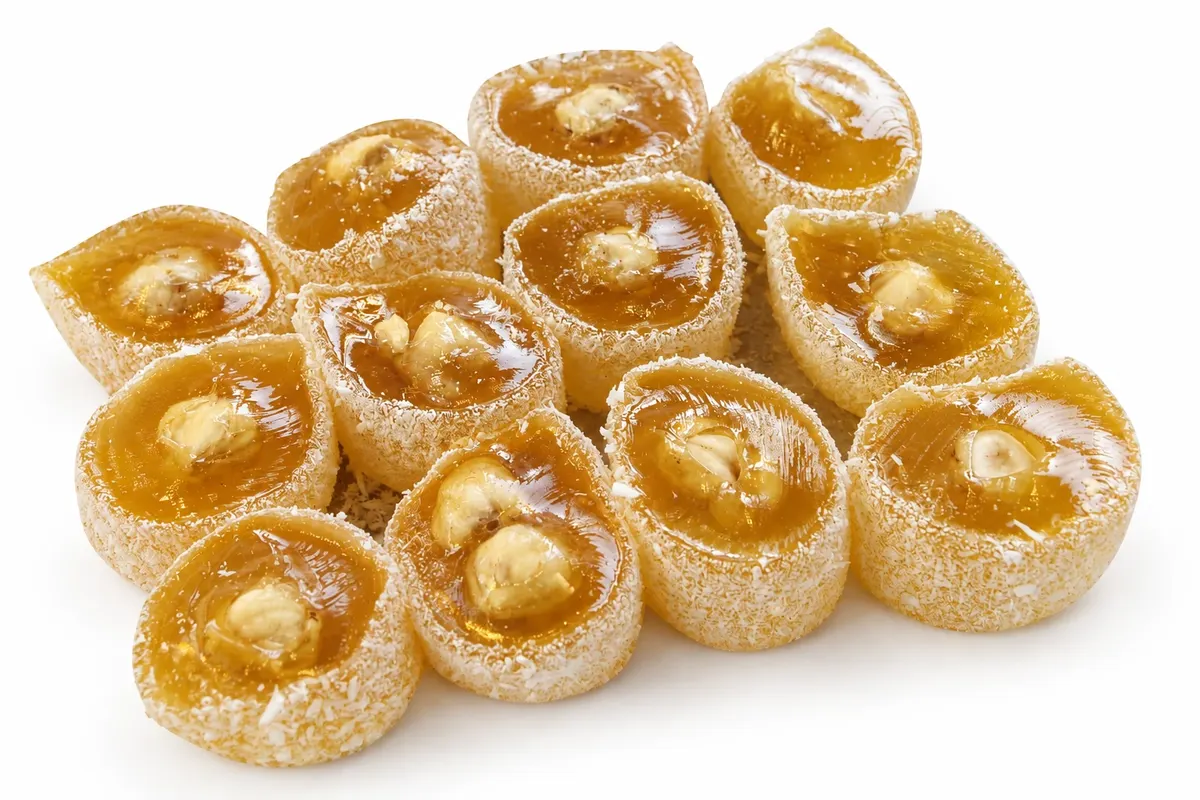
The coffee is served with a glass of water and often a piece of lokum. It is sipped slowly during conversation, in homes and in coffee houses where people meet to talk, read and exchange news. Inviting someone for coffee is a sign of friendship and hospitality, and a Turkish saying claims that a cup of coffee leaves a memory for forty years.
Coffee has a place in ceremonies. It is part of engagement rituals and is served to guests at parties and holidays. After drinking, it is common to turn the cup over onto the saucer and read fortune from the patterns left by the grounds.
Since 2013, the culture and tradition of Turkish coffee have been included in UNESCO’s list of intangible cultural heritage, described as a practice of the whole community transmitted within families through observation and participation. Very similar preparation methods exist in Greece, Cyprus, the Balkans and the Arab world, where the drink has other names, such as Greek coffee or Bosnian coffee; UNESCO’s recognition refers specifically to the tradition in Turkey.


 Brazil
 Argentina
 Bolivia
 Chile
 Colombia
 Ecuador
 Guyana
 French Guiana
 Falkland Islands (Malvinas)
 Paraguay
 Peru
 Suriname
 Uruguay
 Venezuela
 Germany
 Austria
 Belgium
 Croatia
 Denmark
 Spain
 Finland
 France
 Greece
 the Netherlands
 Hungary
 Ireland
 Iceland
 Italy
 Luxembourg
 Norway
 Poland
 Portugal
 the United Kingdom
 the Czech Republic
 Sweden
 Switzerland
 Canada
 the United States
 Mexico
 the Dominican Republic
 South Africa
 Australia
 Fiji
 New Zealand
 Papua New Guinea