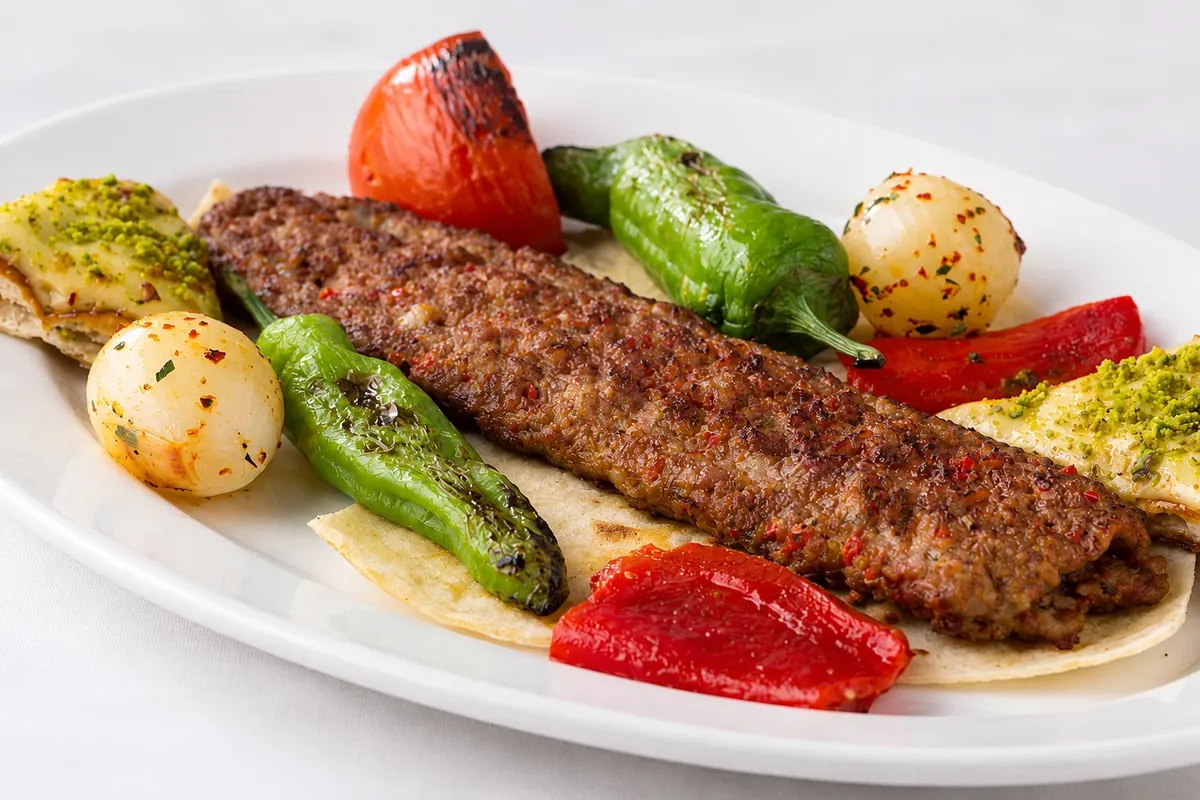
Dish · Adana
Adana kebabı
Wide skewer of lamb meat with tail fat, hand-chopped (zırh) with red pepper, grilled over coals and served with lavaş, onion with sumac, grilled tomato and pepper.

 Turkey
 Brazil
 Argentina
 Bolivia
 Chile
 Colombia
 Ecuador
 Guyana
 French Guiana
 Falkland Islands (Malvinas)
 Paraguay
 Peru
 Suriname
 Uruguay
 Venezuela
 Germany
 Austria
 Belgium
 Croatia
 Denmark
 Spain
 Finland
 France
 Greece
 the Netherlands
 Hungary
 Ireland
 Iceland
 Italy
 Luxembourg
 Norway
 Poland
 Portugal
 the United Kingdom
 the Czech Republic
 Sweden
 SwitzerlandTurkey
 the United States
 Mexico
 the Dominican Republic
 South Africa
 Australia
 Fiji
Illustrative images. The pictures in this guide are illustrations based on the real place, not photographs, and may differ from it.


Traditional food · Turkey
From the balık ekmek on Istanbul’s docks to the büryan of Siirt, which comes out of the pit-oven at dawn: Turkish specialties, each tied to a city or province by the name they have there.
In the photo: Balões sobre Göreme, Capadócia
The cuisine
Turkish food varies greatly from one region to another. On the Aegean and Mediterranean coasts olive oil, beans, vegetables and fish are common; on the Anatolian plateau, wheat, dough and lamb meat; in the southeast, near Syria, pistachio, dried chili and charcoal-grilled kebabs; on the Black Sea coast, corn, butter and cheese. Many dishes carry in their name the city or province where they are known, and that’s how Turks order them: Adana kebabı, Kayseri mantısı, Antep baklavası.
This selection brings together one specialty per city or province, from Thrace on the European side to the border with Armenia. For each place a dish, a sweet or a drink was chosen that local sources treat as that place’s reference. When there was more than one strong candidate, greater weight was given to what is known nationwide by the place name.
Most of these specialties have a geographical indication (coğrafi işaret) registered with the Turkish Patent and Trademark Institute (TÜRKPATENT). The registration, usually requested by the chamber of commerce, the municipality or a local association, describes the ingredients, the method of preparation and the production area, and provides for periodic inspection. It confirms the link to the place, but does not mean the dish only exists there: many are eaten across the country, and some are contested between neighboring provinces, such as testi kebabı (Nevşehir and Yozgat) and büryan (Siirt and Bitlis).
Some traditions are street and everyday fare, like the balık ekmek of Eminönü, the boyoz of İzmir’s breakfast and the ciğer kebabı of Diyarbakır, eaten even in the morning. Others are for celebrations and home cooking, such as Mardin’s kaburga dolması, Çorum’s İskilip dolması and Rize’s muhlama, served at weddings and special dates. There are also sweets that travel as souvenirs: Safranbolu’s lokum, İzmit’s pişmaniye and Gaziantep’s baklava.
For visitors it’s useful to know that “kebab” in Turkey is not a single dish: it is the name for many roasted or grilled meats, each with its cut, its skewer and its oven. Adana kebabı is spicy; Şanlıurfa’s patlıcanlı kebabı alternates meat and eggplant on the skewer; testi kebabı is cooked inside a clay pot; Erzurum’s cağ kebabı rotates on a horizontal spit. Mutton and lamb are common, and many dishes arrive at the table with bread, onion, parsley and dried chili.
3 flavors
Wide skewer of lamb meat with tail fat, hand-chopped (zırh) with red pepper, grilled over coals and served with lavaş, onion with sumac, grilled tomato and pepper.
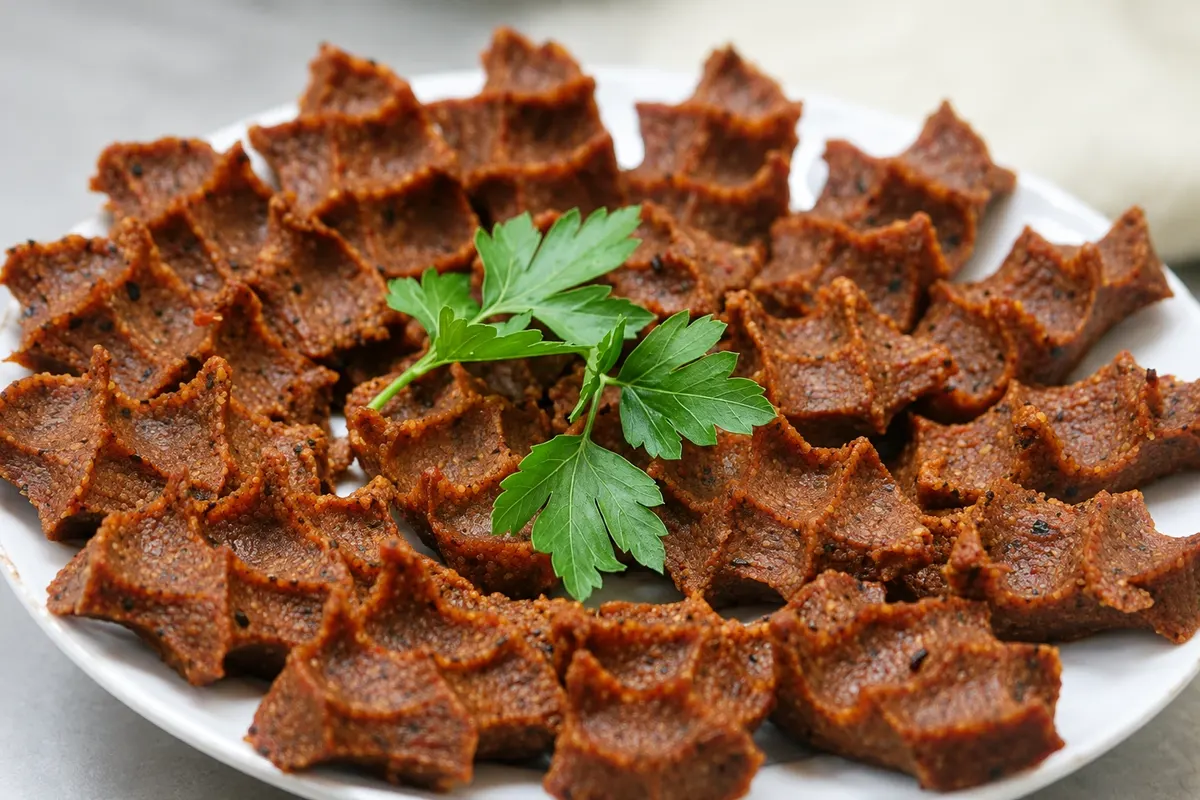
Fine bulgur hand-kneaded with dried pepper (isot), pepper and tomato paste, onion, garlic, walnuts, parsley, pomegranate molasses and spices, meatless, served in lettuce leaves: Adıyaman's çiğ köfte.
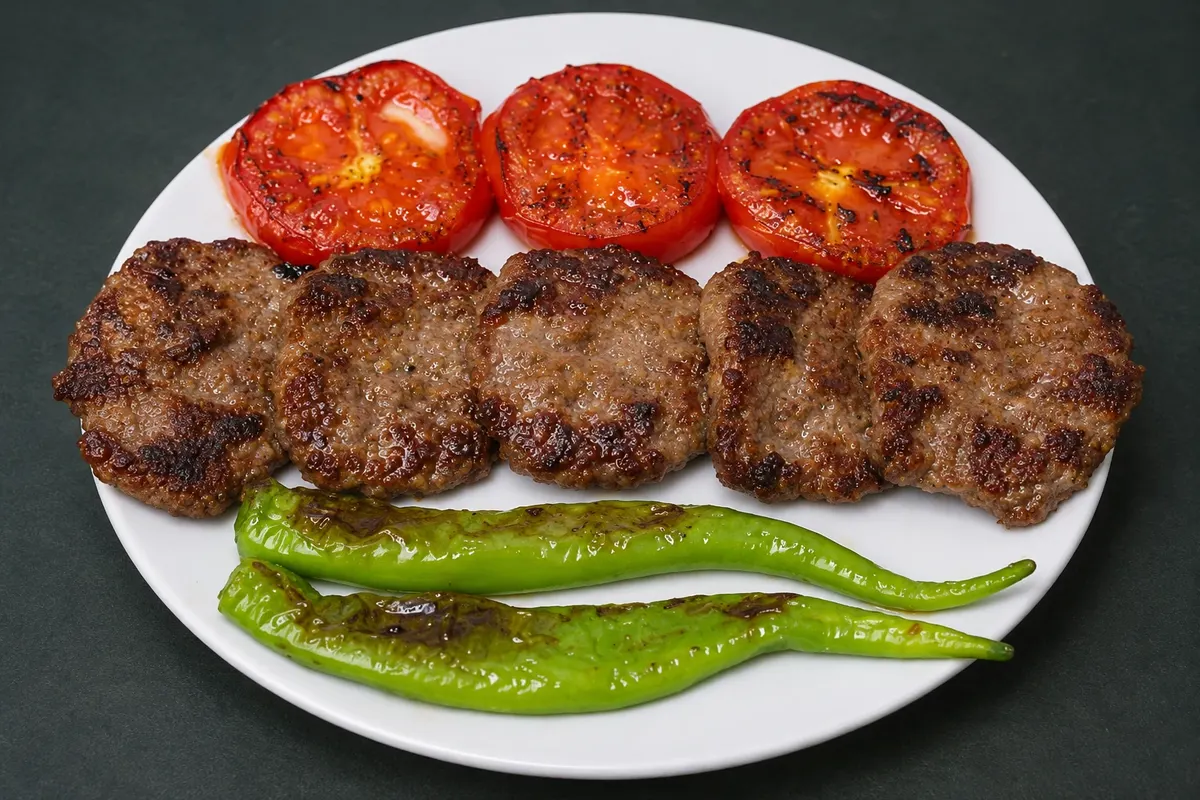
Flattened beef meatballs, stale bread, garlic and salt, grilled over charcoal and served with roasted pepper and tomato: the Akçaabat köfte, on the shore of the Black Sea, in Trabzon.
Your questions
It is the geographical indication registration of the Turkish Patent and Trademark Institute (TÜRKPATENT). It links a product or dish to a place and sets the ingredients, the method of preparation and the production area. Those who use the registered name must follow those rules, and a local committee carries out inspections. The registration confirms the tradition of the place, but does not mean the dish is made only there.
No. Kebab is the name for many roasted or grilled meats. Each city has its own: Adana kebabı is hand-chopped meat and includes chili; Şanlıurfa’s patlıcanlı kebabı alternates meat and eggplant on the skewer; Bursa’s İskender is sliced döner served over bread with hot butter; Cappadocia’s testi kebabı cooks inside a clay pot.
It depends on the region. In the southeast, in Adana, Şanlıurfa and Gaziantep, dried red chili is in almost everything, but generally it adds flavor more than heat. In Istanbul, the Aegean and the Black Sea the food is usually milder. Often the chili is served on the side so each person can add as much as they want.
Yes. Adıyaman’s etsiz çiğ köfte is made from wheat (bulgur) and chili, without meat; İzmir’s boyoz is a puff pastry; Antalya piyazı is white beans with tahini dressing; Rize’s muhlama is cornmeal, butter and cheese. Among the sweets are baklava, künefe, lokum, pişmaniye, peynir helvası and Maraş ice cream.