Hokey pokey
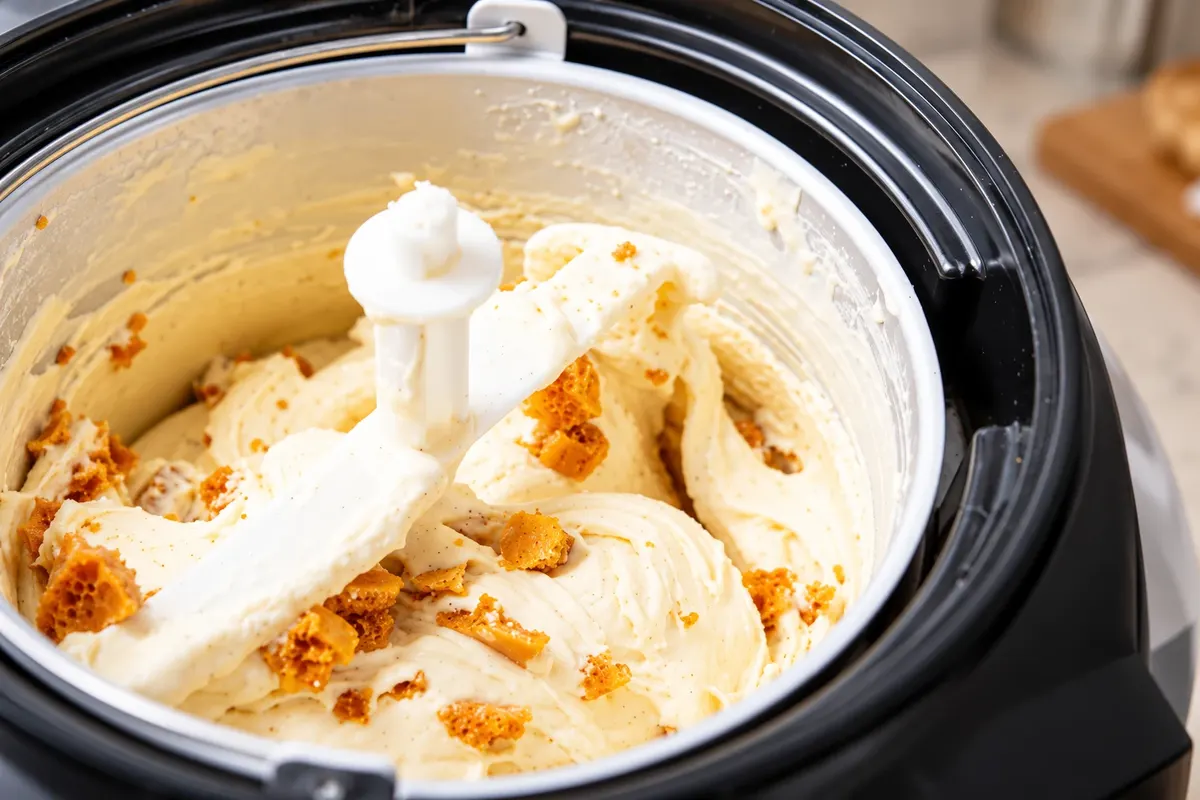
Vanilla ice cream with crunchy bits of aerated caramel, hokey pokey. It’s New Zealand’s second most popular ice cream flavor after plain vanilla, and its origin is disputed between towns in the country.
Flavors · New Zealand
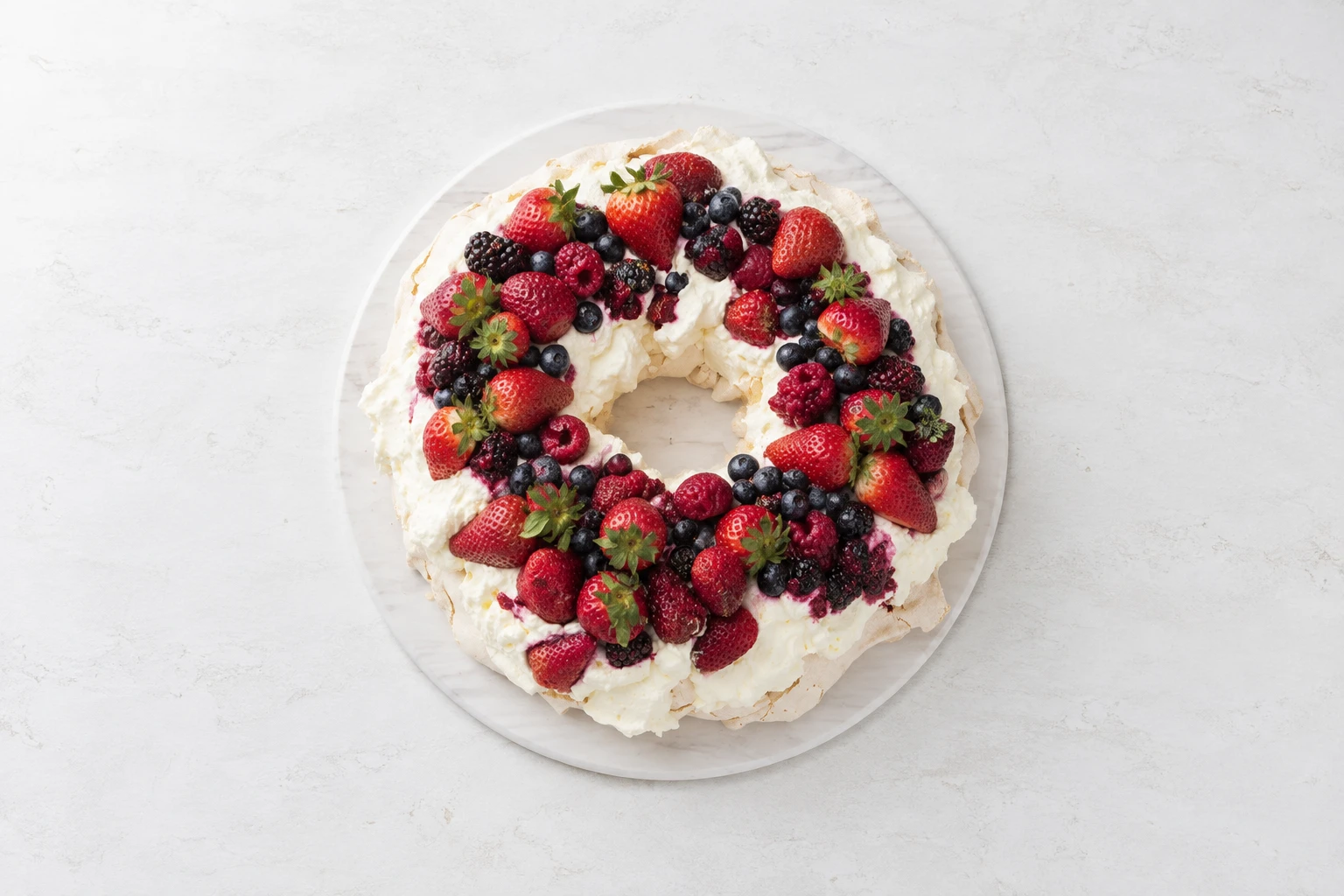
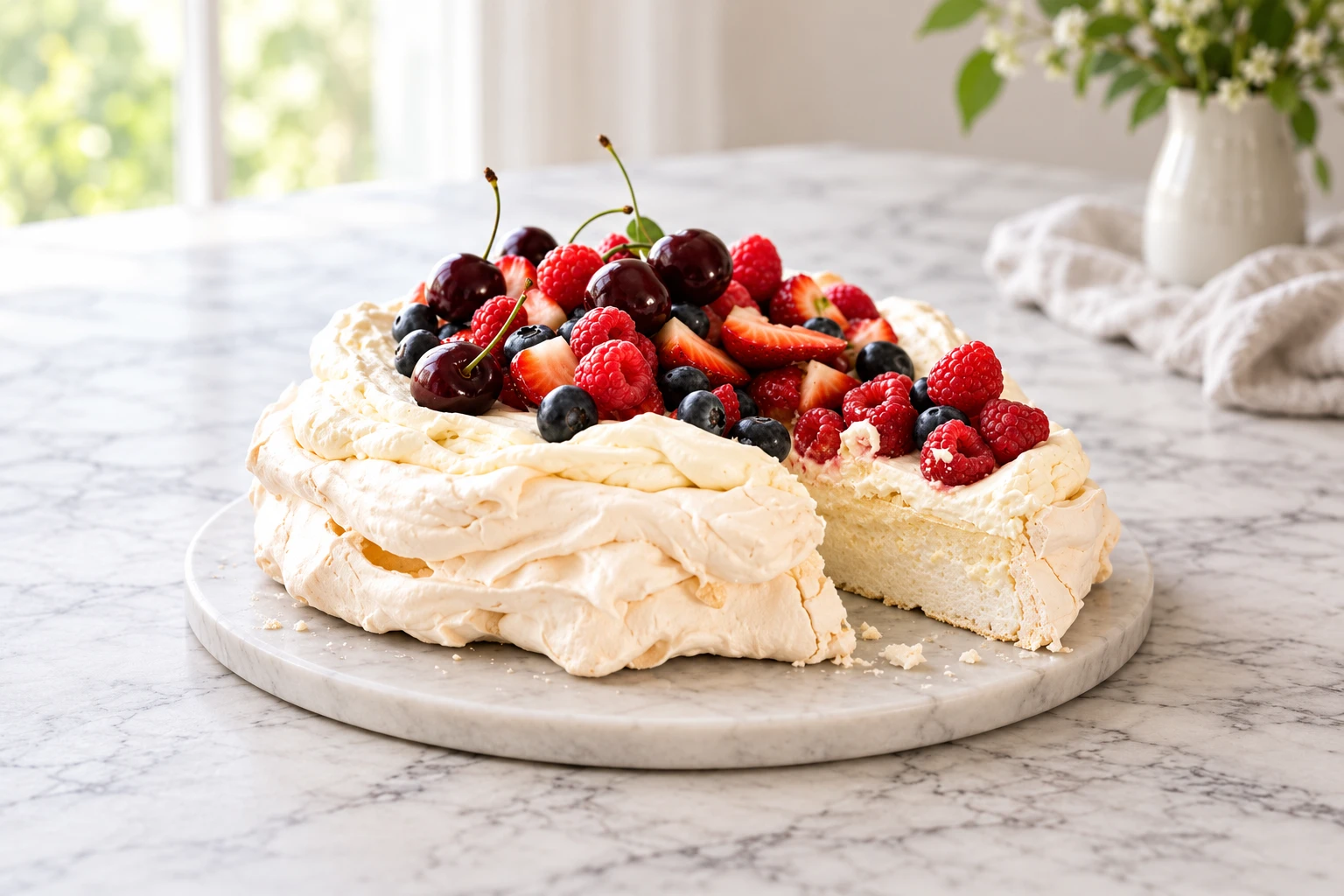
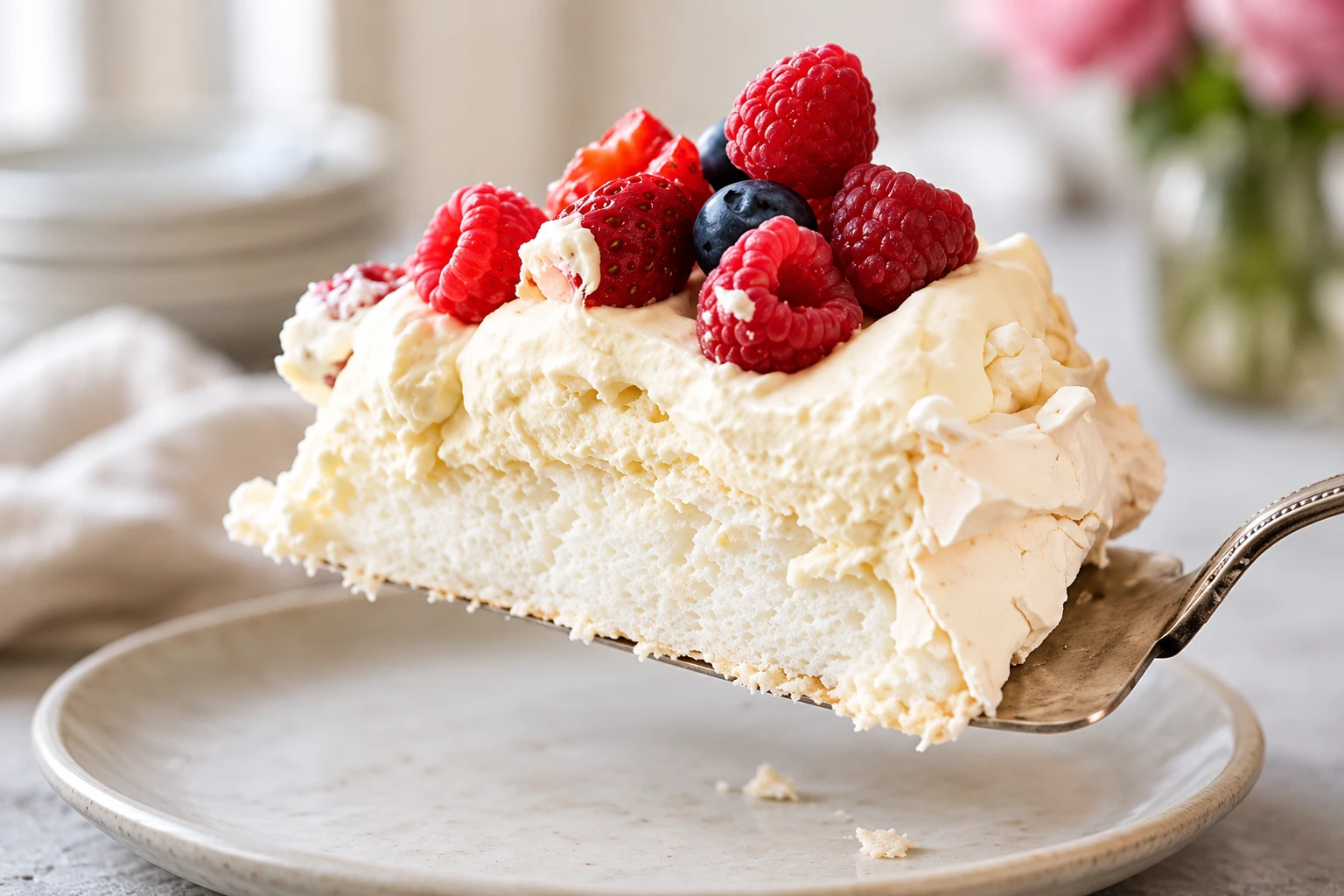
Baked meringue with a crisp shell and soft interior, topped with cream and fruit, often kiwi. New Zealanders regard it as a national dessert and dispute its origin with Australia; researcher Helen Leach, of Otago, collected the oldest recipes.
Traditional sweet from New Zealand
Also known as: pav, pavlova cake
Illustrative images. The pictures in this guide are illustrations based on the real place, not photographs, and may differ from it.
Click a photo to enlarge it.
Pavlova — New Zealand
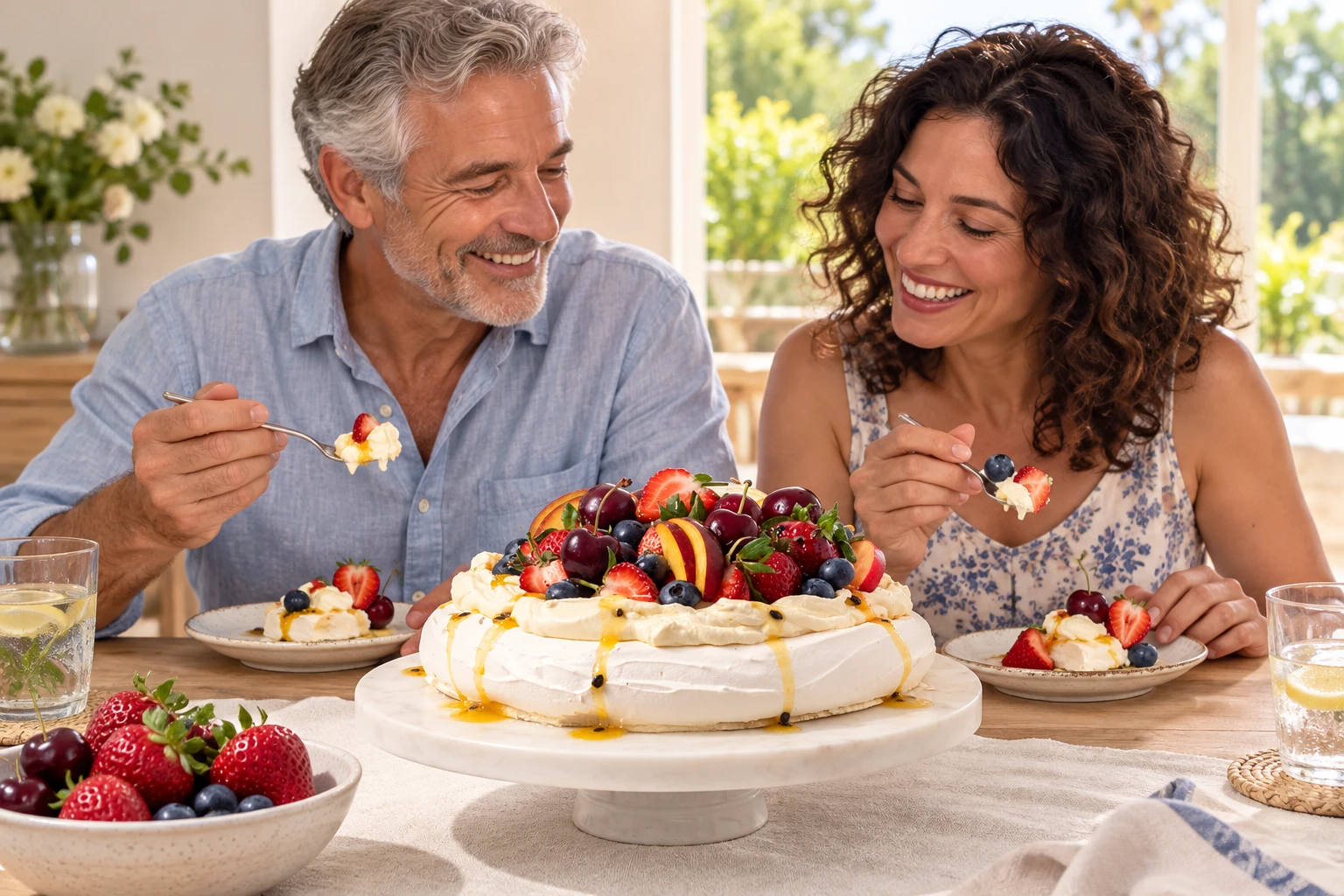
For New Zealanders, the pavlova is the home dessert: it appears at Christmas, at summer barbecues and at family gatherings, topped with cream and fruit, almost always with slices of kiwi. The name honors the Russian ballerina Anna Pavlova, whose 1926 tour of New Zealand and Australia drew huge audiences in both countries.
The most thorough study of the dessert’s origin was done in Dunedin, at the University of Otago, by food anthropologist Helen Leach, author of The Pavlova Story. Leach gathered hundreds of cookbooks and traced the name pavlova back to 1926, when it appeared in a layered gelatin dessert. A meringue cake bearing that name shows up in New Zealand publications in the late 1920s, and the author argues that the recipe evolved gradually through recipe exchange among cooks, not from a single chef’s invention.
There are other stories. One, mentioned in a biography of the ballerina, credits a hotel chef in Wellington during the tour, but lacks documentary proof. Across the Tasman Sea, Australians credit chef Bert Sachse of Perth, who is said to have created his version in 1935. The earliest references to the name also include gelatin desserts and should not be confused with the meringue pavlova. With no definitive decision, the pavlova represents the whole country.
On New Zealand tables, the most common topping is kiwi, strawberry and passionfruit. Supermarkets sell ready-made meringue bases, and in many homes the recipe is passed down through generations.

New Zealand
The pavlova is treated as a national dessert in New Zealand, which contests its origin with Australia; there is no documented city of origin.
Egg whites, granulated sugar, cornstarch, vinegar; whipped cream; kiwi, strawberry, passionfruit and other seasonal fruits.
In slices, at the end of the meal, assembled shortly before serving to keep the meringue crisp.
Christmas and summer, December to February; birthdays and family gatherings year-round.
Your questions
Food anthropologist Helen Leach, of the University of Otago in Dunedin, author of The Pavlova Story, who collected hundreds of old recipes.
The most common topping includes kiwi, along with strawberry and passionfruit, over whipped cream.
There is a story about a hotel chef in Wellington during Anna Pavlova’s 1926 tour, but it has no documentary proof.
Flavors of New Zealand

Vanilla ice cream with crunchy bits of aerated caramel, hokey pokey. It’s New Zealand’s second most popular ice cream flavor after plain vanilla, and its origin is disputed between towns in the country.

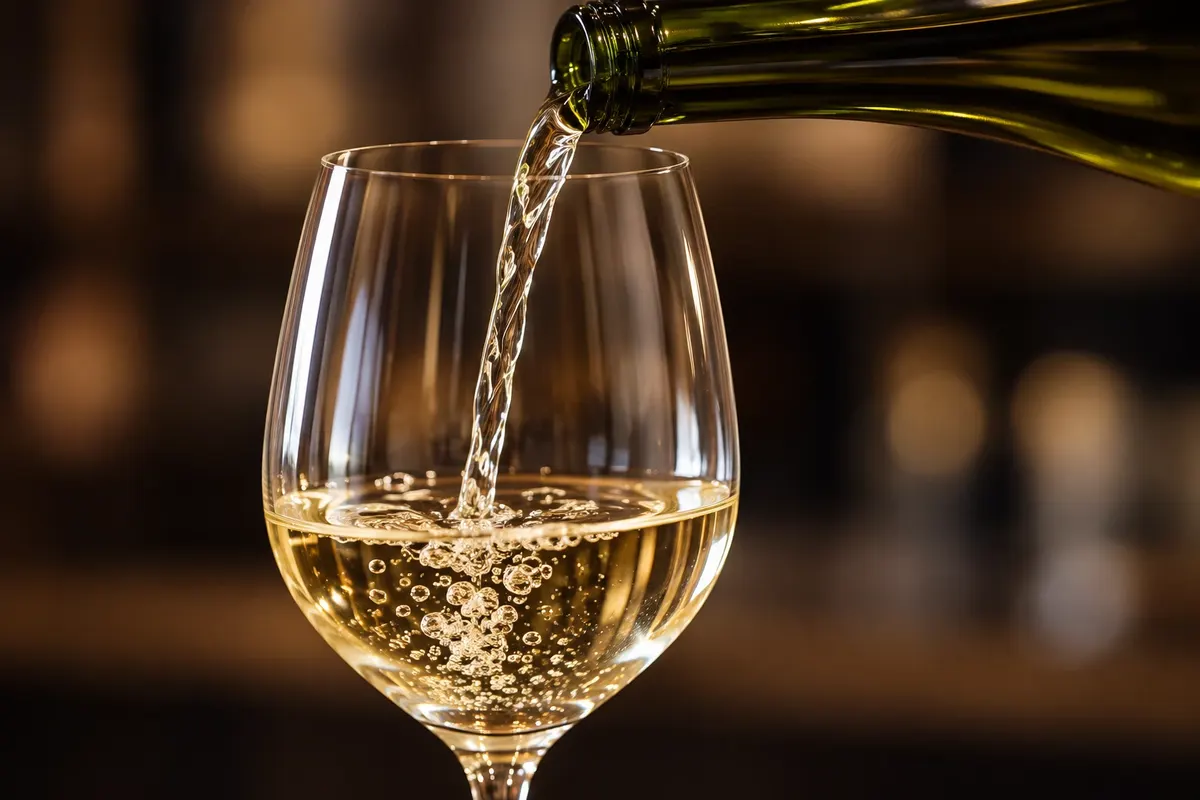
Dry white wine from the sauvignon blanc grape, intensely aromatic, with herbal notes and tropical fruit. Marlborough, in the north of the South Island, is New Zealand’s largest wine region, and the name has been a registered geographical indication since 2018.

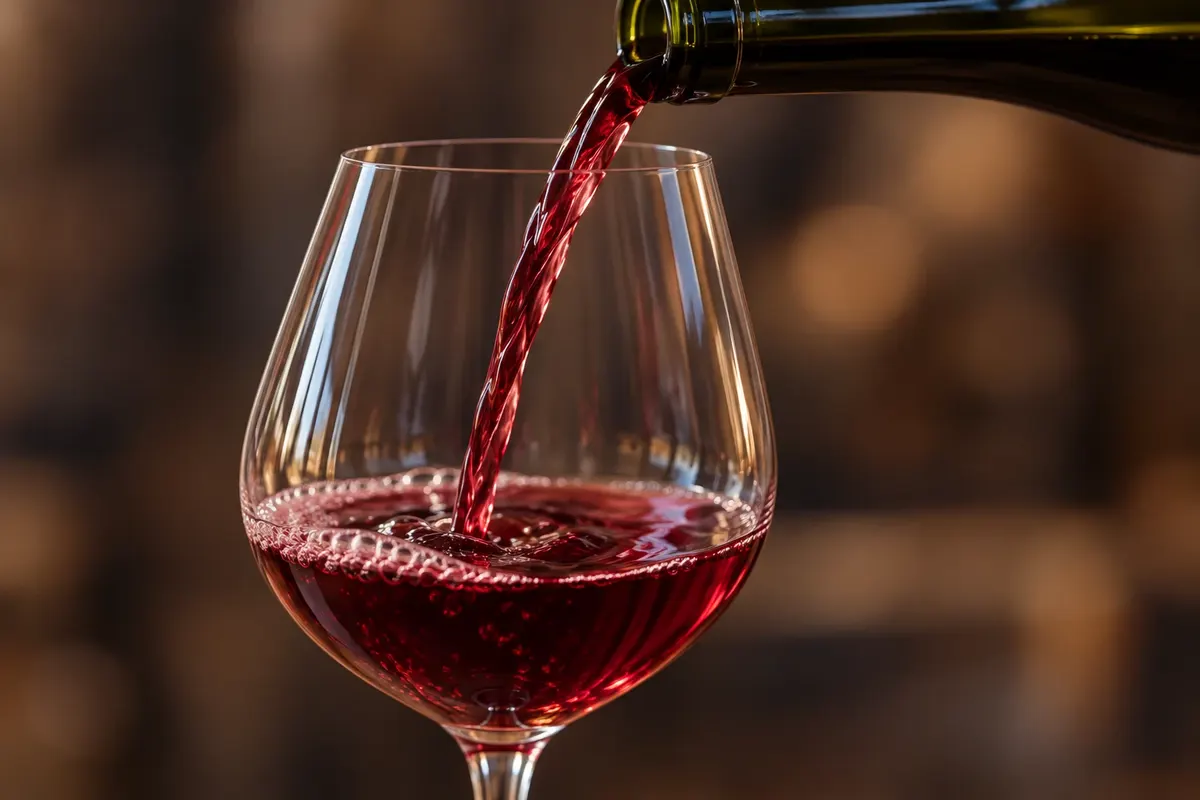
Red wine from the pinot noir grape, the standout variety of Central Otago, the southernmost wine region of New Zealand, set among the inland lakes and mountains of Otago. Fragrant, with intense fruit and a silky texture; the name has been a registered geographical indication since 2018.

Maori meal of meats and vegetables cooked in steam from an earth oven, a tradition throughout the country. In Rotorua, the village of Whakarewarewa cooks hāngī using geothermal steam, in boxes placed over hot springs, without the heated stones of the pit.

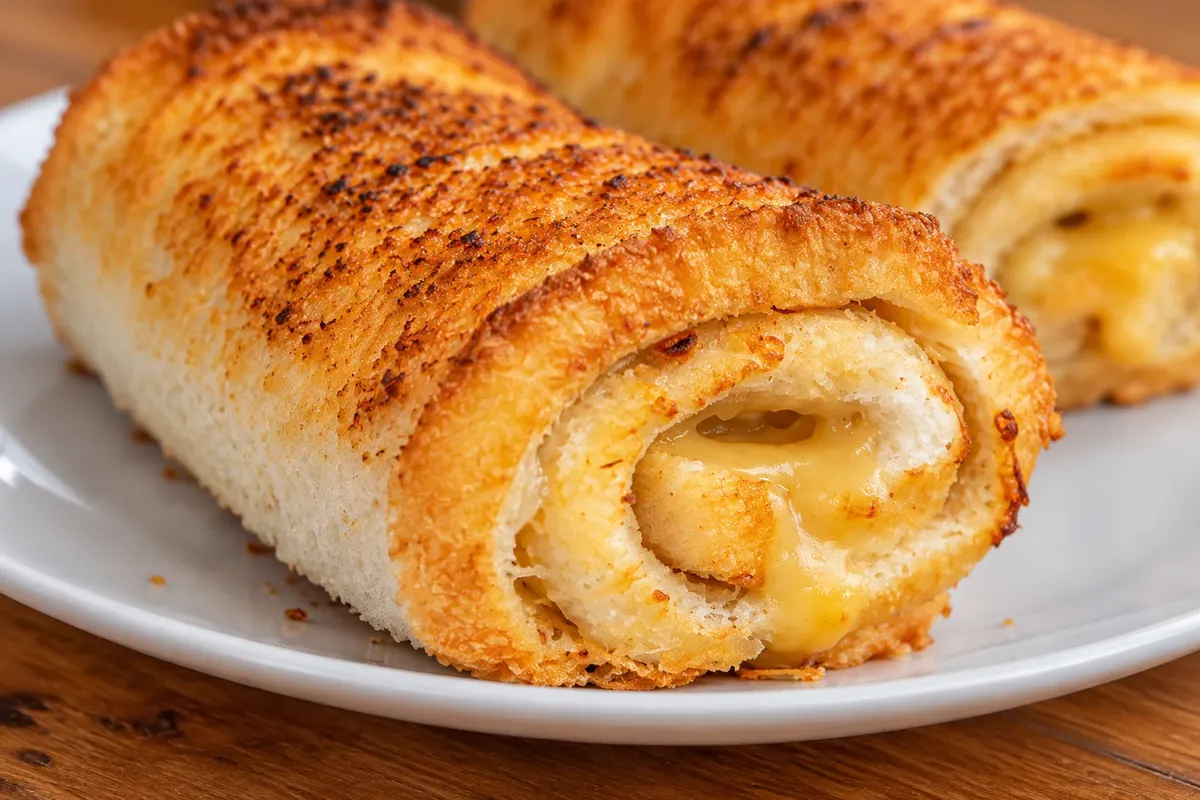
A slice of white sandwich bread spread with a cheesy cream, rolled up and toasted until golden. It’s traditional in cafés, bakeries and fundraising events in Southland, at the far south of New Zealand, where it earned the nickname southern sushi.

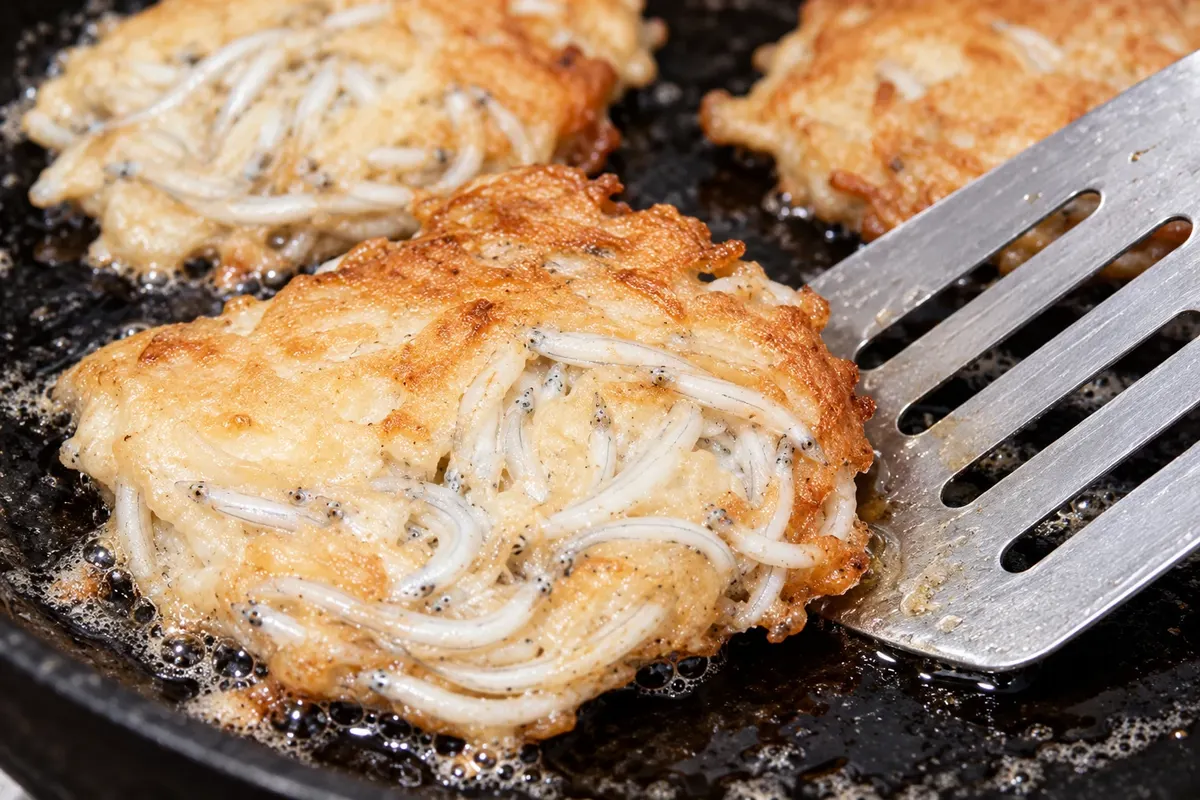
A small cake of beaten egg with whitebait, the juvenile fish of native species that move up rivers in spring, fried in butter or oil. On the West Coast, where catching and eating whitebait is part of local life, it is often served between slices of buttered bread.