

 Brazil
 Antarctica
 Argentina
 Bolivia
 Chile
 Colombia
 Ecuador
 Guyana
 French Guiana
 Falkland Islands (Malvinas)
 Paraguay
 Peru
 Suriname
 Uruguay
 Venezuela
 Germany
 Austria
 Belgium
 Croatia
 Denmark
 Slovakia
 Slovenia
 Spain
 Finland
 France
 Greece
 the Netherlands
 Hungary
 Ireland
 Iceland
 Italy
 Luxembourg
 Norway
 Poland
 Portugal
 the United Kingdom
 the Czech Republic
 Sweden
 Switzerland
 Turkey
 Bermuda
 Canada
 the United States
 Greenland
 Mexico
 Saint Pierre and Miquelon
 the Dominican Republic
 South Africa
 Egypt
 Australia
 Fiji
 New Zealand
 Papua New Guinea
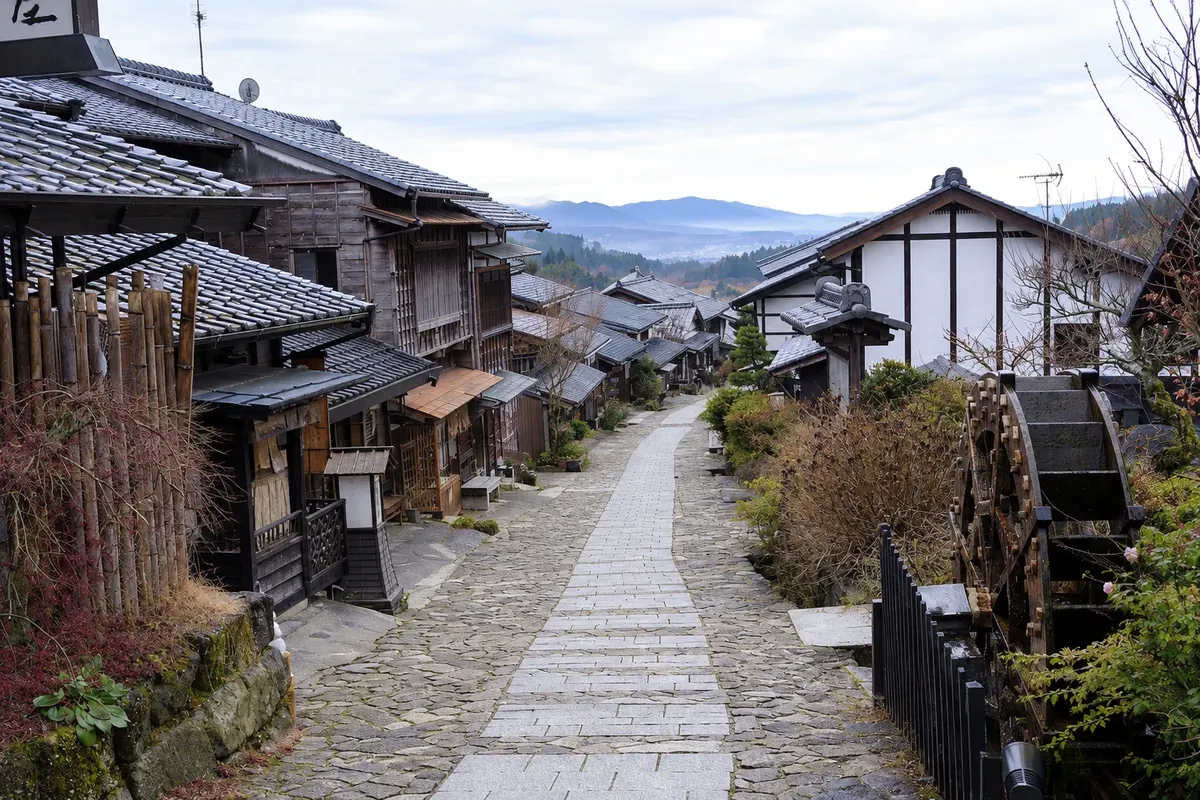
Historic village · Nakatsugawa, Gifu
Magome-juku
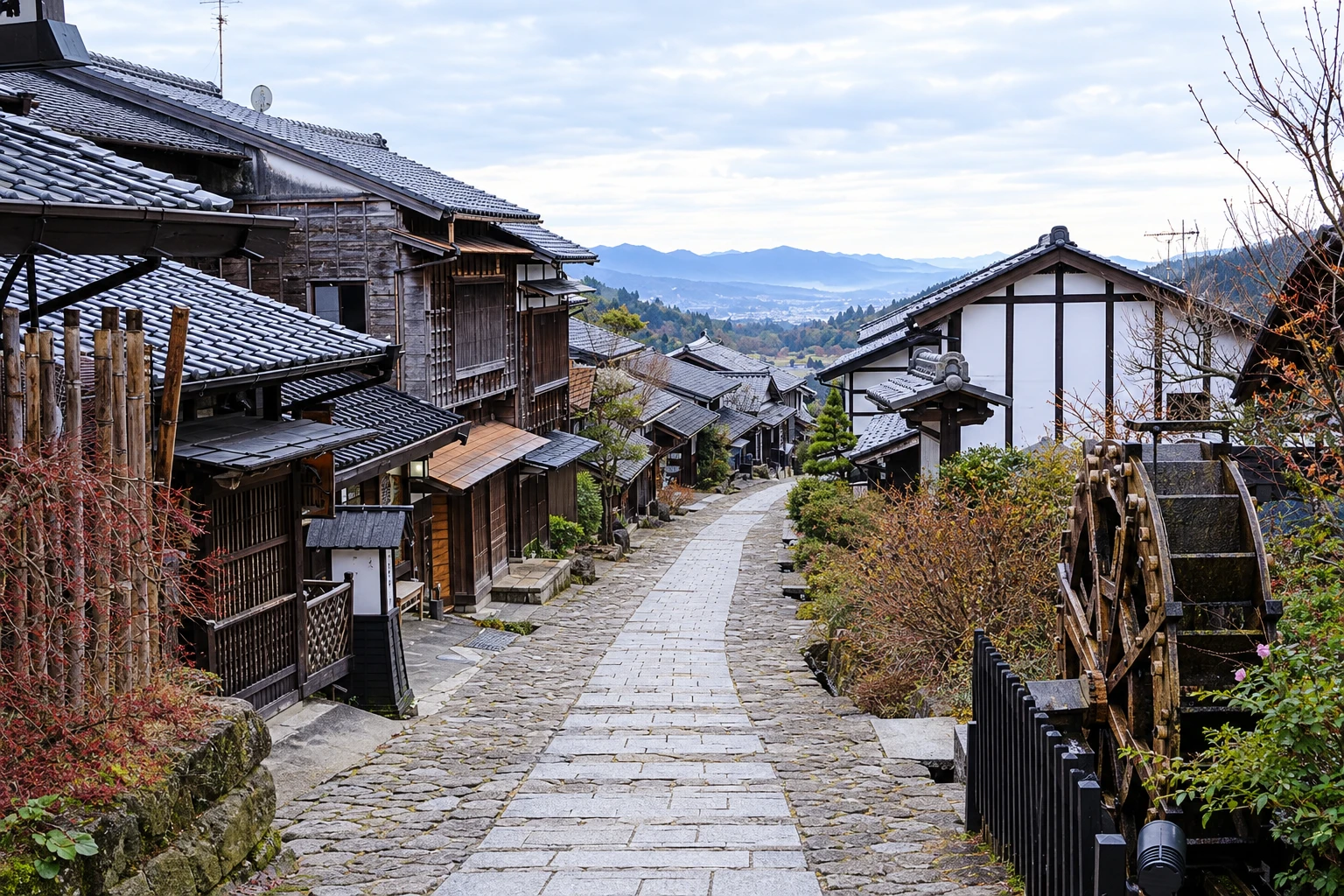
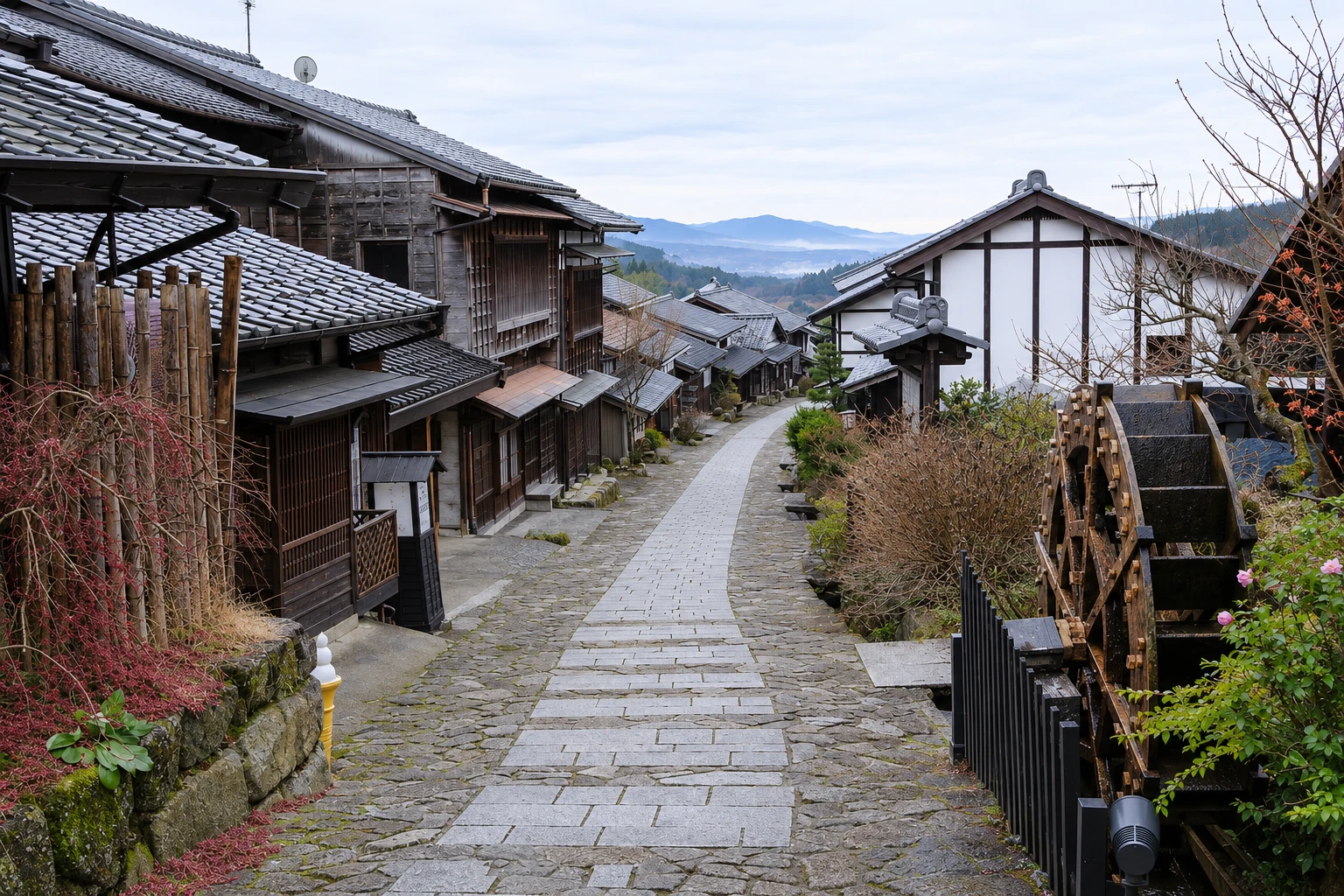
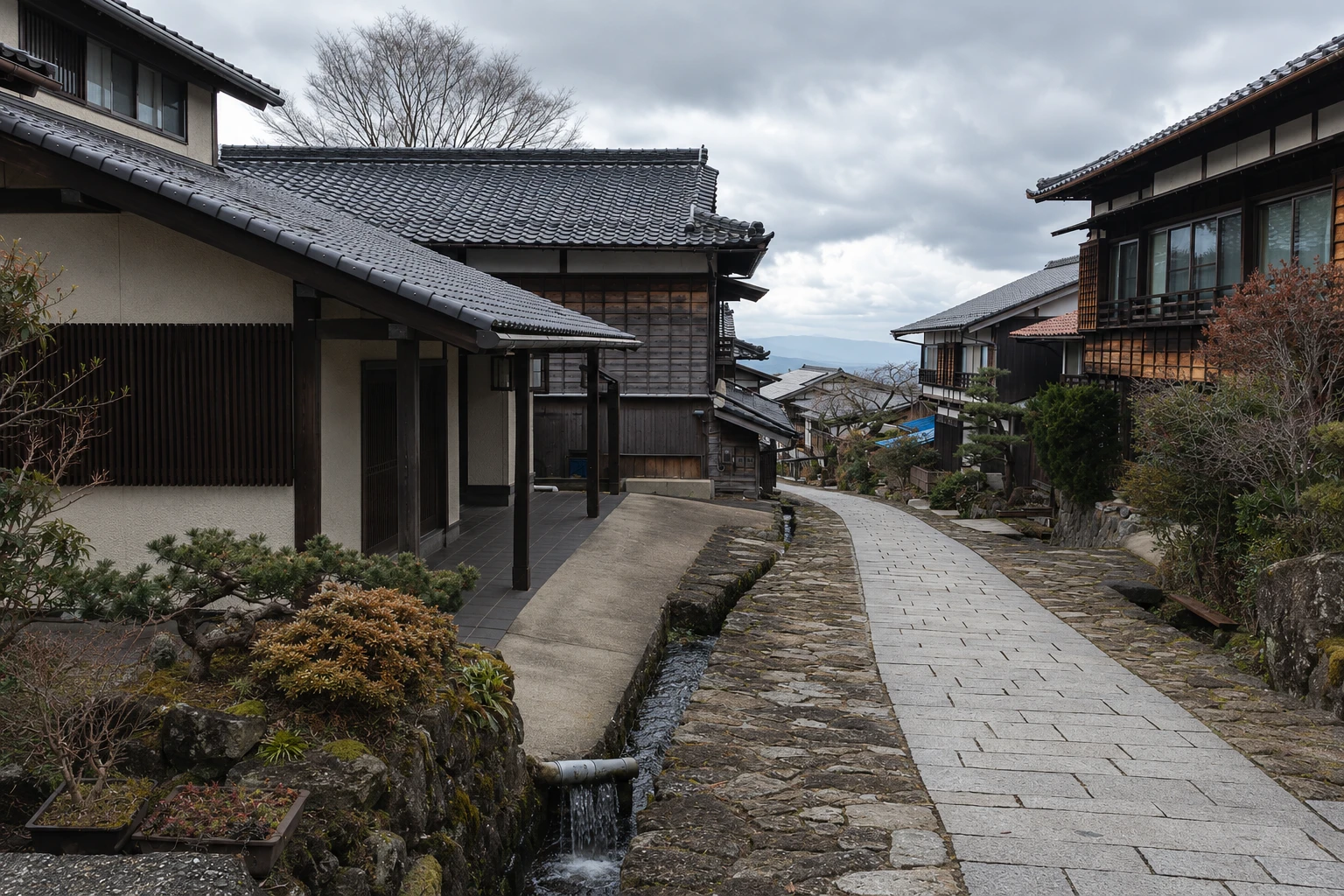
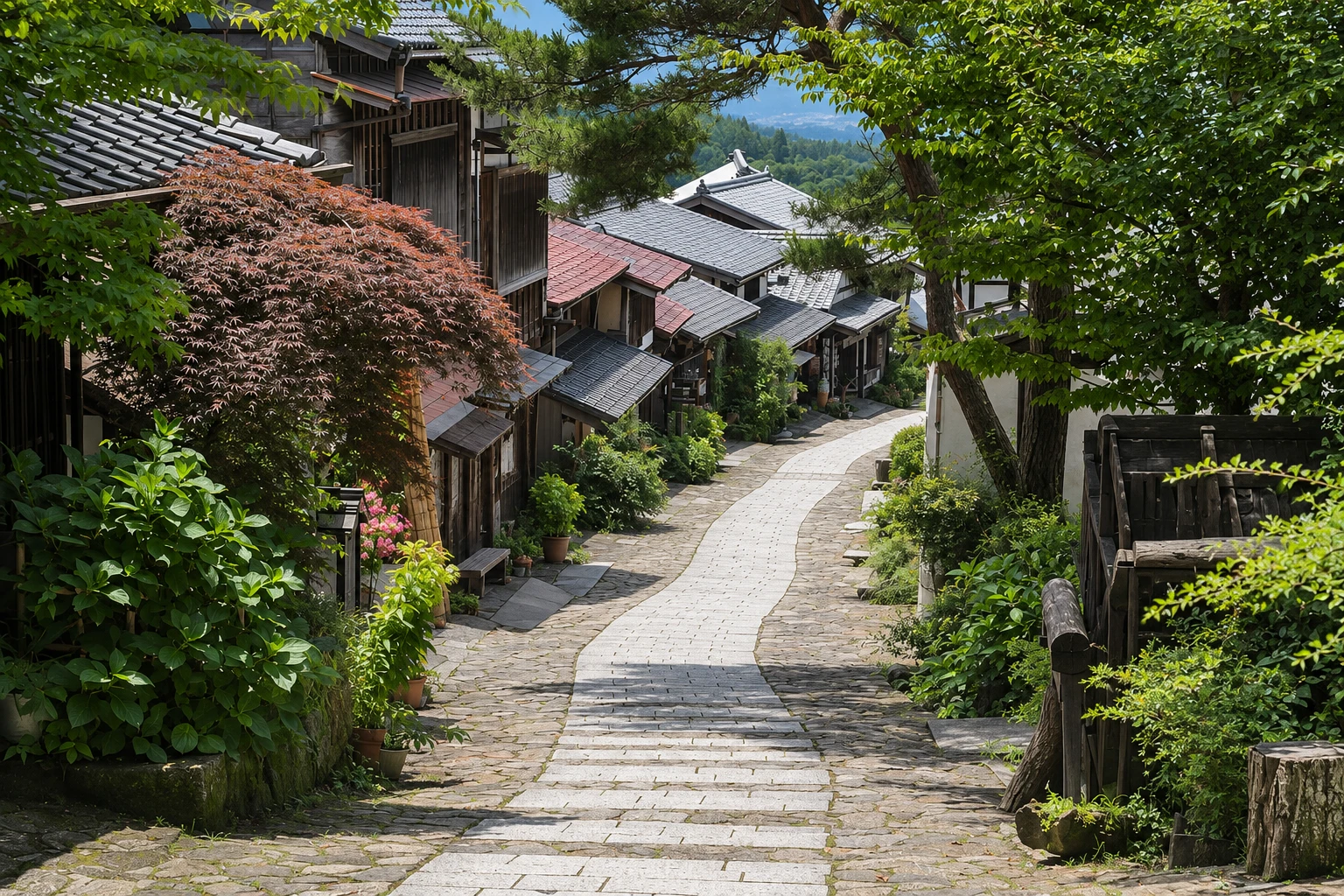
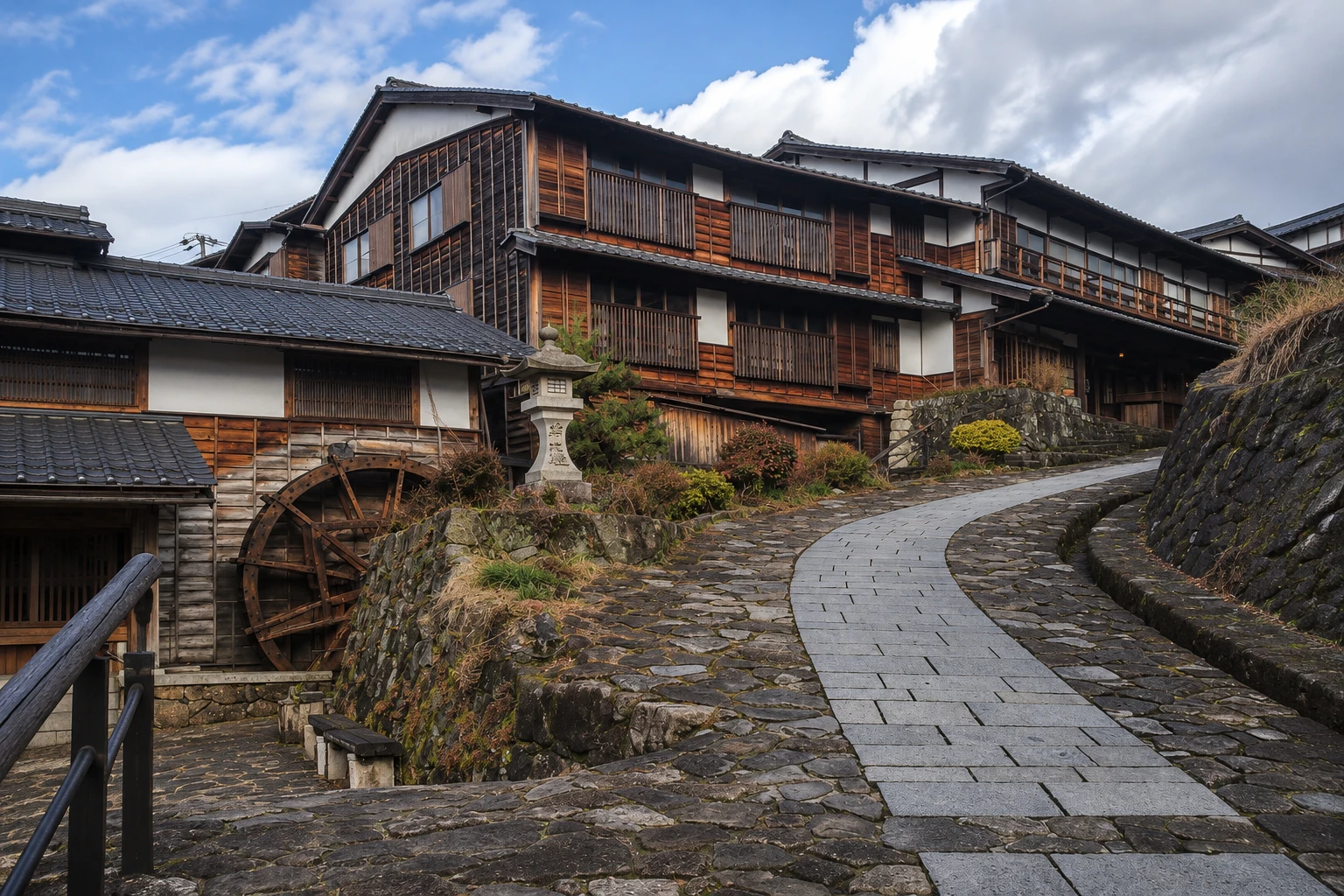
A former Nakasendo post-town on a paved slope of stone, with dark wooden houses, a waterwheel and Mount Ena on the horizon, the birthplace of the writer Shimazaki Toson.
Illustrative images. The pictures in this guide are illustrations based on the real place, not photographs, and may differ from it.

A look at the place
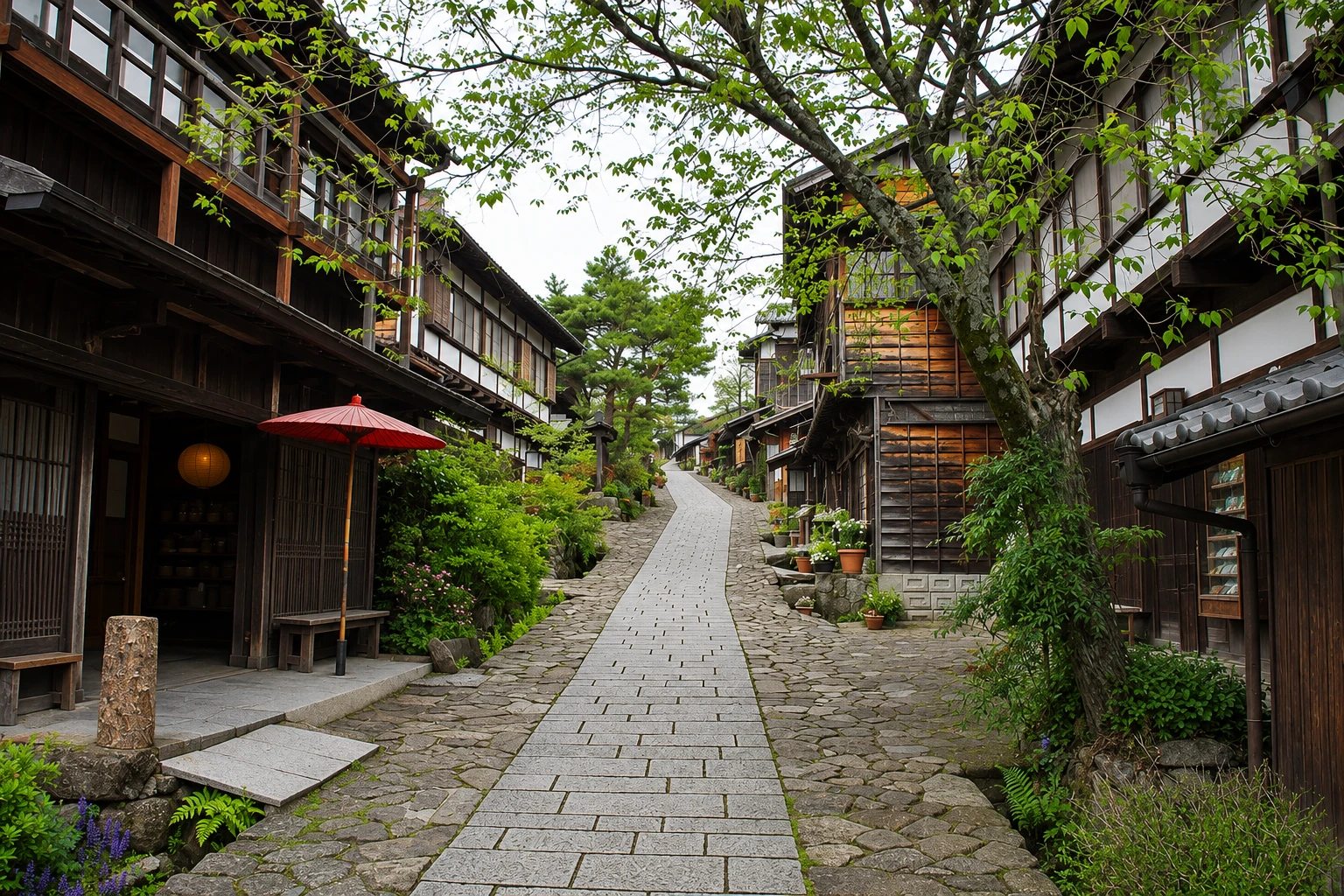
Magome-juku in pictures
These pictures are illustrations based on the real place, not photographs. They may differ from the place.
Click the picture to enlarge it.
Discover
About Magome-juku
Magome-juku was the 43rd post town on the Nakasendo counting from Edo, the last one in the Kiso valley on the road to Kyoto. The village was built on a slope along the road, which climbs a stone-paved hill with stepped turns, the masugata, designed to hinder attacks. Fires in the late 19th and early 20th centuries destroyed much of the houses, which were later rebuilt in the old style.
The street is about 600 meters long, with dark wooden two-story houses, wide eaves, latticed windows and plants on the doorsteps. Today they house inns, craft shops, sweet stalls and restaurants serving soba and gohei-mochi, a rice cake grilled on a skewer with miso and walnut sauce. At the top of the village, a viewpoint looks out over Mount Ena and the valley.
The writer Shimazaki Toson was born in Magome in 1872 into a family that ran the honjin, the official inn for feudal lords. The site is now the Toson Memorial Museum, with manuscripts and objects related to the novel "Before the Dawn," which portrays life on the Nakasendo at the end of the shogunate. Near the village entrance, a watermill still turns.
Until 2005 Magome belonged to Nagano Prefecture; after municipal mergers it became part of Nakatsugawa, in Gifu. The village receives many groups at midday. At the top of the street the Nakasendo trail to Tsumago begins, climbing to the Magome pass.
Before you go
Practical information
Cidade Turismo reviews its information regularly, but something may have changed. Check with the place before planning your trip.
How much time to set aside
About 1 to 2 hours for the street, the viewpoint and the Toson Museum.
Best time
In the early hours of the day or late afternoon, outside excursion times. From April to November, to pair with the trail; autumn brings the foliage and chestnut sweets. In winter, the slope can have ice. Check the museum hours before you go.
How to get there
From Nakatsugawa station, buses take about 25 minutes to Magome; from Nagiso station, about 30 minutes. The main street is pedestrian-only, with parking at the entrance.
Tip
Start at the lower end, near the mill, and walk up the street to the viewpoint, where the trail to Tsumago begins. Try the gohei-mochi at one of the stalls on the slope.
Get your questions answered
Frequently asked questions about Magome-juku
How long to stay in Magome?
1 to 2 hours for the stone street and the Toson museum. One night in a village inn lets you see the street peaceful and quiet.
Is Magome original?
The layout and the stone street are old, but fires in the late 19th and early 20th centuries destroyed many houses, which were rebuilt in the traditional style.
What is gohei-mochi?
A pounded rice cake grilled on a skewer, coated with miso and walnuts. It is sold at the stalls on Magome’s street.
Is the street in Magome steep?
Yes, it is a stone slope with steps. Wear comfortable footwear, and be careful of ice in winter.
Beyond the guide


