

 Brazil
 Antarctica
 Argentina
 Bolivia
 Chile
 Colombia
 Ecuador
 Guyana
 French Guiana
 Falkland Islands (Malvinas)
 Paraguay
 Peru
 Suriname
 Uruguay
 Venezuela
 Germany
 Austria
 Belgium
 Croatia
 Denmark
 Slovakia
 Slovenia
 Spain
 Finland
 France
 Greece
 the Netherlands
 Hungary
 Ireland
 Iceland
 Italy
 Luxembourg
 Norway
 Poland
 Portugal
 the United Kingdom
 the Czech Republic
 Sweden
 Switzerland
 Turkey
 Bermuda
 Canada
 the United States
 Greenland
 Mexico
 Saint Pierre and Miquelon
 the Dominican Republic
 South Africa
 Egypt
 Australia
 Fiji
 New Zealand
 Papua New Guinea
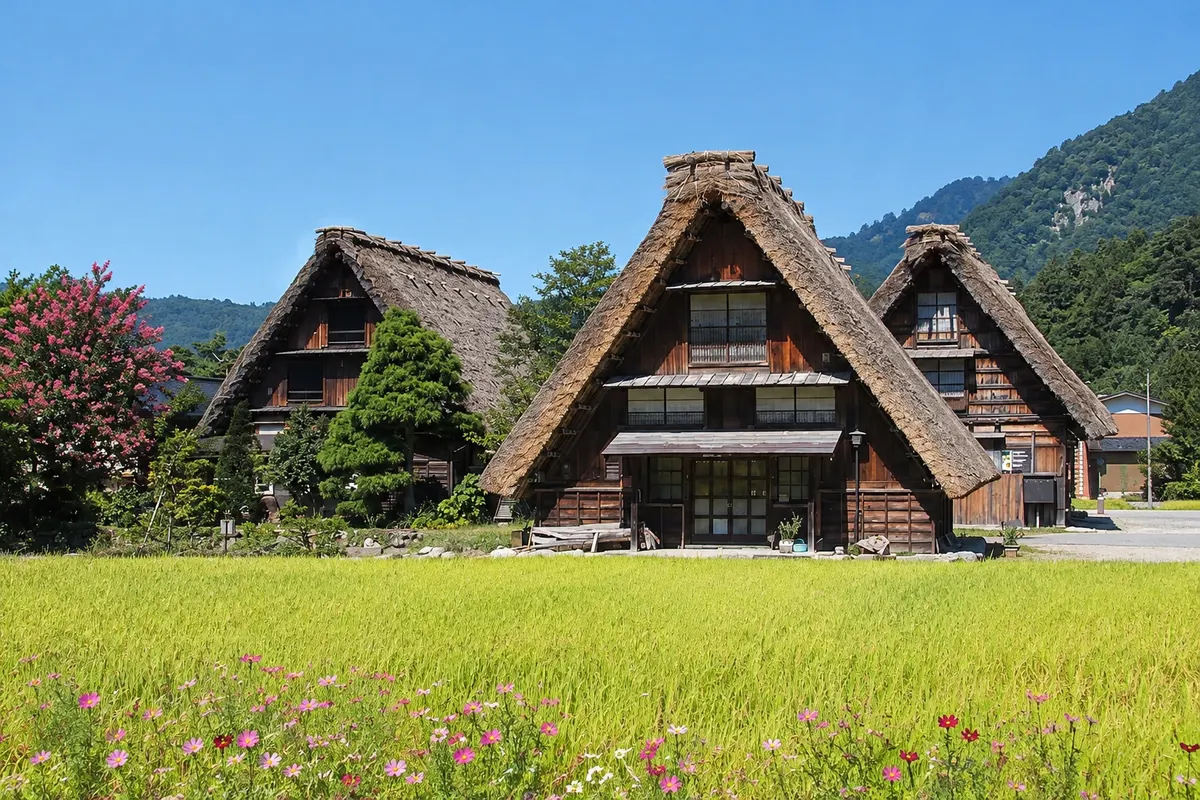
Historic village · Shirakawa, Gifu
Ogimachi Village (Shirakawa-go)
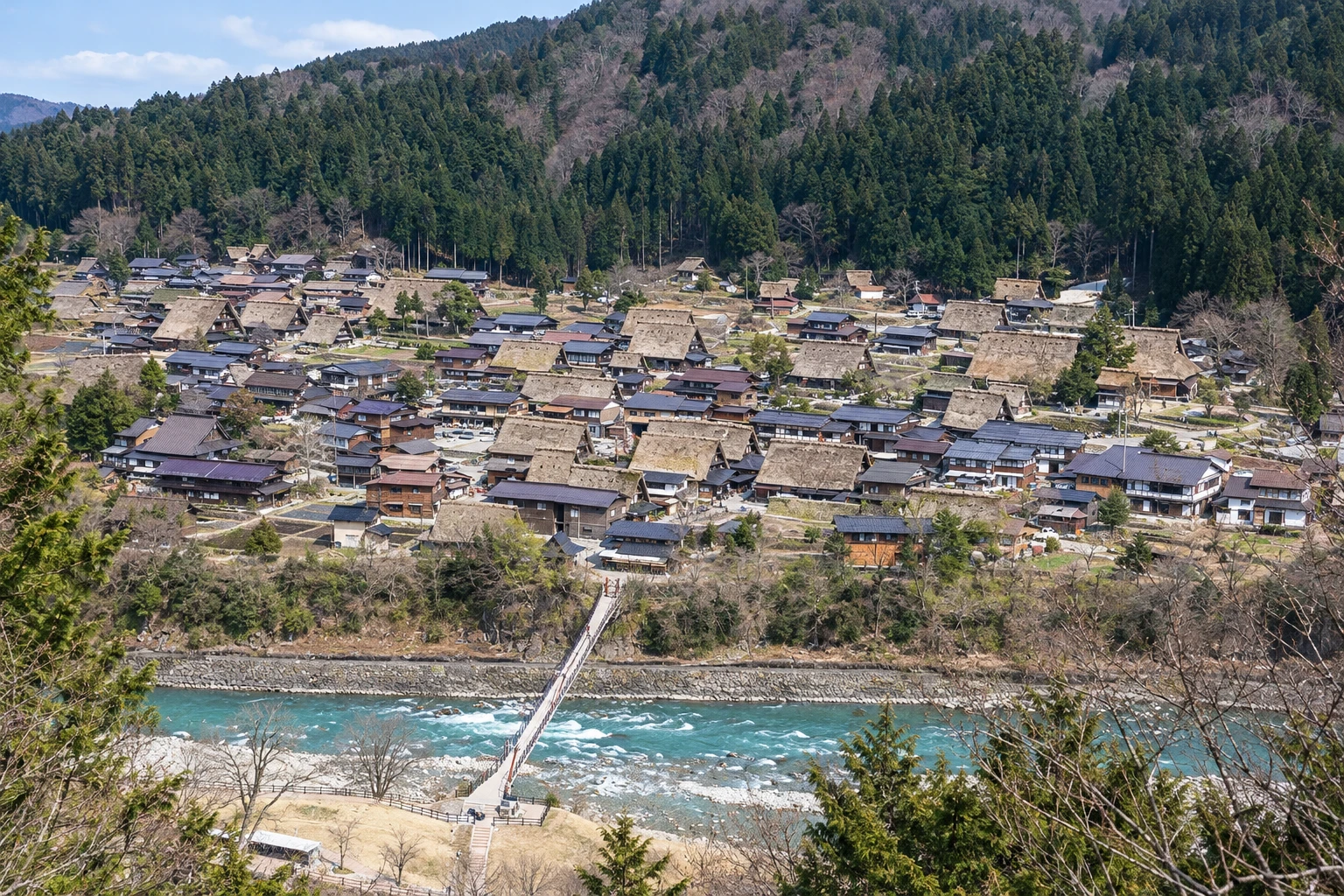
The largest village of Shirakawa-go, with dozens of gassho-zukuri thatched houses among rice fields and the Sho River; a World Heritage site.
Illustrative images. The pictures in this guide are illustrations based on the real place, not photographs, and may differ from it.

A look at the place
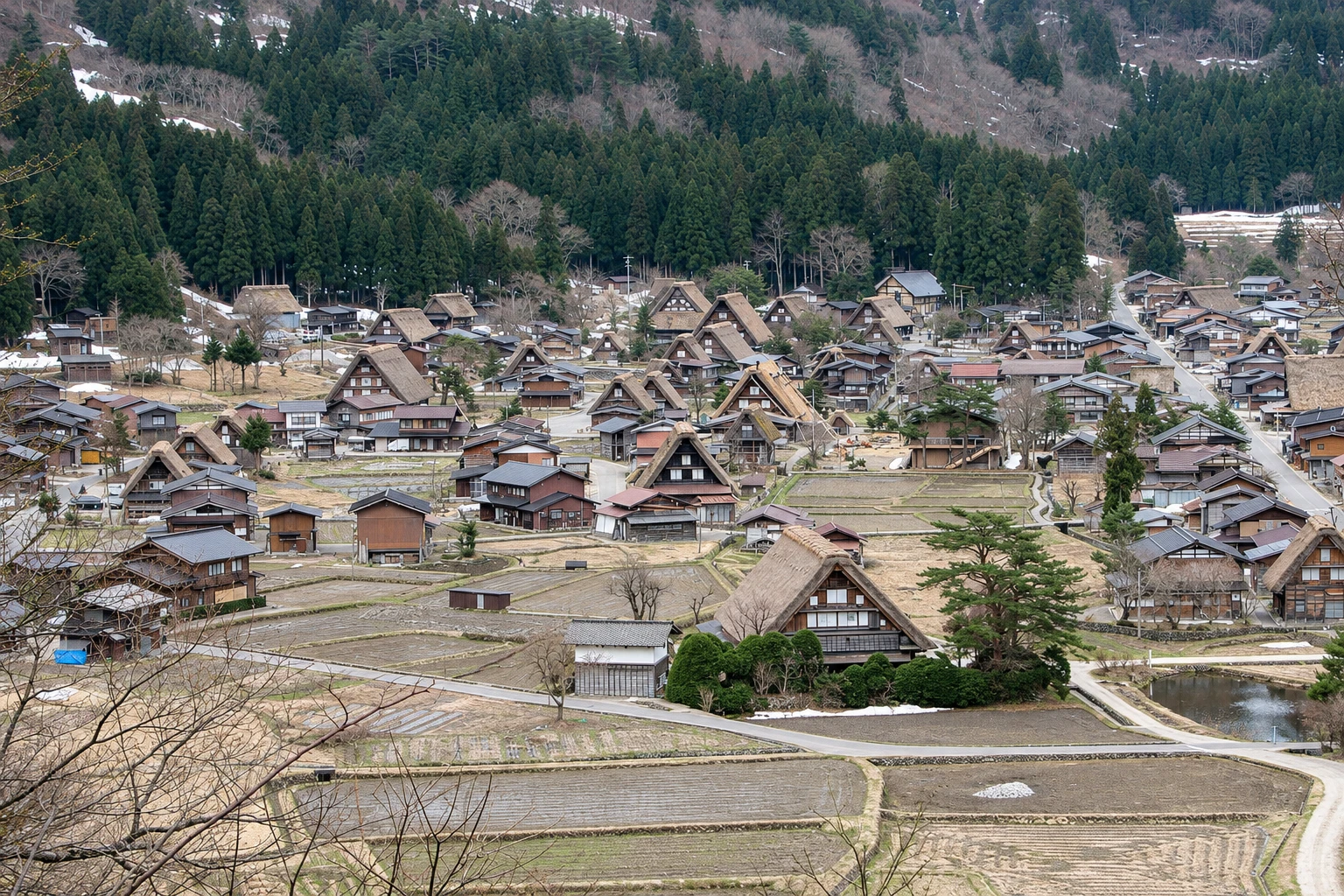
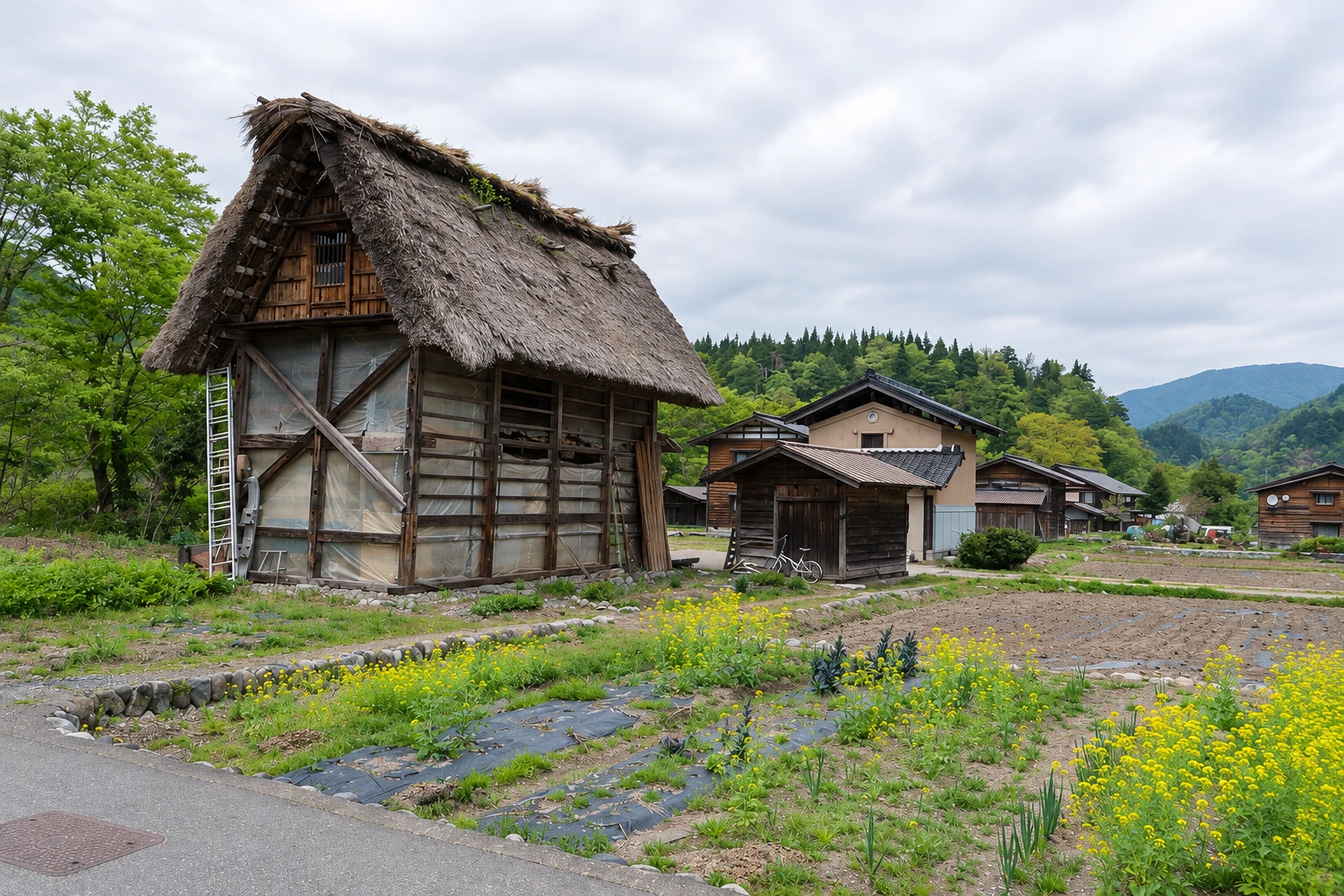
Ogimachi Village (Shirakawa-go) in pictures
These pictures are illustrations based on the real place, not photographs. They may differ from the place.
Click the picture to enlarge it.
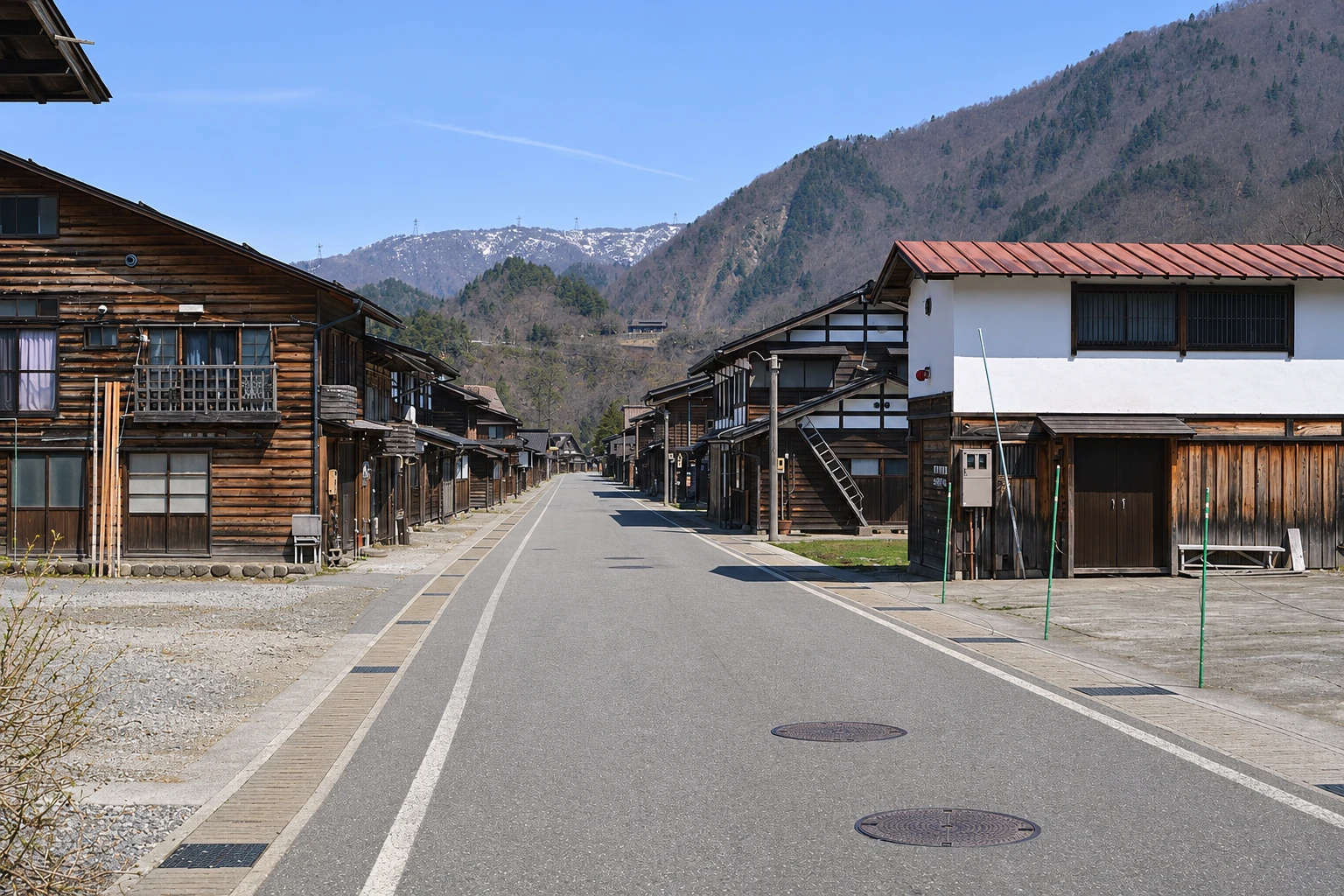
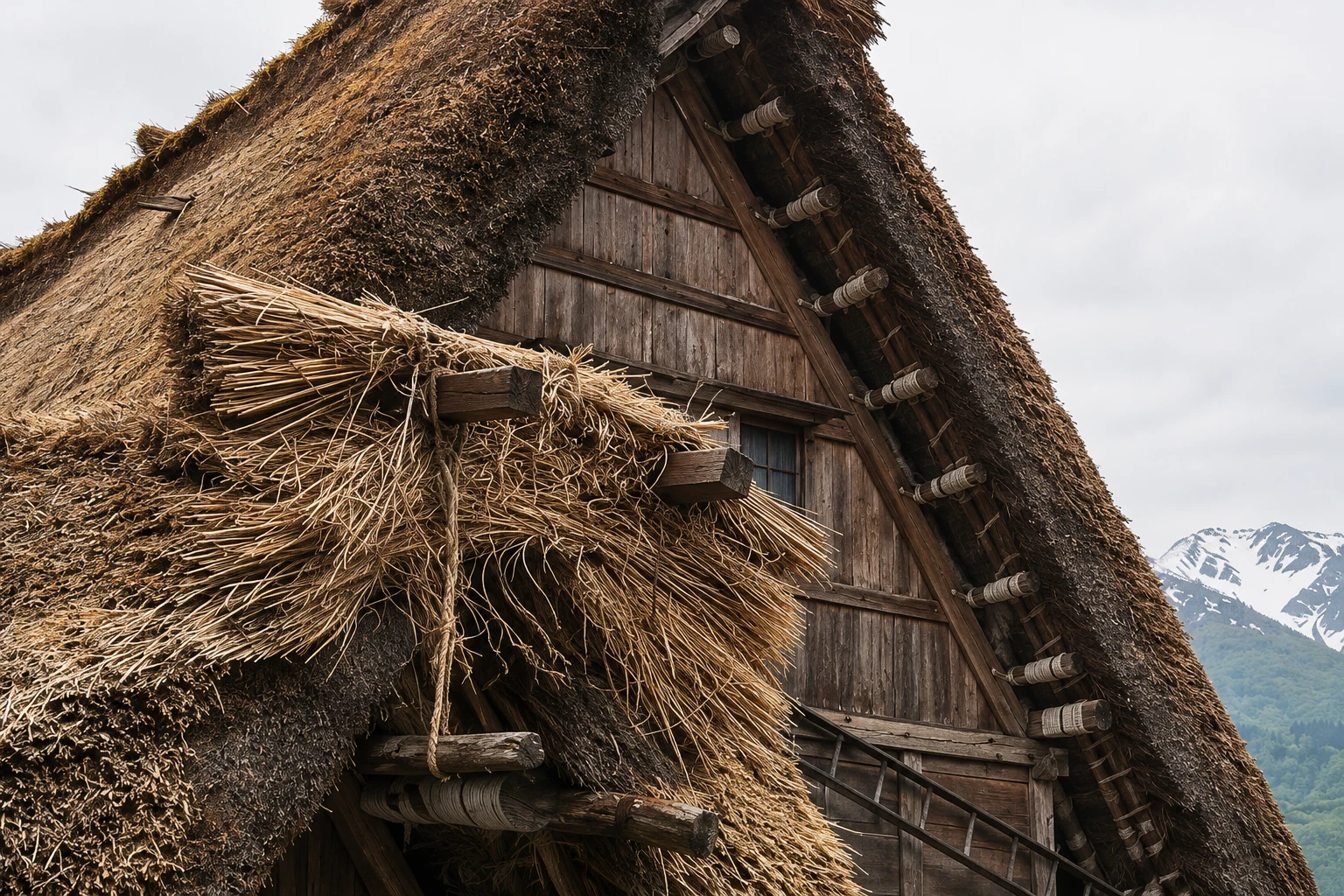
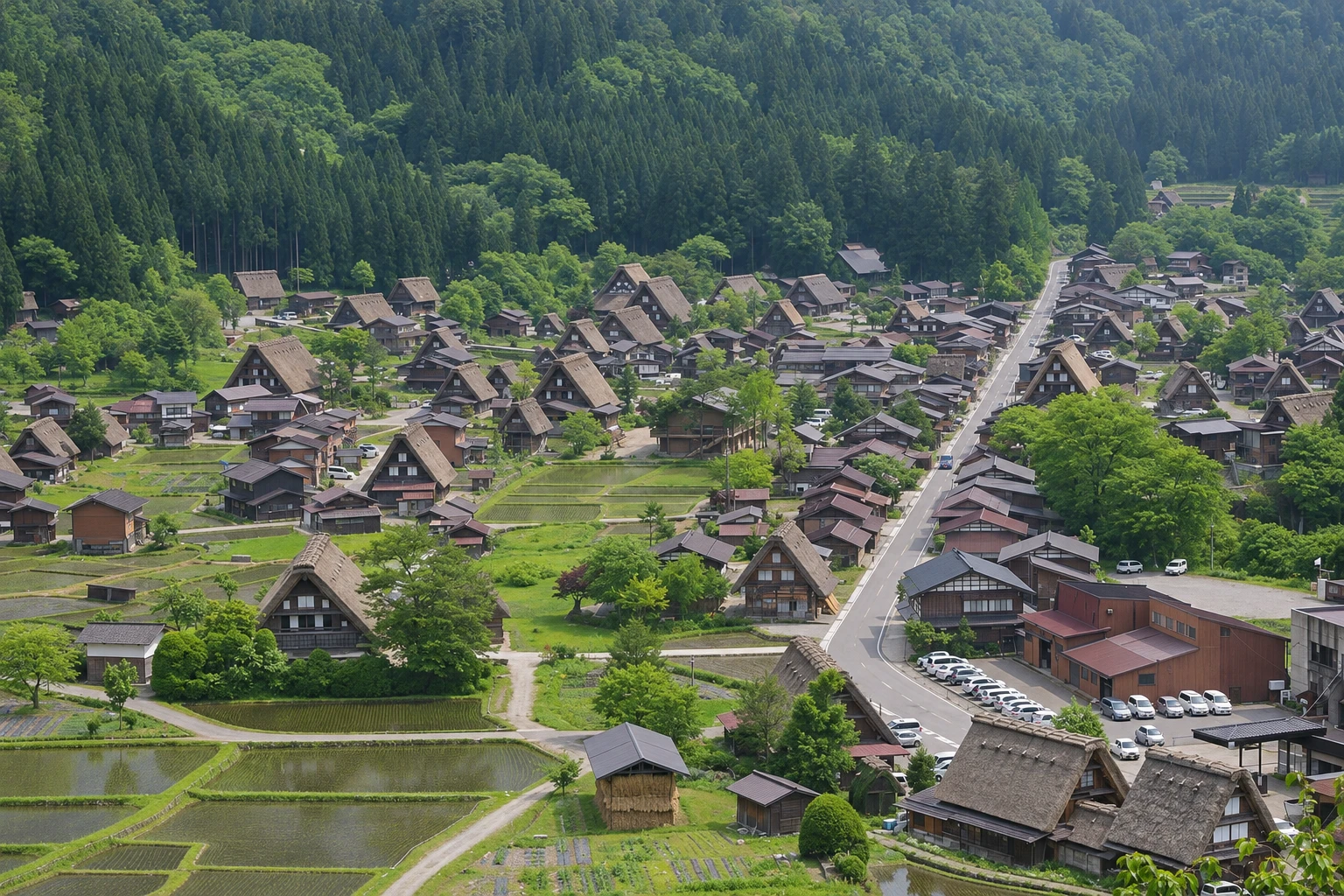
Discover
About Ogimachi Village (Shirakawa-go)
Ogimachi is the largest historic village of Shirakawa, in the Sho River valley. It brings together some dozens of gassho-zukuri houses, surrounded by rice fields, vegetable plots, storehouses and irrigation channels. Together with the villages of Ainokura and Suganuma in Gokayama, it was inscribed in 1995 as a UNESCO World Heritage Site, as the Historic Villages of Shirakawa-go and Gokayama.
The name gassho-zukuri comes from the roof’s shape, which resembles hands joined in prayer. The thick thatch and steep pitch are designed to shed snow, which can exceed 2 meters in winter. Inside, the houses have several floors beneath the roof: the ground floor, with the hearth in the earthen floor, was the living area; the upper floors were used for silkworm farming and saltpetre production for gunpowder, which provided income for the families.
The roofs are rebuilt every few decades by community work parties, the yui, which gather hundreds of residents and volunteers in a single day. In the village, some houses are open to visitors as museums, such as the Wada, Kanda and Nagase houses, and the open-air Gassho-zukuri Minkaen museum displays houses brought from other villages.
Many houses remain inhabited, and the village asks visitors not to enter private land, not to use drones and to keep quiet. On a few winter nights, the houses are illuminated, and access to the village then requires a reservation. Those who stay overnight usually have dinner seated on the floor around the irori.
Before you go
Practical information
Cidade Turismo reviews its information regularly, but something may have changed. Check with the place before planning your trip.
How much time to set aside
2 to 3 hours for the village, one historic house museum and the viewpoint; one night in a gassho house to see the village without daytime visitors.
Best time
Early in the morning or late afternoon, before and after the tour buses. Snow usually covers the roofs from December to March; the illuminated nights, in January and February, require reservations. In late spring, the flooded rice paddies mirror the roofs.
How to get there
The Shirakawa-go bus terminal is at the village entrance. Highway buses arrive from Takayama in about 50 minutes and from Kanazawa in about 1h15 to 1h30; some departures require reservation. The village is connected to the parking area and terminal by a suspension bridge over the Sho River.
Tip
Stay in a gassho house if you can: the village becomes quiet at dusk. Respect private property signs and take your trash back with you, because the village has few bins.
Official website
Get your questions answered
Frequently asked questions about Ogimachi Village (Shirakawa-go)
What is gassho-zukuri?
It’s the style of houses in Shirakawa-go and Gokayama, with very steep thatched roofs that resemble hands pressed in prayer and make the snow slide off.
Can you sleep in a gassho house in Shirakawa-go?
Yes. A small number of houses accept guests, and spots usually sell out months in advance during the snow and autumn seasons.
When is the winter illumination in Shirakawa-go?
On a few nights in January and February, with access controlled by reservations. Dates and rules change each year: confirm in advance.
How much time should you set aside for Shirakawa-go?
2–3 hours for the village, a house museum and the lookout, or an overnight stay to see the village at a relaxed pace.
Do people live in the houses of Shirakawa-go?
Yes, many houses are still inhabited. Visitors should not enter private property.
Beyond the guide


