

 Brazil
 Antarctica
 Argentina
 Bolivia
 Chile
 Colombia
 Ecuador
 Guyana
 French Guiana
 Falkland Islands (Malvinas)
 Paraguay
 Peru
 Suriname
 Uruguay
 Venezuela
 Germany
 Austria
 Belgium
 Croatia
 Denmark
 Slovakia
 Slovenia
 Spain
 Finland
 France
 Greece
 the Netherlands
 Hungary
 Ireland
 Iceland
 Italy
 Luxembourg
 Norway
 Poland
 Portugal
 the United Kingdom
 the Czech Republic
 Sweden
 Switzerland
 Turkey
 Bermuda
 Canada
 the United States
 Greenland
 Mexico
 Saint Pierre and Miquelon
 the Dominican Republic
 South Africa
 Egypt
 Australia
 Fiji
 New Zealand
 Papua New Guinea
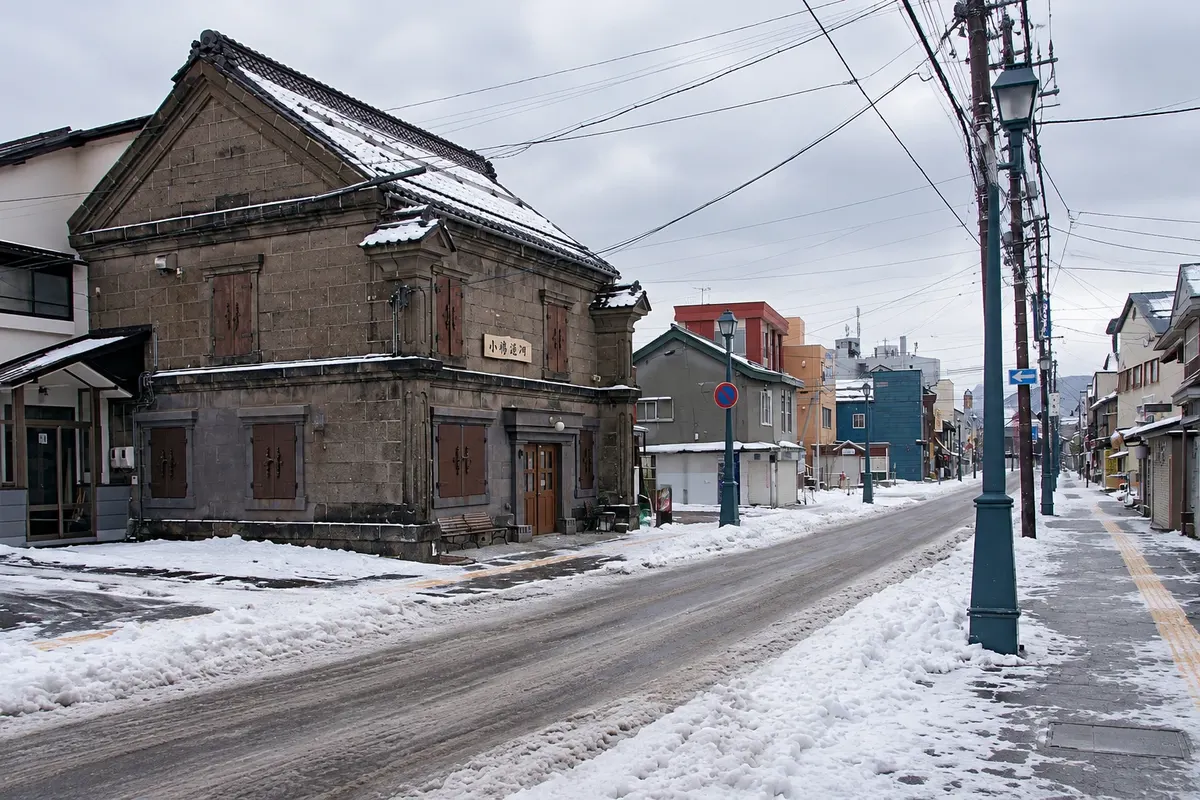
Historic street · Otaru, Hokkaido
Sakaimachi Street
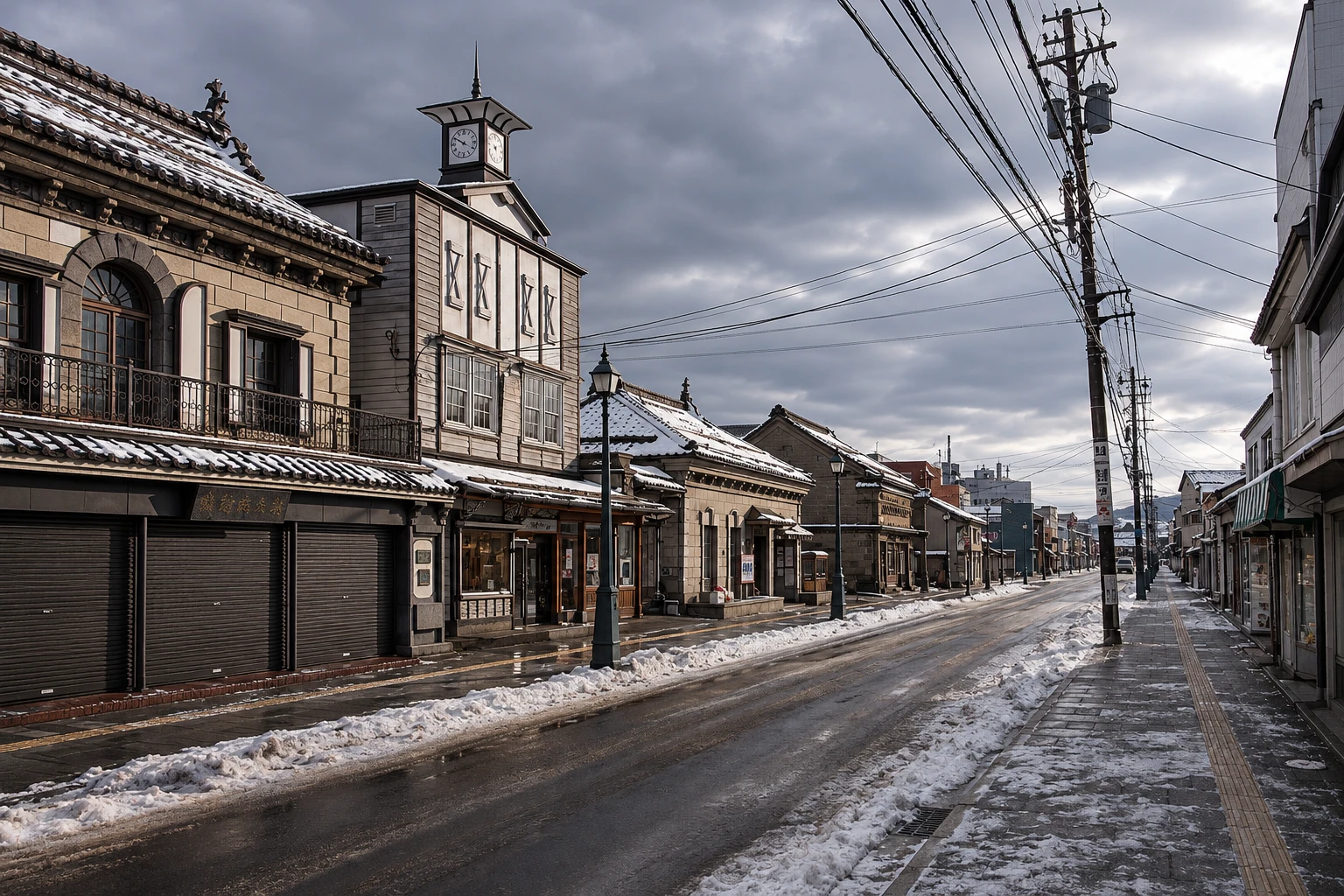
Otaru’s shopping street with early 20th-century houses and warehouses, now home to glassworks, music-box workshops and confectioneries. It ends at the Music Box Museum and the steam clock.
Illustrative images. The pictures in this guide are illustrations based on the real place, not photographs, and may differ from it.

A look at the place
Sakaimachi Street in pictures
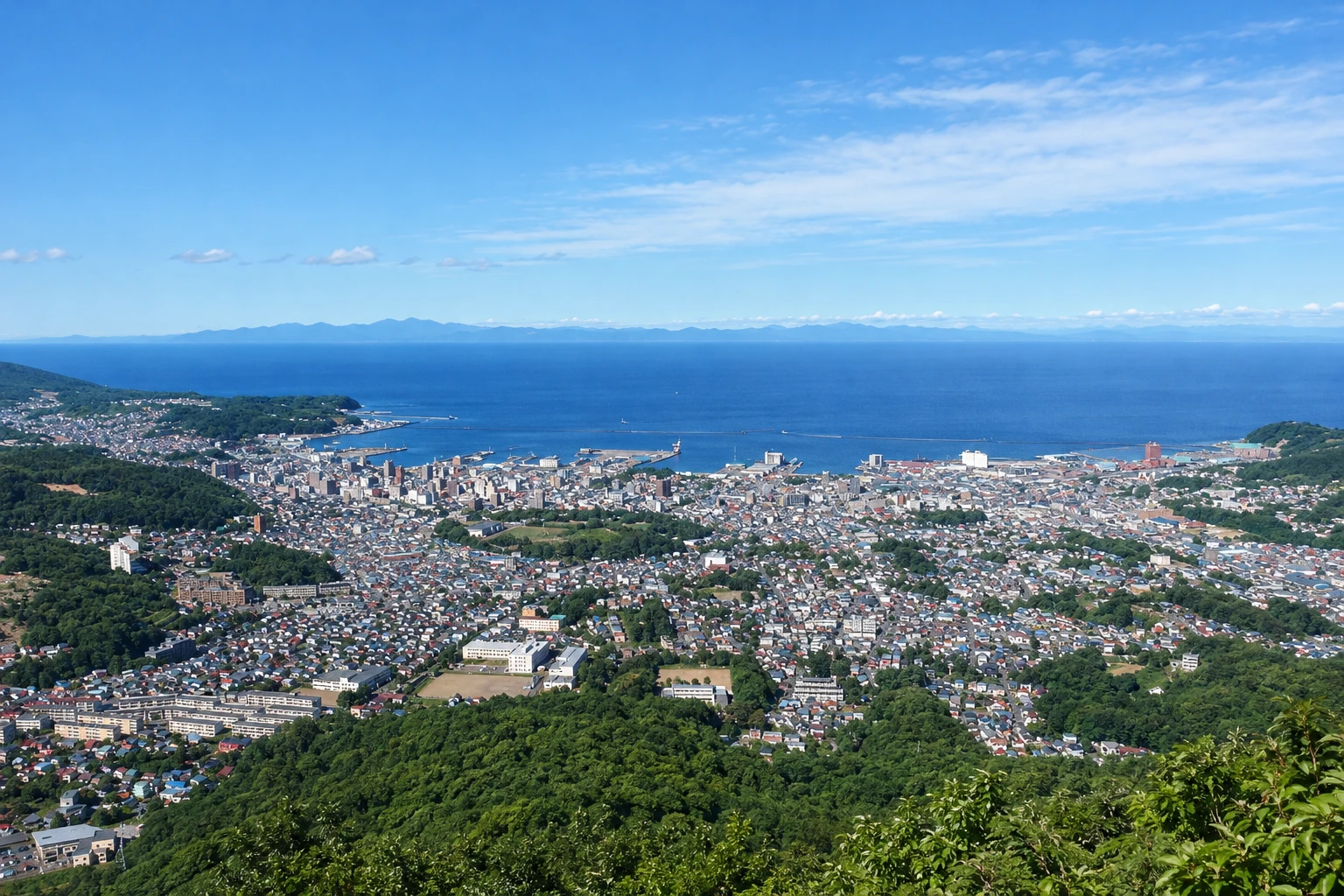
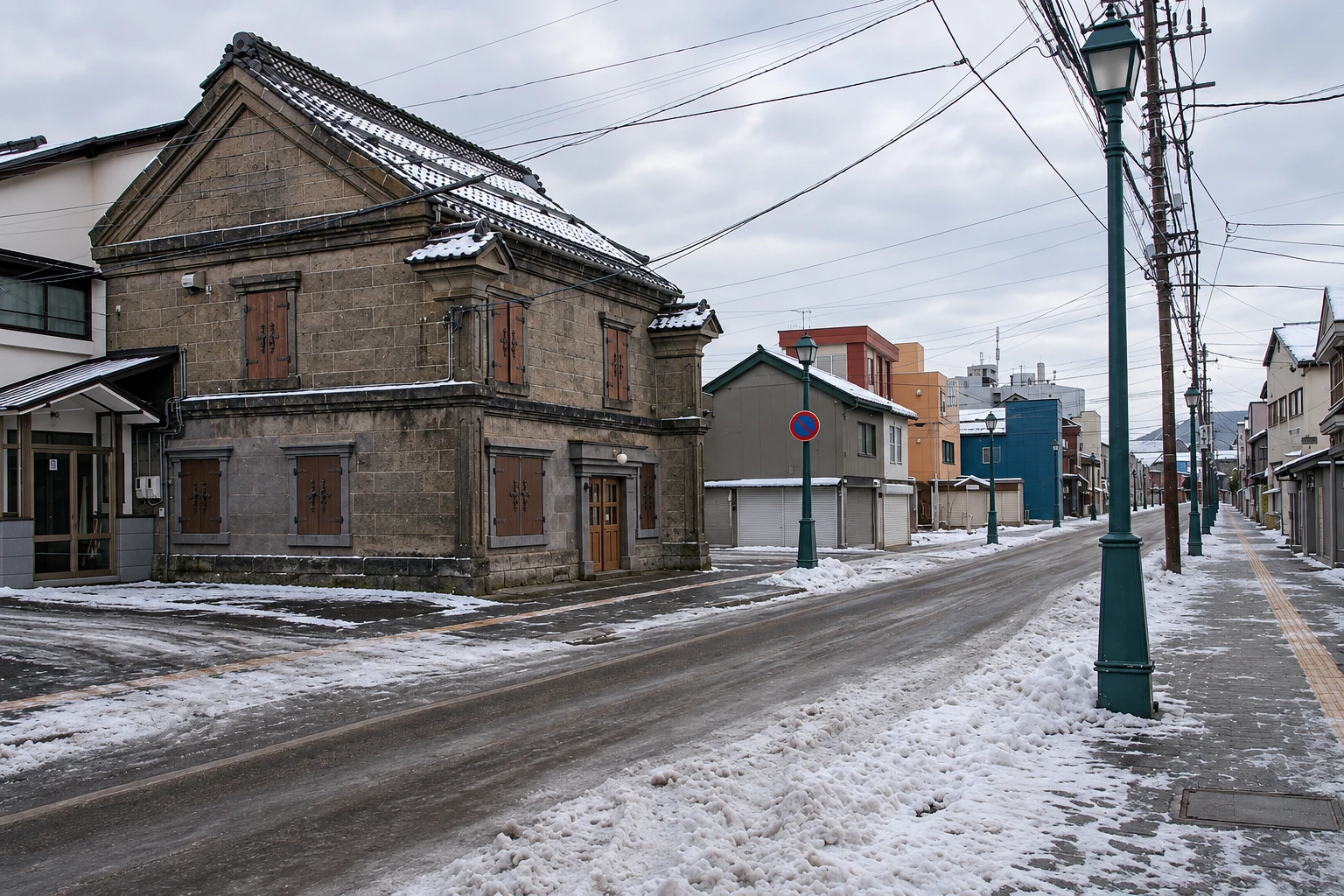
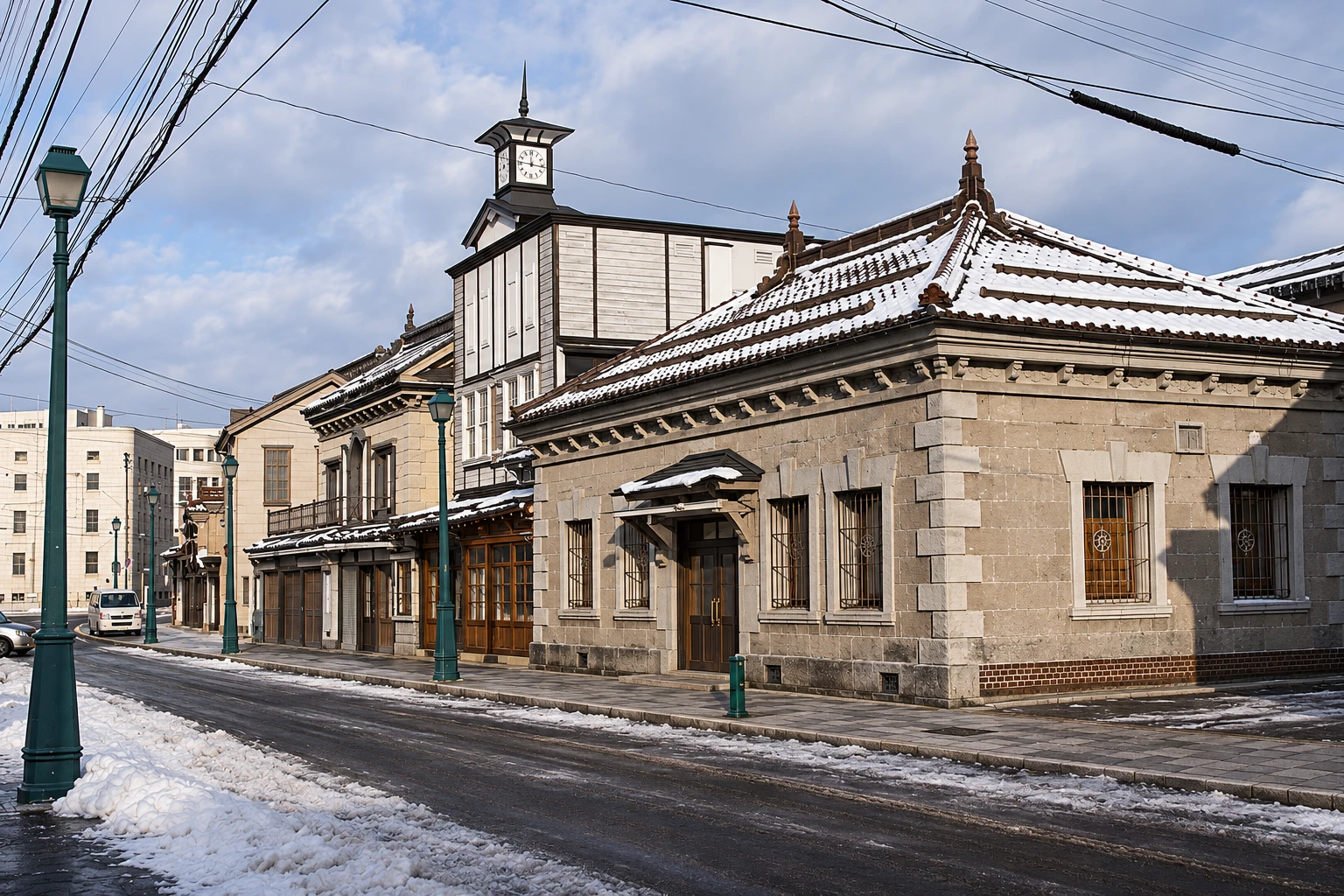
These pictures are illustrations based on the real place, not photographs. They may differ from the place.
Click the picture to enlarge it.
Discover
About Sakaimachi Street
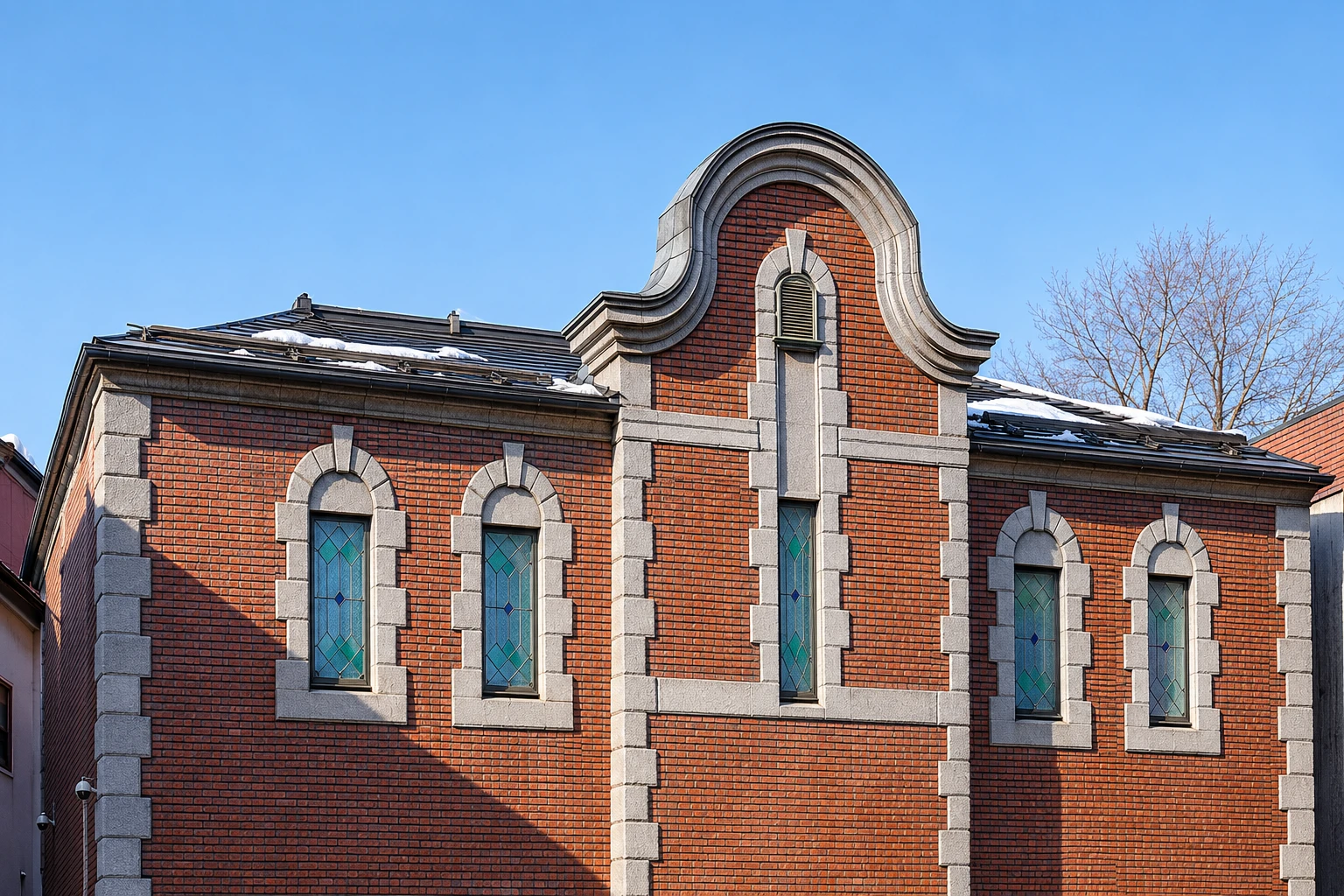
Sakaimachi Street runs parallel to the sea, south of the Otaru Canal, for about 900 meters. In the early 20th century it was the wholesale and trading street for herring, rice and textiles, and many stone, wood and brick buildings from that era still stand. Today the street is the center of Otaru’s crafts.
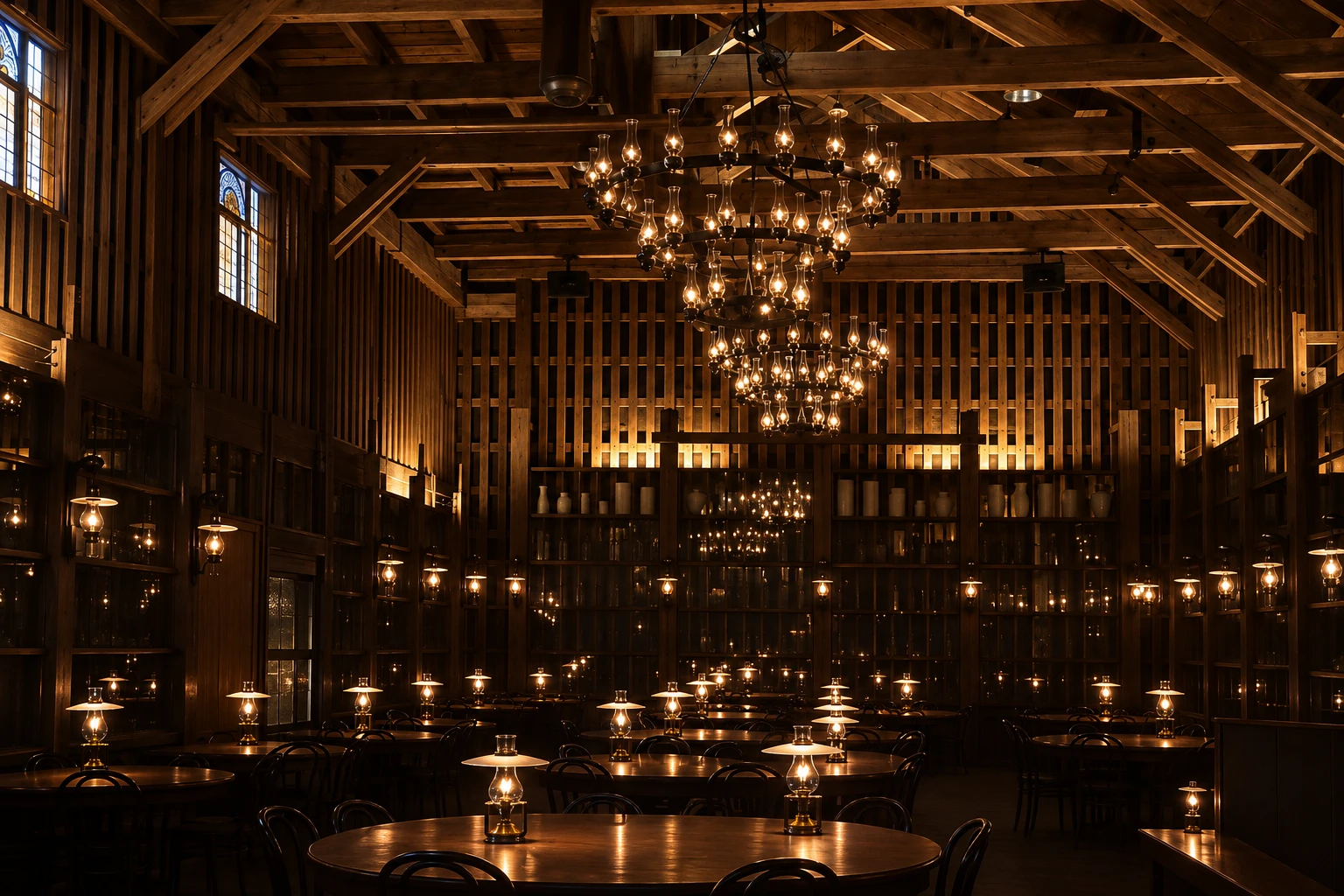
The glass tradition comes from fishing floats and kerosene lamps made in the town before there was electricity. Kitaichi Glass began in that trade and occupies old warehouses along the street, including a hall lit only by oil lamps. Several ateliers let visitors blow or decorate a piece, by reservation.
At the end of the street, at an intersection known as Meruhen, is the Otaru Music Box Museum, in a 1912 brick building, with thousands of boxes, from small to large automata, and a workshop to assemble your own. Opposite it, a Canadian-made steam clock releases steam and plays a tune every fifteen minutes.
The street also has traditional Hokkaido confectioneries, with cheese and milk sweets, and shops selling marine products. It is busy during the day; at night most places close early. It’s worth walking to the end and returning via the canal.
Before you go
Practical information
Cidade Turismo reviews its information regularly, but something may have changed. Check with the place before planning your trip.
How much time to set aside
From 1.5 to 3 hours, depending on workshops and shops.
Best time
In the morning shortly after opening, or late afternoon when groups from Sapporo have left. Shops usually close early in the evening.
How to get there
About a 15-minute walk from Otaru Station and 5 minutes from the canal. Minami-Otaru Station, one stop before, is near the side of the Music Box Museum.
Tip
Get off the train at Minami-Otaru and walk along the street toward the canal, ending at Otaru Station. To blow glass or assemble a music box, book the workshop in advance.
Official website
Get your questions answered
Frequently asked questions about Sakaimachi Street
Why is Otaru known for glass?
The town once made fishing buoys and glass oil lamps for boats and homes before electricity. The glass shops on Sakaimachi Street come from that tradition.
Can you make a glass piece in Otaru?
Yes. Several studios on the street offer glassblowing and glass-decorating workshops by reservation. Some pieces need a day to cool and are shipped to the hotel.
Where is Otaru’s steam clock?
At the Meruhen intersection, at the end of Sakaimachi Street, in front of the Music Box Museum. It plays a melody every fifteen minutes.
Which station is closest to Sakaimachi Street?
Minami-Otaru Station, about a 10-minute walk from the Music Box Museum. From Otaru Station it’s about 15 minutes.
Beyond the guide


