

 Brazil
 Antarctica
 Argentina
 Bolivia
 Chile
 Colombia
 Ecuador
 Guyana
 French Guiana
 Falkland Islands (Malvinas)
 Paraguay
 Peru
 Suriname
 Uruguay
 Venezuela
 Germany
 Austria
 Belgium
 Croatia
 Denmark
 Slovakia
 Slovenia
 Spain
 Finland
 France
 Greece
 the Netherlands
 Hungary
 Ireland
 Iceland
 Italy
 Luxembourg
 Norway
 Poland
 Portugal
 the United Kingdom
 the Czech Republic
 Sweden
 Switzerland
 Turkey
 Bermuda
 Canada
 the United States
 Greenland
 Mexico
 Saint Pierre and Miquelon
 the Dominican Republic
 South Africa
 Egypt
 Australia
 Fiji
 New Zealand
 Papua New Guinea
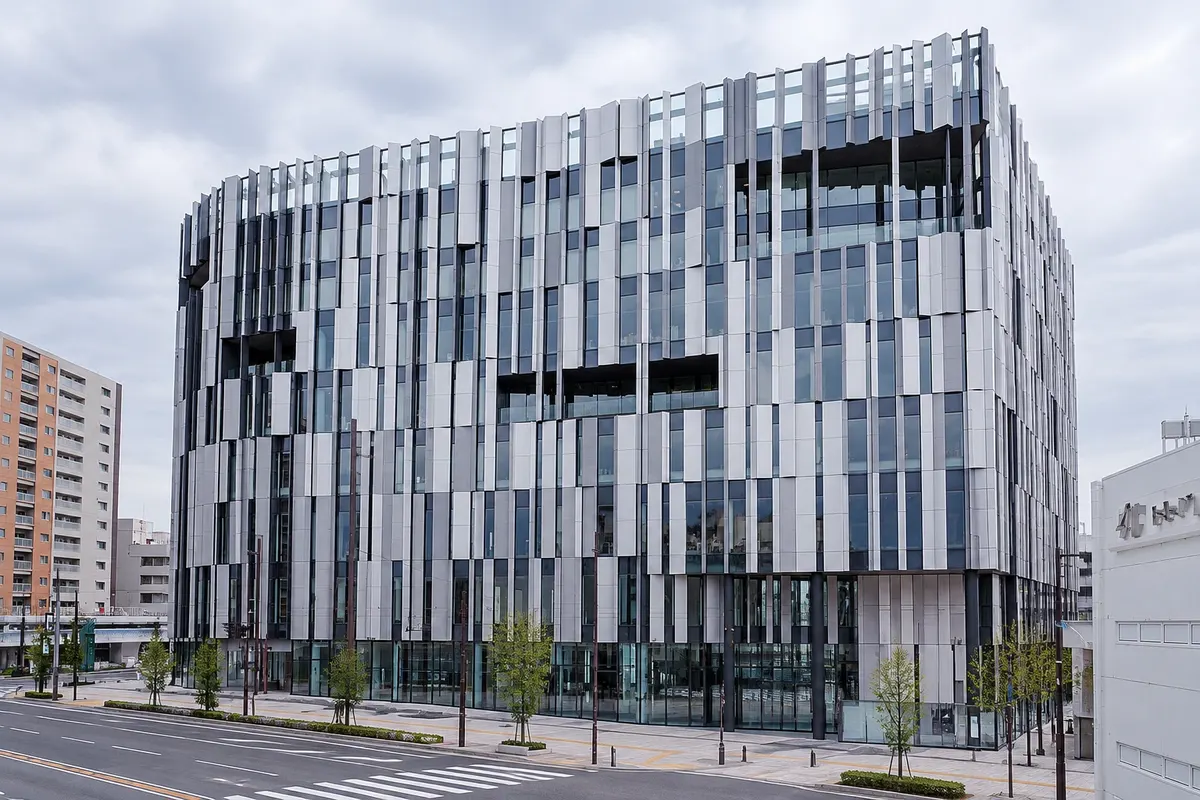
Museum · Toyama, Toyama
Toyama Glass Art Museum
Museum dedicated to contemporary glass, in a Kengo Kuma building clad in wood and glass in central Toyama, with temporary exhibitions and permanent glass galleries.
Illustrative images. The pictures in this guide are illustrations based on the real place, not photographs, and may differ from it.

A look at the place
Toyama Glass Art Museum in pictures
These pictures are illustrations based on the real place, not photographs. They may differ from the place.
Click the picture to enlarge it.

Discover
About Toyama Glass Art Museum
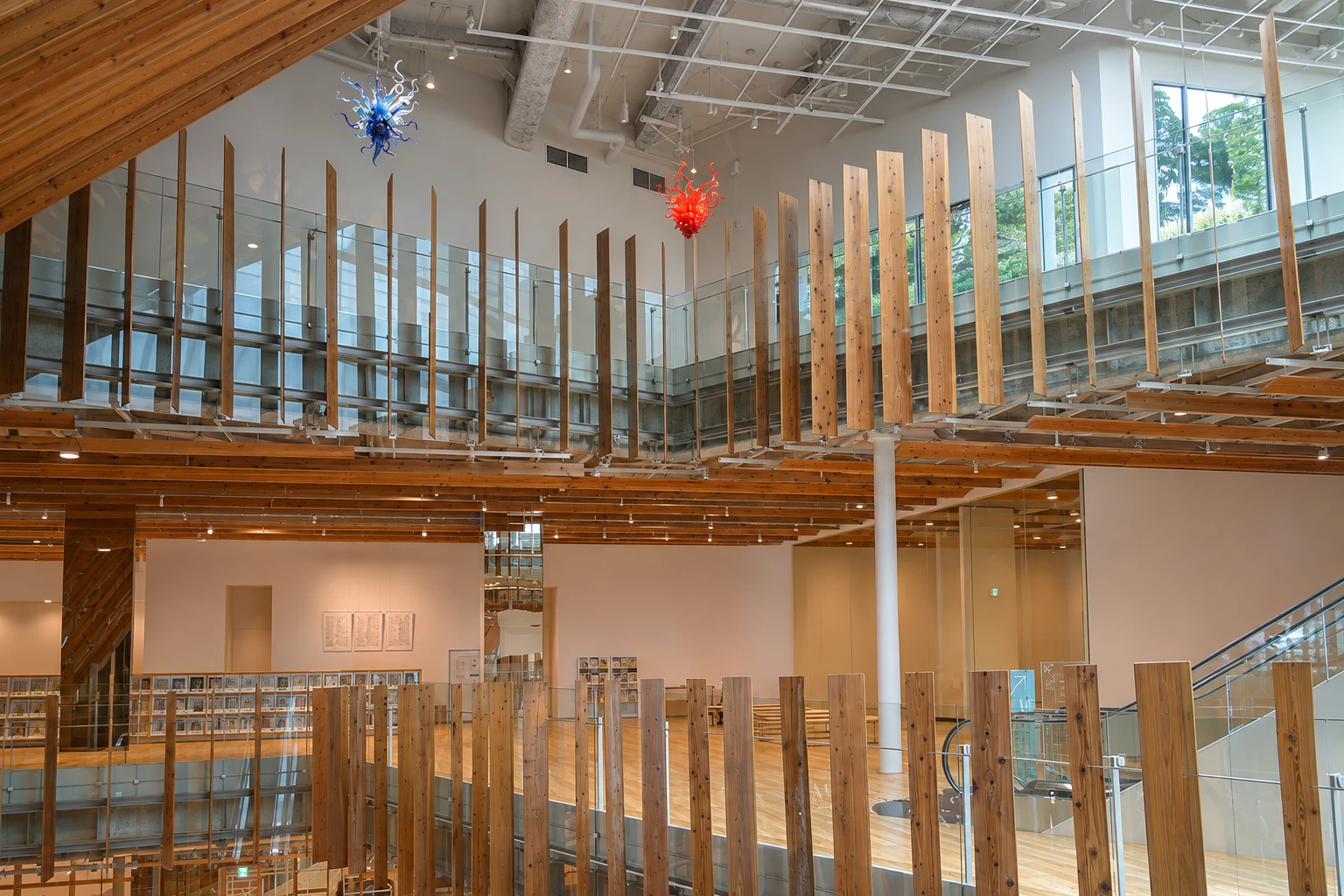
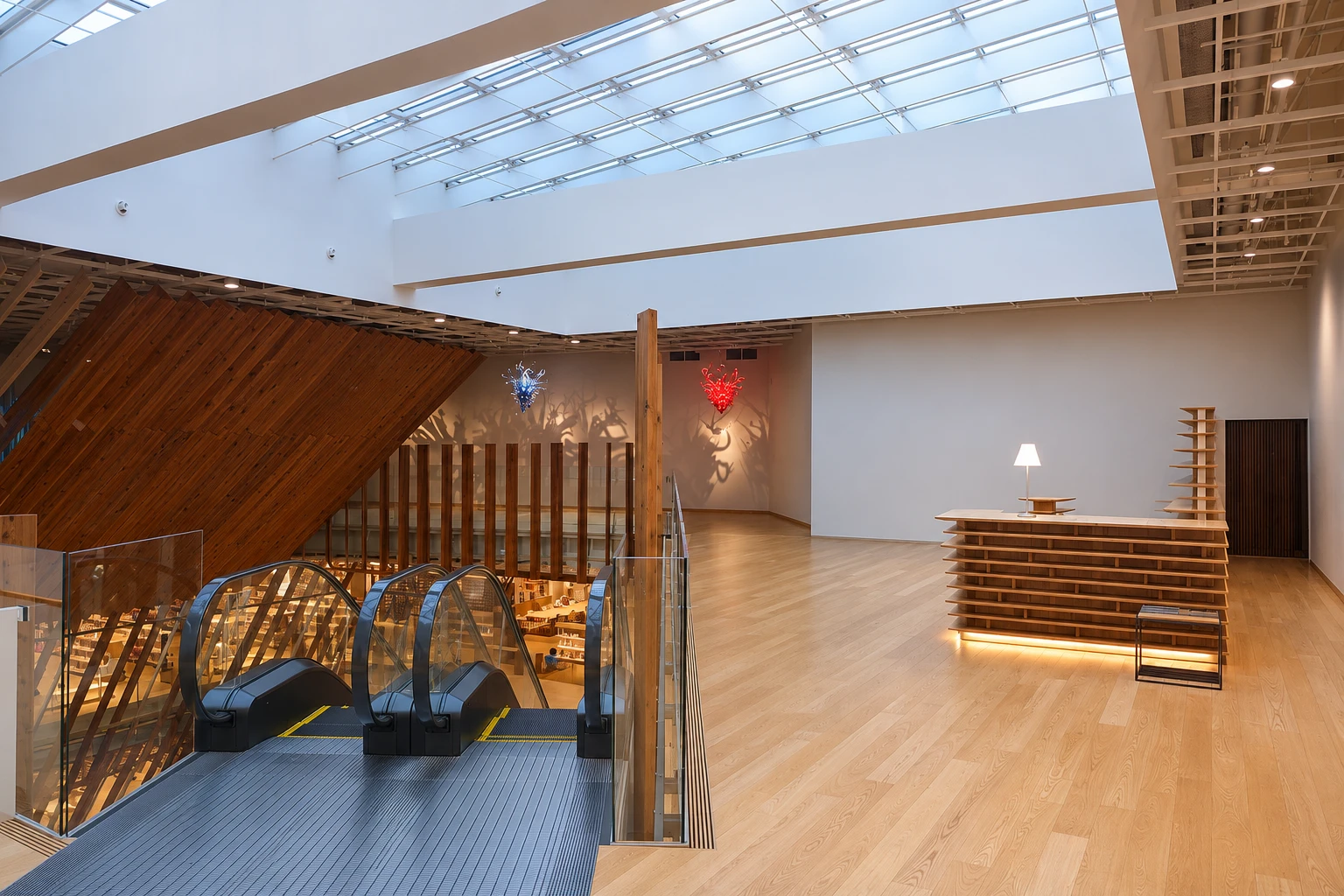
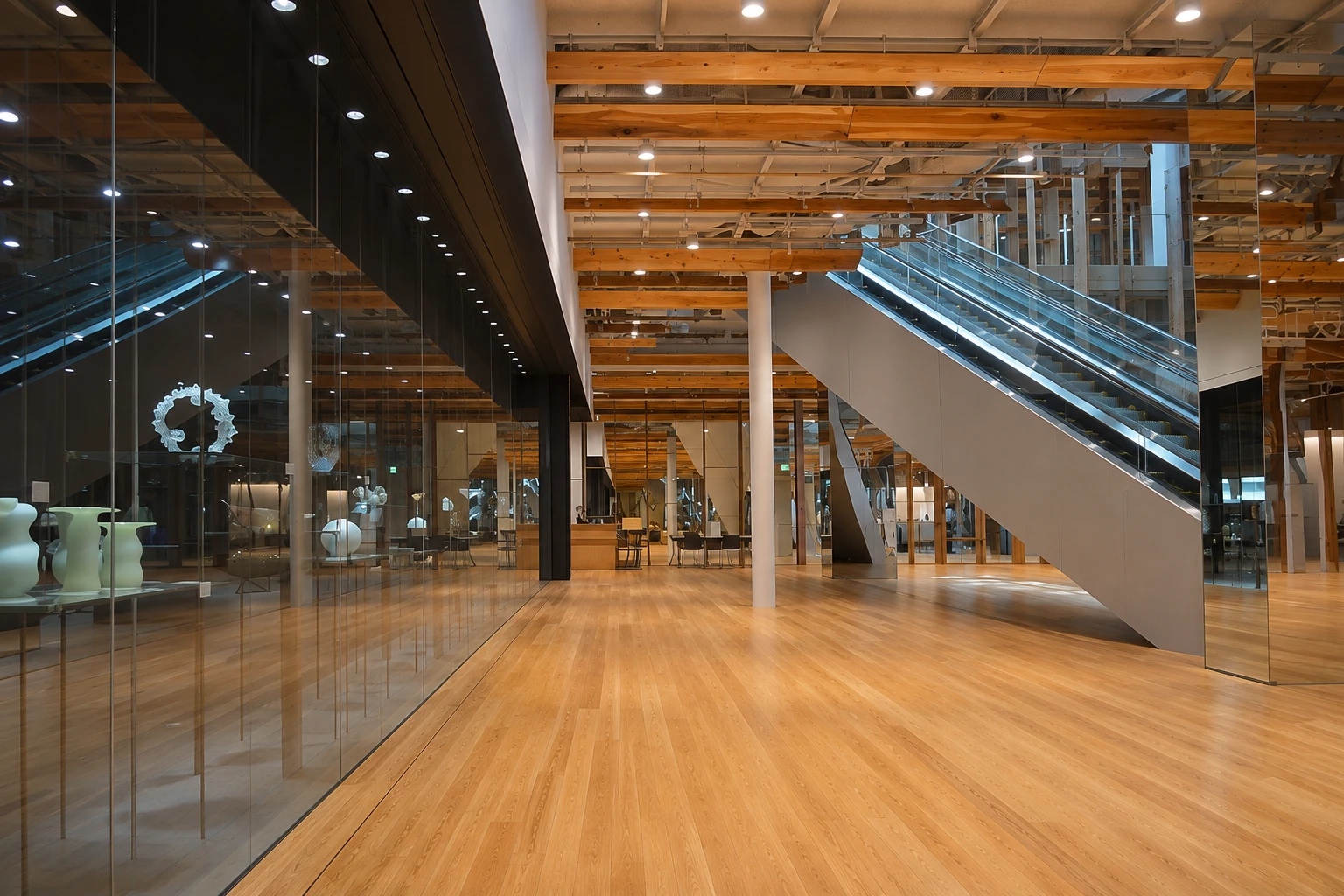
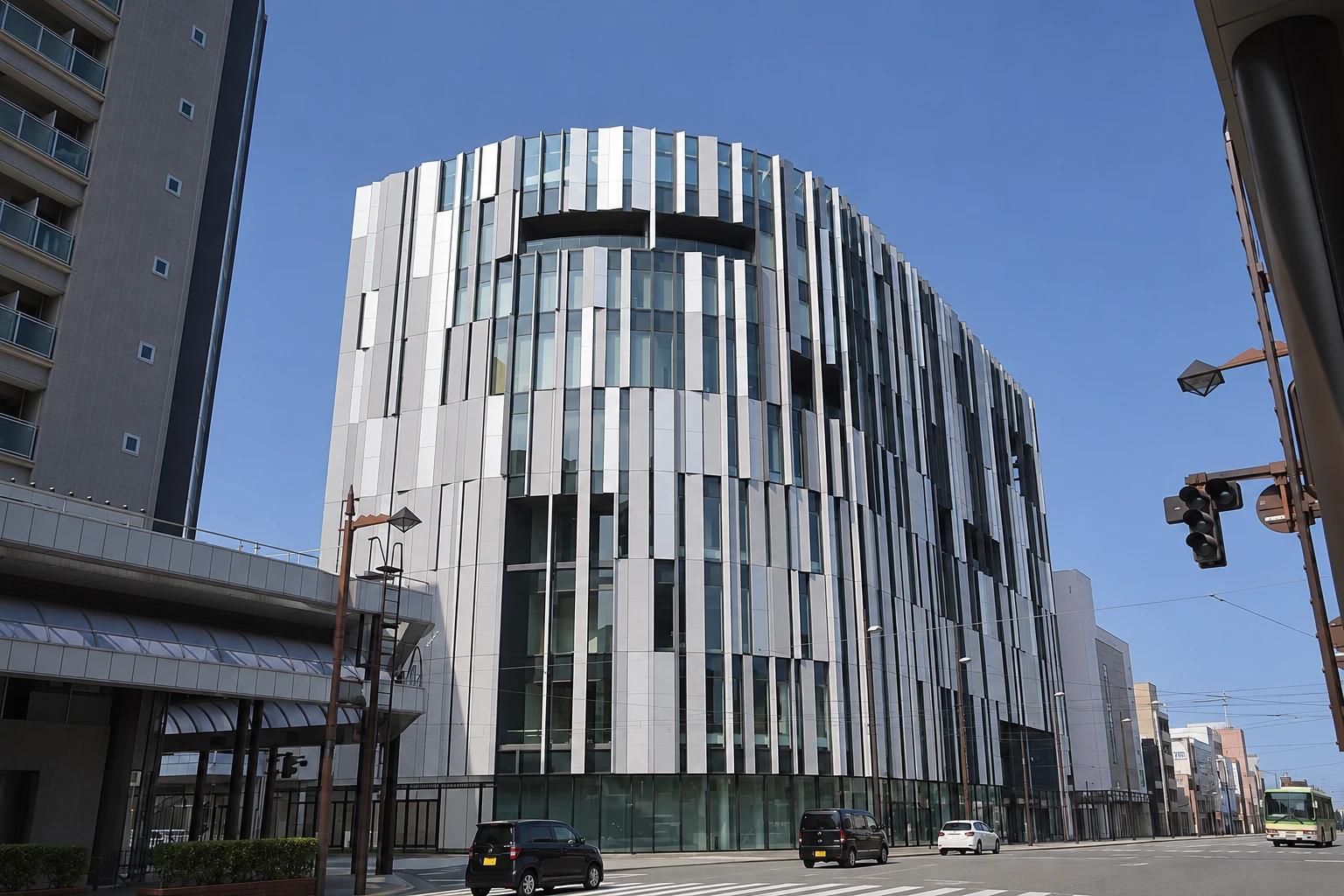
The Toyama Glass Art Museum is located in the city center in the TOYAMA Kirari building, designed by architect Kengo Kuma. The building is clad in slabs of granite, glass and aluminum that change with the light, and inside has a large sloping atrium covered with regional cedar slats that rises across several floors.
Toyama has a long connection to glass: in the Edo period the city produced bottles for medicines sold by traveling peddlers across Japan. From the 1980s onward, the prefecture began supporting artistic glass with schools and workshops, and the museum is part of that policy. In the city, a glass training institute and a cluster of ateliers host artists from different parts of the country.
The collection brings together contemporary glass from Japan and other countries, shown in temporary exhibitions that rotate throughout the year. On the sixth floor, a permanent area presents installations by American artist Dale Chihuly, with brightly colored pieces, and the building also houses the municipal library and shops selling glass by local artists.
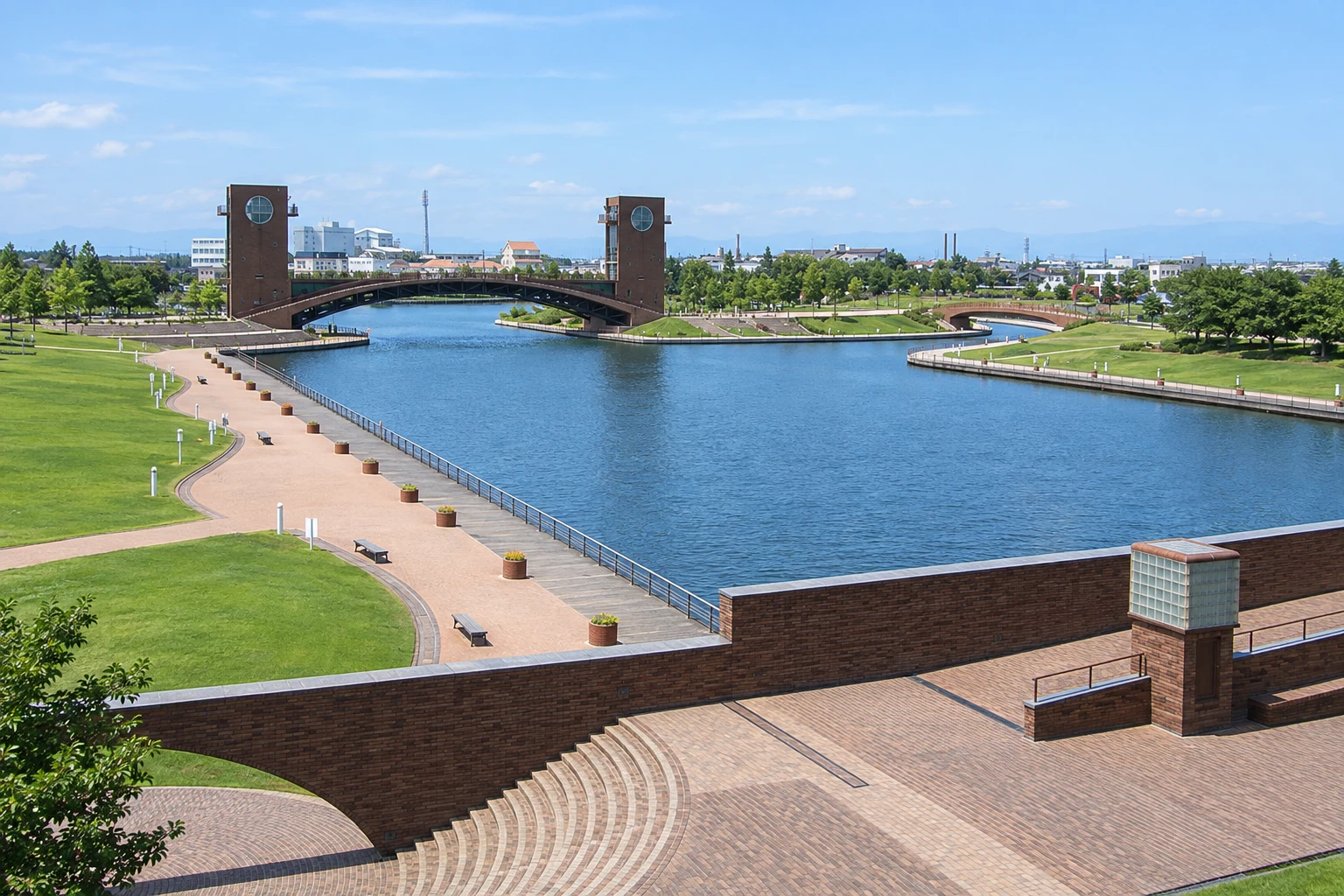
The atrium and the library can be visited without a ticket; the exhibitions charge admission. The museum is a few minutes by tram from Toyama Station, and you can combine the visit with the Fugan canal-side park and the castle park in the same neighborhood.
Before you go
Practical information
Cidade Turismo reviews its information regularly, but something may have changed. Check with the place before planning your trip.
How much time to set aside
About 1 hour 30 minutes, including the atrium, the exhibitions and the permanent galleries.
Best time
At any time of year; it’s a good option on rainy days or when the Alpine Route is closed. Check the exhibition calendar and the museum’s closed days beforehand.
How to get there
From Toyama Station, the tram reaches the Nishicho stop in about 10 minutes; the museum is opposite. It’s about a 20-minute walk.
Tip
Walk up the atrium to see the wooden structure from above. See the temporary exhibitions before entering the permanent galleries, and visit the local artists’ glass shops on the ground floor.
Official website
Get your questions answered
Frequently asked questions about Toyama Glass Art Museum
Who designed the Toyama Glass Art Museum?
Architect Kengo Kuma. The building, called TOYAMA Kirari, has an atrium lined with cedar slats and also houses the municipal library.
Is there an admission fee for the Glass Art Museum?
The atrium and the library can be visited without a ticket; the exhibitions charge admission. Check the current price list.
Why is Toyama linked to glass?
In the Edo period the city manufactured glass bottles for medicines sold by peddlers across Japan. Today the city supports artistic glass with schools and workshops.
How long does a visit to the glass museum take?
About 1 hour 30 minutes for the atrium, temporary exhibitions and permanent galleries.
Beyond the guide


