

 Brazil
 Antarctica
 Argentina
 Bolivia
 Chile
 Colombia
 Ecuador
 Guyana
 French Guiana
 Falkland Islands (Malvinas)
 Paraguay
 Peru
 Suriname
 Uruguay
 Venezuela
 Germany
 Austria
 Belgium
 Croatia
 Denmark
 Slovakia
 Slovenia
 Spain
 Finland
 France
 Greece
 the Netherlands
 Hungary
 Ireland
 Iceland
 Italy
 Luxembourg
 Norway
 Poland
 Portugal
 the United Kingdom
 the Czech Republic
 Sweden
 Switzerland
 Turkey
 Bermuda
 Canada
 the United States
 Greenland
 Mexico
 Saint Pierre and Miquelon
 the Dominican Republic
 South Africa
 Egypt
 Australia
 Fiji
 New Zealand
 Papua New Guinea
Temple · Uji, Kyoto
Byodo-in
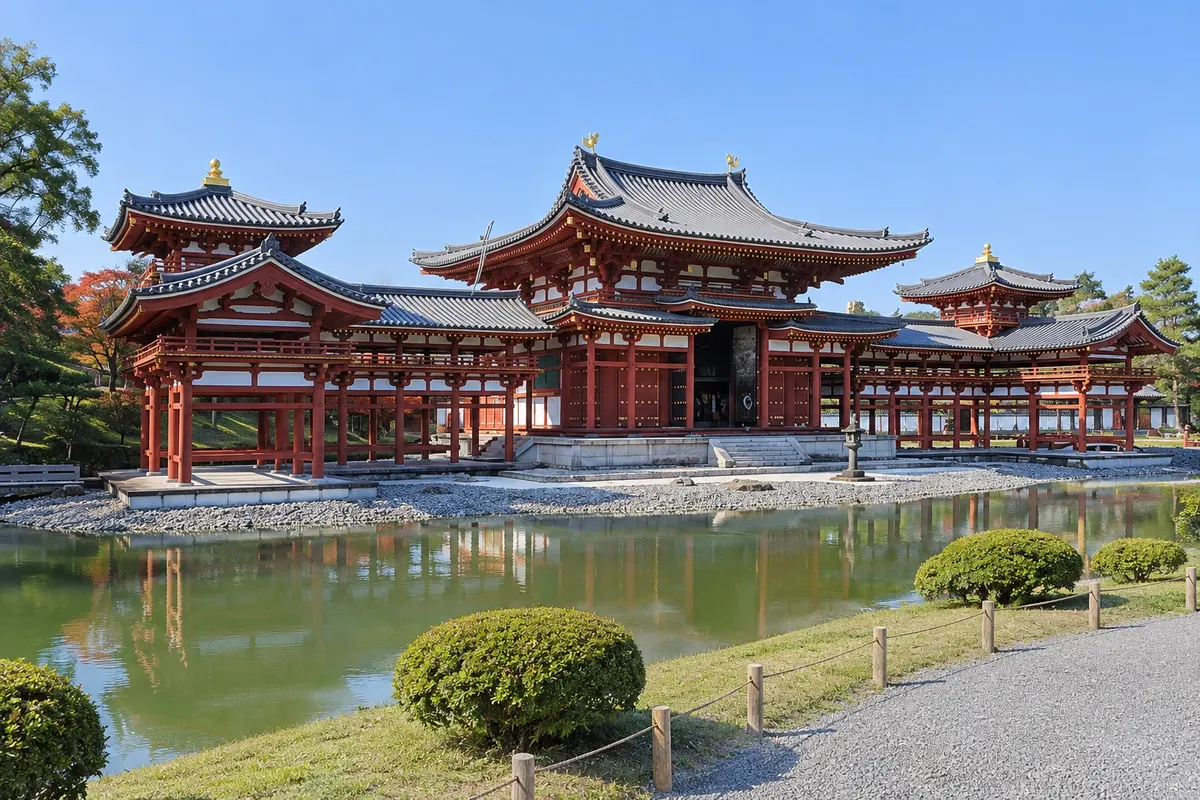
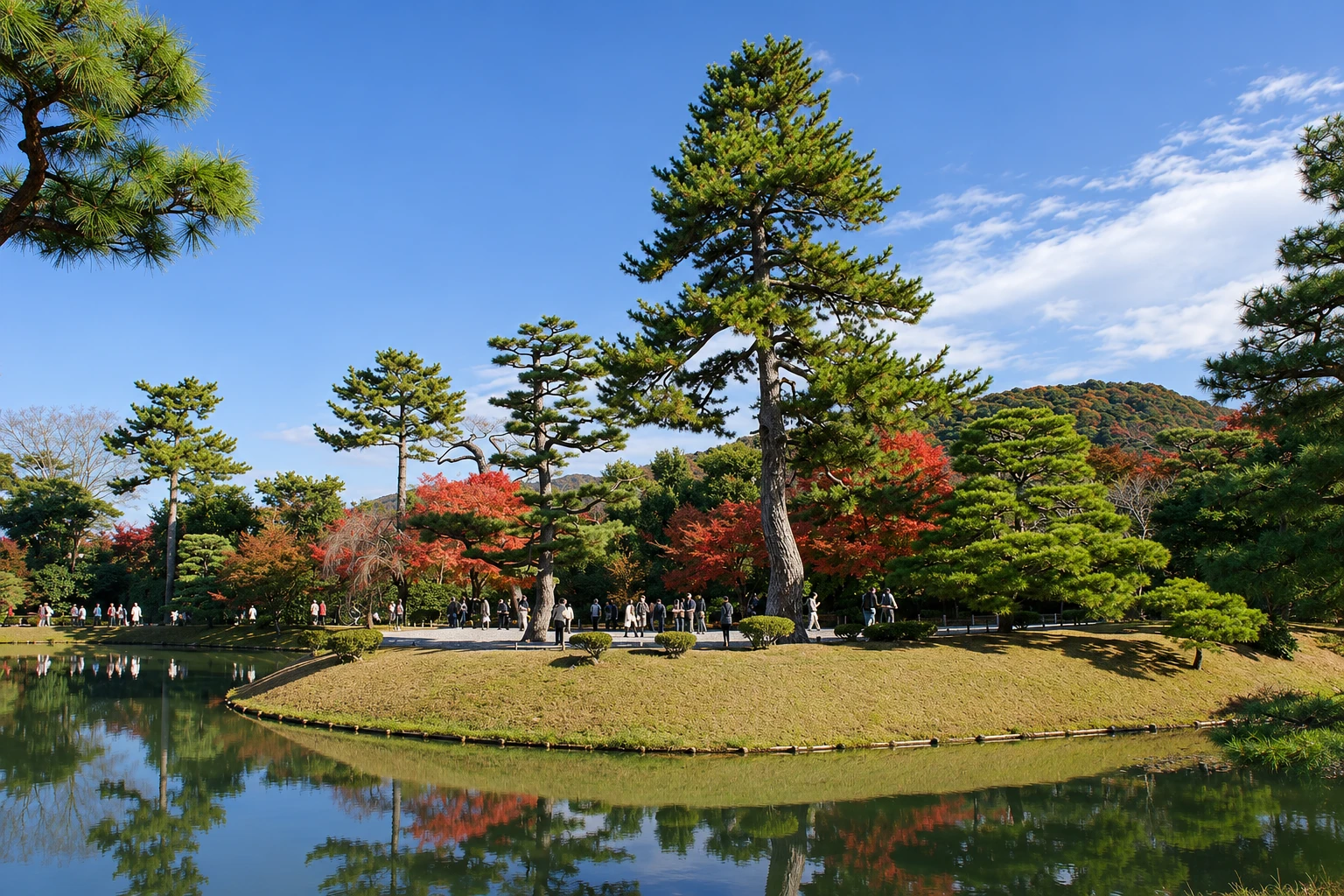
The Uji temple with the 11th-century Phoenix Hall reflected in a pond, and a museum housing the original sculptures; World Heritage site.
Illustrative images. The pictures in this guide are illustrations based on the real place, not photographs, and may differ from it.

A look at the place
Byodo-in in pictures
These pictures are illustrations based on the real place, not photographs. They may differ from the place.
Click the picture to enlarge it.
Discover
About Byodo-in
Byodo-in was the country villa of the noble Fujiwara no Michinaga, one of the most powerful figures of the Kyoto court, and was converted into a Buddhist temple by his son Fujiwara no Yorimichi in 1052. The temple has been on the World Heritage list since 1994.
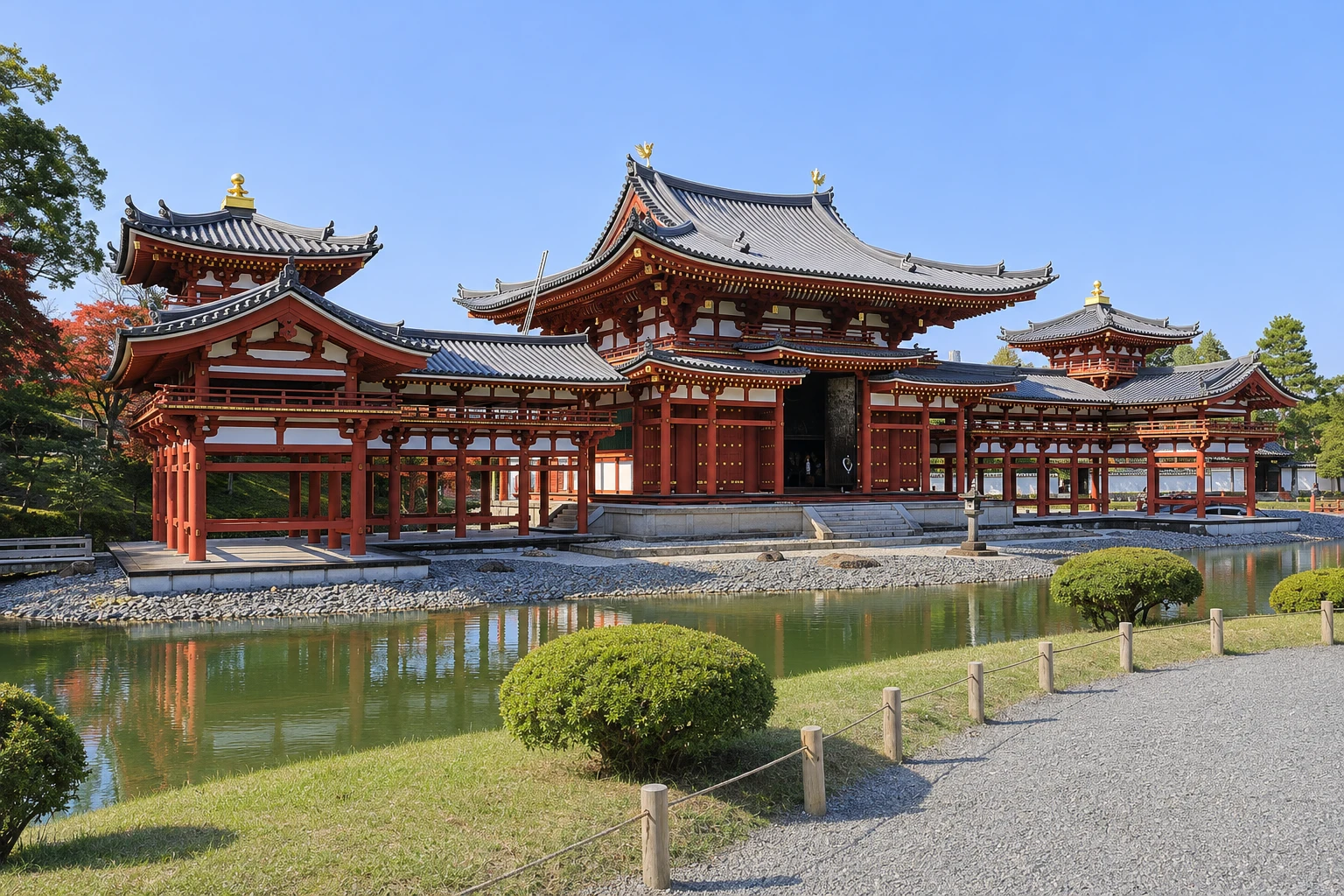
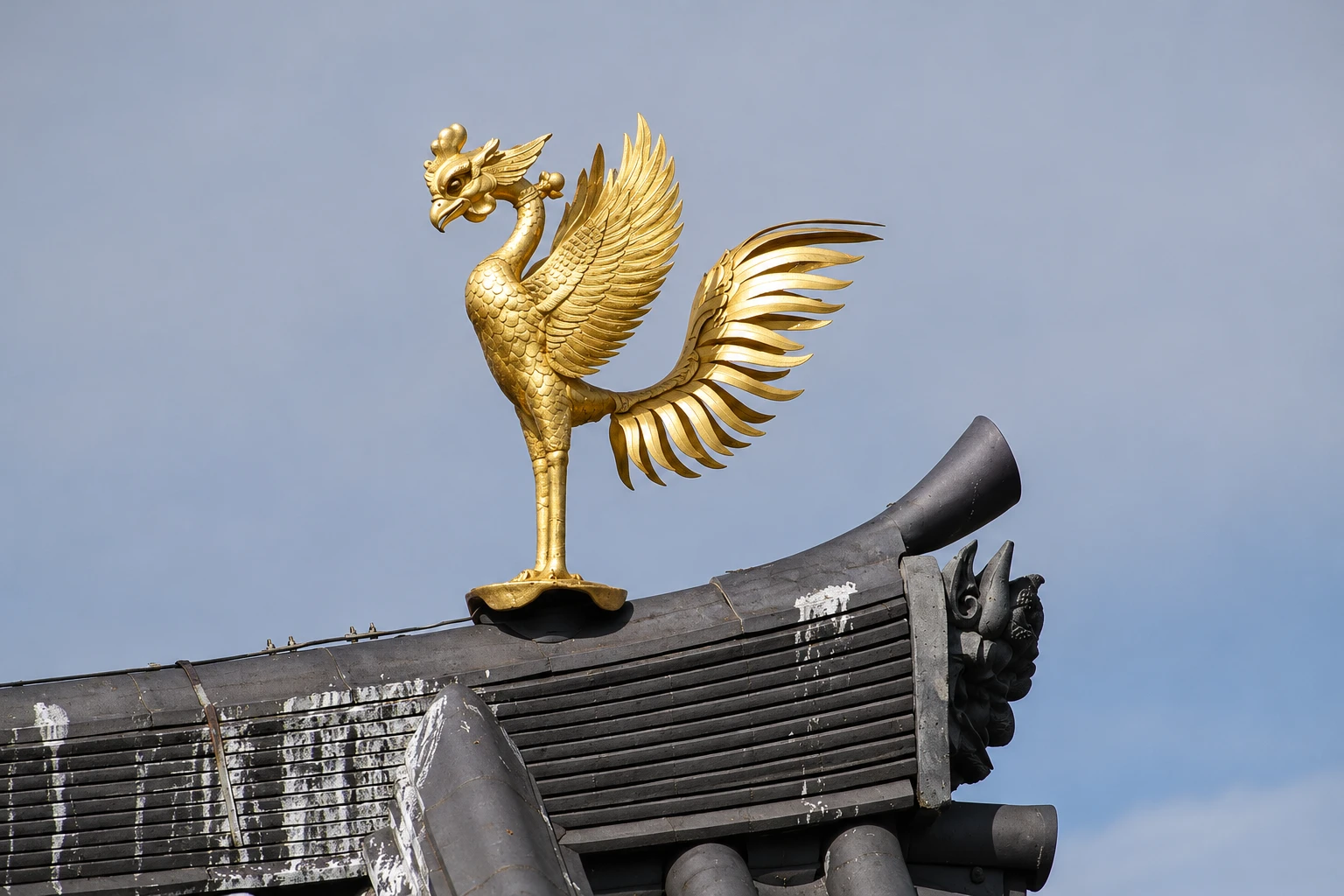
The main building is Phoenix Hall (Hoo-do), completed in 1053. It has a central section with two side wings and a rear wing that together resemble a bird with outstretched wings, and two bronze phoenixes on the roof. The hall was built to represent the Pure Land paradise of Amida Buddha and is reflected in the pond in front. The image of the hall is engraved on one of Japan’s coins.
Inside the hall is the gilded Amida statue by the sculptor Jocho, and on the walls are bodhisattva figures on clouds playing instruments and dancing. The interior is visited in small groups, with a separate ticket and a scheduled time obtained at the temple.
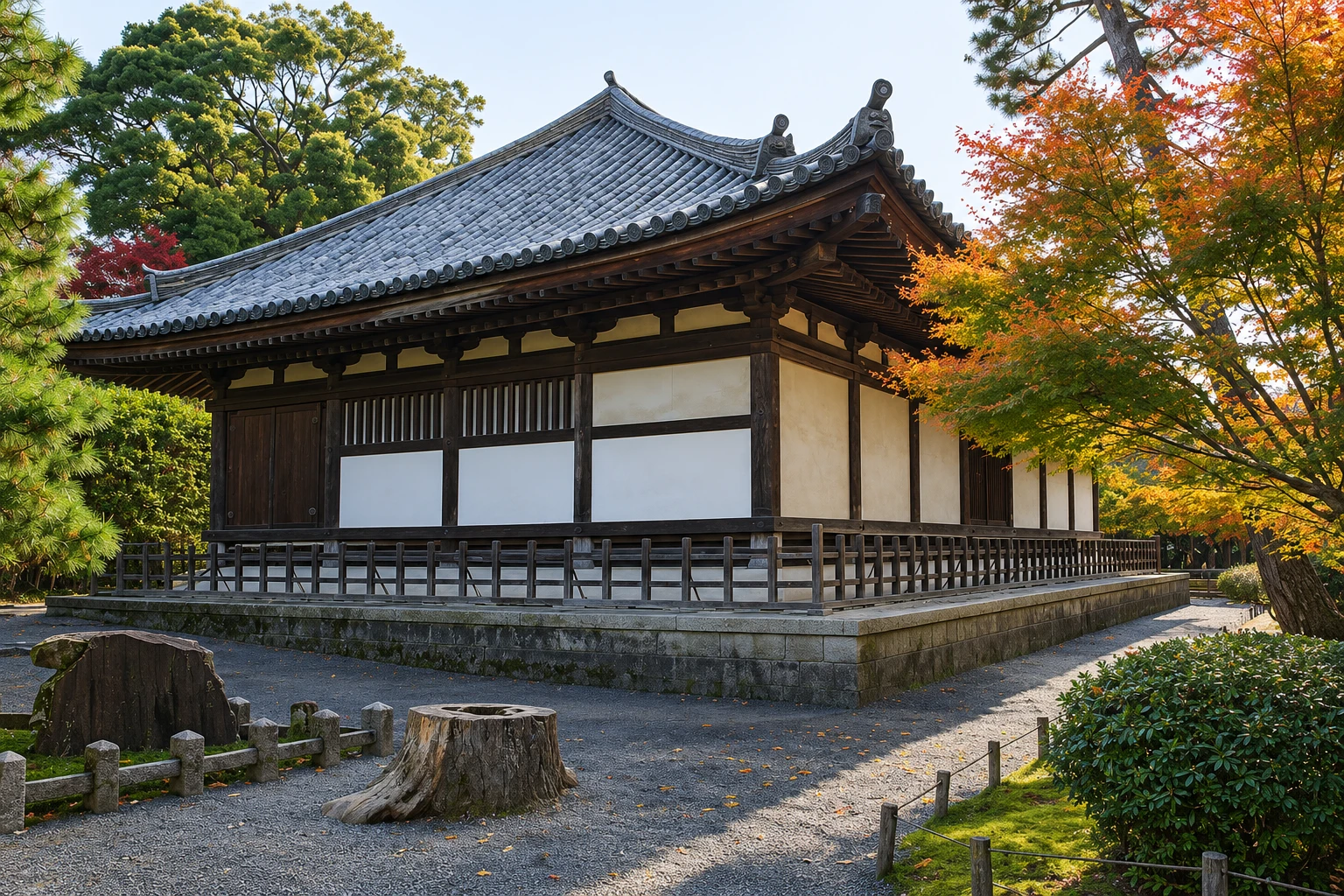
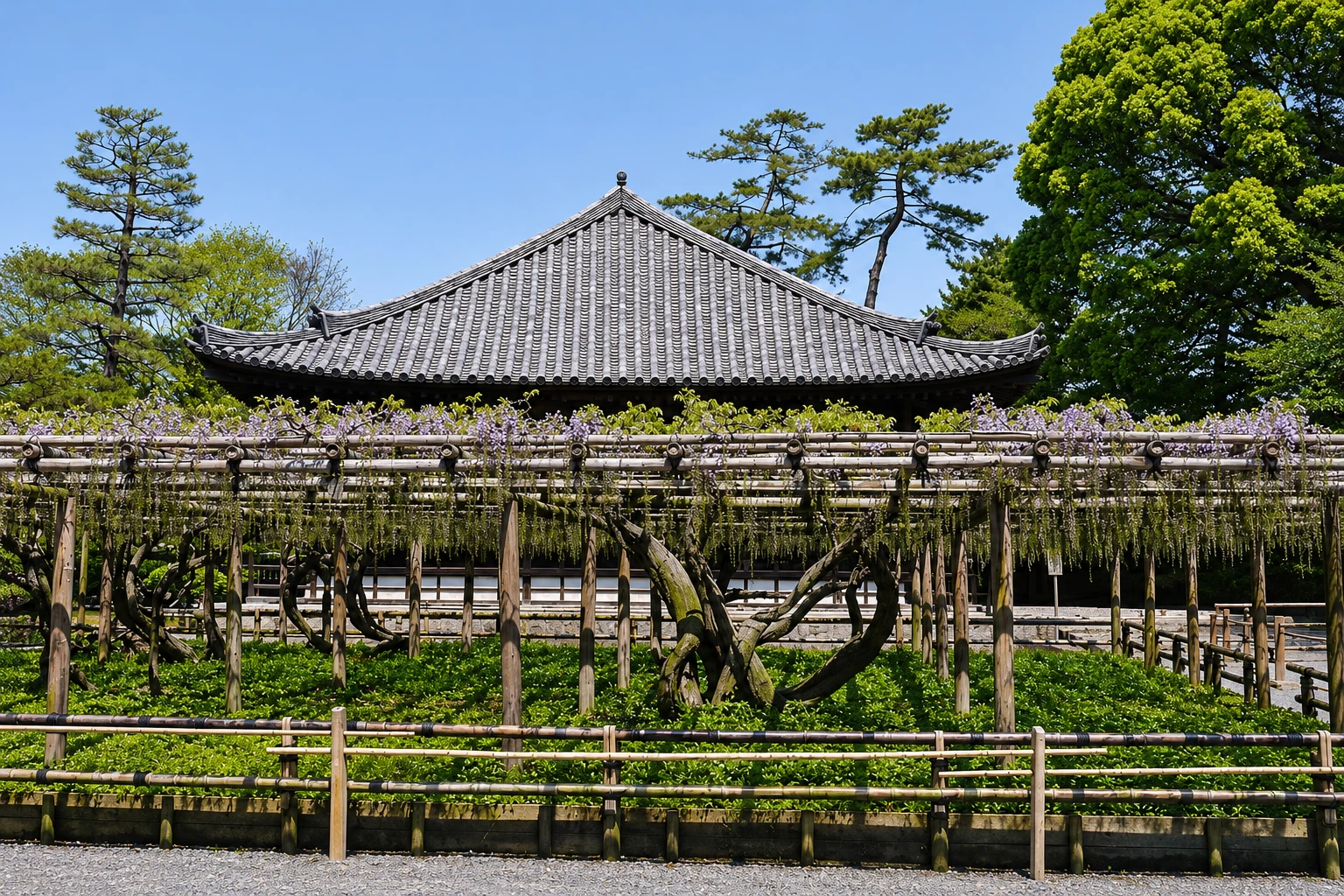
The Hoshokan museum, built into the slope so as not to disturb the landscape, houses the original roof phoenixes, a bronze bell and some of the bodhisattva figures on clouds. The surrounding gardens have wisteria that usually bloom in late April and early May.
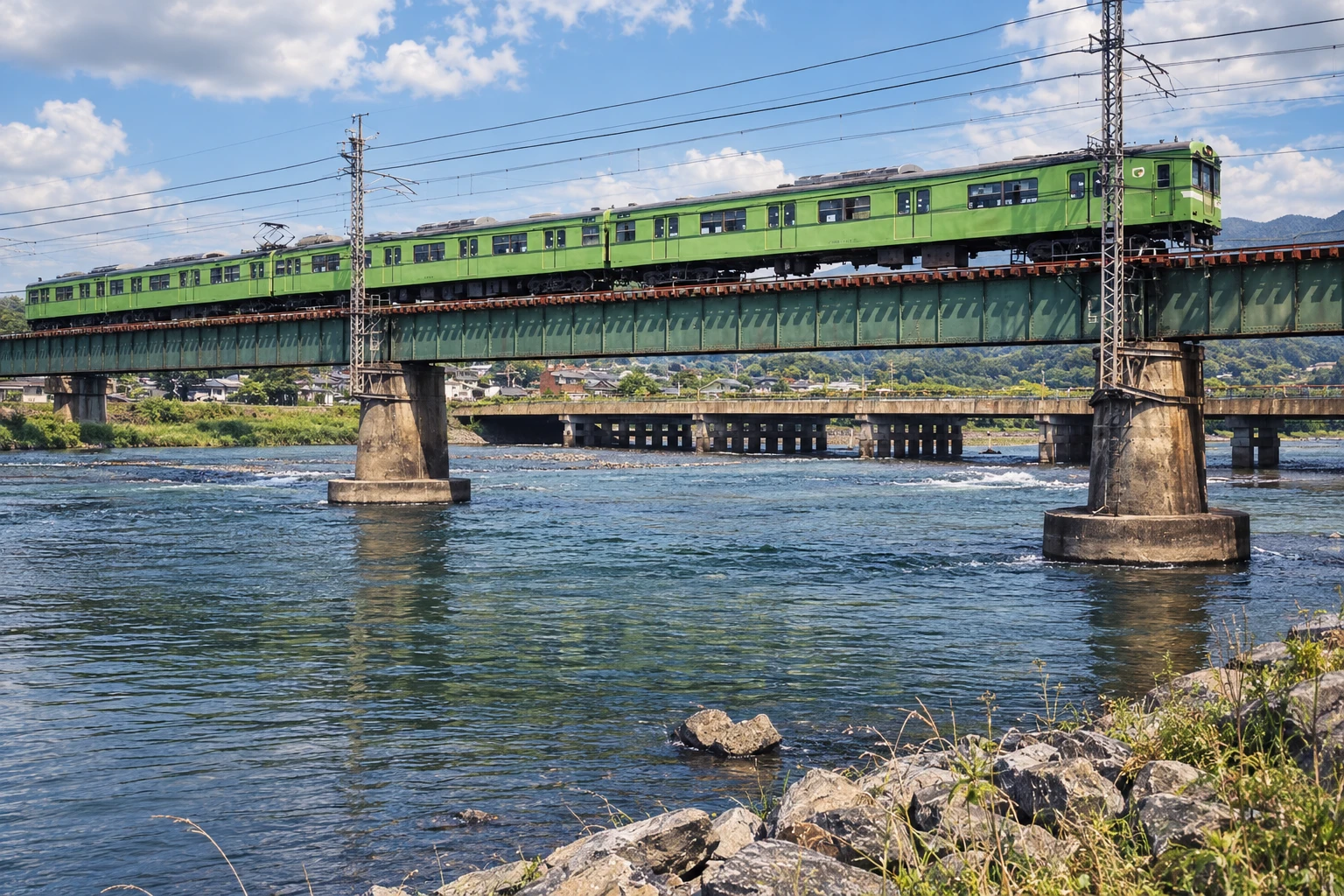
The access street, Byodoin Omotesando, has teahouses and Uji green tea shops selling matcha sweets. The Uji River runs beside it, with isles linked by bridges leading to Ujigami Shrine on the far side.
Before you go
Practical information
Cidade Turismo reviews its information regularly, but something may have changed. Check with the place before planning your trip.
How much time to set aside
About 1 to 1.5 hours for the garden and the museum; about 20 minutes extra for the interior of Phoenix Hall.
Best time
Right at opening, before the groups that arrive from Kyoto, to see the hall reflected in the pond. Wisteria usually bloom from late April to early May. Tickets for the hall interior are limited and sold on the day: arrive early.
How to get there
Uji Station on the JR Nara Line is about a 10-minute walk; Keihan-Uji Station is also about 10 minutes, on the other side of Uji Bridge. From Kyoto Station, the JR rapid train takes about 20 minutes.
Tip
Buy early the ticket for the Phoenix Hall interior, which has group-limited admission. Before leaving, try Uji green tea at one of the teahouses on Byodoin Omotesando.
Official website
Get your questions answered
Frequently asked questions about Byodo-in
What is the Phoenix Hall of Byōdō-in?
It is the temple’s main building, dating from 1053, with wings that suggest a bird with outstretched wings and two phoenixes on the roof. It houses the Amida Buddha statue and is depicted on one of Japan’s coins.
Can you go inside the Phoenix Hall?
Yes, on short guided visits in groups, with a separate ticket and scheduled time, sold at the temple on the day. Capacity is limited.
How do I get to Byōdō-in from Kyoto?
Take the JR Nara Line to Uji Station, about 20 minutes by rapid train, then a 10-minute walk. The Keihan line also serves Uji.
How long does a visit to Byōdō-in take?
1 to 1.5 hours for the garden and the Hoshōkan Museum, plus about 20 minutes for the interior of the hall.
What to do in Uji besides Byōdō-in?
Visit Ujigami Shrine, walk the islands of the Uji River, see the Genji Monogatari Museum and taste the local green tea and matcha sweets.
Beyond the guide


