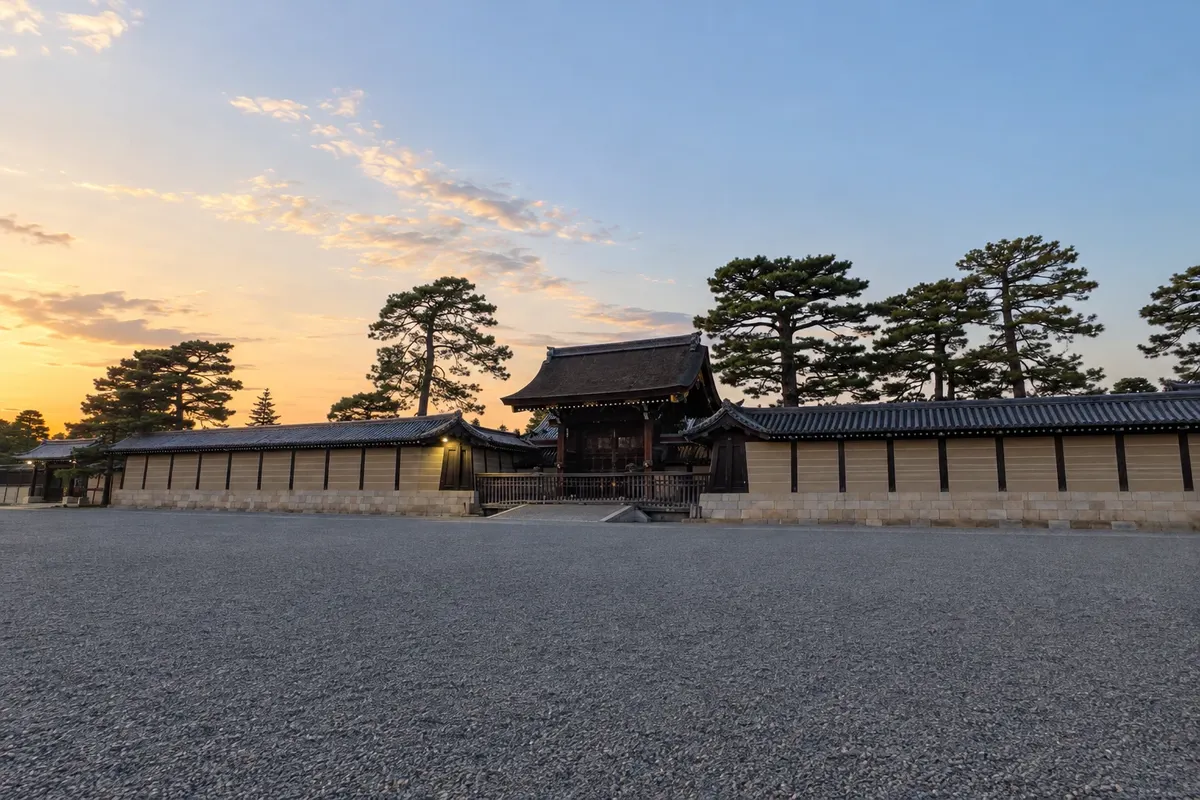
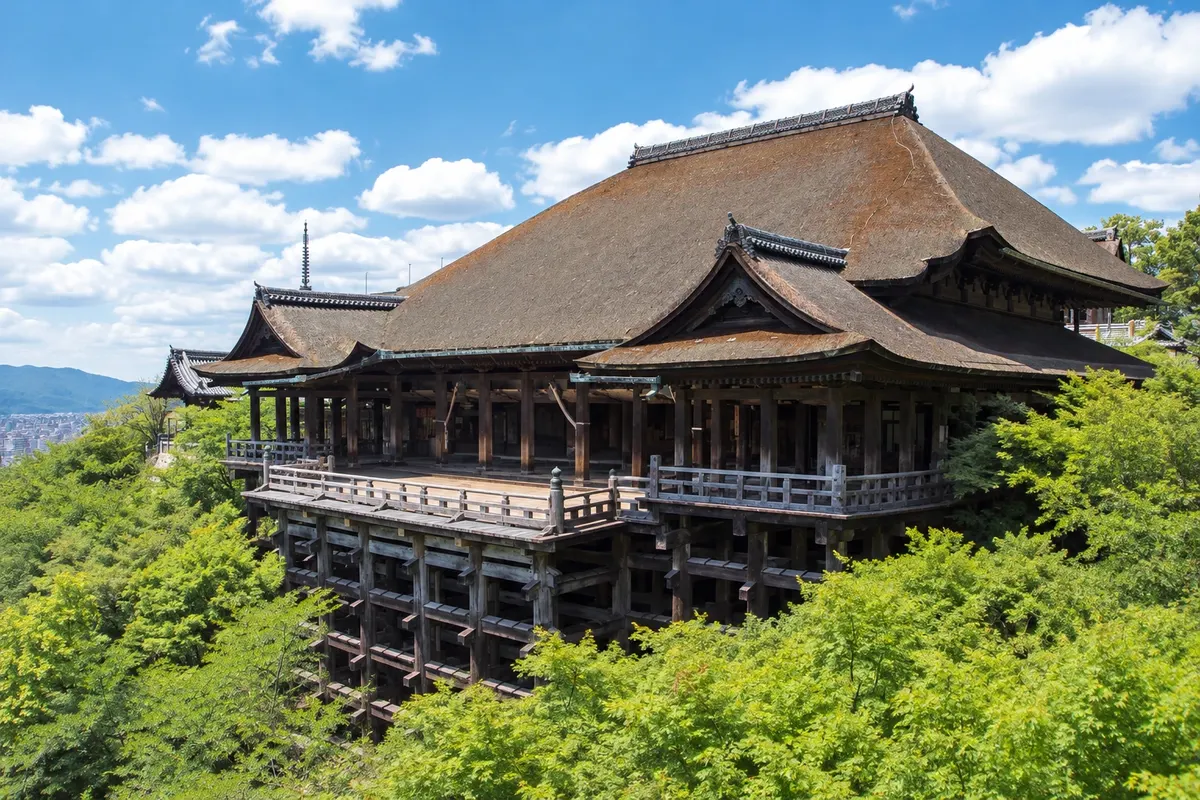
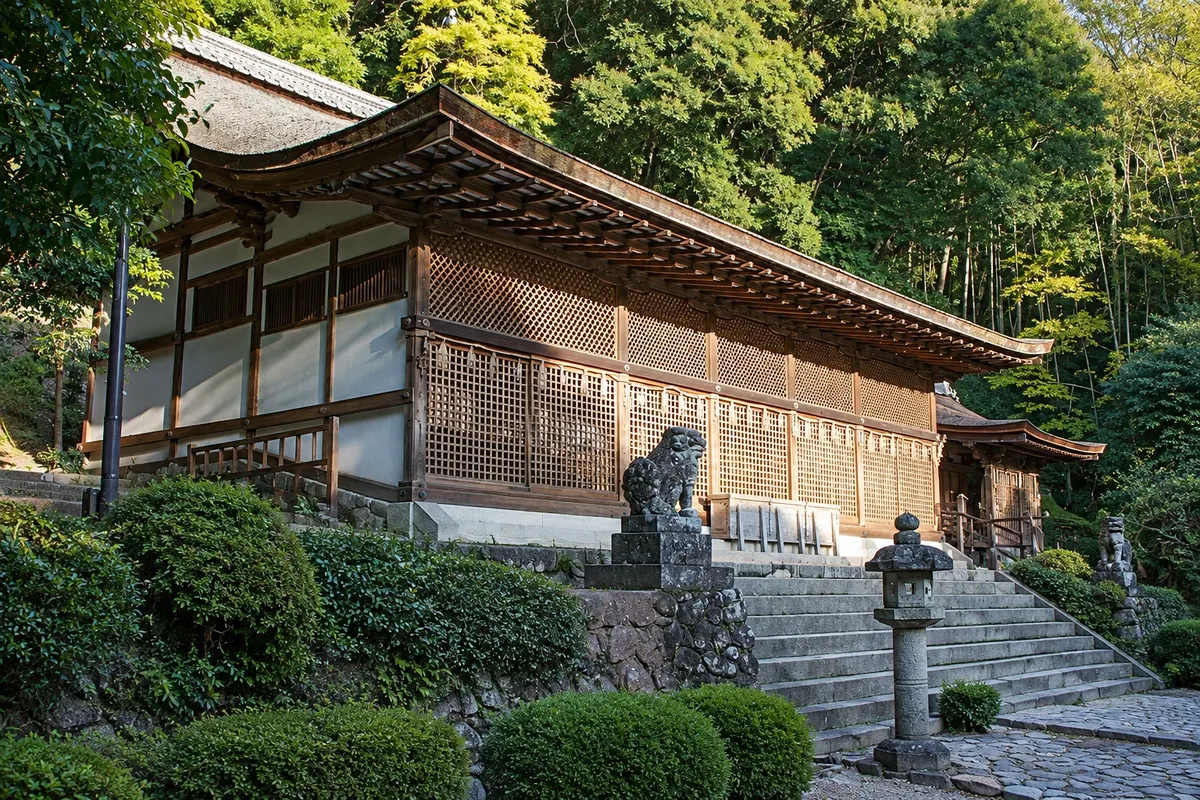
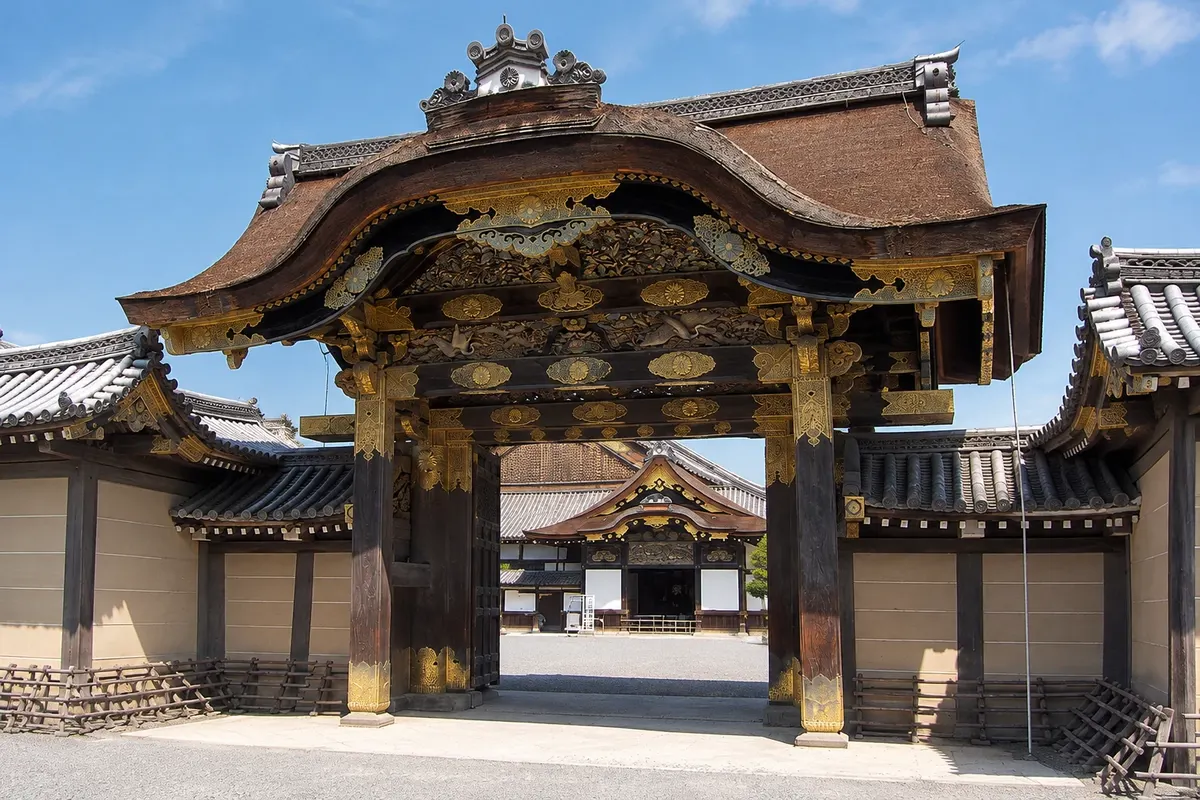
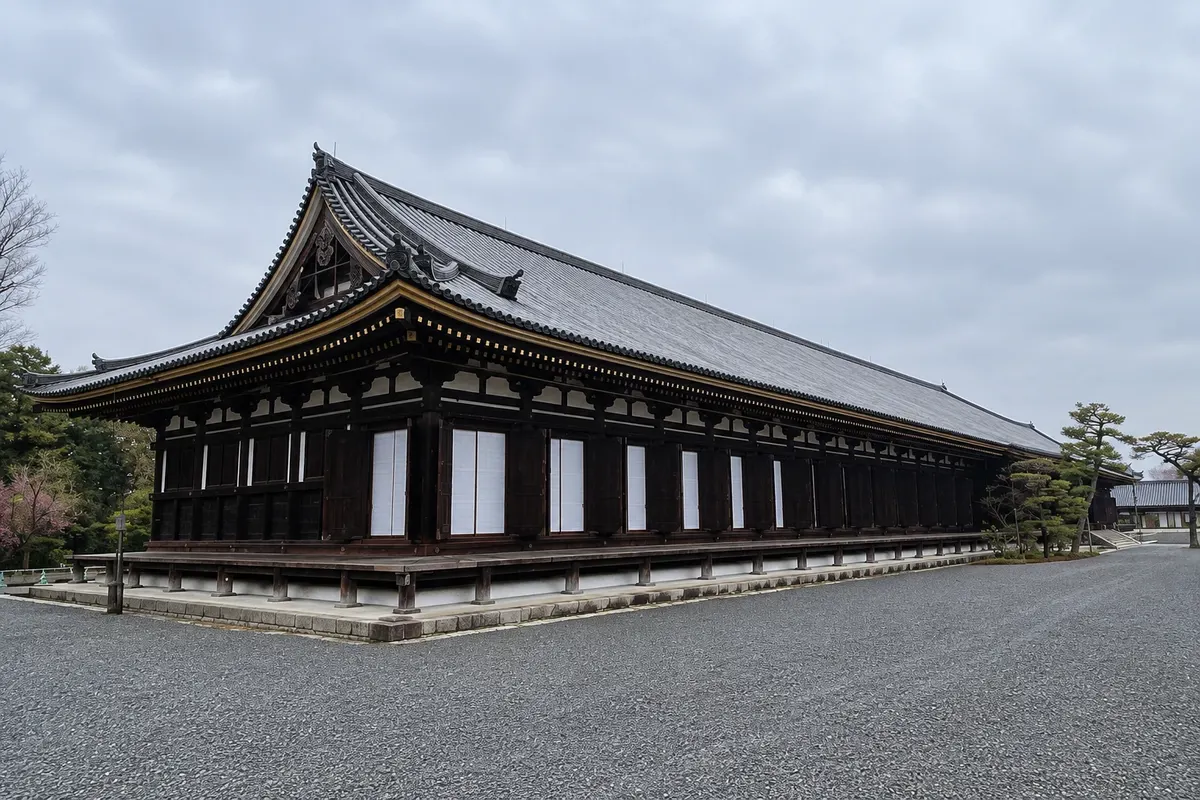
Kyoto was Japan’s capital for more than a thousand years, from 794 to 1868, and the residence of the emperors. The city escaped the major bombings of World War II and preserves hundreds of Buddhist temples, Shinto shrines, gardens and wooden houses. Seventeen of its monuments, together with others in Uji and Otsu, form the Historic Monuments of Ancient Kyoto World Heritage site.
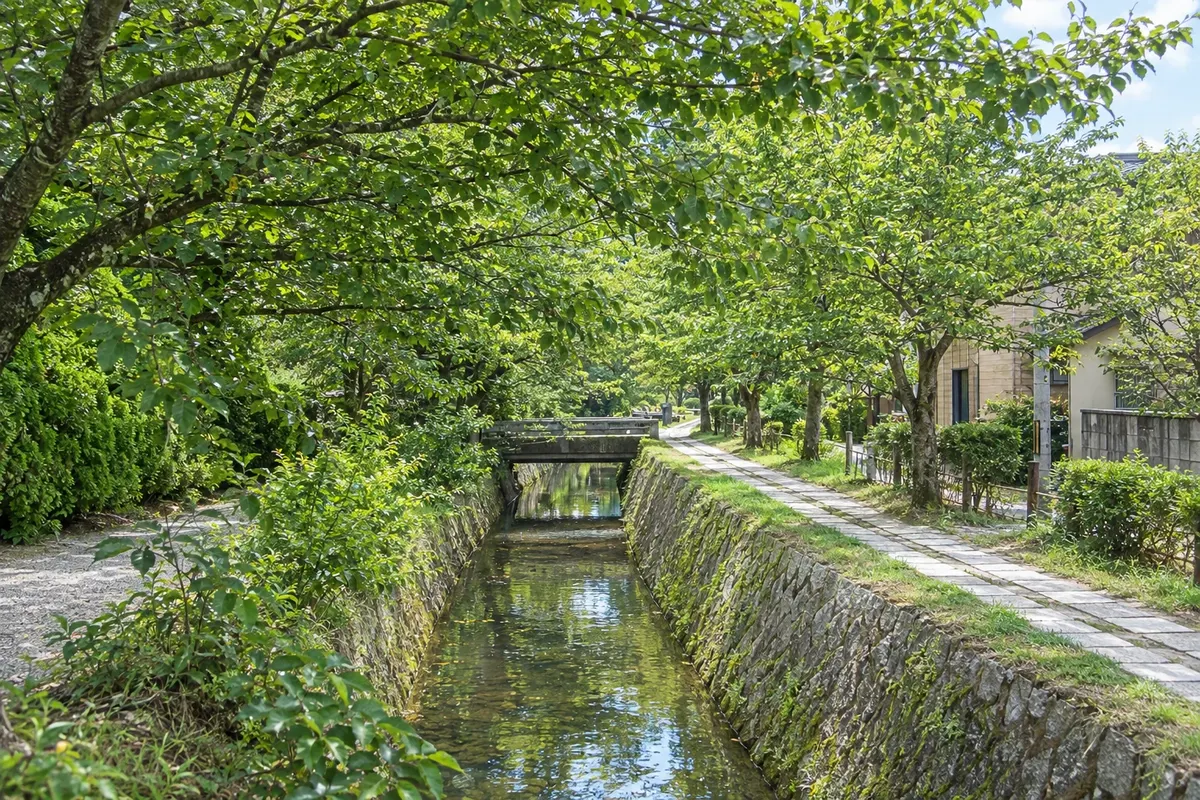
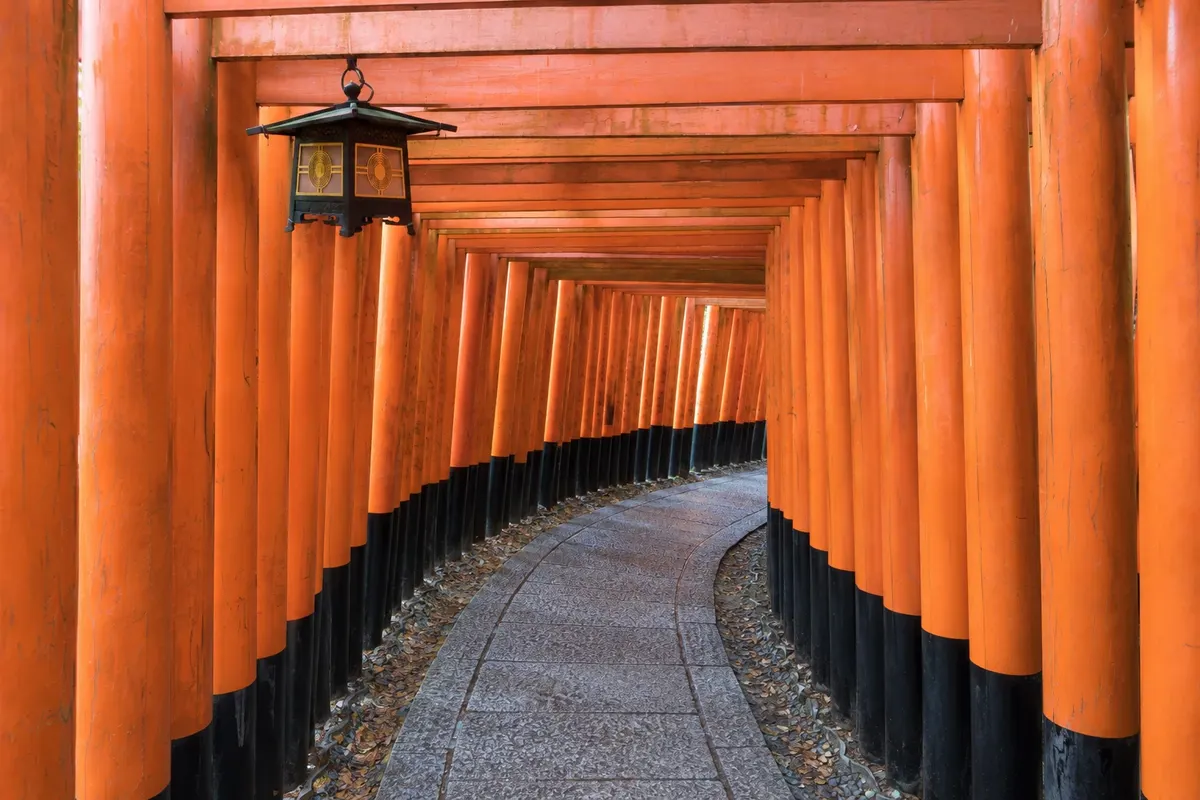
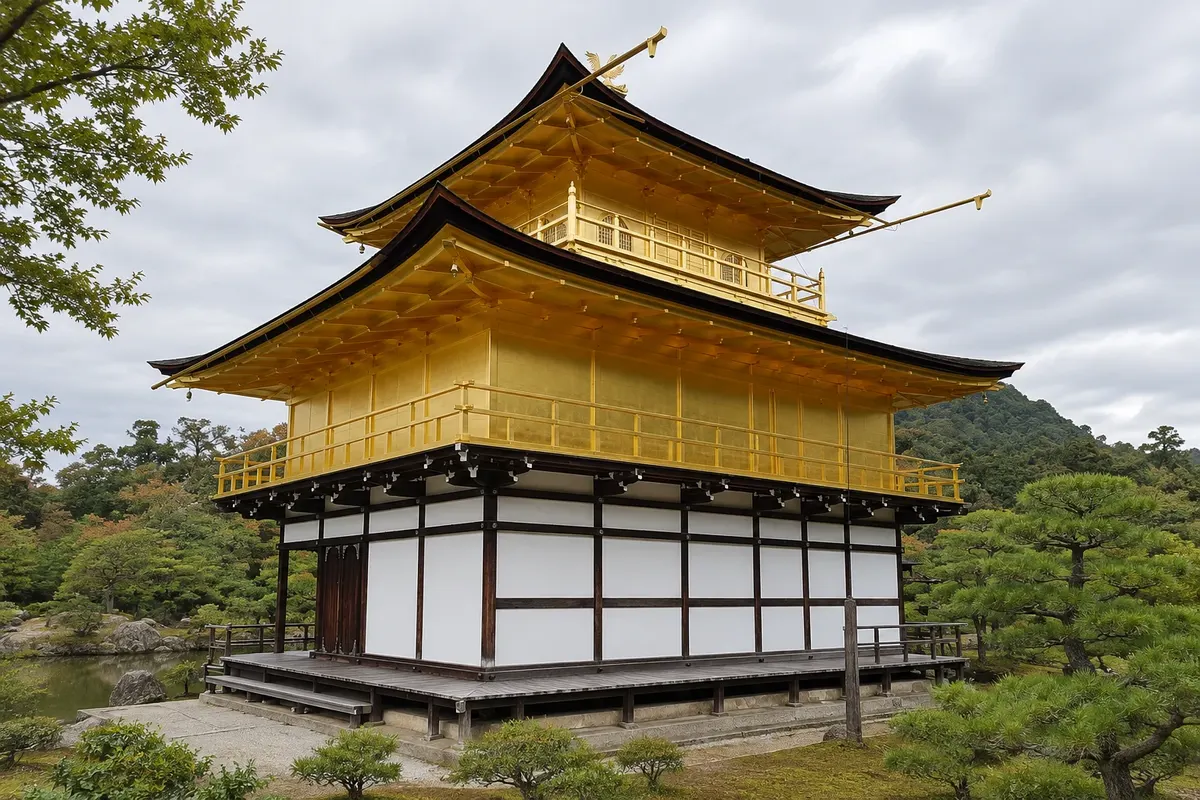
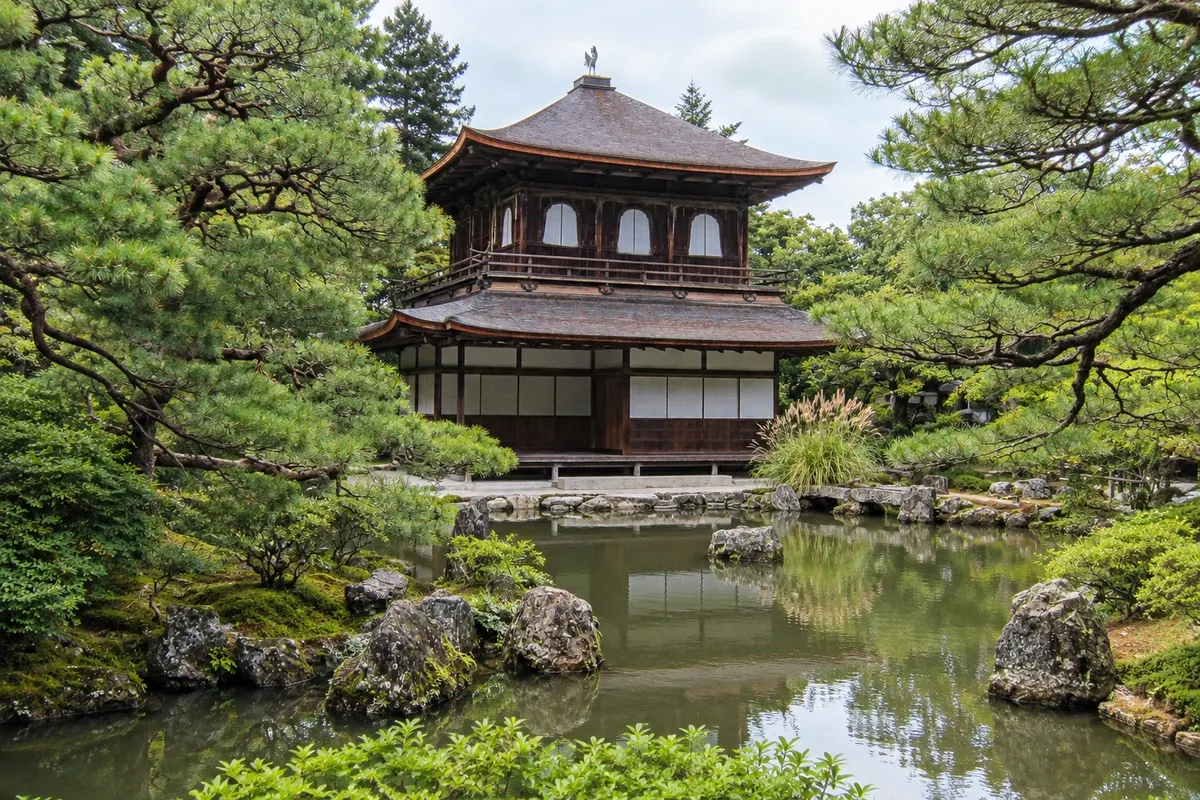
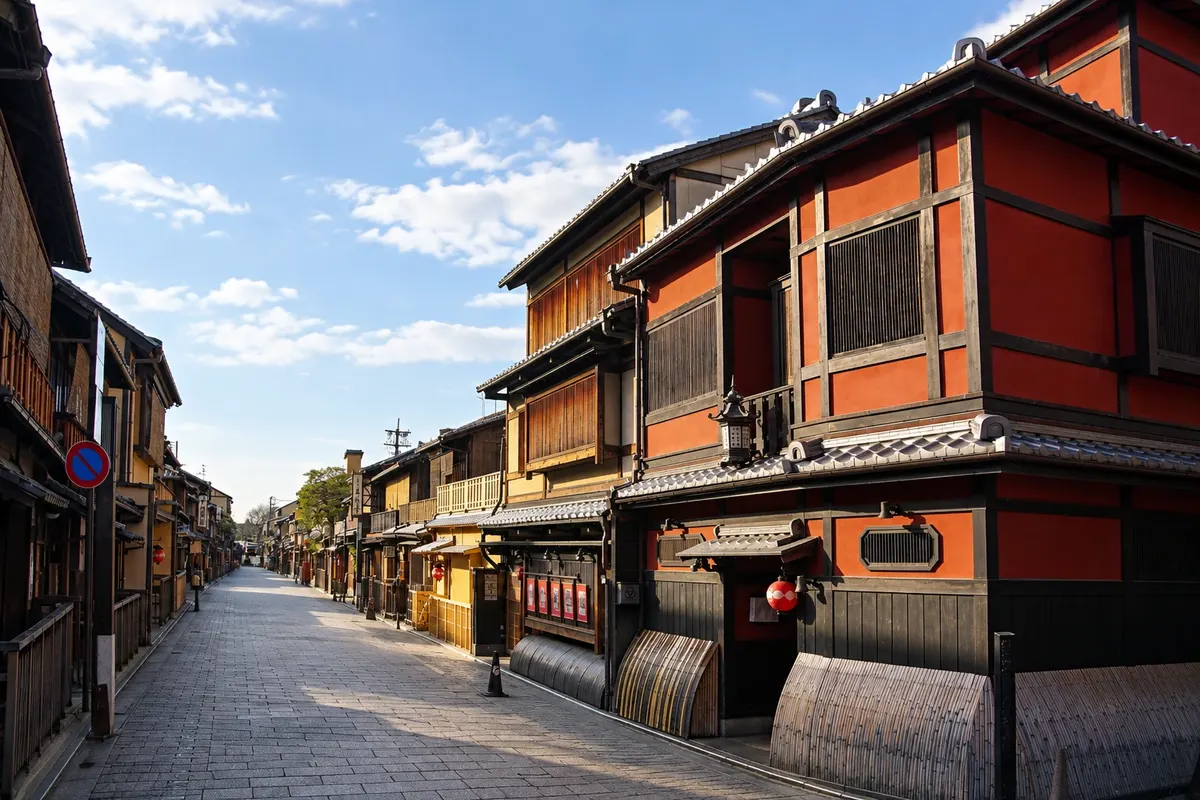
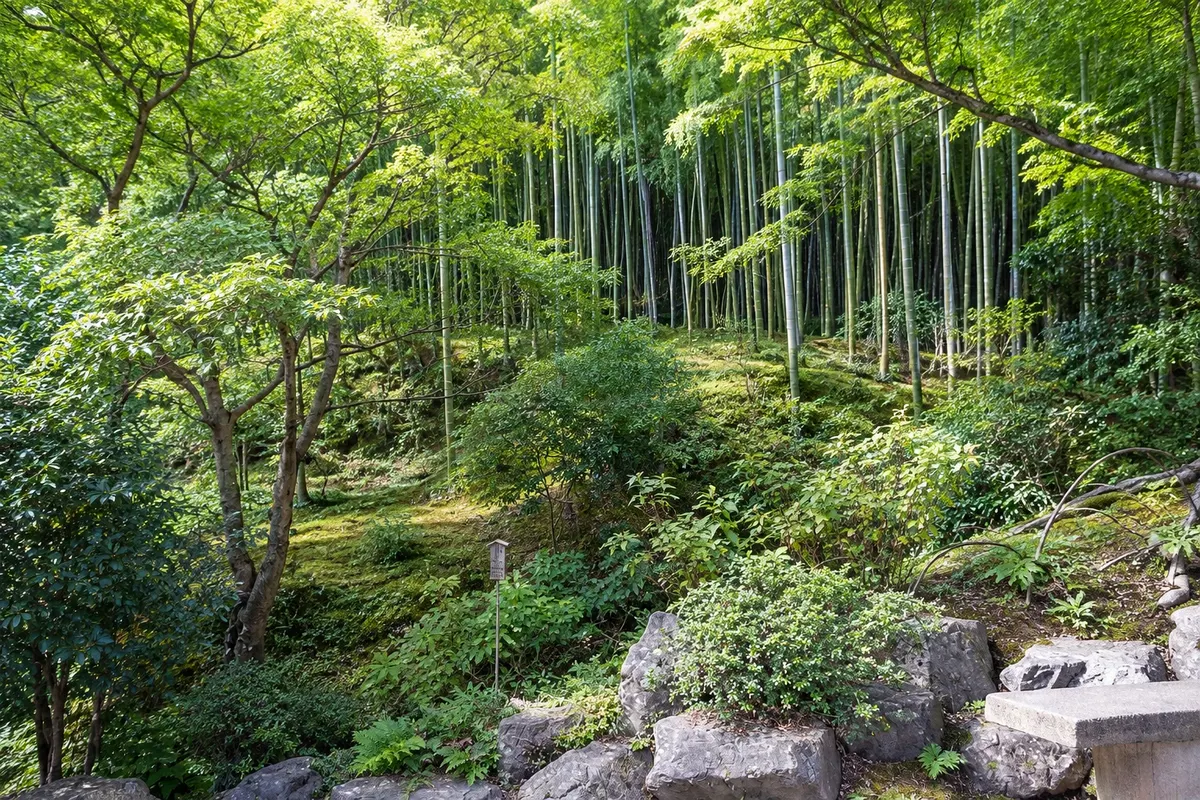
The center follows a grid layout inherited from the ancient capital, with Kyoto Station to the south and the Kamo River to the east. On the other side of the river is Higashiyama, the most visited area: Kiyomizu-dera, the slopes of Sannenzaka and Ninenzaka, the Gion district and Yasaka Shrine. To the north, Ginkaku-ji opens onto the Philosopher’s Path; to the northwest is Kinkaku-ji; to the west, Arashiyama with its bamboo grove; and to the south, the thousands of torii at Fushimi Inari.
Kyoto is also the city of traditional arts: the tea ceremony, the geisha—called geiko there—and the apprentice maiko, kaiseki cuisine and temple vegetarian cuisine, the Nishijin textiles and the Nishiki Market, with pickles, sweets and kitchenware. On the calendar, the Gion Matsuri festival occupies the whole month of July.
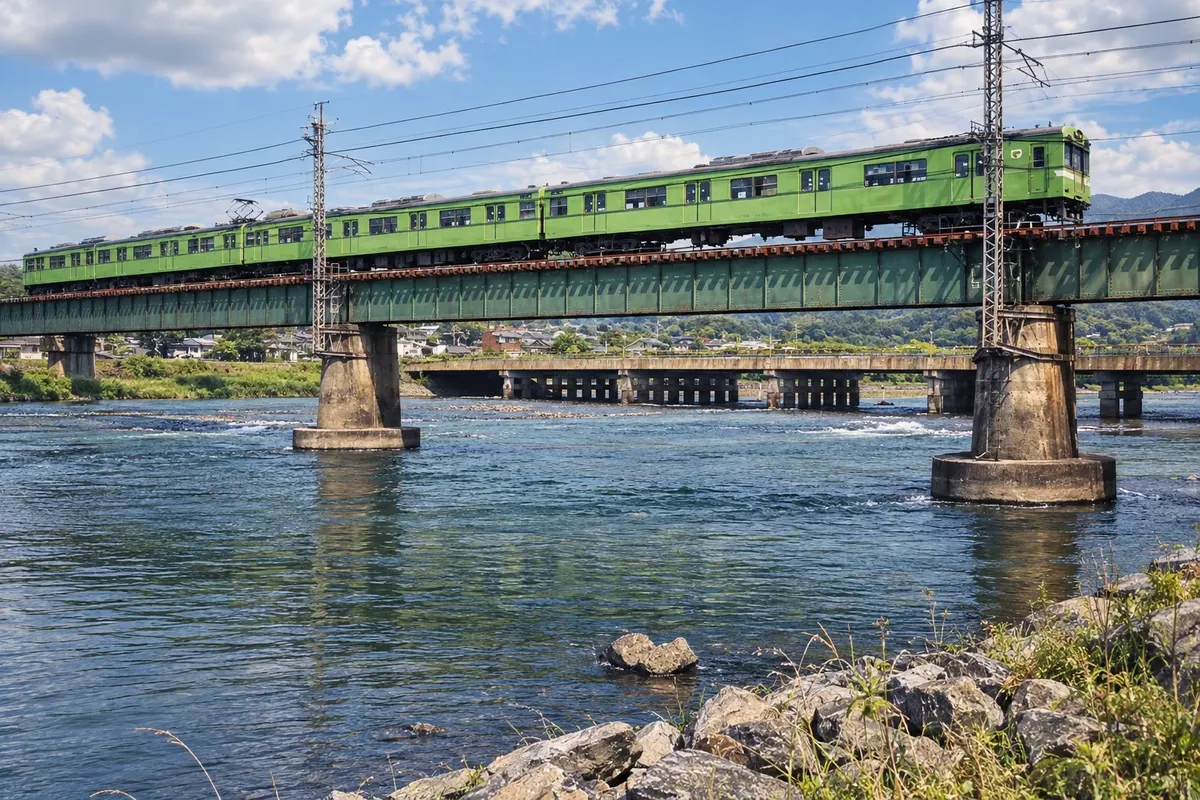
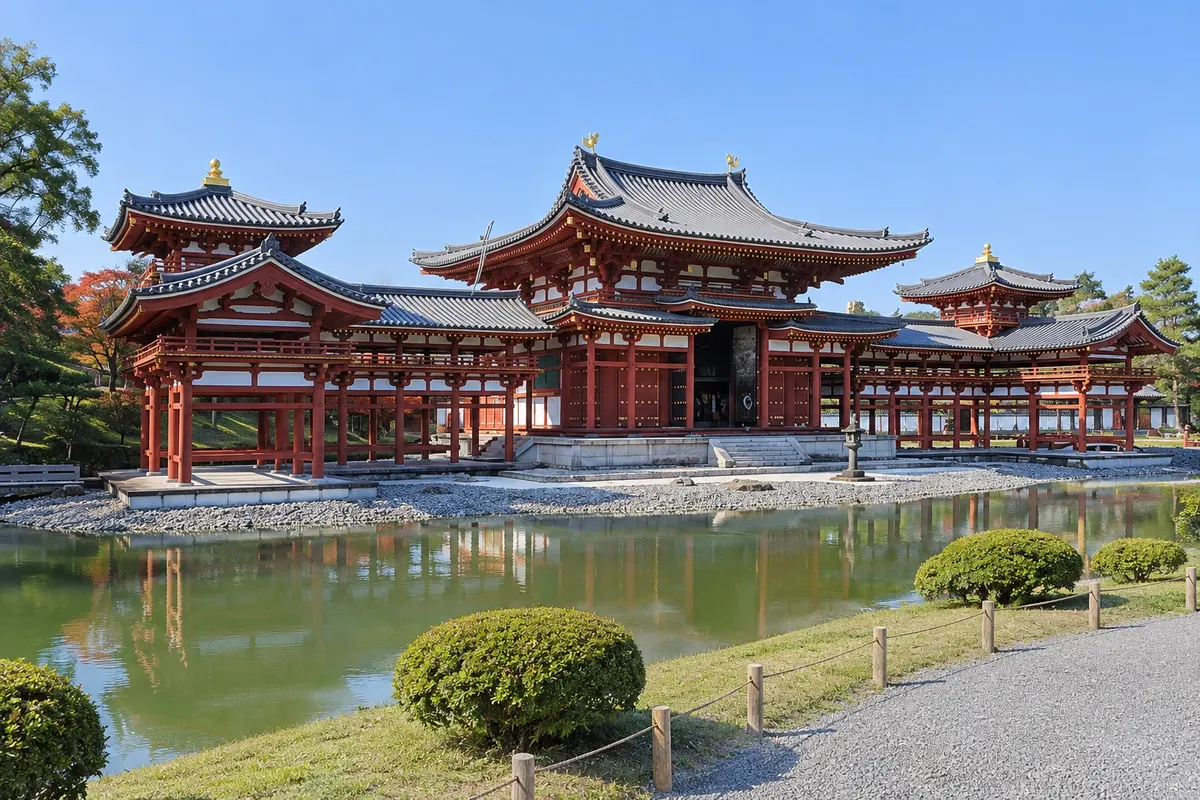
About 20 minutes by train to the south, Uji is the city of green tea and the Byodo-in, the Phoenix Hall temple. Nara, Osaka and Kobe are less than an hour away, which makes Kyoto a base for the Kansai region.
This destination brings together 2 cities: Kyoto, Uji.


 Brazil
 Antarctica
 Argentina
 Bolivia
 Chile
 Colombia
 Ecuador
 Guyana
 French Guiana
 Falkland Islands (Malvinas)
 Paraguay
 Peru
 Suriname
 Uruguay
 Venezuela
 Germany
 Austria
 Belgium
 Croatia
 Denmark
 Slovakia
 Slovenia
 Spain
 Finland
 France
 Greece
 the Netherlands
 Hungary
 Ireland
 Iceland
 Italy
 Luxembourg
 Norway
 Poland
 Portugal
 the United Kingdom
 the Czech Republic
 Sweden
 Switzerland
 Turkey
 Bermuda
 Canada
 the United States
 Greenland
 Mexico
 Saint Pierre and Miquelon
 the Dominican Republic
 South Africa
 Egypt
 Australia
 Fiji
 New Zealand
 Papua New Guinea