

 Brazil
 Antarctica
 Argentina
 Bolivia
 Chile
 Colombia
 Ecuador
 Guyana
 French Guiana
 Falkland Islands (Malvinas)
 Paraguay
 Peru
 Suriname
 Uruguay
 Venezuela
 Germany
 Austria
 Belgium
 Croatia
 Denmark
 Slovakia
 Slovenia
 Spain
 Finland
 France
 Greece
 the Netherlands
 Hungary
 Ireland
 Iceland
 Italy
 Luxembourg
 Norway
 Poland
 Portugal
 the United Kingdom
 the Czech Republic
 Sweden
 Switzerland
 Turkey
 Bermuda
 Canada
 the United States
 Greenland
 Mexico
 Saint Pierre and Miquelon
 the Dominican Republic
 South Africa
 Egypt
 Australia
 Fiji
 New Zealand
 Papua New Guinea
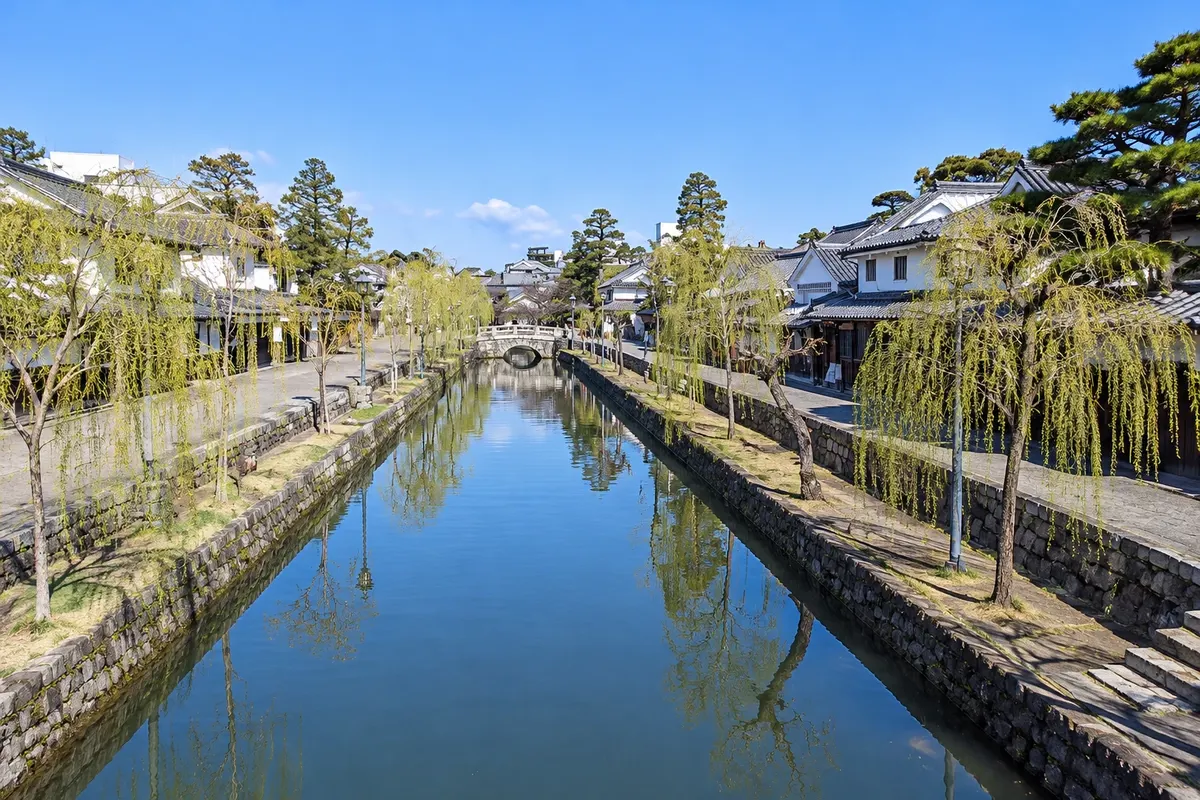
Historic center · Kurashiki, Okayama
Kurashiki Bikan Historical Quarter
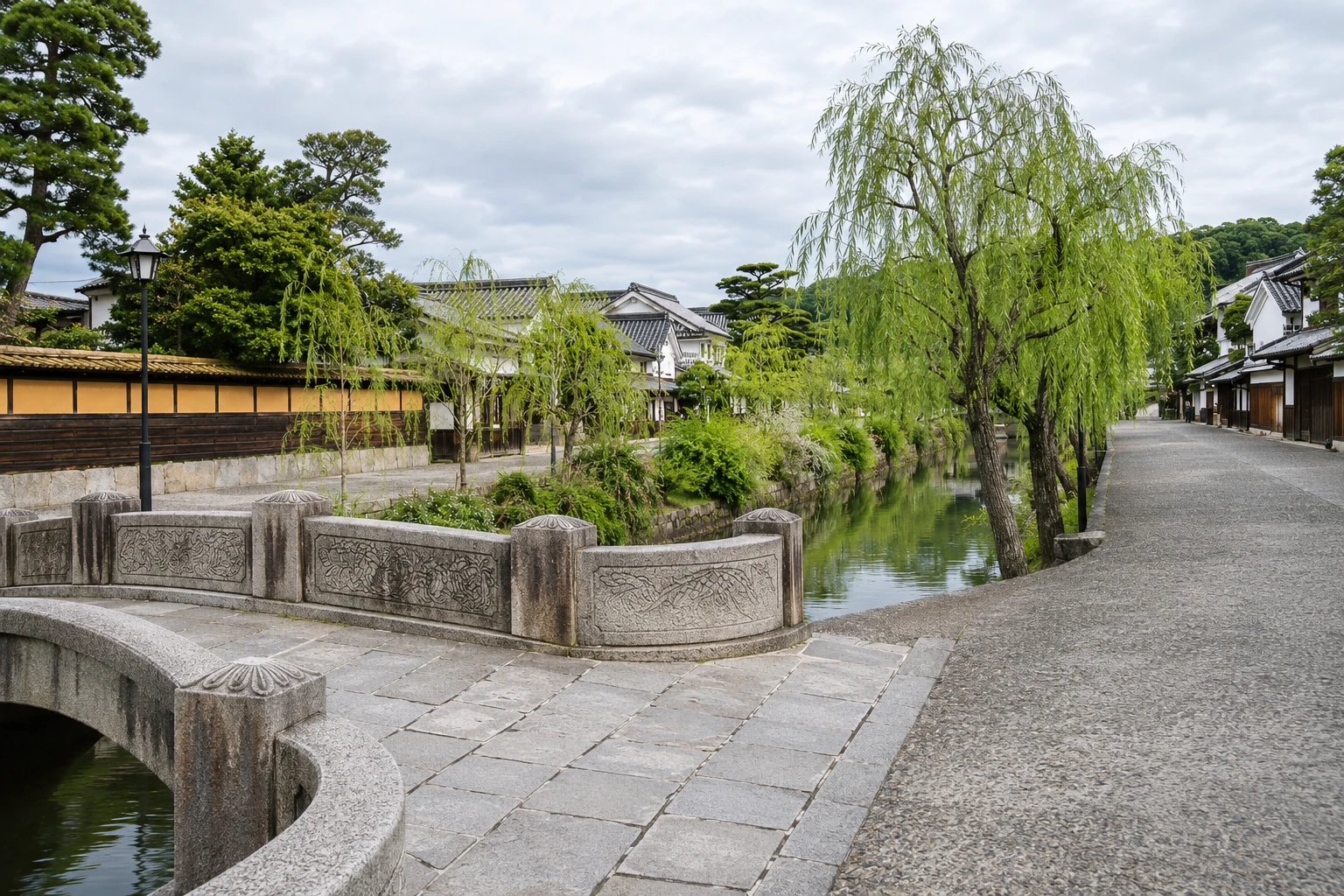
Kurashiki’s old town, with a canal lined with willow trees, white warehouses with black bands, merchant houses and craft shops, preserved from the Edo period.
Illustrative images. The pictures in this guide are illustrations based on the real place, not photographs, and may differ from it.

A look at the place
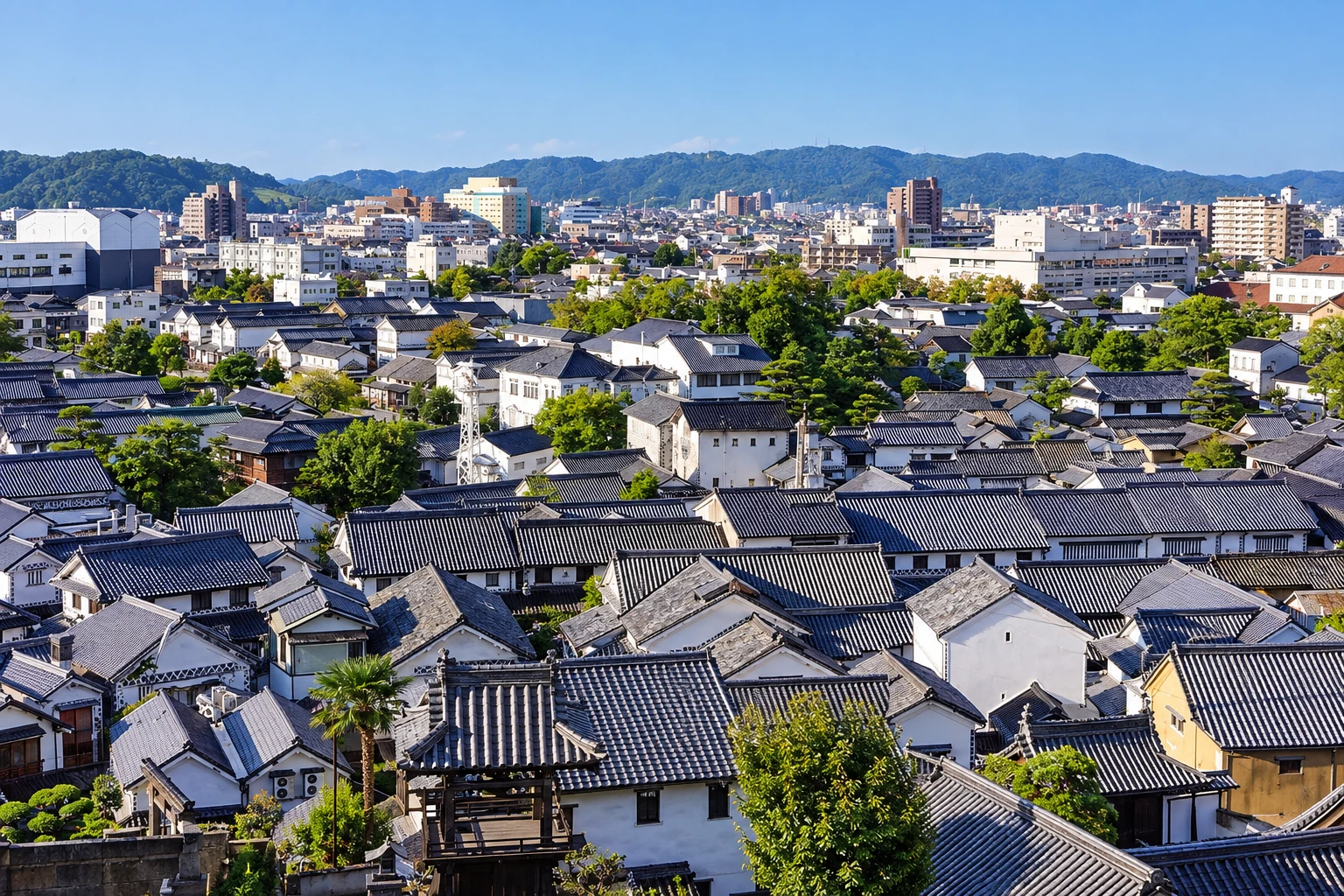
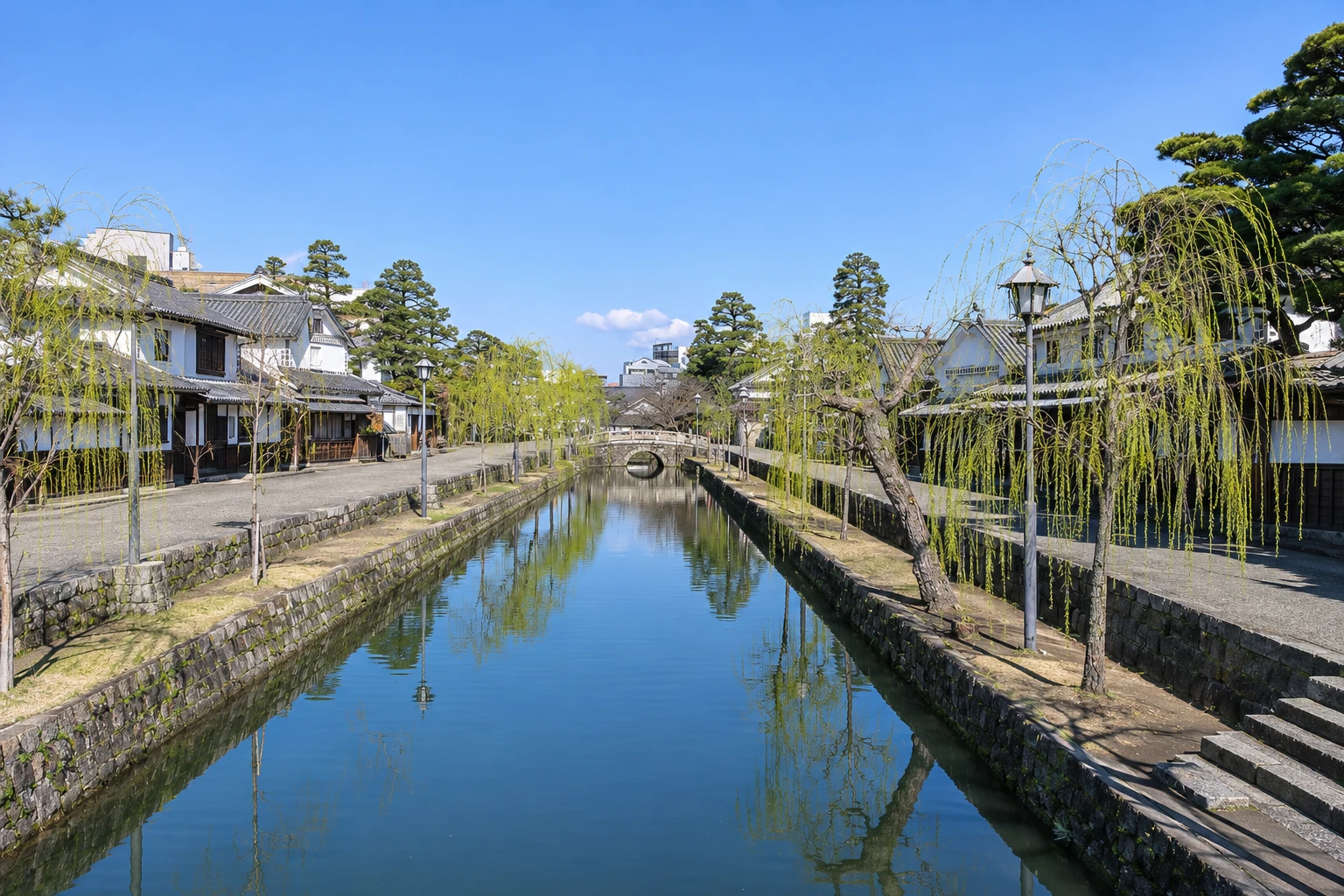
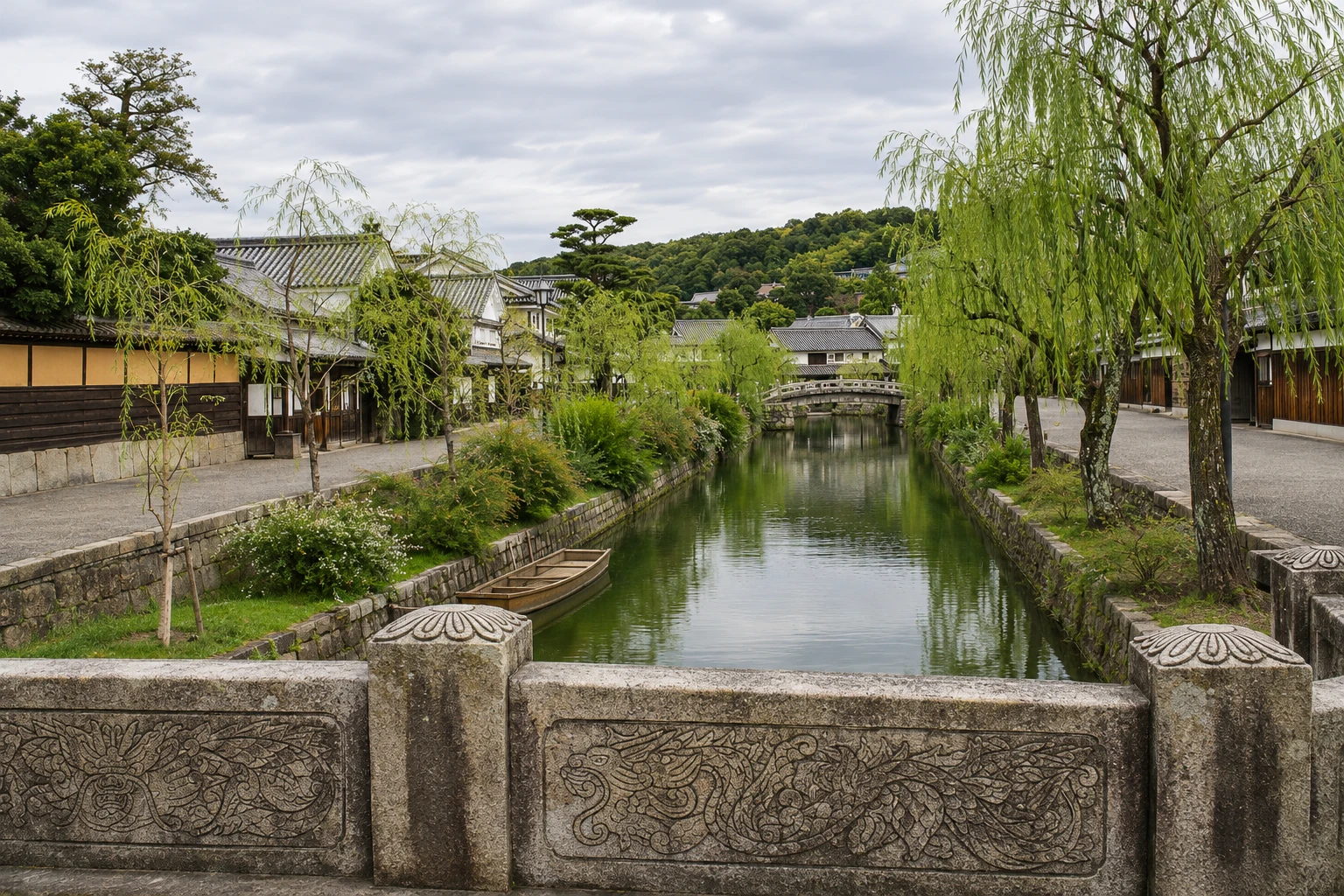
Kurashiki Bikan Historical Quarter in pictures
These pictures are illustrations based on the real place, not photographs. They may differ from the place.
Click the picture to enlarge it.
Discover
About Kurashiki Bikan Historical Quarter
The Bikan district, Kurashiki Bikan Chiku, is Kurashiki’s historic center. In the Edo period the city was governed directly by the shogunate and functioned as a trading post: boats came up the canal with rice, cotton and other products from the plains, stored in warehouses on the bank. The name Kurashiki comes precisely from those warehouses, the kura.
Kurashiki’s canal runs between stone banks, under willow trees and arched bridges. On each side are white-walled warehouses with the namako-kabe pattern—black tiles set on the diagonal with raised white joints—and merchant houses with wooden lattice façades. Many have become small museums, craft shops, cafés and restaurants.
At the end of the 19th century the Ohara family established a cotton spinning mill there, Kurabo, which brought prosperity and the arts to the city. The old brick spinning mill, covered in ivy, became Ivy Square, with a hotel, museum and courtyard. The Ohara Museum of Art, on the canal’s edge, also arose from that fortune.
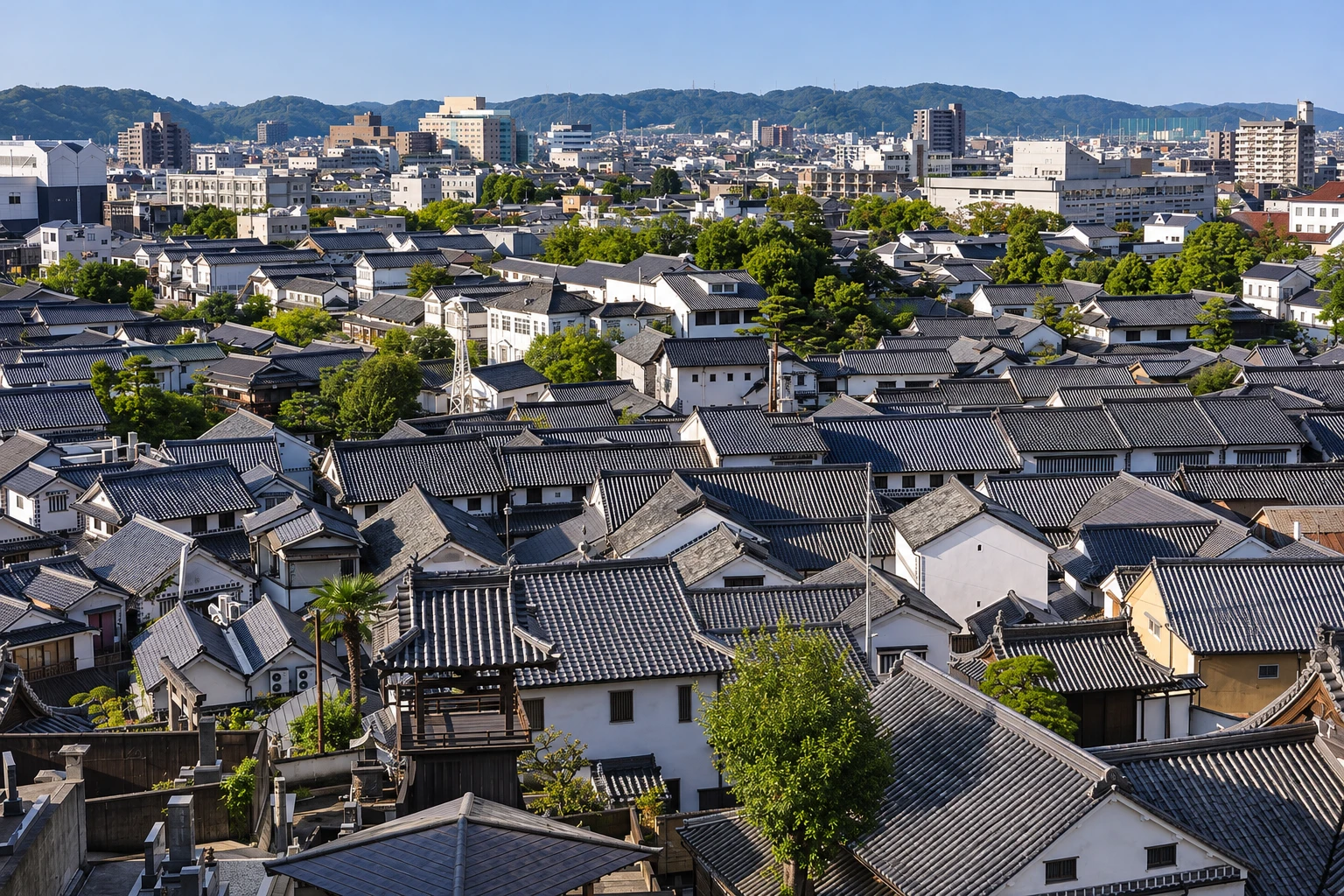
Behind the district, a stairway climbs to Achi Shrine on Tsurugata Hill, with views over the dark-tiled roofs. Side streets, such as Honmachi, preserve old houses and craft workshops. At night the canal is often lit and the neighborhood empties, showing another side of the place.
Before you go
Practical information
Cidade Turismo reviews its information regularly, but something may have changed. Check with the place before planning your trip.
How much time to set aside
2 to 3 hours on foot, without the museum; half a day with the Ohara Museum.
Best time
Early in the morning, before tour groups, or at night when the lights are on and the streets are empty. From spring to summer the willow trees are greener. Some shops and museums close one day a week; check ahead.
How to get there
From Kurashiki Station, walk south along the main avenue for about 15 minutes to the canal.
Tip
Take a boat ride on the canal when it is operating, and climb to Achi Shrine for the view over the roofs. Try Okayama peach or grape ice cream at the shops along the bank.
Get your questions answered
Frequently asked questions about Kurashiki Bikan Historical Quarter
How long should I stay in the Bikan district?
2 to 3 hours for the canal and streets; half a day with the Ohara Museum. An evening in the district lets you see the lighting and the empty streets.
Is the Bikan district lit at night?
Yes, the canal and warehouses are often illuminated at night, and the neighborhood becomes quieter after the shops close.
What is Ivy Square?
It is the old Ohara family cotton spinning mill, a red-brick building covered in ivy, converted into a hotel, museum and courtyard next to the Bikan district.
What is the origin of the name Kurashiki?
It comes from the kura, the warehouses where rice and cotton that passed along the canal were stored in the Edo period.
Beyond the guide


