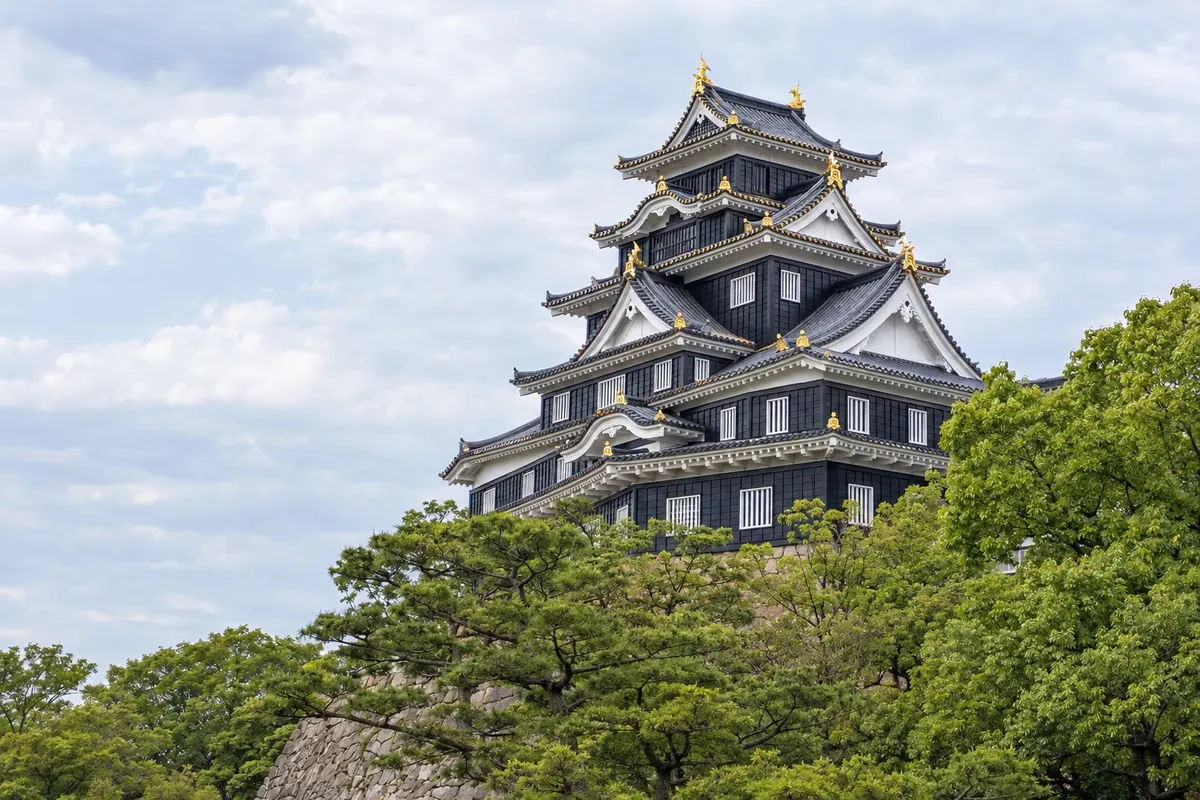
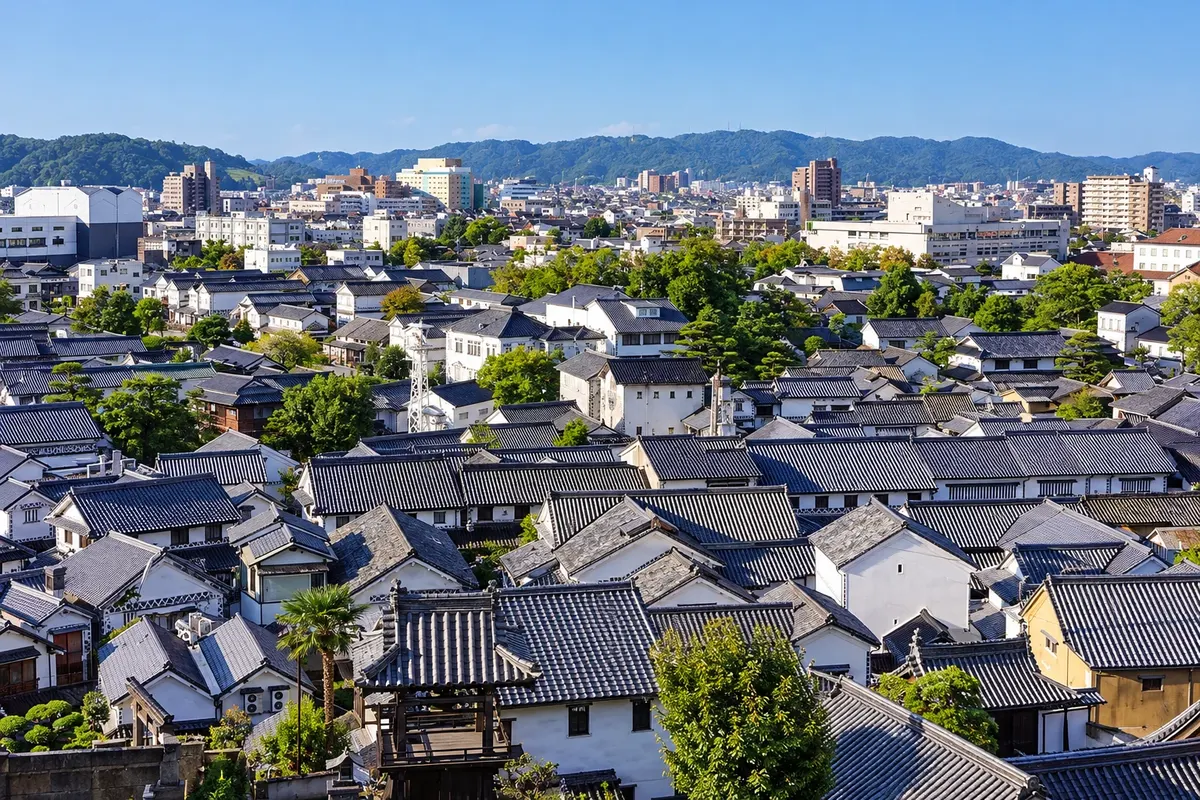
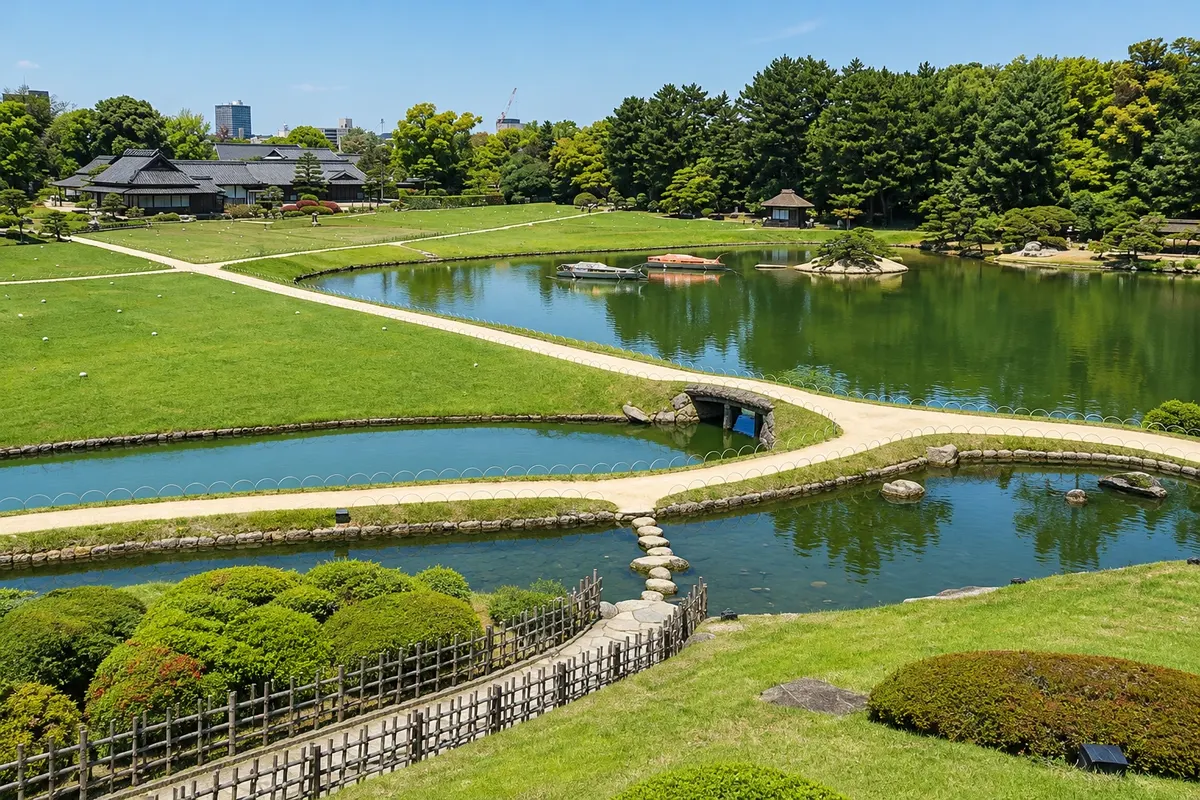
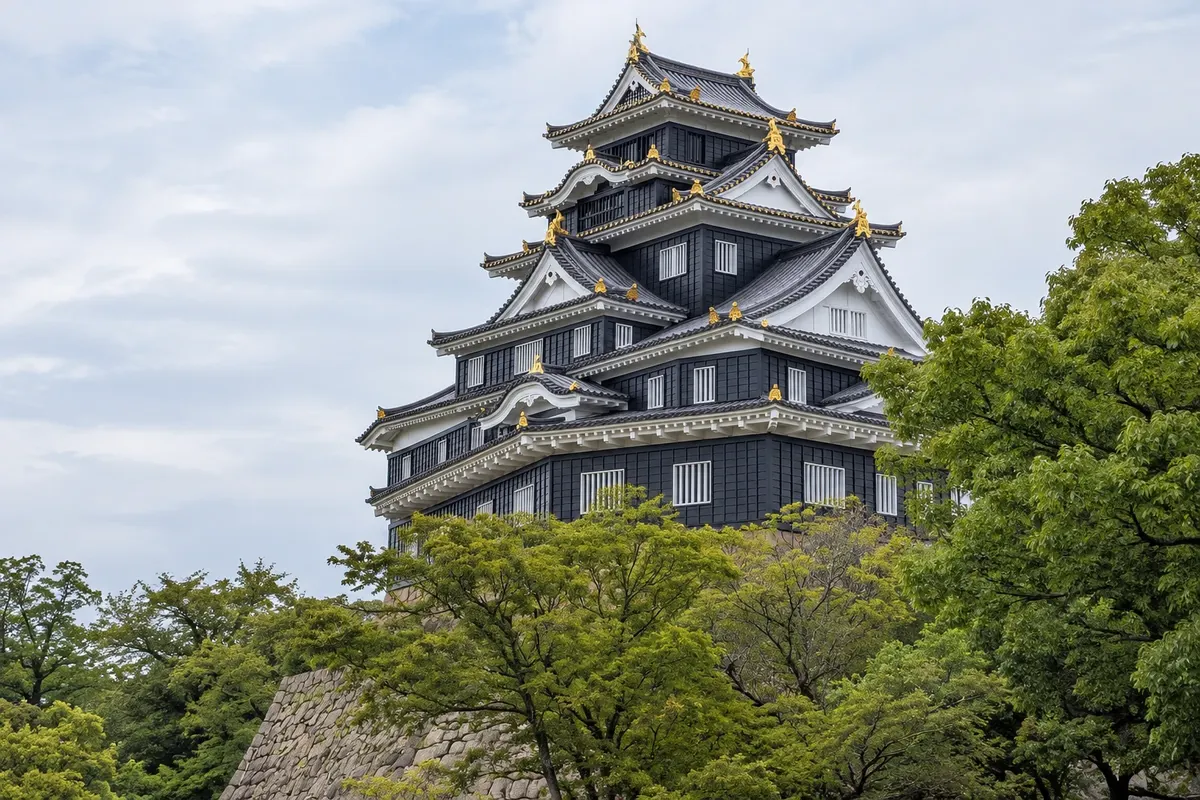
Okayama is the capital of the prefecture of the same name, located between Osaka and Hiroshima on the Sanyo shinkansen line. It is also the main rail junction for Shikoku, for Matsue and the Sea of Japan coast, and for the art islands of the Inland Sea. The city grew up along the Asahi River, where Okayama Castle, with its dark walls, stands, and across the water is Korakuen, one of Japan’s three most celebrated gardens.
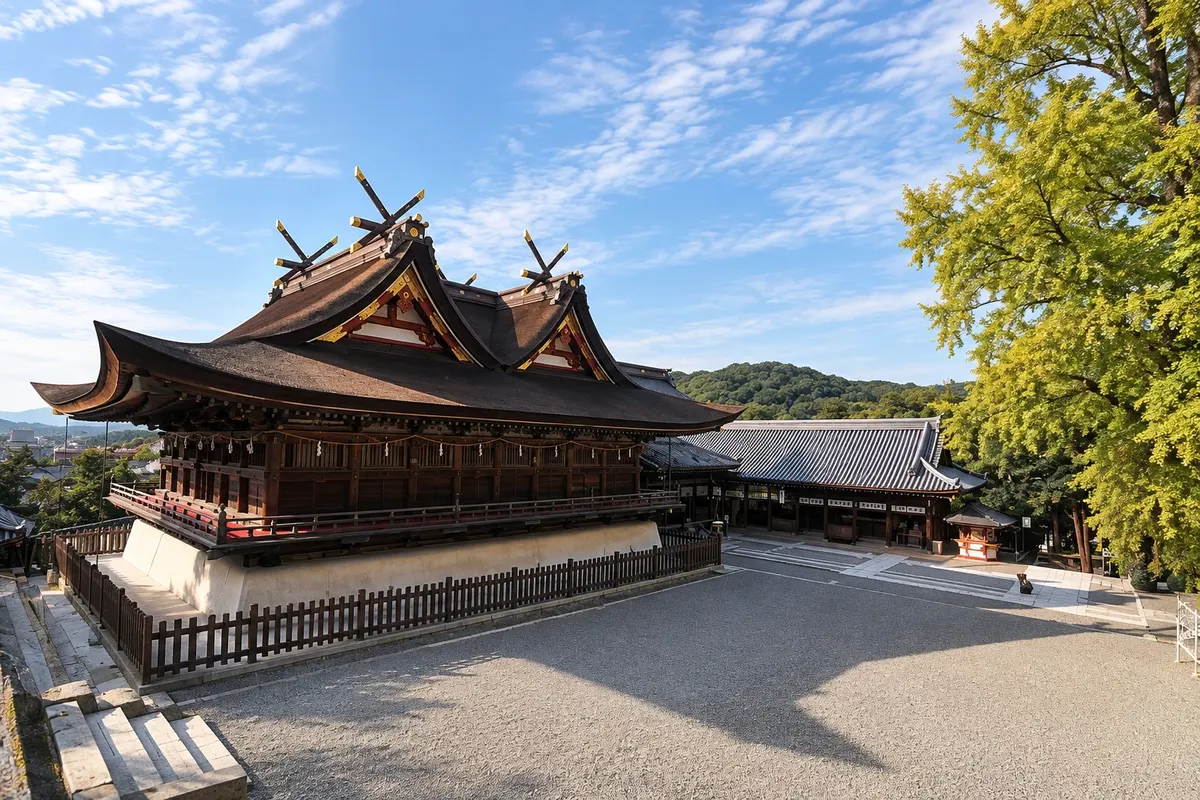
The region is linked to the legend of Momotaro, the boy born from a peach who, with the help of a dog, a monkey and a pheasant, defeats an ogre. Statues of the hero appear at the station, and Kibitsu Shrine, in the west of the city, honors the prince whom tradition associates with the story. The surrounding Kibi Plain has ancient burial mounds, temples and a cycling route through rice fields.
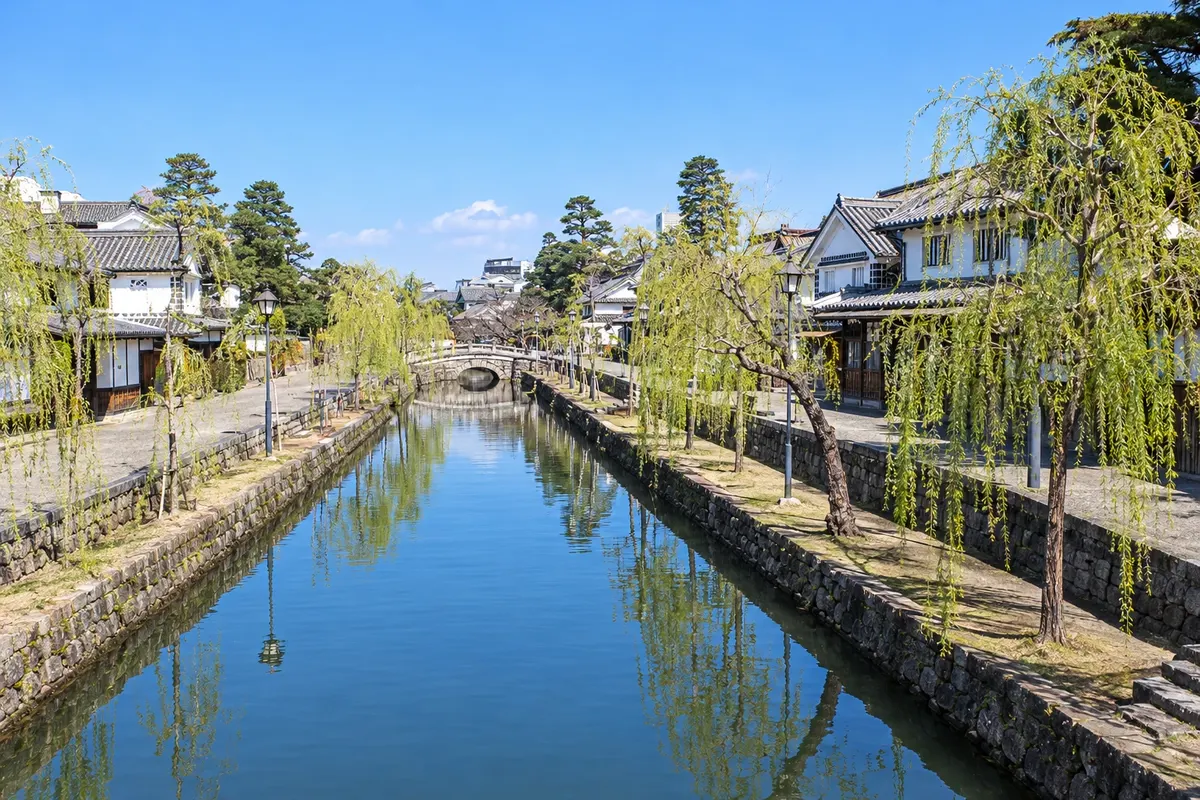
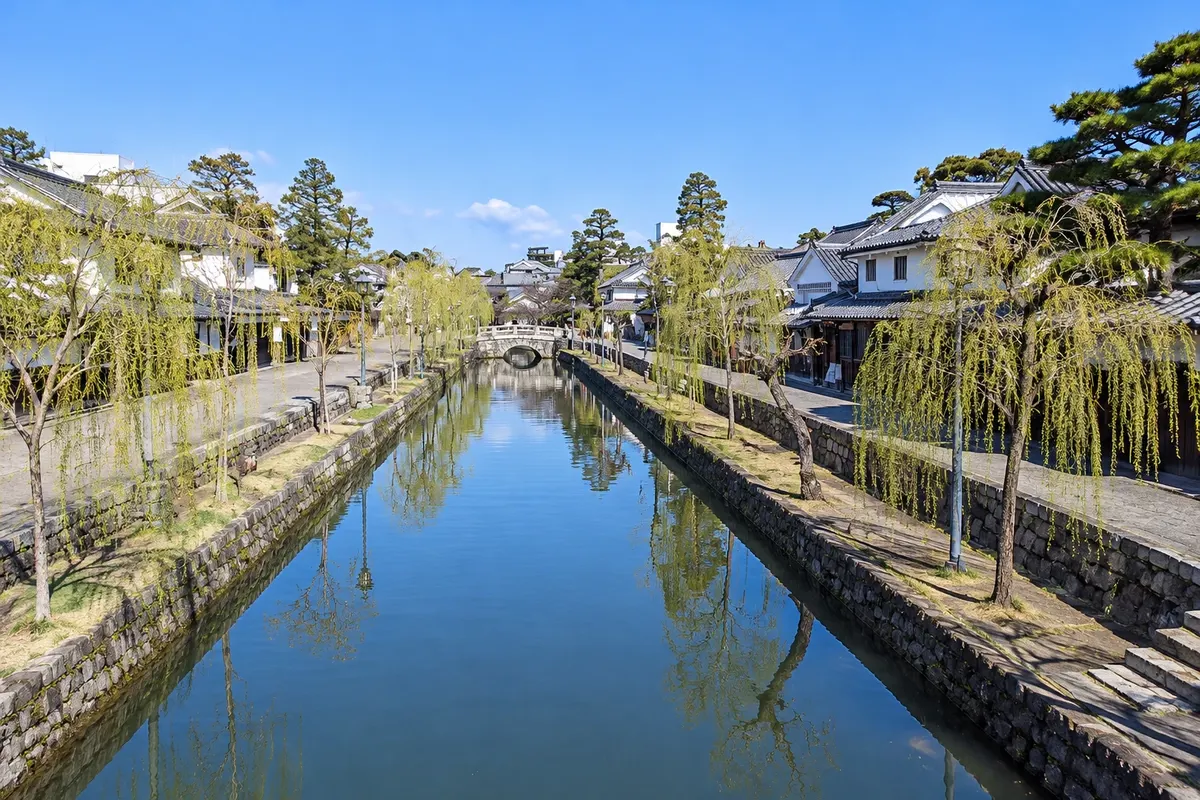
Kurashiki is about 15 minutes by train to the west. The Bikan district, the historic center, preserves a canal lined with willows and white-walled warehouses with black tile bands, from the time when the city was a rice and cotton trading post governed directly by the shogunate. There is also the Ohara Museum of Art, the first museum in Japan dedicated to Western art.
Okayama and Kurashiki are visited together in one or two days, and serve as bases for Naoshima via Uno Port and for Bitchu-Matsuyama Castle, on a mountain to the north. The region is known for white peaches and grapes, and Kojima, south of Kurashiki, for jeans.
This destination brings together 2 cities: Okayama, Kurashiki.


 Brazil
 Antarctica
 Argentina
 Bolivia
 Chile
 Colombia
 Ecuador
 Guyana
 French Guiana
 Falkland Islands (Malvinas)
 Paraguay
 Peru
 Suriname
 Uruguay
 Venezuela
 Germany
 Austria
 Belgium
 Croatia
 Denmark
 Slovakia
 Slovenia
 Spain
 Finland
 France
 Greece
 the Netherlands
 Hungary
 Ireland
 Iceland
 Italy
 Luxembourg
 Norway
 Poland
 Portugal
 the United Kingdom
 the Czech Republic
 Sweden
 Switzerland
 Turkey
 Bermuda
 Canada
 the United States
 Greenland
 Mexico
 Saint Pierre and Miquelon
 the Dominican Republic
 South Africa
 Egypt
 Australia
 Fiji
 New Zealand
 Papua New Guinea