

 Brazil
 Antarctica
 Argentina
 Bolivia
 Chile
 Colombia
 Ecuador
 Guyana
 French Guiana
 Falkland Islands (Malvinas)
 Paraguay
 Peru
 Suriname
 Uruguay
 Venezuela
 Germany
 Austria
 Belgium
 Croatia
 Denmark
 Slovakia
 Slovenia
 Spain
 Finland
 France
 Greece
 the Netherlands
 Hungary
 Ireland
 Iceland
 Italy
 Luxembourg
 Norway
 Poland
 Portugal
 the United Kingdom
 the Czech Republic
 Sweden
 Switzerland
 Turkey
 Bermuda
 Canada
 the United States
 Greenland
 Mexico
 Saint Pierre and Miquelon
 the Dominican Republic
 South Africa
 Egypt
 Australia
 Fiji
 New Zealand
 Papua New Guinea
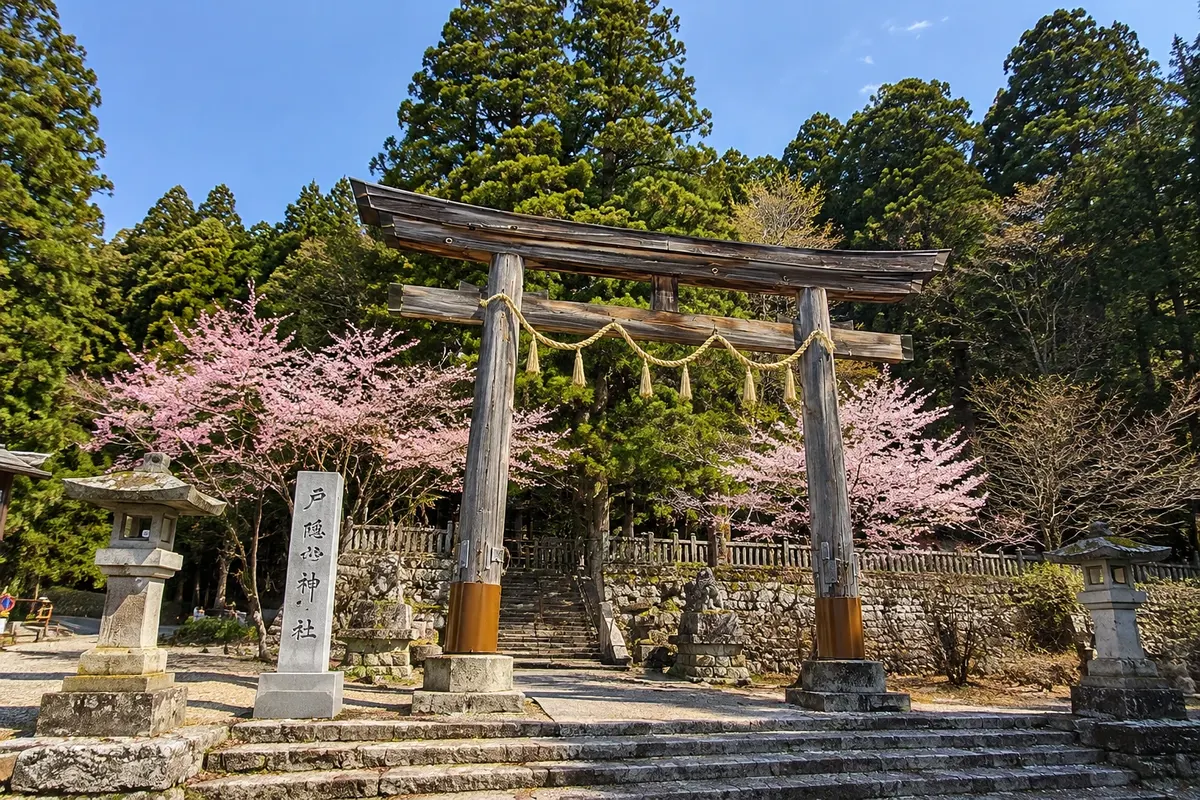
Shrine · Nagano, Nagano
Togakushi Shrine
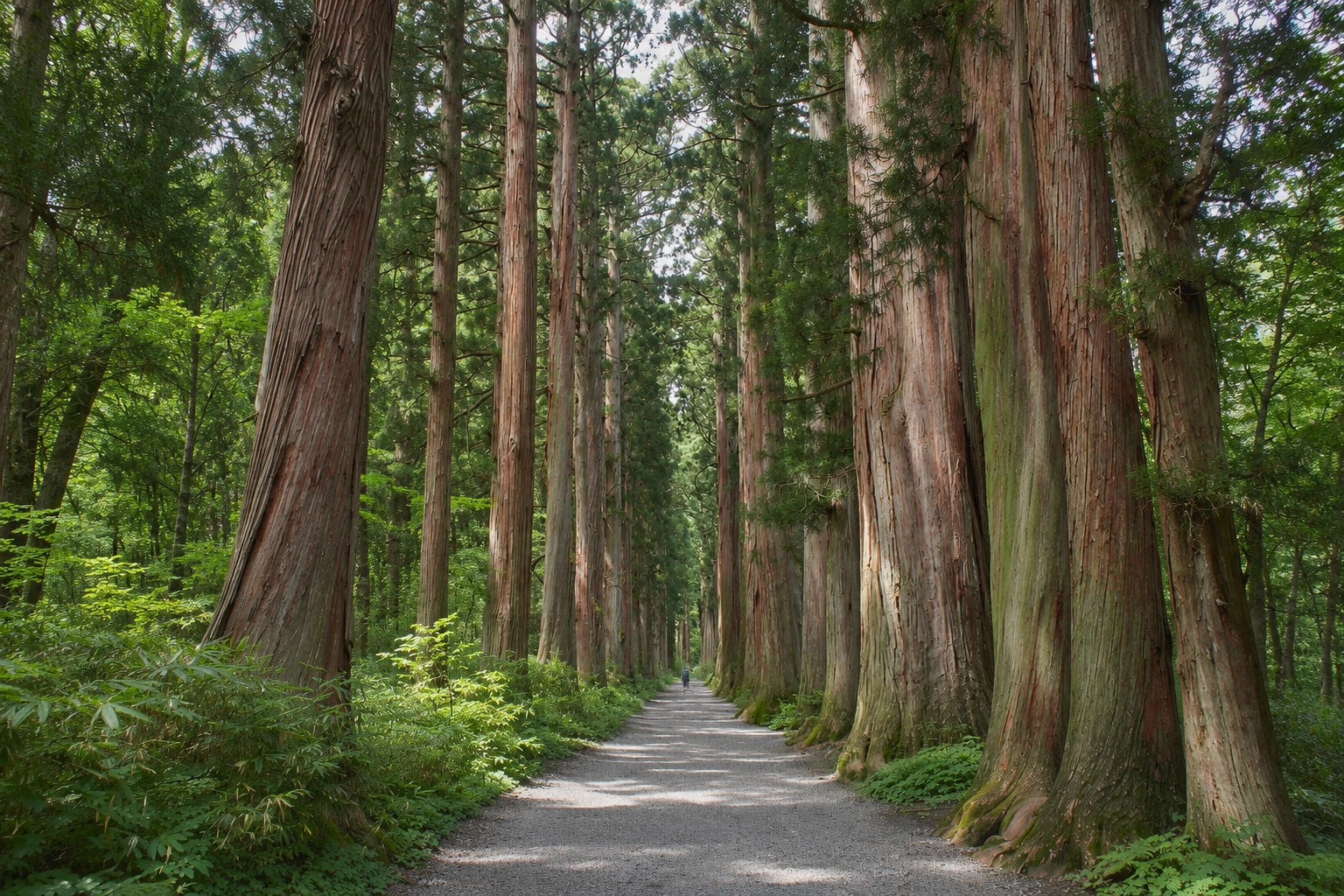
A group of five Shinto shrines on the slope of Mount Togakushi, northwest of Nagano, connected by trails. The route to Okusha passes through an avenue of cedars over 400 years old.
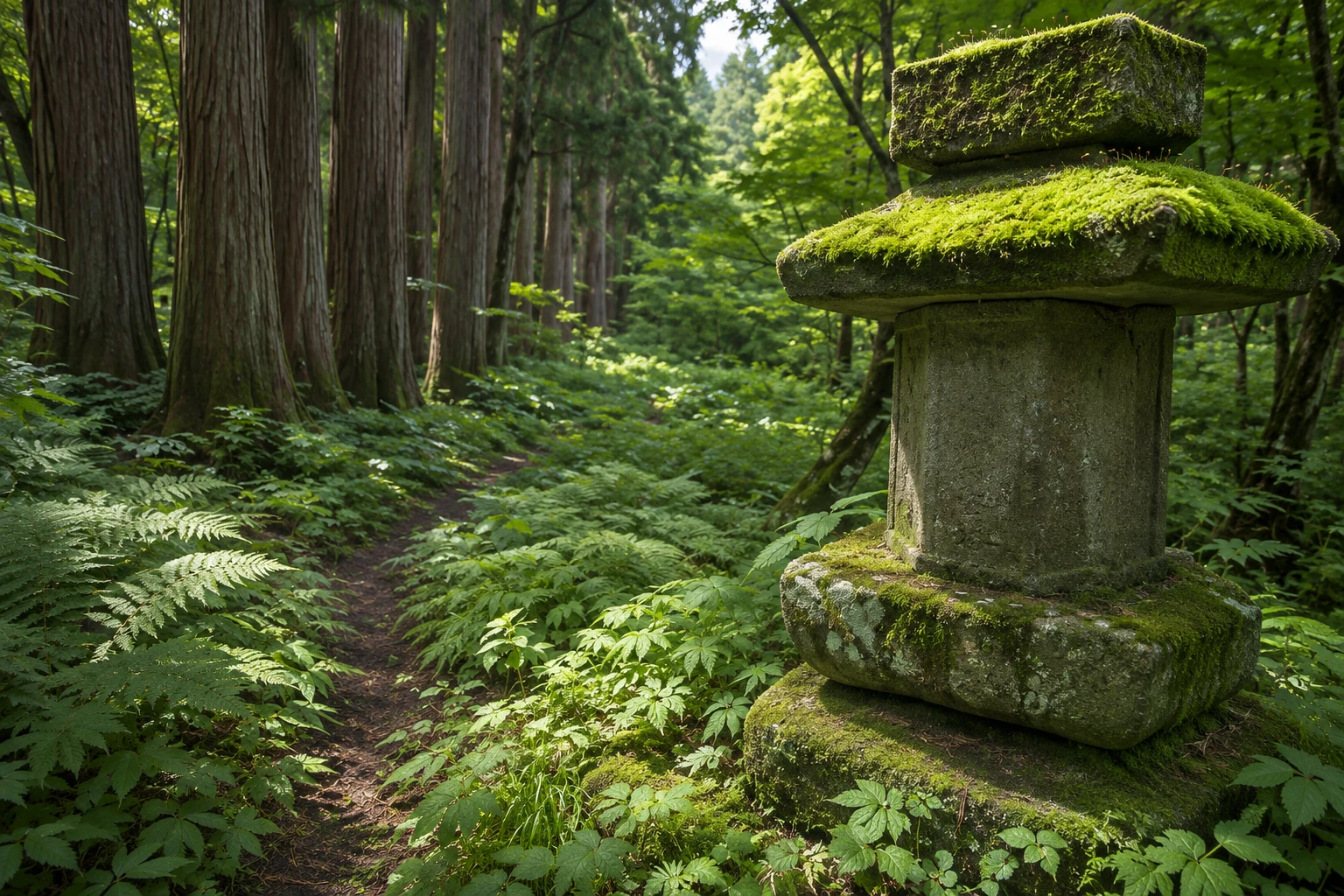
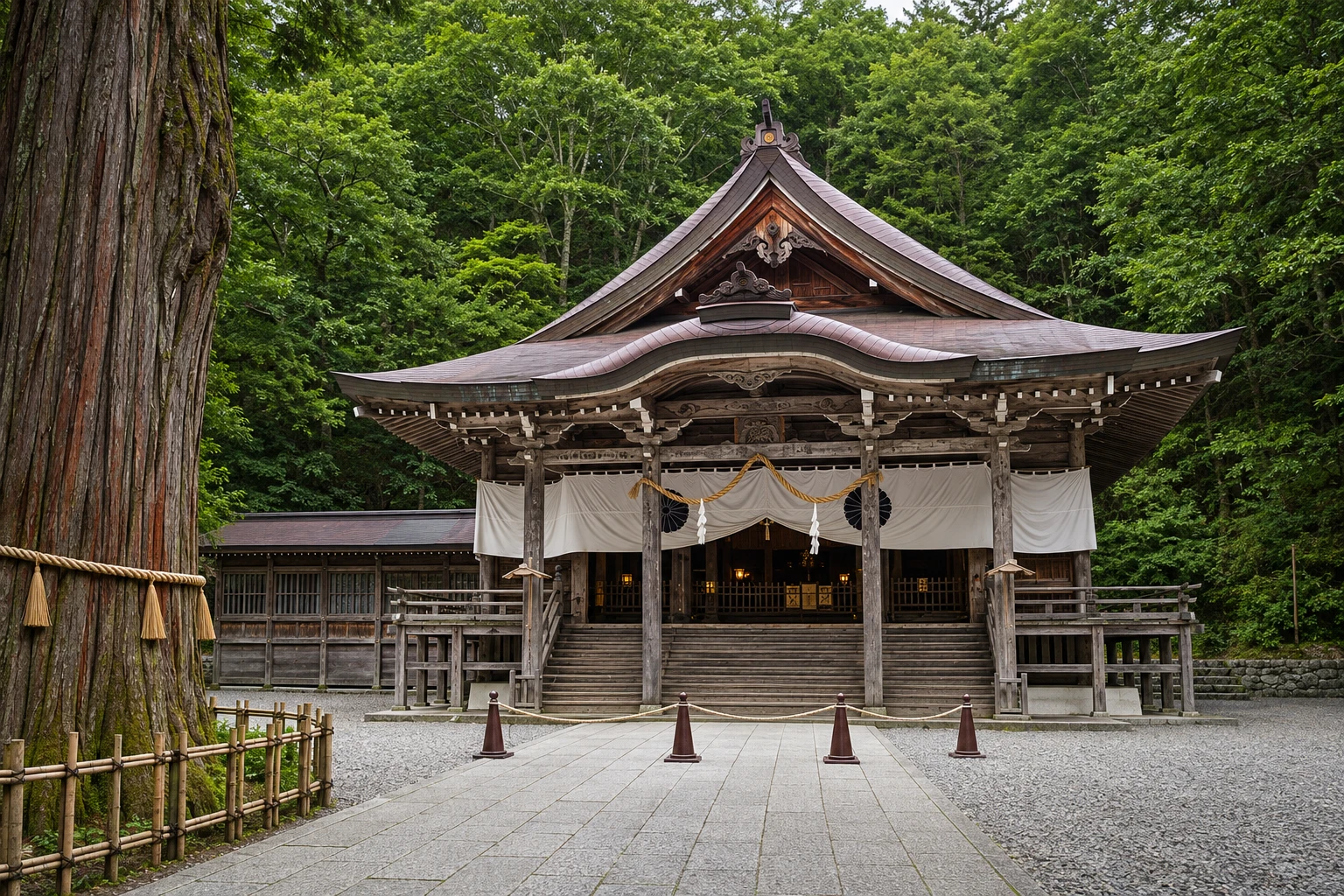
Illustrative images. The pictures in this guide are illustrations based on the real place, not photographs, and may differ from it.

A look at the place
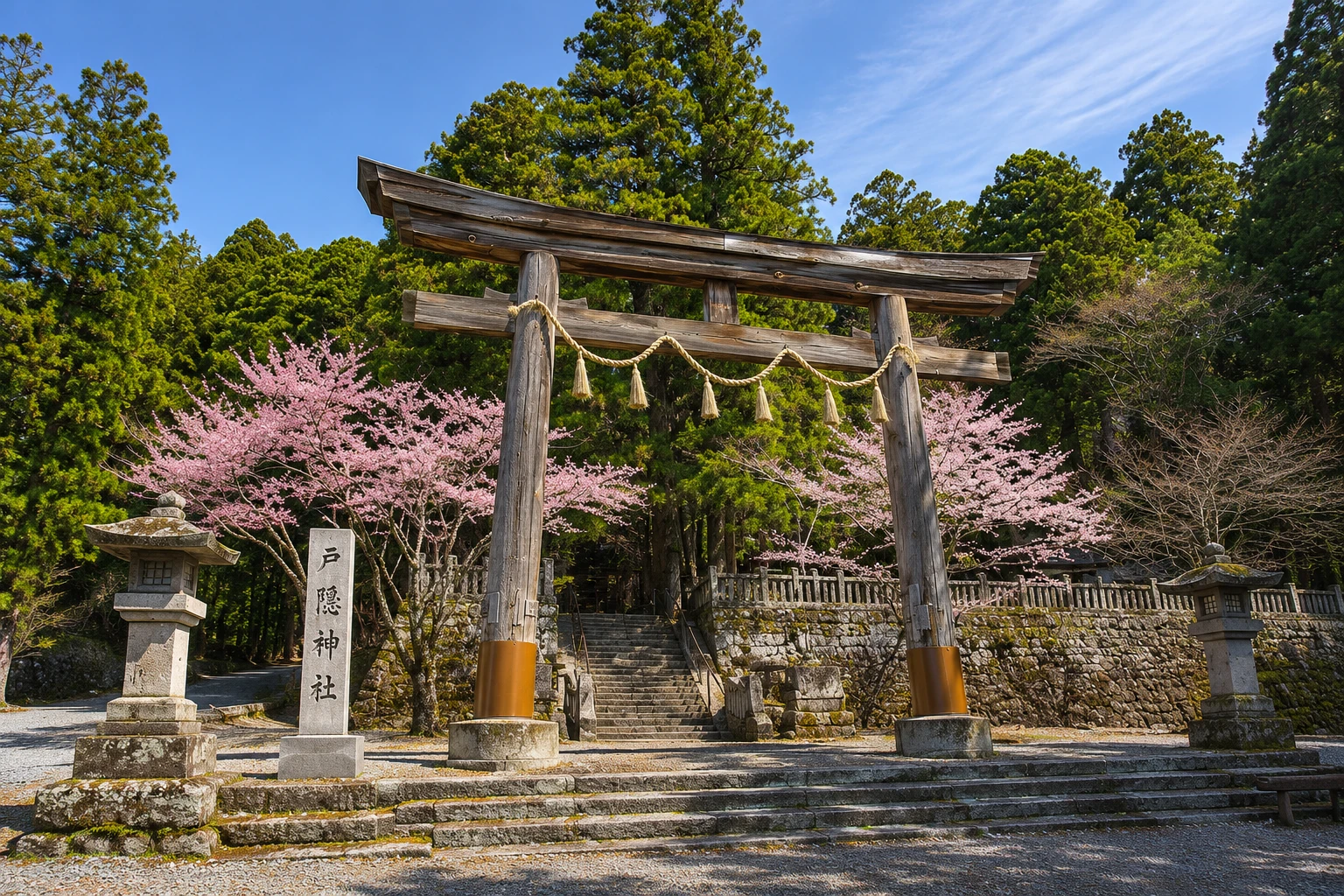
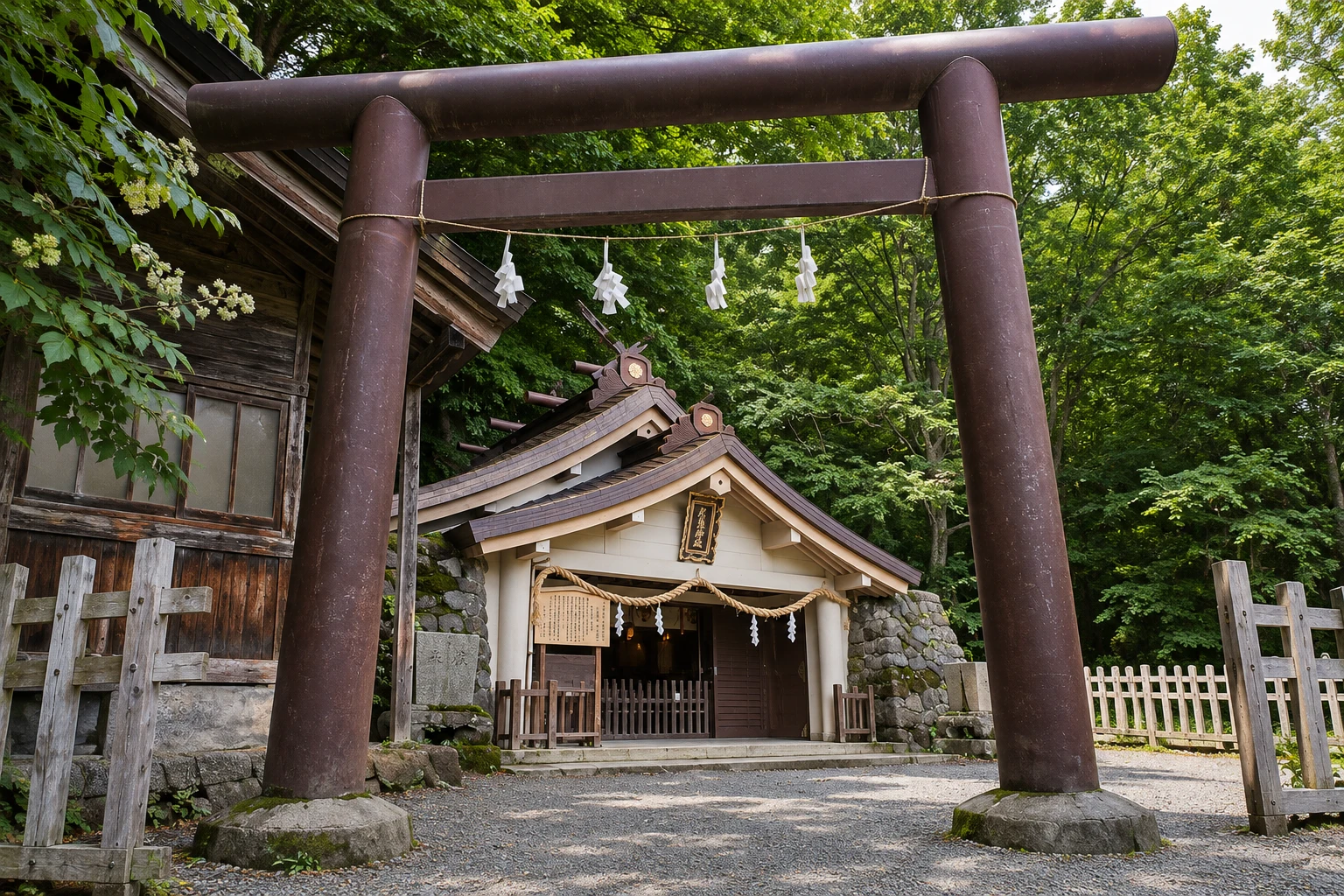
Togakushi Shrine in pictures
These pictures are illustrations based on the real place, not photographs. They may differ from the place.
Click the picture to enlarge it.
Discover
About Togakushi Shrine
Togakushi Shrine consists of five shrines spread across the slope of Mount Togakushi, at about 1,200 meters altitude, northwest of Nagano. They are linked to the myth of the sun goddess Amaterasu, who hid in a cave and was lured out by the god of strength, Ame-no-Tajikarao; according to tradition, the stone door of the cave was thrown to this mountain. For centuries the place was a center for mountain ascetics and Buddhist temples, which were separated from the shrines in the 19th century.
The most visited shrine is Okusha, the inner shrine. From the road, a path of about 2 km climbs through the forest, passes a red gate, and enters an avenue of some 300 cedars over 400 years old, planted in the 17th century. The final section has stone steps. Chusha, the middle shrine, has a large sacred tree and the main village, with lodgings of former priests and soba houses.
Togakushi is known for soba, made from buckwheat grown in the mountains and served in bamboo baskets. The region is also associated with ninja schools, and a small theme park and a museum near Okusha address that history.
The trails between the five shrines can be walked in a few hours, through forest and past a lake, Kagami-ike, which reflects Mount Togakushi. In winter, snow covers the path to Okusha, leaving the buildings inaccessible for part of the season.
Before you go
Practical information
Cidade Turismo reviews its information regularly, but something may have changed. Check with the place before planning your trip.
How much time to set aside
About 2 to 4 hours for Okusha and Chusha; a full day for all five shrines.
Best time
From May to November, with cool summers and foliage in October. In winter, snow covers the cedar avenue and access to Okusha is limited. Early morning has fewer people in the cedar avenue.
How to get there
Buses run from Nagano Station to Togakushi, taking about 1 hour to Chusha and about 1 hour 10 minutes to the entrance to Okusha. By car, about 50 minutes via the mountain road.
Tip
Get off the bus at the entrance to Okusha, climb the cedar avenue, and return on foot along the trail to Chusha to have soba for lunch. Bring sturdy footwear: the final section has uneven stone steps.
Official website
Get your questions answered
Frequently asked questions about Togakushi Shrine
How long does the walk to Okusha at Togakushi take?
About 40 minutes to 1 hour uphill, on a roughly 2 km path that passes the red gate and the cedar avenue, with steps at the end.
How to get from Nagano to Togakushi Shrine?
By bus from Nagano Station, about 1 hour to Chusha. There are bus passes for the area.
Is Togakushi Shrine open in winter?
Chusha and the village remain accessible, but the path to Okusha is often snow-covered, with limited access to the buildings. Check before you go.
Why is Togakushi known for soba?
Buckwheat grows well in the cold mountain climate, and pilgrim lodgings have served soba for centuries. It is served in bamboo baskets, in a style particular to the region.
Beyond the guide


