

 Brazil
 Antarctica
 Argentina
 Bolivia
 Chile
 Colombia
 Ecuador
 Guyana
 French Guiana
 Falkland Islands (Malvinas)
 Paraguay
 Peru
 Suriname
 Uruguay
 Venezuela
 Germany
 Austria
 Belgium
 Croatia
 Denmark
 Slovakia
 Slovenia
 Spain
 Finland
 France
 Greece
 the Netherlands
 Hungary
 Ireland
 Iceland
 Italy
 Luxembourg
 Norway
 Poland
 Portugal
 the United Kingdom
 the Czech Republic
 Sweden
 Switzerland
 Turkey
 Bermuda
 Canada
 the United States
 Greenland
 Mexico
 Saint Pierre and Miquelon
 the Dominican Republic
 South Africa
 Egypt
 Australia
 Fiji
 New Zealand
 Papua New Guinea
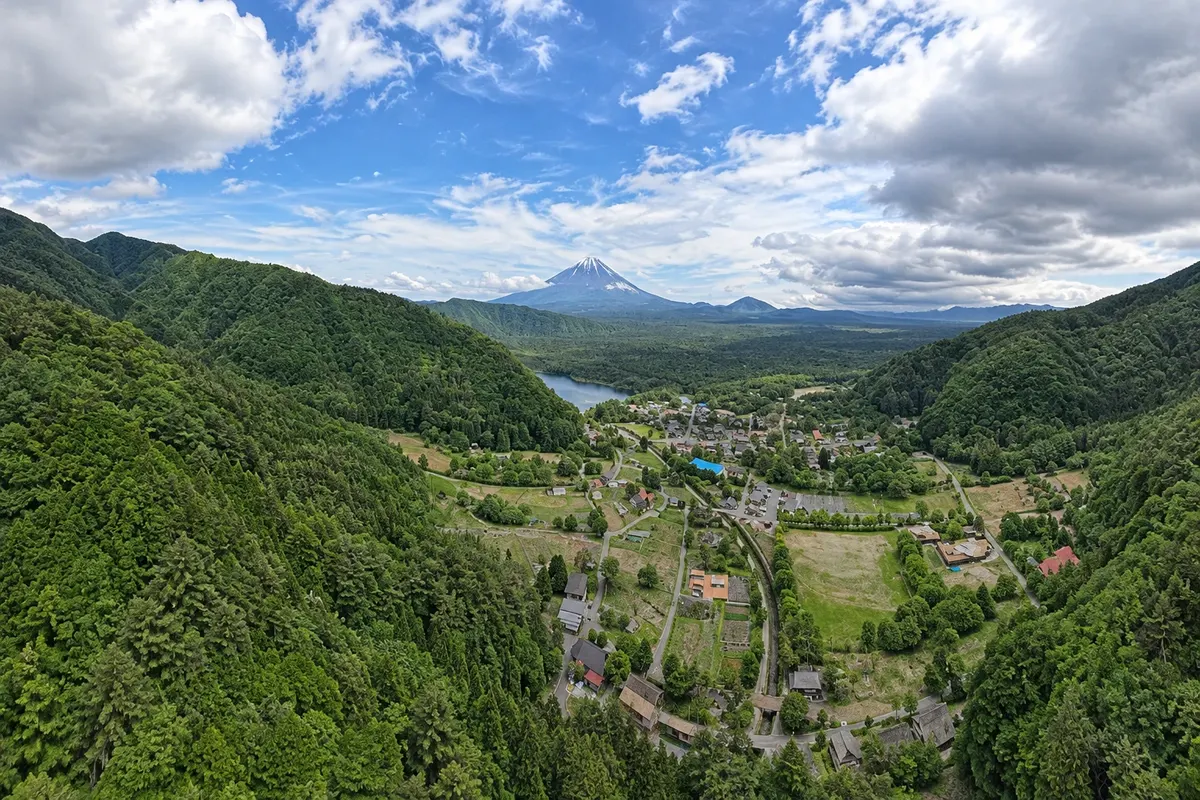
Historic village · Fujikawaguchiko, Yamanashi
Saiko Iyashi no Sato Nenba
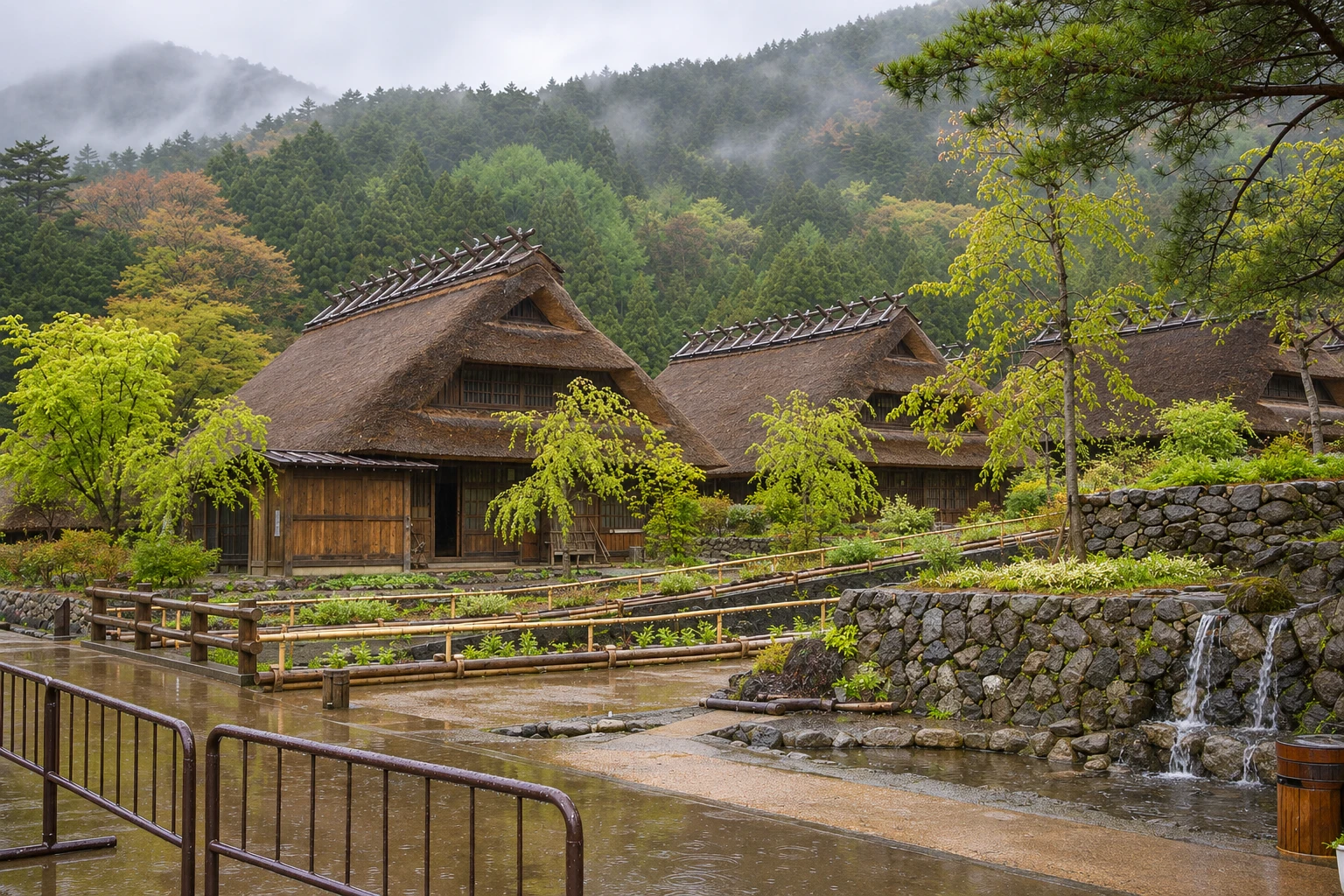
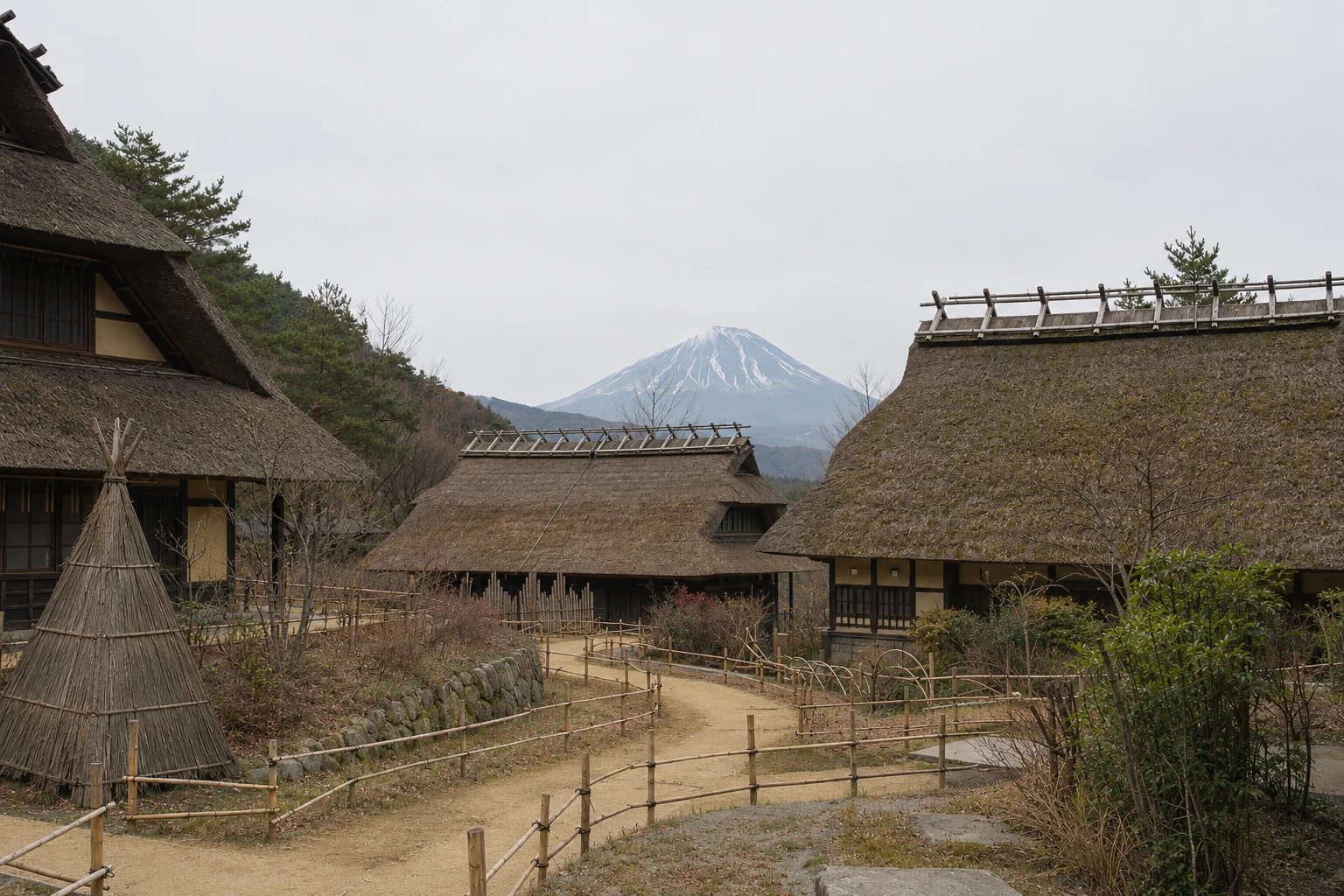
A village of thatched-roof houses on the shore of Lake Sai, rebuilt as an open-air museum, with crafts, shops and Mount Fuji in the background.
Illustrative images. The pictures in this guide are illustrations based on the real place, not photographs, and may differ from it.

A look at the place
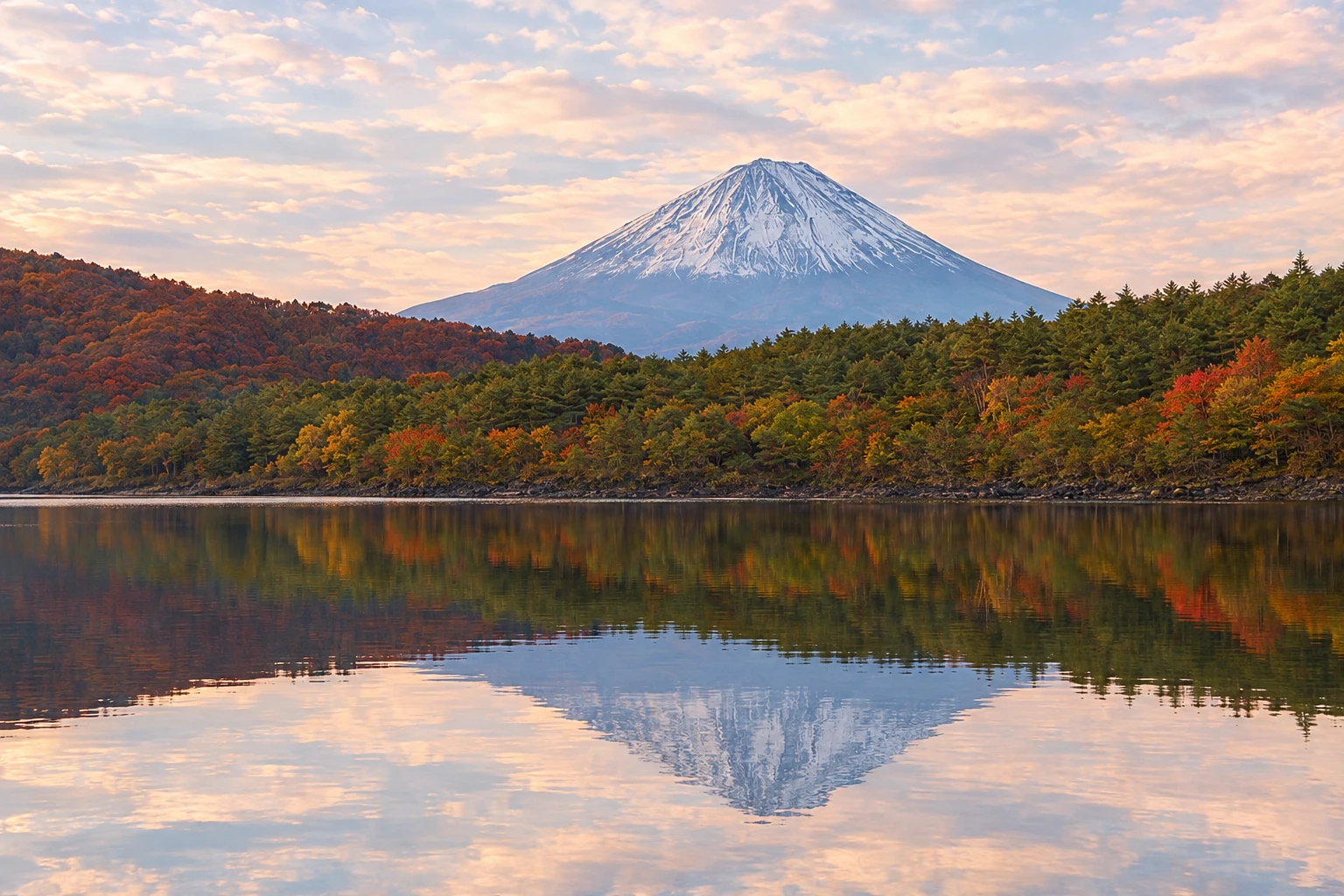
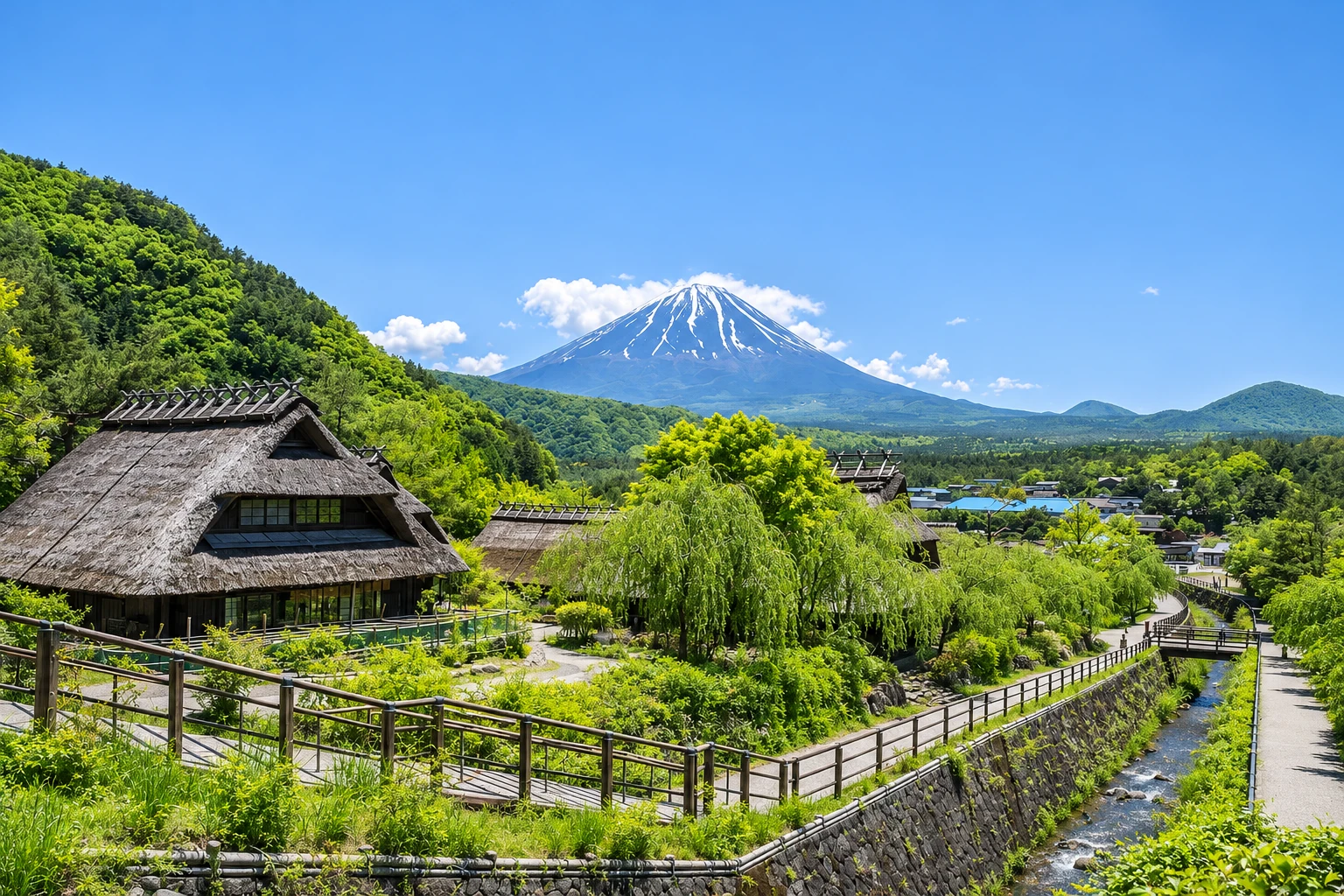
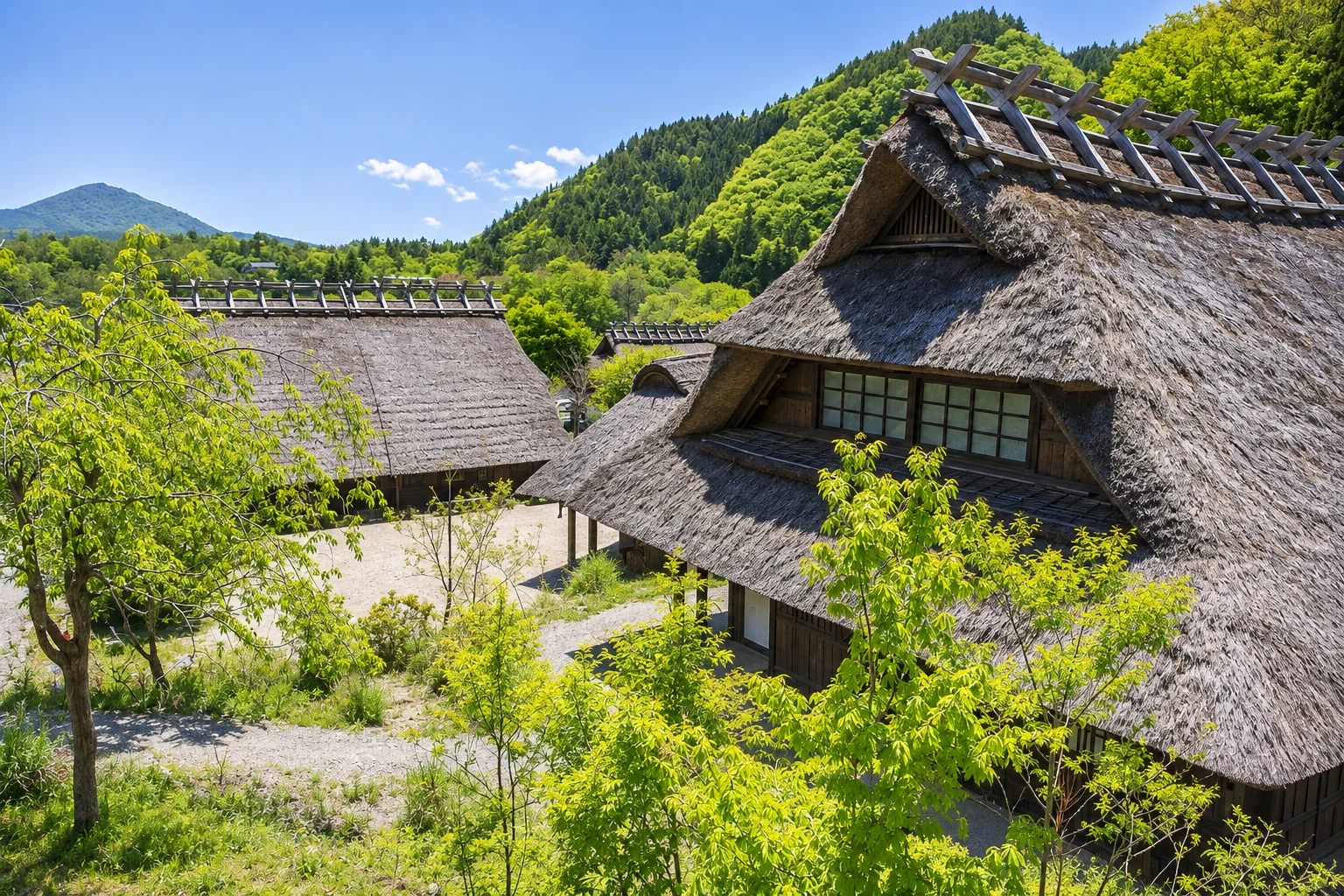
Saiko Iyashi no Sato Nenba in pictures
These pictures are illustrations based on the real place, not photographs. They may differ from the place.
Click the picture to enlarge it.
Discover
About Saiko Iyashi no Sato Nenba
Saiko Iyashi no Sato Nenba is on the west shore of Lake Sai. The site was once an agricultural village of thatched houses, Nenba, destroyed by a landslide during a typhoon in 1966. Decades later the village was reconstructed on the same site as an open-air museum, with about twenty traditional houses.
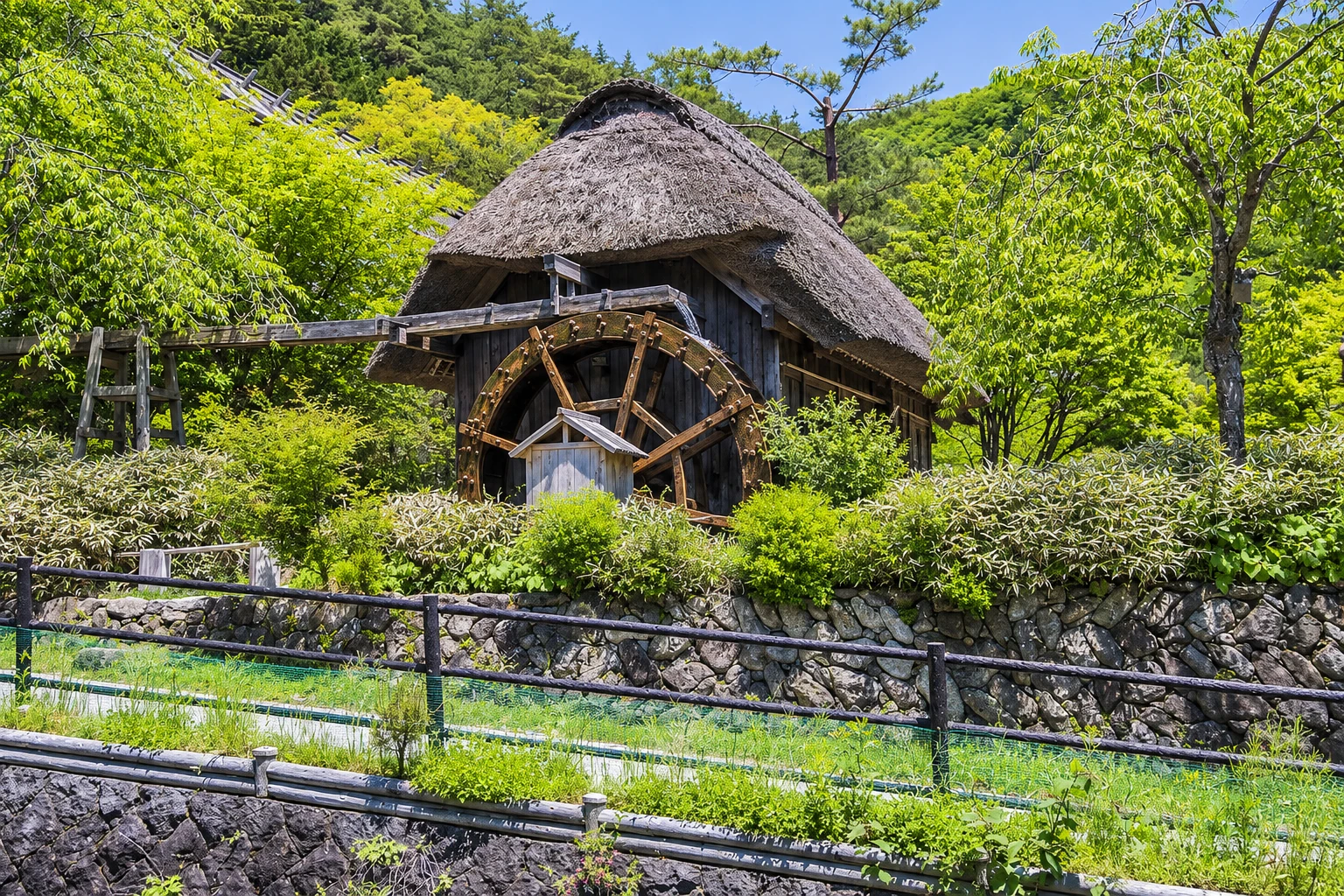
The houses have thick straw roofs in the kabuto-zukuri style, with the tops shaped like a samurai helmet, and are scattered on the hillside around dirt paths and a stream. Each one houses an activity: pottery workshops, weaving, washi paper and incense workshops, craft shops, galleries, a tea house and restaurants serving local dishes such as hoto, a thick noodle cooked with vegetables and miso, a Yamanashi specialty.
On clear days, the Fuji cone appears behind the houses, framed in a way that recalls old woodblock prints. Some houses rent kimonos for walking around the village, and the higher path has a small observation area over the roofs.
The village operates on museum hours and charges admission. It’s a common stop for sightseeing buses around Lake Sai, and the surrounding area has trails to the lake and the forest. In the late afternoon, after the buses leave, the village grows quiet, and the path down to Lake Sai’s shore lets you see the thatched houses from afar, with the forest and the mountain in the background.
Before you go
Practical information
Cidade Turismo reviews its information regularly, but something may have changed. Check with the place before planning your trip.
How much time to set aside
From 1 to 1h30.
Best time
Early in the morning, when Fuji is typically visible and the village is calmer. In autumn, the surrounding trees change color in November; in winter, snow can cover the roofs.
How to get there
Sightseeing buses on the Lake Sai line depart from Kawaguchiko Station and stop at the village in about 40 minutes. By car, it’s about 20 minutes from the station.
Tip
Combine the village with the lava caves and Lake Sai on the same bus route. Try hoto at one of the village restaurants — a warm dish that’s good for cold days.
Official website
Get your questions answered
Frequently asked questions about Saiko Iyashi no Sato Nenba
What is Iyashi no Sato?
A village of thatched-roof houses on the shore of Lake Sai, rebuilt as an open-air museum after being destroyed by a landslide in 1966. The houses now host workshops, shops and restaurants.
Can you see Fuji from Iyashi no Sato?
On clear days, yes: the cone appears behind the houses. With clouds, it is hidden.
How do you get to Iyashi no Sato?
By sightseeing bus on the Lake Sai line, about 40 minutes from Kawaguchiko Station.
What is hoto?
It’s a local Yamanashi dish: thick noodles cooked with vegetables, kabocha and miso, served in an iron pot.
How long should you allow for Iyashi no Sato?
About 1 to 1.5 hours.
Beyond the guide


