

 Brazil
 Antarctica
 Argentina
 Bolivia
 Chile
 Colombia
 Ecuador
 Guyana
 French Guiana
 Falkland Islands (Malvinas)
 Paraguay
 Peru
 Suriname
 Uruguay
 Venezuela
 Germany
 Austria
 Belgium
 Croatia
 Denmark
 Slovakia
 Slovenia
 Spain
 Finland
 France
 Greece
 the Netherlands
 Hungary
 Ireland
 Iceland
 Italy
 Luxembourg
 Norway
 Poland
 Portugal
 the United Kingdom
 the Czech Republic
 Sweden
 Switzerland
 Turkey
 Bermuda
 Canada
 the United States
 Greenland
 Mexico
 Saint Pierre and Miquelon
 the Dominican Republic
 South Africa
 Egypt
 Australia
 Fiji
 New Zealand
 Papua New Guinea
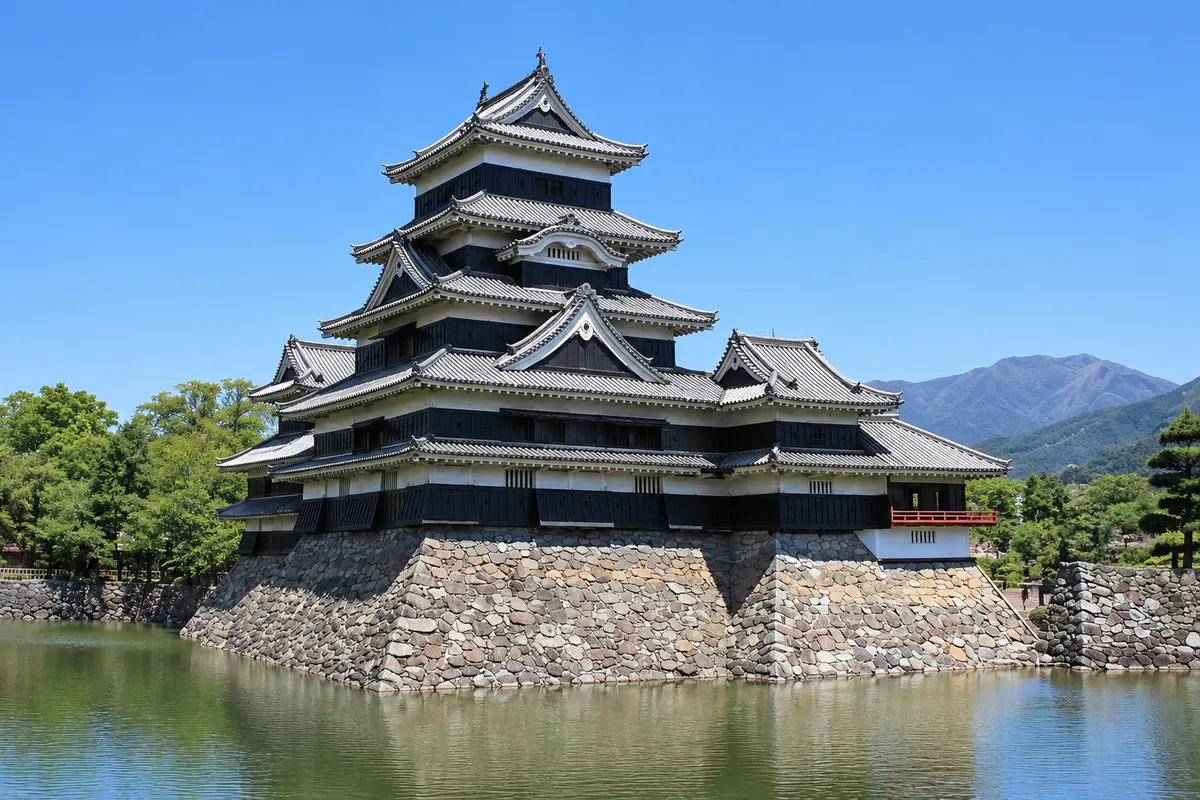
Castle · Matsumoto, Nagano
Matsumoto Castle
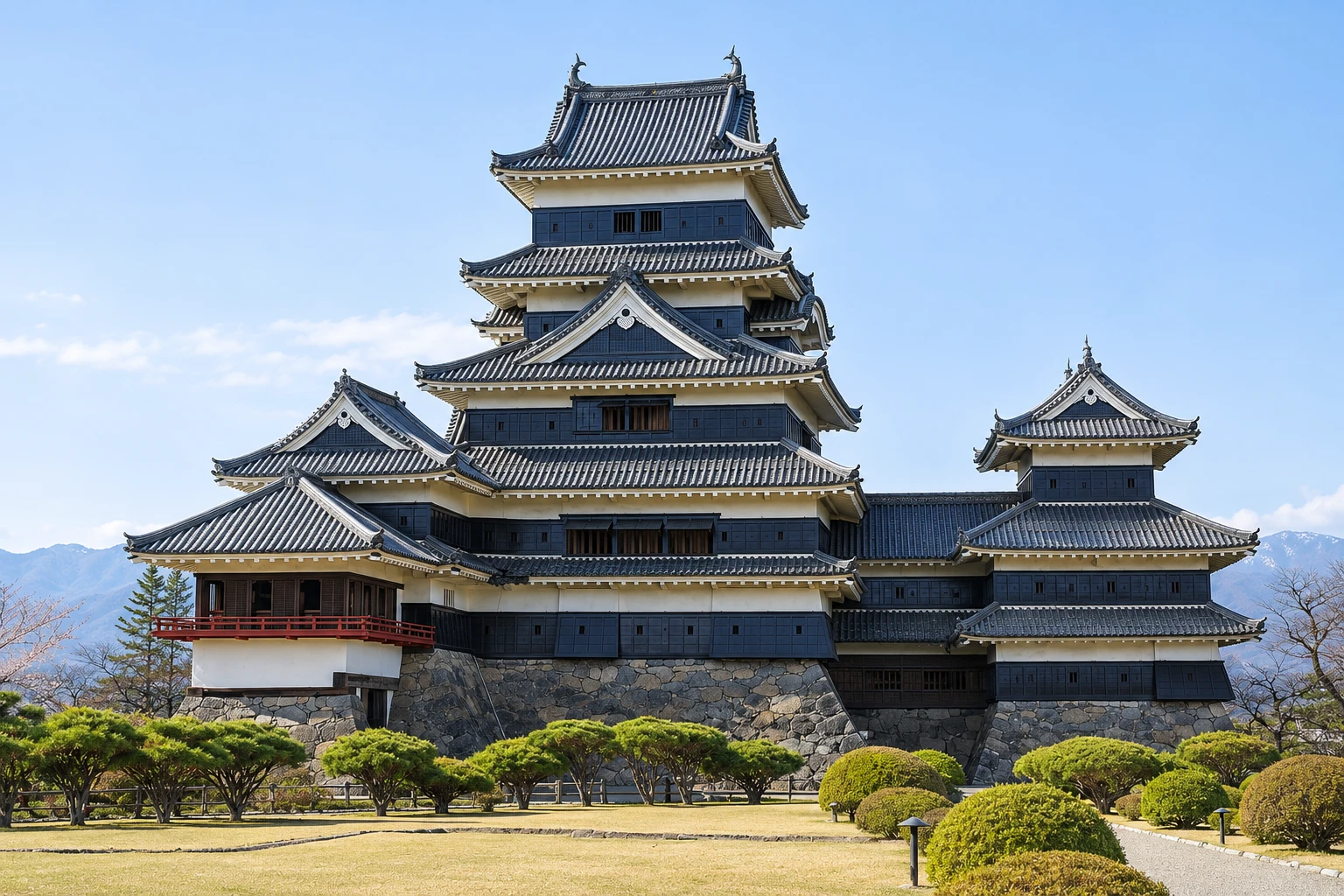
Castle with the original main keep from the late 16th century, wooden with black walls, surrounded by a moat. A national treasure, it has five roofs and six internal floors, steep stairs and a moon-viewing tower.
Illustrative images. The pictures in this guide are illustrations based on the real place, not photographs, and may differ from it.

A look at the place
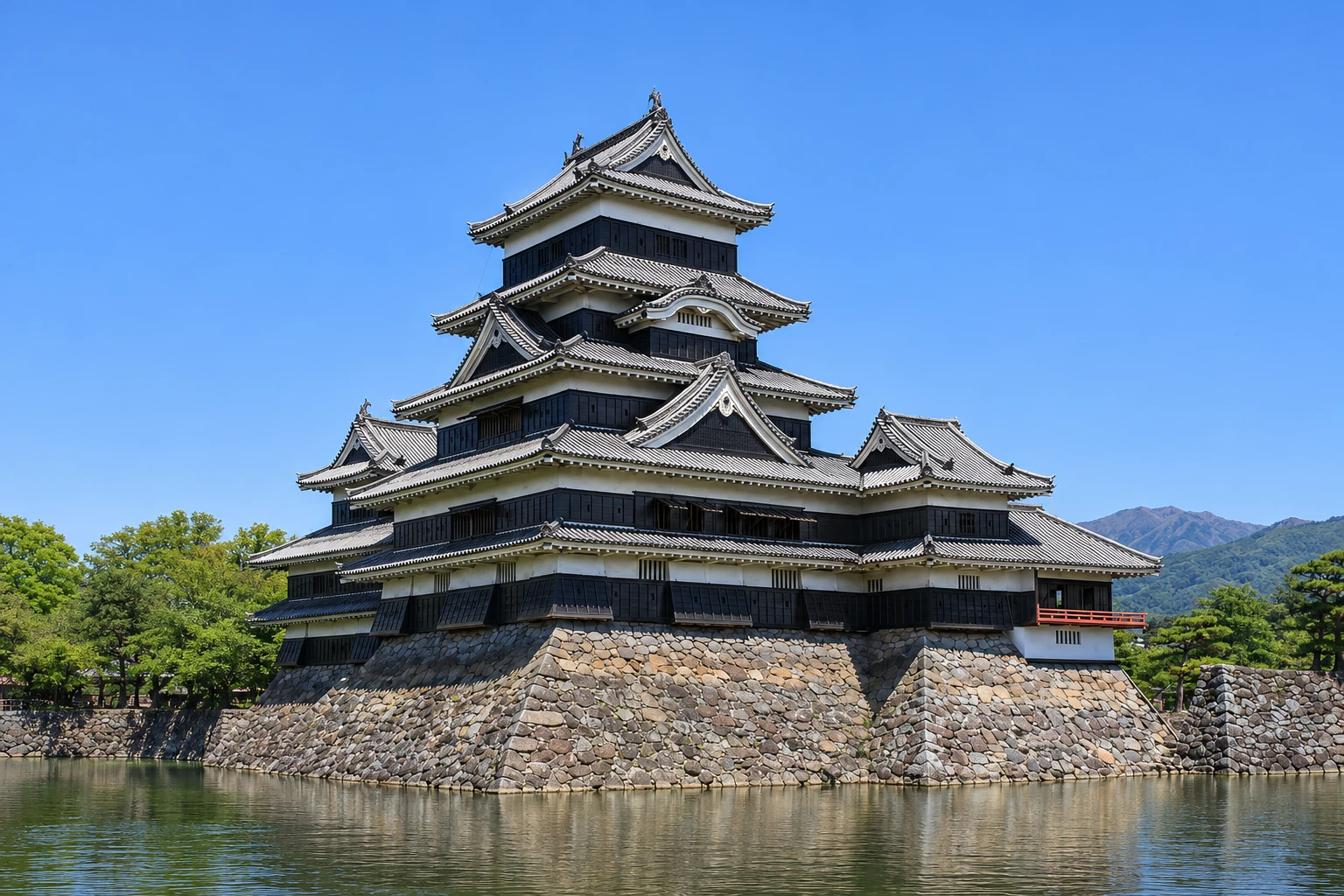
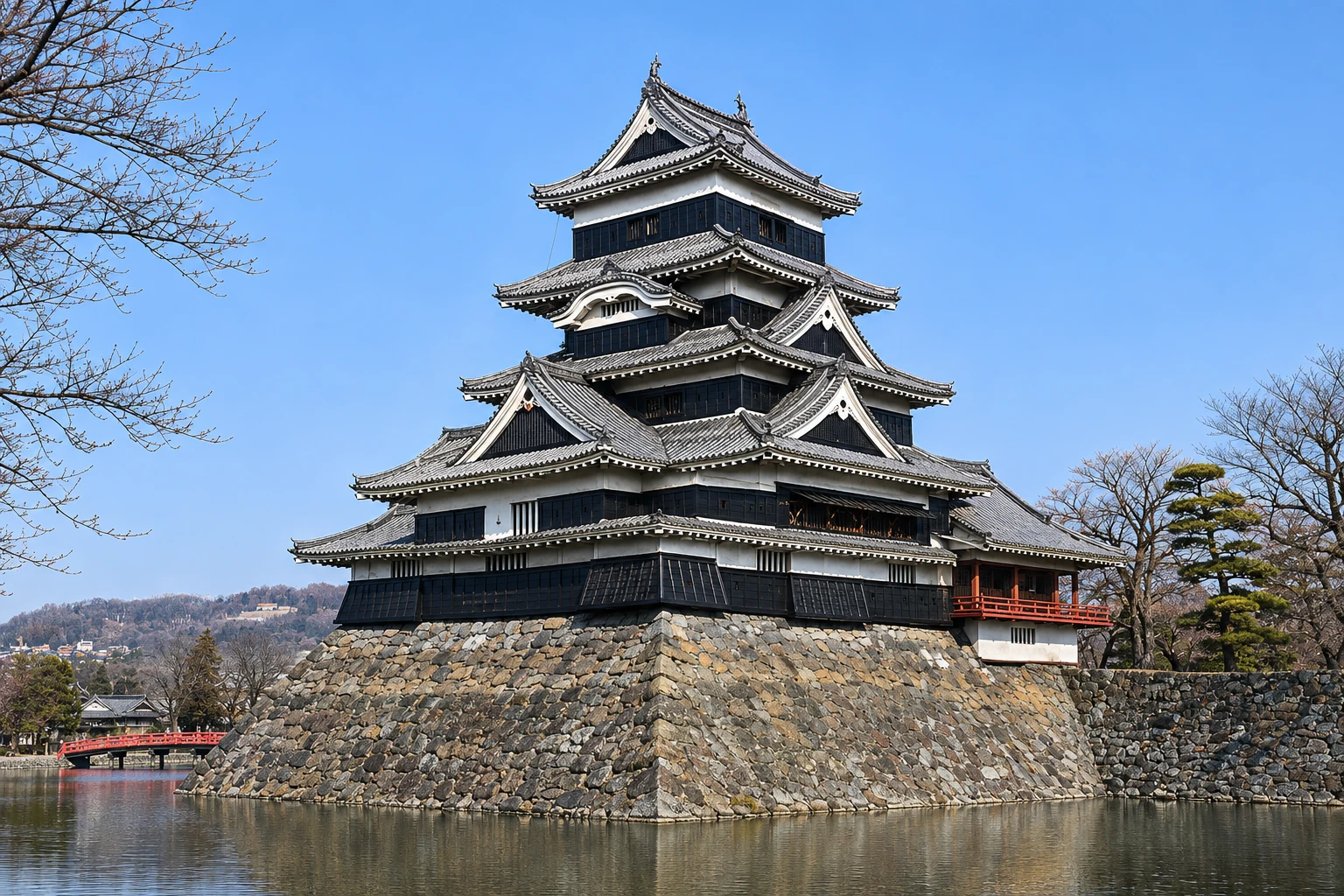
Matsumoto Castle in pictures
These pictures are illustrations based on the real place, not photographs. They may differ from the place.
Click the picture to enlarge it.
Discover
About Matsumoto Castle
Matsumoto Castle is one of the twelve castles in Japan that retain their original main keep, and one of five designated as a national treasure. The keep, with five roofs and six internal floors, was erected around 1593–1594, at the end of the period of internal wars, and is considered the oldest surviving example of its type. Because of its black lacquered wooden walls, it earned the nickname “Crow Castle.”
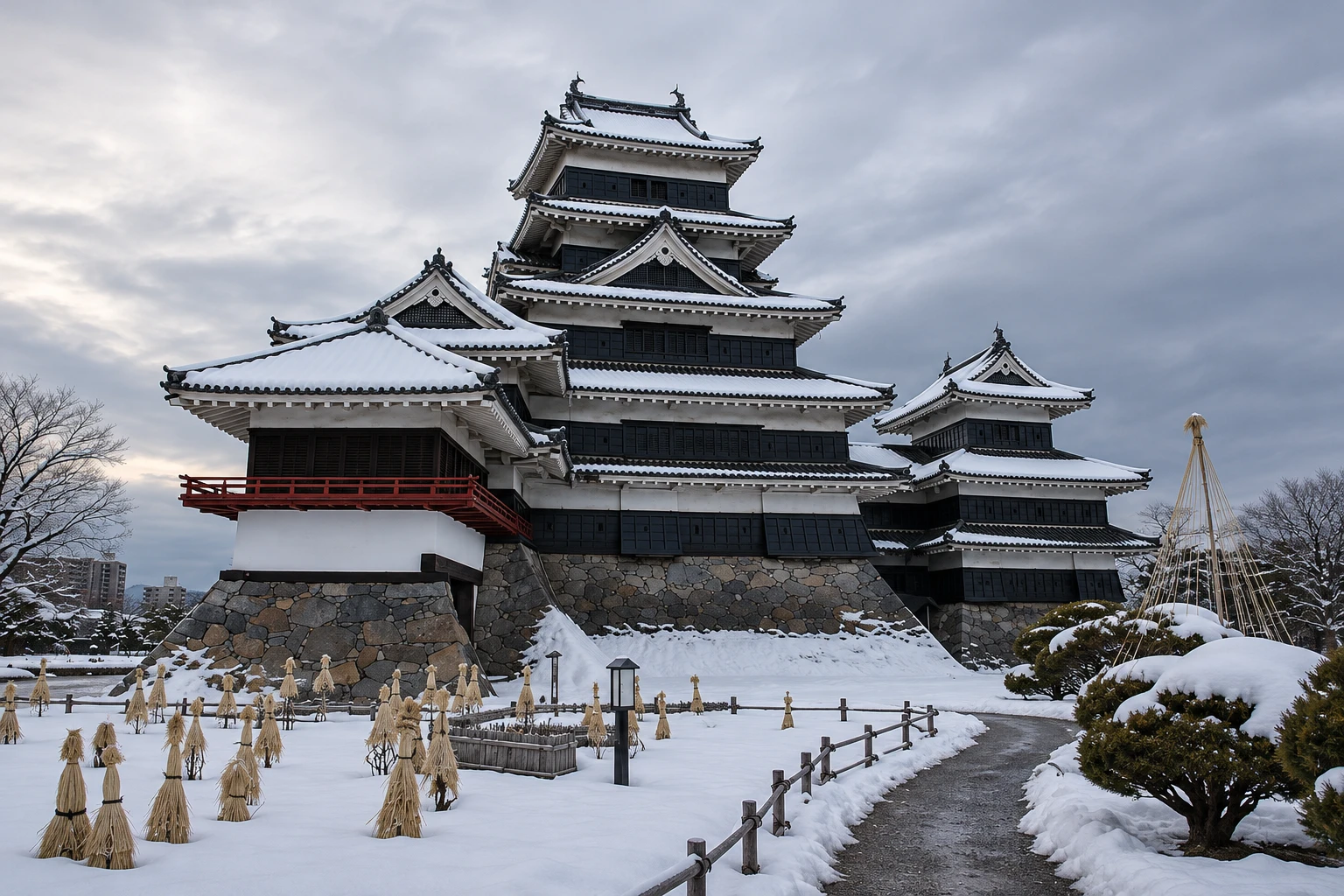
The complex includes the main keep, a smaller keep connected by a corridor, and two wings added around 1630 in peacetime: one for moon viewing, open with verandas, and another with a red balcony. The contrast between the military parts, with arrow slits and trapdoors for dropping stones, and the leisure areas is one of the visit’s points of interest.
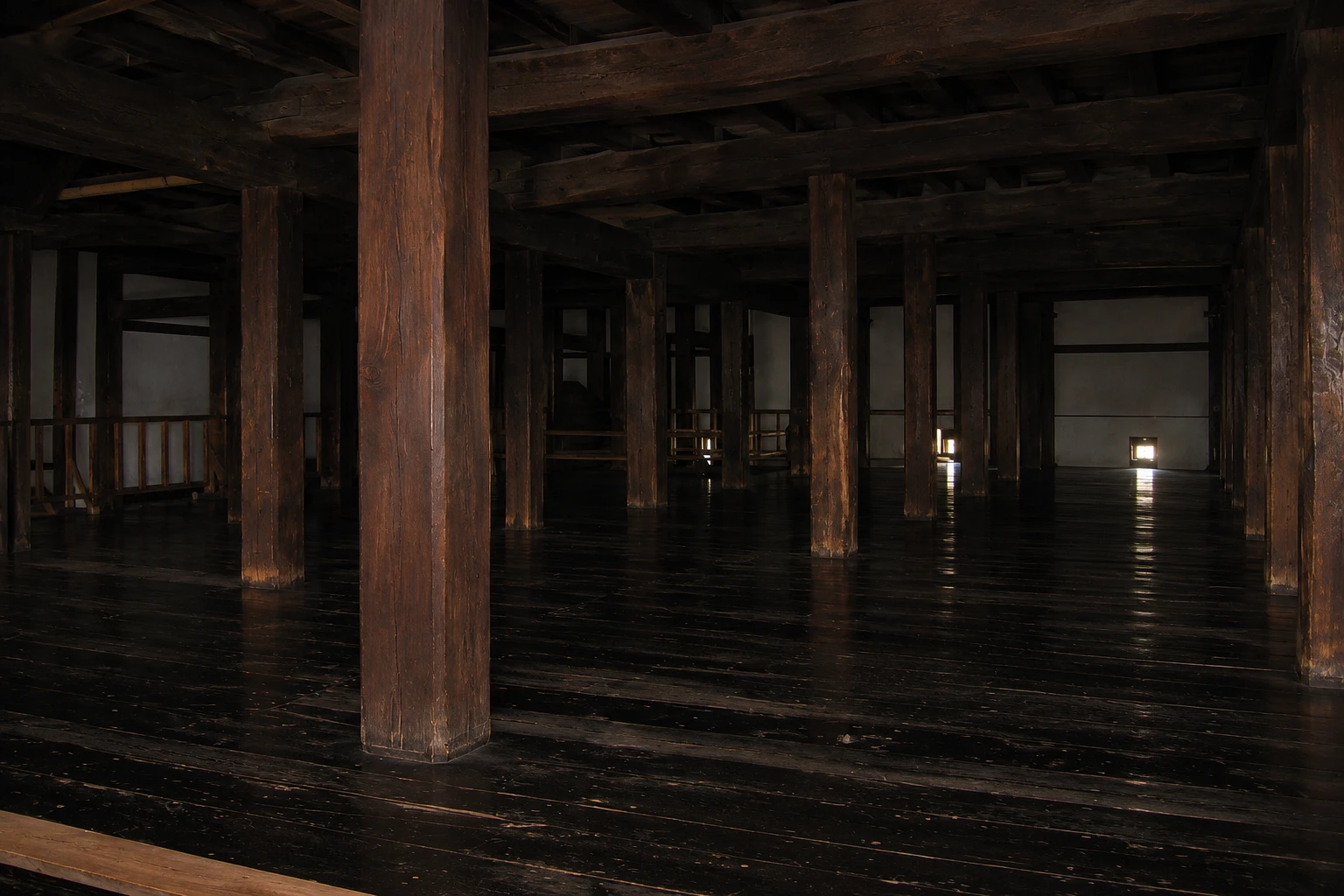
Inside, the keep is dark wood with exposed beams. The stairs are narrow and very steep, with high steps, reaching angles of about 60 degrees. Along the way, a hidden floor without exterior windows served as storage and refuge. On the second floor there is a collection of firearms from the period. From the top, you can see the city and the Northern Alps.
The castle stands in a park with a wide moat where the keep is reflected with the mountains behind it, and a red bridge. In spring, the park’s cherry trees usually bloom in April, and on some evenings the castle is illuminated.
Before you go
Practical information
Cidade Turismo reviews its information regularly, but something may have changed. Check with the place before planning your trip.
How much time to set aside
From 1 to 1h30.
Best time
Right at opening, before the lines to climb the keep form, which usually happen on weekends and holidays. In April the cherry trees tend to bloom; on clear days, the Alps appear behind the keep.
How to get there
About 15–20 minutes on foot from Matsumoto Station, or by the city loop bus, with a stop next to the castle.
Tip
Wear socks and shoes that are easy to take off, because you enter the keep barefoot, and be careful on the steep stairs. For the classic photo, go to the side of the moat with the red bridge early in the morning.
Official website
Get your questions answered
Frequently asked questions about Matsumoto Castle
Is Matsumoto Castle original?
Yes. The main keep dates from the late 16th century and was never completely destroyed or rebuilt, which places it among Japan’s twelve original castles and five national treasures.
Is climbing the tower of Matsumoto Castle difficult?
The stairs are narrow and very steep, with high steps. It requires care and is not recommended for people with mobility difficulties; on busy days lines form on the floors.
Why is Matsumoto Castle black?
The wooden walls are lacquered black, which earned it the nickname “the Crow Castle.”
How long does a visit to Matsumoto Castle take?
1 to 1.5 hours for the keep and the park. On days with lines, allow more time.
Beyond the guide


