

 Brazil
 Antarctica
 Argentina
 Bolivia
 Chile
 Colombia
 Ecuador
 Guyana
 French Guiana
 Falkland Islands (Malvinas)
 Paraguay
 Peru
 Suriname
 Uruguay
 Venezuela
 Germany
 Austria
 Belgium
 Croatia
 Denmark
 Slovakia
 Slovenia
 Spain
 Finland
 France
 Greece
 the Netherlands
 Hungary
 Ireland
 Iceland
 Italy
 Luxembourg
 Norway
 Poland
 Portugal
 the United Kingdom
 the Czech Republic
 Sweden
 Switzerland
 Turkey
 Bermuda
 Canada
 the United States
 Greenland
 Mexico
 Saint Pierre and Miquelon
 the Dominican Republic
 South Africa
 Egypt
 Australia
 Fiji
 New Zealand
 Papua New Guinea
Before you go
Your trip to Matsue.
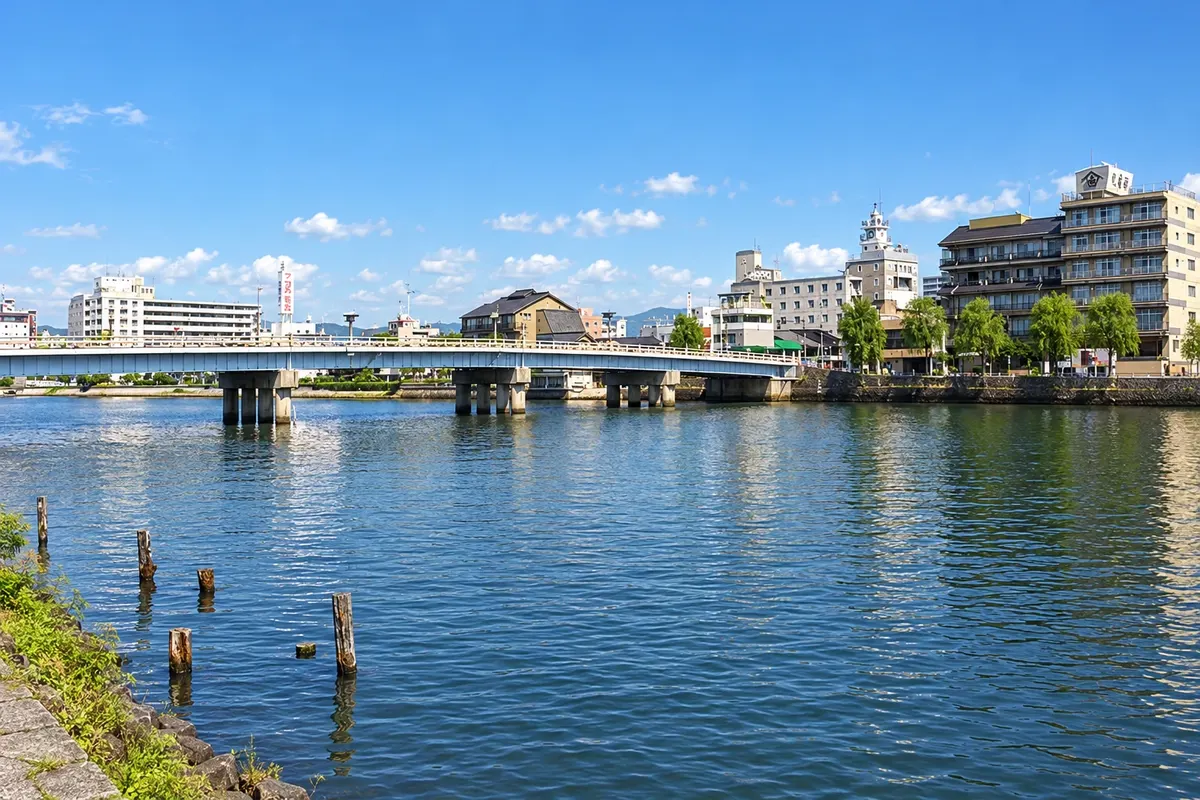
Illustrative images. The pictures in this guide are illustrations based on the real place, not photographs, and may differ from it.

Matsue – Shimane Destination Matsue and Izumo Capital
How to get there
-
Aeroporto de Izumo (IZO) Izumo · 23 km
-
Estação de Matsue 1 km
Approximate distances. Check flights and bus, train or boat schedules before you travel.
Yakumo trains run from Okayama in about two and a half hours. Izumo Airport is about 23 km away, with a direct bus, and Yonago Airport about 30 km. The Ichibata line departs from Matsue Shinjiko Onsen Station toward Izumo Taisha.
How many days
One day for the castle, the moat boat, Shiomi Nawate and the sunset on the lake. With two days, add the Adachi Museum and Yaegaki Shrine, south of the city.
When to go
Spring and autumn usually have the most pleasant weather. The castle cherry trees typically bloom in early April. Winter is gray and damp, with occasional snow; summer is hot. The moat boats put heaters under the tables in winter.
The seasons shown are the most usual ones; nature doesn't always follow the calendar.
Do you need a car?
No. The Lake Line tourist bus circles the castle, Shiomi Nawate and the lakefront, and the city center is walkable. The Adachi Museum runs its own bus from Yasugi Station.
Suggested itinerary
An order that works
Built with the places on this page. No rush: it's paced so you have time to see them.
One day in Matsue
-
Morning
Matsue Castle
Climb the original castle keep and see the city, Lake Shinji and the mountains from the top floor.
-
Afternoon
Boat and Shiomi Nawate
Take the moat boat tour and disembark at Shiomi Nawate to visit Lafcadio Hearn’s house and museum and a samurai residence.
-
Late afternoon
Sunset on Lake Shinji
Walk to the lakeshore near the Shimane Art Museum for the sunset, when the sky cooperates.
-
Evening
Shijimi and sake
Dine on lake fish and shijimi soup—the small clams of Shinji—at a restaurant in the center or the hot-spring district.
2 days in Matsue
Day 1
-
Morning
Castle and moats
Start at the castle and take the moat boat, which passes under bridges so low the boat’s roof is lowered.
-
Afternoon
Shiomi Nawate
Have soba for lunch and visit the samurai quarter, with Hearn’s house, and a teahouse for green tea with a Matsue sweet.
-
Late afternoon
Lakeshore
Go to the shore of Lake Shinji for the sunset, near the small island of Yomegashima.
-
Evening
Matsue Shinjiko Onsen
Stay at a lakeside onsen hotel and take a bath with a water view.
Day 2
-
Morning
Adachi Museum
Take the train to Yasugi and the museum bus to Adachi to see the garden in the morning light.
-
Afternoon
Painting collection
See the Yokoyama Taikan collection and have lunch at the museum café facing the garden.
-
Late afternoon
Yaegaki Shrine
On the way back, stop at Yaegaki Shrine, south of Matsue, associated with marriage, with the lake where you read your fortune on a paper leaf.
-
Evening
Onward to Izumo
Take the train to Izumo or stay in Matsue to depart early the next day.
Check before you go. Opening hours and days change, and places may close for renovations, holidays or events. This itinerary is a suggestion from Cidade Turismo, not a commitment: plan yours by checking directly with each place you intend to visit.
Before you go
Frequently asked questions
How does the moat-boat tour in Matsue work?
The boat runs around the castle moats for about 50 minutes, with a boatman who narrates the route. At some low bridges, the boat’s roof is lowered and passengers lean down.
Who was Lafcadio Hearn?
A writer of Greek and Irish origin who lived in Matsue in 1890 and 1891, married a Japanese woman and adopted the name Koizumi Yakumo. He wrote books about Japan’s legends and customs. His house and a museum are in Shiomi Nawate.
Where to see the sunset over Lake Shinji?
On the east shore, near the Shimane Art Museum and Yomegashima Island, there is a spot with steps down to the water. Sunsets tend to be more beautiful on clear days in autumn and spring.
What to eat in Matsue?
Shijimi, the small clams from Lake Shinji, in soup; Izumo soba; lake and Sea of Japan fish; and tea sweets, a tradition left by Lord Matsudaira Fumai.
Beyond the guide


