

 Brazil
 Antarctica
 Argentina
 Bolivia
 Chile
 Colombia
 Ecuador
 Guyana
 French Guiana
 Falkland Islands (Malvinas)
 Paraguay
 Peru
 Suriname
 Uruguay
 Venezuela
 Germany
 Austria
 Belgium
 Croatia
 Denmark
 Slovakia
 Slovenia
 Spain
 Finland
 France
 Greece
 the Netherlands
 Hungary
 Ireland
 Iceland
 Italy
 Luxembourg
 Norway
 Poland
 Portugal
 the United Kingdom
 the Czech Republic
 Sweden
 Switzerland
 Turkey
 Bermuda
 Canada
 the United States
 Greenland
 Mexico
 Saint Pierre and Miquelon
 the Dominican Republic
 South Africa
 Egypt
 Australia
 Fiji
 New Zealand
 Papua New Guinea
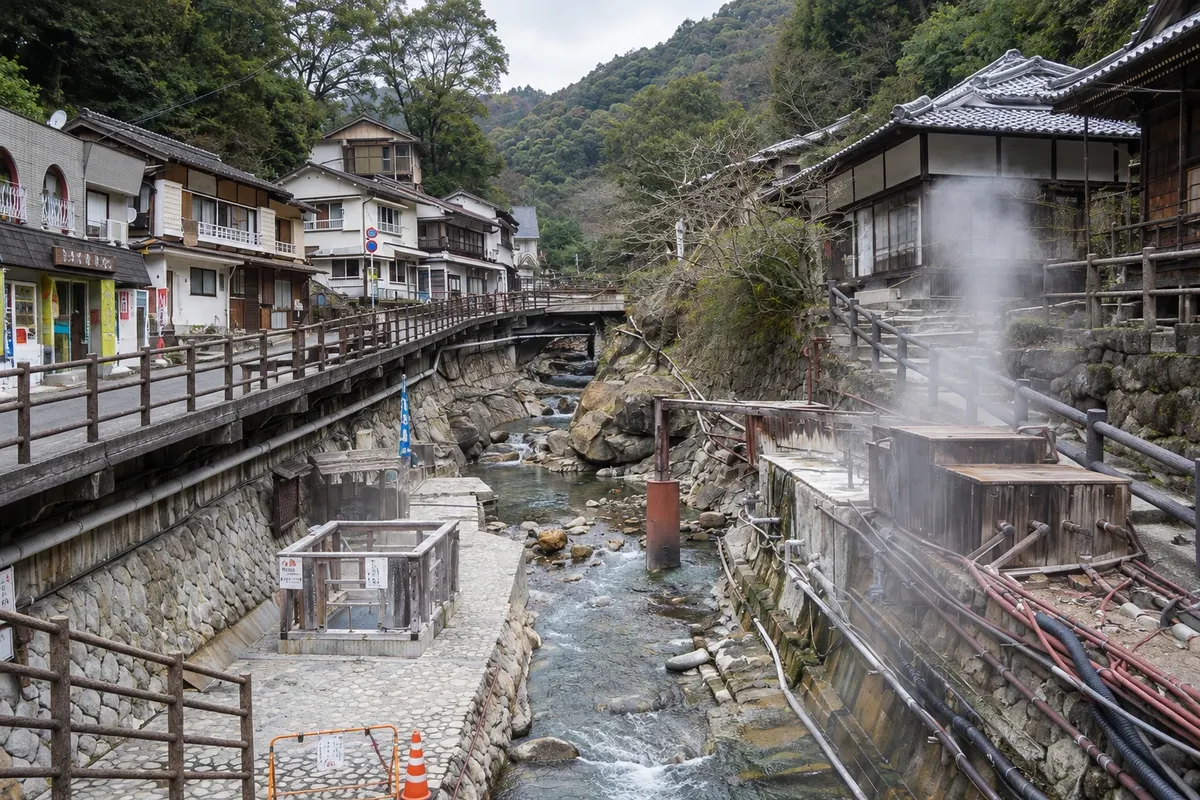
Hot-spring village · Tanabe, Wakayama
Yunomine Onsen
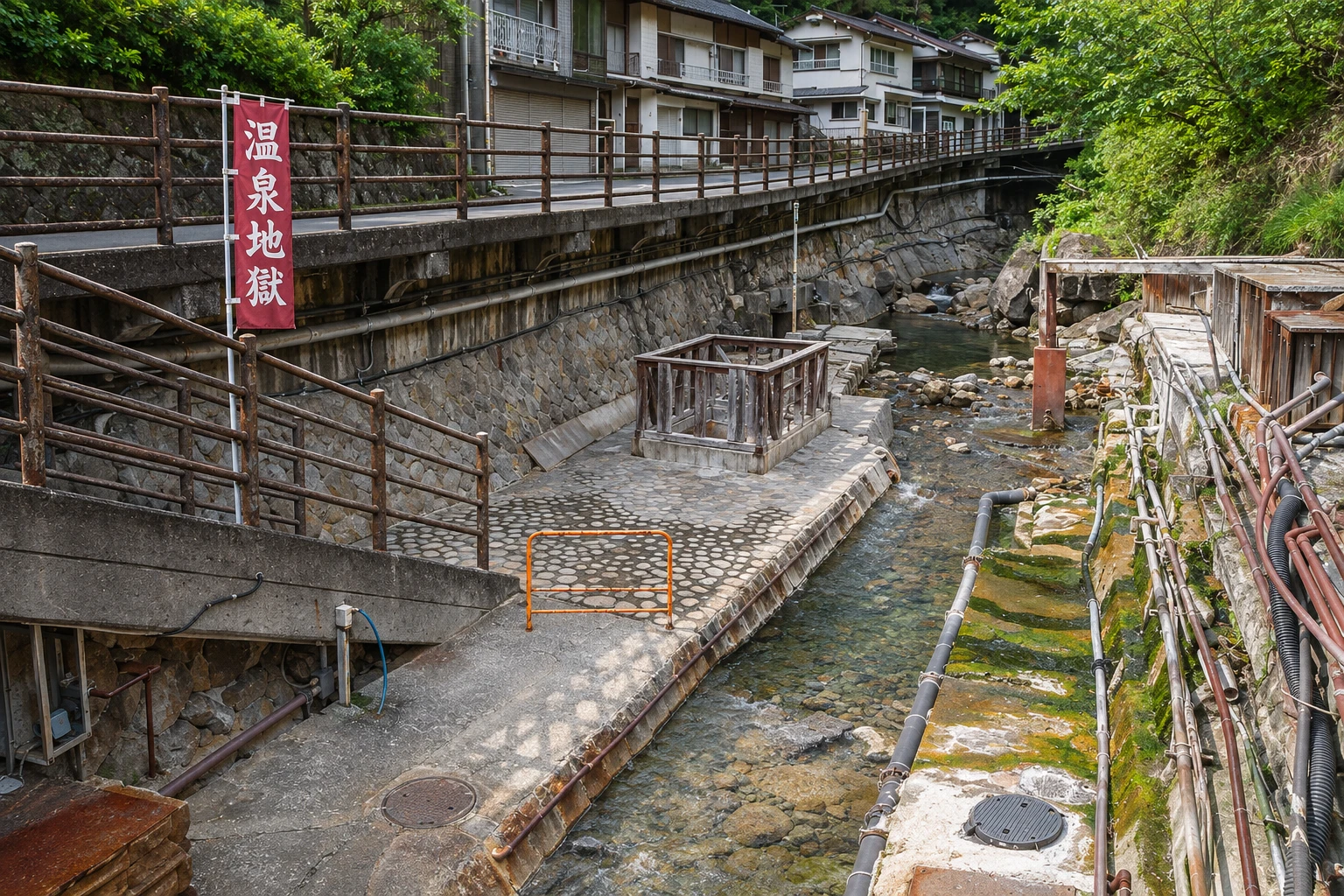
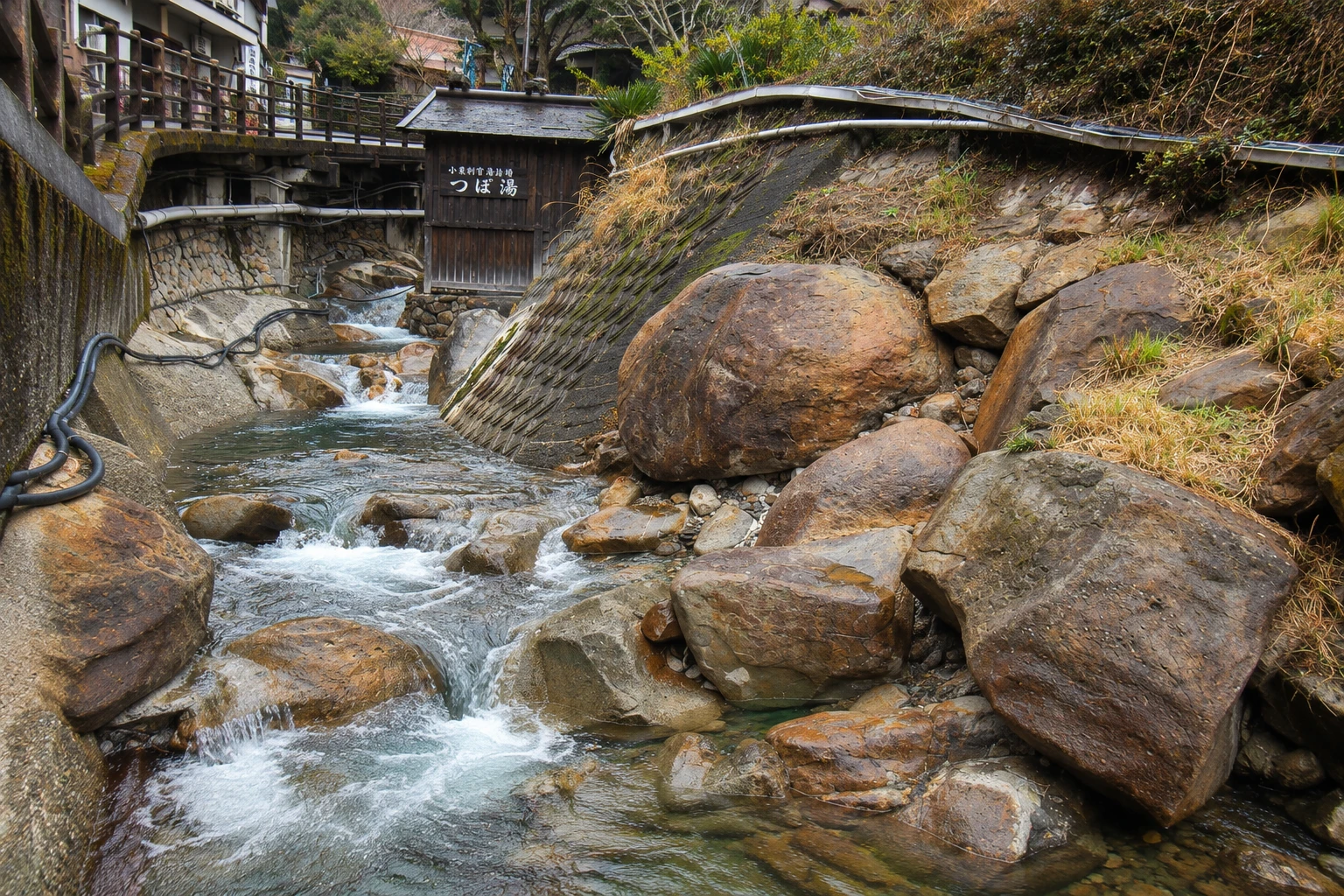
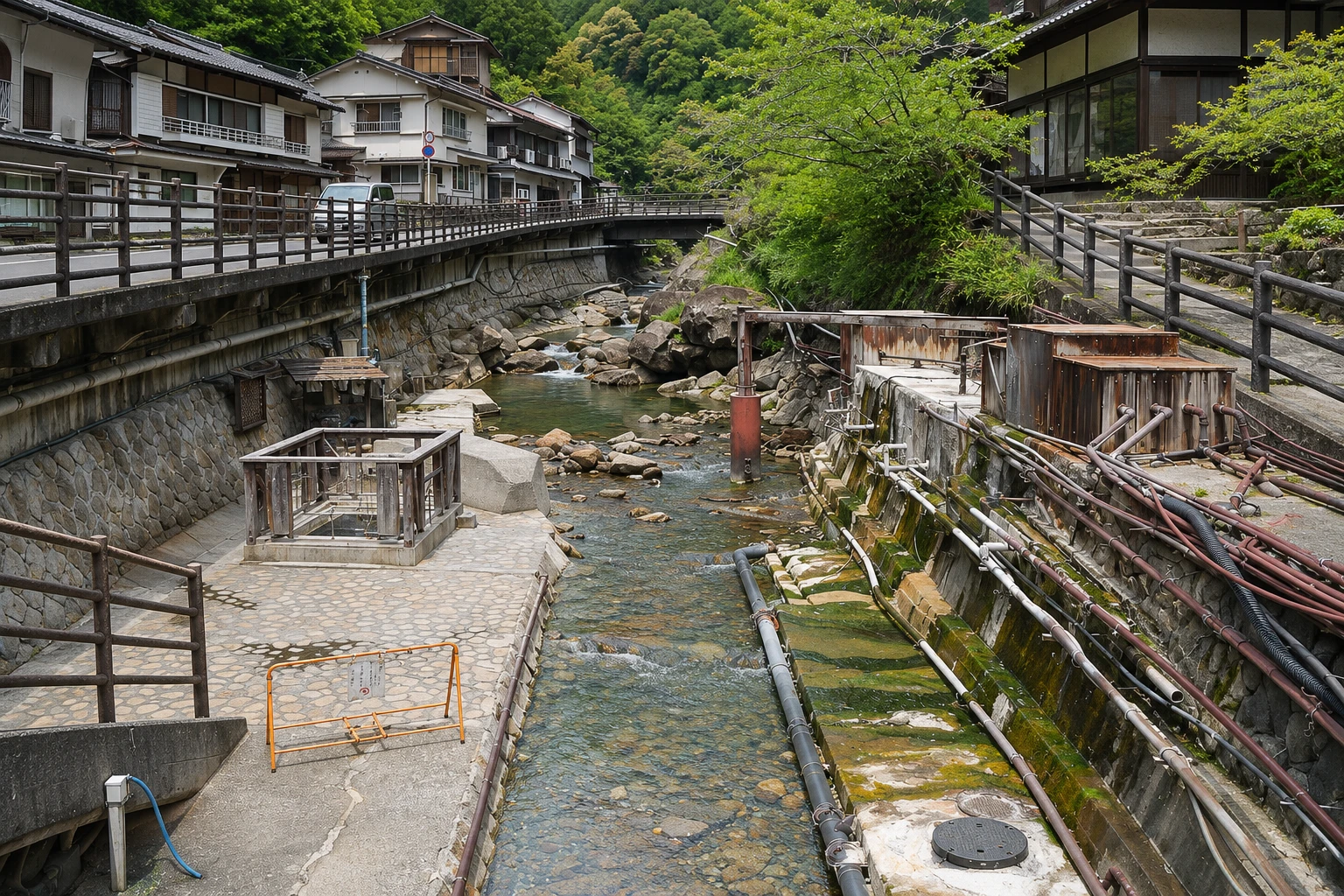
Hot spring village in a narrow valley near Hongu Taisha, used for centuries by pilgrims for purification. The Tsuboyu, a stone bath cabin by the stream, is the only hot spring listed as a World Heritage site.
Illustrative images. The pictures in this guide are illustrations based on the real place, not photographs, and may differ from it.

A look at the place
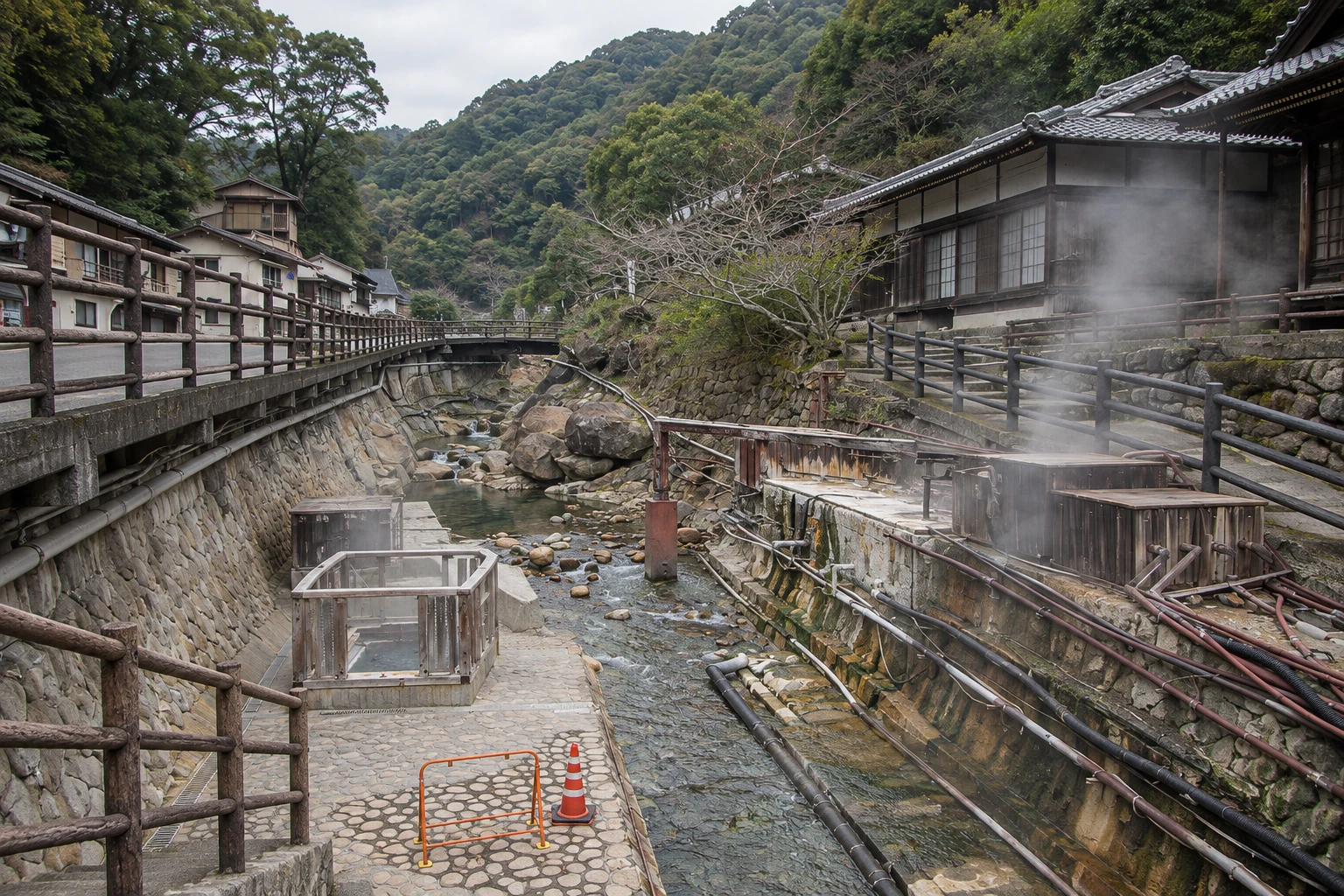
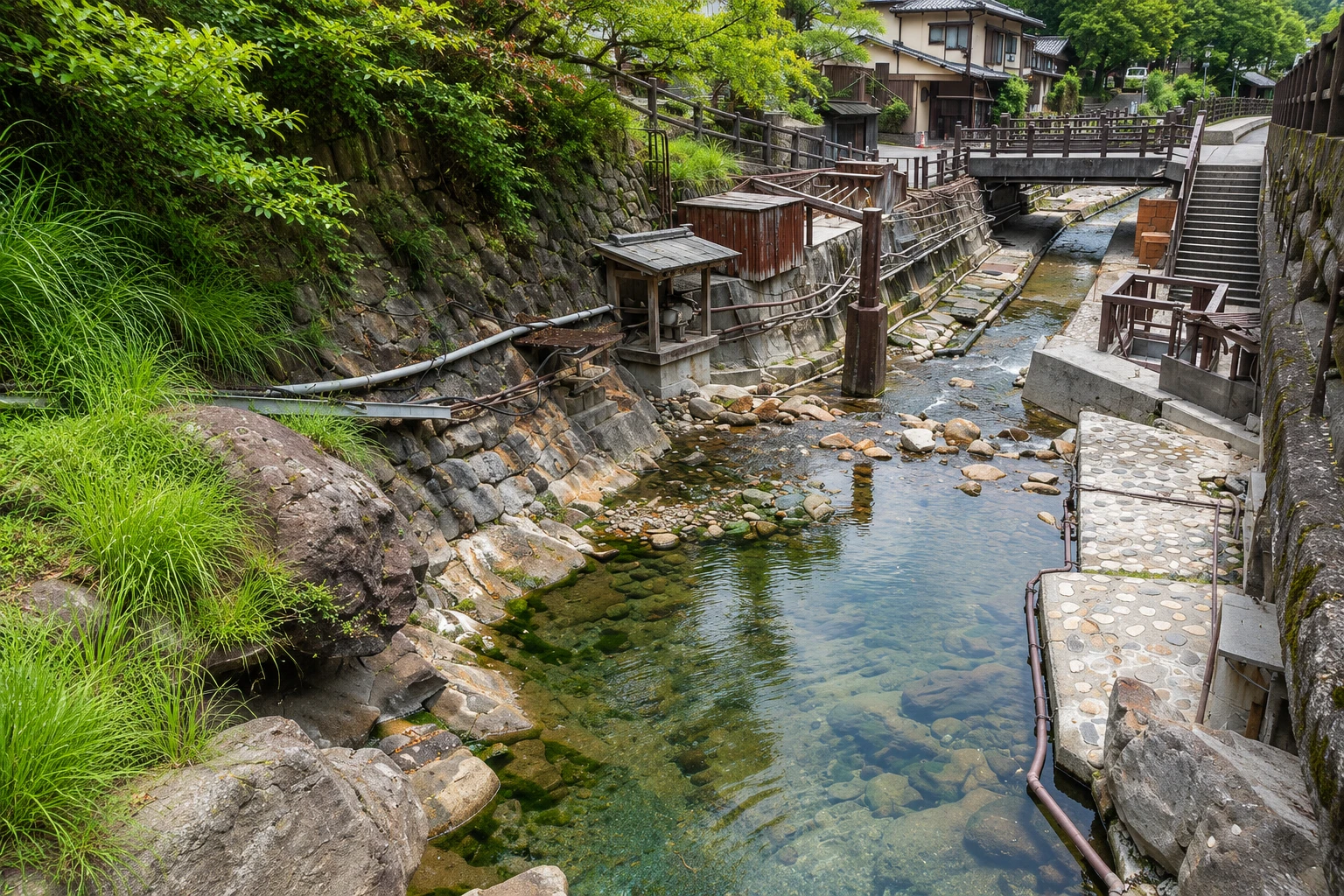
Yunomine Onsen in pictures
These pictures are illustrations based on the real place, not photographs. They may differ from the place.
Click the picture to enlarge it.
Discover
About Yunomine Onsen
Yunomine Onsen lies in a narrow valley about 4 km from Kumano Hongu Taisha and is considered one of Japan’s oldest hot springs, with a tradition of roughly 1,800 years. Pilgrims en route to the shrine stopped there for yugori, the purification bath before praying. The stream that runs through the village emits steam at several points, and the spring water emerges at about 90°C.
The Tsuboyu is a small wooden cabin over a natural stone tub in the streambed, with space for two people. It is the only hot spring bath inscribed as part of a World Heritage site in the Kii Mountains. Use is by shifts of about 30 minutes, with tokens purchased at the bathhouse next door; according to tradition, the water changes color several times a day.
Beside the stream, locals and visitors cook eggs and vegetables in a bubbling spring, the yuzutsu, and the eggs are sold in the village. The public bathhouse also has larger baths fed by the same source, and the small Toko-ji temple houses an image of the Healing Buddha supposedly formed by mineral deposits from the spring.
The village has some traditional inns and guesthouses, and is a waypoint on the Dainichi-goe, a short trail section that climbs from Hongu Taisha over the mountain. Nearby, at Kawayu Onsen, hot water wells up from the riverbed, and in winter residents dig a large pool in the river itself.
Before you go
Practical information
Cidade Turismo reviews its information regularly, but something may have changed. Check with the place before planning your trip.
How much time to set aside
One to two hours; one night to enjoy the baths.
Best time
Late afternoon or evening, after the walk, and early in the morning, when there is less of a queue for the Tsuboyu. Winter, from December to February, is the season for the river pool at Kawayu.
How to get there
It is about 4 km from Hongu Taisha: around 10 minutes by bus or about 1 hour 30 minutes on foot via the Dainichi-goe. Buses from Kii-Tanabe and from Shingu stop in the village.
Tip
Buy the Tsuboyu token at the bathhouse as soon as you arrive, because the line can exceed an hour. Bring eggs or potatoes to cook in the yuzutsu, using the nets sold in the village.
Official website
Get your questions answered
Frequently asked questions about Yunomine Onsen
How does the Tsuboyu work?
It's a stone tub for up to two people, used in shifts of about 30 minutes. The token is bought at the bathhouse next door, and there is no soap or shower inside the cabin.
Is Yunomine close to Hongu Taisha?
Yes, about 4 km: 10 minutes by bus or roughly 1h30 on foot via the Dainichi‑goe trail section.
What is the river pool at Kawayu Onsen?
In winter, usually from December to February, Kawayu residents dig a large pool in the riverbed where hot water wells up from below. It’s a few kilometers from Yunomine.
Can I use Tsuboyu if I have a tattoo?
Rules about tattoos vary and can change. Ask at the bathhouse before buying the token.
Beyond the guide


