

 Brazil
 Antarctica
 Argentina
 Bolivia
 Chile
 Colombia
 Ecuador
 Guyana
 French Guiana
 Falkland Islands (Malvinas)
 Paraguay
 Peru
 Suriname
 Uruguay
 Venezuela
 Germany
 Austria
 Belgium
 Croatia
 Denmark
 Slovakia
 Slovenia
 Spain
 Finland
 France
 Greece
 the Netherlands
 Hungary
 Ireland
 Iceland
 Italy
 Luxembourg
 Norway
 Poland
 Portugal
 the United Kingdom
 the Czech Republic
 Sweden
 Switzerland
 Turkey
 Bermuda
 Canada
 the United States
 Greenland
 Mexico
 Saint Pierre and Miquelon
 the Dominican Republic
 South Africa
 Egypt
 Australia
 Fiji
 New Zealand
 Papua New Guinea
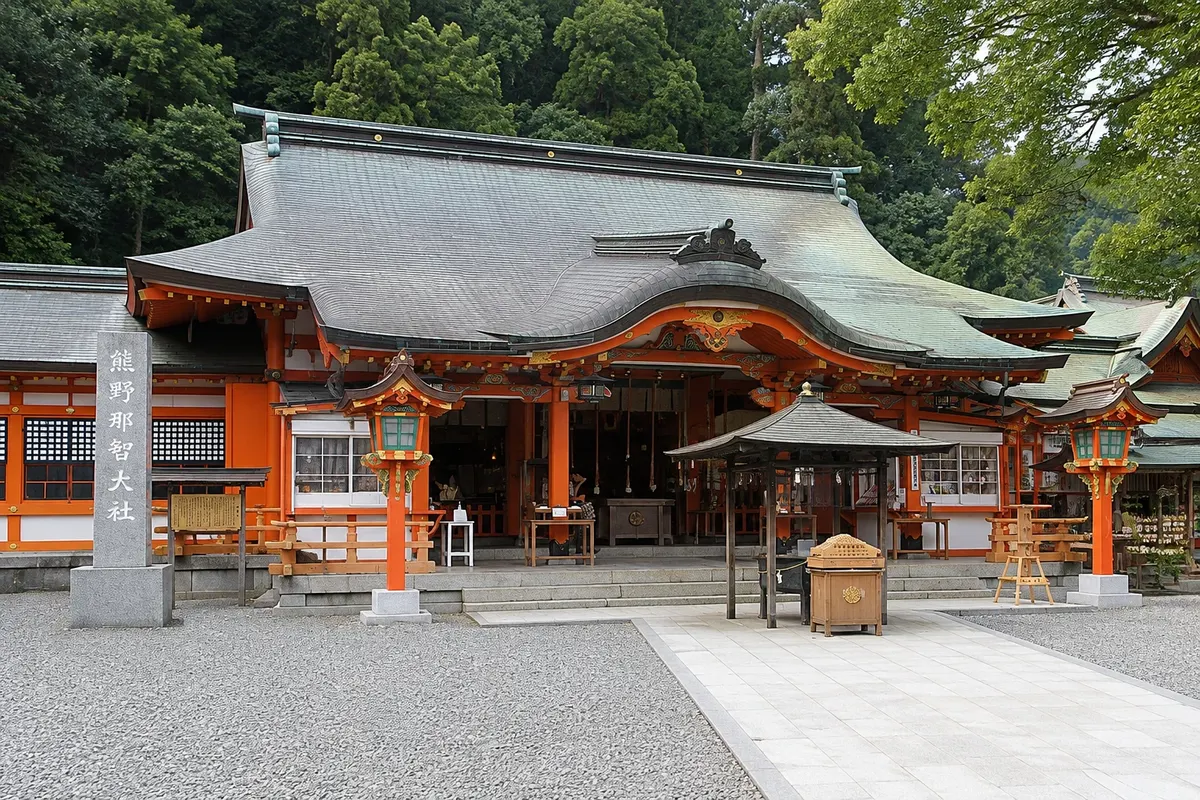
Shrine · Nachikatsuura, Wakayama
Kumano Nachi Taisha and Seiganto-ji
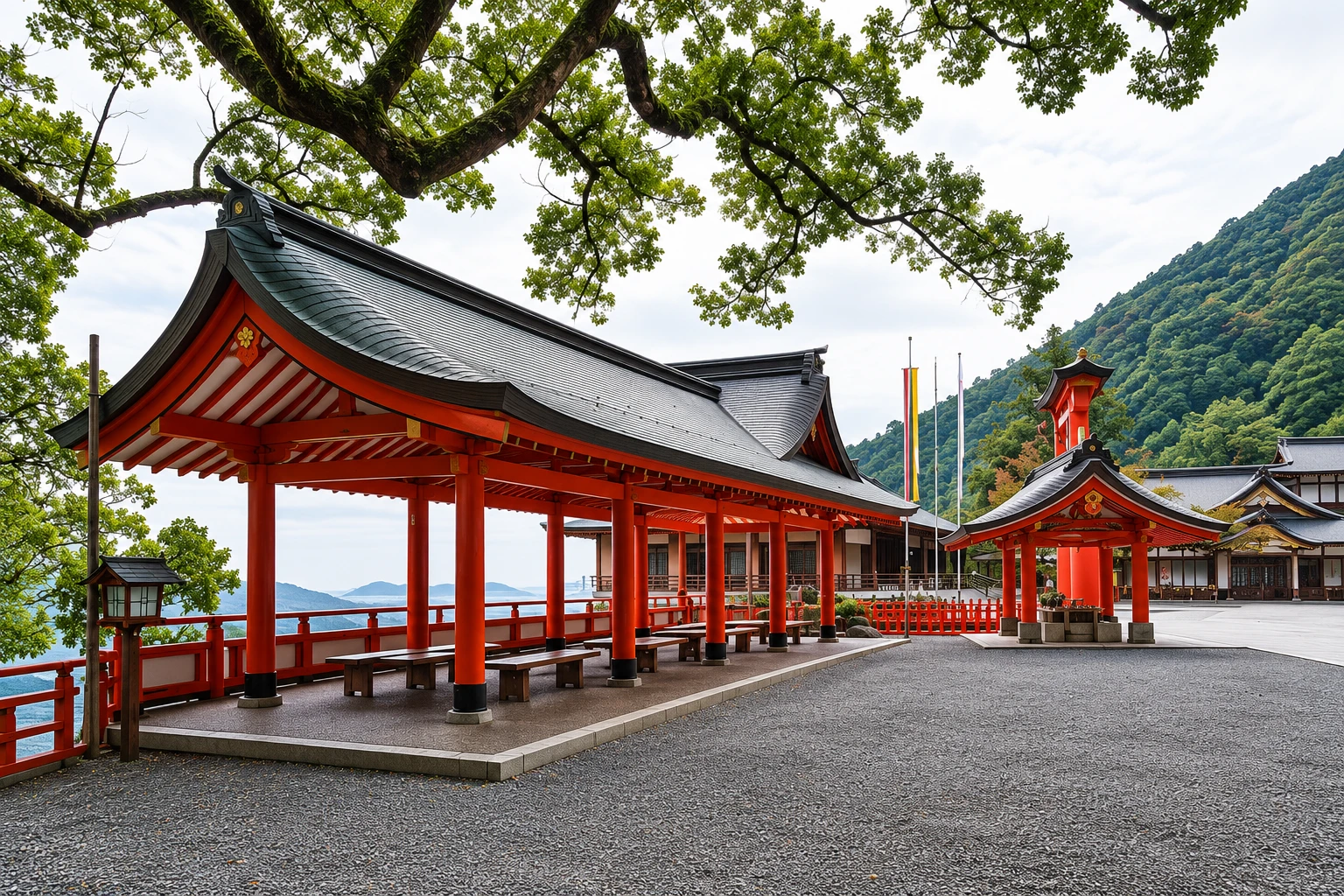
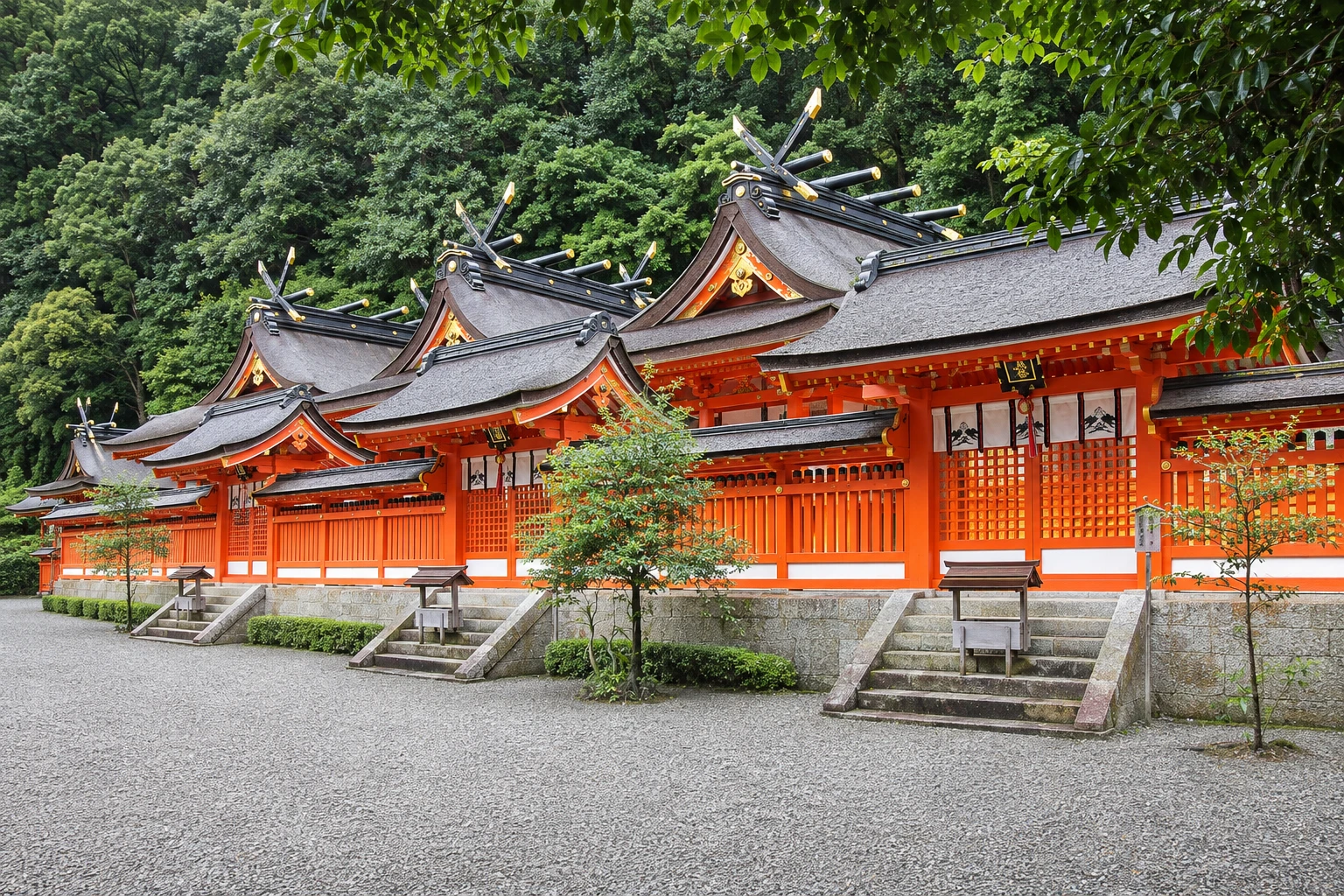
A Shinto shrine and a Buddhist temple side by side on the slope of Mount Nachi, one of the three great shrines of Kumano. The three-story red pagoda of Seiganto-ji, with Nachi Falls behind it, is the region’s best-known view.
Illustrative images. The pictures in this guide are illustrations based on the real place, not photographs, and may differ from it.

A look at the place
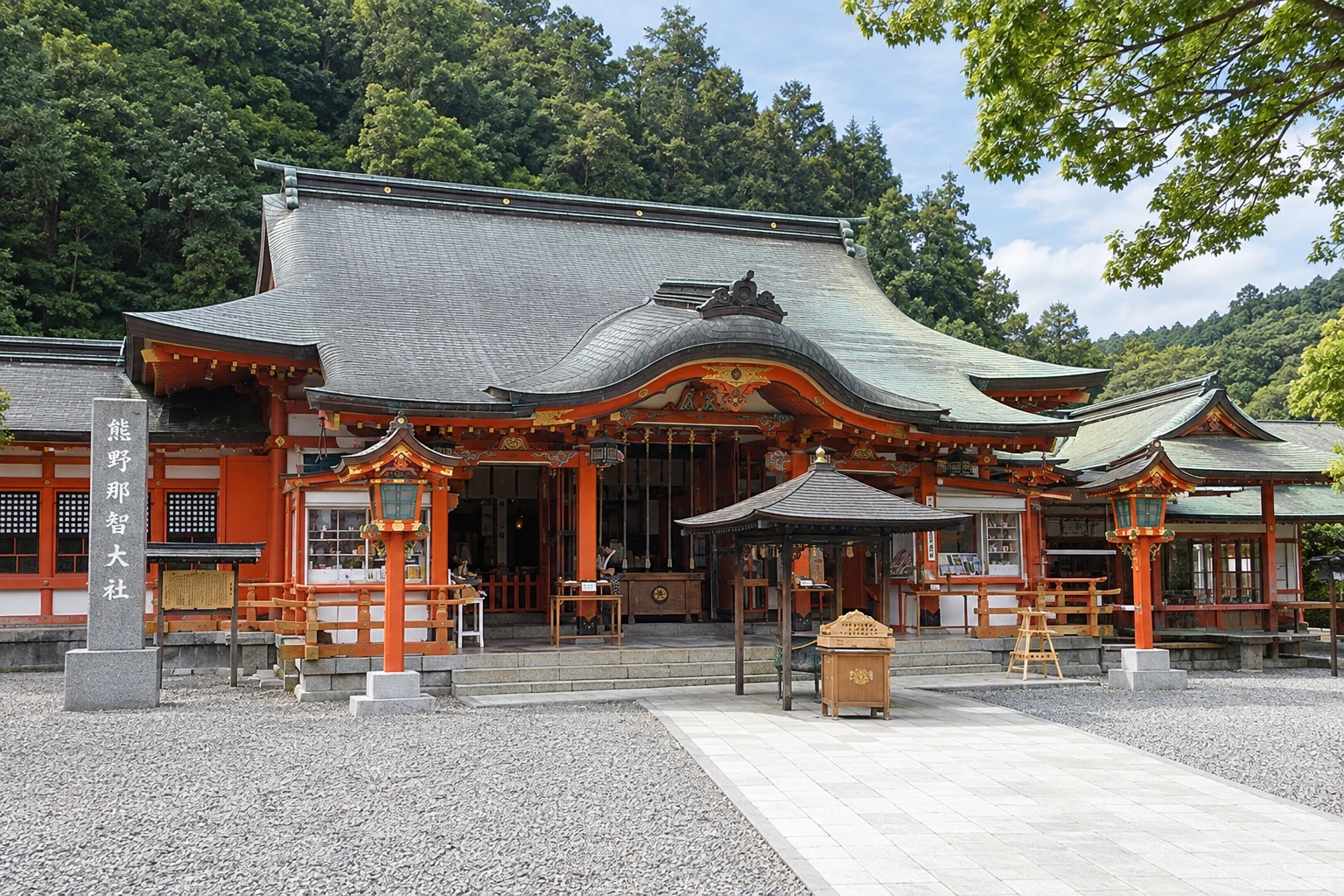
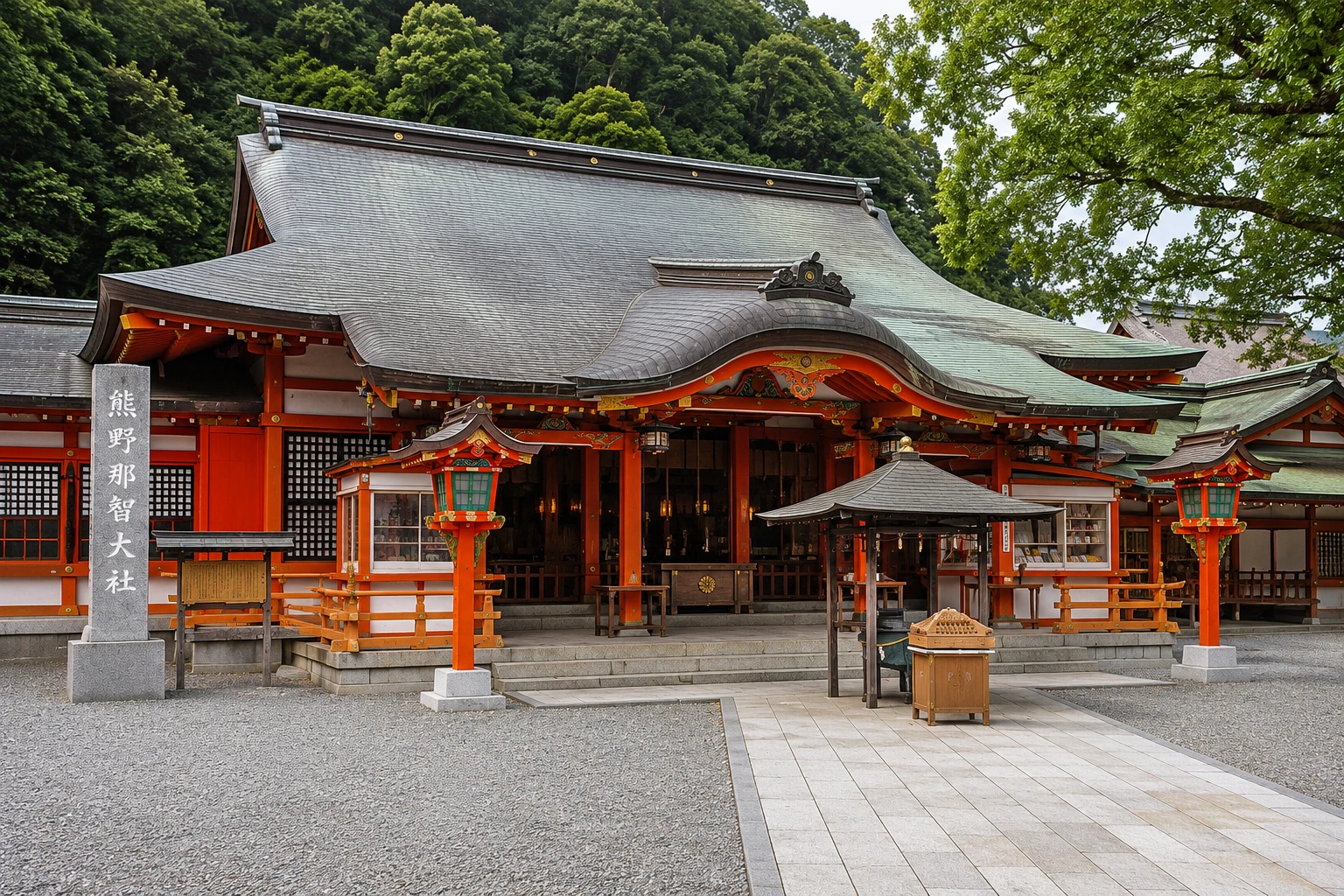
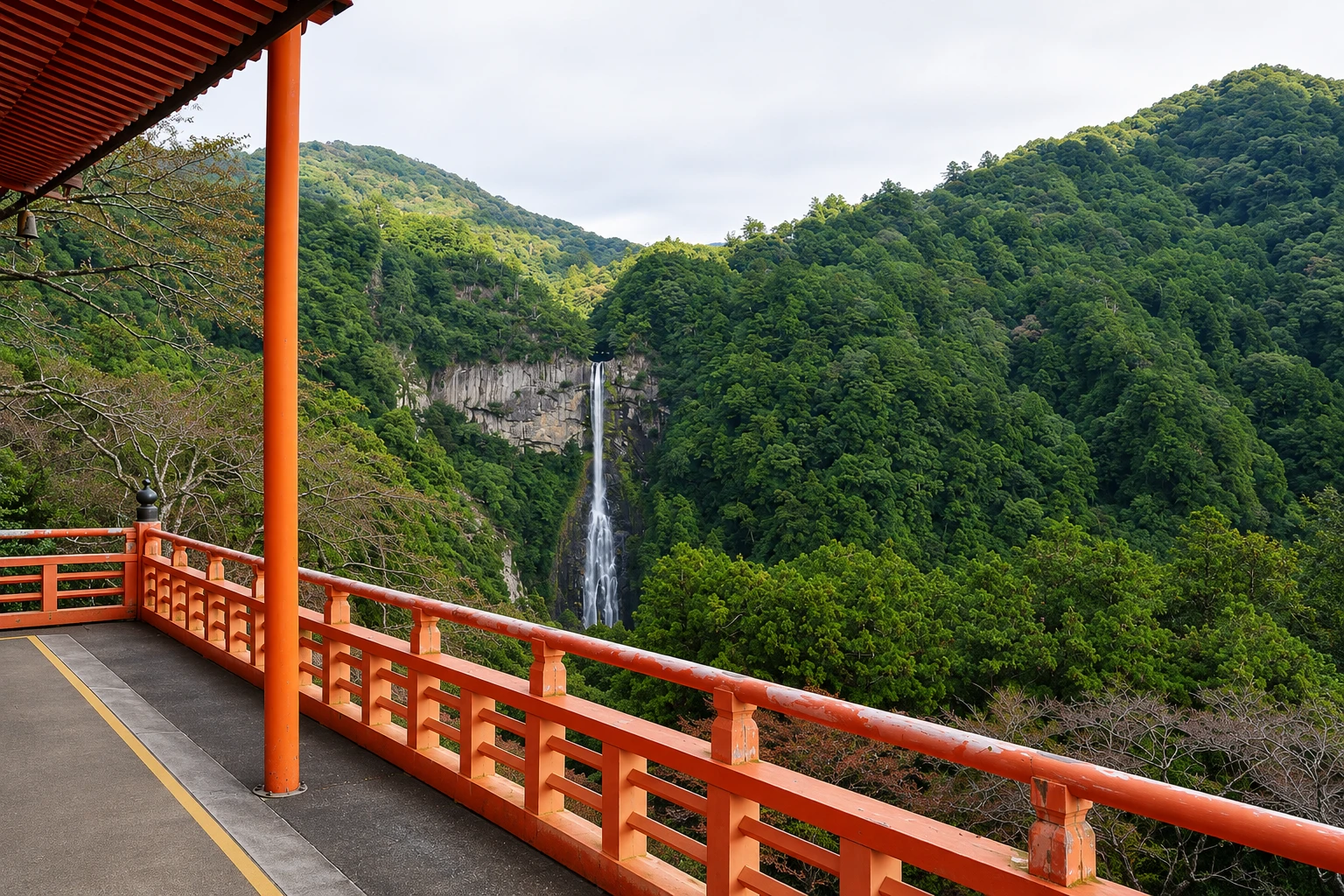
Kumano Nachi Taisha and Seiganto-ji in pictures
These pictures are illustrations based on the real place, not photographs. They may differ from the place.
Click the picture to enlarge it.
Discover
About Kumano Nachi Taisha and Seiganto-ji
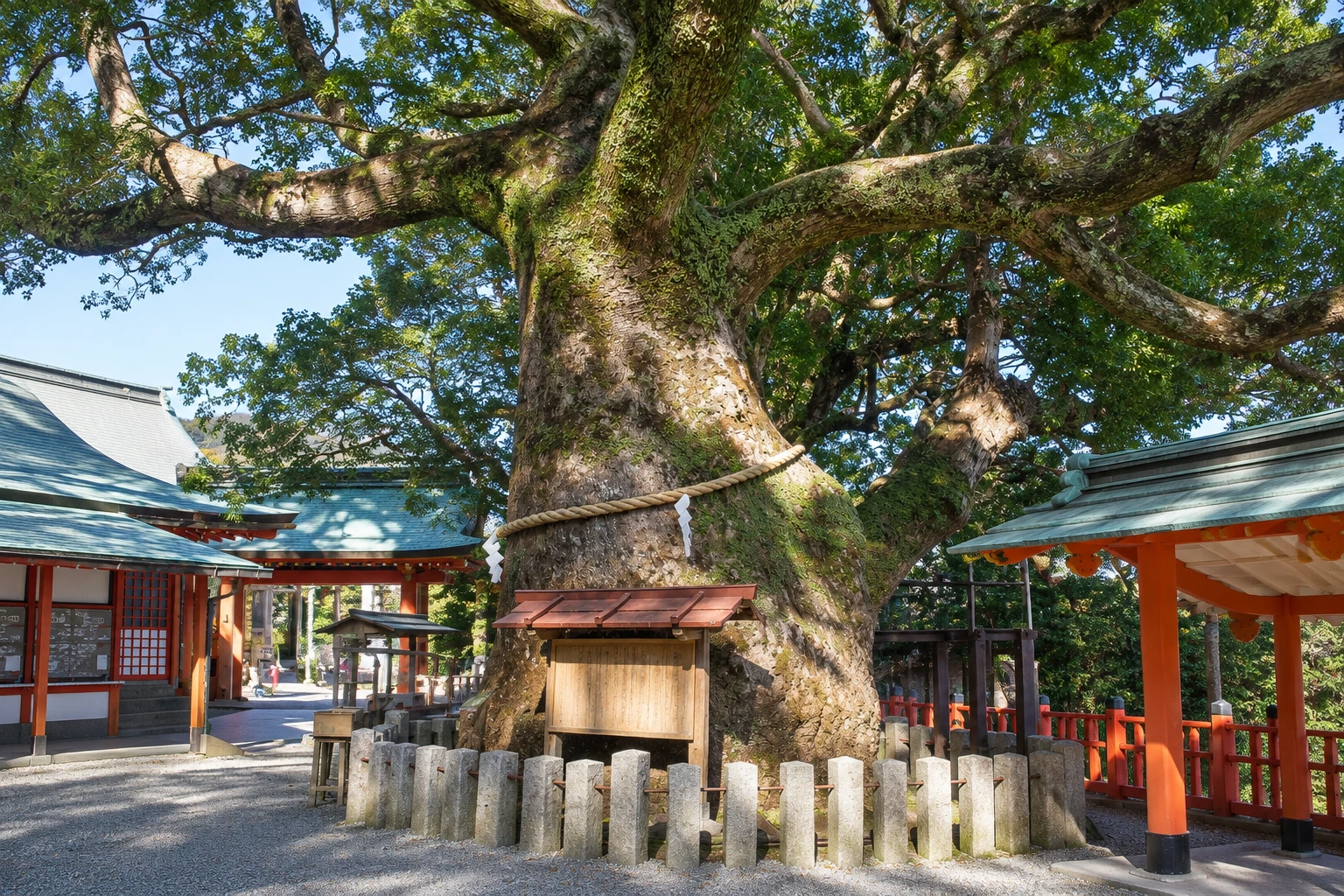
Kumano Nachi Taisha sits on the slope of Mount Nachi at about 500 meters elevation and originated from the worship of Nachi Falls, which can be seen from the courtyard. It is one of the three great shrines of Kumano, with buildings painted red and a large bell. Beside it, without a clear separation, is Seiganto-ji, a Buddhist temple that is the first of the 33 temples of the Saigoku pilgrimage, one of Japan’s oldest.
The coexistence of the two recalls the time when Shinto and Buddhism were practiced together in Kumano, before the separation imposed by the government at the end of the 19th century. The main hall of Seiganto-ji, rebuilt at the end of the 16th century by order of Toyotomi Hideyoshi, is the oldest building in the Kumano area. Behind it, the three-story red pagoda, rebuilt in the 20th century, stands in front of the waterfall in the most photographed framing of Kumano.
The traditional approach is the Daimon-zaka, a stone stairway of about 600 meters, part of the Kumano Kodo, lined with cedar trees several hundred years old, with two twin cedars at the entrance. The climb takes 30 to 40 minutes and ends at the shopping street that leads to the shrine. Heian-period costumes are rented there for photos.
From the shrine courtyard you can see the sea in the distance. From the pagoda, a trail descends to Hiro-jinja at the base of the waterfall.
Before you go
Practical information
Cidade Turismo reviews its information regularly, but something may have changed. Check with the place before planning your trip.
How much time to set aside
2 to 3 hours, including the Daimon-zaka climb and the waterfall.
Best time
In the morning, when the light falls on the waterfall and pagoda and there are fewer groups. The climb is more comfortable from March to May and from October to November. On July 14, the fire festival fills the area.
How to get there
From Kii-Katsuura Station, take a bus to Daimon-zaka to climb the stairway, or to Nachisan, closer to the shrine, in about 25 to 30 minutes.
Tip
Climb via the Daimon-zaka and return by bus from the stop near the waterfall. For the pagoda-with-waterfall photo, go to the terrace behind the main hall of Seiganto-ji.
Official website
Get your questions answered
Frequently asked questions about Kumano Nachi Taisha and Seiganto-ji
What is Daimon-zaka?
A stone stairway about 600 meters long between ancient cedars, part of the Kumano Kodo, that climbs to Nachi Taisha in 30 to 40 minutes.
Is Nachi Taisha Buddhist or Shinto?
Nachi Taisha is Shinto; Seiganto-ji, next to it, is Buddhist. The two have coexisted since the time when the two religions were practiced together in Kumano.
Is there an entrance fee for Nachi Taisha?
There is no charge to enter the shrine or the courtyard of Seiganto-ji. The interior of the pagoda and some areas have separate fees.
Where can I photograph the pagoda with Nachi Waterfall?
On the terrace behind the main hall of Seiganto-ji, where the red pagoda appears in front of the waterfall.
Beyond the guide


