

 Brazil
 Antarctica
 Argentina
 Bolivia
 Chile
 Colombia
 Ecuador
 Guyana
 French Guiana
 Falkland Islands (Malvinas)
 Paraguay
 Peru
 Suriname
 Uruguay
 Venezuela
 Germany
 Austria
 Belgium
 Croatia
 Denmark
 Slovakia
 Slovenia
 Spain
 Finland
 France
 Greece
 the Netherlands
 Hungary
 Ireland
 Iceland
 Italy
 Luxembourg
 Norway
 Poland
 Portugal
 the United Kingdom
 the Czech Republic
 Sweden
 Switzerland
 Turkey
 Bermuda
 Canada
 the United States
 Greenland
 Mexico
 Saint Pierre and Miquelon
 the Dominican Republic
 South Africa
 Egypt
 Australia
 Fiji
 New Zealand
 Papua New Guinea
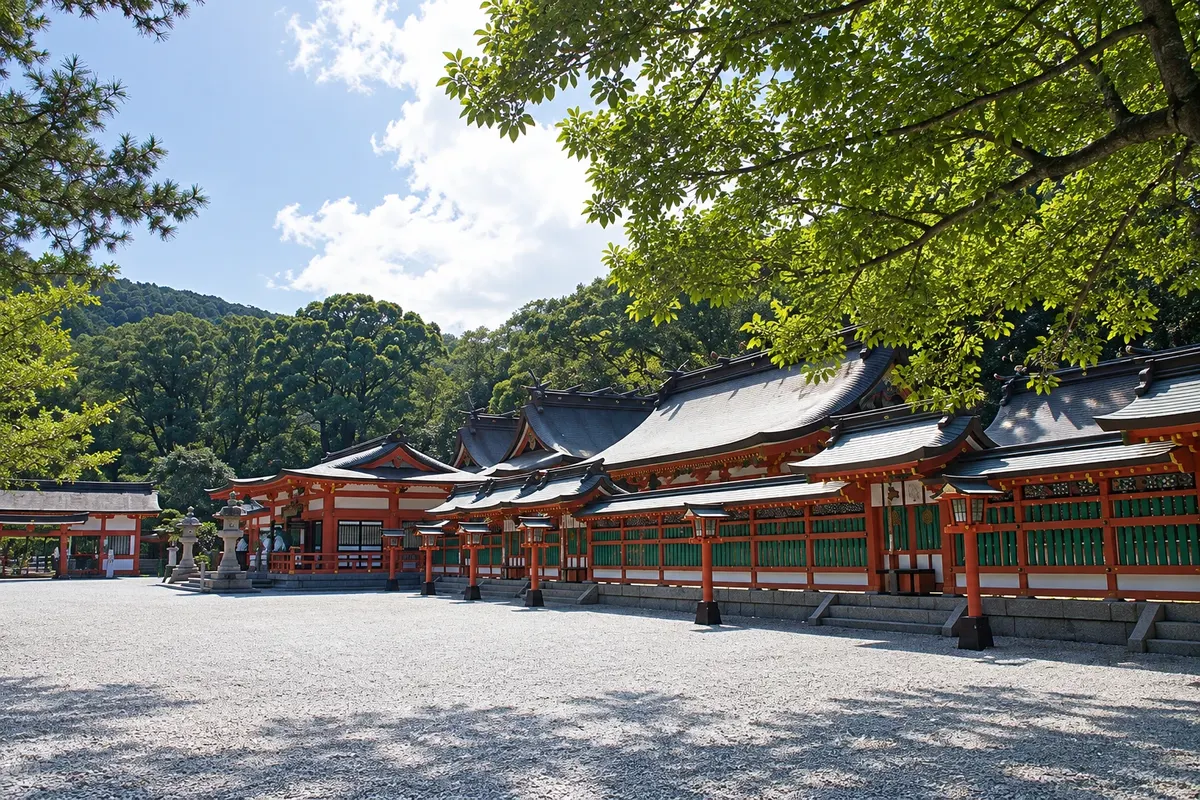
Shrine · Nachikatsuura, Wakayama
Kumano Hayatama Taisha
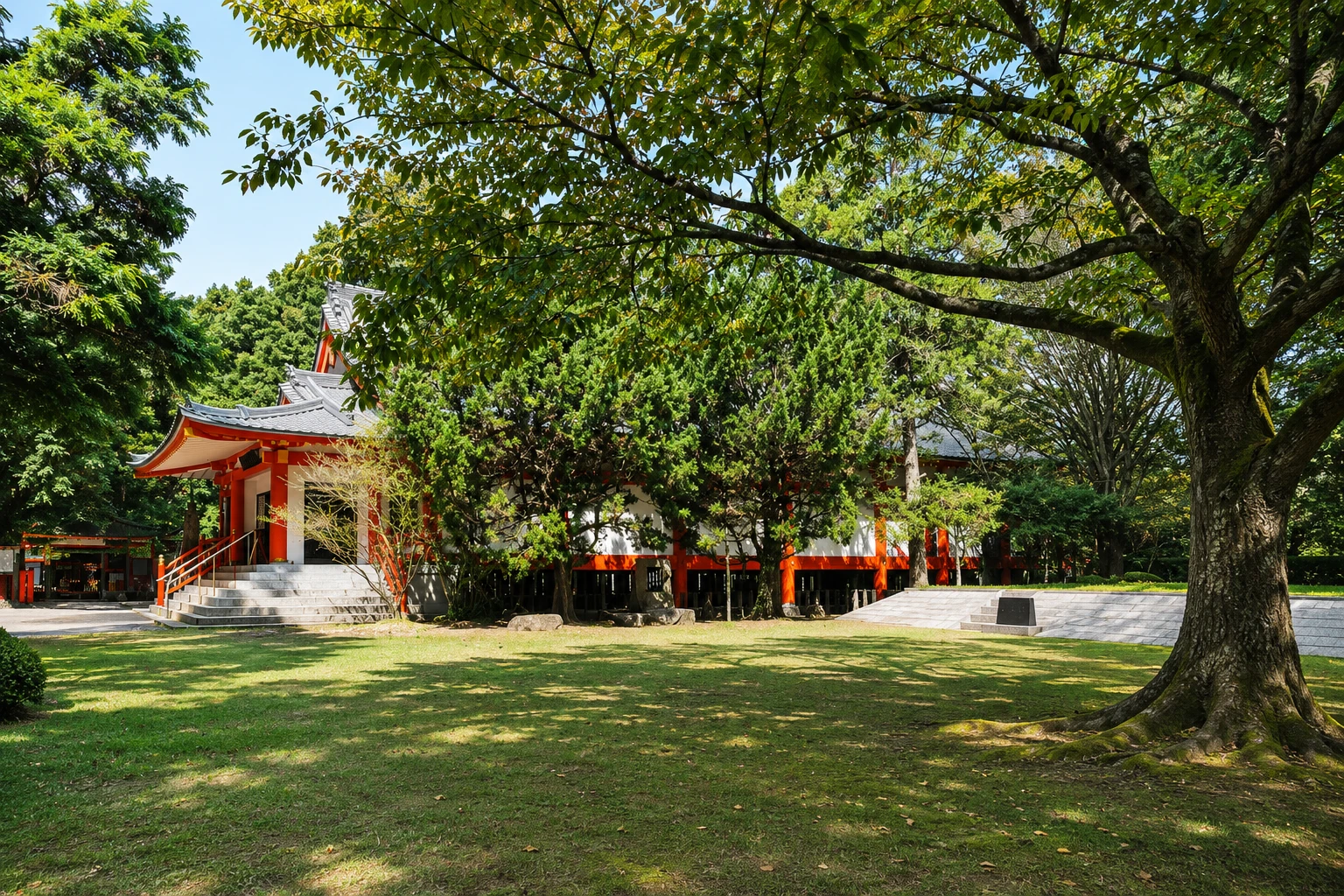
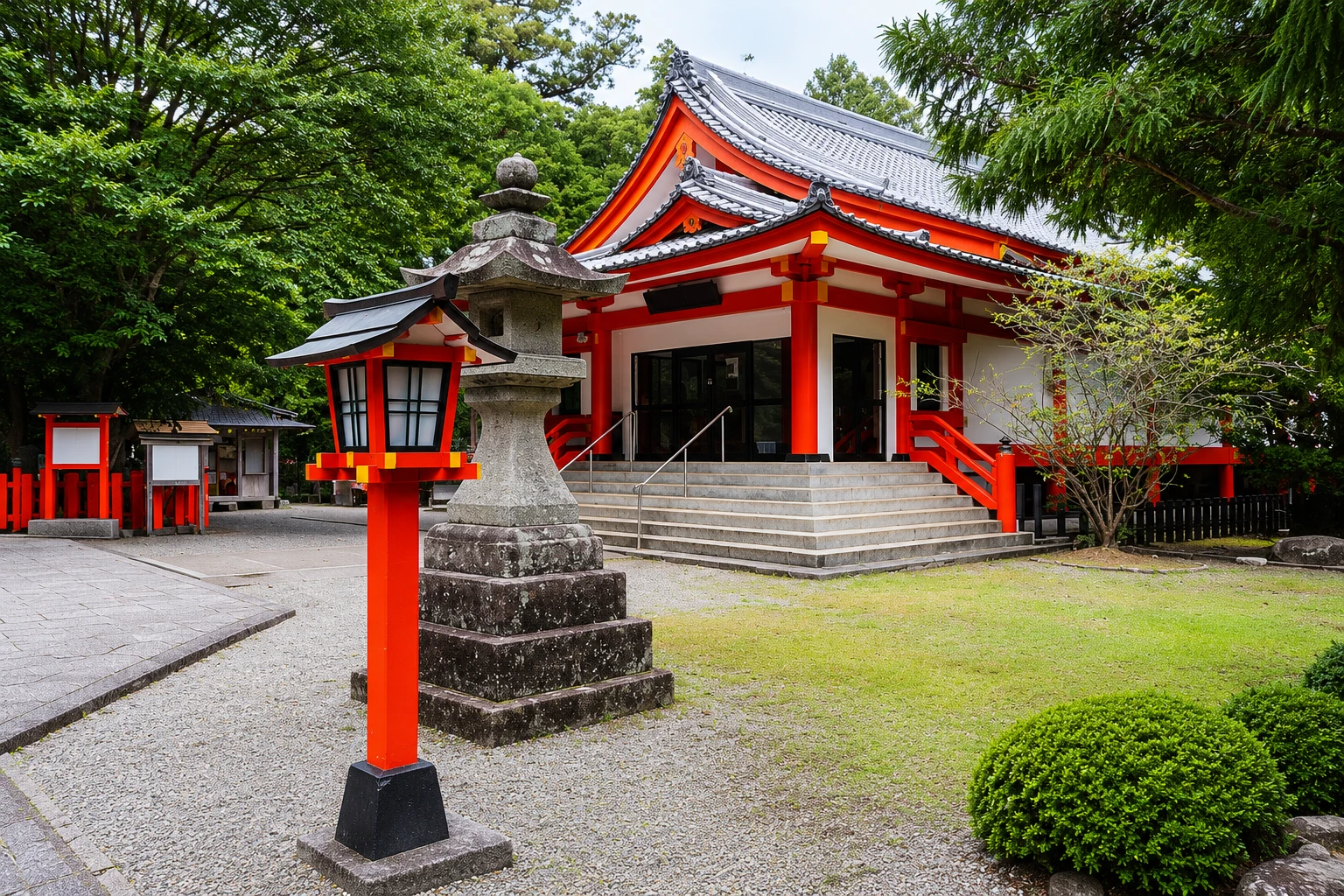
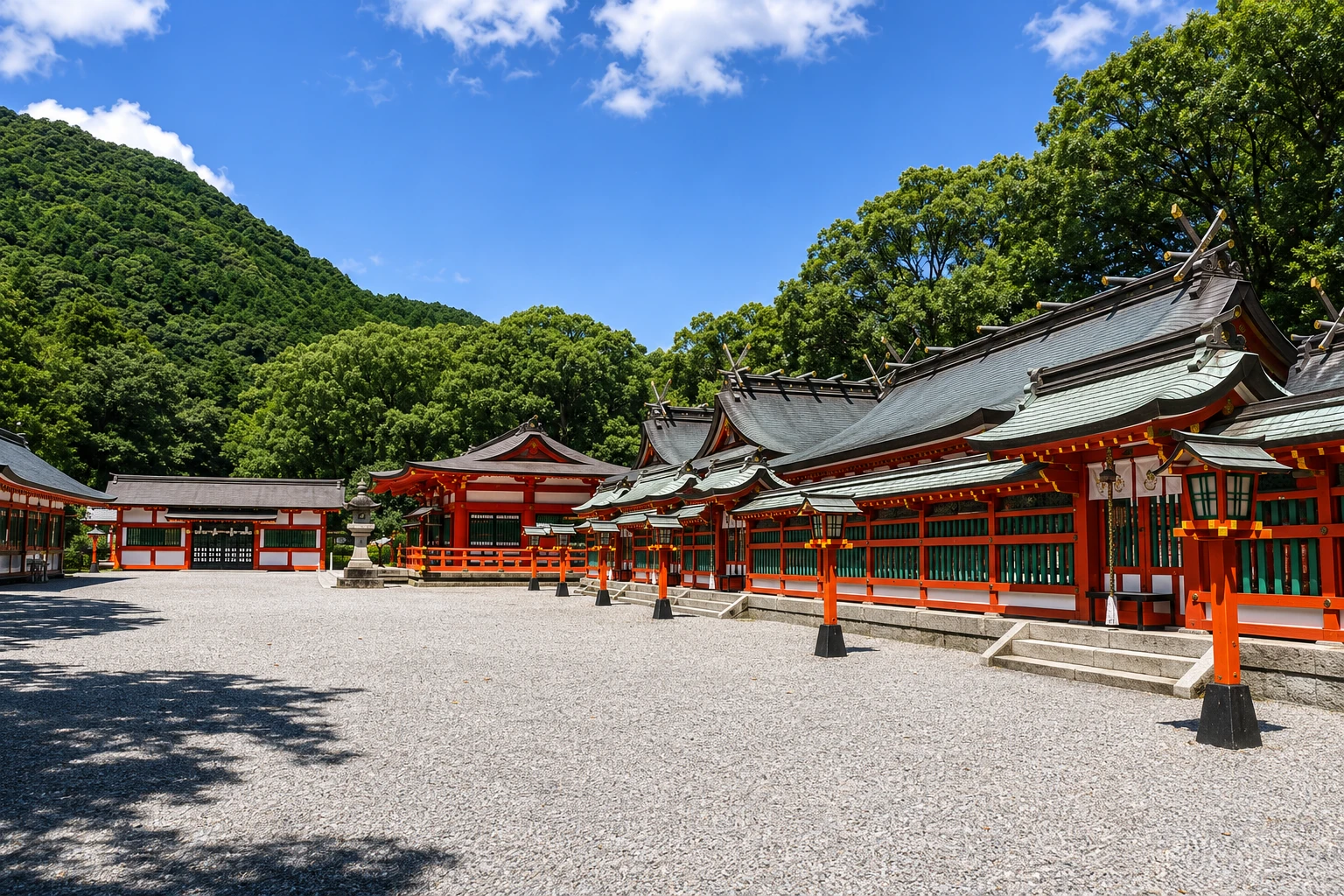
One of the three great shrines of Kumano, in Shingu at the mouth of the Kumano River, with buildings painted bright red and a nagi tree about a thousand years old. Nearby, the Gotobiki-iwa rock of Kamikura Shrine dominates the town.
Illustrative images. The pictures in this guide are illustrations based on the real place, not photographs, and may differ from it.

A look at the place
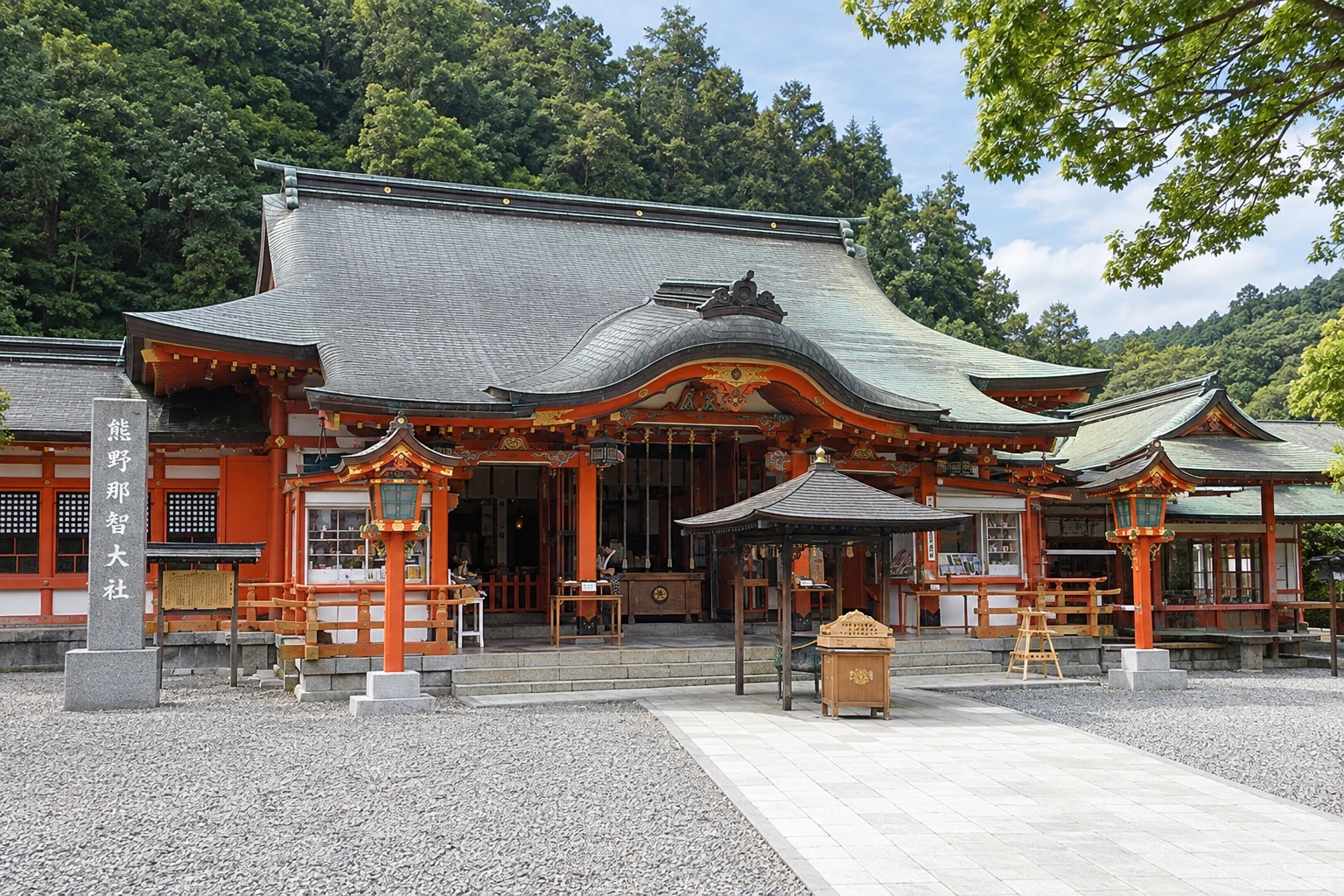
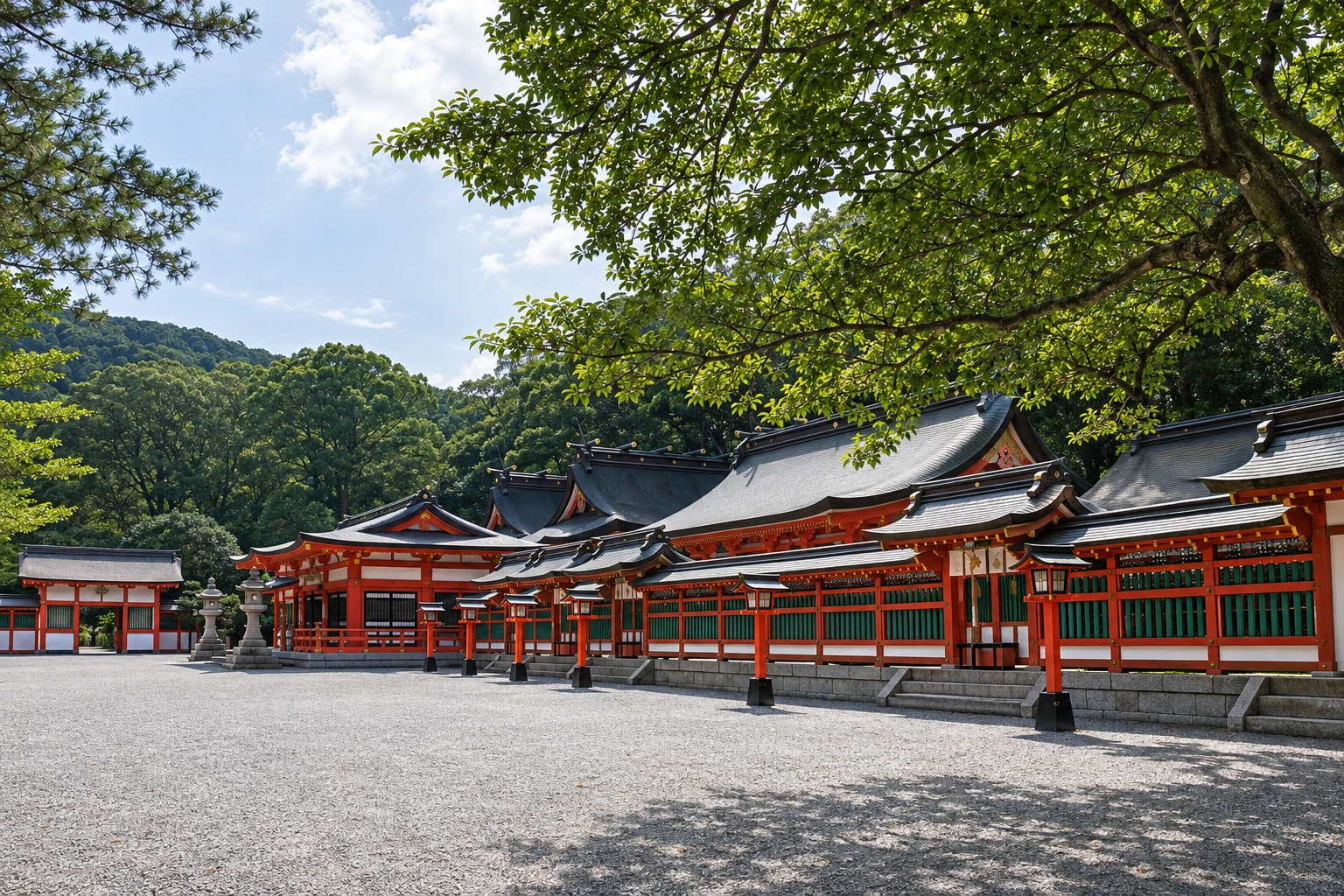
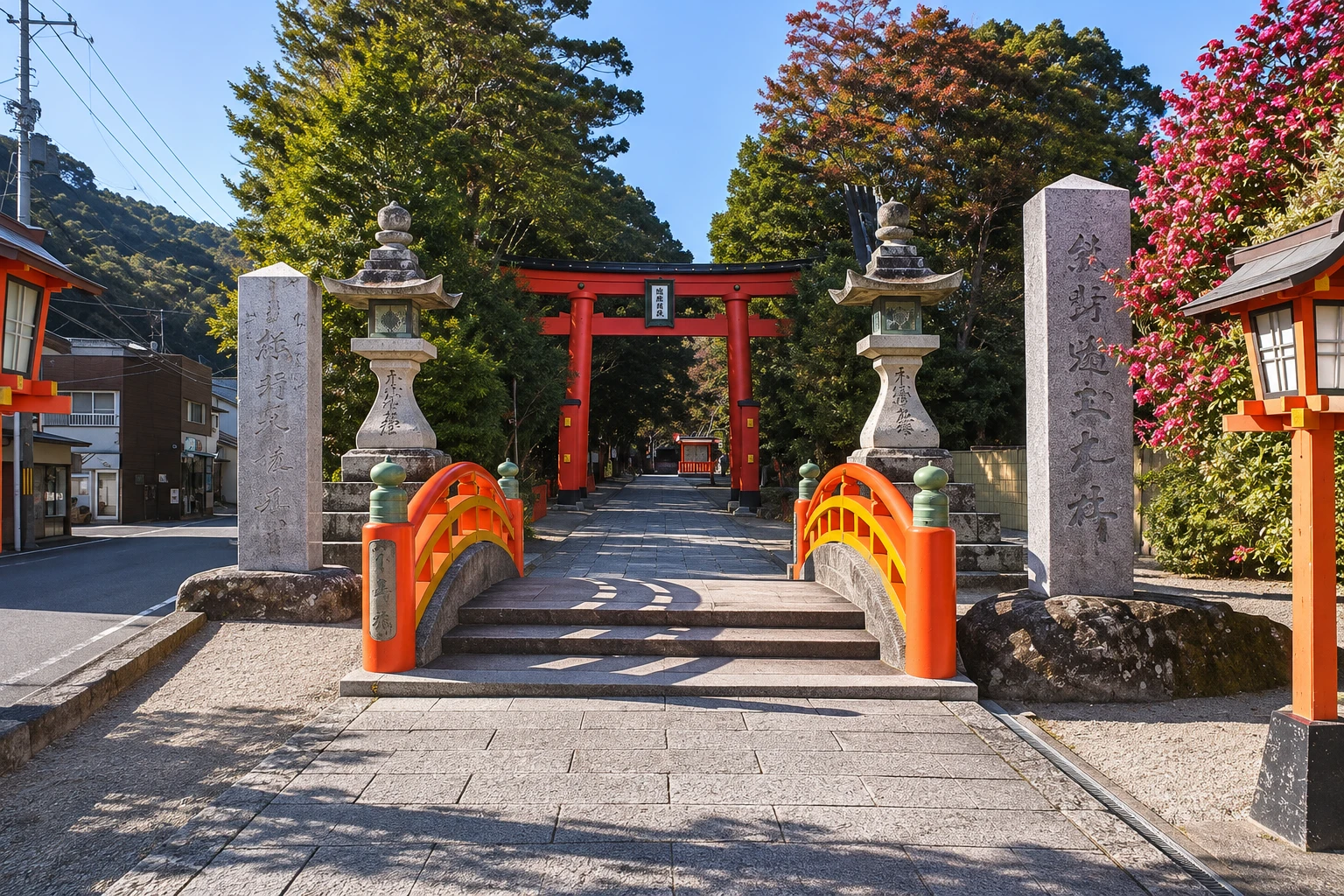
Kumano Hayatama Taisha in pictures
These pictures are illustrations based on the real place, not photographs. They may differ from the place.
Click the picture to enlarge it.
Discover
About Kumano Hayatama Taisha
Kumano Hayatama Taisha is in Shingu, about 15 km from Nachikatsuura, near the mouth of the Kumano River. It is one of the three great Kumano shrines, alongside Hongu Taisha and Nachi Taisha, and the name Shingu, "new shrine," comes from it: according to tradition, the deities of Kumano first descended on the Gotobiki-iwa rock on the summit of the neighboring mountain, and later were worshiped at the new shrine on the plain.
The buildings, rebuilt in the 20th century after a fire, are painted bright red with white details, in a style that contrasts with the dark wood of Hongu Taisha. In the courtyard grows a nagi tree about a thousand years old, considered a natural treasure; its leaves, hard to tear, are used as amulets to protect relationships and journeys. The shrine also houses a collection of objects donated by the court, displayed in the treasure museum.
About 1 km away is Kamikura Shrine, atop Mount Gongen, where the large Gotobiki-iwa rock, shaped like a frog, balances on the slope above the town. The ascent is via a staircase of 538 irregular stone steps, steep and without a handrail for much of the way, and the view from the top covers Shingu, the river and the sea. On February 6, at the Oto Matsuri festival, hundreds of men dressed in white run down that stairway carrying torches.
Shingu is a stop on the coastal train and on the buses that go to Hongu, which makes it possible to visit the three great shrines in sequence.
Before you go
Practical information
Cidade Turismo reviews its information regularly, but something may have changed. Check with the place before planning your trip.
How much time to set aside
45 minutes to 1 hour; plus 1 hour for Kamikura Shrine.
Best time
In the morning, when the red of the buildings has good light. For the climb to Kamikura, prefer dry days, because the stone steps become slippery. The Oto Matsuri festival is on February 6.
How to get there
About 15 minutes on foot from Shingu Station, which is reached by train from Kii-Katsuura in about 20 minutes. Buses from Hongu also stop in Shingu.
Tip
Climb to Kamikura Shrine only with firm footwear and your hands free: the staircase is steep and irregular. Buy a nagi leaf as a keepsake, sold at the shrine.
Official website
Get your questions answered
Frequently asked questions about Kumano Hayatama Taisha
Where is Kumano Hayatama Taisha located?
In Shingu, about a 15-minute walk from Shingu Station and about 15 km from Nachikatsuura.
What is the Gotobiki-iwa rock?
A large rock on the slope of Mount Gongen at Kamikura Shrine where, according to tradition, the deities of Kumano first descended. It is reached by a staircase of 538 steps.
Is there an entrance fee for Hayatama Taisha?
There is no charge to enter the shrine. The treasure hall requires a separate ticket.
Can you see the three great Kumano shrines in one day?
It is possible by car if you start early, or by bus and train with a well-planned day. With public transport, two days make the visit more relaxed.
Beyond the guide


