

 Brazil
 Antarctica
 Argentina
 Bolivia
 Chile
 Colombia
 Ecuador
 Guyana
 French Guiana
 Falkland Islands (Malvinas)
 Paraguay
 Peru
 Suriname
 Uruguay
 Venezuela
 Germany
 Austria
 Belgium
 Croatia
 Denmark
 Slovakia
 Slovenia
 Spain
 Finland
 France
 Greece
 the Netherlands
 Hungary
 Ireland
 Iceland
 Italy
 Luxembourg
 Norway
 Poland
 Portugal
 the United Kingdom
 the Czech Republic
 Sweden
 Switzerland
 Turkey
 Bermuda
 Canada
 the United States
 Greenland
 Mexico
 Saint Pierre and Miquelon
 the Dominican Republic
 South Africa
 Egypt
 Australia
 Fiji
 New Zealand
 Papua New Guinea
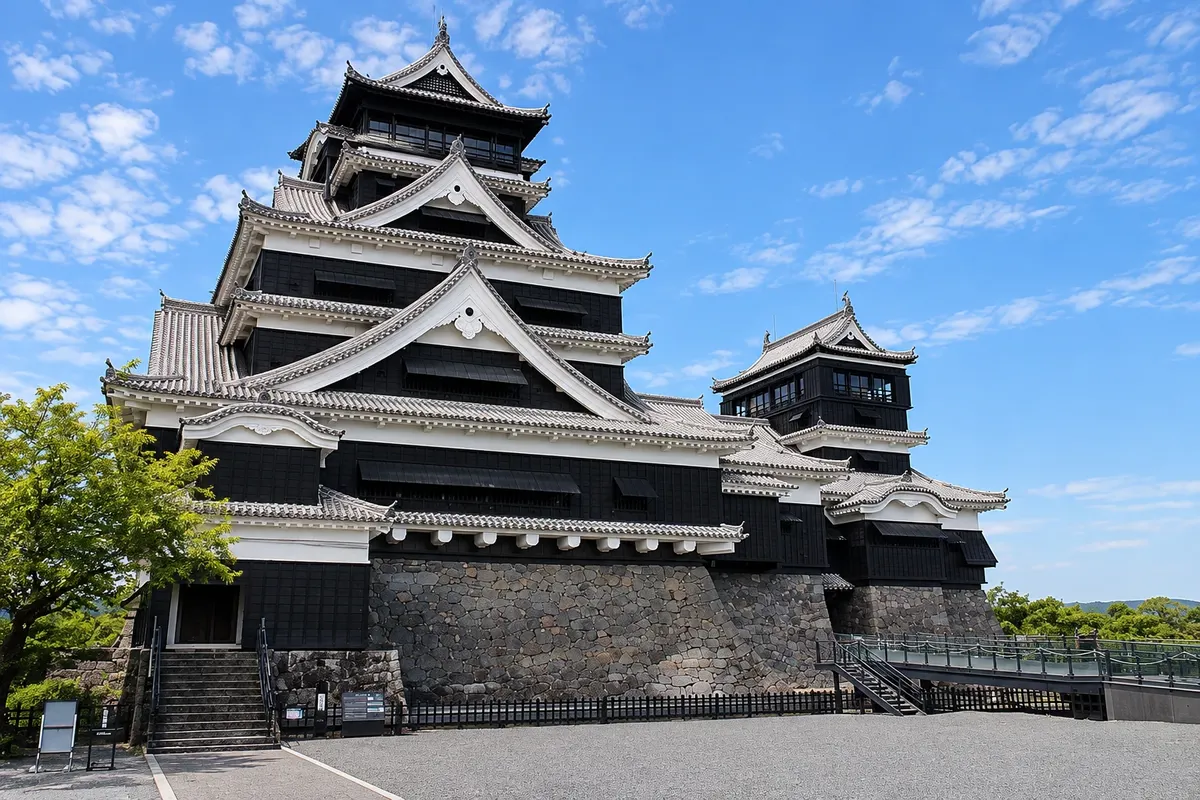
Castle · Kumamoto, Kumamoto
Kumamoto Castle
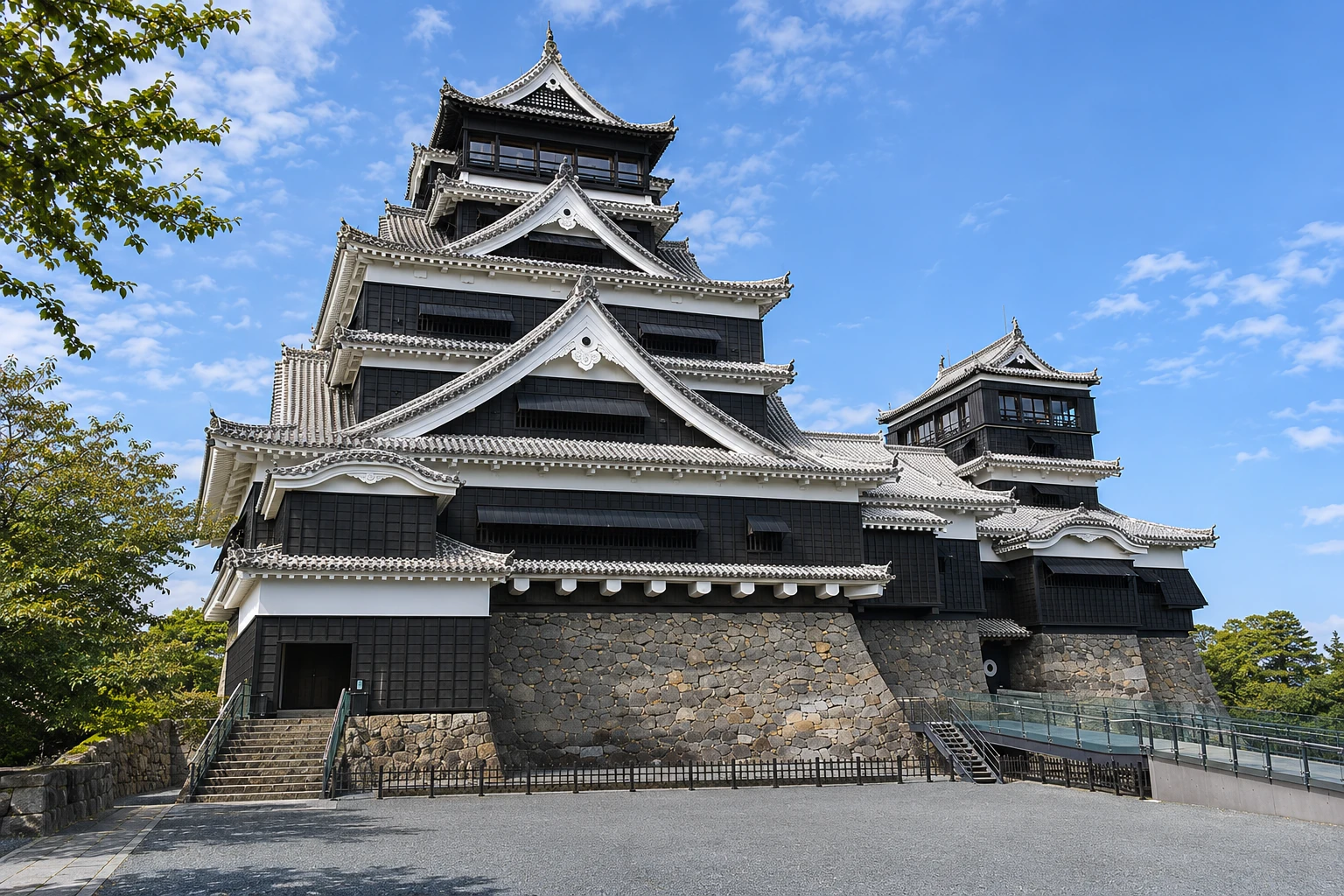
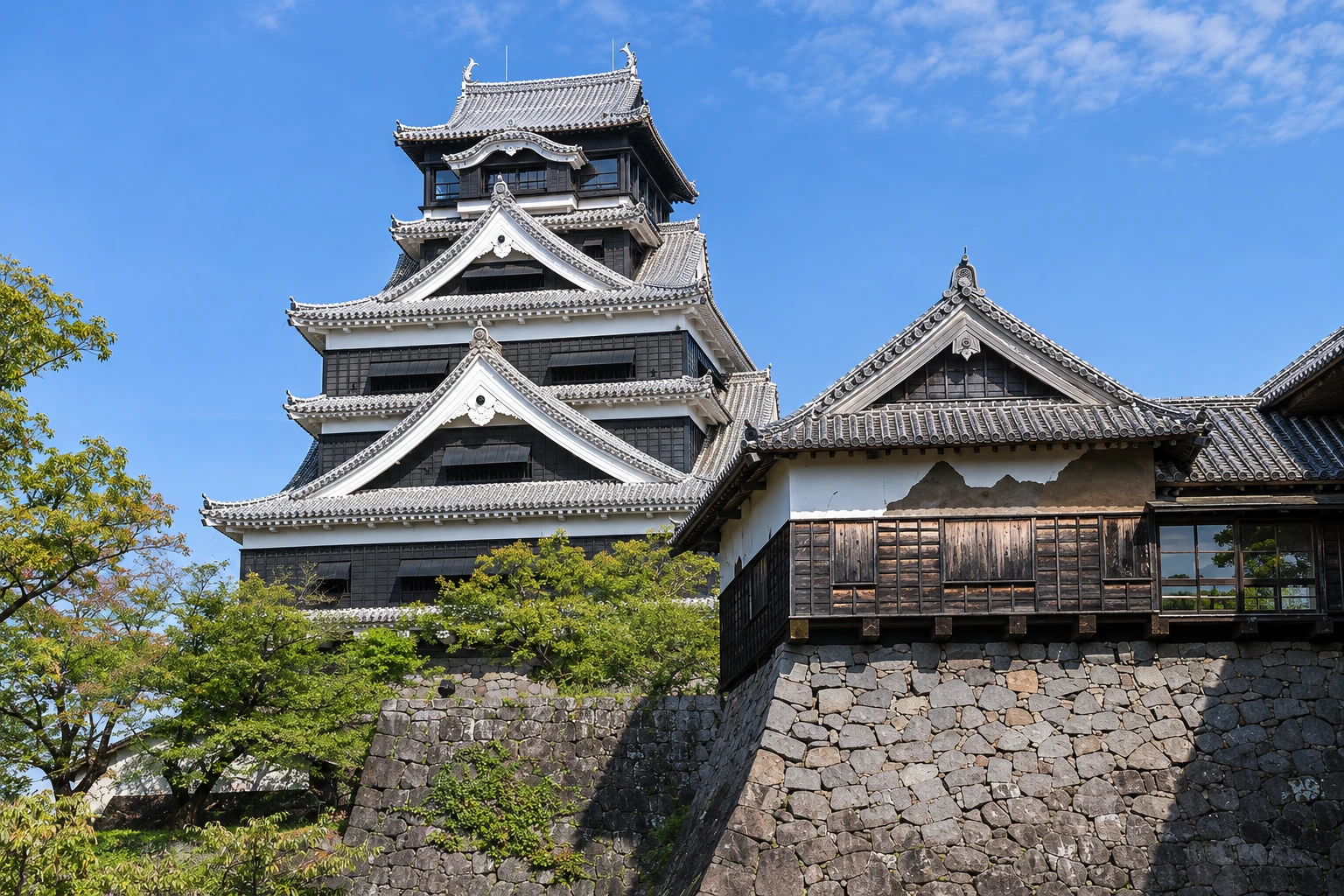
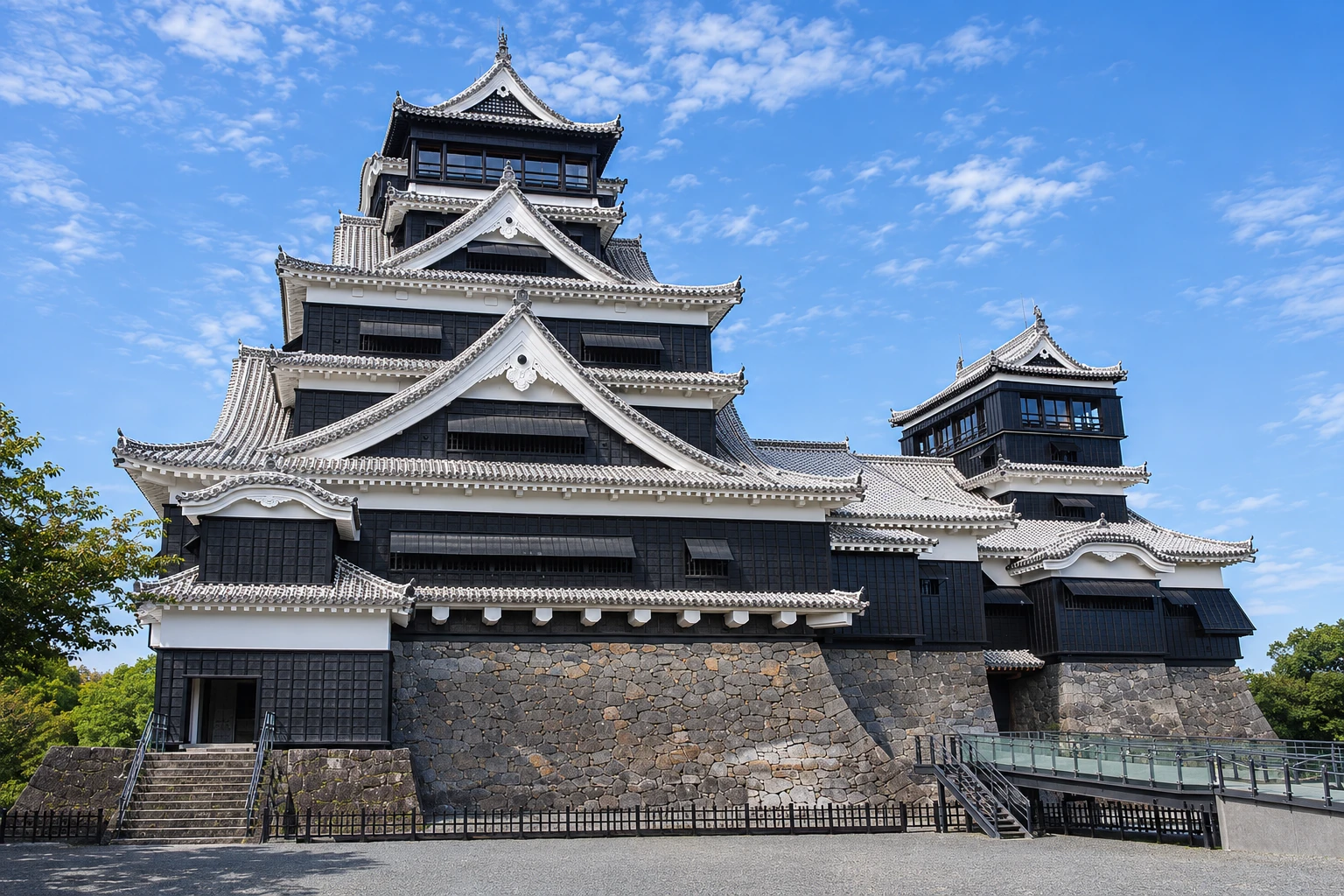
One of Japan’s largest castles, with curved stone walls and black towers; damaged in the 2016 earthquakes, its main keep has been restored and is visited by elevated walkways over the reconstruction.
Illustrative images. The pictures in this guide are illustrations based on the real place, not photographs, and may differ from it.

A look at the place
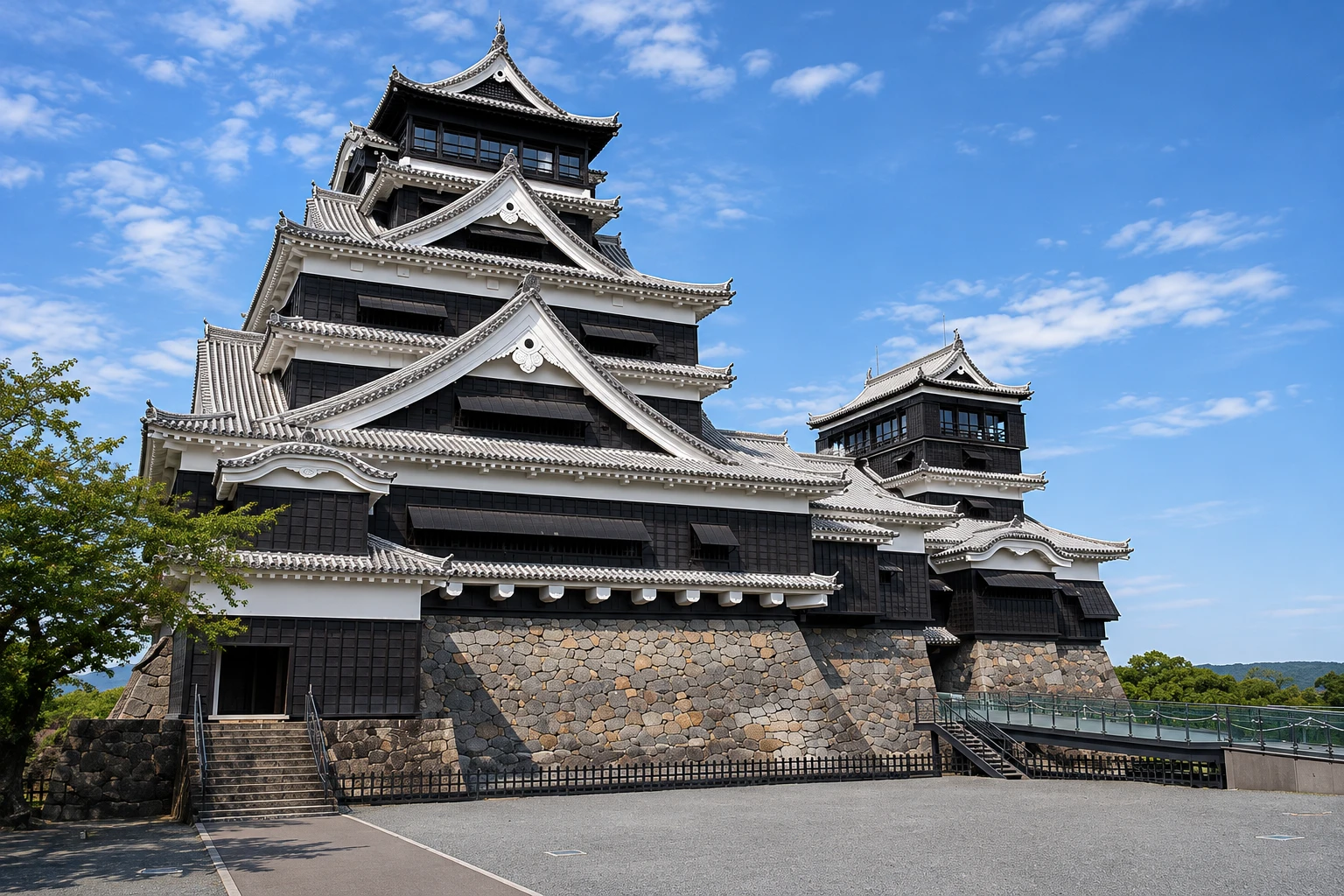
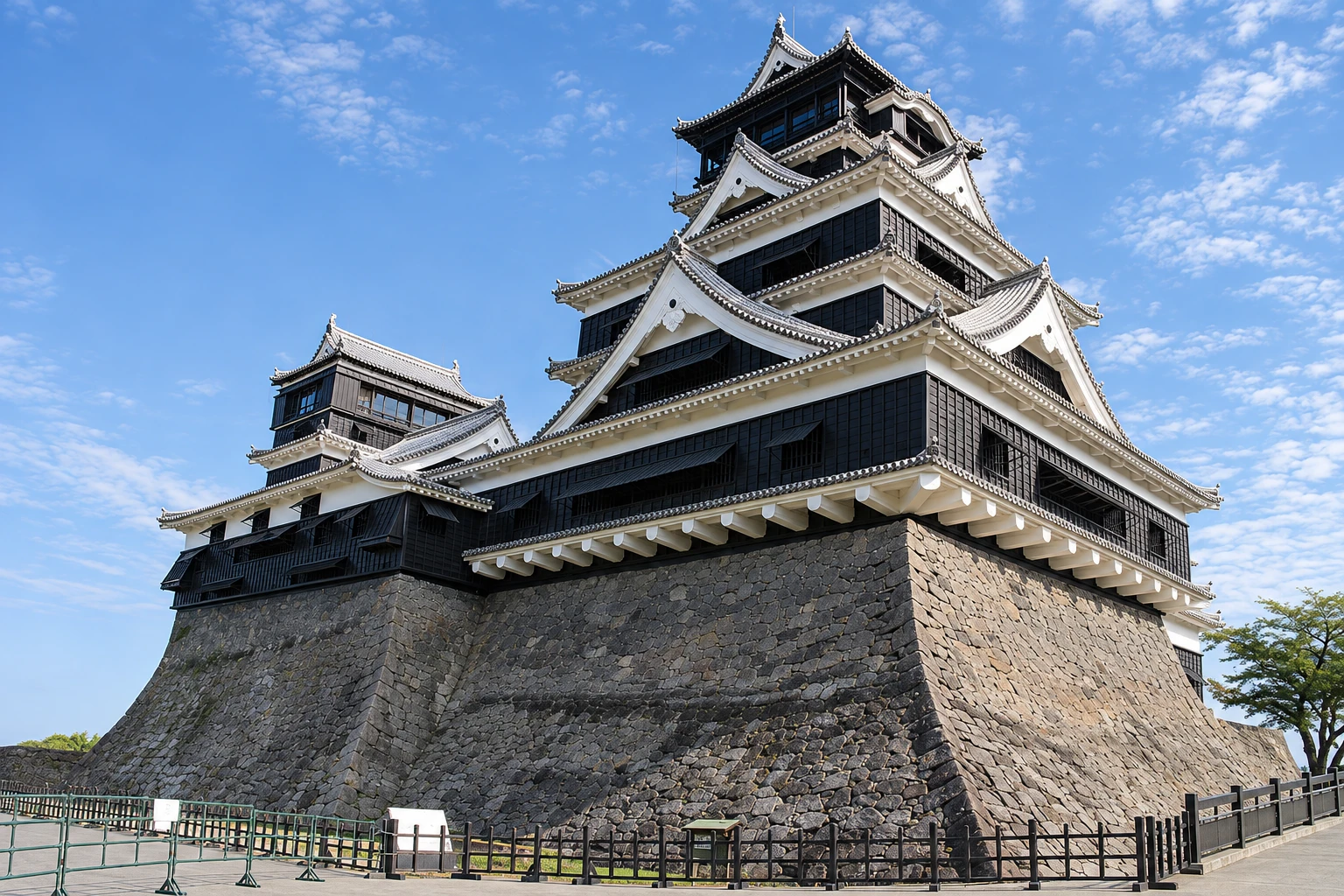
Kumamoto Castle in pictures
These pictures are illustrations based on the real place, not photographs. They may differ from the place.
Click the picture to enlarge it.
Discover
About Kumamoto Castle
Kumamoto Castle was built by Kato Kiyomasa and completed in the early 17th century on a hill in the city center. It was one of Japan’s largest castles, with dozens of turrets and kilometres of walls. The stone walls, the musha-gaeshi, start sloped and become almost vertical at the top—a curve designed to prevent scaling.
In 1877, during the Satsuma Rebellion, the castle withstood a siege by Saigo Takamori’s forces, but the main keep caught fire shortly afterwards. The keep seen today was rebuilt in concrete in 1960, modeled on the original black towers. The three-storey Uto turret is one of the older surviving structures.
The April 2016 earthquakes toppled sections of wall and damaged turrets. The main keep has been restored and houses a museum about the castle’s history and the reconstruction, with an observation deck on the top floor. The rest of the complex remains under repair, a recovery expected to take decades, and fallen stones have been numbered to return them to their places.
Visits take place on an elevated steel walkway that passes above the walls and allows close viewing of the reconstruction. At the foot of the castle are Sakuranobaba Josaien, with restaurants and the Wakuwakuza museum, and the garden of the former Hosokawa Gyobu palace. In spring, the park’s cherry trees usually bloom around the walls.
Before you go
Practical information
Cidade Turismo reviews its information regularly, but something may have changed. Check with the place before planning your trip.
How much time to set aside
About 2 hours for the walkway, the main keep and the museum; add another hour for Josaien.
Best time
In the morning, before the tour groups. Cherry blossoms typically bloom from late March to early April. In the evening, the walls and towers are often illuminated. Open areas change according to the work; confirm before you go.
How to get there
The tram from Kumamoto Station reaches the castle and city hall stop in about 15 minutes; from there the south entrance is a few minutes on foot. There are sightseeing buses that circulate the center.
Tip
Buy the combined ticket that includes Wakuwakuza. Go up to the top floor of the main keep to see the reconstructed walls from above.
Official website
Get your questions answered
Frequently asked questions about Kumamoto Castle
Can you enter the keep of Kumamoto Castle?
Yes. The main keep was restored after the 2016 earthquakes and houses a museum and an observation deck. The rest of the complex is viewed from an elevated walkway.
Is Kumamoto Castle original?
Some stone walls and certain turrets, like the Uto turret, are original. The main keep was rebuilt in concrete in 1960 after the 1877 fire, and it was restored after the 2016 earthquakes.
How long does a visit to Kumamoto Castle take?
About 2 hours for the walkway, the keep and the museum. With Josaien and the Wakuwakuza museum, allow half a day.
When will the castle reconstruction be finished?
Complete restoration is expected to take decades. Meanwhile visitors follow the work from the elevated walkway, and areas open as they are completed.
Beyond the guide


