

 Brazil
 Antarctica
 Argentina
 Bolivia
 Chile
 Colombia
 Ecuador
 Guyana
 French Guiana
 Falkland Islands (Malvinas)
 Paraguay
 Peru
 Suriname
 Uruguay
 Venezuela
 Germany
 Austria
 Belgium
 Croatia
 Denmark
 Slovakia
 Slovenia
 Spain
 Finland
 France
 Greece
 the Netherlands
 Hungary
 Ireland
 Iceland
 Italy
 Luxembourg
 Norway
 Poland
 Portugal
 the United Kingdom
 the Czech Republic
 Sweden
 Switzerland
 Turkey
 Bermuda
 Canada
 the United States
 Greenland
 Mexico
 Saint Pierre and Miquelon
 the Dominican Republic
 South Africa
 Egypt
 Australia
 Fiji
 New Zealand
 Papua New Guinea
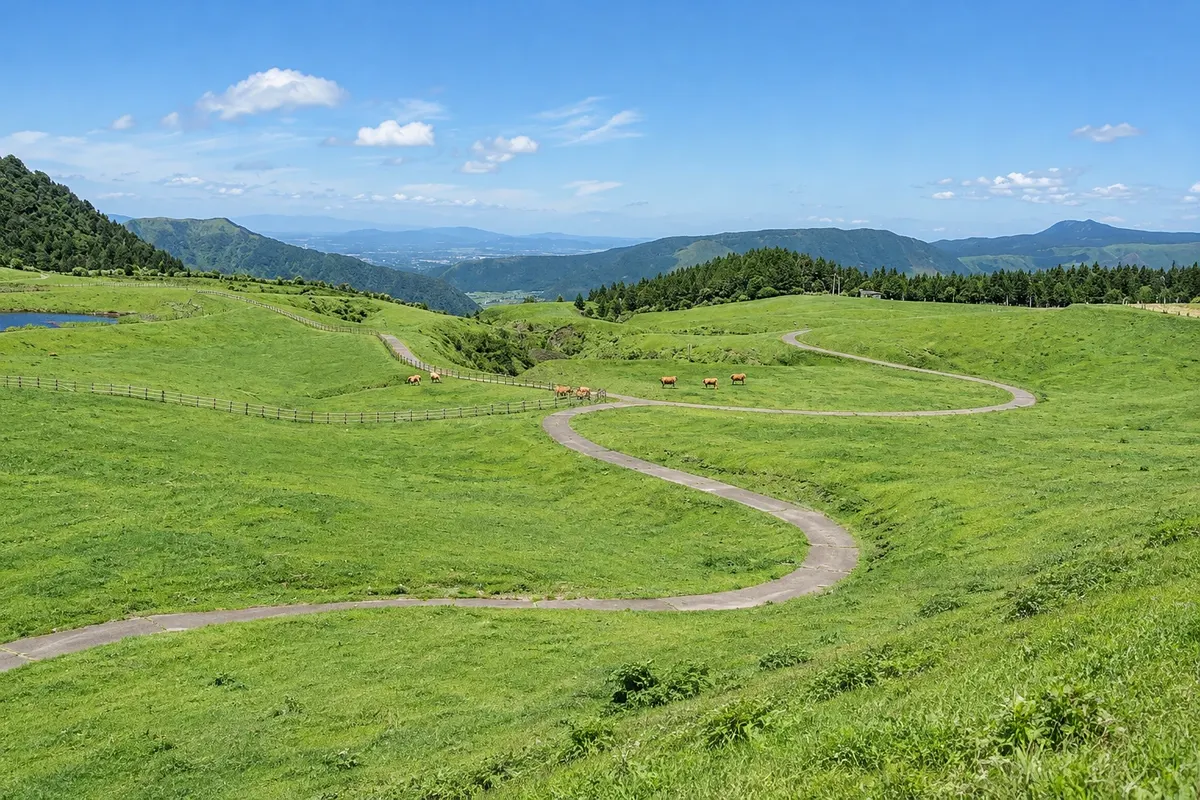
Natural scenery · Aso, Kumamoto
Kusasenri
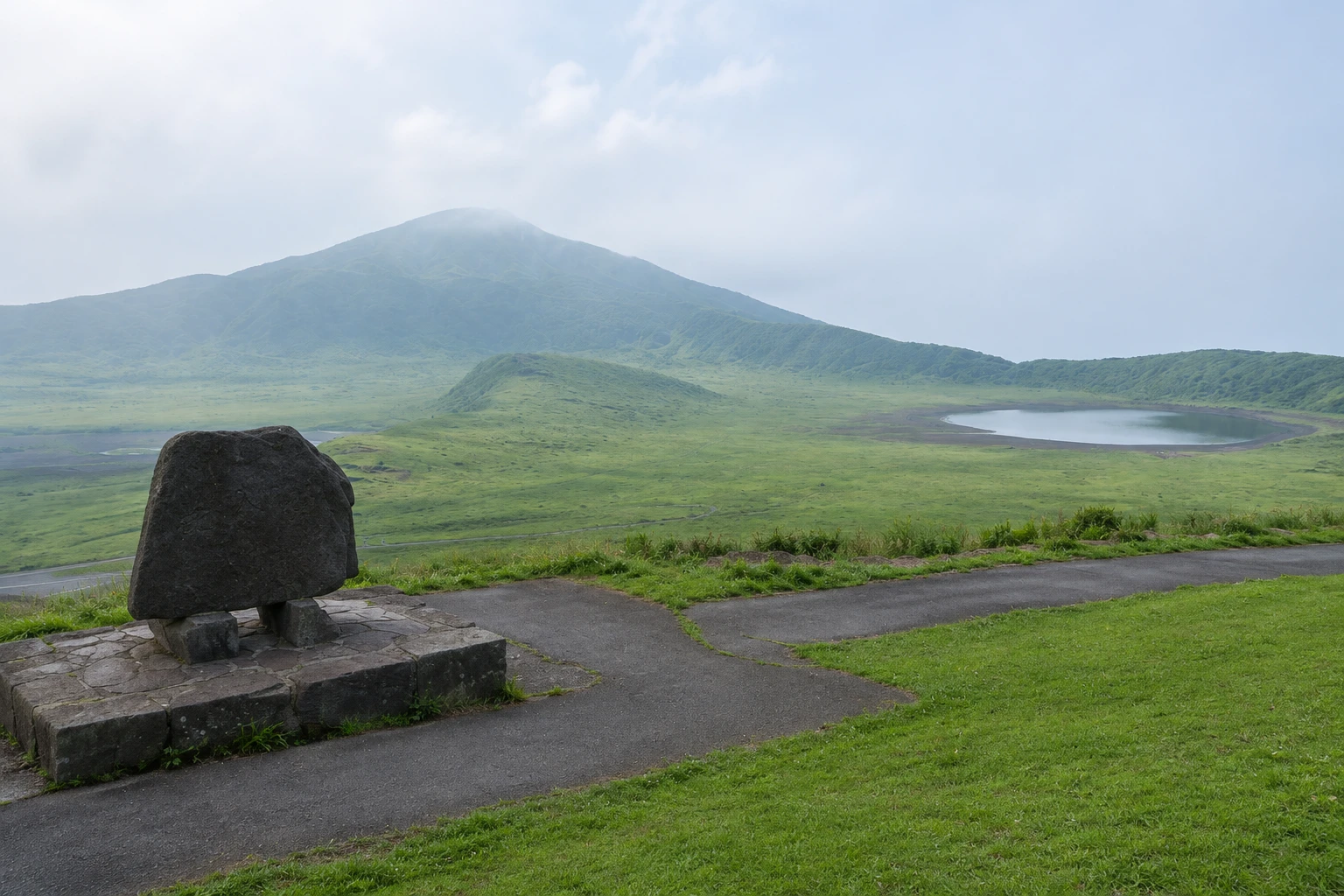
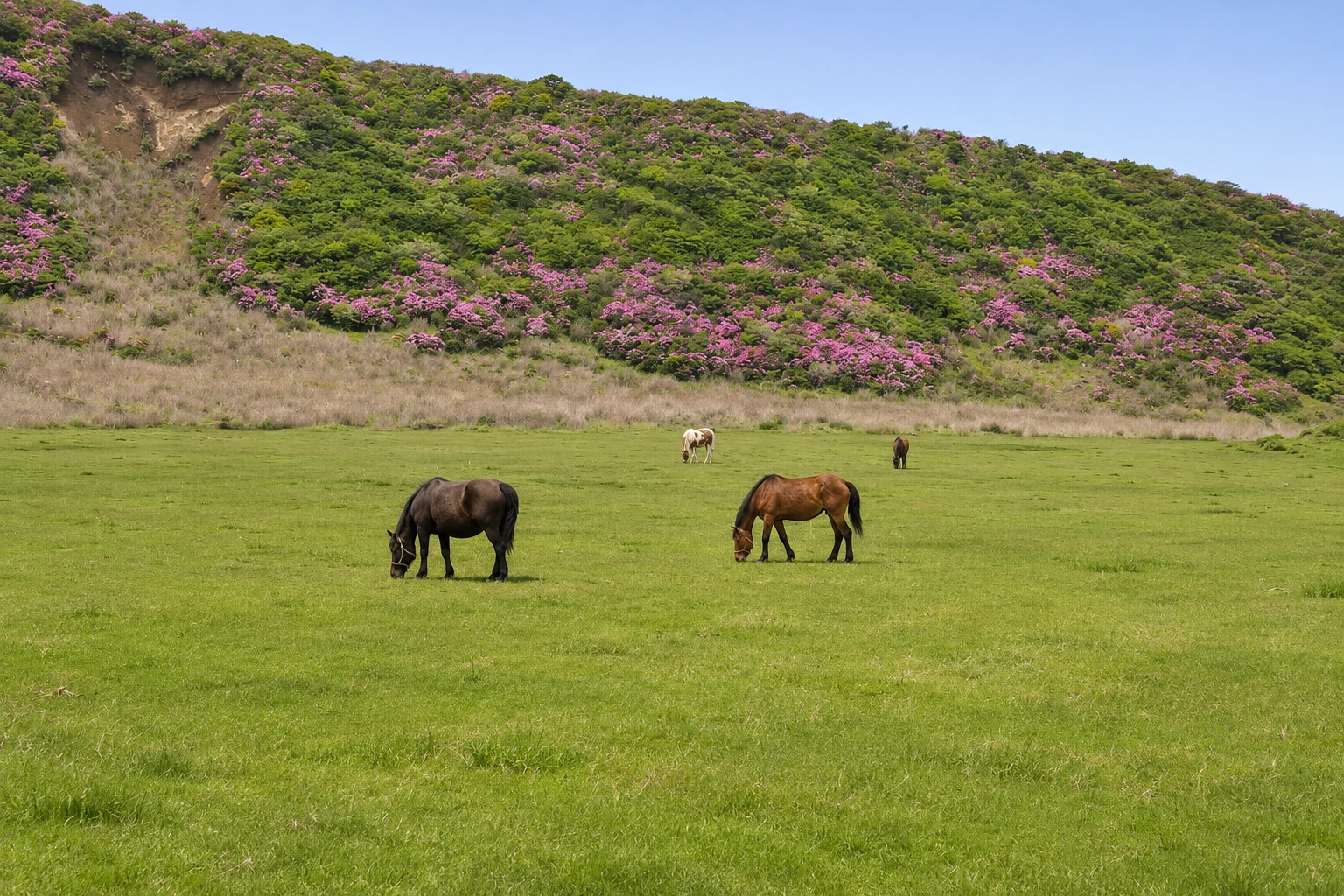
A grass plain in an old crater at about 1,100 meters, with ponds, horses and the Aso Volcano Museum in front; from there you can see Nakadake emitting smoke.
Illustrative images. The pictures in this guide are illustrations based on the real place, not photographs, and may differ from it.

A look at the place
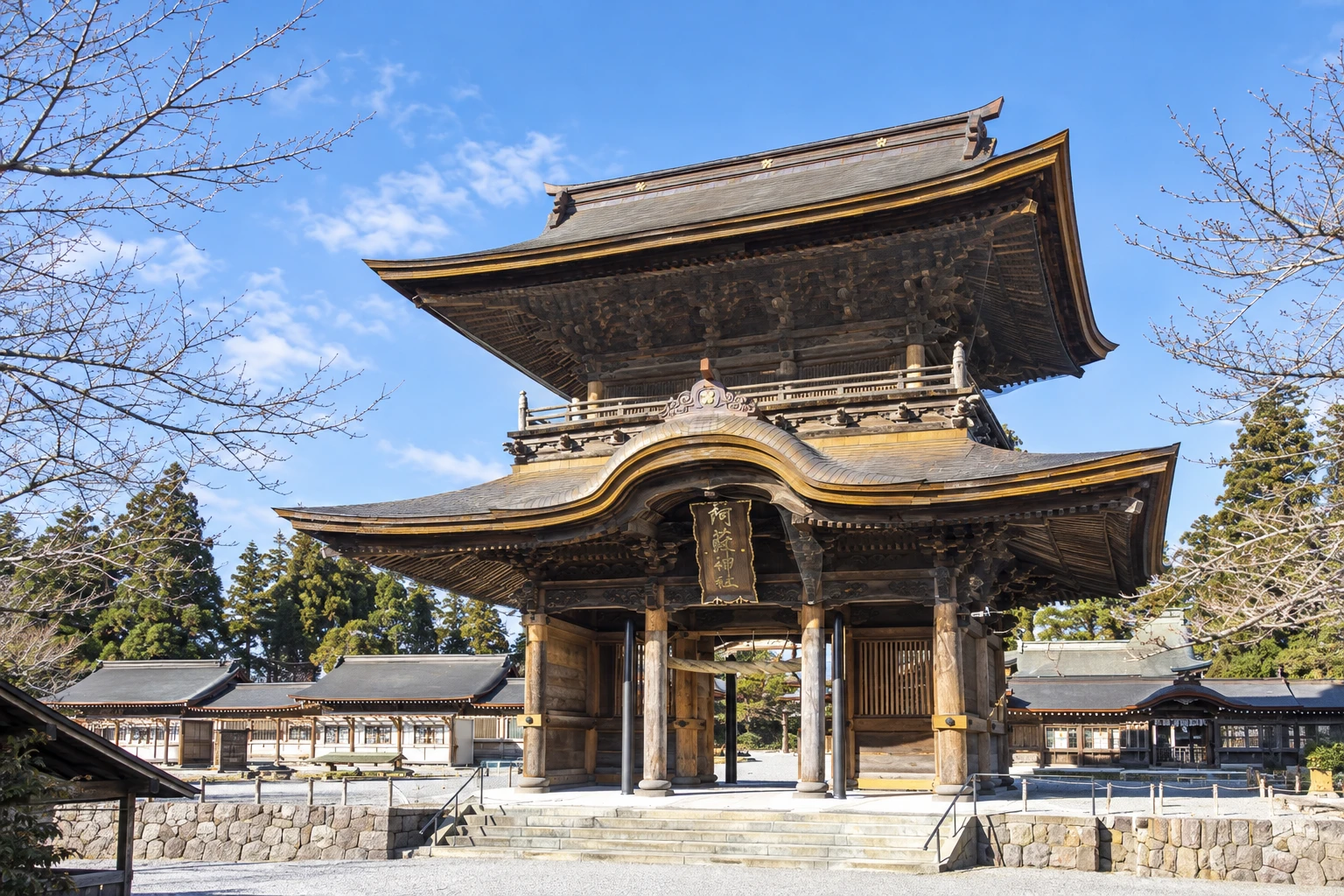
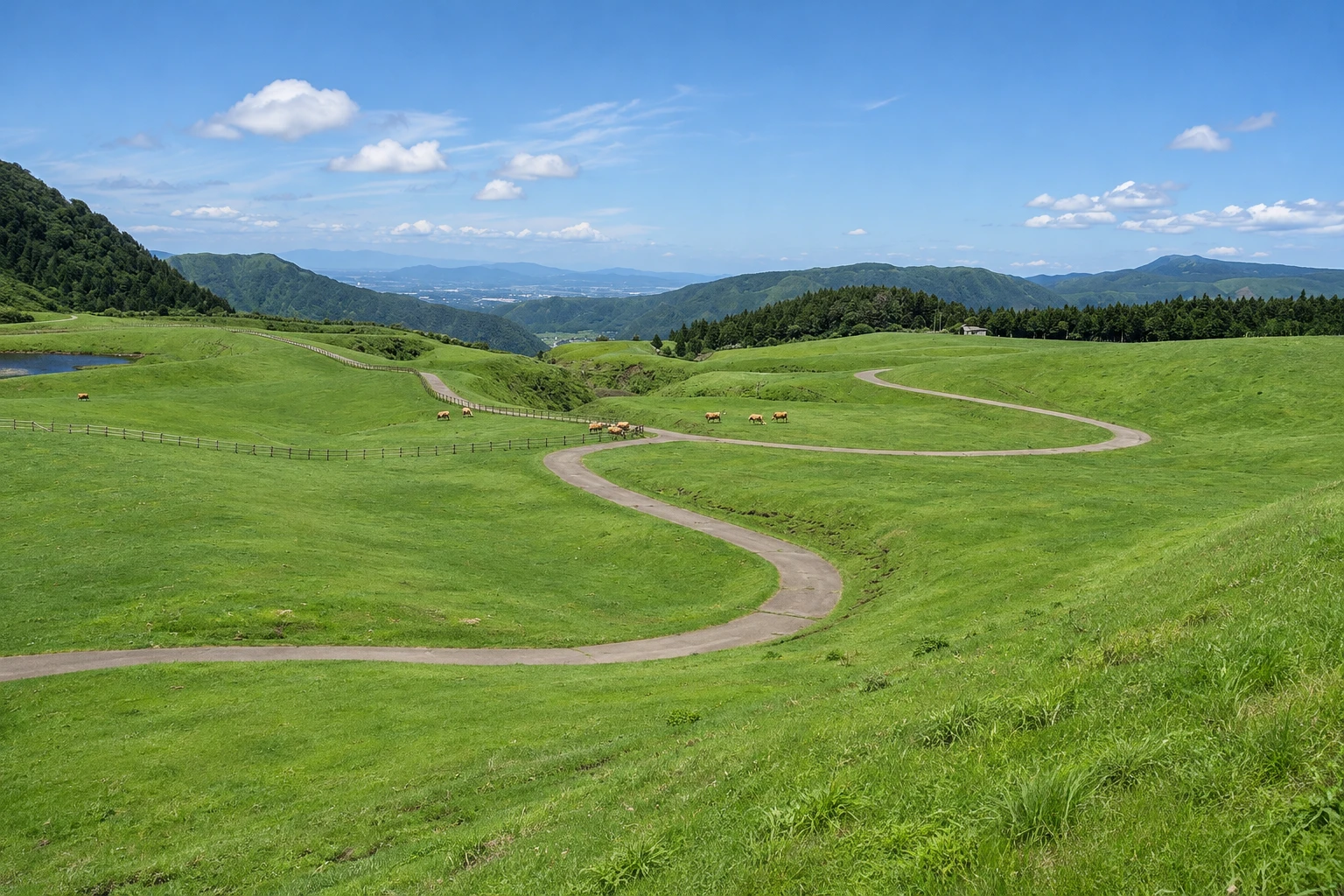
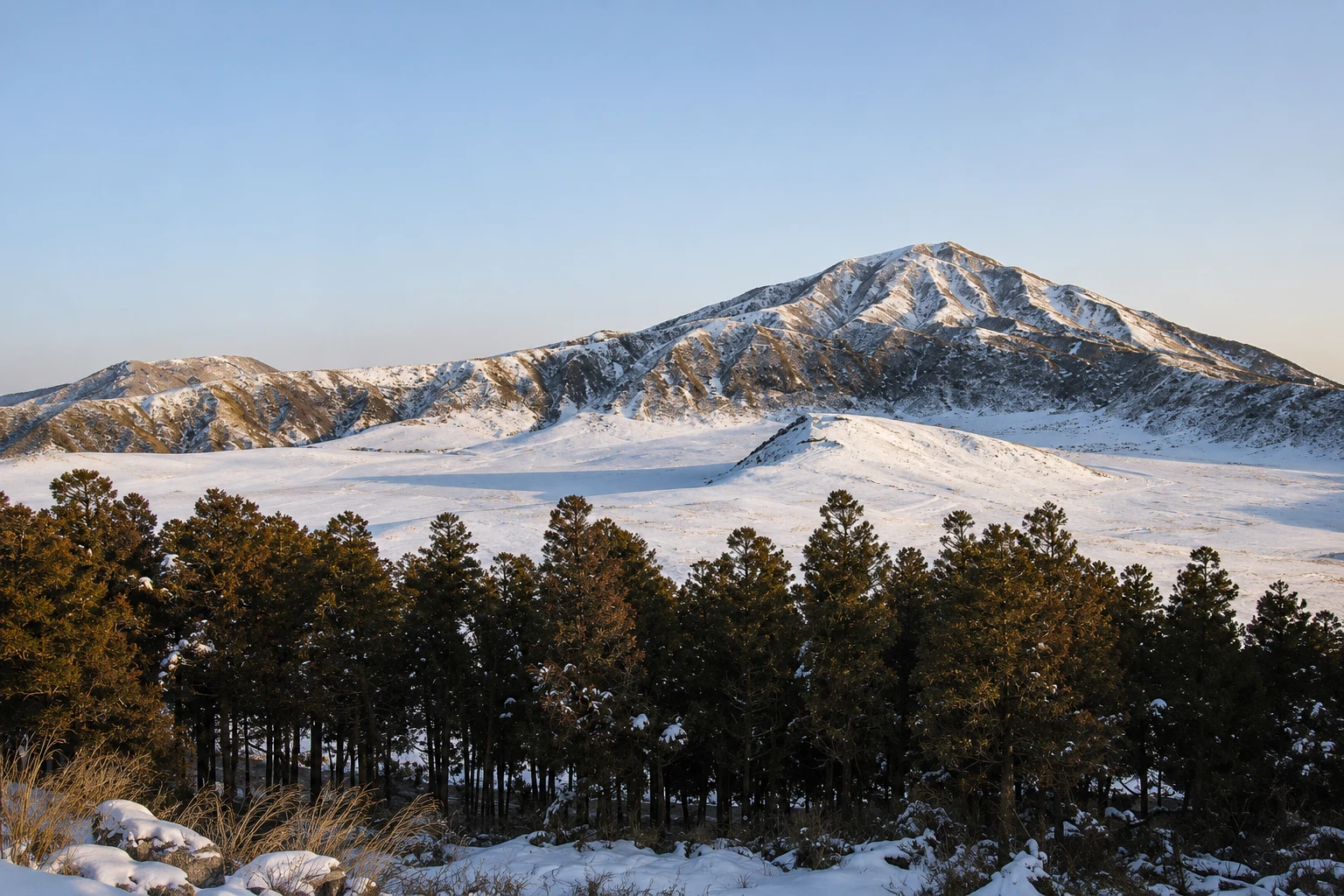
Kusasenri in pictures
These pictures are illustrations based on the real place, not photographs. They may differ from the place.
Click the picture to enlarge it.
Discover
About Kusasenri
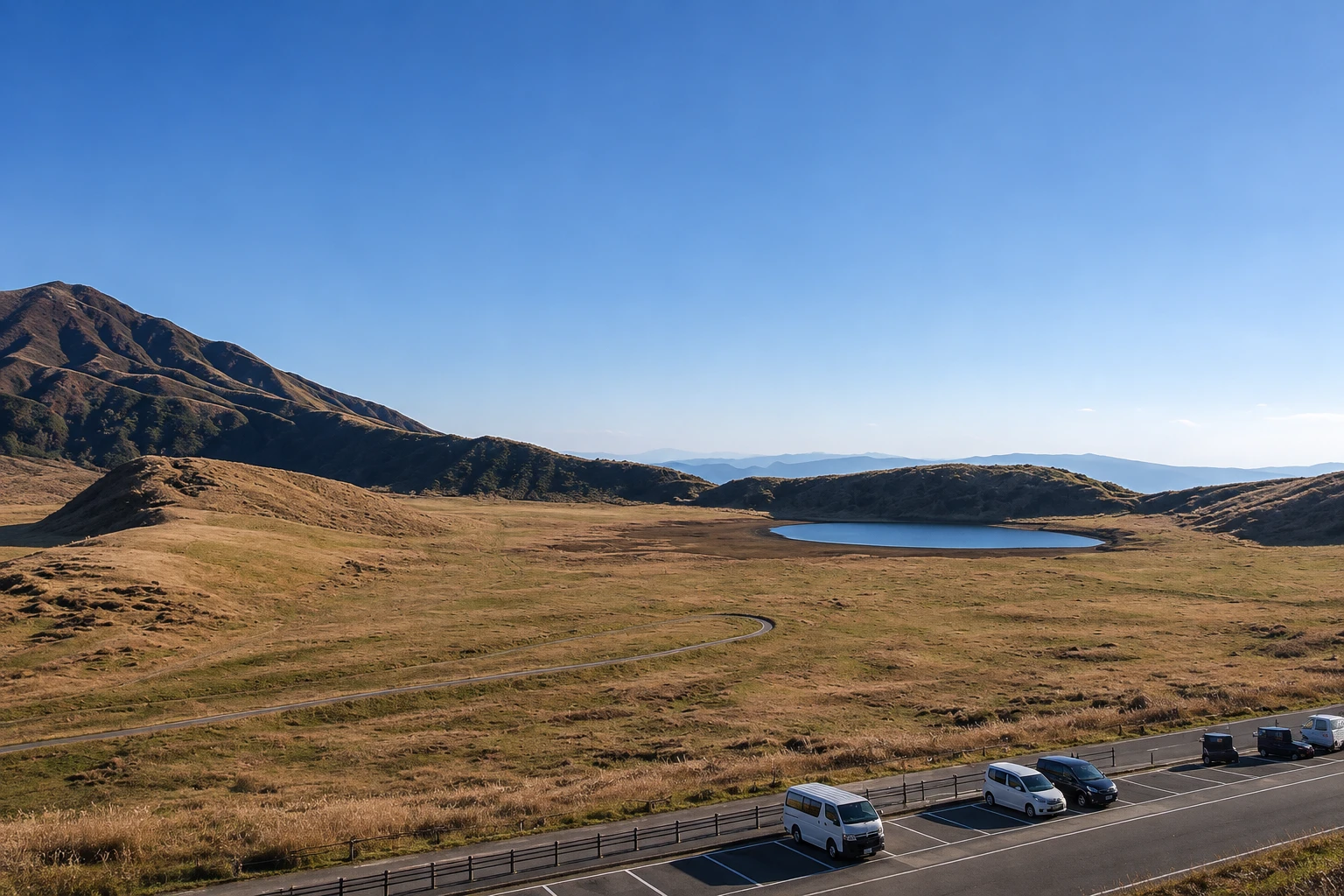
Kusasenri, or Kusasenrigahama, is a grass field about one kilometer across in an old crater among Aso’s five peaks, at roughly 1,100 meters altitude. In the middle are shallow ponds formed by rain, and horses graze freely. In the background the active Nakadake peak often emits a column of white steam.
On the opposite side of the road is the Aso Volcano Museum, with cameras installed on the crater edge showing live images, scale models of the caldera and explanations about the eruptions. From the parking area a short trail leads to a viewpoint over the field and to Mount Eboshi, which can be climbed in about an hour.
On the field itself there are horse rides led by handlers, and dirt trails that circle the ponds. In spring and summer the grass is green; in autumn, golden. Near the road, Komezuka, a small volcanic cone with a sunken top, is another familiar image of Aso.
About 3 km away is the Nakadake crater. Access depends on the alert level from the Japan Meteorological Agency and local rules, and it is often closed for extended periods, including when volcanic gases are present. Kusasenri and the museum are usually outside the restricted area; check before you go.
Before you go
Practical information
Cidade Turismo reviews its information regularly, but something may have changed. Check with the place before planning your trip.
How much time to set aside
Allow 1 to 2 hours for the field, the viewpoint and the museum; more time if you climb Mount Eboshi or take a horse ride.
Best time
From April to November in the morning, when the peaks often appear without clouds. The grass is green from April to August and golden in October and November. In winter the road can be icy. Check the alert level before going up.
How to get there
It is about 18 km from Aso Station, a 30-minute drive. There are buses from the station to the Volcano Museum, in front of the field, with few departures per day.
Tip
See the museum’s live crater images, even when access is closed. Combine Kusasenri and Komezuka in the same visit.
Get your questions answered
Frequently asked questions about Kusasenri
Is Kusasenri near Aso’s crater?
It’s about 3 km from the Nakadake crater, where you can see steam. How close you can get to the crater depends on the alert level; Kusasenri is usually outside the restricted area.
Can you ride a horse in Kusasenri?
Yes, there are short rides led by handlers across the field for an extra fee. Availability depends on the weather.
What is in the Aso Volcano Museum?
Live images from cameras installed at the crater, models of the caldera and explanations about eruptions. It’s a way to see the crater when access is closed.
How long should I set aside for Kusasenri?
One to two hours for the field and the museum. Add about an hour if you climb Mount Eboshi.
Beyond the guide


